-
-
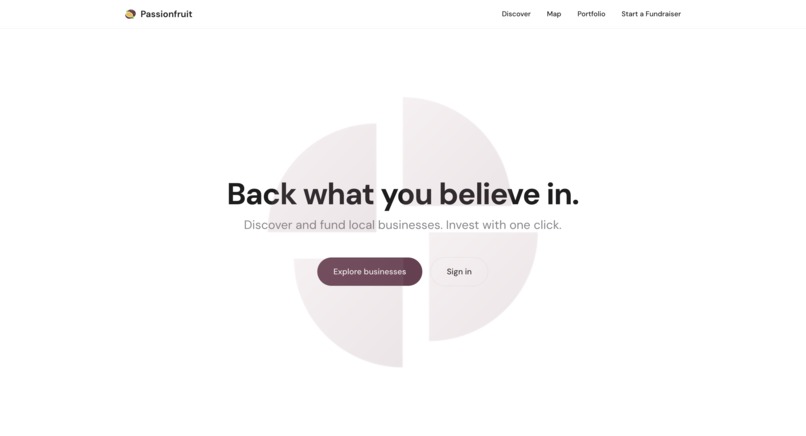
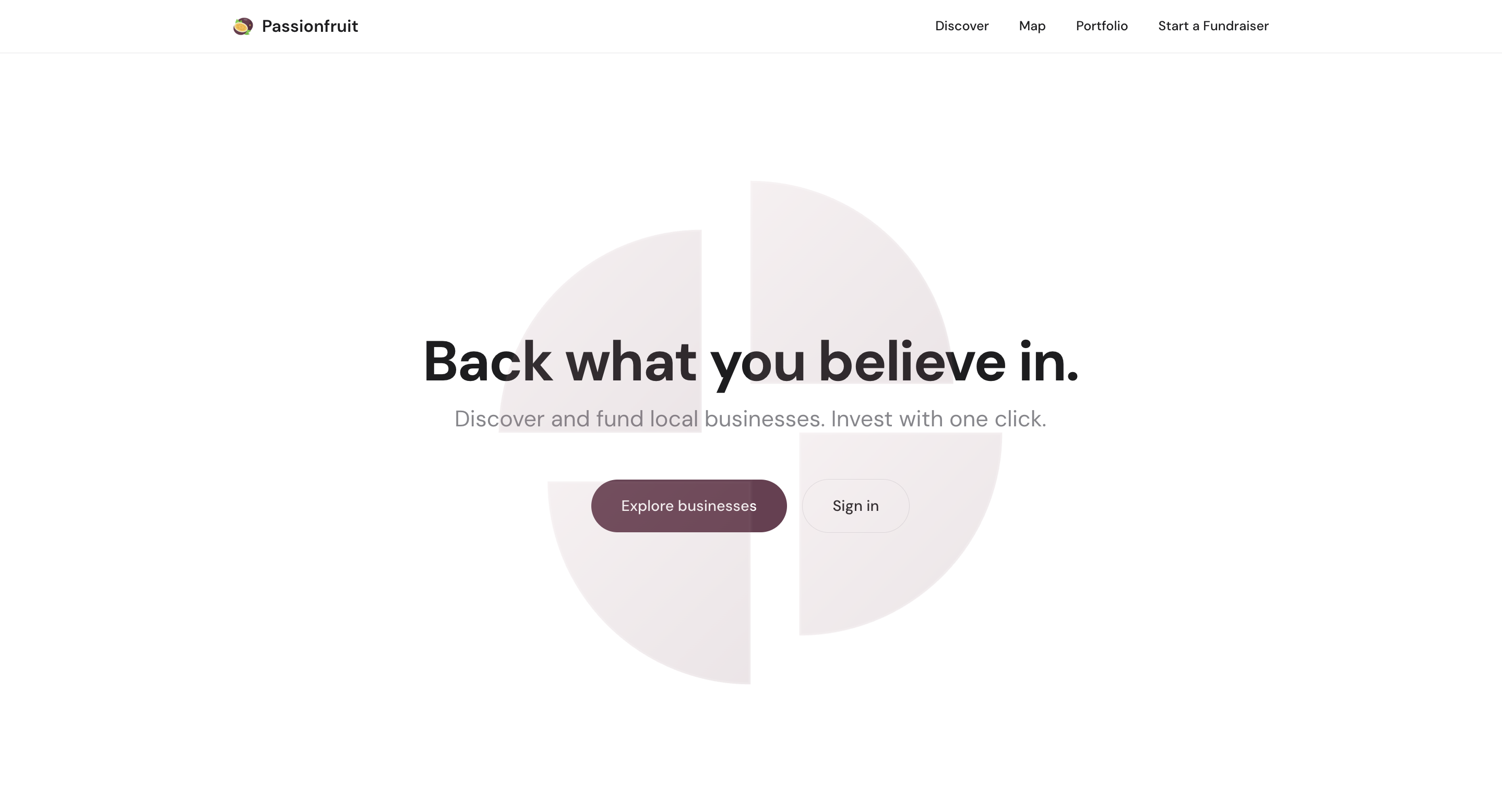
Home Page - Animated Circle Design!
-
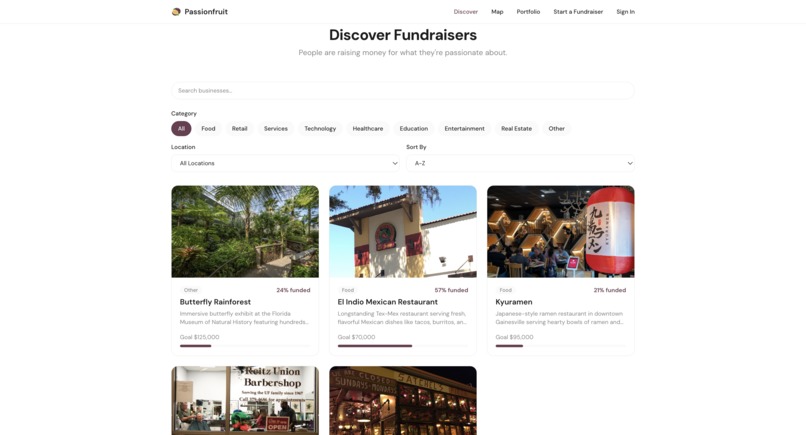
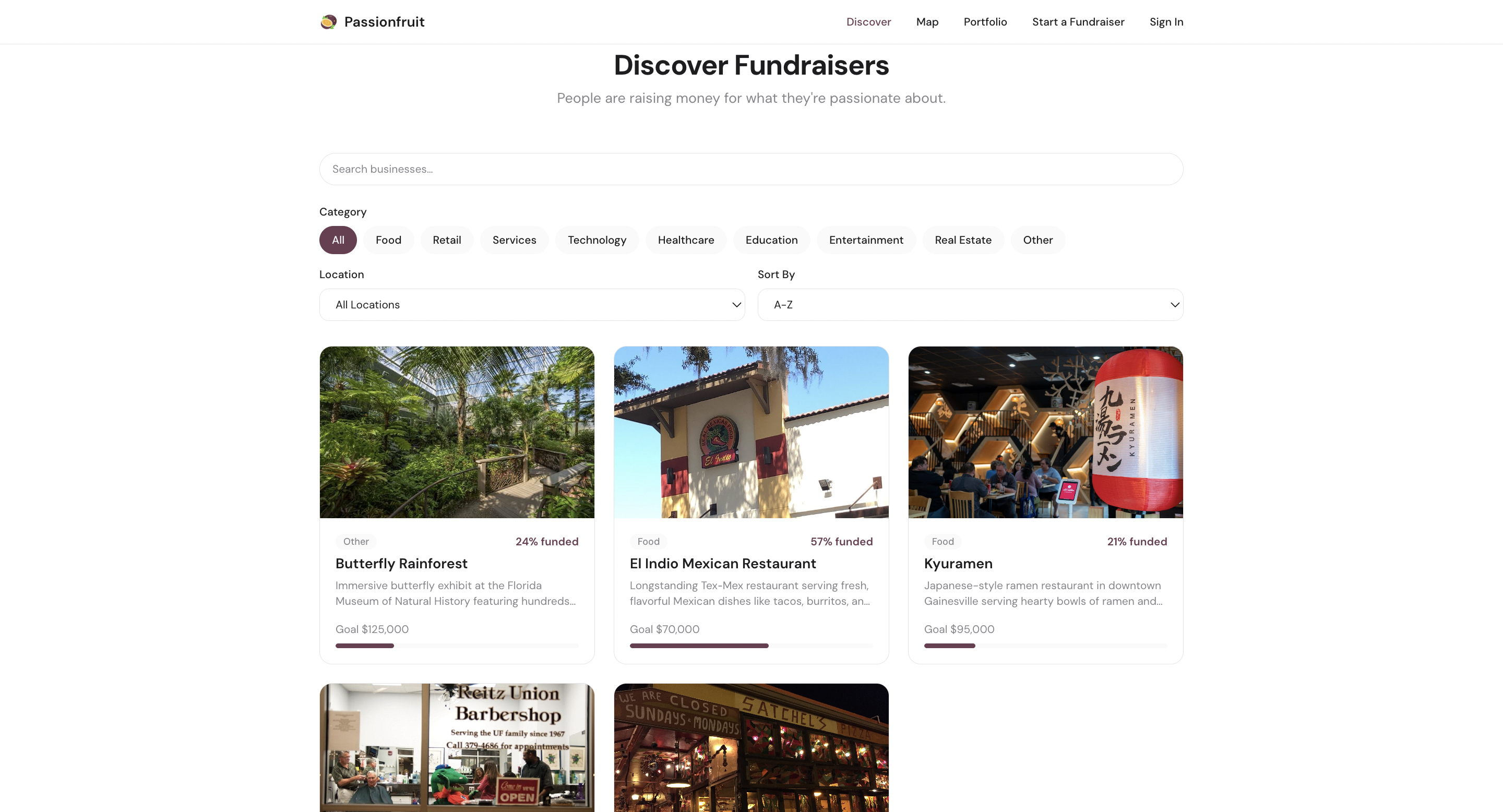
Discovery Page w/ All Business Postings
-
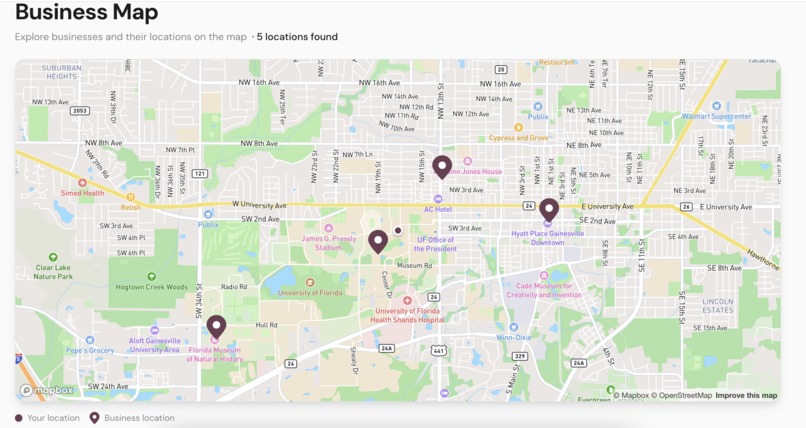
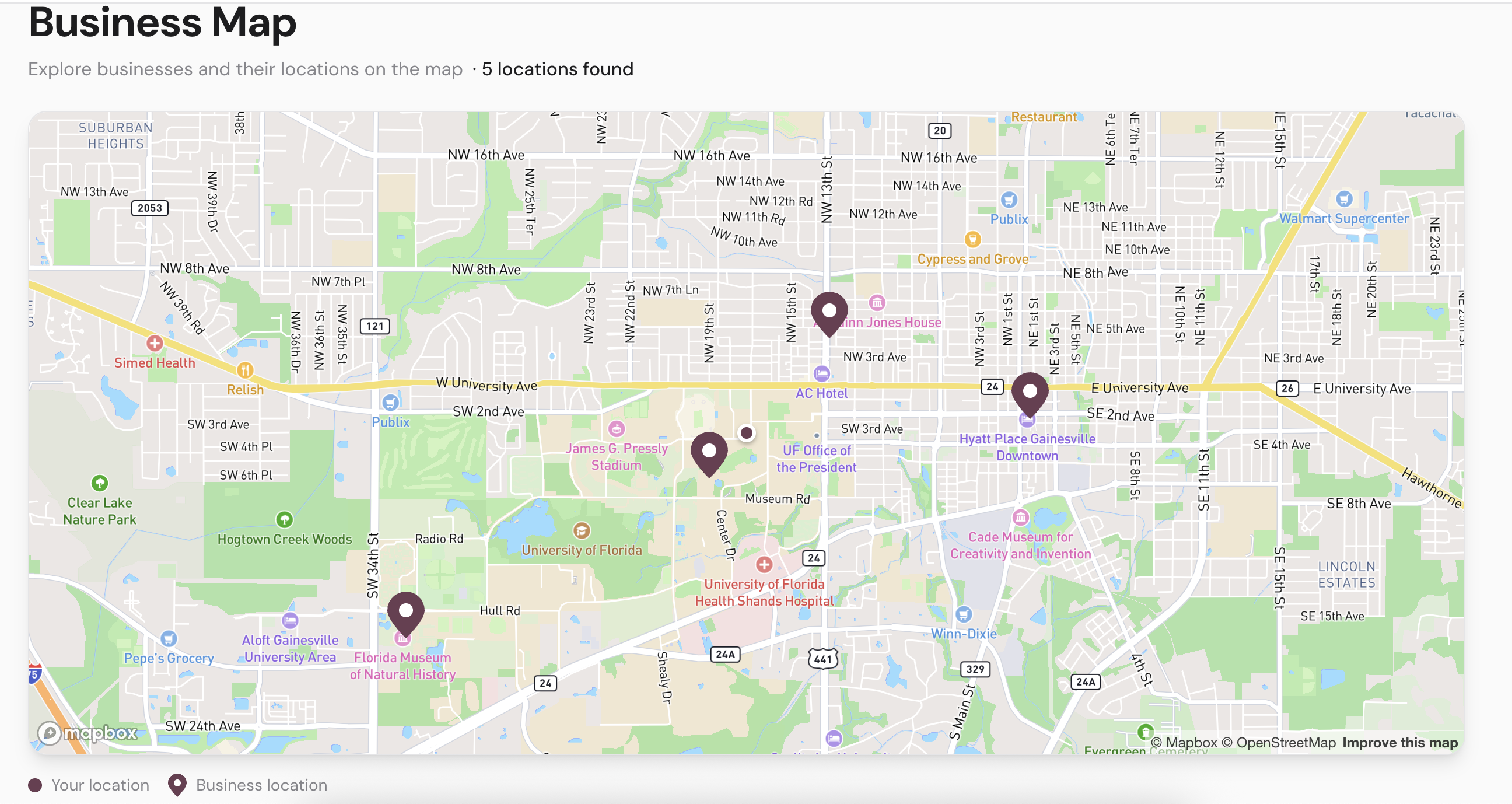
Interactive Map w/ Businesses Pinned
-
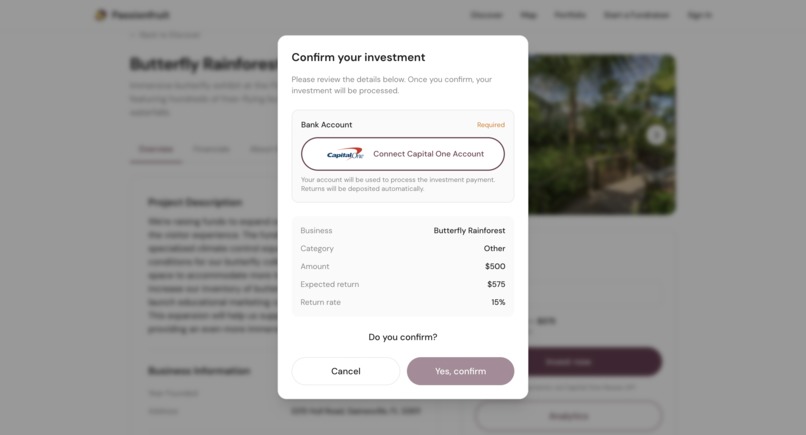
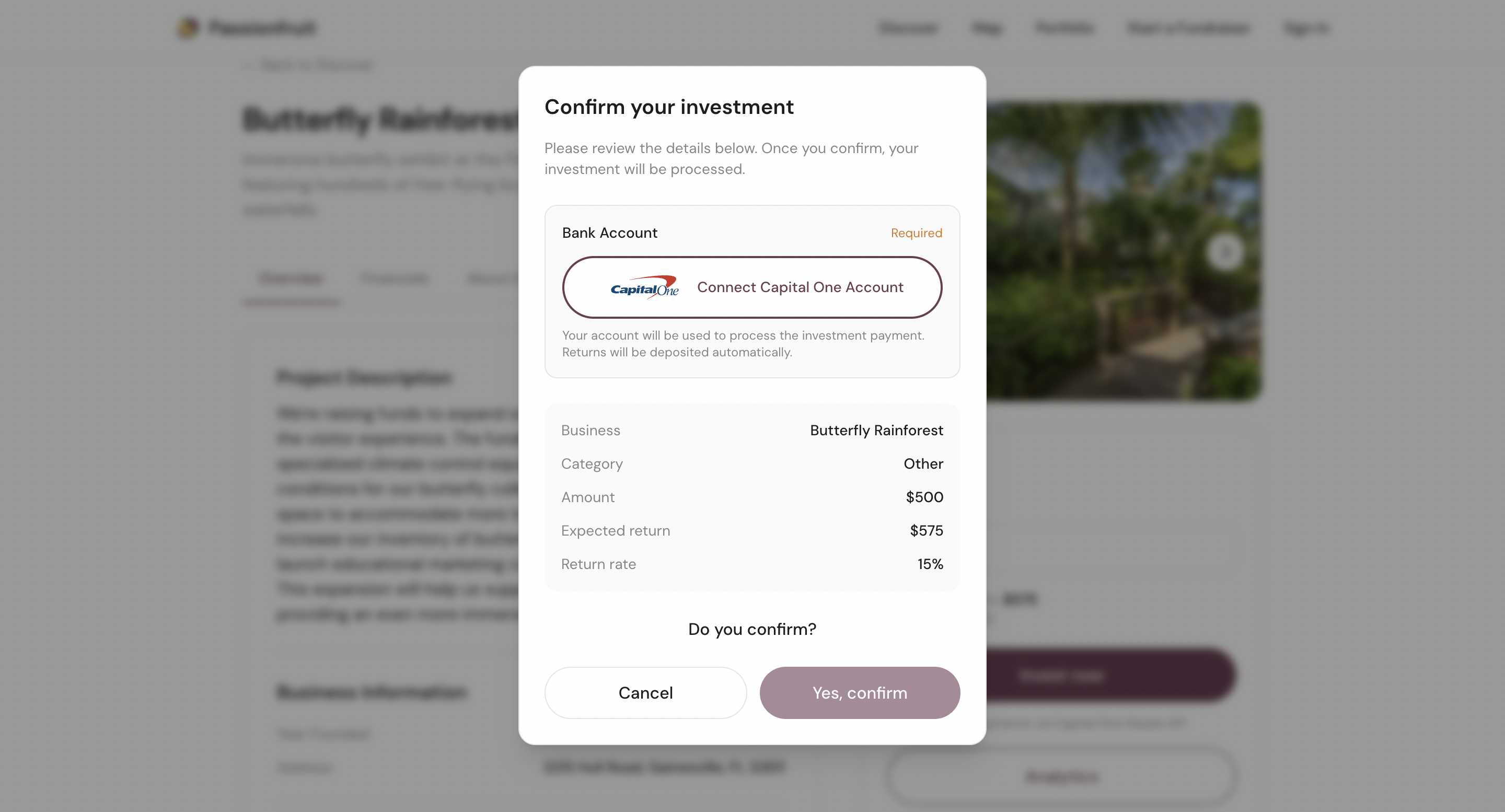
Order Summary
-
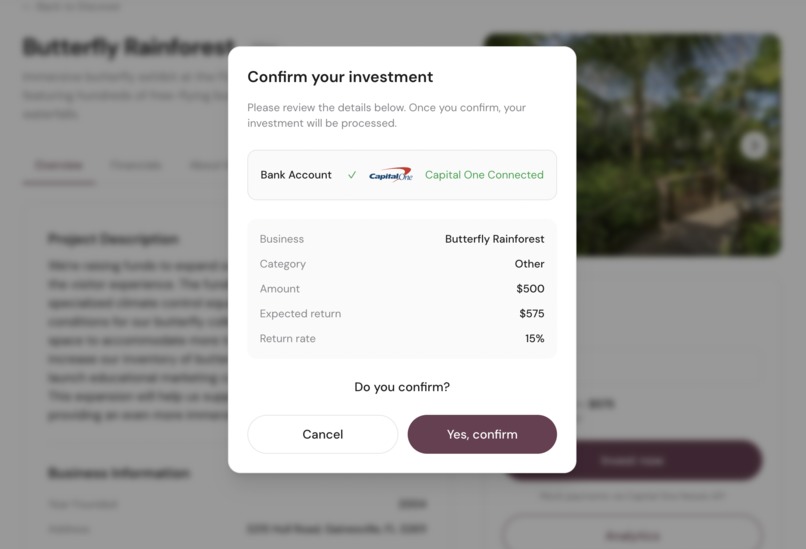
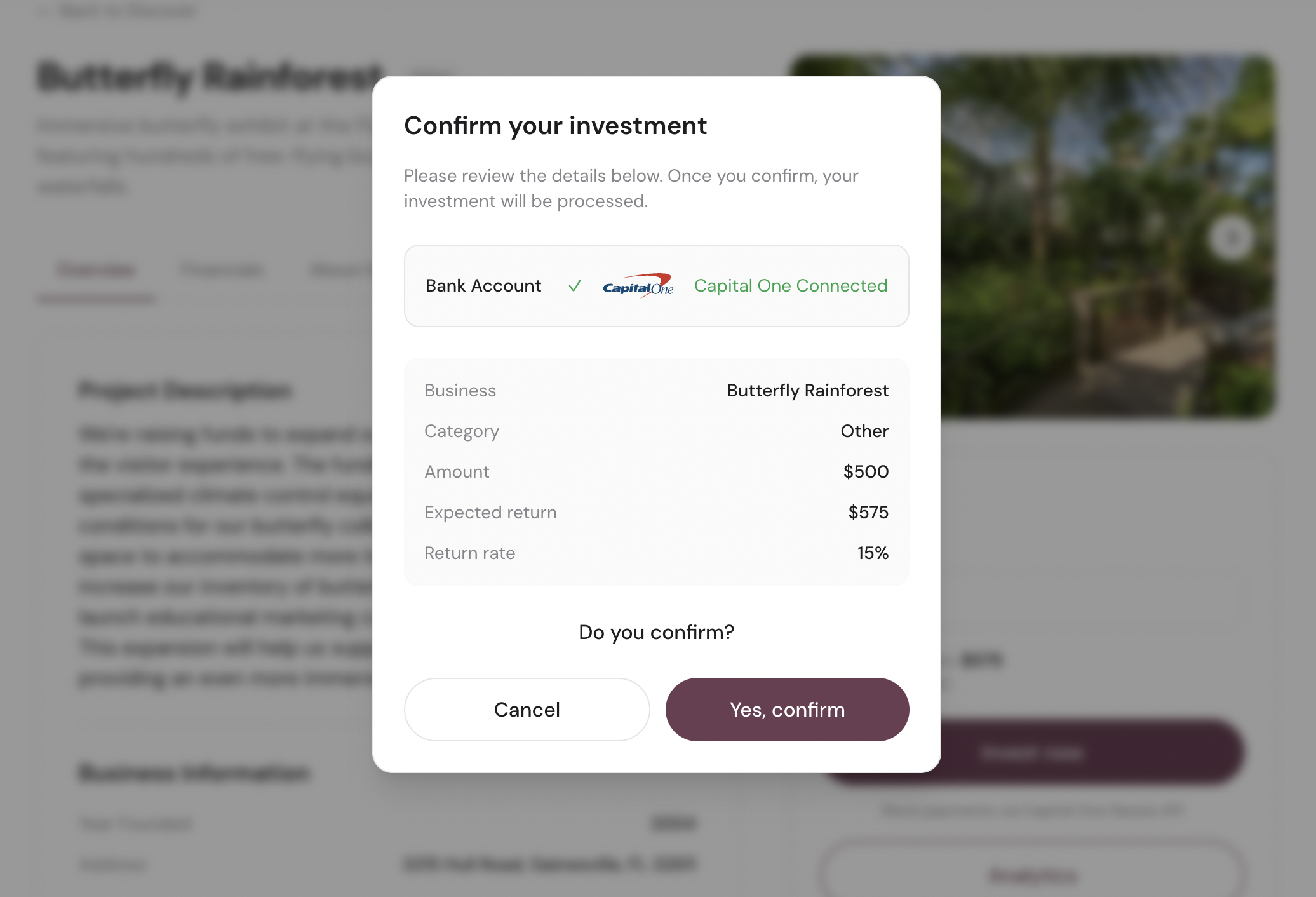
Official Capital One Button Integration Check Mark from Previous
-
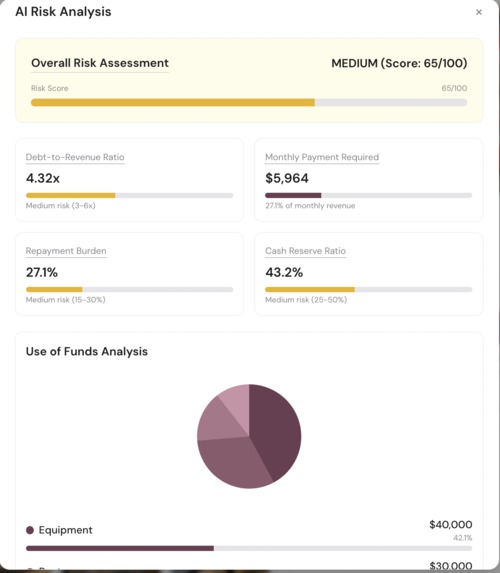
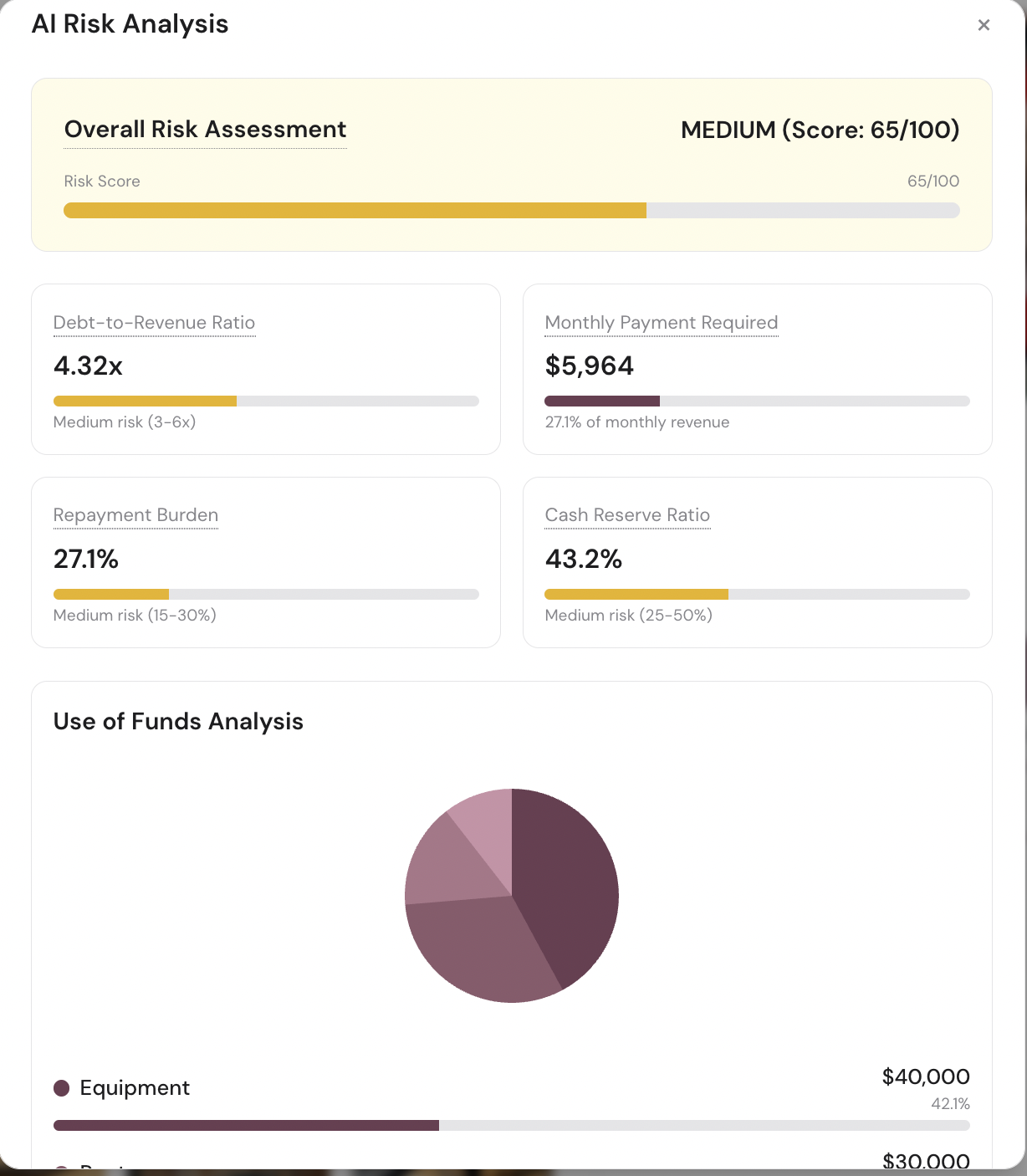
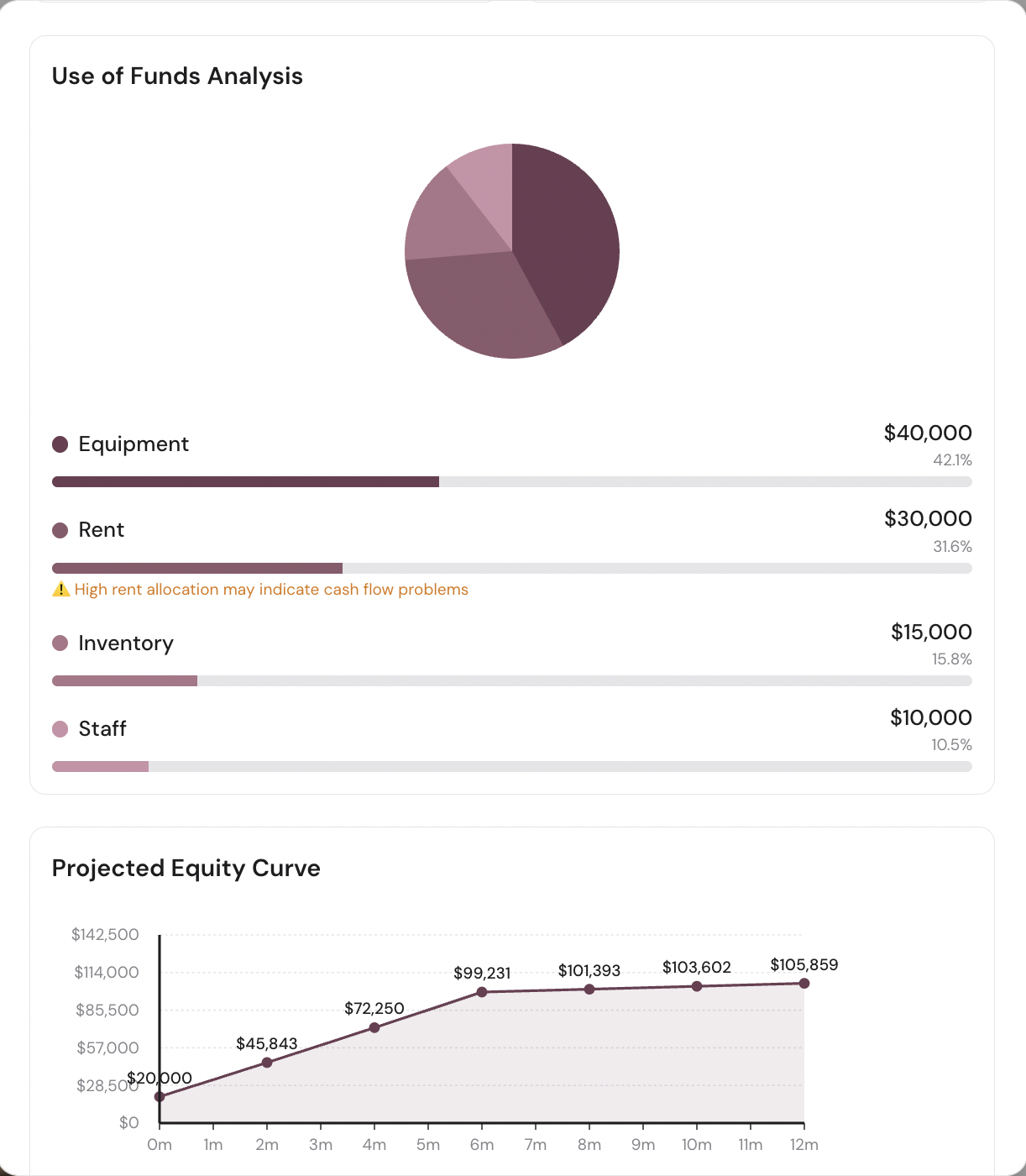
Business Insights p1
-
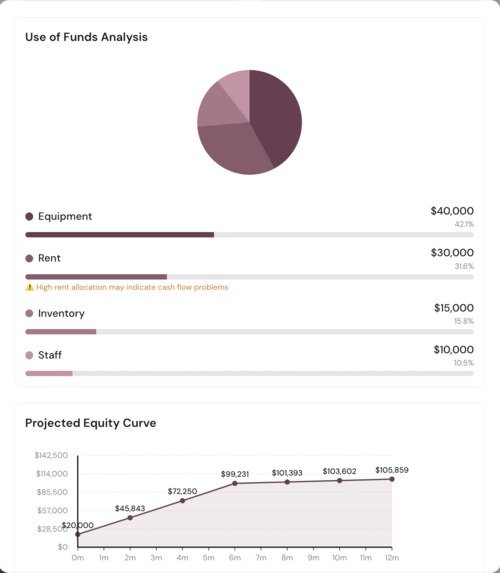
Business Insights p2
-
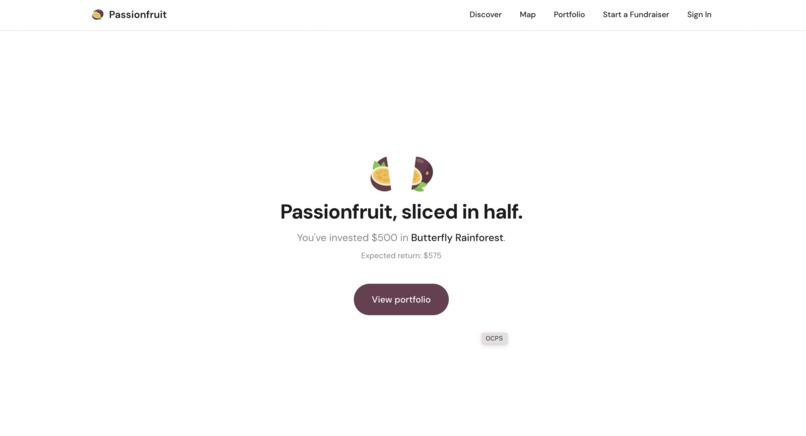
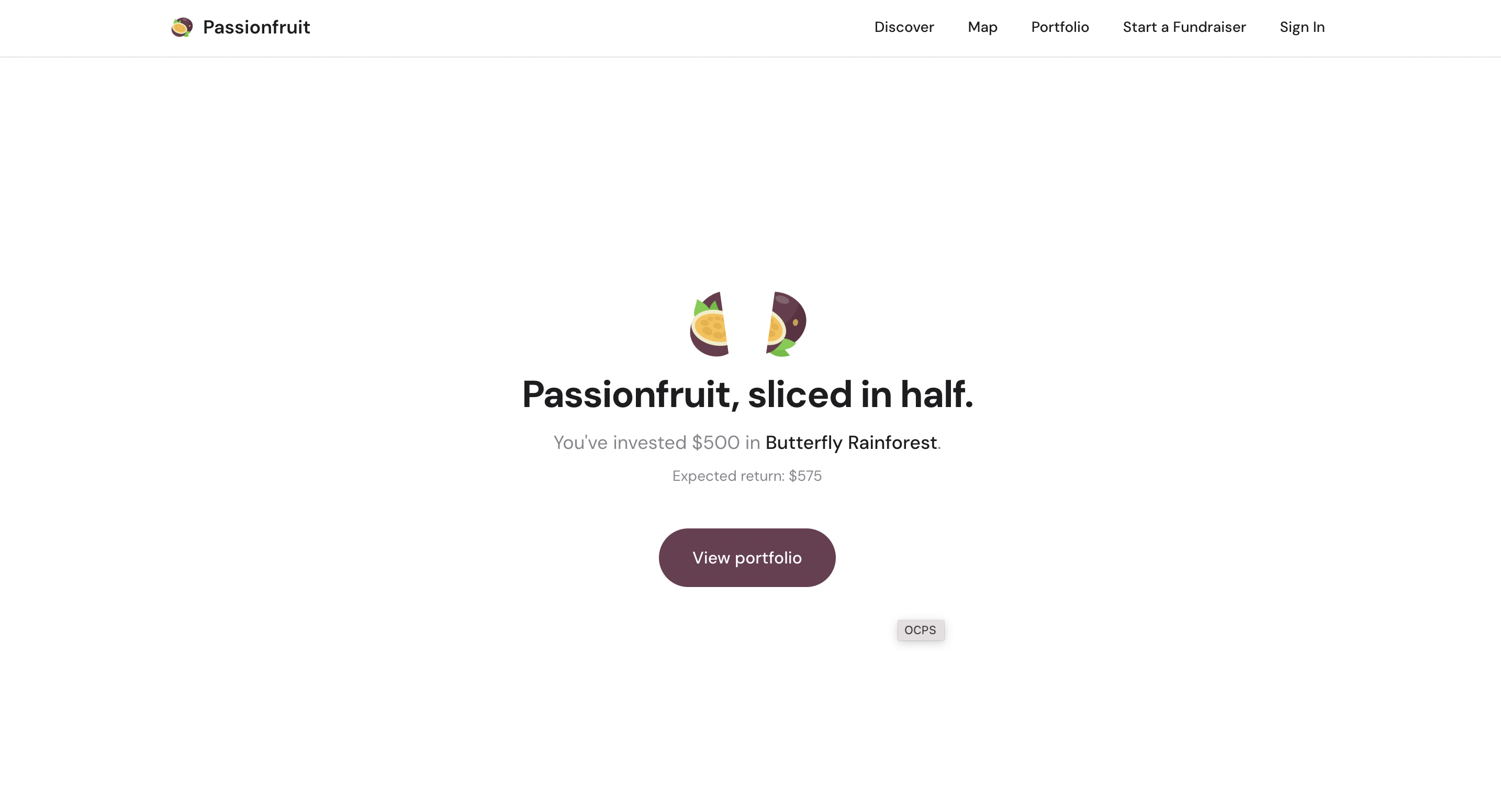
Investment Confirmation; Fruit slices in half with sound effect!
-
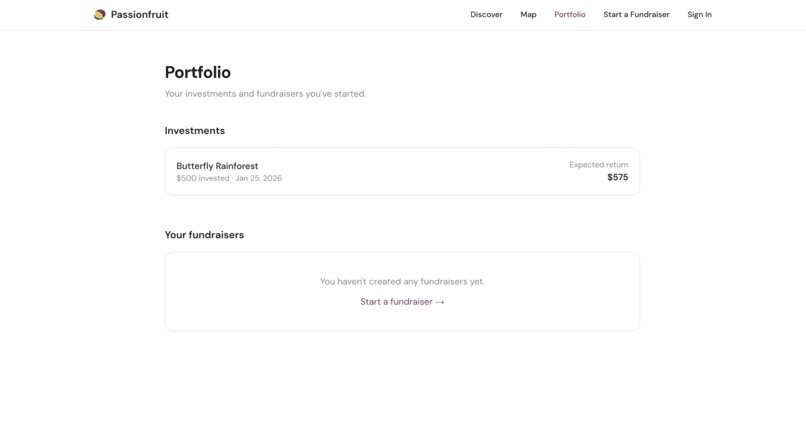
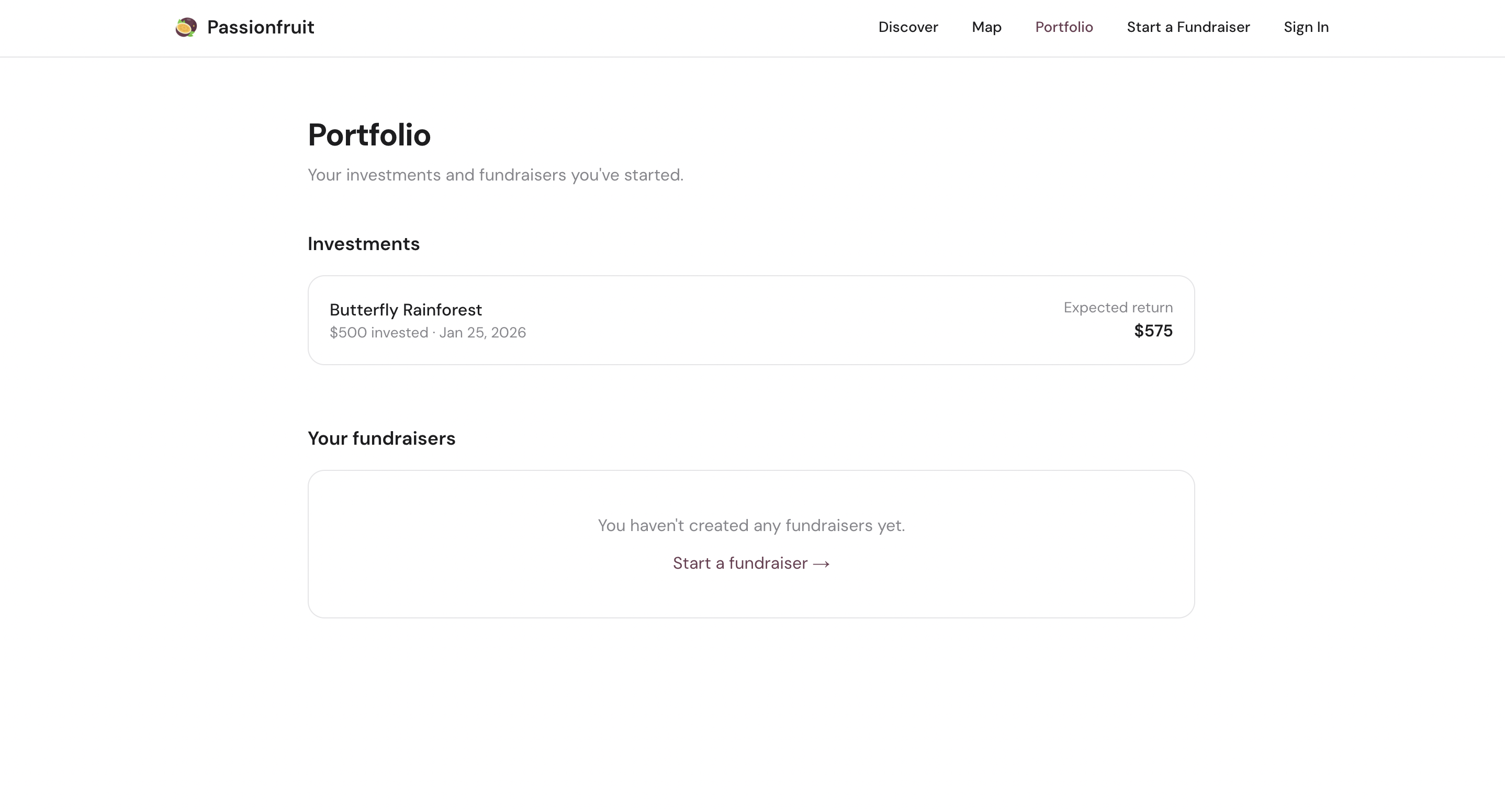
User Portfolio
-
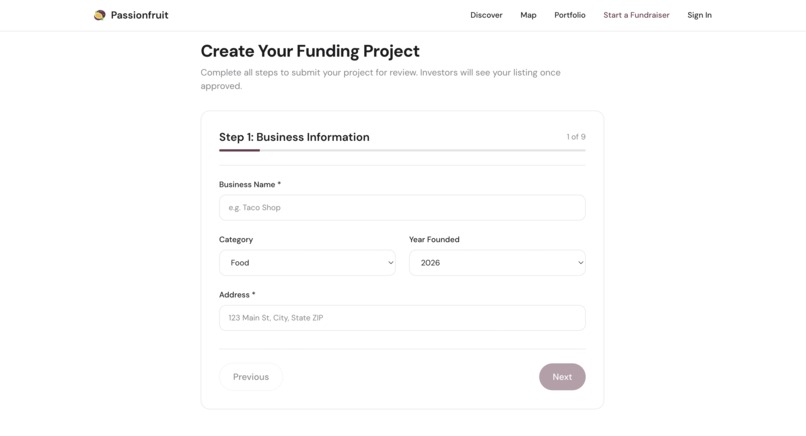
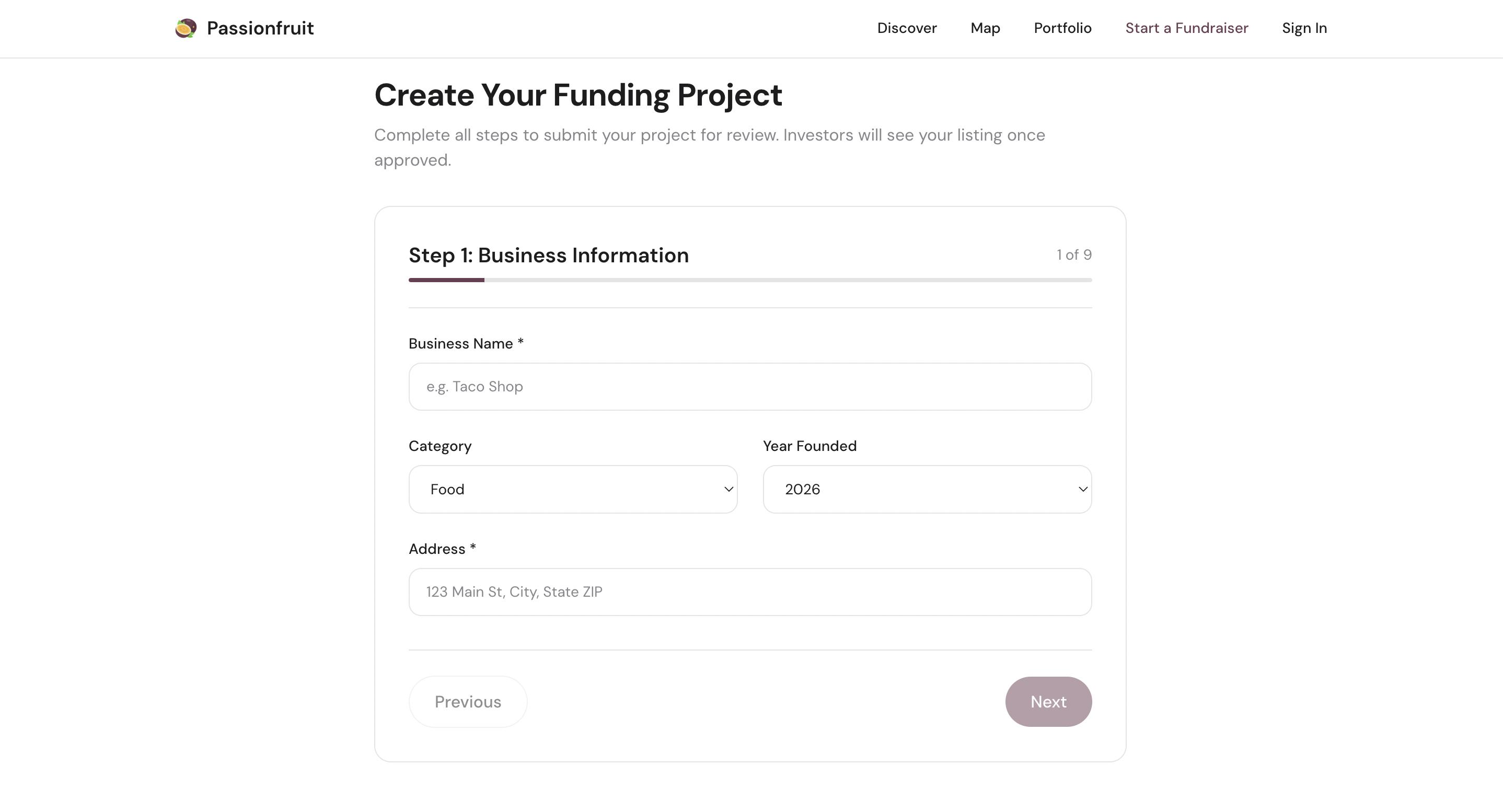
Start a fundraiser page
Inspiration
Aryan's parents are local business owners. He often heard them talk about how hard it is to maintain the expenses of running a business (wages, rent, supplies, taxes, and so many other bills). Despite the struggle with running a business, Aryan has single-handedly seen the community his parents built with their patrons. Seeing this sense of community, he has fostered a passion for supporting mom-and-pop businesses. Therefore, Passionfruit sets up a platform where the community can work together to invest in and support local businesses, while also earning profits over time.
How Does it Work?
Similar to crowdfunding with GoFundMe, users browse businesses on a dashboard or an interactive map. Each business is local, showing why they need funding, their business financials and analytics, and progress. To invest, users connect their "Capital One" account, enter an amount, and confirm; the backend processes the investment and updates funding. Business owners can create postings through a questionnaire form that includes financial details, photos, and project information.
How Did We Build It?
We built Passionfruit with a Next.js 14 frontend using TypeScript and Tailwind CSS, and a FastAPI backend in Python. The frontend uses Zustand for state management and renders fundraising postings and investment models. We also use Mapbox to generate a map. The backend uses REST endpoints for businesses, investments, and analytics, with JSON file persistence.
The frontend makes REST calls to the backend for all data operations. The backend processes investments, runs analytics on request, and updates stored state. The map geocodes business addresses on load and displays them with custom pin markers.
Challenges We Faced
It would be a lie if we said we flew through without any challenges. Our first roadblock was Git. Since half our team were first hackers, getting into the habit of using Git commands took a minute to get used to. But practice makes perfect, and it becomes a second-hand thought. A main roadblock was with the implementation of the Capital One Nessie API; we tried really hard to implement something that just wouldn't work out. It was a bummer because we would have loved to create a mock bank account system; however, Nessie would not have been the right tool. And a challenge that happened near the end was trying to transition from running on a local host to an actual domain.
Future Improvements
Some future improvements that could take Passionfruit to the next level would be to implement a stricter verification system before businesses can list a position to prevent fraudulent posts. We could require licenses, documents, etc. Another step would be to develop a mobile app version for iOS and Android. Our biggest idea would be to enable real-time investment tracking and allow for investments to be more liquid by being able to sell investments earlier.
What We Learned
Half of our team were first-time hackers! So there was a steep learning curve getting everybody on page with learning the basics of coding collaboration. Other than that, everybody was out of their comfort zone! Aryan never really worked on the front end before, but his creative personality helped create the sleek and modern UI of Passionfruit. Barath learned how to set up the account sign-in authentication system. Devam learned a lot about backend development as he took command of that! Arnov took a lot of leadership in working on the API integrations, something he quickly picked up at this hackathon.
Built With
- fastapi
- gemini
- javascript
- json
- mapbox
- next.js
- python
- react
- tailwind
- typescript


Log in or sign up for Devpost to join the conversation.