-
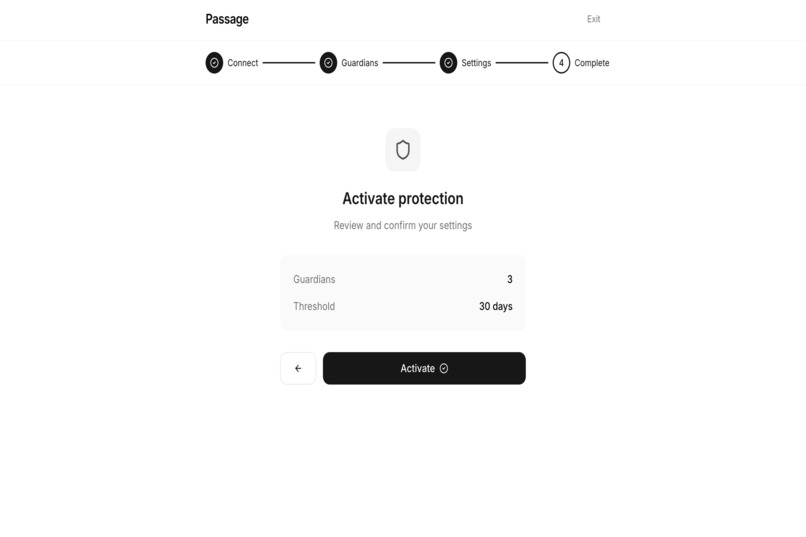
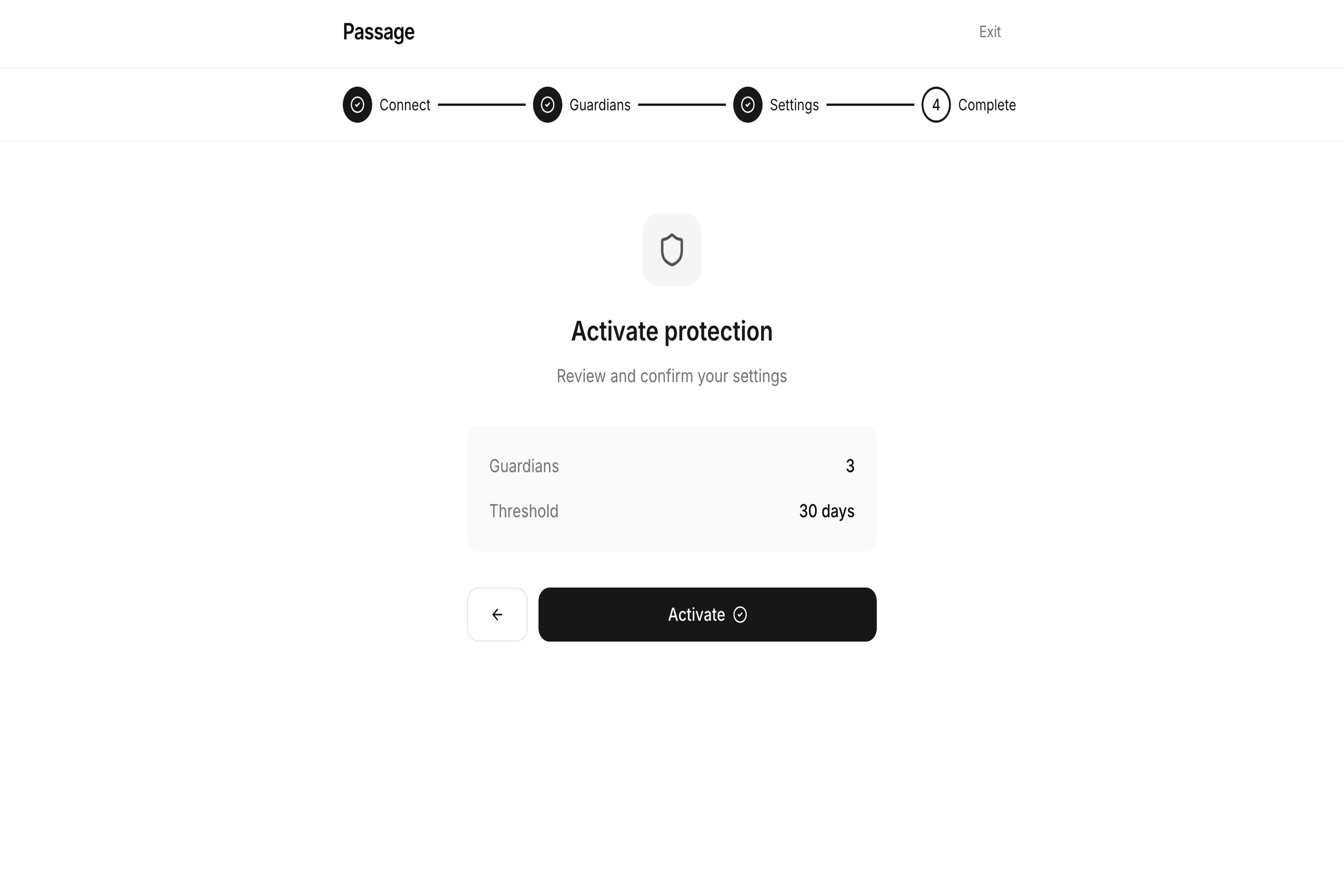
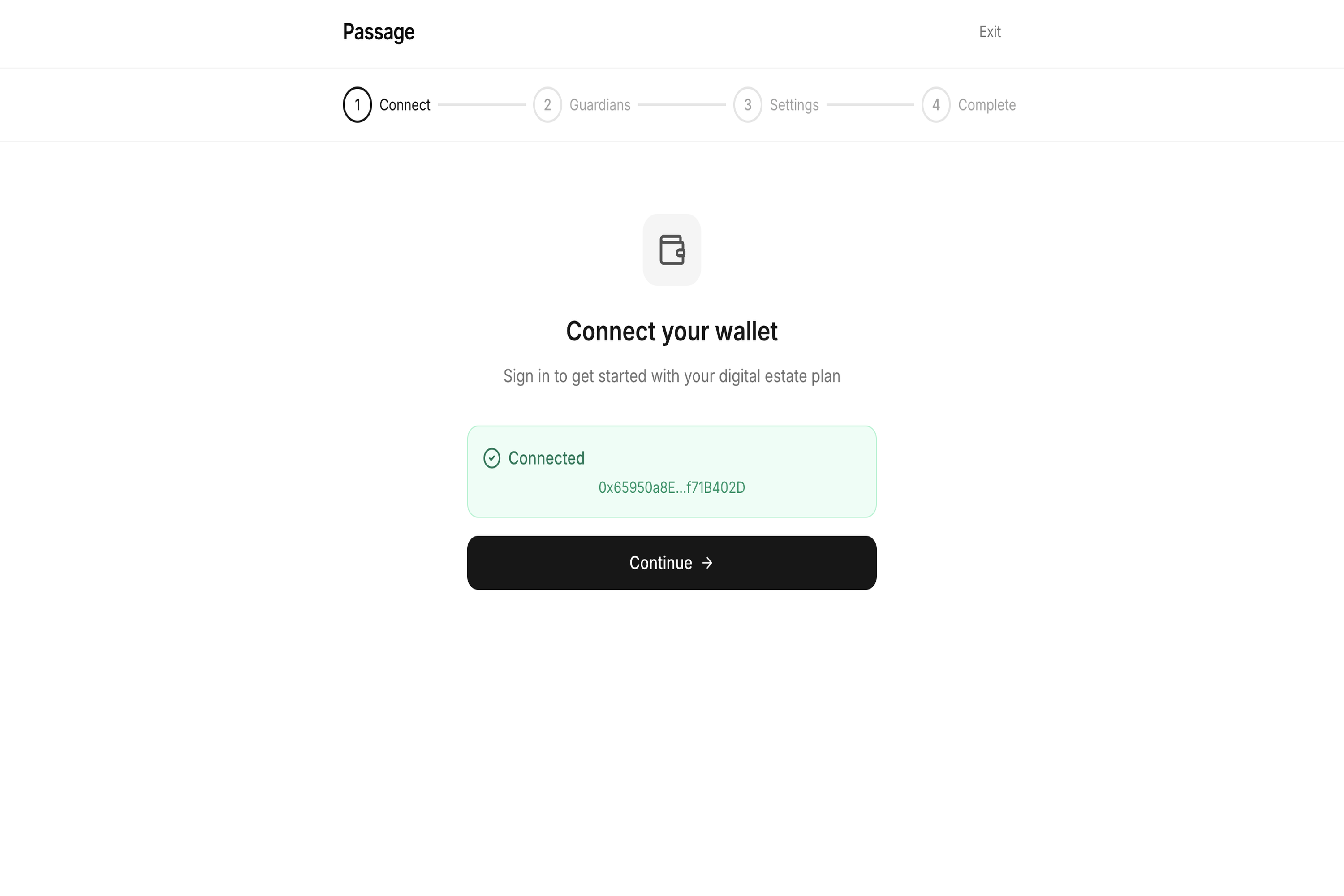
Step 4: Activate Protection
-
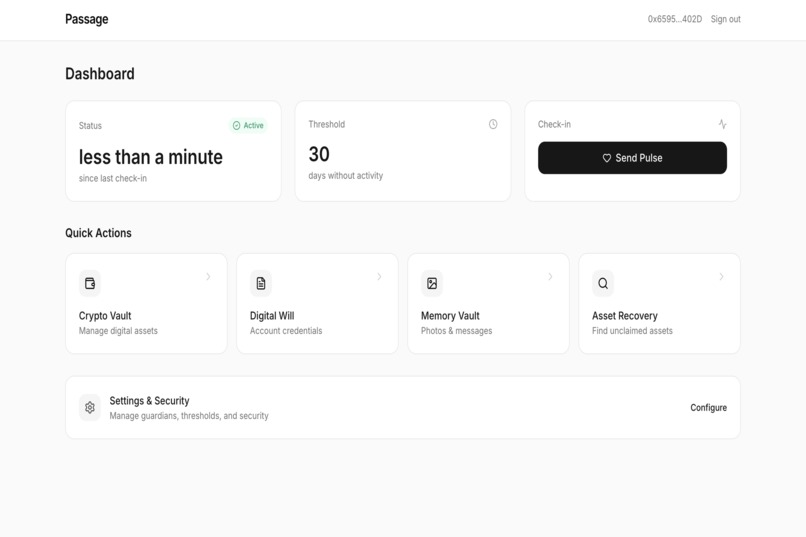
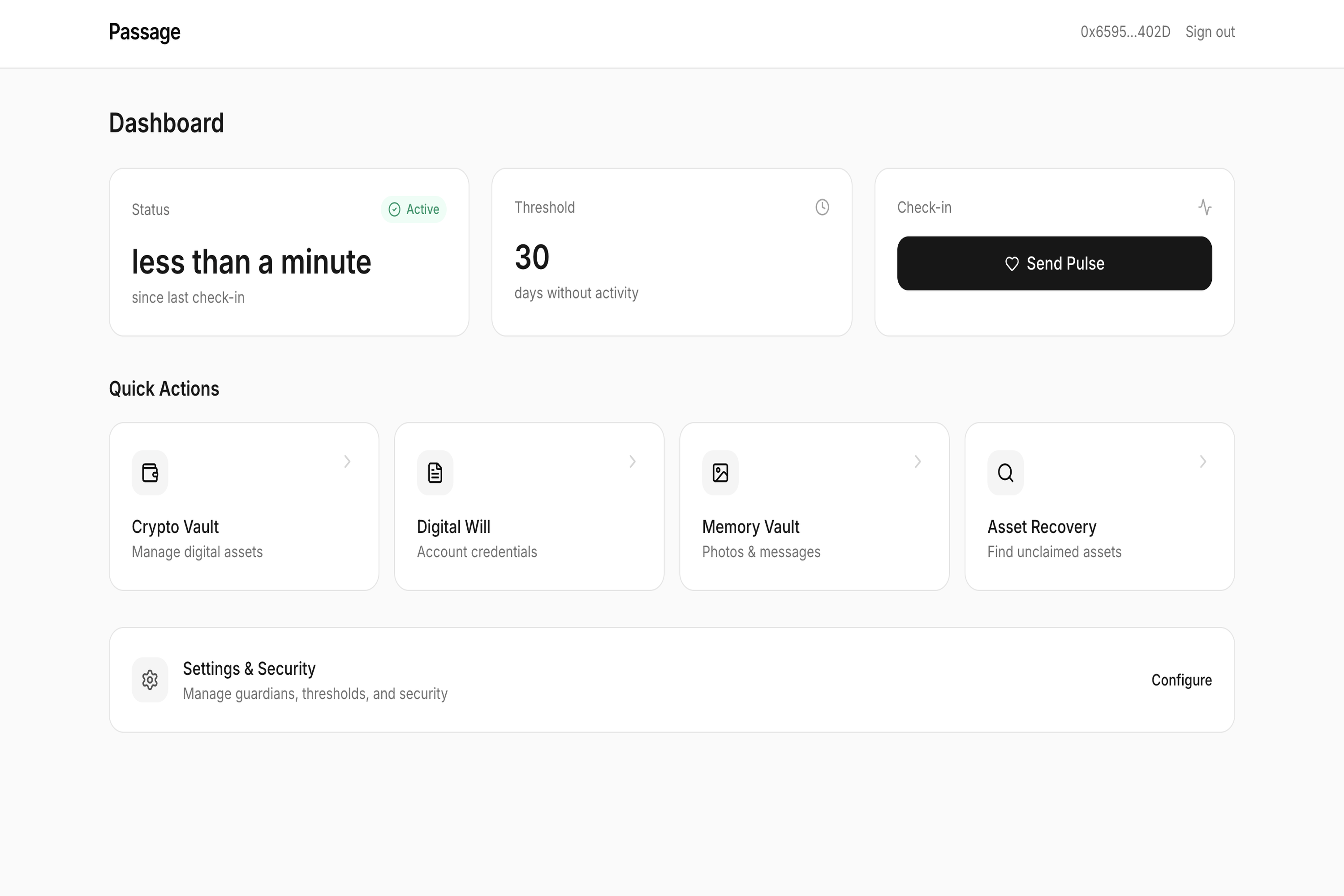
Dashboard after onboarding
-
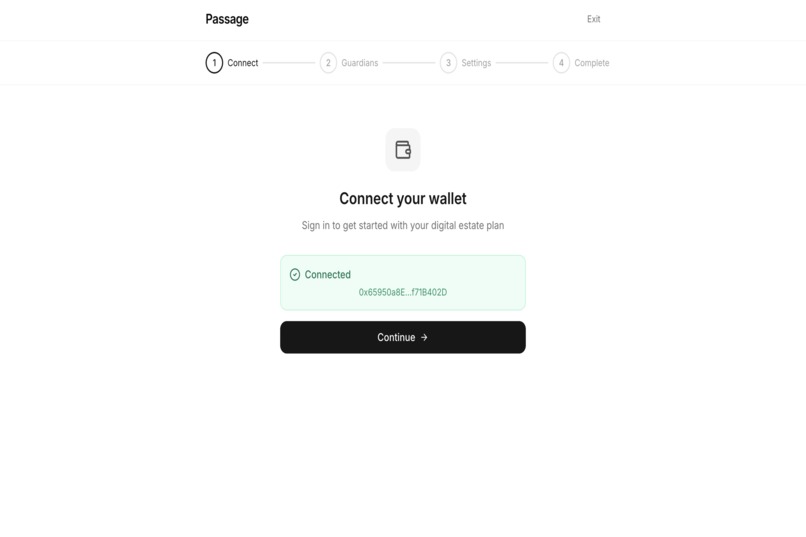
Onboarding Flow: step 1 - Wallet Connection
-
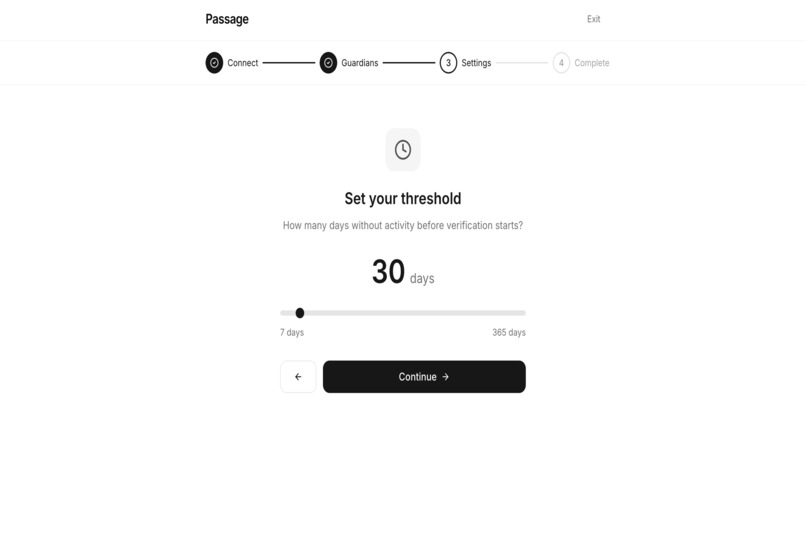
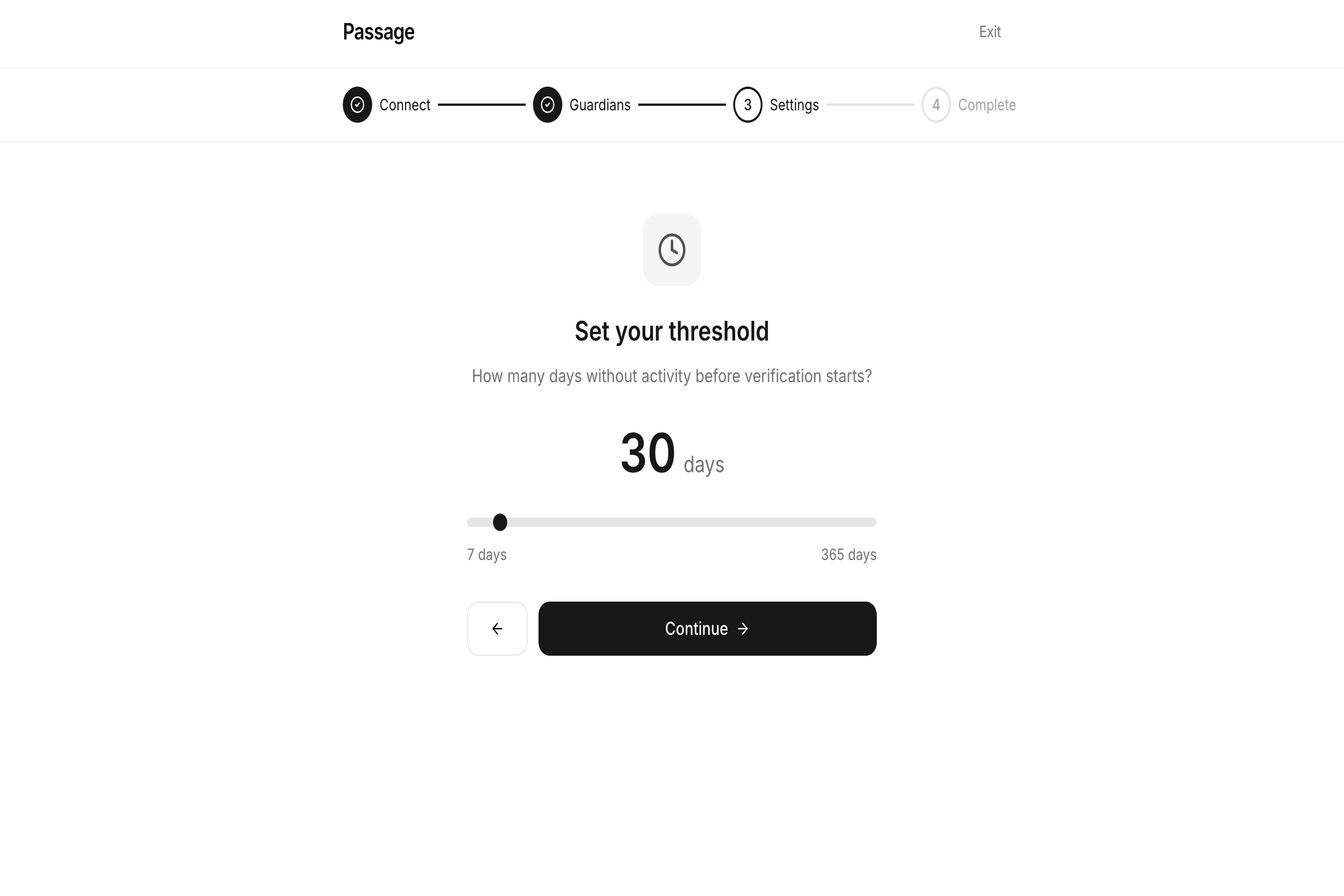
Step 3: Set Threshold
-
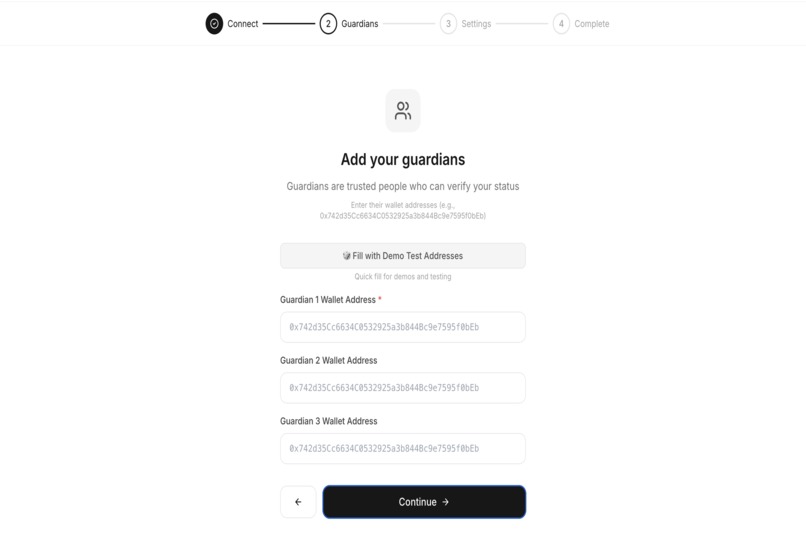
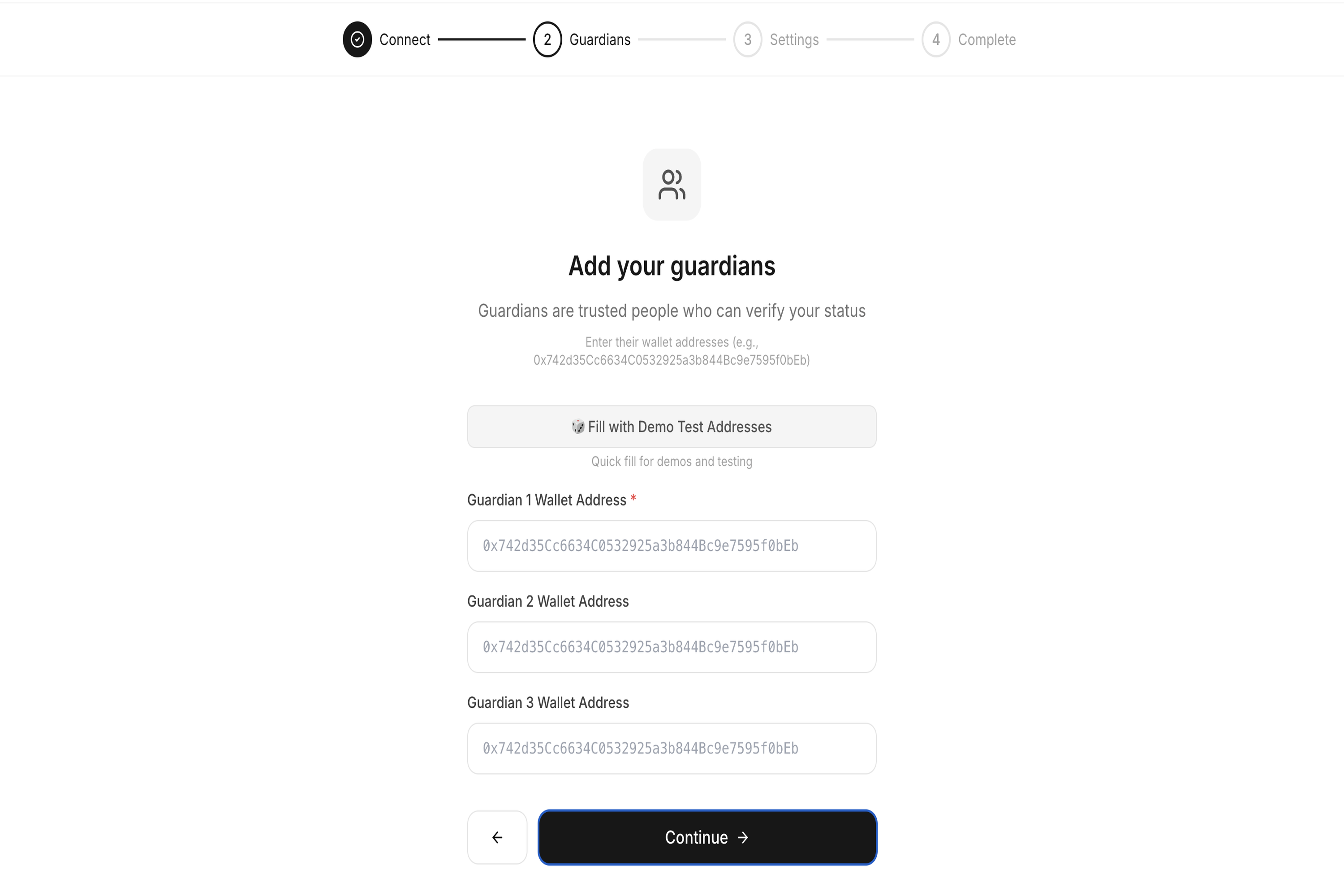
Step 2: Add Guardians
-
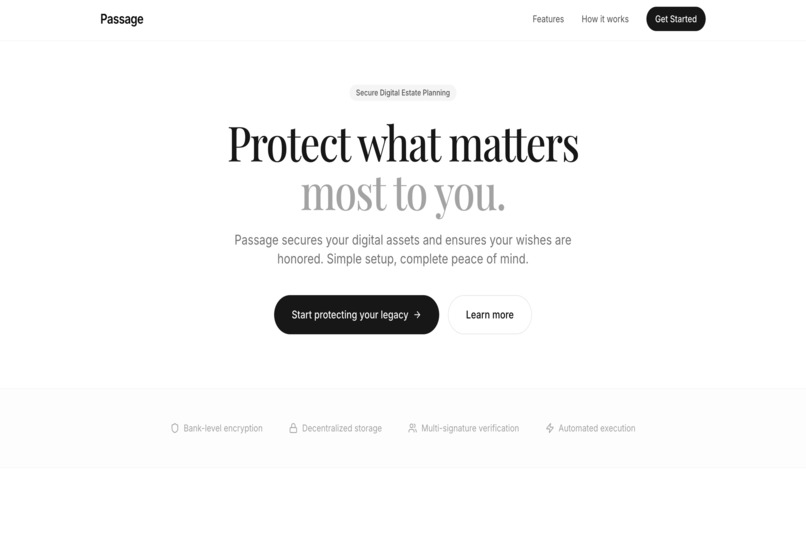
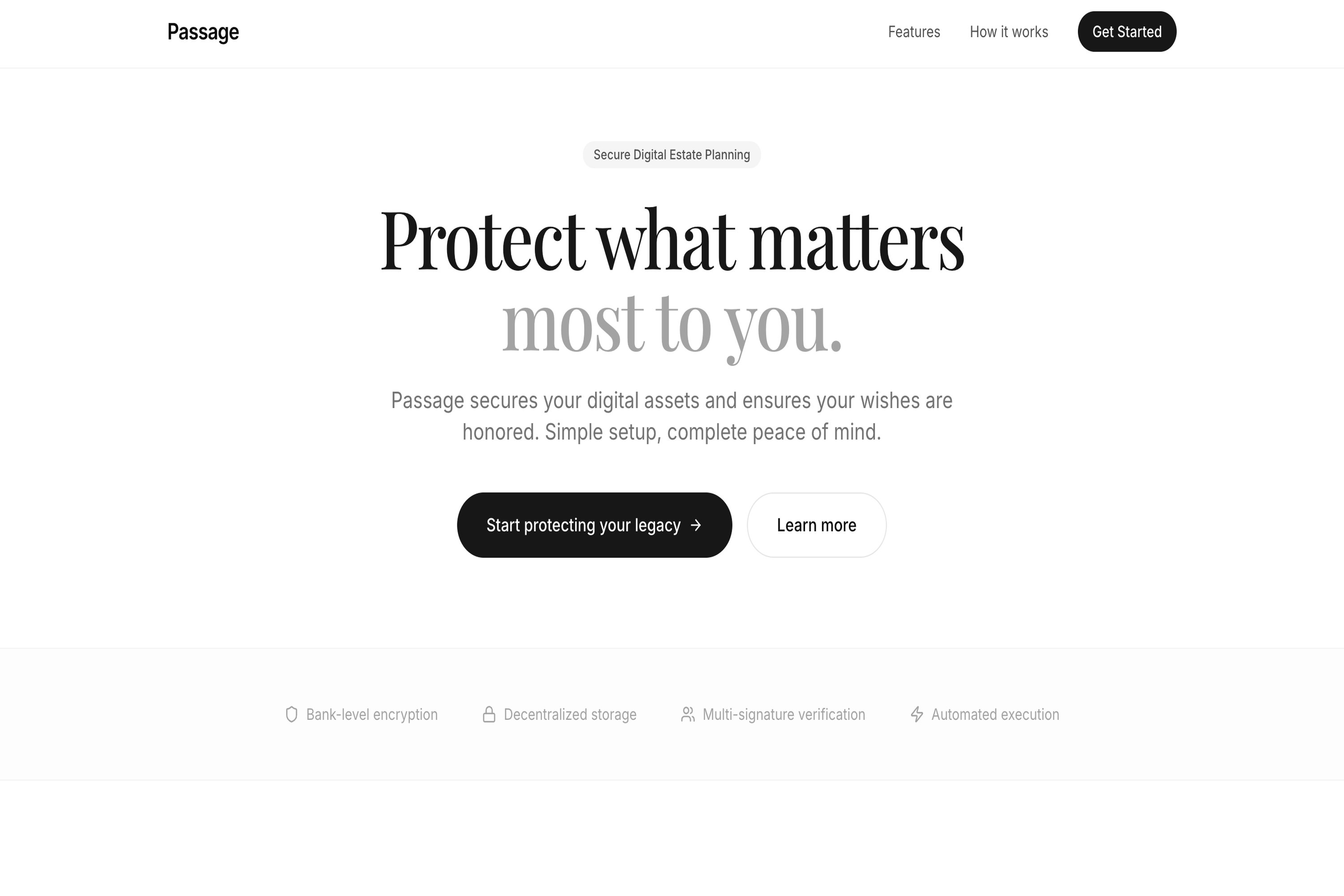
Landing page
About Passage
What Inspired Us
A few months ago, I was helping a friend deal with their father's passing. The process was heartbreaking - not just because of the loss, but because of how difficult it was to handle everything that came after. They spent months trying to figure out what accounts their dad had, which passwords were important, and what digital assets existed. Some things were lost forever because no one knew they existed.
That got me thinking: in our digital age, we have so much of our lives online - social media accounts, crypto wallets, cloud storage, email accounts. But when someone passes away, accessing these things becomes nearly impossible. Traditional estate planning doesn't really cover digital assets, and the legal process can take months or even years.
I wanted to build something that would give people peace of mind. Something that would automatically handle their digital estate if something happened to them, without requiring their family to go through the painful process of guessing passwords and filling out endless forms.
That's how Passage was born - a decentralized digital estate manager that acts like a "dead man's switch" for your digital life.
What We Learned
Building Passage taught us a lot about several technologies we hadn't worked with before.
Blockchain and Smart Contracts: This was our first real deep dive into Solidity and smart contract development. We learned how to write secure contracts that handle sensitive logic like estate transfers and heartbeat verification. The hardest part was making sure the contracts were secure - one small bug could mean someone's entire digital estate gets locked away forever.
AI Agents: We used browser-use, which is an AI agent that can actually control a web browser. This was fascinating - watching an AI navigate websites, fill out forms, and execute tasks just like a human would. We learned how to give the AI clear instructions and handle edge cases when websites change or things don't work as expected.
Encryption and Privacy: We integrated Lit Protocol for encrypting sensitive data like passwords and account information. Learning about threshold encryption and how to securely store data that can only be decrypted under specific conditions was eye-opening. Privacy isn't just about hiding data - it's about controlling who can access it and when.
Decentralized Infrastructure: We used Chainlink Functions to verify user activity through external APIs in a decentralized way. This was important because we needed a trustless way to check if someone was still active without relying on a single server that could go down or be compromised.
How We Built It
Passage is built in three main parts that work together:
The Smart Contracts (Solidity + Hardhat): This is the heart of the system. We built a "Dead Man's Switch" contract that tracks when users last checked in. If someone doesn't send a "heartbeat" signal within a certain time period, the contract automatically triggers the estate transfer process. We also added a guardian system where trusted people can confirm if someone has passed away, adding an extra layer of verification.
The Backend (Python + FastAPI): This handles the AI agent that actually executes the digital will. When the smart contract detects that someone hasn't checked in, it triggers our backend. The AI agent uses browser-use to log into accounts, transfer assets, send messages, or do whatever the user specified in their will. We also built a recovery agent that searches unclaimed property databases to find assets the user might have forgotten about.
The Frontend (Next.js + TypeScript): This is where users interact with Passage. They can create their digital estate, add accounts and instructions, set up guardians, and see the status of their estate. We made it simple and intuitive because estate planning shouldn't require a computer science degree.
The whole system is connected through WebSockets so users get real-time updates, and everything is encrypted using Lit Protocol so sensitive information stays private until it's needed.
The Challenges We Faced
Building Passage wasn't easy. Here are some of the biggest challenges we ran into:
Making AI Agents Reliable: The AI agent needs to work with real websites that change all the time. A website might update their login page, or add a new security step, and suddenly our agent can't log in anymore. We spent a lot of time building error handling and retry logic. When something fails, we take screenshots so we can debug what went wrong. We also built a system that can handle two-factor authentication automatically using TOTP codes.
Smart Contract Security: Writing smart contracts is scary because once they're deployed, you can't fix bugs easily. We spent weeks reviewing our code, thinking about edge cases, and testing different scenarios. What if someone tries to game the system? What if a guardian turns malicious? What if the Chainlink oracle fails? We had to think through all these possibilities.
Handling Sensitive Data: Storing passwords and account information securely is a huge responsibility. We can't just put them in a database - they need to be encrypted in a way that only the right people can decrypt them at the right time. Integrating Lit Protocol was complex, and we had to make sure we understood how the encryption and decryption process worked.
Blockchain Integration: Connecting everything to the blockchain was trickier than we expected. We had to set up listeners that watch for events on the smart contract, handle network issues, and make sure transactions go through reliably. Sometimes transactions fail or get stuck, and we needed to build retry mechanisms.
User Experience: Estate planning is already stressful, so we wanted to make Passage as simple as possible. But there's a lot of complexity under the hood - encryption, blockchain transactions, AI agents. Finding the right balance between simplicity and functionality was a constant challenge.
Testing Everything: Testing a system that involves blockchain, AI agents, and real websites is really hard. We couldn't just write unit tests - we had to test the whole flow end-to-end. We built mock websites to test the AI agent, used testnets for blockchain testing, and created demo modes where time passes 100x faster so we could test the heartbeat system without waiting days.
Despite all these challenges, we're really proud of what we built. Passage gives people a way to protect their digital legacy and make sure their loved ones don't have to go through the same painful process we saw our friend experience.
Built With
- axios
- celery
- docker
- ethereum
- fastapi
- gpt-4
- hardhat
- ipfs
- javascript
- langchain
- next.js
- openai
- playwright
- postgresql
- privy
- pydantic
- pyotp
- python
- react
- redis
- resend
- sendgrid
- solidity
- tailwind
- typescript
- uvicorn
- viem
- wagmi
- web3.py
- websockets

Log in or sign up for Devpost to join the conversation.