-
-
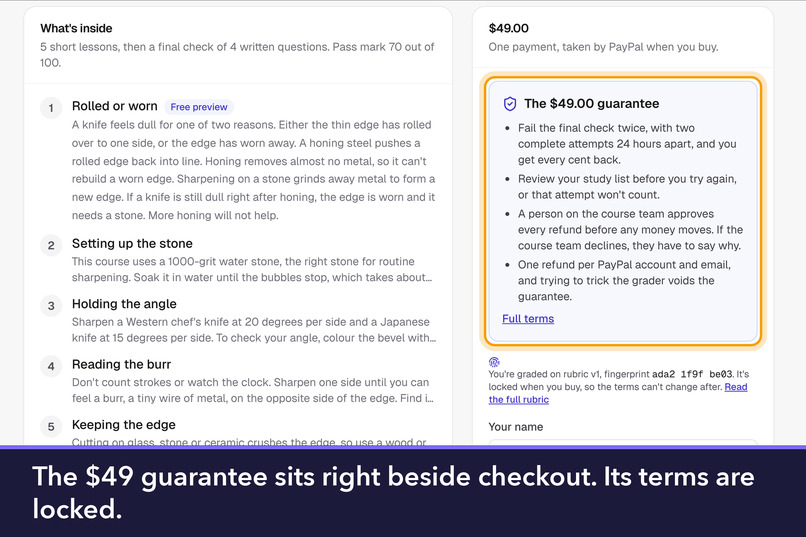
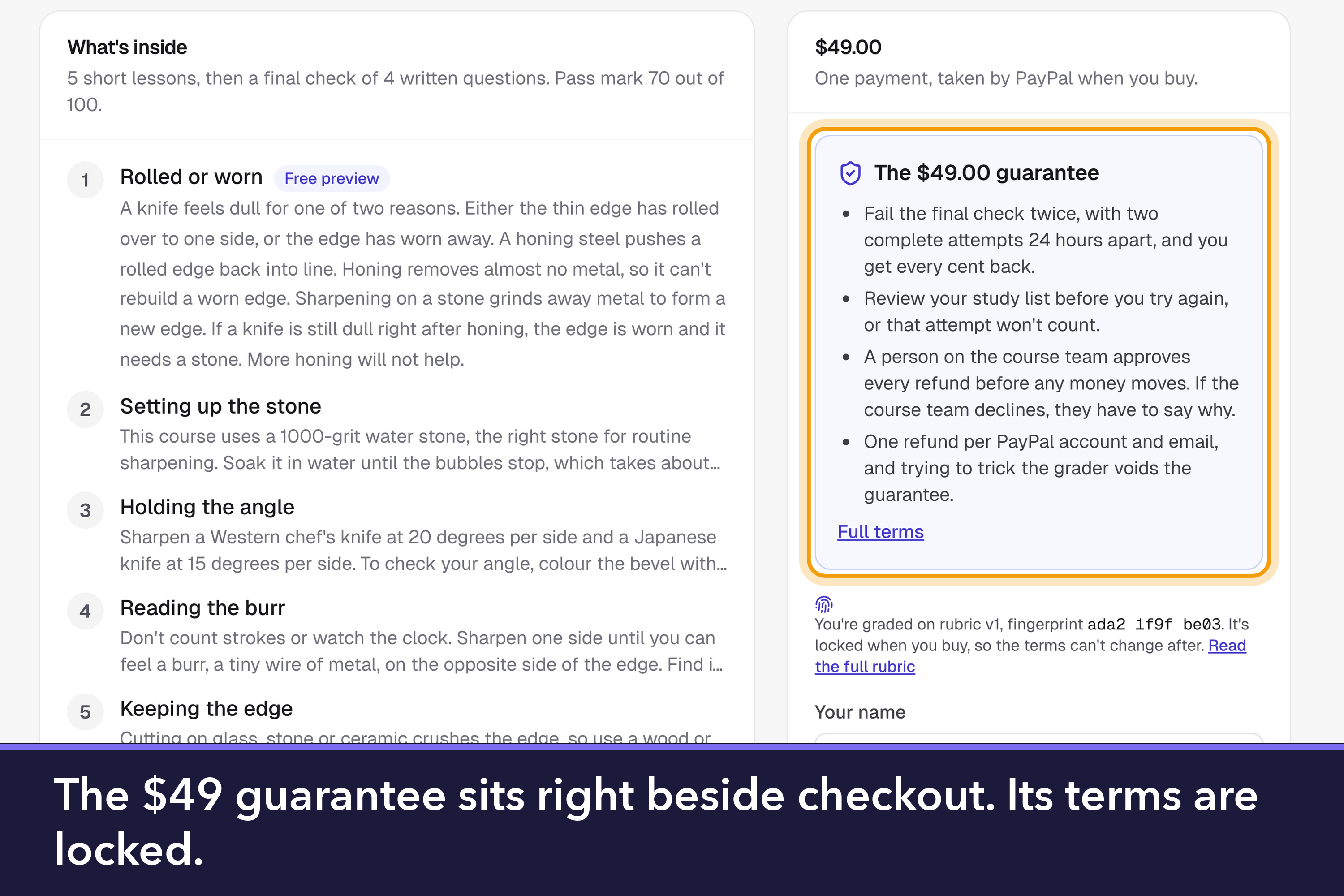
The $49 guarantee sits right beside checkout. Its terms are locked.
-
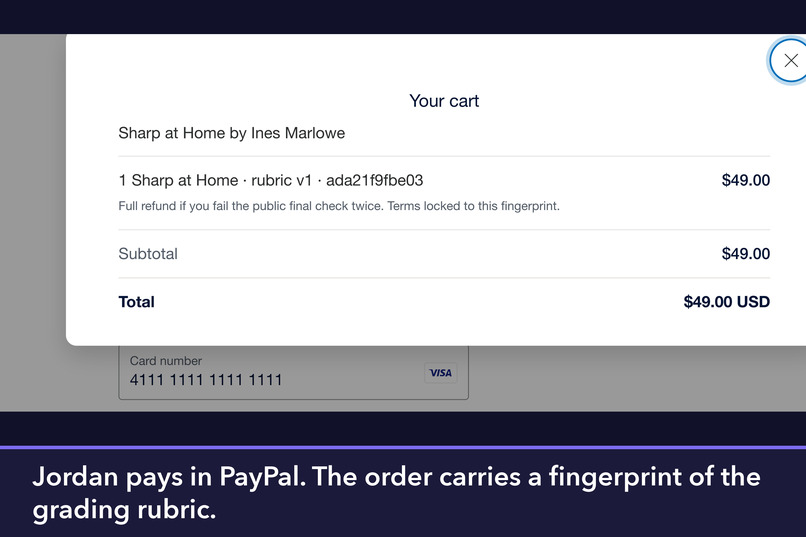
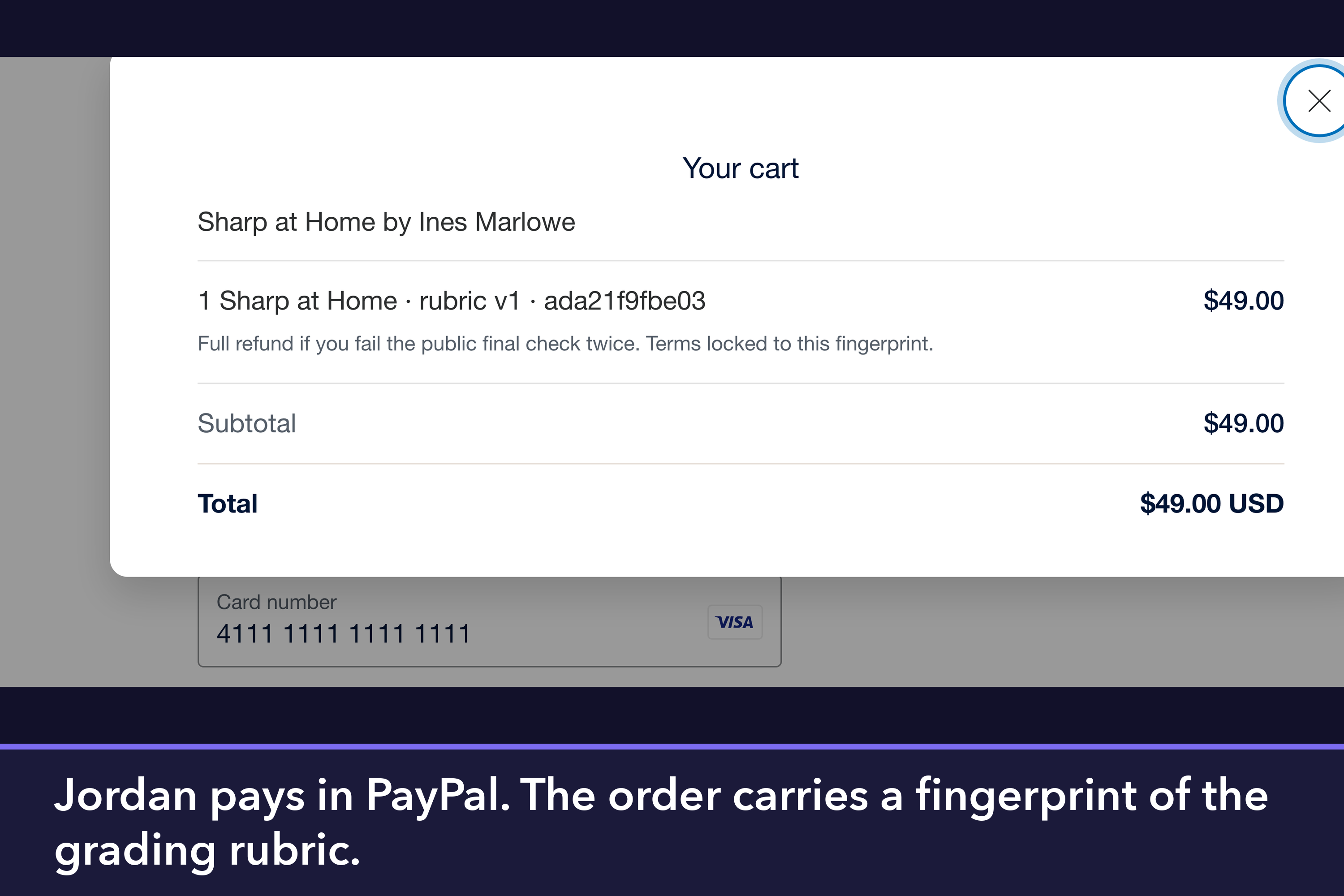
Jordan pays in PayPal. The order carries a fingerprint of the grading rubric.
-
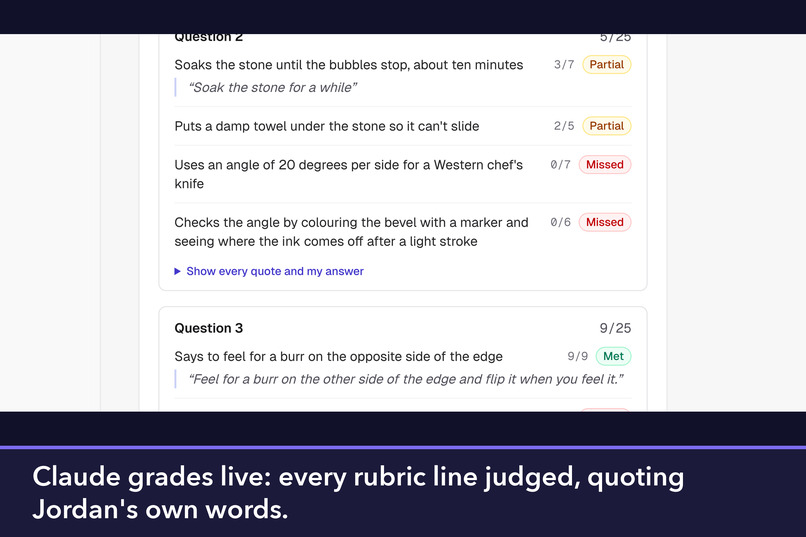
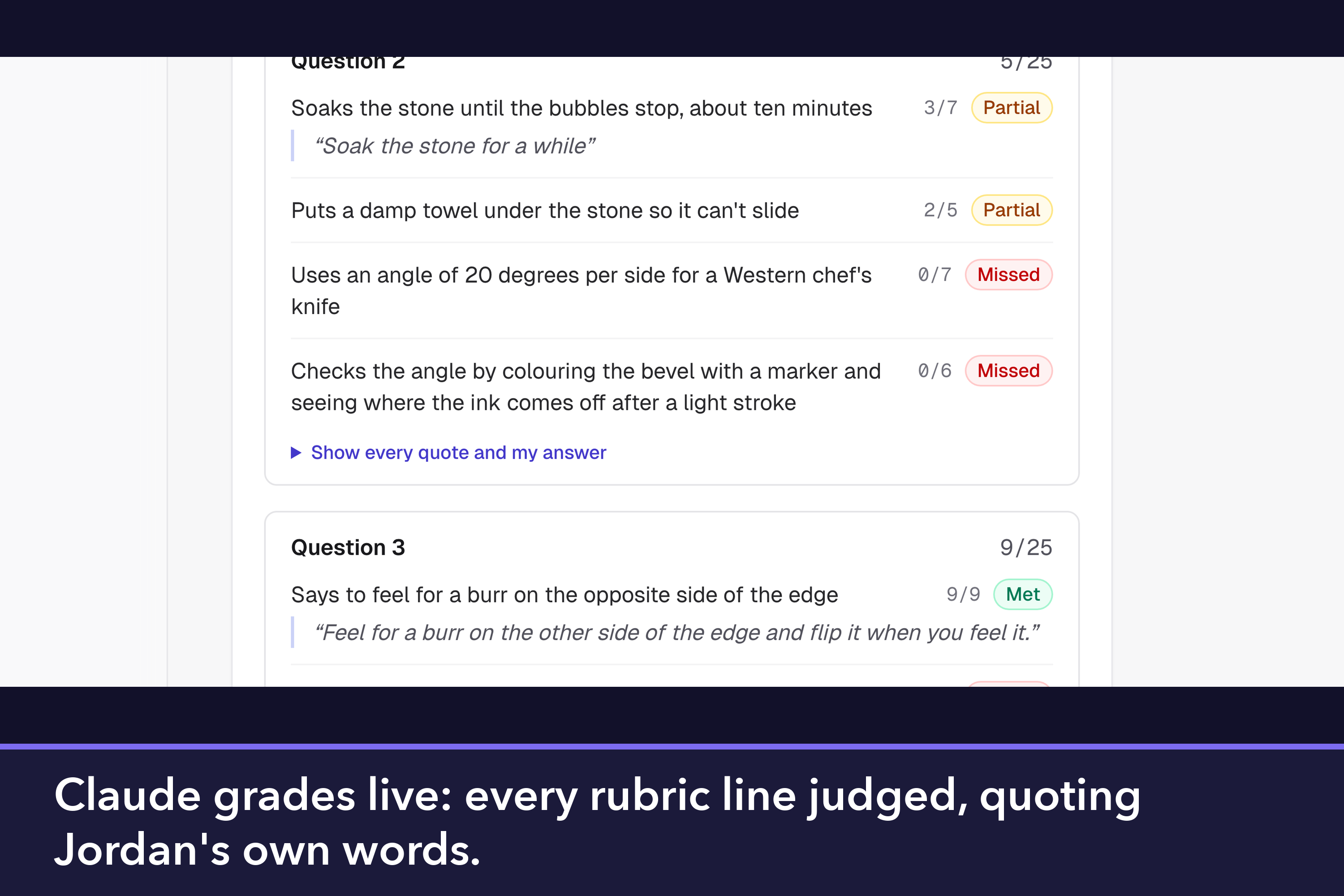
Claude grades live: every rubric line judged, quoting Jordan's own words.
-
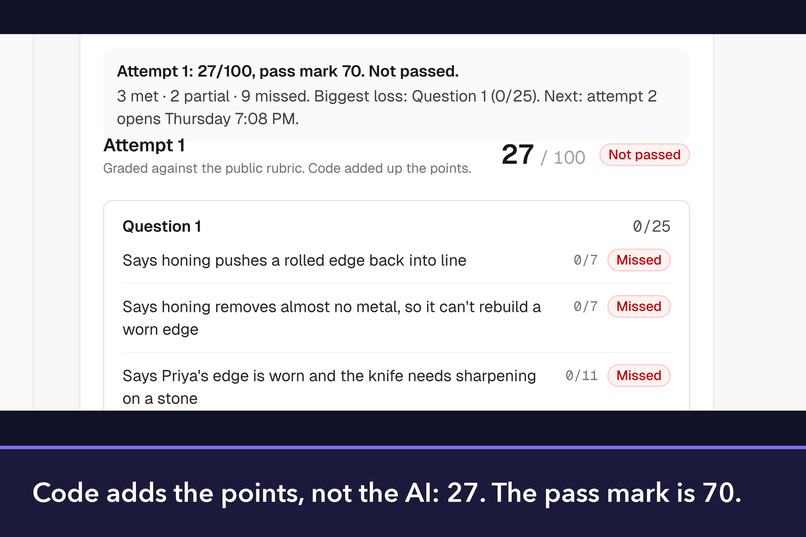
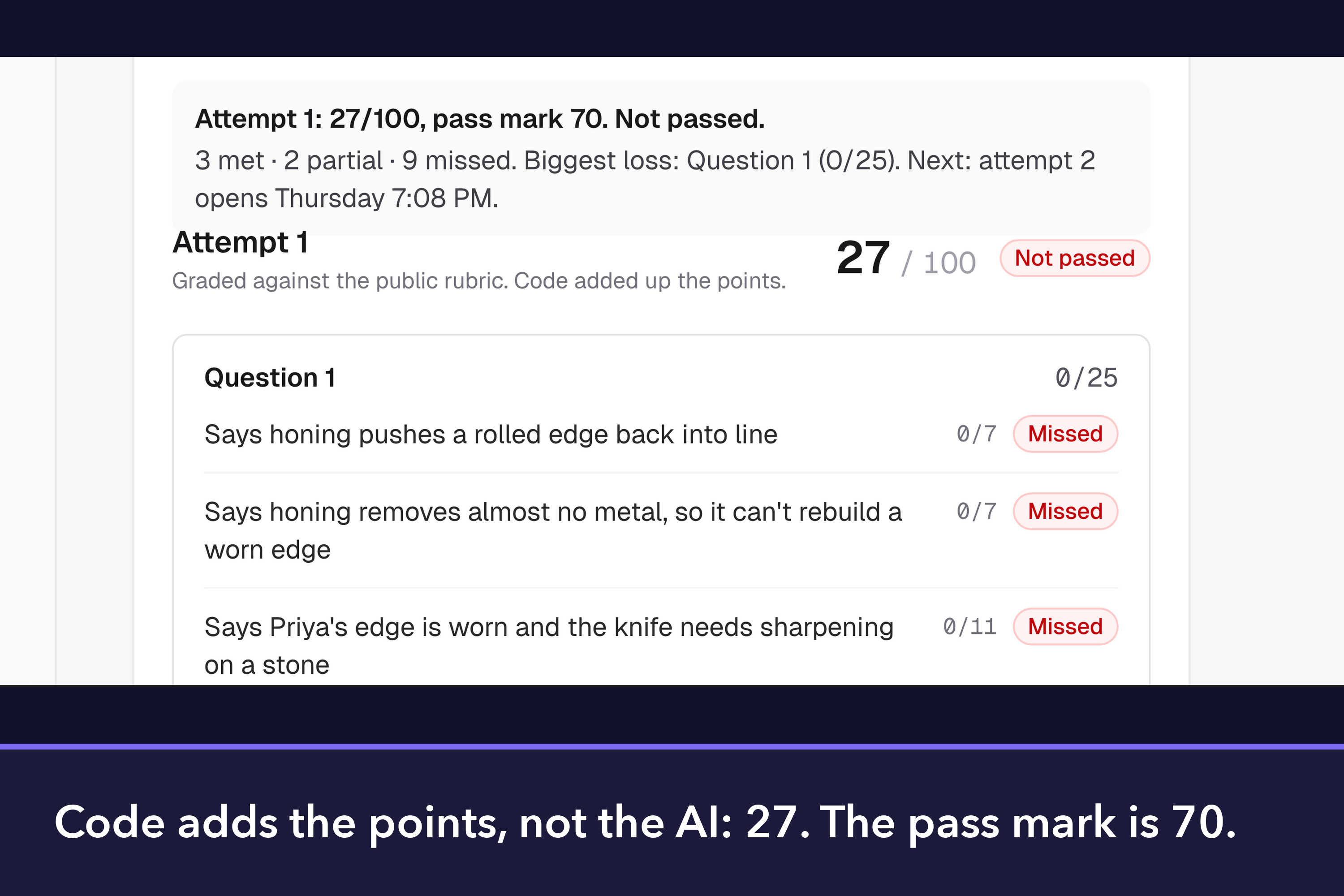
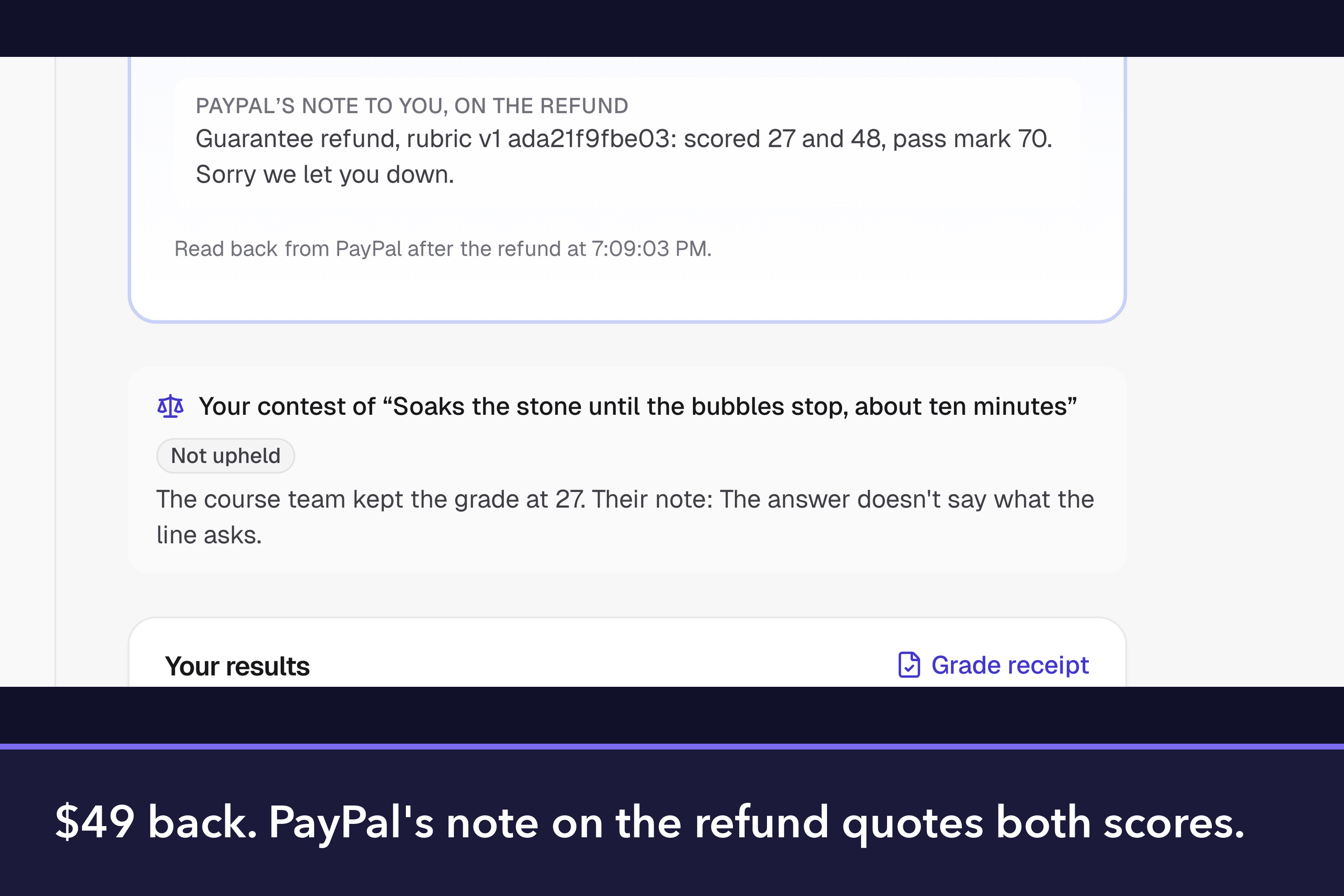
Code adds the points, not the AI: 27. The pass mark is 70.
-
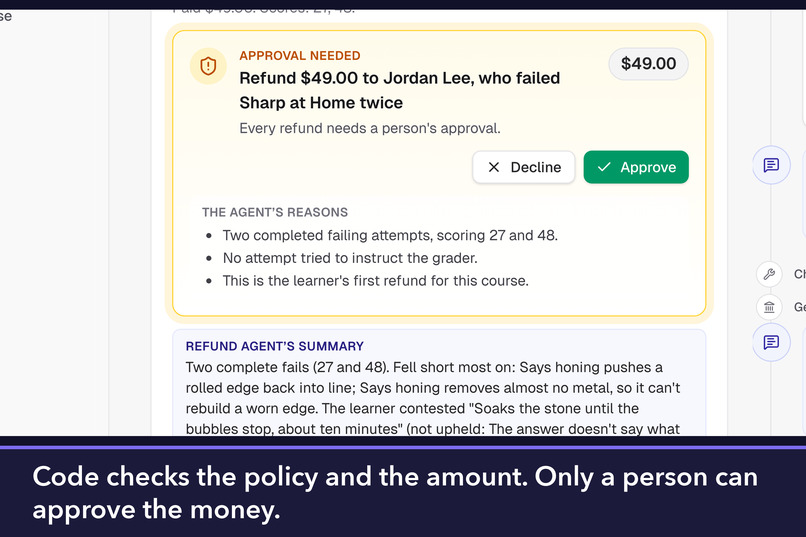
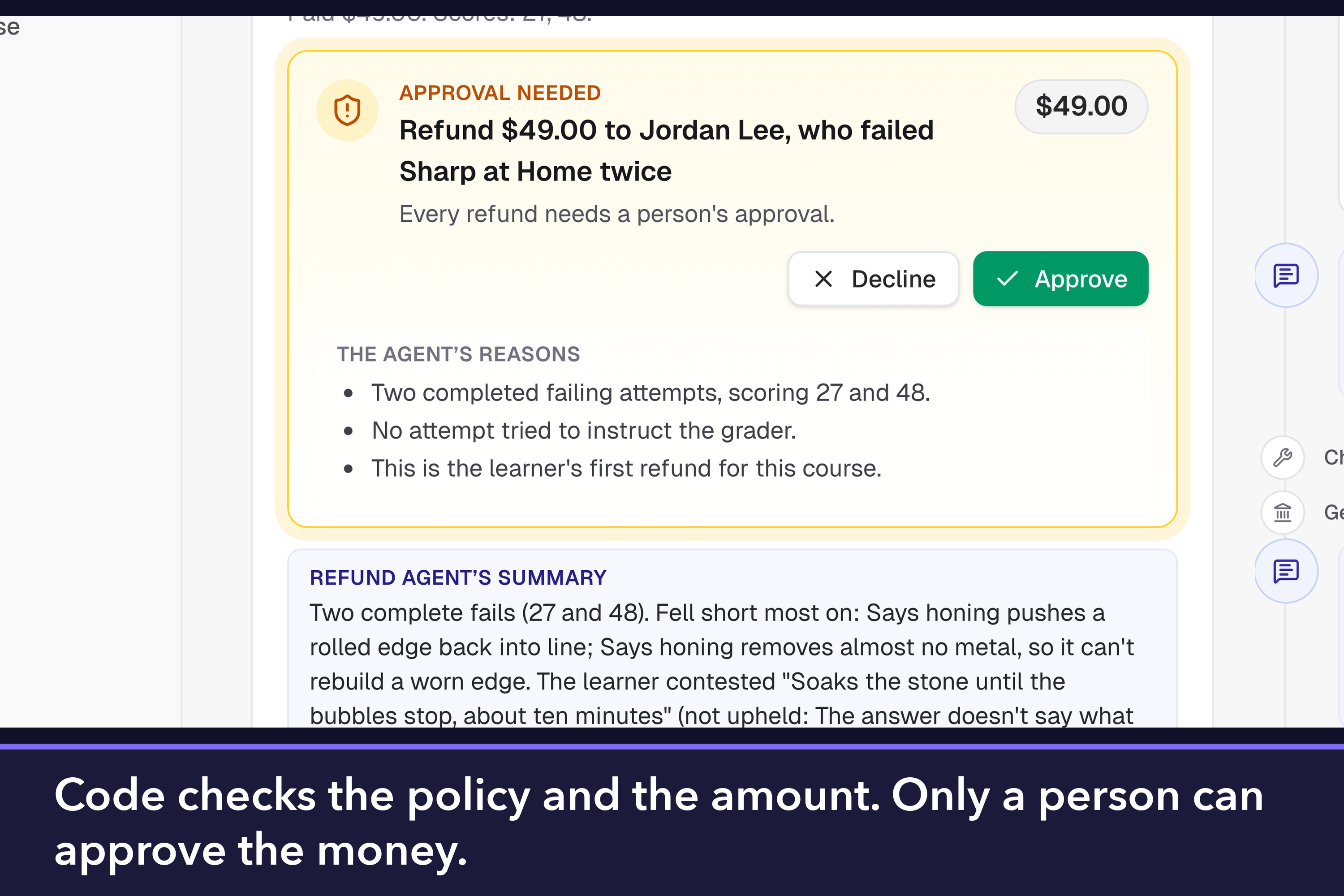
Code checks the policy and the amount. Only a person can approve the money.
-
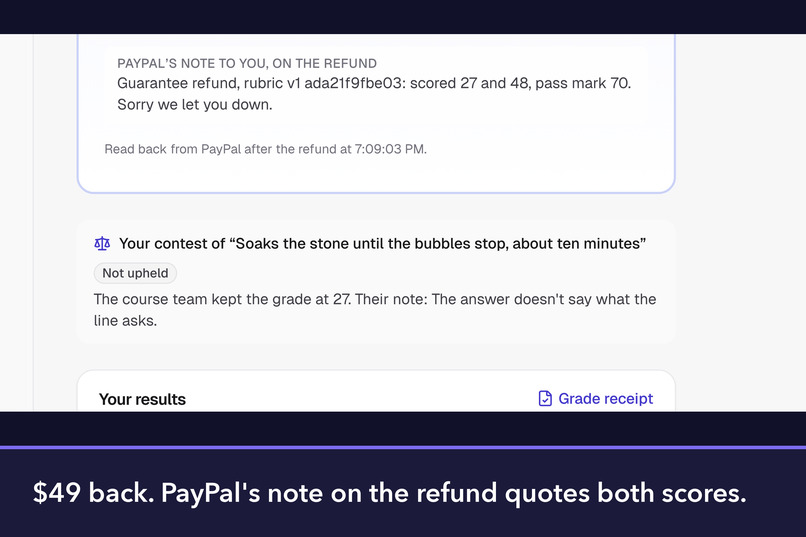
$49 back. PayPal's note on the refund quotes both scores.
-
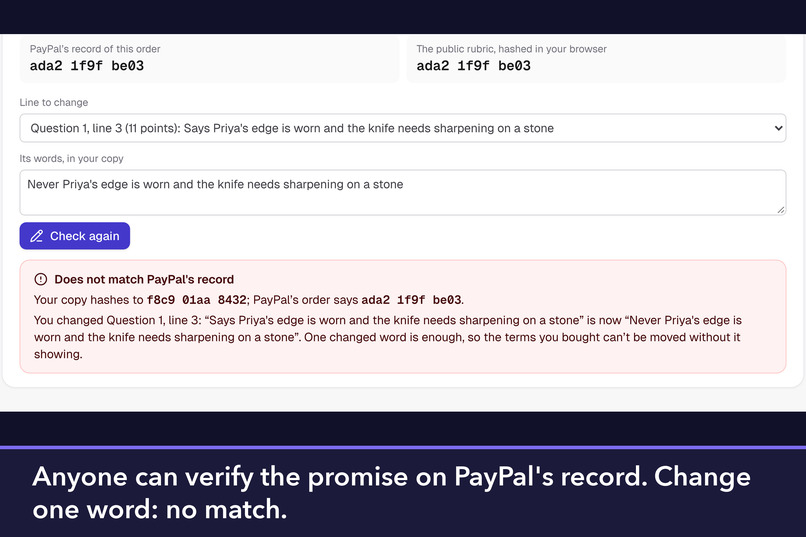
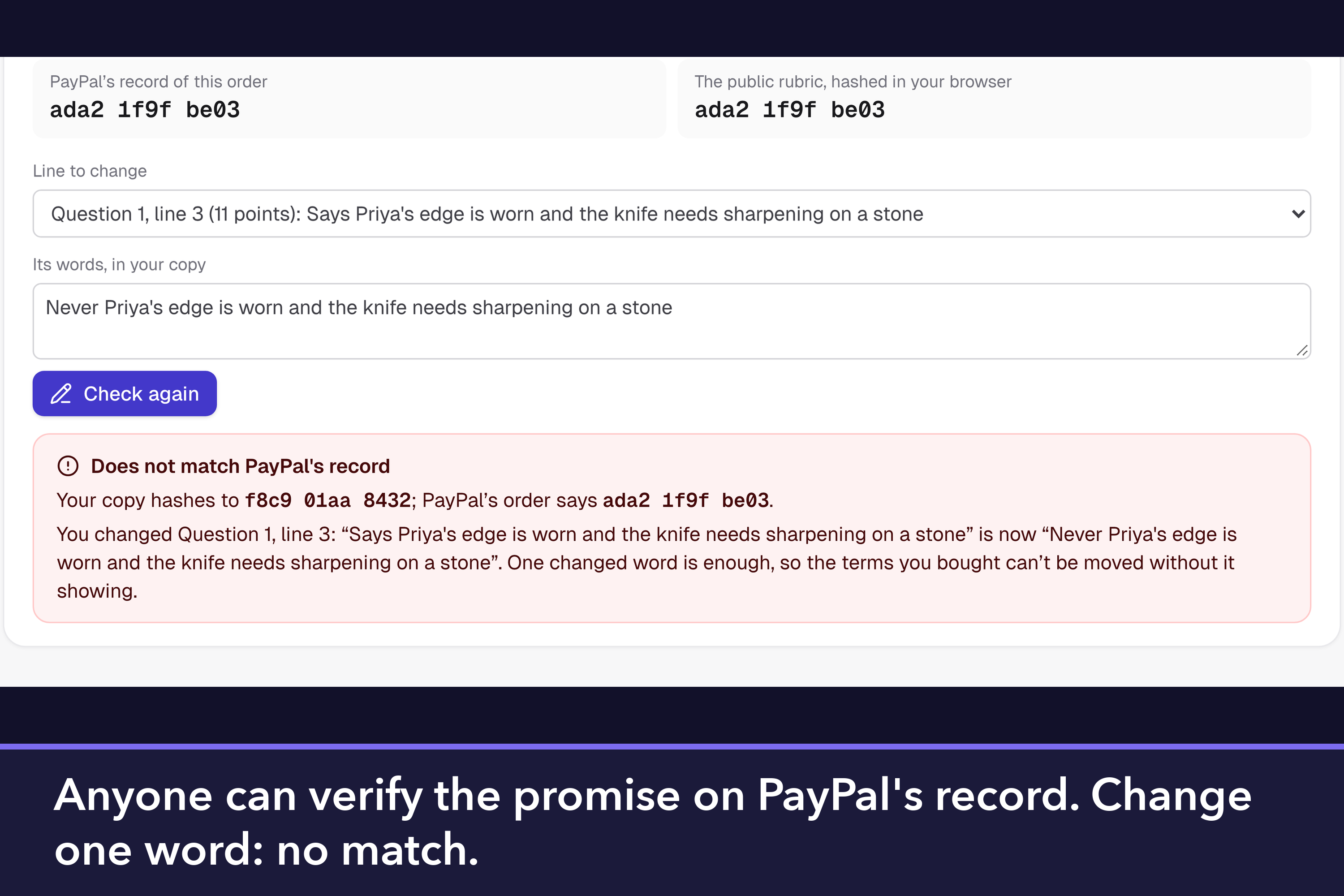
Anyone can verify the promise on PayPal's record. Change one word: no match.
Inspiration
A US regulator found that a coding school's advertised job placement was closer to half than the 86% it claimed. Course promises are hard to check before you pay, and buyers describe refunds denied, stalled or changed after purchase. We wanted a guarantee with terms locked before you pay, a trigger that is the course's own public rubric, and a refund that a person approves.
What it does
A learner buys the sample course, Sharp at Home, for $49, with the guarantee beside the pay button. They take the final check: four written questions. They fall short, study the lines they missed, try again, and fall short again. The refund goes to a person, PayPal pays it, and the learner sees the refund id. Step by step:
- Claude grades each answer against the public rubric, point by point, quoting the learner's words. Code adds the points. The pass mark is 70.
- A learner can contest one rubric line once, and a person rules on it.
- After a second fail, a refund agent writes a note and proposes the refund. It cannot pay.
- A person on the team approves, and PayPal pays.
- A public
/verifypage reads the PayPal order back and shows whether its fingerprint matches the rubric on sale. - A creator can publish their own course on
/creator, with the same guarantee.
How we built it
All four of our entries share an open starter kit: Next.js, the PayPal Agent Toolkit behind a Guard that enforces money limits and human approval, and a timeline of every PayPal call. This entry's own work is:
- the rubric, locked and fingerprinted at purchase
- the sealed grader and its scoring
- the refund rule in code and the refund agent
- the contest
/rubric,/cohort,/creatorand/verify
PayPal runs on the Server SDK, written by following the APIMatic PayPal Context Plugin: Orders v2 with the rubric version and fingerprint on the order's item line and invoice_id, Payments v2 refunds with a note quoting both scores, webhooks and Disputes v1. Claude Sonnet 5.5 grades, and Claude Haiku 5.5 is the refund agent.
The PayPal ledger and the cohort tables are AG Grid (Community) tables, and the app is hosted on Render.
Challenges we ran into
- Grading near the pass mark is noisy. From 66 to 73, the sealed method grades twice more and takes the median, and 69 or 70 goes to a person.
- Learners could fail on purpose, so six rules stop that, including two completed fails, no near-copies and one refund per PayPal payer.
- A sandbox refund can read PENDING until the seller balance covers it, so the app shows PayPal's status as is.
Accomplishments that we're proud of
- Change one word of the rubric and the fingerprint no longer matches. Anyone can check it against PayPal's record of the order.
- The grader was tested on 20 new attempts it had never seen. No attempt both blind judges failed was ever passed. All 3 attempts that tried to instruct the grader were flagged.
- Those attempts were written by Claude, so real learners will be messier.
What we learned
Writing the terms onto PayPal's own records makes a promise checkable by anyone. The model suggests and a person decides.
What's next
Paying creators out, real learners to test the grader on, and a review for live mode.
Built With
- ag-grid
- anthropic-sdk
- apimatic
- claude
- claude-haiku-5.5
- claude-sonnet-5.5
- next.js
- paypal
- paypal-agent-toolkit
- paypal-disputes
- paypal-js-sdk
- paypal-orders-v2
- paypal-payments-v2
- paypal-server-sdk
- paypal-webhooks
- react
- render
- tailwindcss
- typescript
- zod
