-
-
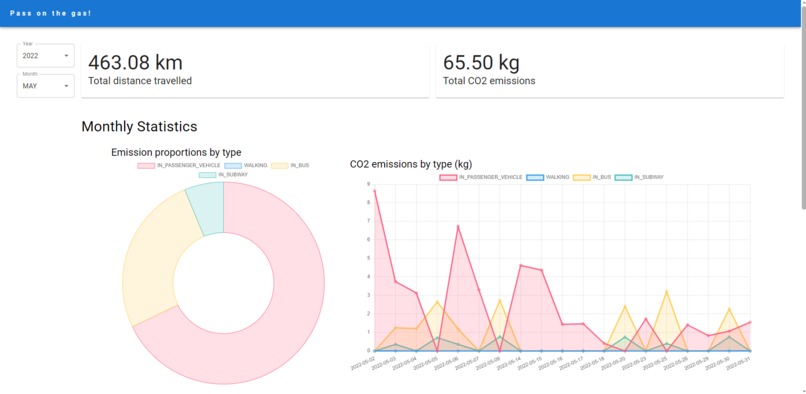
Dashboard
-
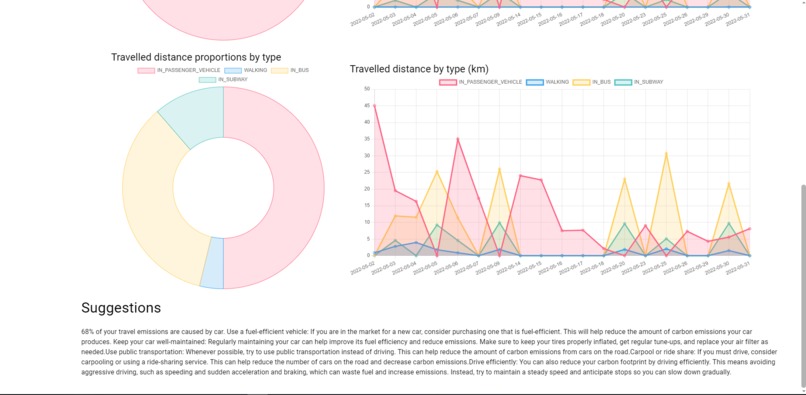
Dashboard
-
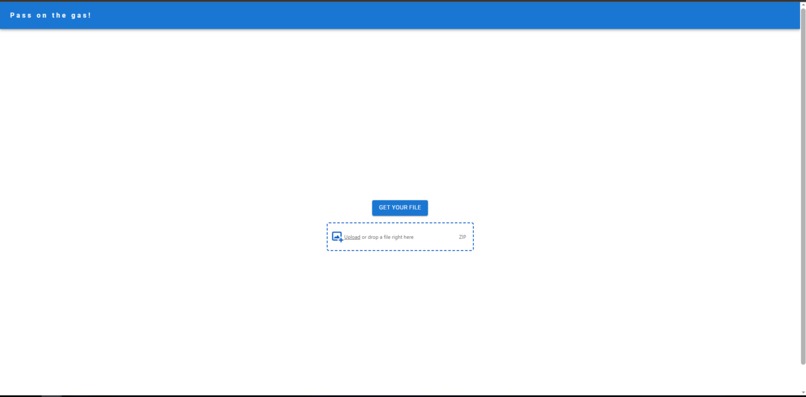
Upload page
-
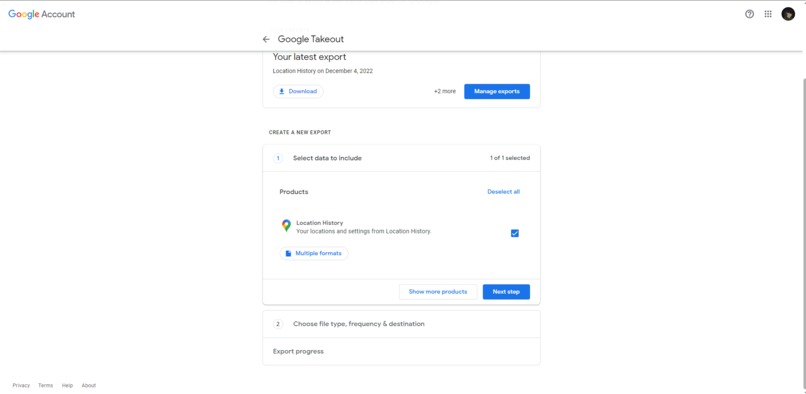
Where to download location data
Inspiration
As very hands-on people, we believe the best way to make change is is to put your head down, and work on making tangible solutions to specific problems. Many promising projects and organizations vow to fight climate, but do very little other than promising a lot and using buzzwords to give the impression that progress is being made.
As part of the generation who will have to live with the consequences of the present's actions, we cannot afford to just sit around and wait for the ones at the top to start acting. There are always other incentives that may divert their attention from the climate crisis. Instead of relying on these entities to act, we should band together and fight for nature collectively. Everyone can contribute to fight climate change, however big or small the impact. As long as concrete progress is being made, we are moving in the right direction.
The specific issue we want to tackle is the difficult access to emission data caused by transportation. Transportation is a large part of our daily lives and should be one of the first areas that we seek to improve. Everybody uses transportation, so everyone can also do a part in making it greener by reducing their emissions. However, we saw that it wasn't very accessible to the average person to track their travel related carbon emissions. Most tools that currently exist are based on a short questionnaire that only gives a very vague range of the amount of CO2 being produced. Without concrete numbers and data, it is difficult to set specfic and objective goals. How can one expect to reduce their footprint, if they do not know what it is?
What it does
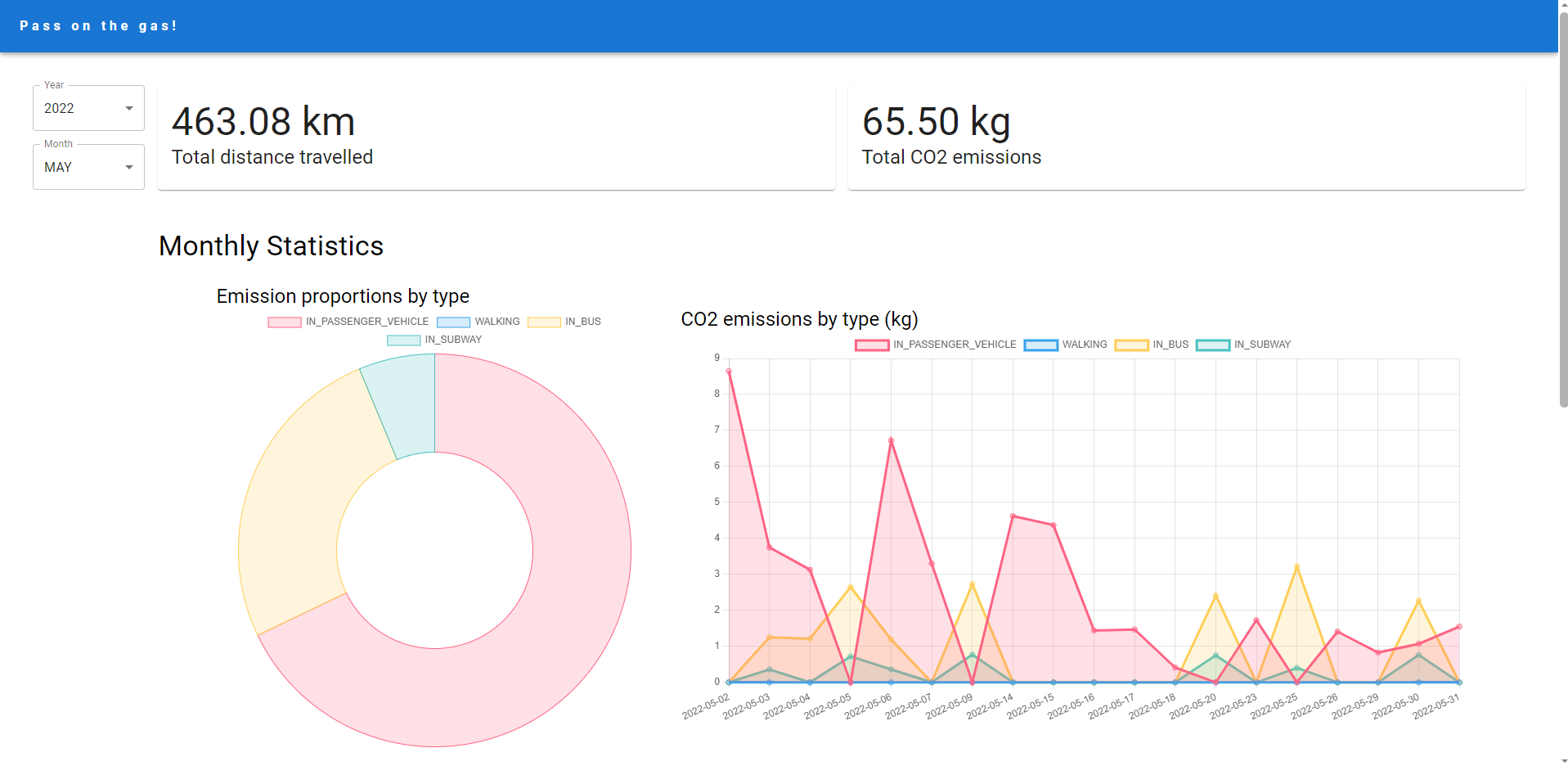
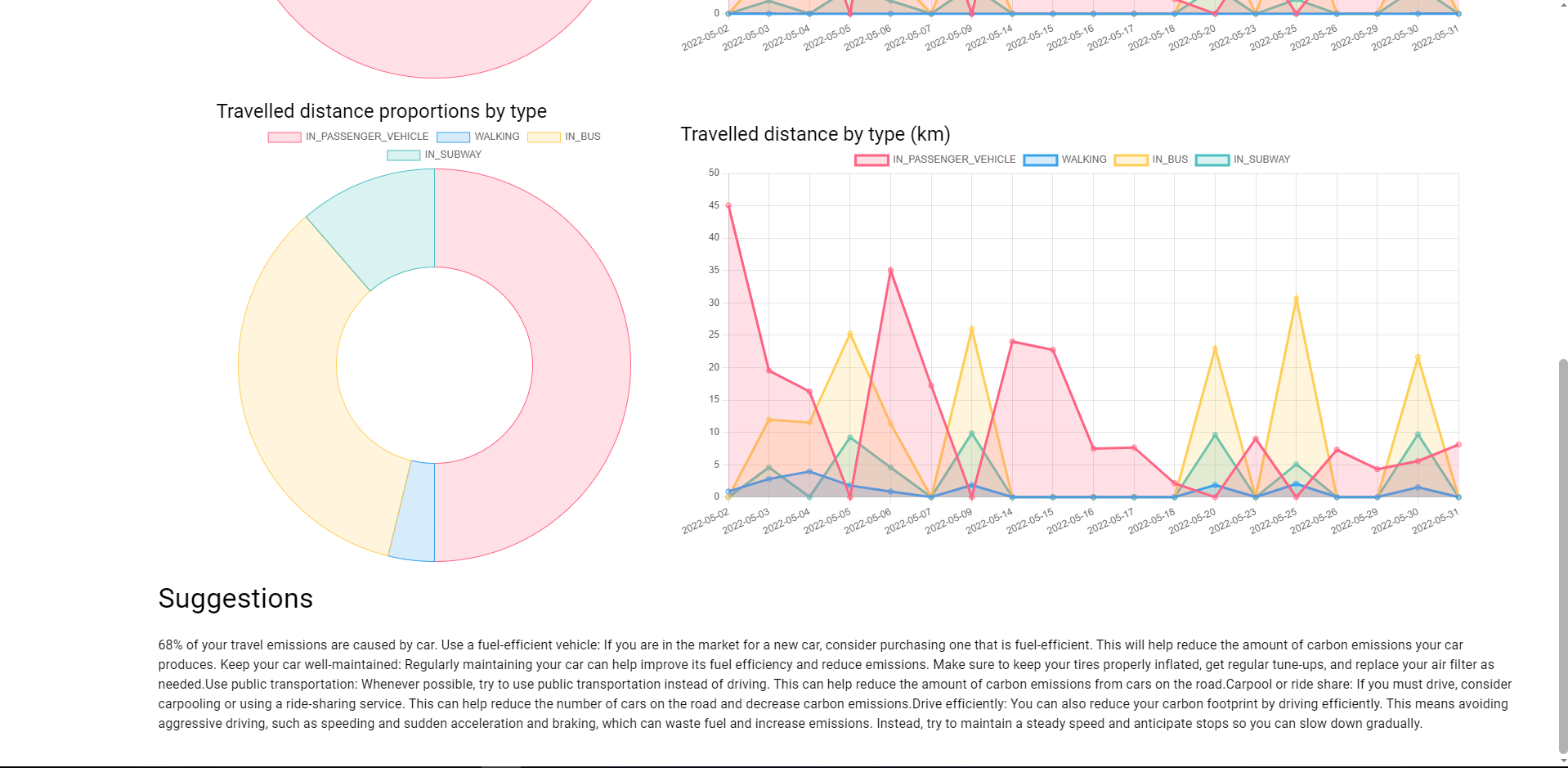
Pass on the Gas! is a web app that helps you track your carbon emissions produced by transportation by using your location history. It provides useful graphs to help better visualize your data as well as suggests a few ways you can reduce your carbon footprint based on your data.
How we built it
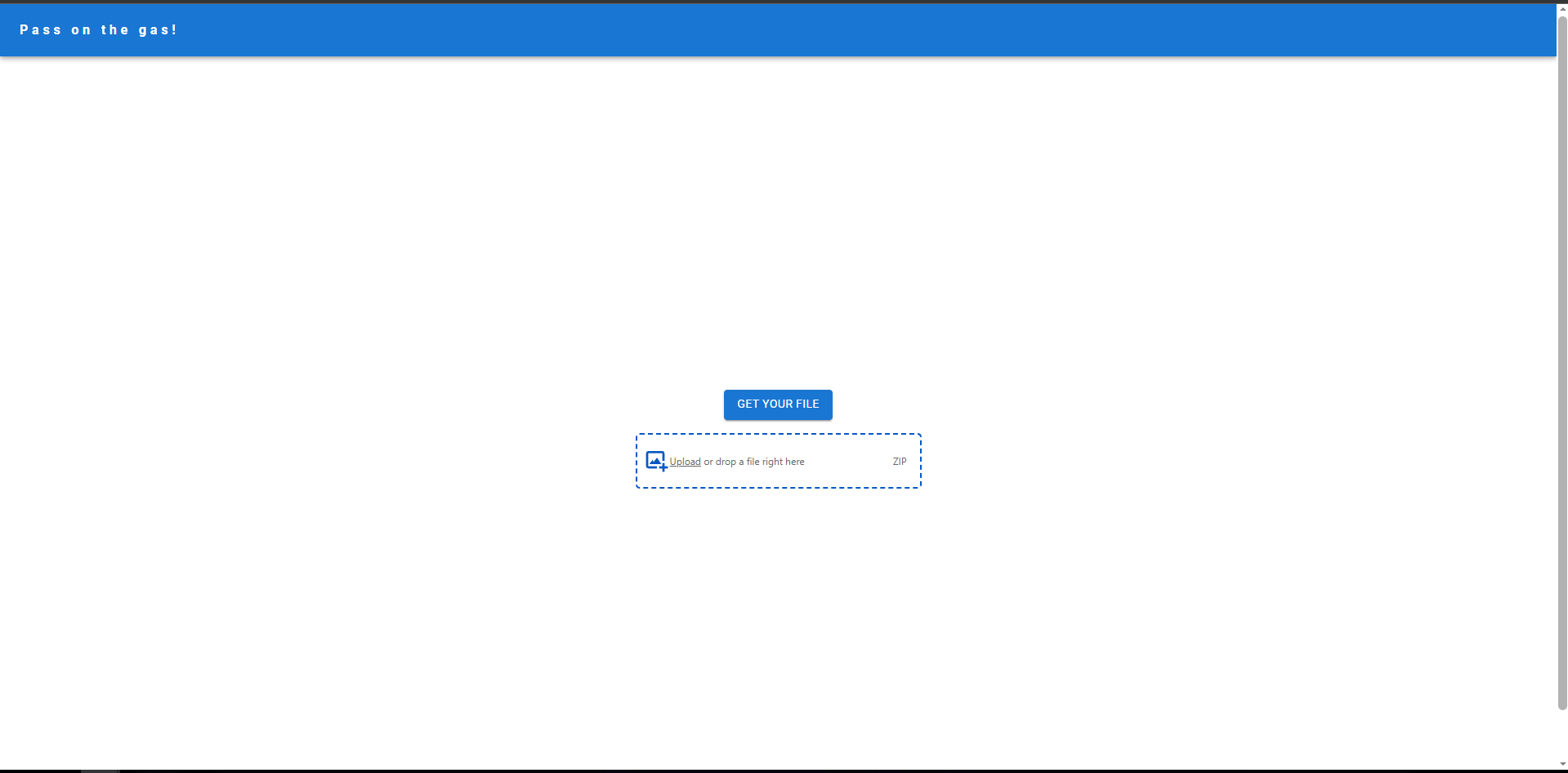
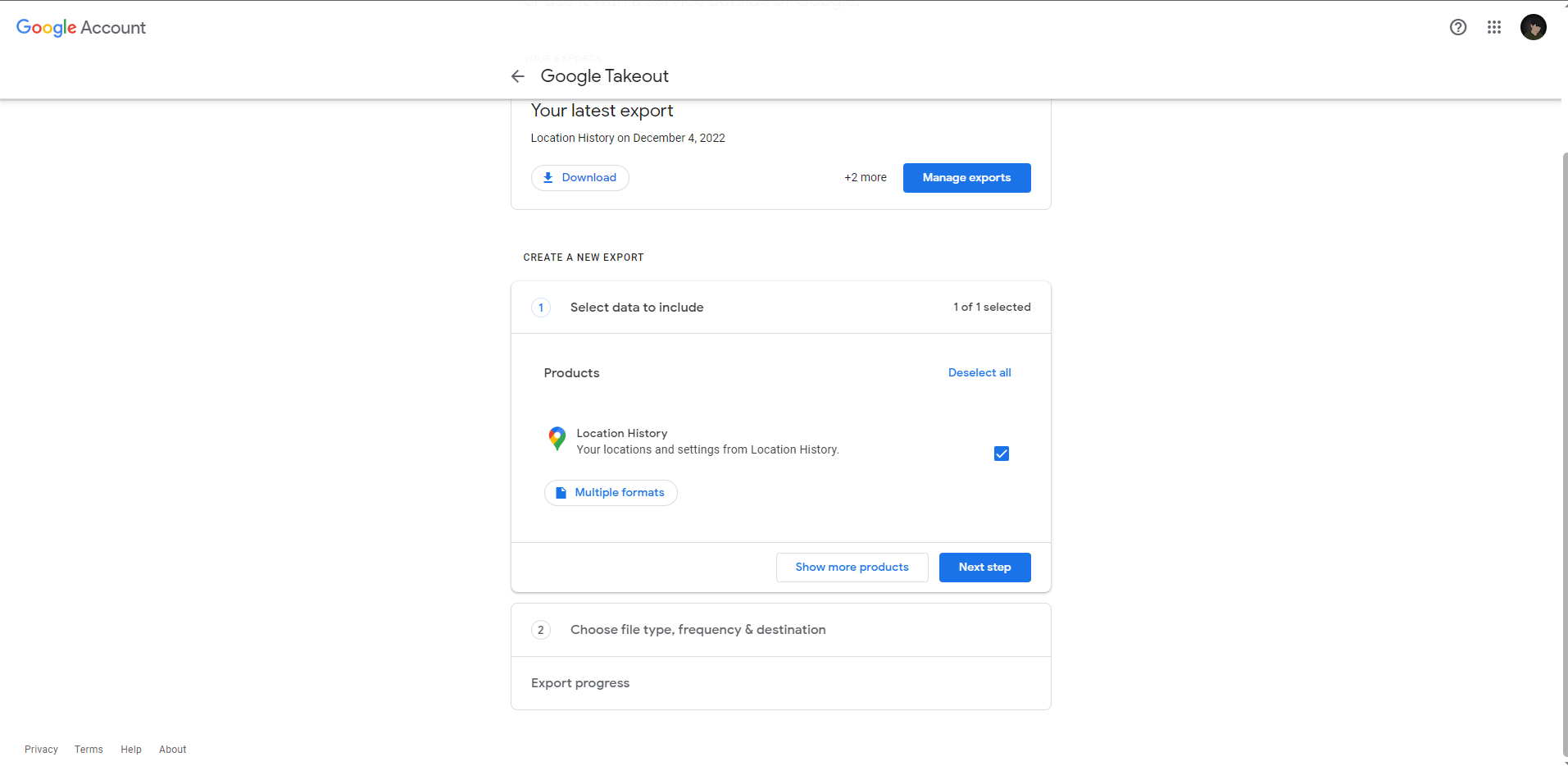
Our web app uses location history data gathered by Google Maps. If you have location history turned on, then your data can be used to calculate emissions. We used Python and FastAPI for the backend to analyze the location data and calculate the emissions they caused. We used TypeScript, React and a few other libraries for the frontend to display all the information. We also used GPT-3, a machine-learning language model, to generate suggestions based on one's travel tendencies. The frontend is hosted on Vercel. The backend is hosted on render.com
Challenges we ran into
The usual backend hosting service we use (Deta.sh) wasn't working for our project, so we had to learn how to deploy our backend on another service (render.com). Figuring out how to use Google's location data was also a challenge. The files they give are tens of thousands of lines long, so it was difficult to find a way to make use of all that valuable information.
Accomplishments that we're proud of
We are proud of accomplishing exactly what we sought to do: to build a concrete, working solution to a specific problem, all within the given timeframe. Our entire mission was not tp follow the trend of being all talk, no show, so we are happy to have a working web app to demonstrate.
What we learned
We learned just how much a single person can emit monthly just off of transportations, and how much different modes differ in emissions. In particular, my emissions from commuting to school dropped by half when I switched to taking the bus compared to taking the car.
What's next
Add more statistics and graphs that can paint a better picture of one's emissions. Add specific transportation parameters for more accurate calculations. For example, electrics cars emit less than gas cars. There should be a setting for it so that the emission numbers reflect this detail. Implement more sophisticated suggestions.
Our team
Jesse: I'm a mechanical engineering student with a deep care for the environment. Studying in this sector has helped me become more aware of the impacts it has on our planet, and enables me to think of ways to reduce those impacts. Industrial processes and methods account for much, but mundane things like gas-powered transportation aren't to be neglected, and it's a chance for everyone to do good.
Jimmy: I am a computer science student with a great interest in data and software. I aspire to bring the most good to the world and help the greatest amount of people through code. When it comes to climate change, it is both a social and scientific challenge that I hope to tackle by making a data-driven and accessible solution.


Log in or sign up for Devpost to join the conversation.