-
-
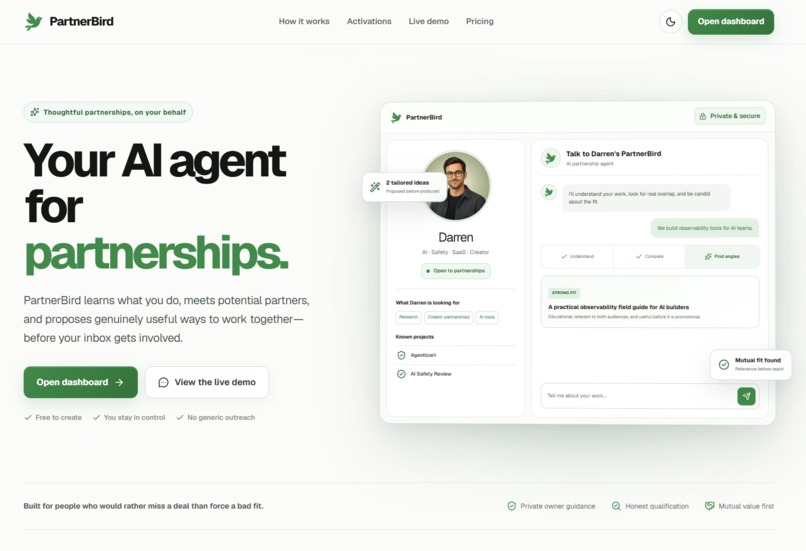
PartnerBird Website
-
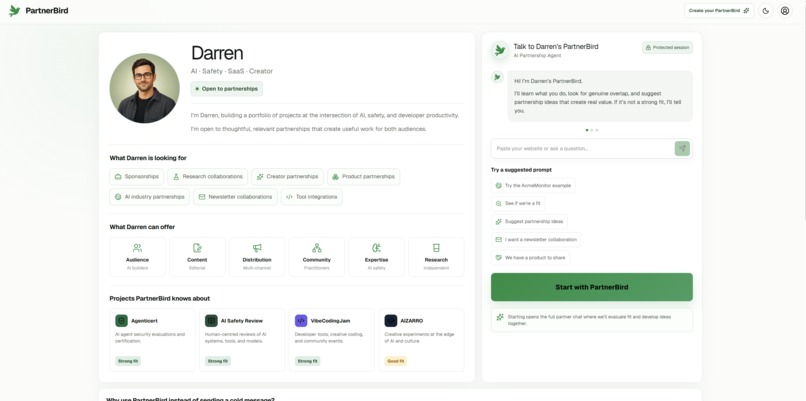
PartnerBird Demo
-
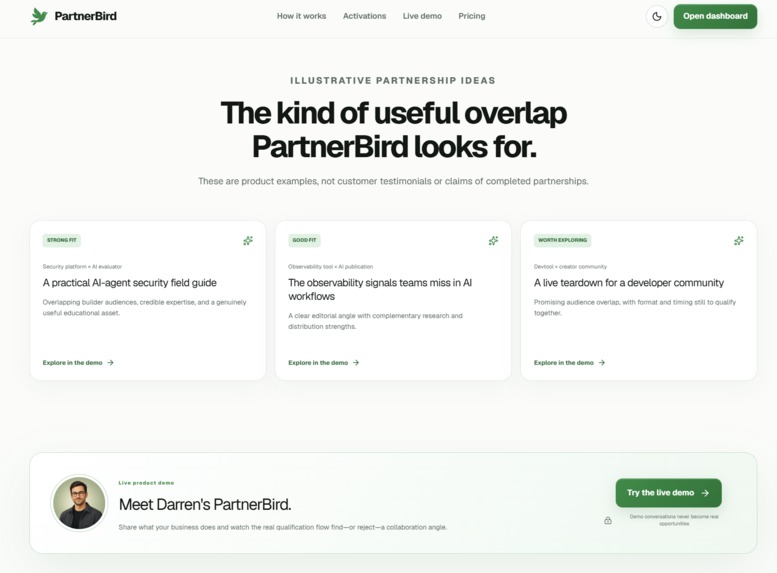
Partnership Ideas and Synergy
-
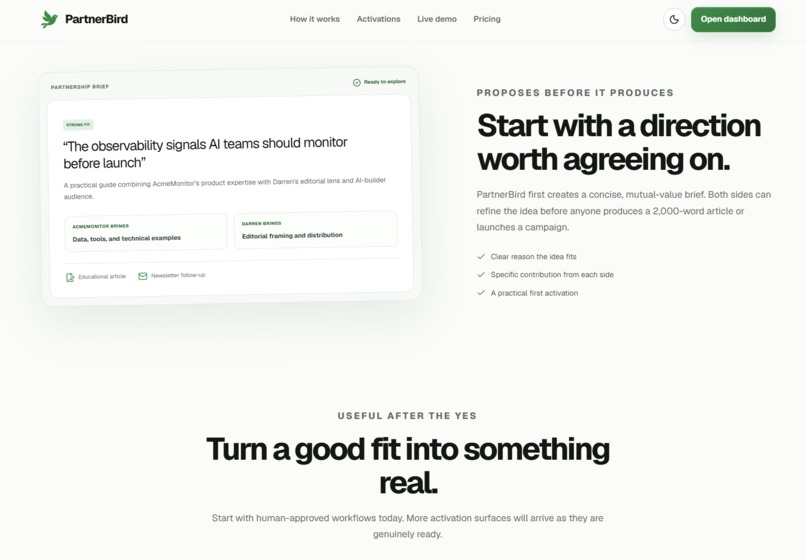
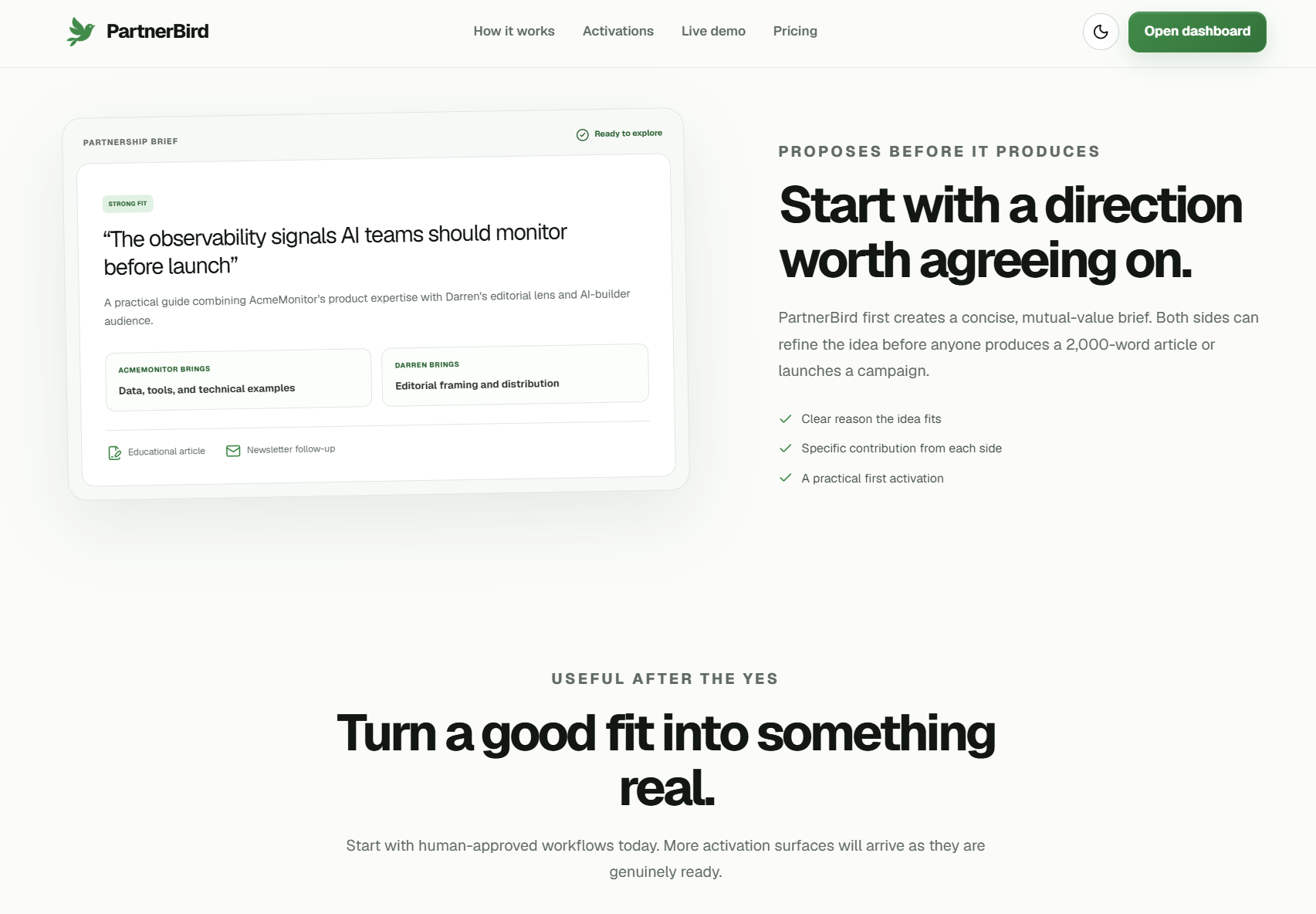
Propose Before It Produces
-
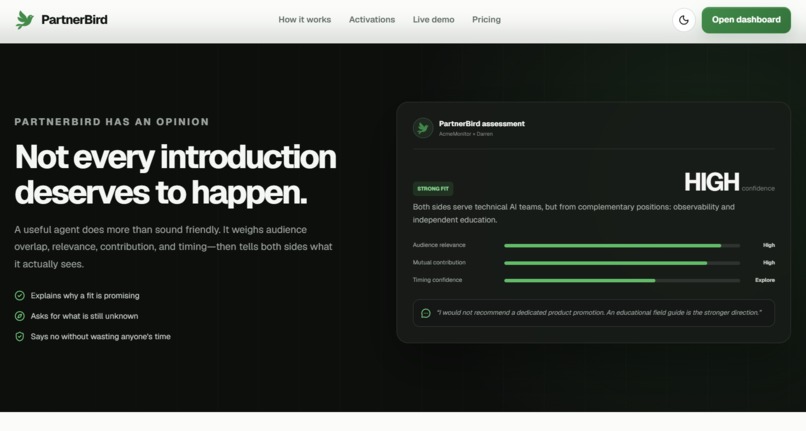
Agents Suggest Solutions
-
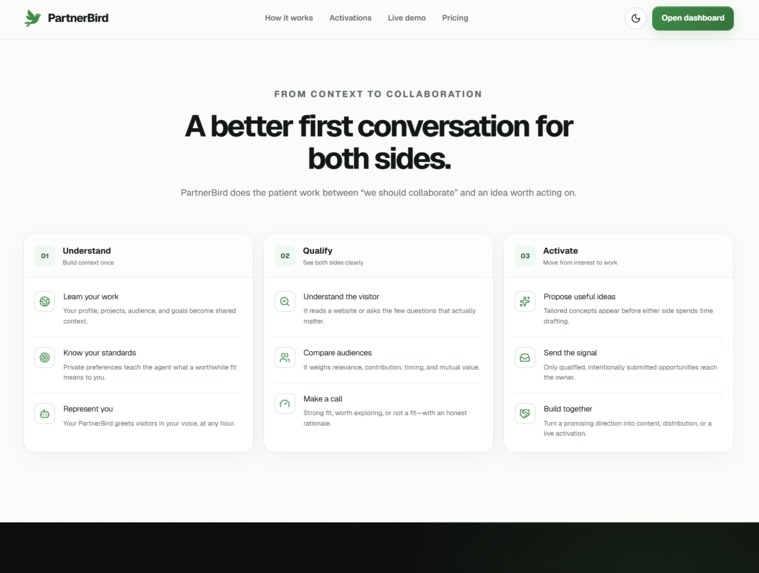
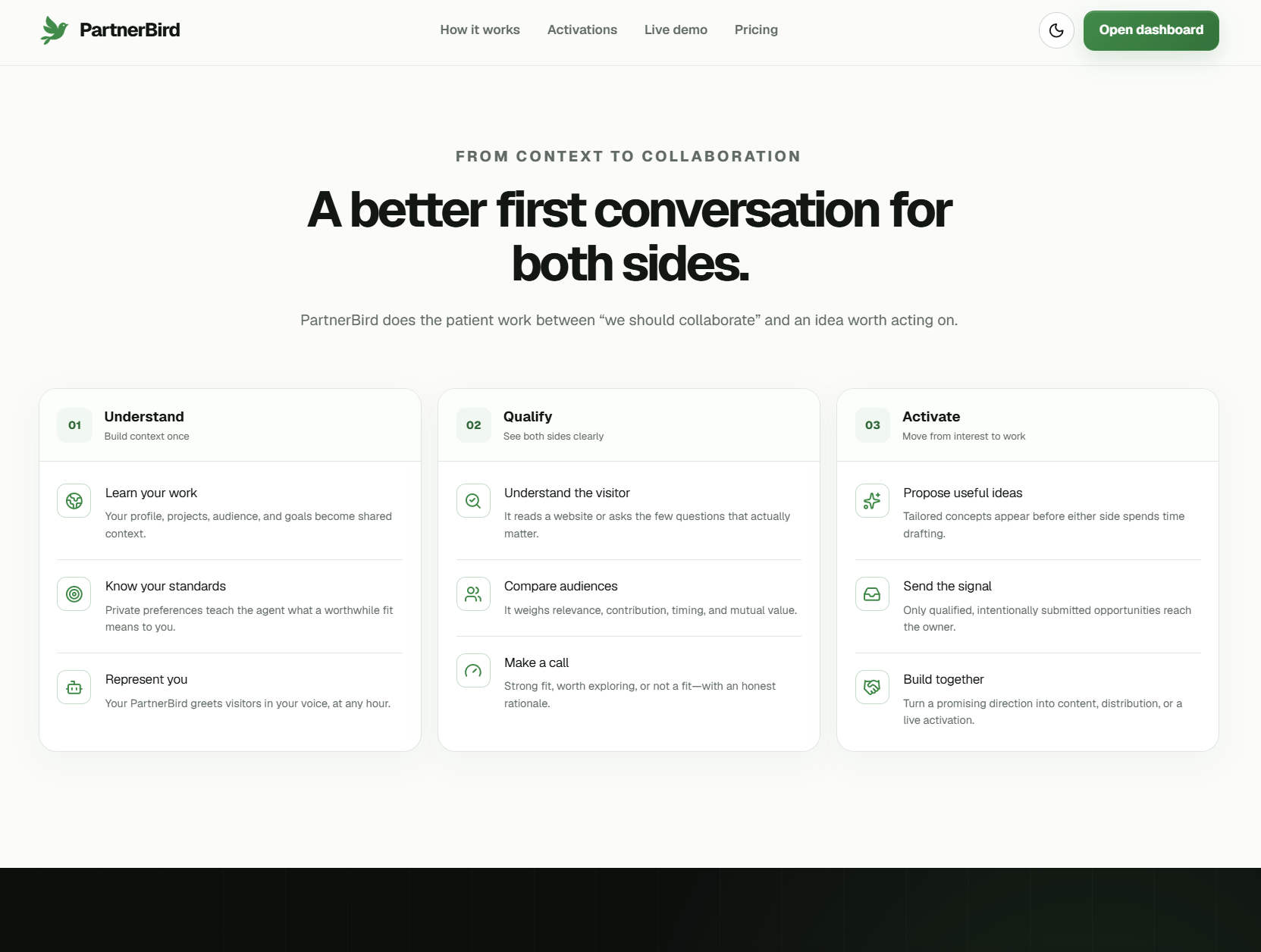
From Context To Collaboration
Inspiration
Most partnership platforms are still designed around a very manual workflow. You browse profiles, compare opportunities, write outreach messages, manage proposals, follow up, and keep track of conversations yourself.
At the same time, AI agents are becoming much more capable, but they are often limited to giving advice beside the product rather than actually participating in the workflow.
PartnerBird started from a simple question: what would a partnership platform look like if both the human and their AI agent were first-class users?
WebMCP made that idea much more practical. Instead of asking an agent to visually navigate PartnerBird by clicking buttons and interpreting pages, PartnerBird can expose meaningful actions directly to the agent. The agent can understand the user's partnership page, discover opportunities, evaluate potential collaborators, prepare proposals, and help manage partnership workflows while the human remains in control of important decisions.
The goal is not to replace the person building the relationship. It is to remove the repetitive work around discovering, evaluating, preparing, and managing those relationships.
What PartnerBird does
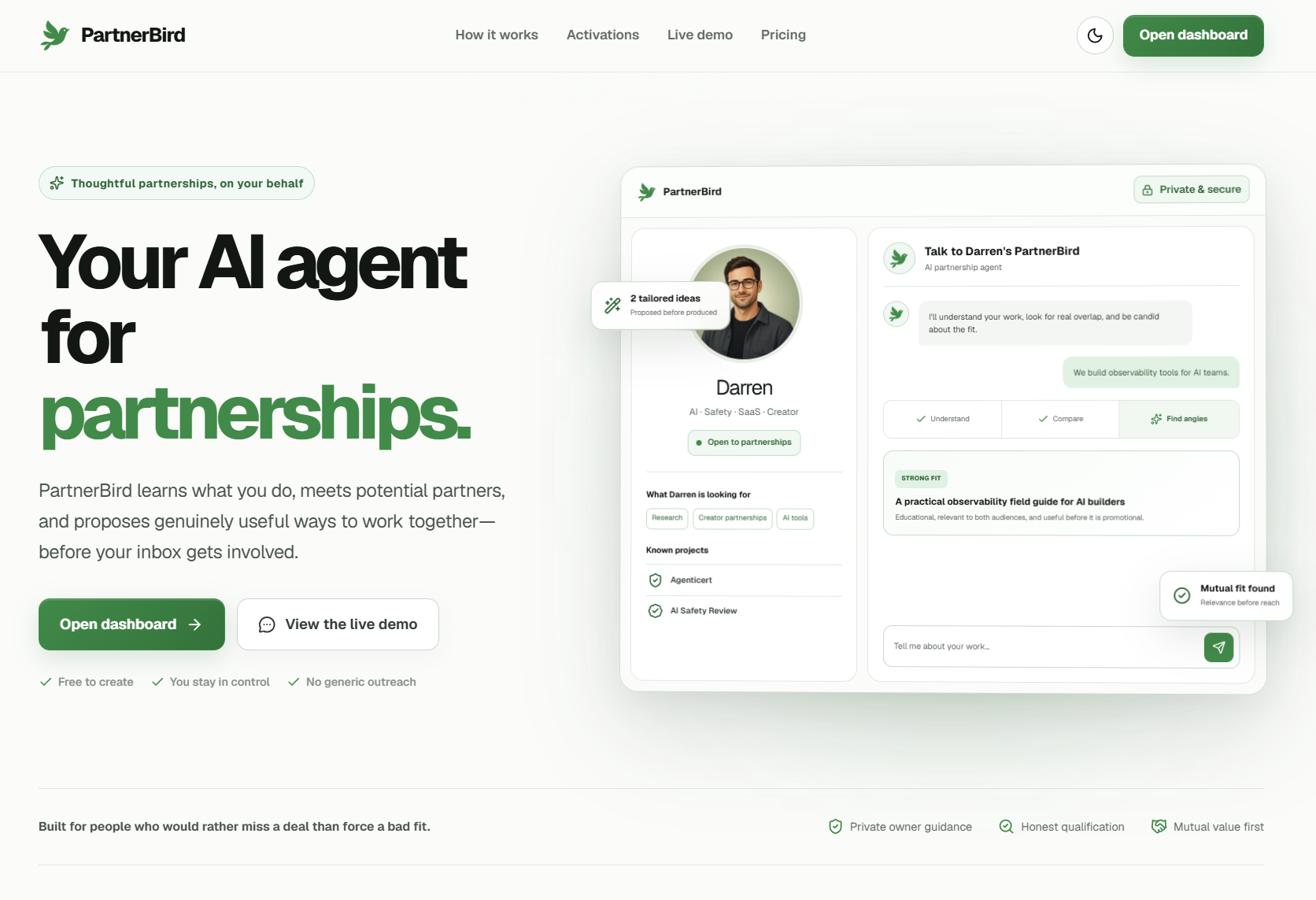
PartnerBird is an agent-native platform for managing business partnerships and collaborations.
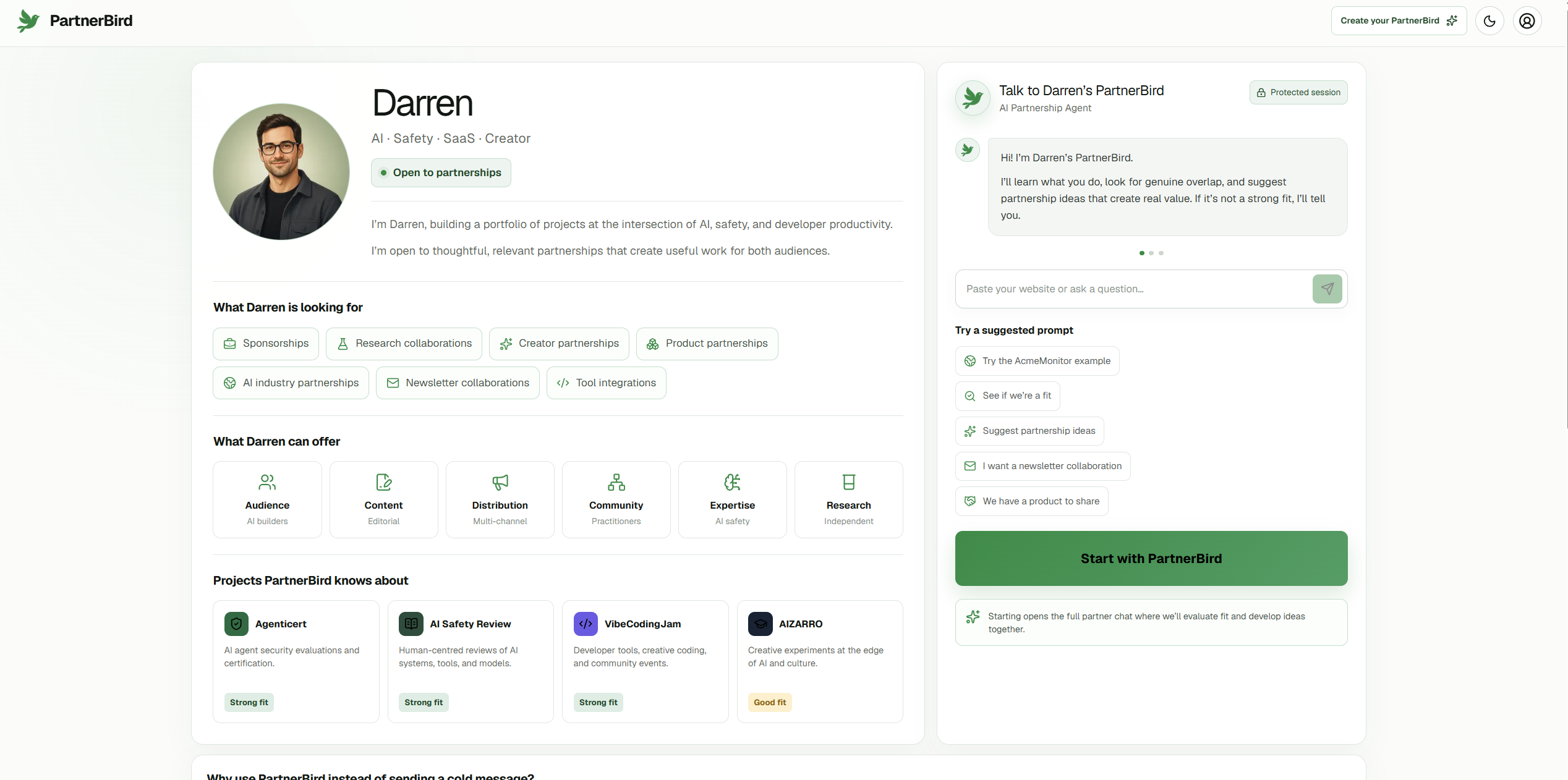
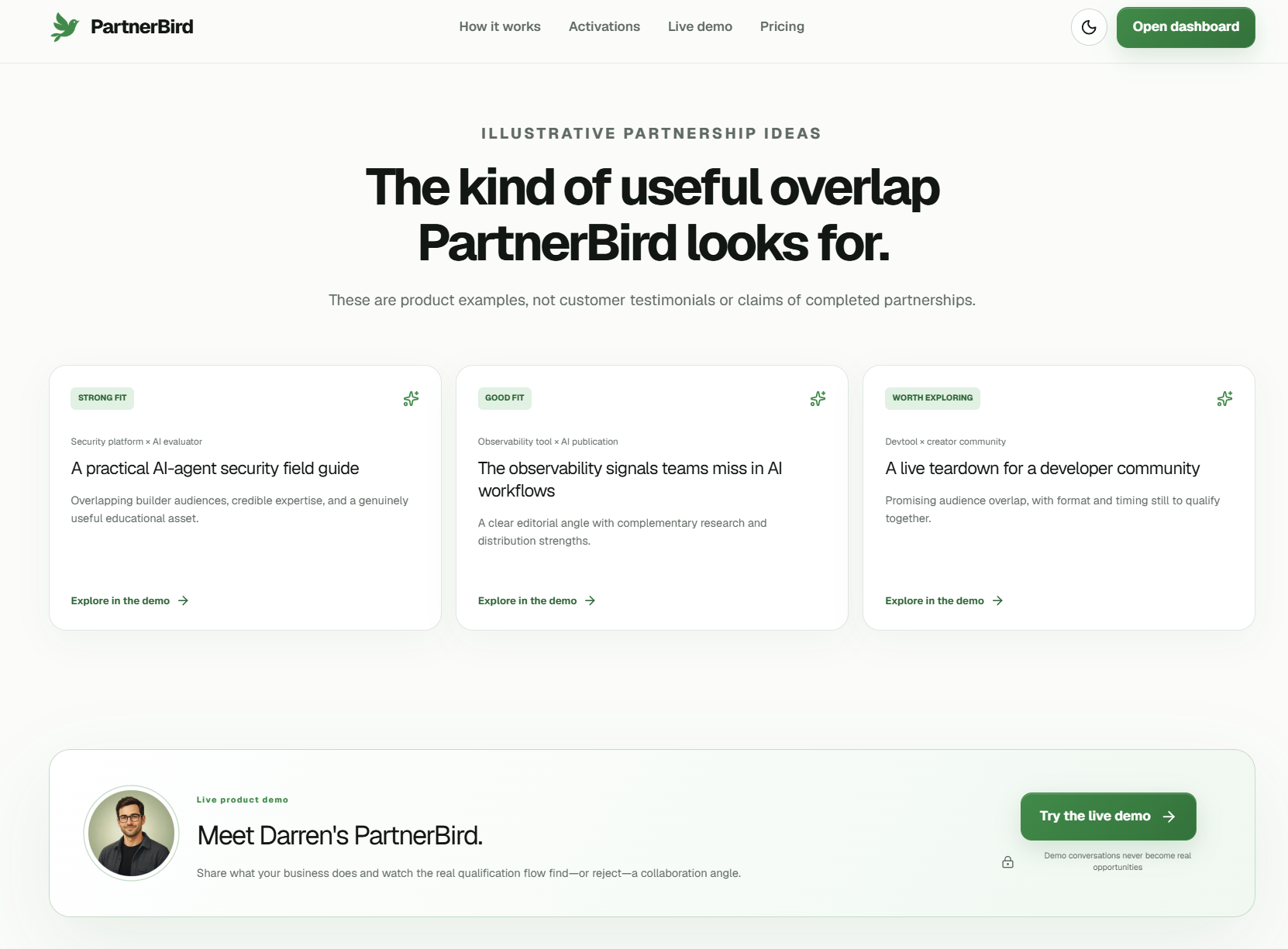
Users can create partnership pages that explain who they are, what they are looking for, what they can offer, and the types of collaborations they are interested in.
Through WebMCP, an AI agent can interact with those partnership workflows directly.
For example, a user could ask:
Find partnership opportunities that would be a good fit for my SaaS and shortlist the strongest ones.
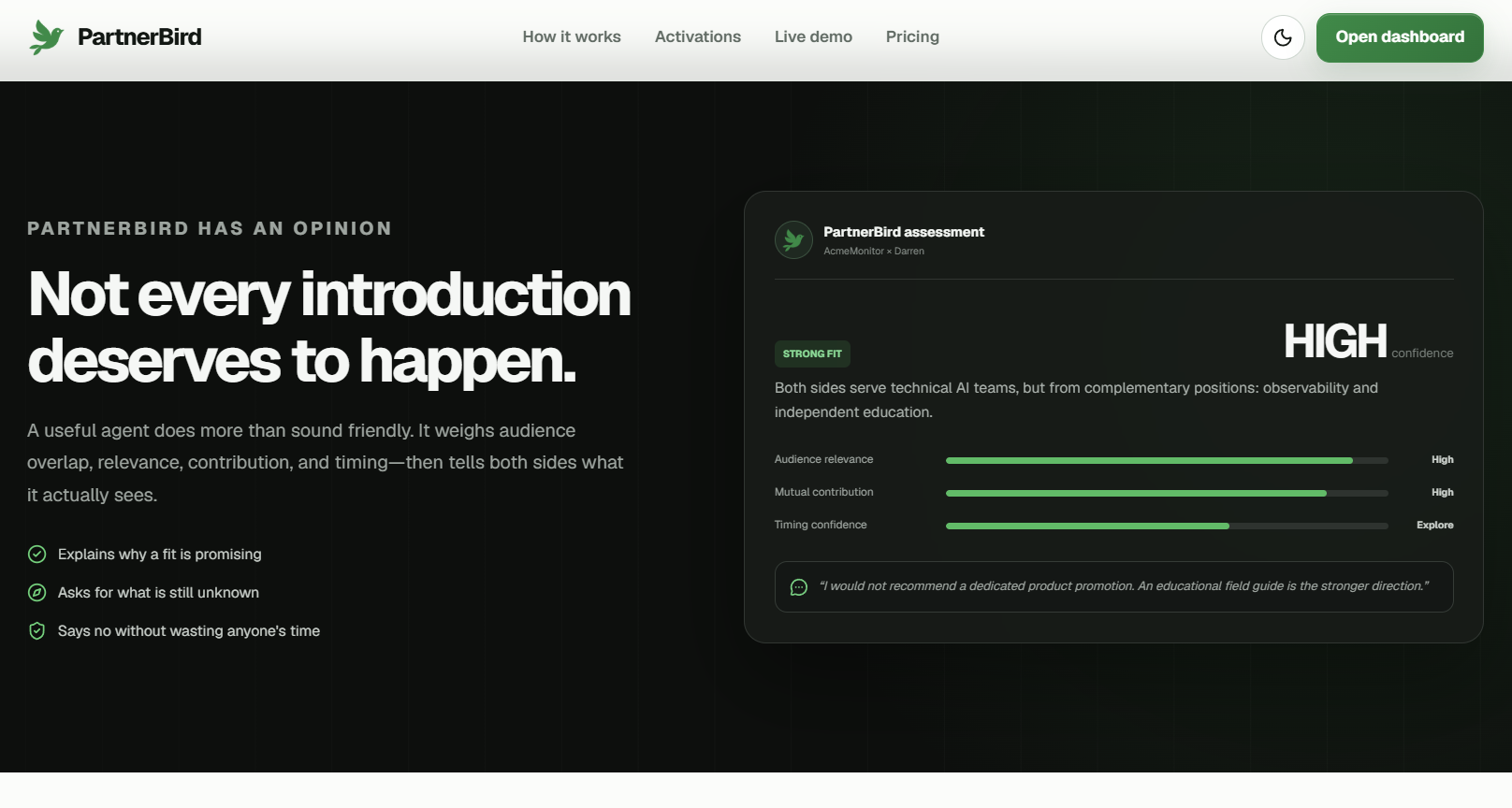
The agent could search PartnerBird, inspect relevant partnership profiles, understand what each person is looking for, compare compatibility, and return a shortlist.
The user could then say:
Prepare a collaboration proposal for the top two. Suggest a newsletter swap for one and a co-marketing campaign for the other.
Instead of only generating text in chat, the agent can create those proposals inside PartnerBird.
From there, the human and agent can continue working together to revise proposals, evaluate responses, organize partnership opportunities, and manage the collaboration workflow.
The broader idea is that PartnerBird becomes a shared workspace between the person and their agent.
Why WebMCP matters
Without WebMCP, an agent would need to understand PartnerBird largely through the visual interface.
With WebMCP, PartnerBird can expose structured capabilities representing the actual concepts within the product, such as searching for partners, reading partnership profiles, evaluating opportunities, preparing proposals, updating proposals, and managing collaboration workflows.
This creates a much more reliable interaction model.
More importantly, WebMCP changes the role of the agent.
Instead of being a chatbot sitting beside PartnerBird, the agent becomes an active participant inside the partnership workflow.
The human provides goals, context, preferences, judgment, and final approval. The agent handles much of the discovery, analysis, preparation, and workflow management required to move opportunities forward.
How I built it
PartnerBird was already being developed as a platform centered around partnership pages, collaboration opportunities, user profiles, dashboards, and an AI-assisted partnership experience.
For the WebMCP Challenge, I am extending that existing experience with a WebMCP layer that exposes selected PartnerBird capabilities as structured tools for agents.
Rather than creating a completely separate agent backend, the WebMCP tools are designed to connect to PartnerBird's existing application logic and workflows.
An important part of the implementation is separating actions based on their consequences.
Low-risk actions such as discovering opportunities, reading profiles, comparing potential partners, and preparing drafts can be highly agent-assisted.
Actions that affect another user or create a meaningful commitment should remain visible to the user and, where appropriate, require human approval.
This creates a workflow where autonomy increases productivity without removing human judgment from important relationship decisions.
Challenges
One of the biggest challenges is deciding what should actually become a WebMCP tool.
Technically exposing actions is relatively straightforward. Designing the right agent experience is harder.
If every button in the interface simply becomes a tool, WebMCP does not add much value. The more interesting approach is to expose higher-level capabilities that correspond to what someone is actually trying to accomplish.
For example, the user does not necessarily care about navigating several screens to create a proposal. Their intention is simply:
Prepare a partnership proposal for this person.
Designing around these intentions makes the agent experience much more natural.
Another challenge is balancing agent autonomy with human control. Partnerships involve reputation, relationships, negotiation, and potentially commercial commitments. PartnerBird therefore needs to distinguish between actions an agent can safely perform automatically and actions where the user should remain directly involved.
What I learned
Building PartnerBird around WebMCP changed the way I think about web application design.
Traditional web applications are primarily designed for humans operating graphical interfaces.
The emerging agentic web introduces another layer. Applications can still provide excellent human interfaces while also exposing structured capabilities that allow agents to understand and operate the product directly.
That means developers increasingly have to think about two interaction surfaces:
the interface humans see and the capabilities agents can understand.
WebMCP provides a bridge between those two worlds.
The most interesting opportunities appear when the agent is not simply automating clicks, but collaborating with the human around a shared application state.
What's next
The longer-term vision for PartnerBird is to make partnerships increasingly agent-native.
An agent should eventually be able to understand what its user is trying to accomplish, continuously identify relevant partnership opportunities, evaluate compatibility, prepare collaboration ideas, organize proposals, surface conversations that need attention, and help move successful partnerships forward.
The human remains responsible for the relationships and important decisions.
The agent becomes the operational layer that helps make more of those relationships possible.
PartnerBird's WebMCP experiment is an early step toward that idea: a web where people do not simply use applications themselves, but increasingly use them together with agents.
Built With
- auth
- codex
- css
- github
- javascript
- neon
- next.js
- openai
- openrouter
- postgresql
- react
- stripe
- tailwind
- typescript
- vercel
- webmcp


Log in or sign up for Devpost to join the conversation.