-
-
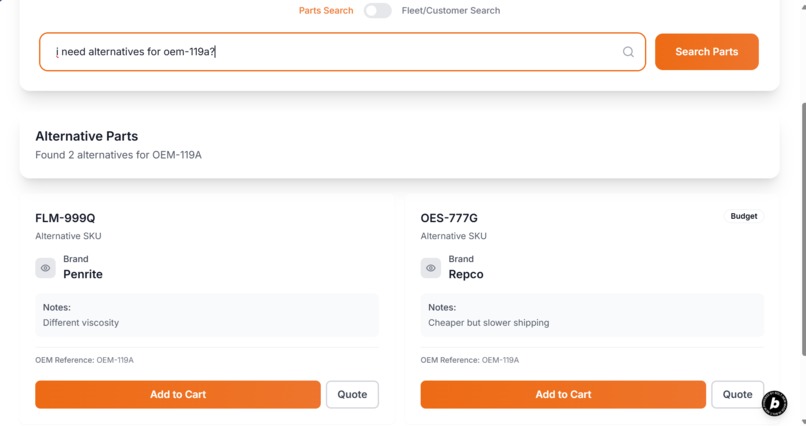
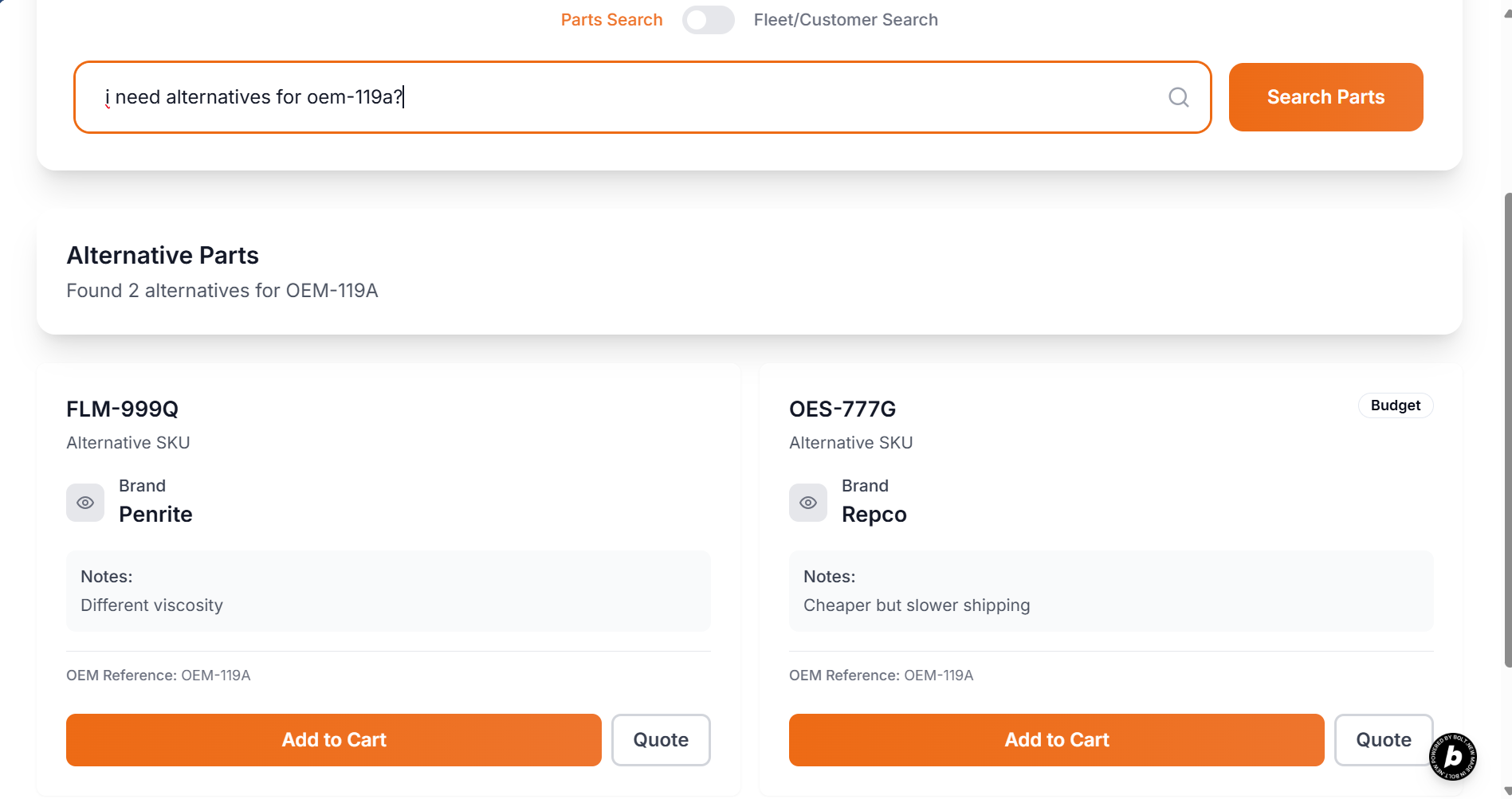
Alternative parts search
-
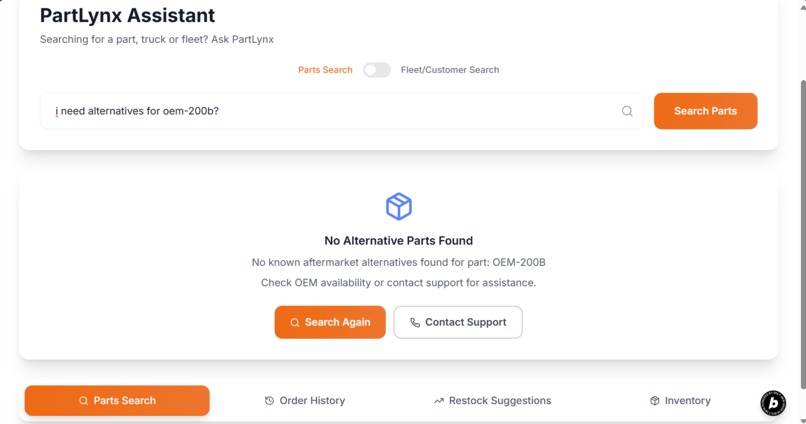
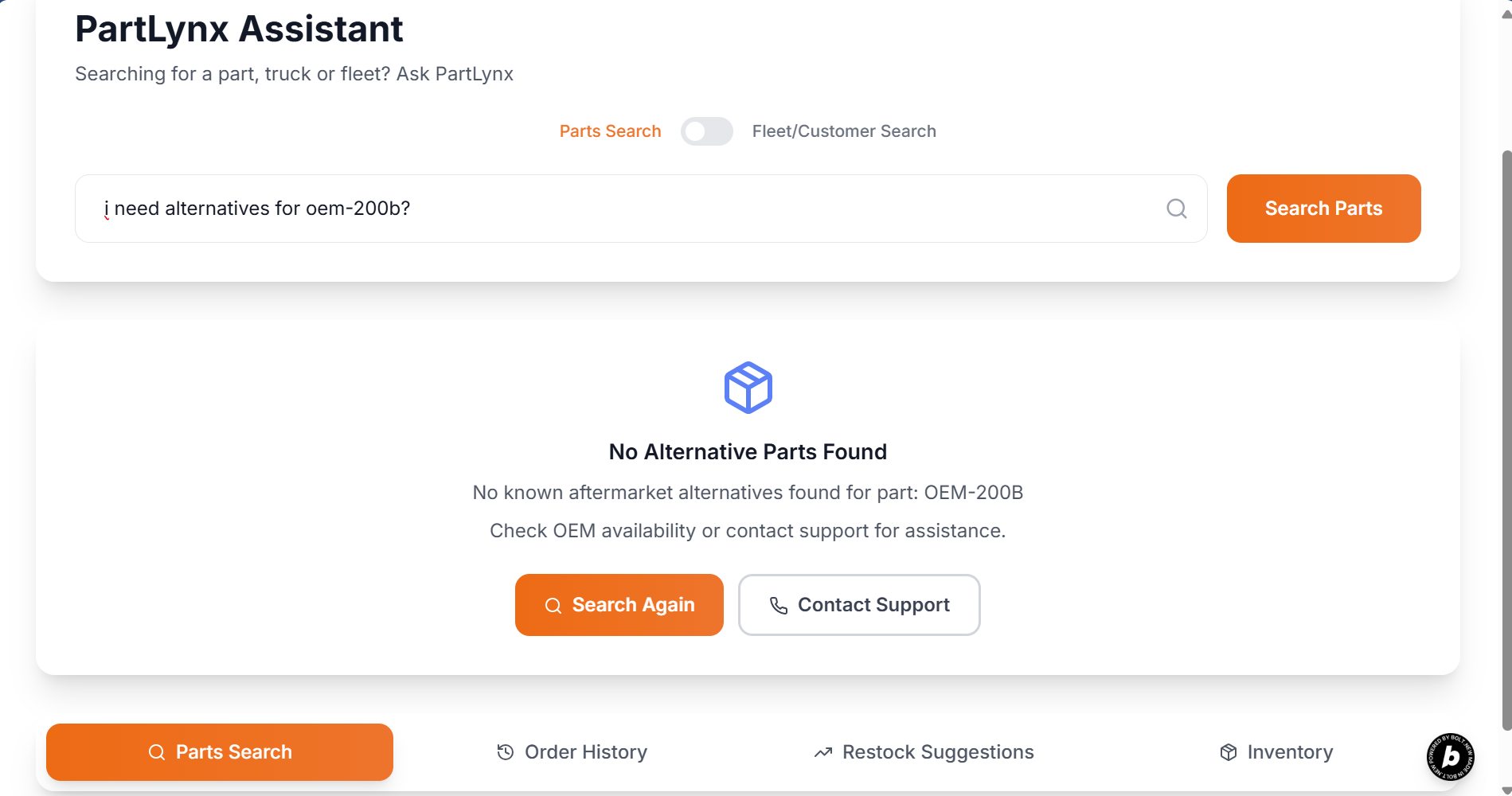
Fallback
-
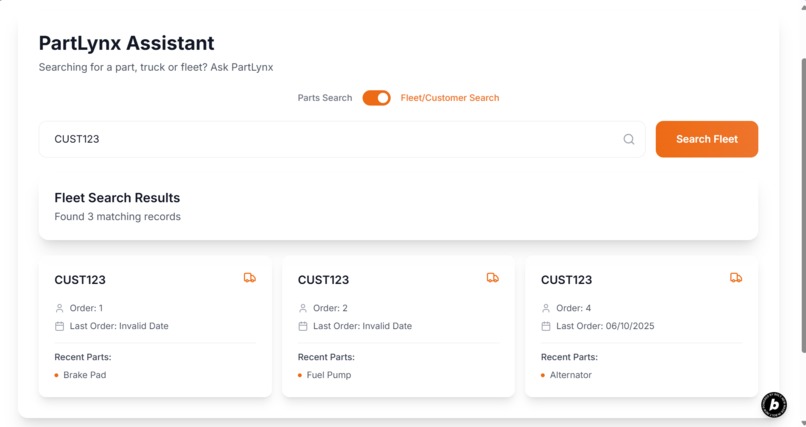
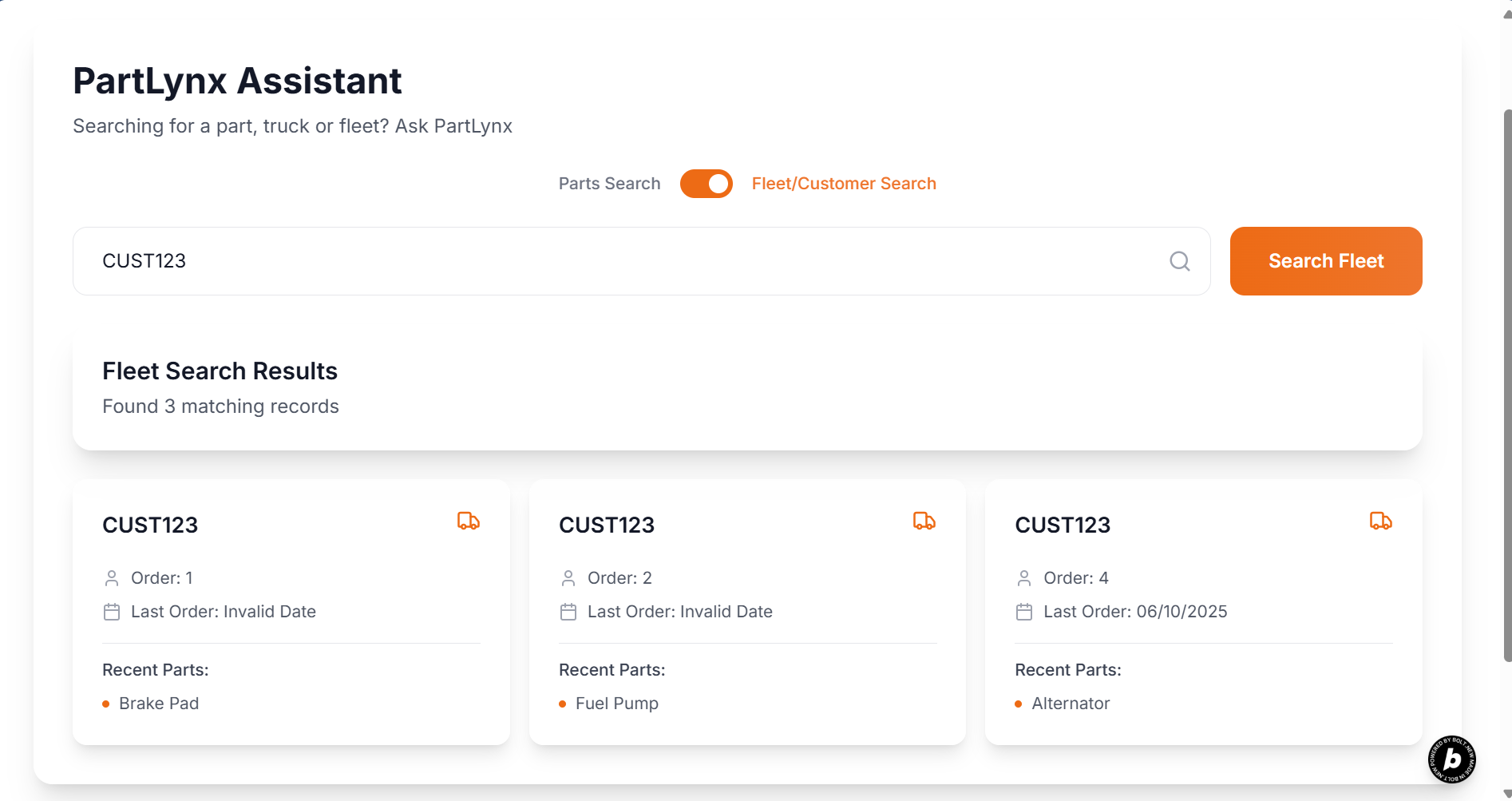
fleet-search
-
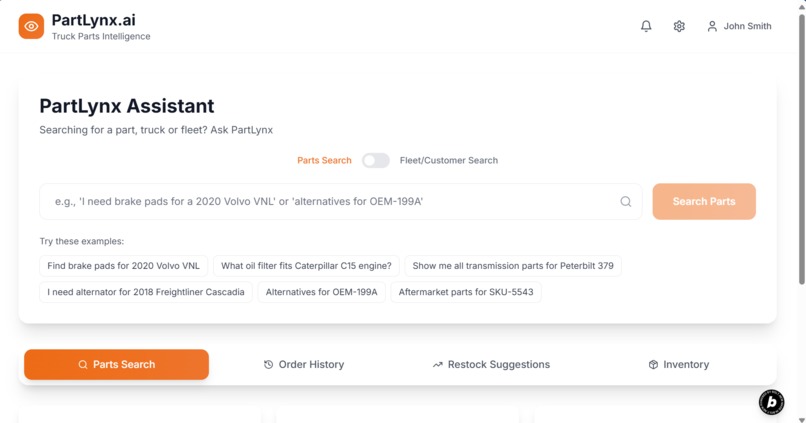
home
-
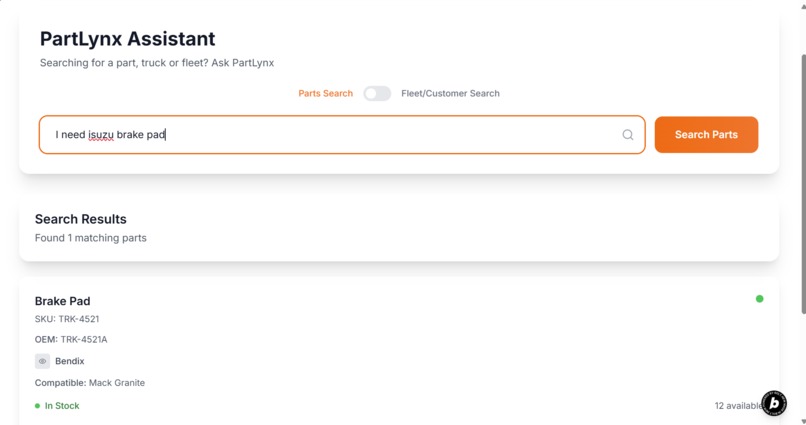
search
Partlynx.ai
Inspiration
My dad started a truck and trailer parts business when I was a kid. Growing up around that business — and the incredible people who keep it running — shaped who I am. Parts interpreters, in particular, are a rare kind of expert. They carry decades of knowledge in their heads and are getting harder to find and hire.
For a long time, I’ve felt a little like I’ve been letting my family down. I stepped away from the family business to follow my own path (with full support from everyone — they’ve always backed me), but I still carried a sense of guilt. Eldest daughter syndrome, maybe!
Since my dad got hurt a few years back, I’ve wanted to do something that could give back — to support him, to support the business he’s worked so hard to build, and to support the incredible people around him who’ve kept it all running. I wanted to build something that would save him time. Something that could give him the ability to choose how he spends his time — not just work constantly because no one else has the tools to step in.
This is my little tribute: To my dad, to the family business, and to the interpreters and staff who show up every day to make it work.
I also knew this was the right idea because it targets a space everyone else overlooks. Blue-collar businesses are rarely the focus of innovation. The tools they get are clunky, bloated, or clearly made by people who’ve never worked a day at a service desk. They don’t understand what it’s like to carry hundreds of part numbers — both OEM and aftermarket — in your head, ready to cross-reference based on a vague customer description.
Most truck drivers know their vehicle inside and out, but they might not know the exact part they need. They’ll describe a noise, or point to a general location. It’s up to the interpreter to figure it out — fast, under pressure, and with total accuracy. This tool supports that process — it doesn’t replace it. It was built with interpreters in mind from day one.
Partlynx.ai is for the people tech innovation forgets. For the parts interpreters, service teams, and logistics backbone that keep Australia (and the world) moving.
What it does
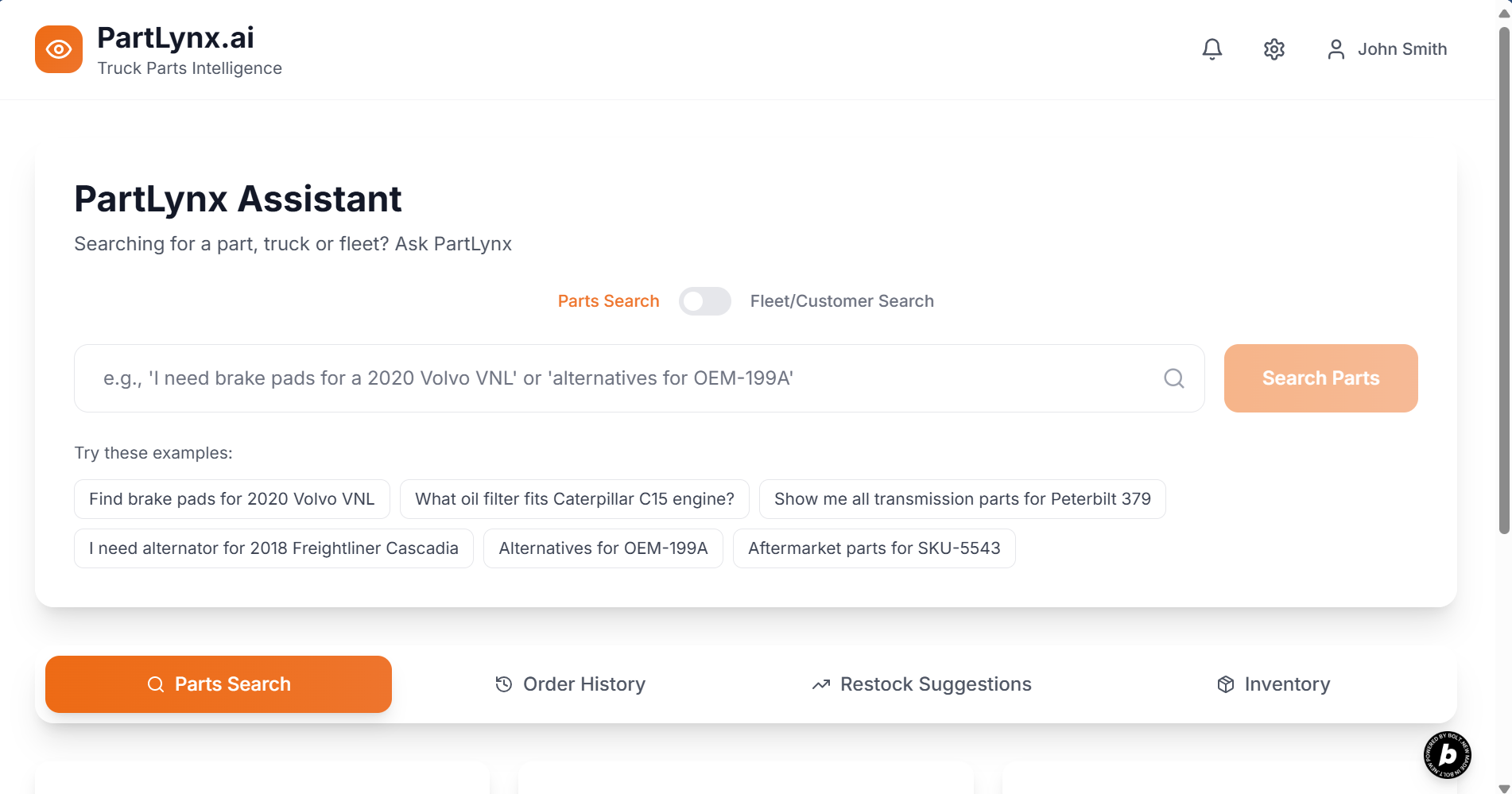
Partlynx.ai is a lightweight, AI-powered assistant for parts interpreters in the truck and trailer industry.
It lets users:
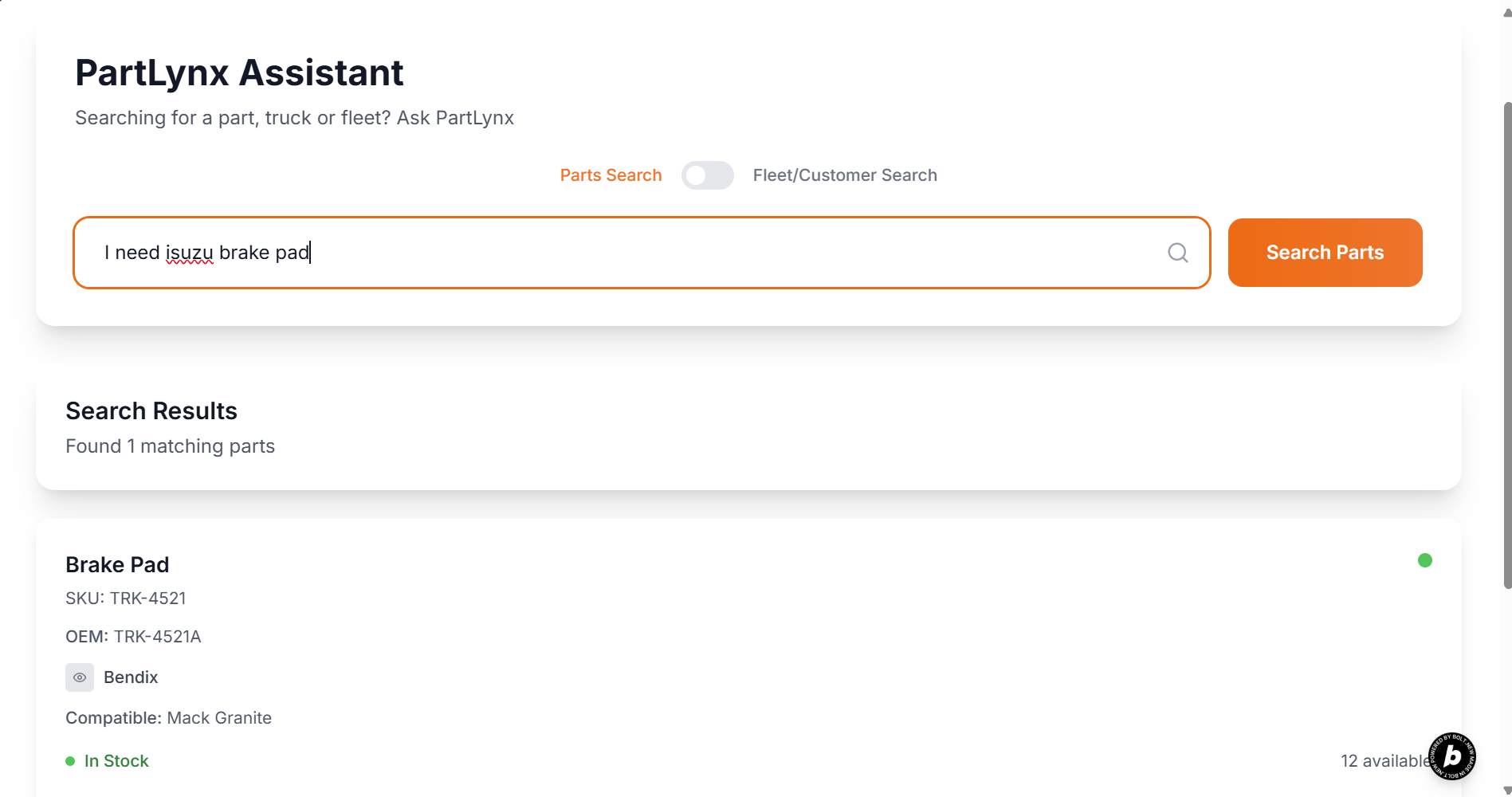
- Ask natural-language questions like “Do we have OEM-134X in stock?” or “What’s the ETA on TRK-4521?”
- Get fast answers pulled from structured inventory, order, and parts data
- Look up aftermarket alternatives to OEM parts
- See customer order history
- Receive restock suggestions based on inventory levels
The goal is to reduce manual lookup work and free up time for interpreters to focus on what matters — great service.
How I built it
I’m a tech consultant, not a developer — but I built this solo during the hackathon, end-to-end. Partlynx.ai is designed based on a simple concept: search for parts and alternatives with extremely varied inputs.
No one person can remember every SKU, alternative part, or even the subtle differences that emerge across similar vehicles in a fleet. Partlynx.ai reduces the need for perfect recall — interpreters don’t have to know the exact part number or SKU. They can describe the issue in their own words and still get relevant, structured results.
That means less time spent flipping through PDFs or old invoices — and more time spent helping customers. It improves the experience for the interpreter and the customer, without replacing the human expertise that defines this role.
This tool was built for my dad and his business, and for the wonderful people in it — interpreters who deserve better, faster, more intuitive tools.
🧠 Backend (Supabase)
Supabase powers everything under the hood. I built:
parts_inventory– SKUs, OEMs, brands, stockalt_parts– validated substitutes with performance tierscustomers_and_fleets– mock customer/fleet data
Views and RPCs include:
customer_order_details– simulate past lookupsget_top_restock_parts()– trigger restock logicget_alt_parts(oem_code)– substitute filteringoem_lookup(oem_code)– fuzzy matching
Supabase also serves my SVGs and asset files.
💻 Frontend (Bolt.new + Netlify)
I used Bolt.new to:
- Build the assistant UI and prompt interface
- Toggle between Part Search and Fleet Lookup
- Wire in Supabase functions and live logic
- Style with brand colours and simple cards
- Create fallback UX for no-match scenarios
Deployed to Netlify at: https://partlynx.netlify.app
♻️ RAG & SLM
Partlynx.ai uses a Retrieval-Augmented Generation (RAG) architecture and a Small Language Model (SLM) to enable fast, lightweight responses. Instead of relying on large hosted APIs, this setup keeps response times fast and the infrastructure cost low — making it practical for small business use.
Challenges I ran into
- Building it at all! This was my first time fully building something myself. While I’ve project managed plenty of tech builds, I’m not a developer — so every step, from data modelling to front-end wiring, was a crash course in building solo.
- Limited time and steep learning curve. With only a few days to complete the project, juggling design, implementation, and AI tuning was intense. I was learning while doing, and doing while debugging.
- Designing a usable interface. I now have a whole new appreciation for the UX designers I’ve worked with — translating what’s in your head into something intuitive and actually pleasant to use is way harder than it looks.
- Creating useful dummy data. I wanted to reflect the reality of how parts businesses actually run, which meant crafting CSVs that were realistic, structured, and worked across multiple use cases — from inventory to orders to aftermarket lookup.
- Avoiding hallucinations. Since interpreters rely on accuracy, ensuring the assistant didn’t make up false answers or confidently mislead was essential. That shaped how I structured the data and constrained model outputs.
- Balancing simplicity with capability. I had to make hard choices about what to include in the MVP. The tool needed to be genuinely useful, without overwhelming users who may not be tech-savvy or AI-native.
Accomplishments I’m proud of
- I built and deployed my first full-stack app solo — and it actually works! This was so exciting for me, given that my role is usually so behind-the-scenes. I greatly enjoyed the learning experience (even with the learning curve), and I’m proud of the MVP I created. It might not be perfect, but it really speaks to what this can become.
- Bridging a real-world business problem with AI in a way that’s accessible, helpful, and respectful of industry expertise
- Honouring the people behind the project — this tool was built with interpreters in mind, not just “for” them
- Turning a personal story into a technical tool that might just scale into something more
What I learned
- The best AI projects start with real people
- Simplicity in design makes adoption more likely — especially in industries that aren’t tech-first
- Lightweight LLMs + smart data design can go a long way without needing huge infrastructure
- Sometimes the fastest way to learn AI is to pick a problem you love and just start building
What’s next
- Fully integrate VIN/chassis number lookup for truck config preloading
- Improve interpreter UX with suggested prompts and fallback flows
- Connect to real inventory and fleet databases
- Integrate with the parts ordering system to close the loop
- Expand cross-reference logic for more complex substitute trees and part families
- Add chat functionality so users can ask for help identifying parts in conversation
- Add voice-to-text support to enable hands-free usage at service desks or in the field
- Enable plug-and-play deployment for other small-to-medium parts businesses — not just our own
- Incorporate visual lookup — imagine snapping a part photo and asking “is this in stock?”
Challenges I'm submitting for
🔧 Uniquely Useful Tool
Partlynx.ai was built for interpreters — not for AI hype, not for developer demos. I designed it to be used daily in service centres, workshops, and parts desks. Every saved minute matters in this environment, where interpreters juggle dozens of queries, limited time, and customer urgency.
This isn’t just about convenience — it’s about supporting a workforce that is routinely overlooked by the tech world, despite being critical to logistics, infrastructure, and vehicle safety. Partlynx brings modern tooling to the people who need it most, in a format they can actually use.
🏗️ Startup Challenge (Supabase)
Supabase powers every layer of the backend, enabling me to ship logic-heavy functionality with no traditional backend engineering.
That includes:
- Views (e.g.
customer_order_details) to simulate real-world workflows - Full-text search across key part attributes (
sku,brand,model, etc.) Stored procedures (RPCs) like:
get_top_restock_parts()– identify low stock itemsget_alt_parts(oem_code)– surface substitutes based on performance tieroem_lookup(oem_code)– fuzzy match OEM/SKU to known inventory
Supabase let me model and serve the logic interpreters actually use — not just raw data access, but real workflow context.
🚀 Deploy Challenge (Netlify)
Partlynx.ai is deployed live via Netlify at https://partlynx.netlify.app — giving me a reliable, fast environment to iterate and ship during the hackathon. The Git-based workflow made testing and updating frictionless, which let me focus on feature quality instead of fiddling with infrastructure.
✨ Inspirational Story
This is the first time I’ve built and shipped a full application on my own. I had to learn Supabase, Bolt.new, SQL, UI logic, and product flow — all while staying focused on something useful.
I built it for my dad. For the family business. And for the parts interpreters who keep trucks on the road and workshops moving.
They deserve better tools — and this is just the beginning.
Built with ❤️ for the people who keep trucks on the road.
Built With
- bolt.new
- netlify
- slm
- sql
- supabase

Log in or sign up for Devpost to join the conversation.