-
Result
-
Workflow

Inspiration
Our inspiration for this project came from the desire to help paralyzed patients regain independence and improve their quality of life. Observing the limitations that these individuals face daily, we wanted to design a solution that would assist them in performing essential tasks like limb movements, standing, and sitting, all while reducing the dependency on caregivers and healthcare professionals.
What it does
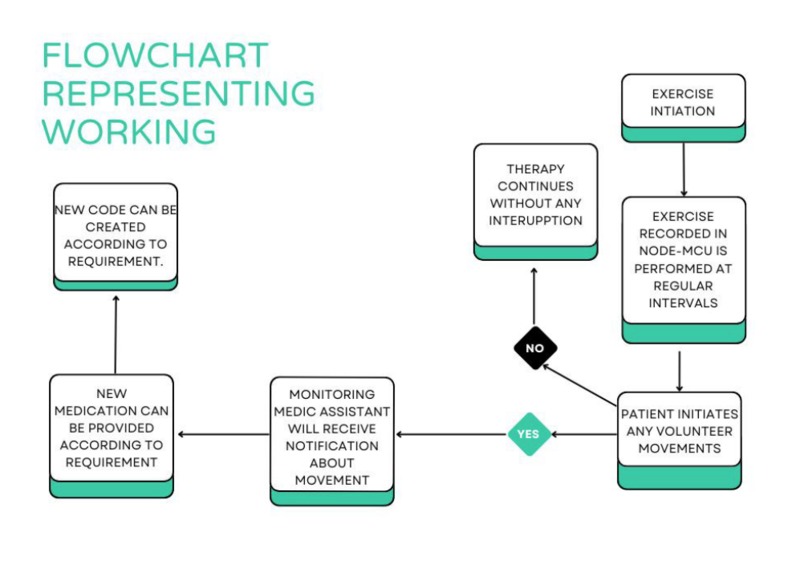
This IoT-enabled robotic system helps paralyzed patients carry out vital exercises such as limb movements, standing, and sitting autonomously at regular intervals. It integrates seamlessly with IoT technologies, ensuring real-time monitoring and adjustment based on each patient’s unique needs, enhancing the rehabilitation process and promoting patient self-reliance.
How we built it
We built this system by integrating hardware (robotic components, sensors) with custom software (for precise control of patient movements). The IoT component enables real-time communication and feedback, allowing for dynamic adjustments during rehabilitation exercises. The system is designed to be scalable and adaptable to different patient requirements and healthcare protocols.
Challenges we ran into
Real-Time Monitoring: Ensuring the system could provide real-time updates and adjust movements based on individual patient conditions was a significant technical challenge. Hardware Integration: Integrating multiple robotic components with the software system while ensuring seamless operation required fine-tuning. Patient Safety: Designing the system to ensure safety during exercise routines, especially for patients with varying levels of mobility, was crucial.
Accomplishments that we're proud of
Successfully developed a prototype that can autonomously assist patients with essential rehabilitation exercises. Achieved a functional IoT system for real-time patient monitoring and movement adjustments. The system’s scalability allows for accommodation of diverse patient needs and healthcare protocols, a key feature we’re particularly proud of.
What we learned
The importance of precise sensor integration and feedback loops to ensure accurate and safe movements. The complexities of working with IoT in healthcare and the potential it holds for improving patient care. How to balance autonomy in the system with the need for real-time oversight, ensuring patient safety and effectiveness.
What's next for Parth
Future improvements will focus on enhancing the system’s adaptability to various physical conditions and disabilities. We aim to integrate additional healthcare features such as remote monitoring by caregivers and integration with other medical devices to offer a holistic healthcare solution. Further research will be dedicated to refining the robotic movements for more natural, efficient, and safe patient exercises.
Built With
- c
- iot
- mobile-application
- wifi

Log in or sign up for Devpost to join the conversation.