-
-
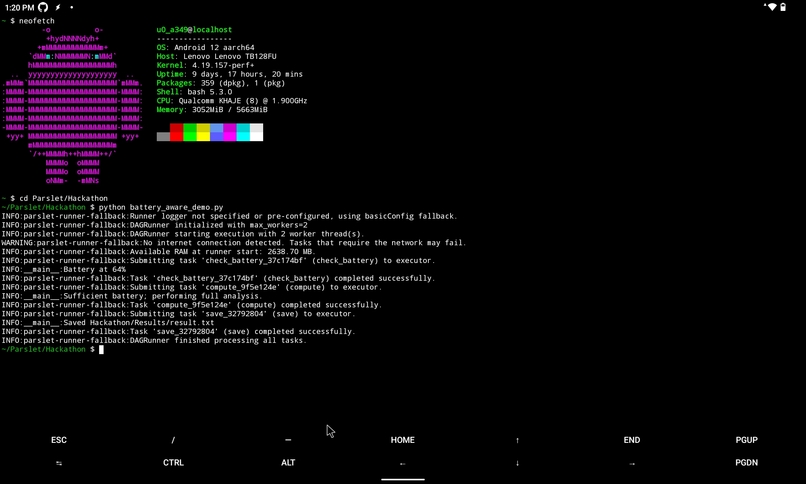
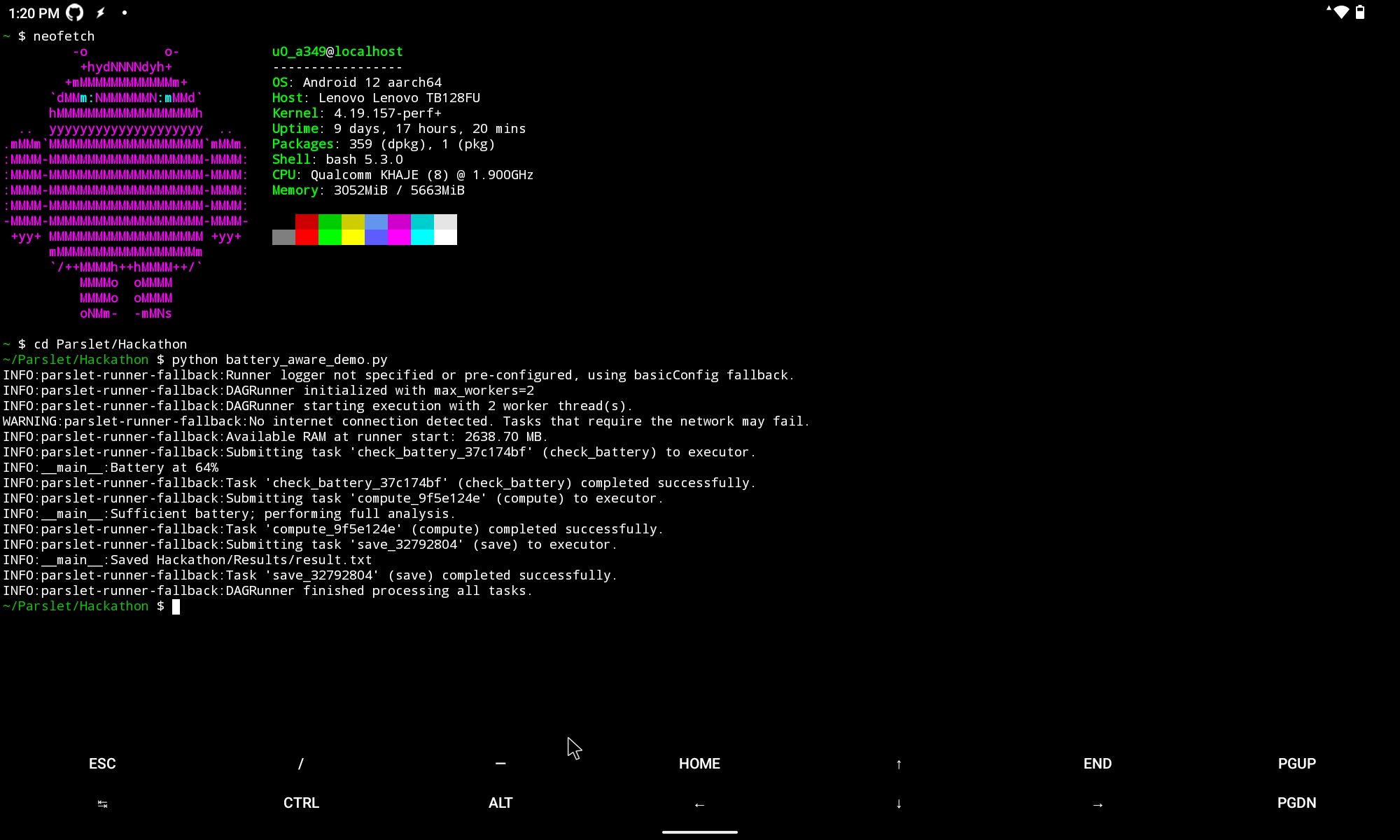
Battery Aware Demo
-
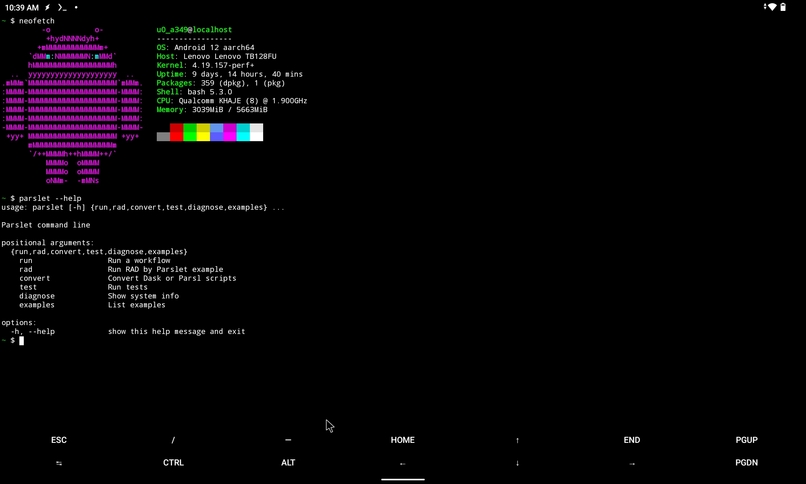
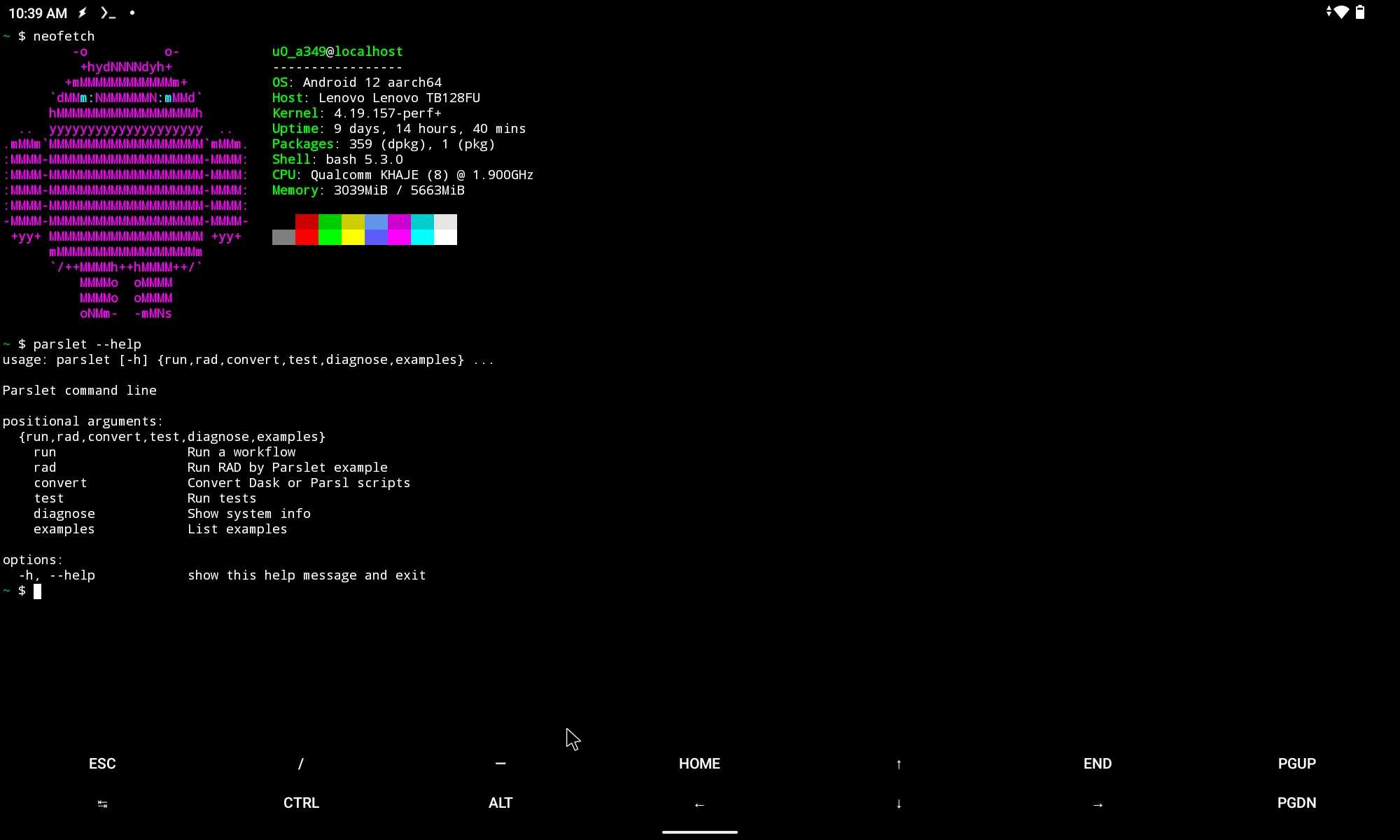
Parslet Help Menu
-
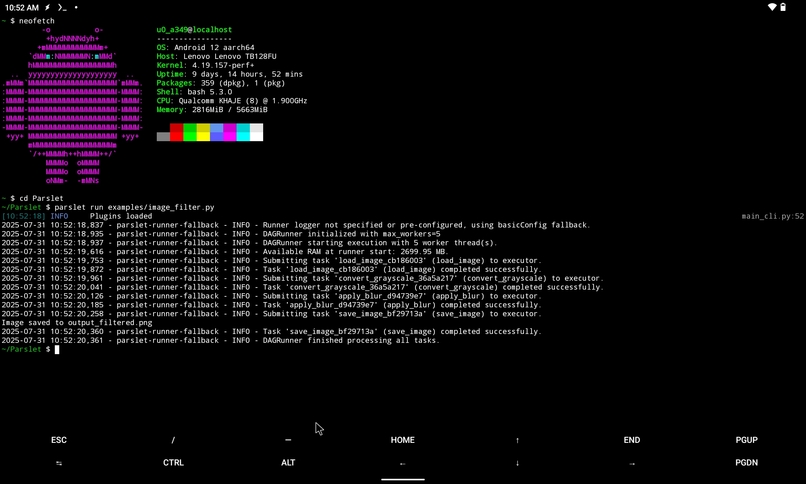
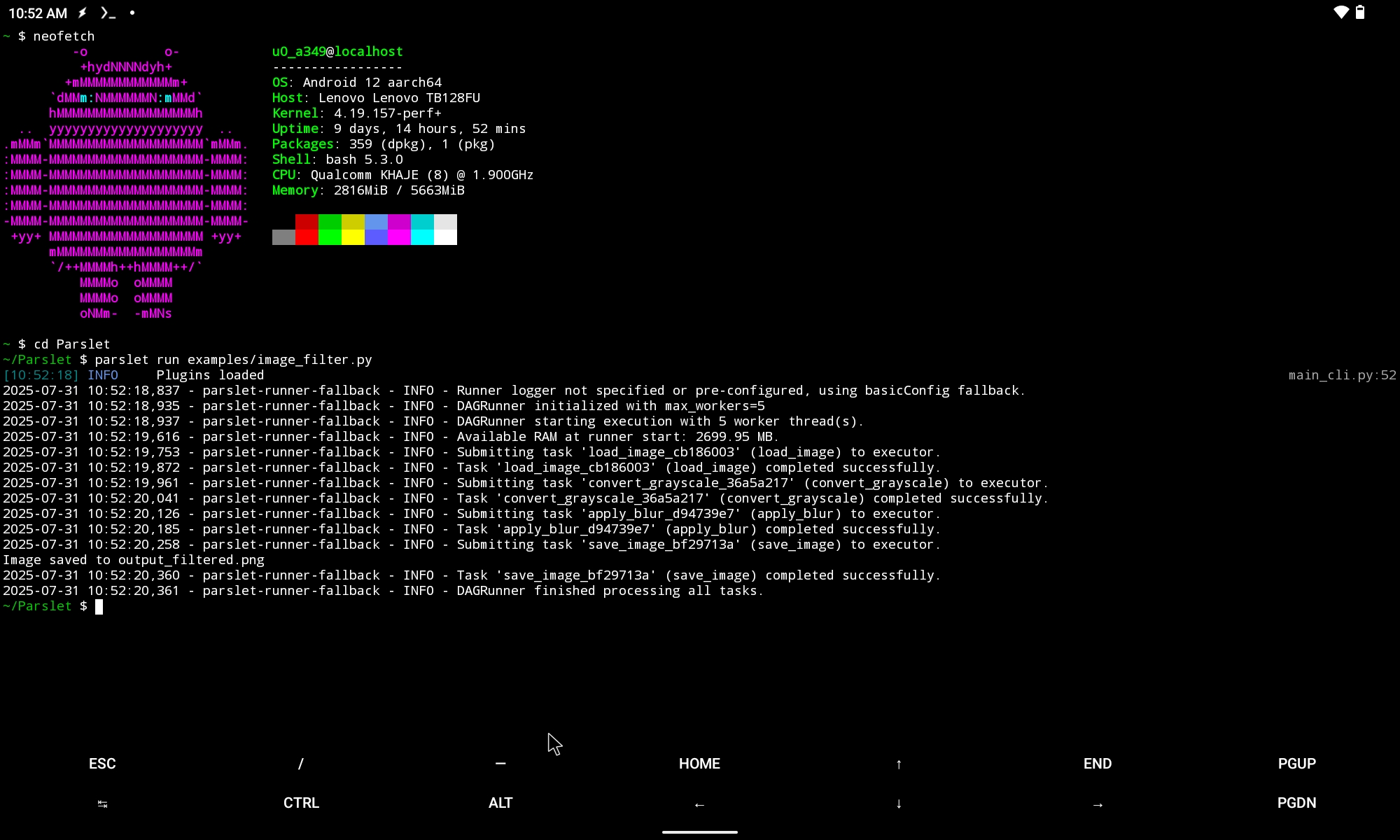
Image Filter Demo
-
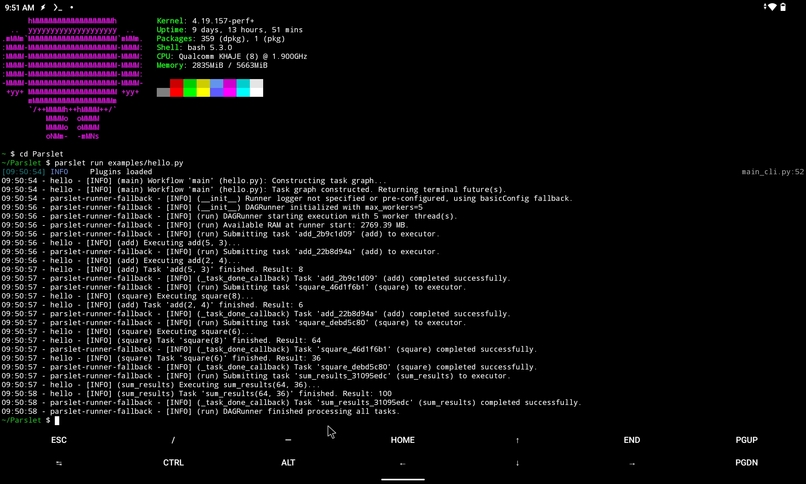
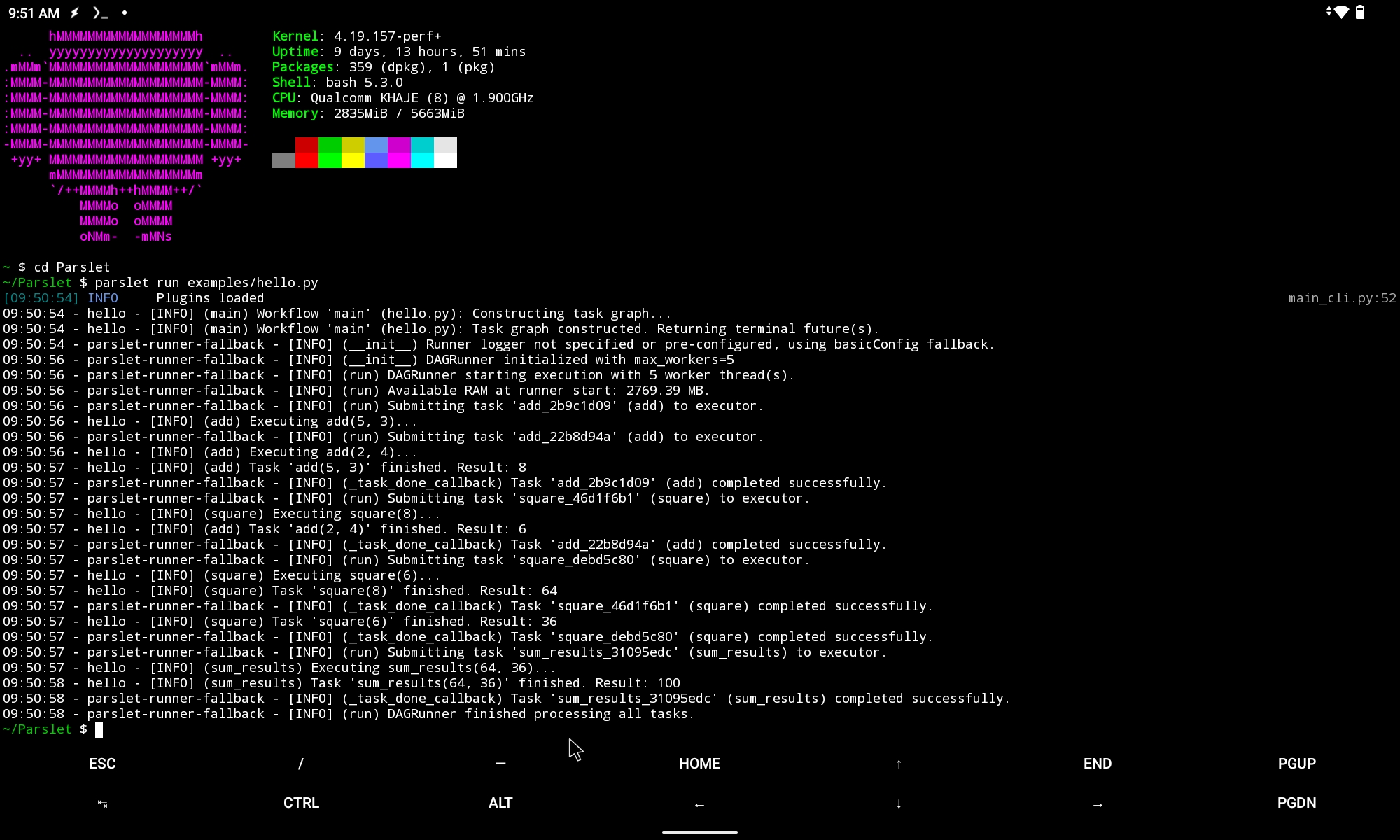
Hello Demo
Inspiration
As an Outreachy intern with Parsl, I saw how powerful parallel task execution could be. But I also realized how out of reach it was for users like me, Android users without access to clusters, servers, or HPC setups. I wanted to make Parsl’s core ideas available to people with nothing more than a smartphone or tablet.
What it does
Parslet is a lightweight parallel task runner that works in low-resource environments like Android (via Termux). It supports DAG-based workflows, battery-aware scheduling, and offline execution. You can create tasks, connect dependencies, and run the whole thing, without needing a cluster or pip install.
How I built it
I used Python and built a custom DAG engine from scratch, optimizing for low memory and CPU usage. I developed and tested directly on an Android tablet using Termux and open-source tools. All visual assets and docs were designed on my Lenovo android tablet, fully mobile-first.
Challenges I ran into
- No access to high-performance computing gear
- Limited electricity and RAM
- No pip/venv support; so I had to avoid heavy dependencies
- Needed to create visualization and execution logic from scratch
- Battery API access was tricky on Android
What I learned
- How to think modularly and keep things lightweight
- That user empathy should guide dev decisions
- How to optimize Python for slow systems
- How to document and test entirely without a laptop
What's next
- PyPI package submission
- Offline GUI for Android
- Support for custom task types and plugins
- Deeper integration with existing Parsl tools
- More examples + native Termux install scripts

Log in or sign up for Devpost to join the conversation.