-
-
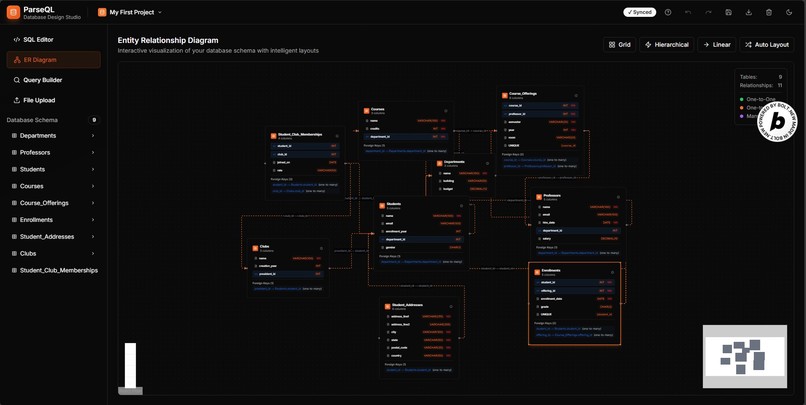
Visualizer
-
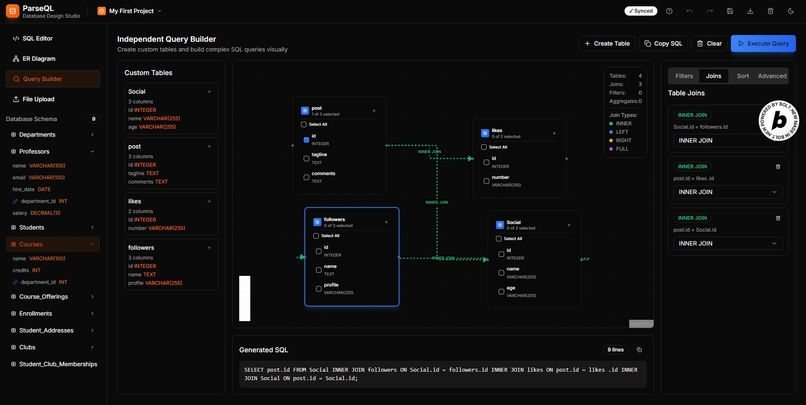
Table Builder
-
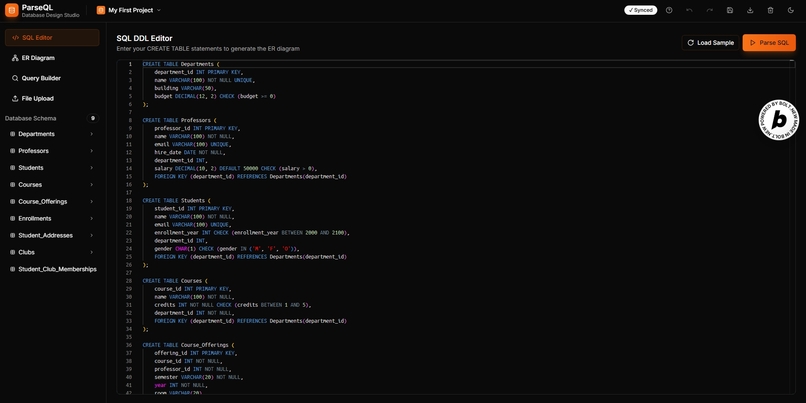
Query Parser
-
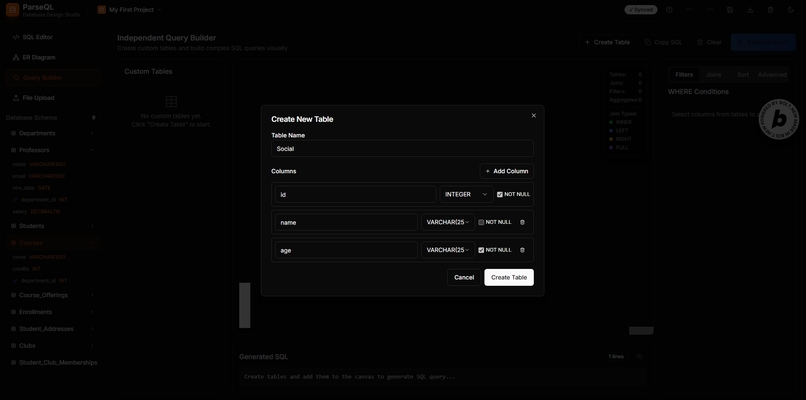
-
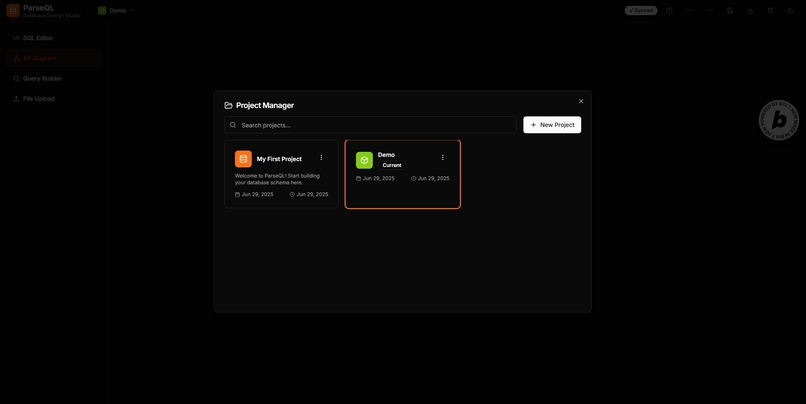
Project Manager
-
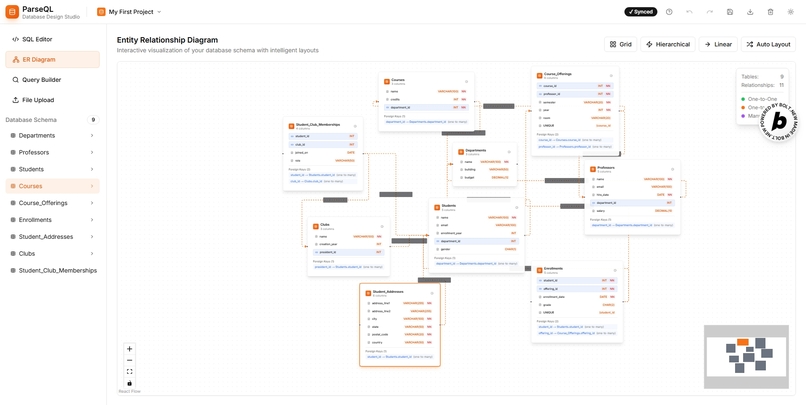
Light mode of application
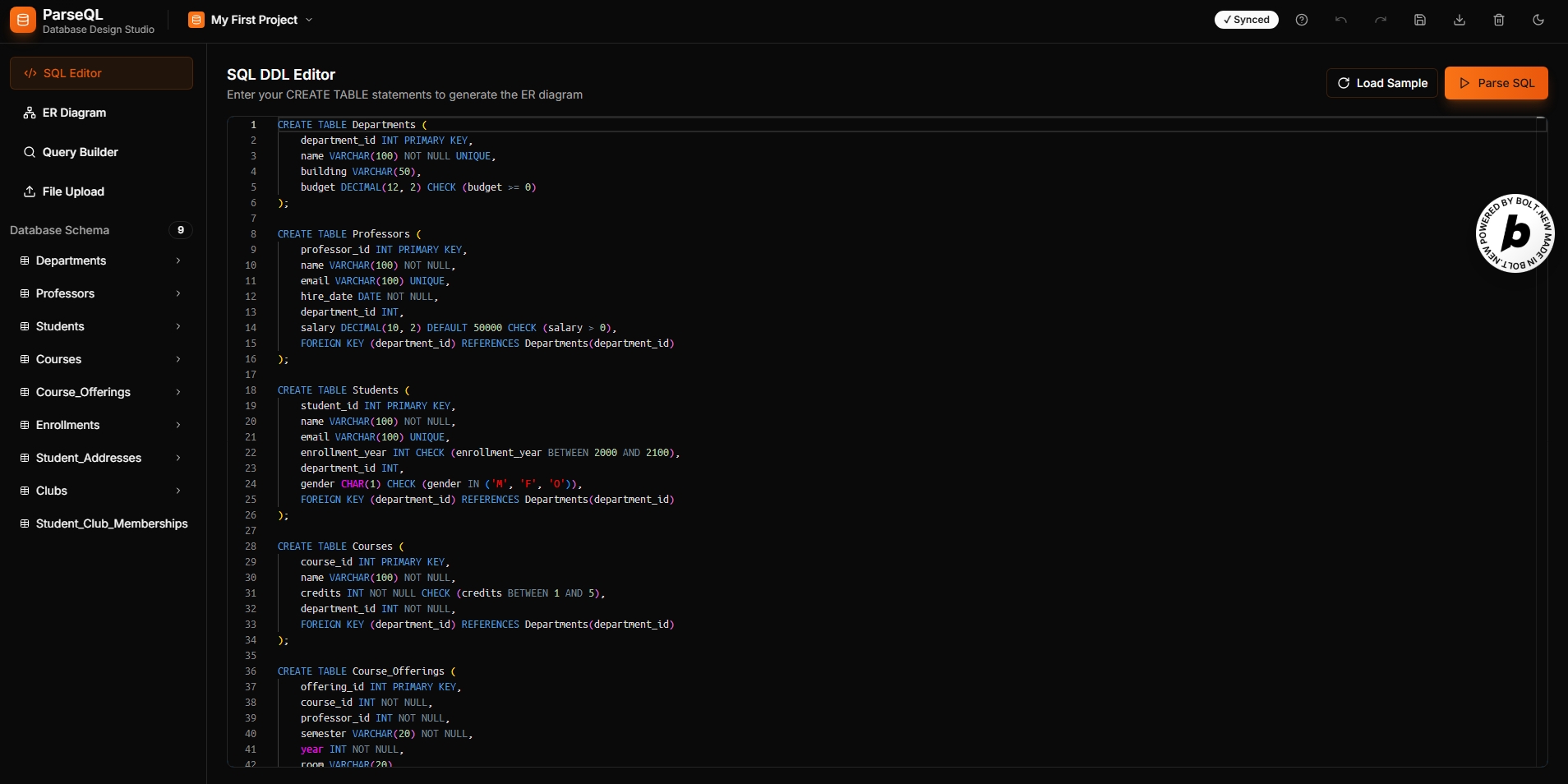
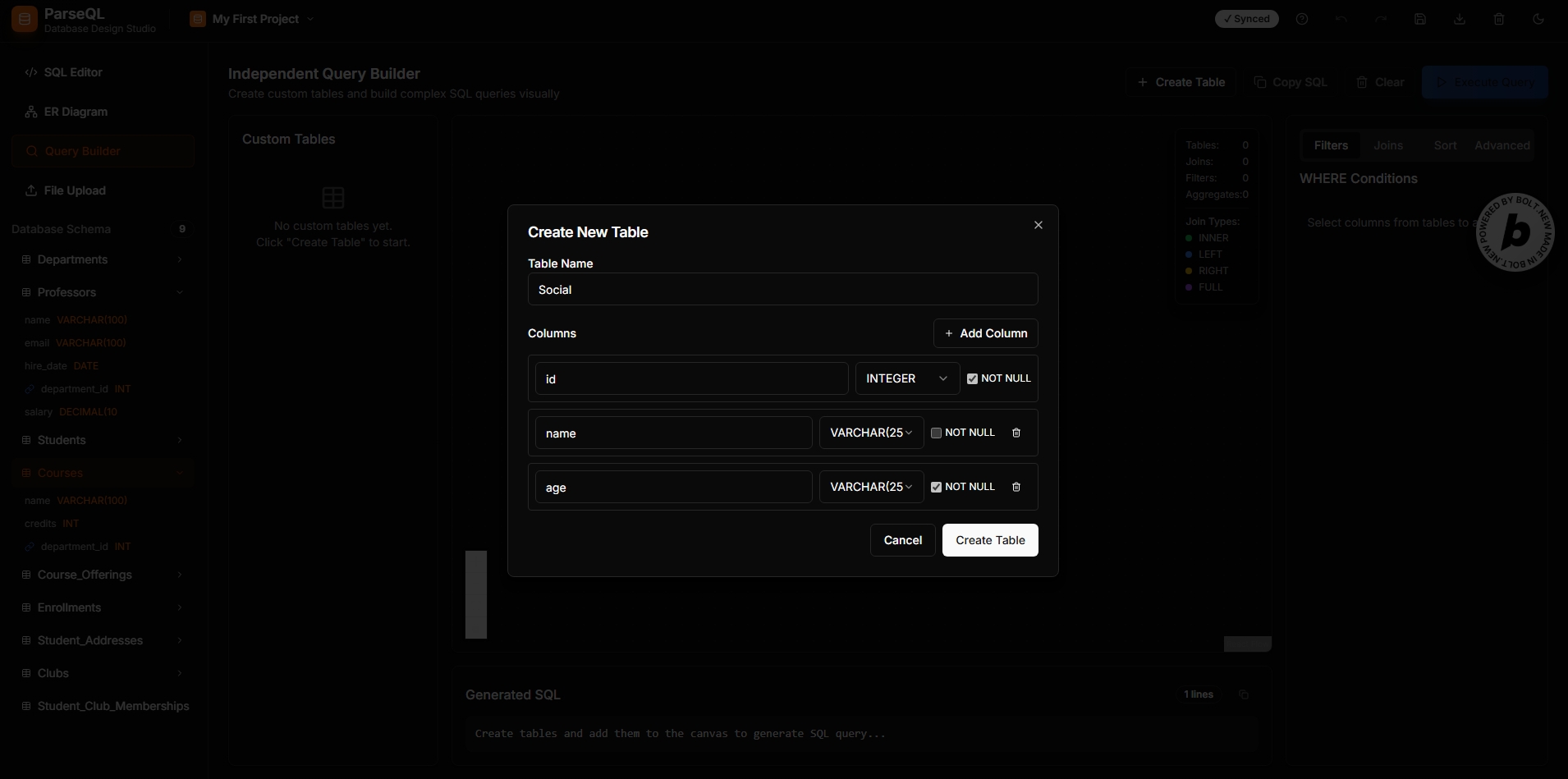
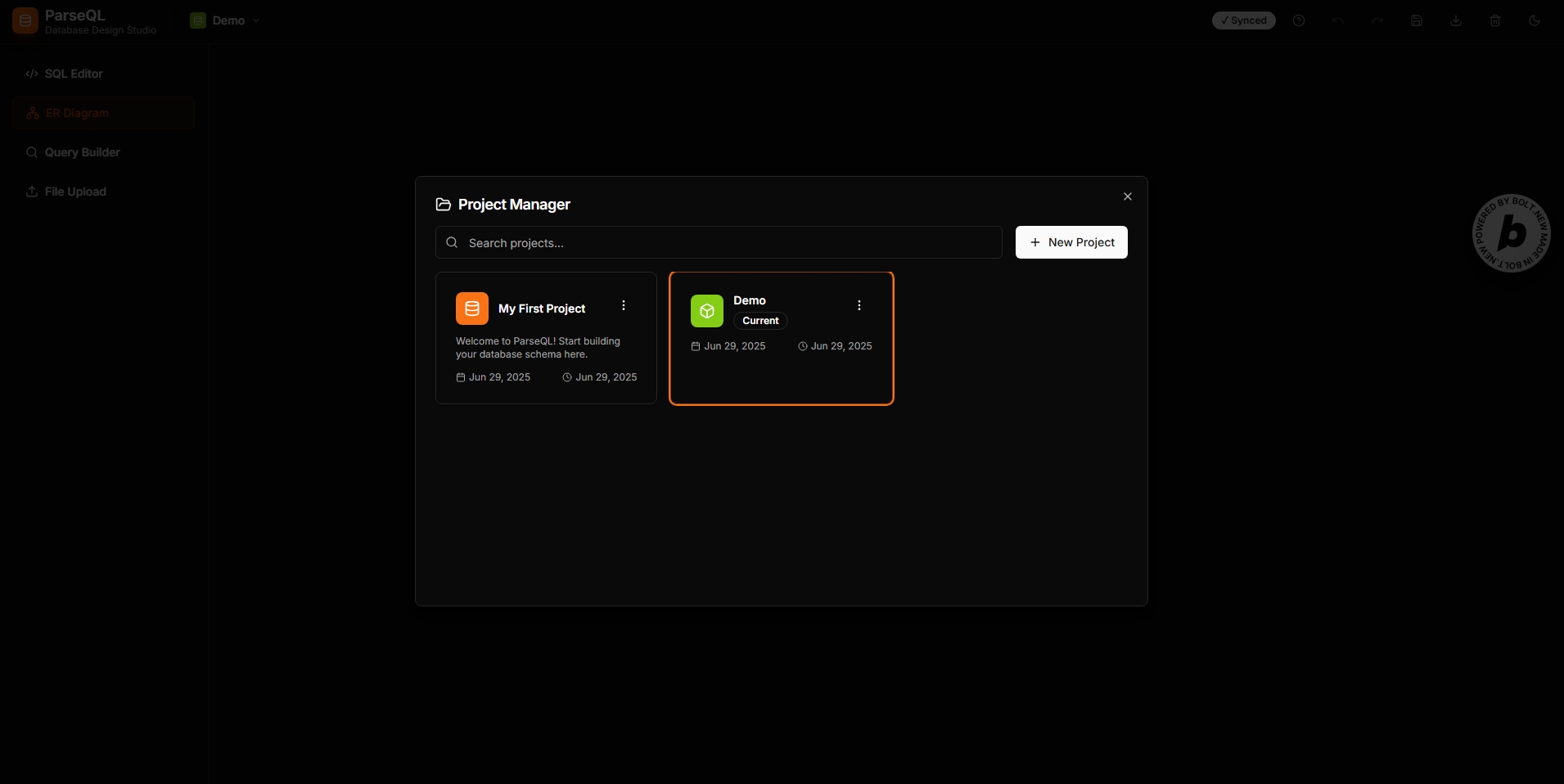
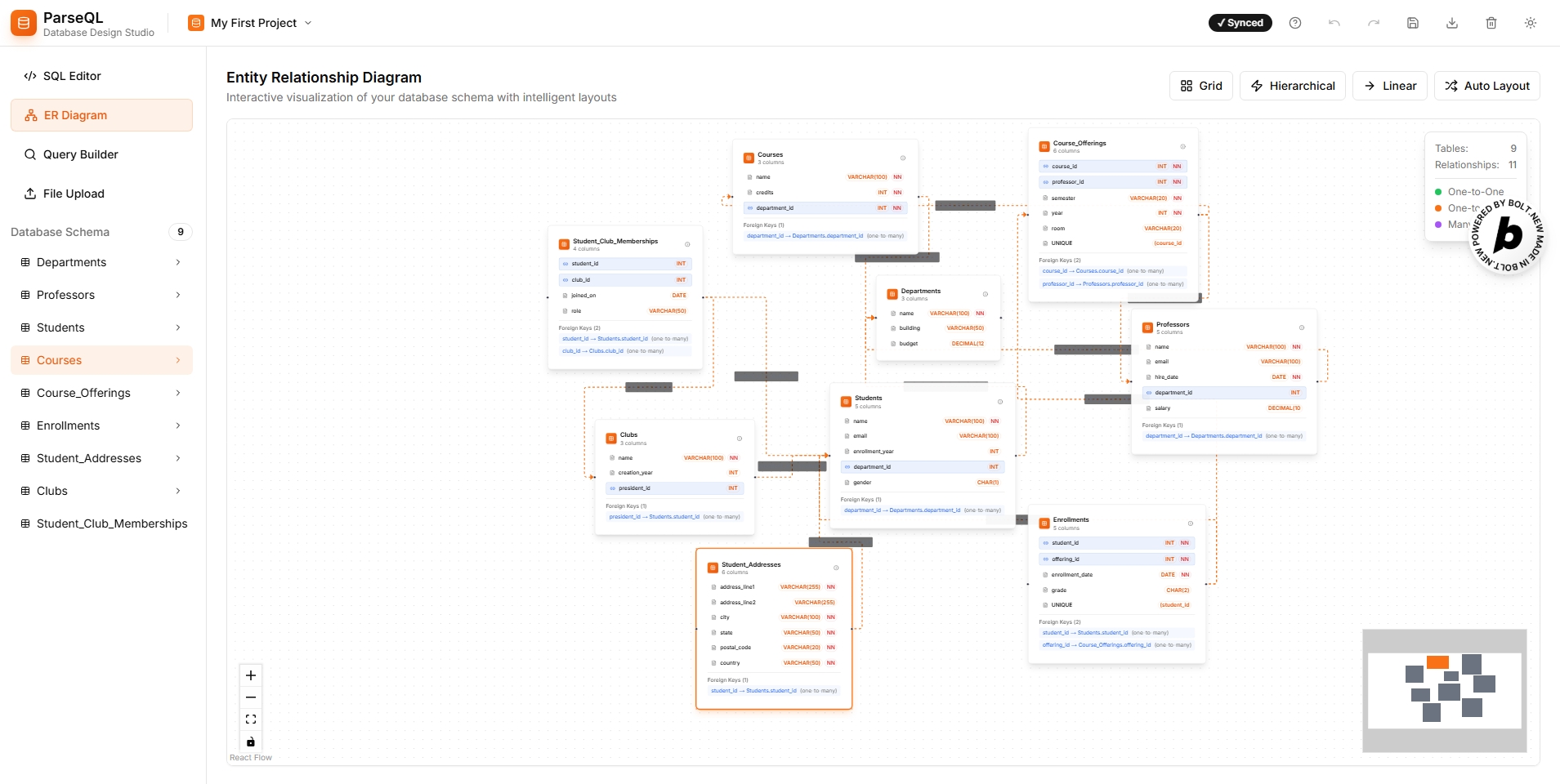
As a seasoned hackathon participant, I've learned that success isn't just about brilliant ideas; it's about execution, resilience, and leveraging every tool at your disposal. "ParseQL" is a testament to that philosophy, a project born from a common frustration and brought to life with unprecedented speed and precision.
Inspiration
ParseQL was born from the need to bridge the gap between abstract SQL DDL statements and their visual representation. I aimed to create an intuitive, visual studio where database design becomes a fluid, interactive experience, empowering anyone to effortlessly design, understand, and query their database schemas.
What it does
ParseQL is a comprehensive, interactive database design studio that transforms raw SQL DDL into dynamic, actionable insights:
- SQL DDL Editor: Write and parse CREATE TABLE statements with syntax highlighting and error detection.
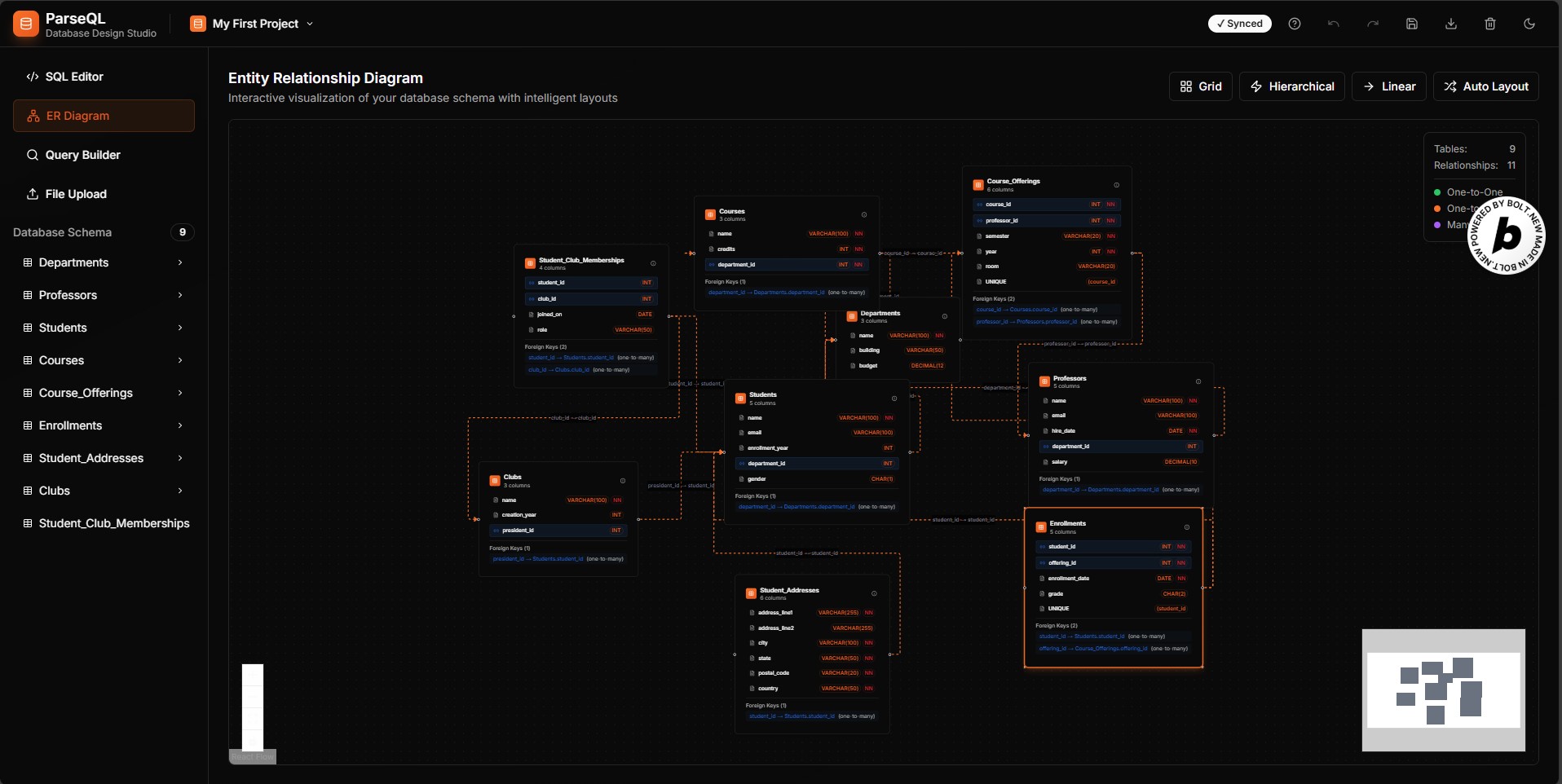
- ER Diagram Visualization: Instantly visualize parsed schemas as interactive Entity-Relationship Diagrams with various intelligent layouts.
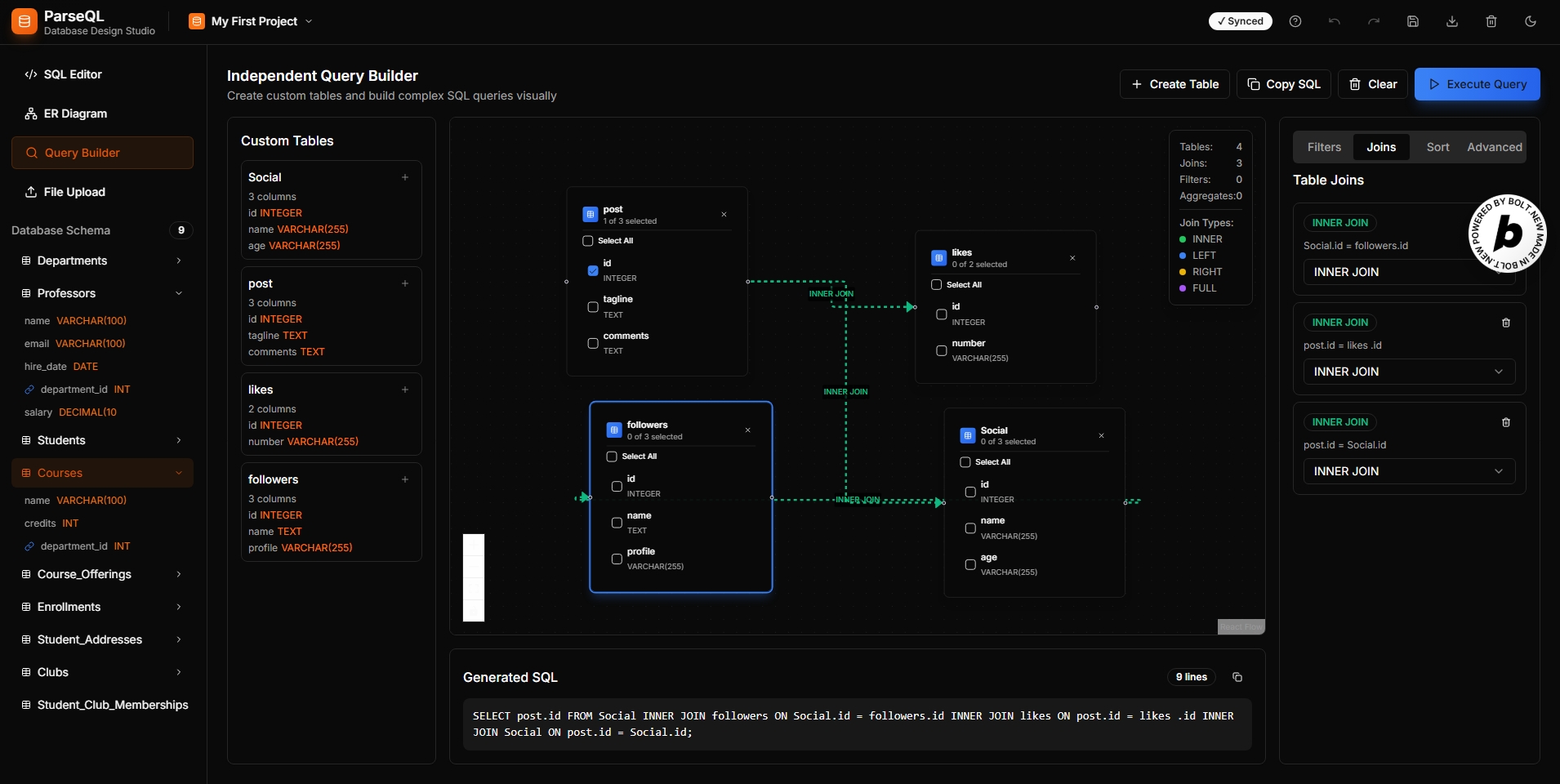
- Visual Query Builder: Construct complex SQL queries visually by dragging tables, setting filters, defining joins, and seeing real-time SQL generation.
- File Import: Upload .sql, .txt, and SQLite database files (.db, .sqlite, .sqlite3) for automatic schema parsing.
- Project Management: Create, manage, and switch between multiple database projects with persistent state.
How we built it
ParseQL is built on a modern web stack:
- Frontend: Next.js, Tailwind CSS, shadcn/ui, Lucide React.
- State Management: Zustand for complex global state.
- Interactive Diagrams: React Flow for ER diagrams and the visual query builder.
- SQL Parsing: Custom TypeScript parser and sql.js for SQLite database files.
- Code Editor: Monaco Editor for the SQL DDL input.
- Mock Backend: Next.js API route for simulated query execution.
Crucially, Bolt acted as an invaluable pair programmer, code generator, and debugging assistant throughout the development process. Its prompt-driven capabilities allowed for rapid iteration and problem-solving, transforming weeks of work into days.
Challenges I ran into
Developing ParseQL as a solo project presented significant hurdles:
- SQL DDL Parsing Complexity: Handling the diverse syntax of SQL DDL was challenging, with debugging parsing errors being particularly time-consuming. Bolt helped refine regex and logic, significantly reducing debugging time.
- Intelligent ER Diagram Layouts: Achieving aesthetically pleasing and functionally useful layouts in React Flow, especially for complex relationships, required extensive fine-tuning. Bolt provided alternative approaches and debugging steps for layout issues.
- Real-time SQL Generation Accuracy: Translating visual interactions into syntactically correct and semantically meaningful SQL queries in real-time was a constant battle. Bolt generated precise code snippets for complex state updates and query logic.
Accomplishments that I am proud of
- Comprehensive Feature Set: Delivering a full-fledged application with diverse functionalities as a solo developer within a tight timeframe.
- Intuitive User Experience: Simplifying complex database tasks through a clean, modern, and highly intuitive interface.
- Robust SQL Parsing & SQLite Support: Successfully implementing a versatile parser and integrating sql.js for direct in-browser SQLite database file parsing.
- Rapid Development with Bolt: The speed at which this project evolved, from concept to a polished application, is a testament to the transformative power of AI-assisted development.
What we learned
This project profoundly demonstrated the power of AI-assisted development:
- AI as a Force Multiplier: Bolt wasn't just a tool; it was a constant companion, enabling me to operate with the efficiency of a larger team, tackling complex problems with unprecedented speed.
- Importance of Prompt Engineering: The quality of AI output directly correlated with the clarity and specificity of my prompts.
What's next for ParseQL
- Advanced Schema Editing: Direct in-diagram editing of tables, columns, and relationships.
- Live Database Connectivity: Support for connecting to live PostgreSQL, MySQL, and other databases.
- Schema Versioning & Collaboration: Features for tracking changes and multi-user collaboration.
- Code Generation: Expanding to generate ORM models, API endpoints, or migration scripts.
- Business Model & User Engagement: Strategically leveraging ParseQL as a business to drive user adoption by simplifying database design, helping users understand complex schemas, and empowering them to build more efficiently.
Built With
- immer
- monaco-editor
- next
- react
- reactflow
- shadcn
- sonner
- sql.js
- tailwind
- zod
- zustand


Log in or sign up for Devpost to join the conversation.