Inspiration Many industries are still buried in paper. Whether it's an insurance claim or an immigration filing, people spend hours manually typing data from scanned images into digital systems. We wanted to build a tool that removes this friction by making paper documents "machine-readable" instantly.
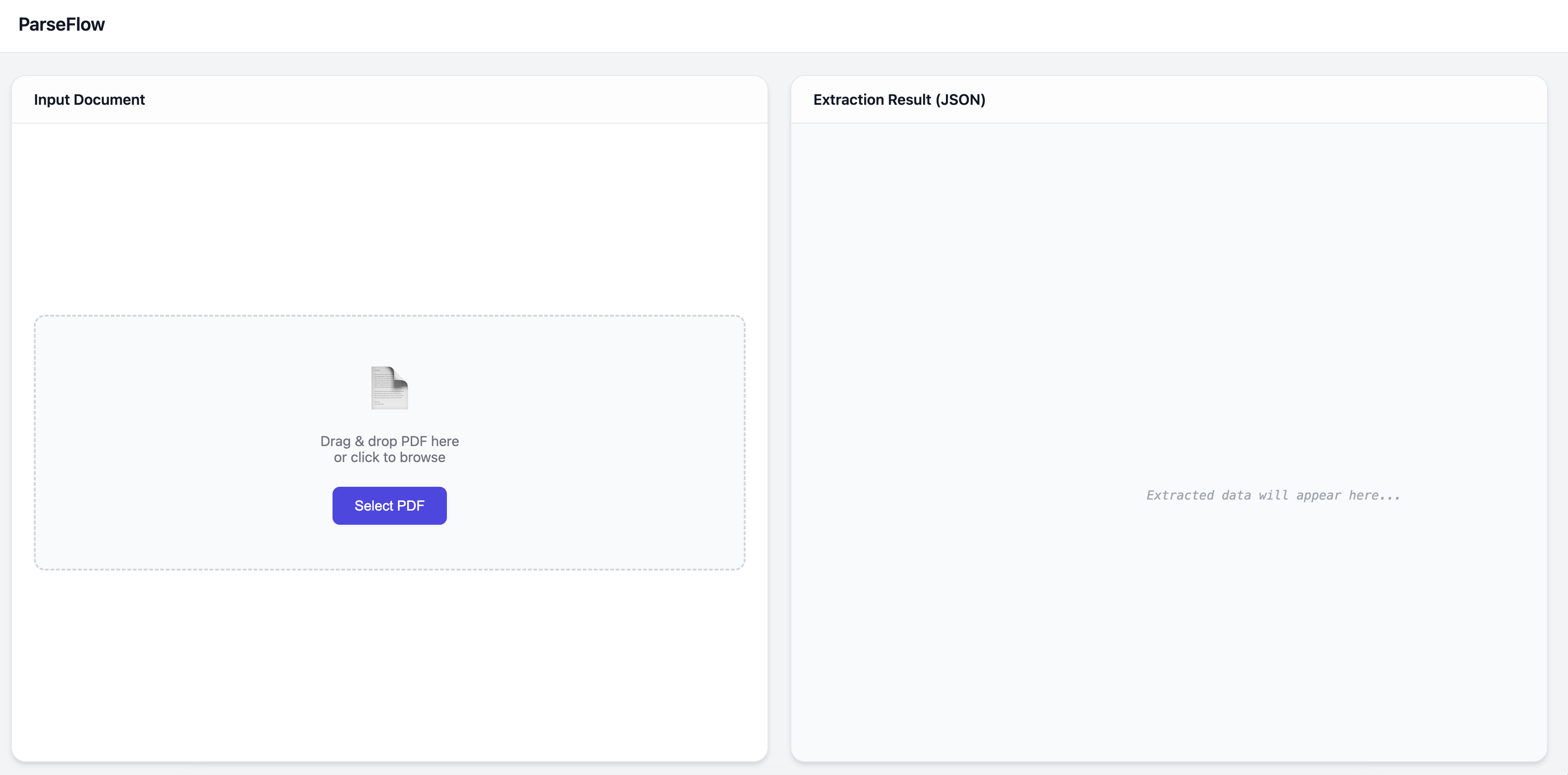
What it does ParseFlow takes an image of a complex application form and converts it into a structured JSON file.
It identifies key-value pairs (e.g., Name: John Doe).
It recognizes the state of checkboxes and tables.
It outputs clean data that can be plugged into any existing database or software.
How we built it We utilized a combination of Computer Vision and Large Language Models (LLMs). The system first analyzes the layout of the document to understand where the data sits, then uses AI to extract the text and map it into a standardized JSON schema.
Challenges we ran into The biggest challenge was handling real-world document quality. Scanned forms are often tilted, blurry, or contain messy handwriting. We spent a lot of time refining the pre-processing logic to ensure the AI could still "read" the form accurately even if the photo wasn't perfect.
Accomplishments that we're proud of We successfully created a flexible engine that doesn't just work for one type of form. We’ve tested it on various layouts—from legal petitions to insurance intake forms—and consistently received structured data that requires minimal human correction.
What we learned We learned that the "structure" of the data is just as important as the text itself. Simply extracting words is easy; the real value lies in knowing exactly which "key" those words belong to so that the data is immediately useful for developers.
What's next for ParseFlow Our goal is to improve the handling of handwritten notes and to create direct integrations for common industry platforms. We want to make ParseFlow the "copy-paste" button for the physical world.

Log in or sign up for Devpost to join the conversation.