-
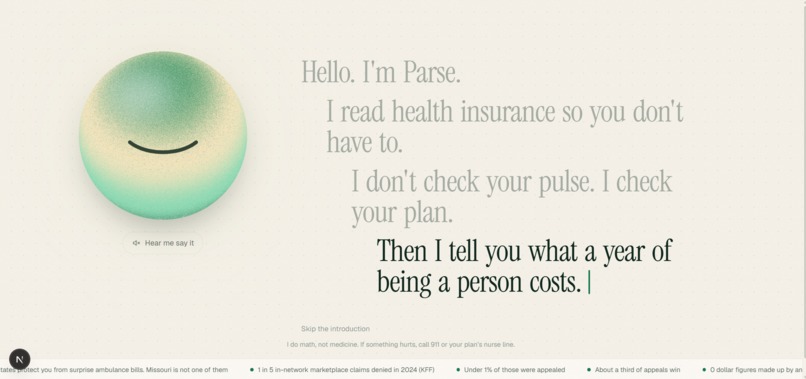
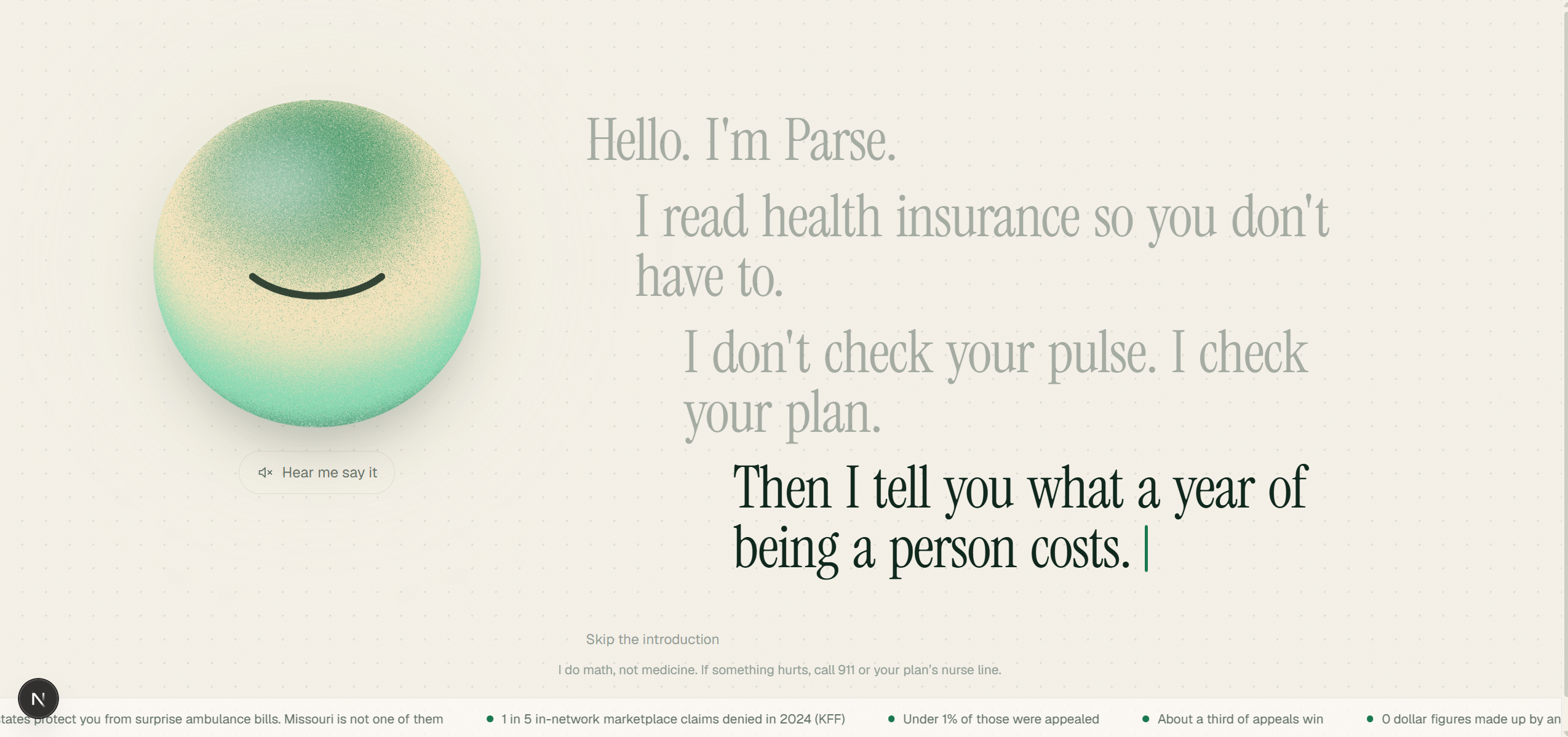
Landing Page
-
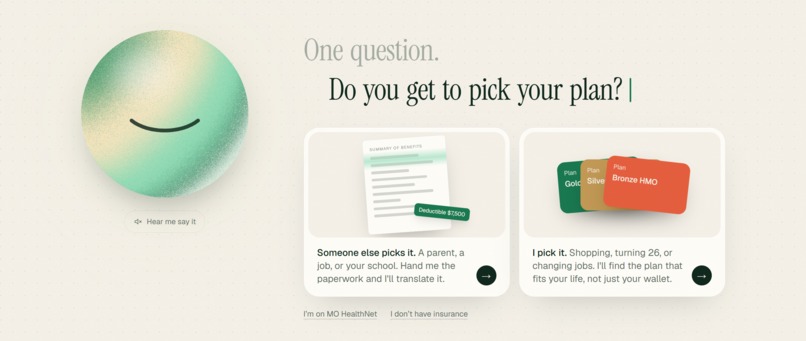
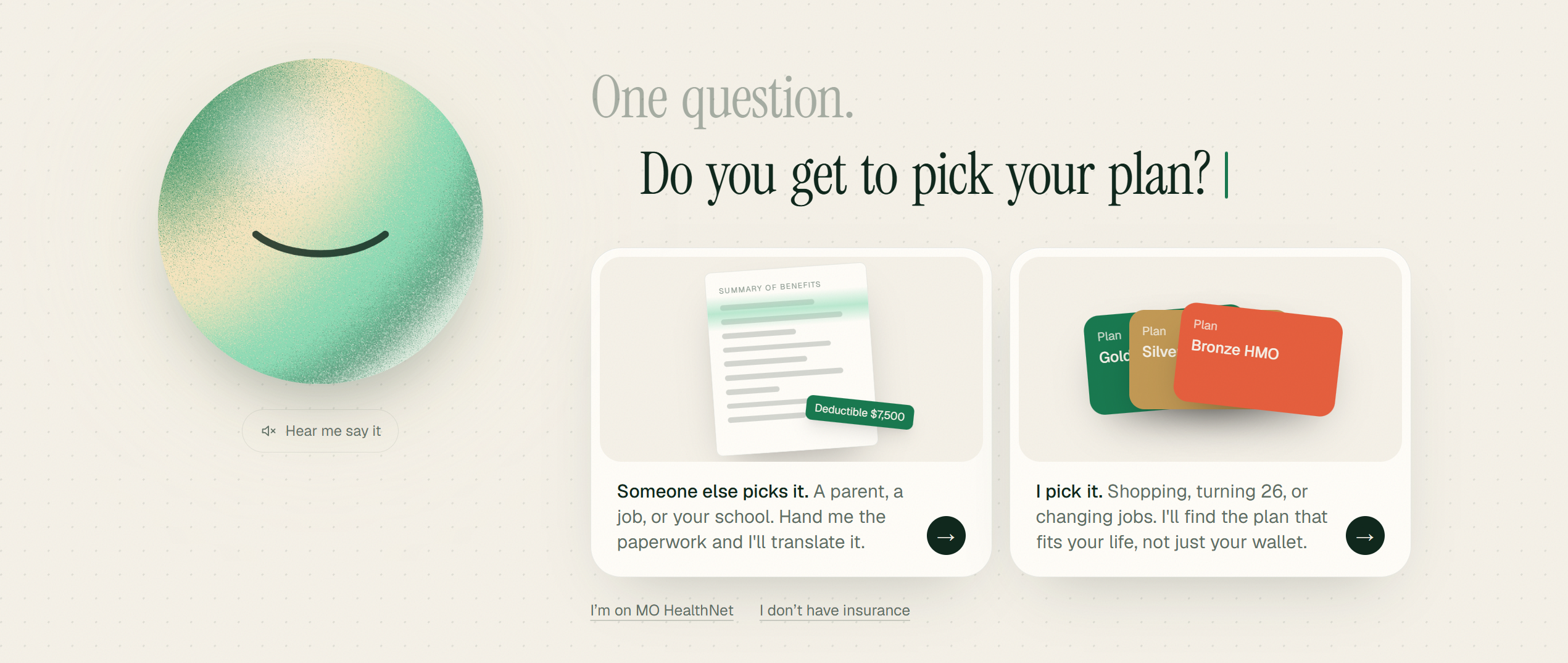
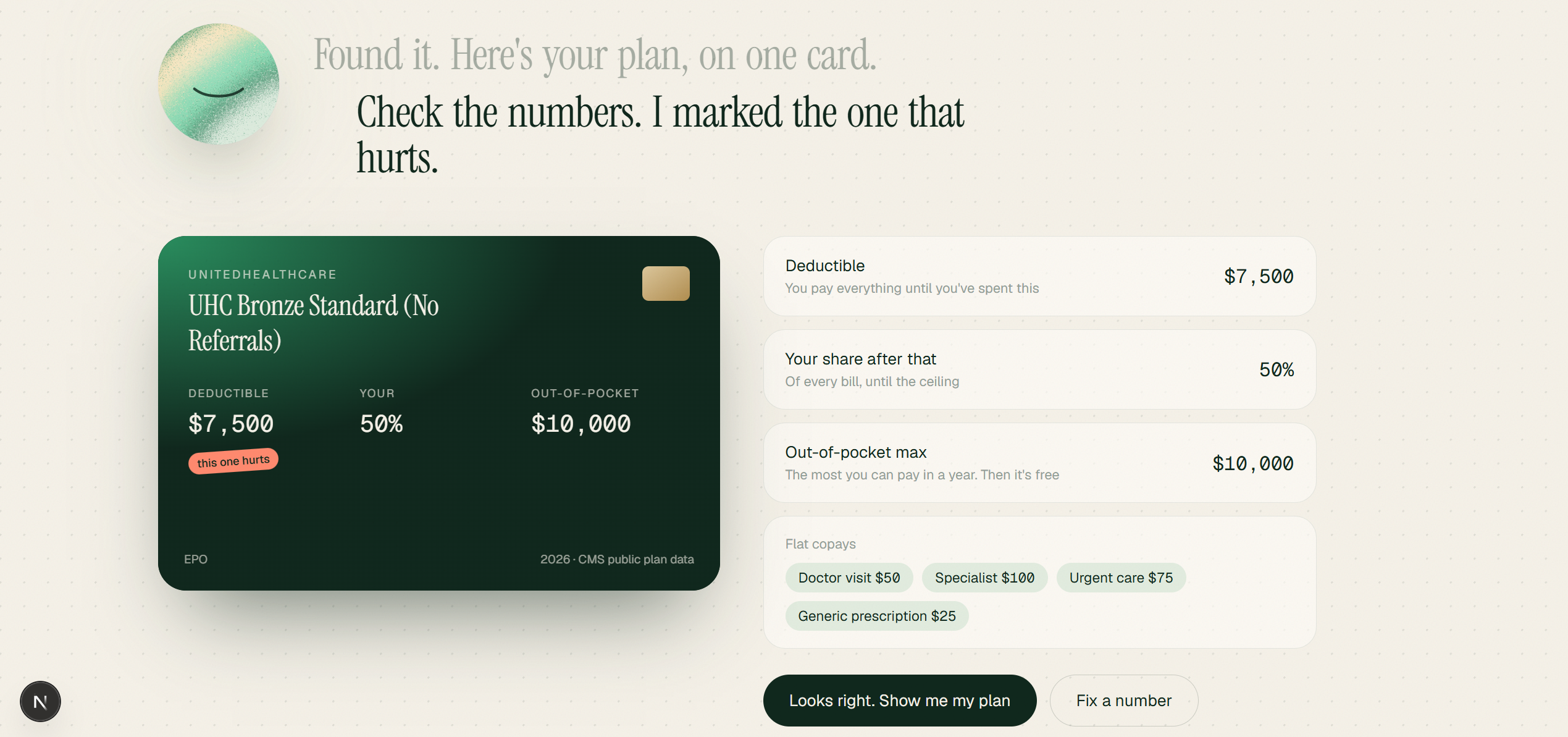
Plan Selection Graphic
-
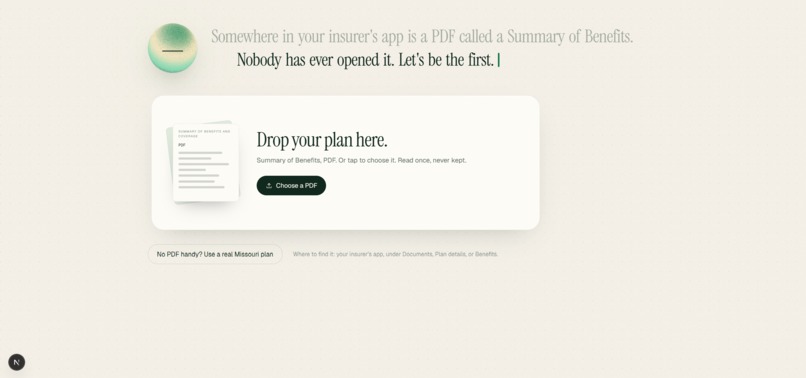
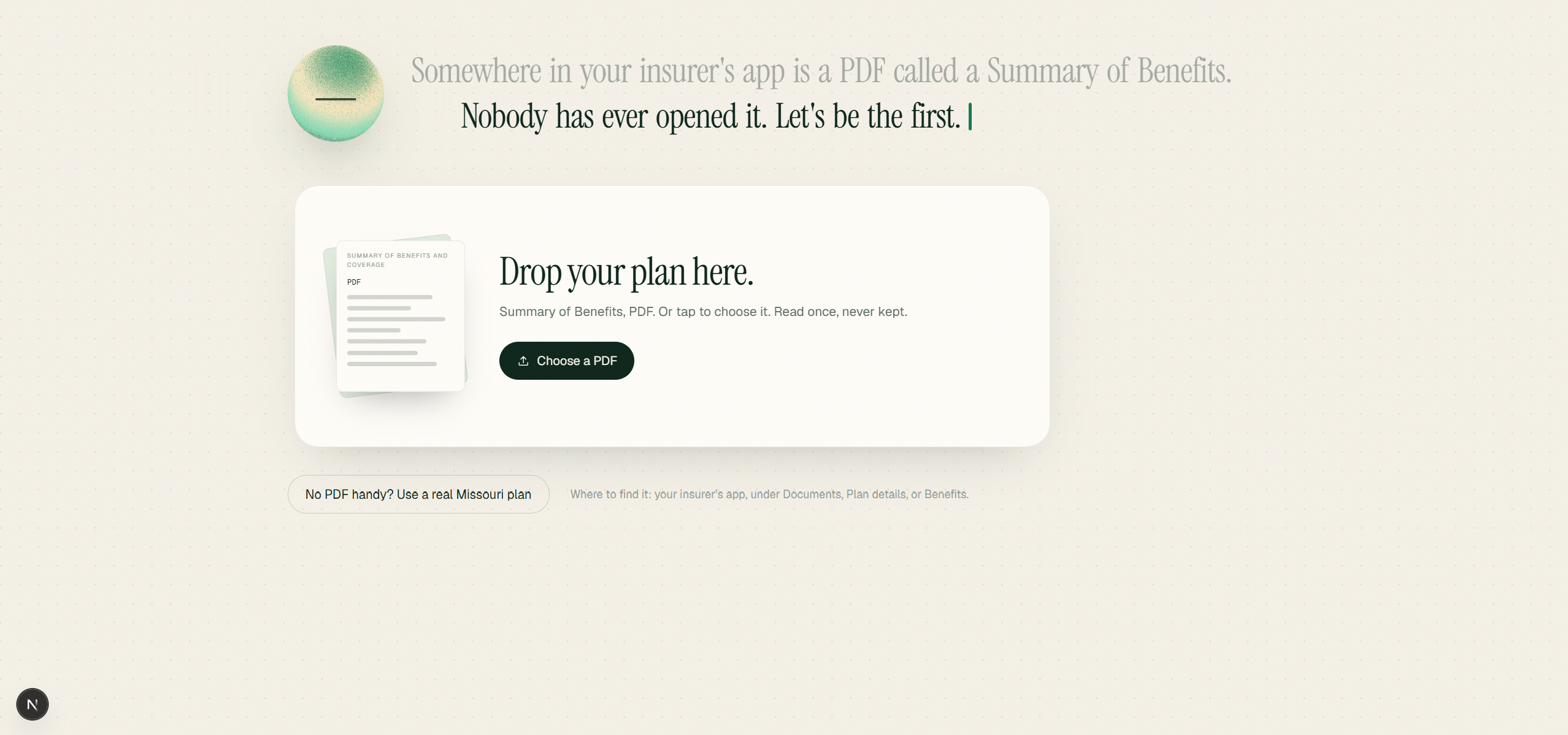
Drop Benefits of Summary PDF Here
-
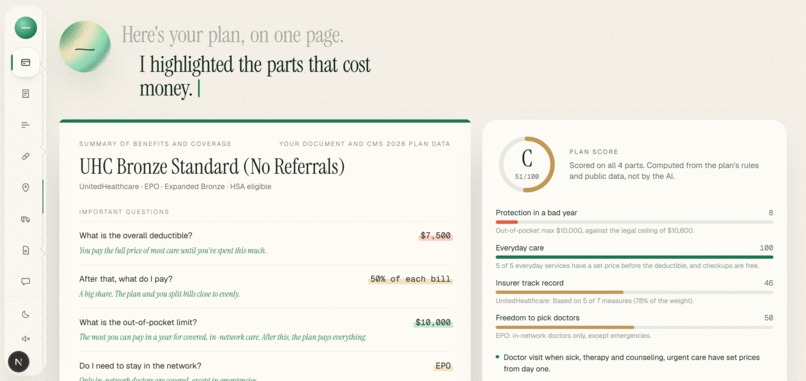
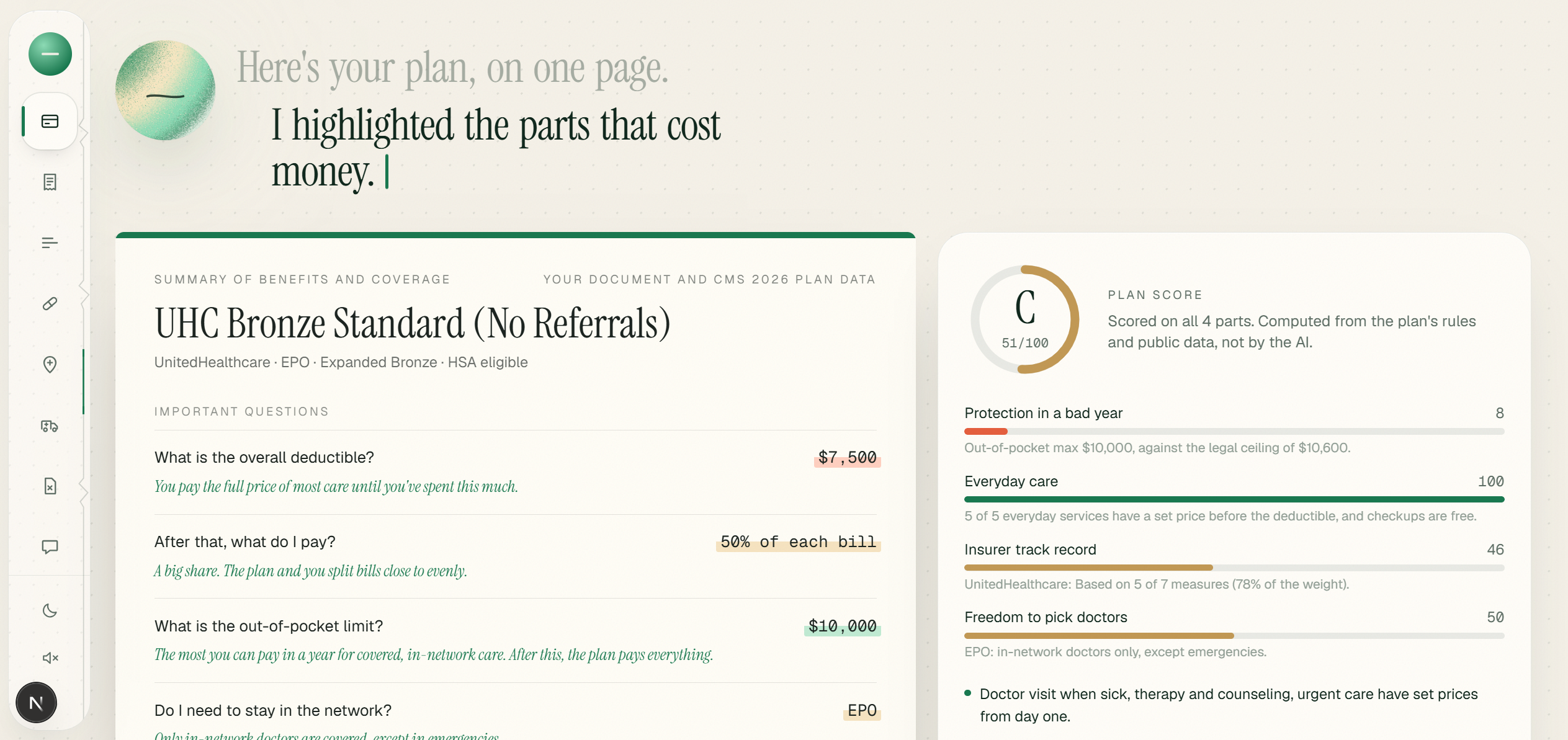
Displaying Benefits Summary through a Clean Dashboard
-
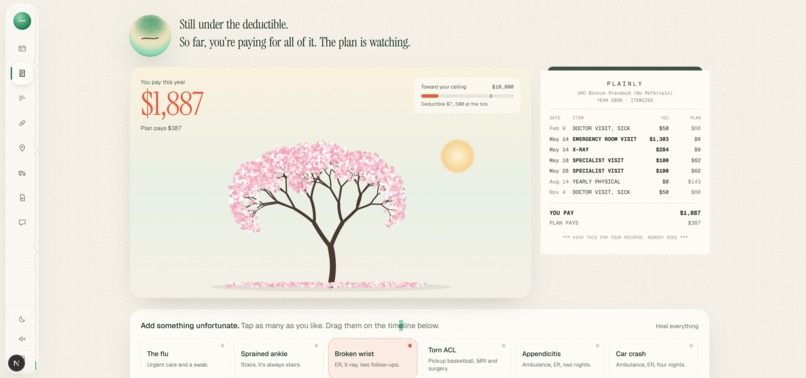
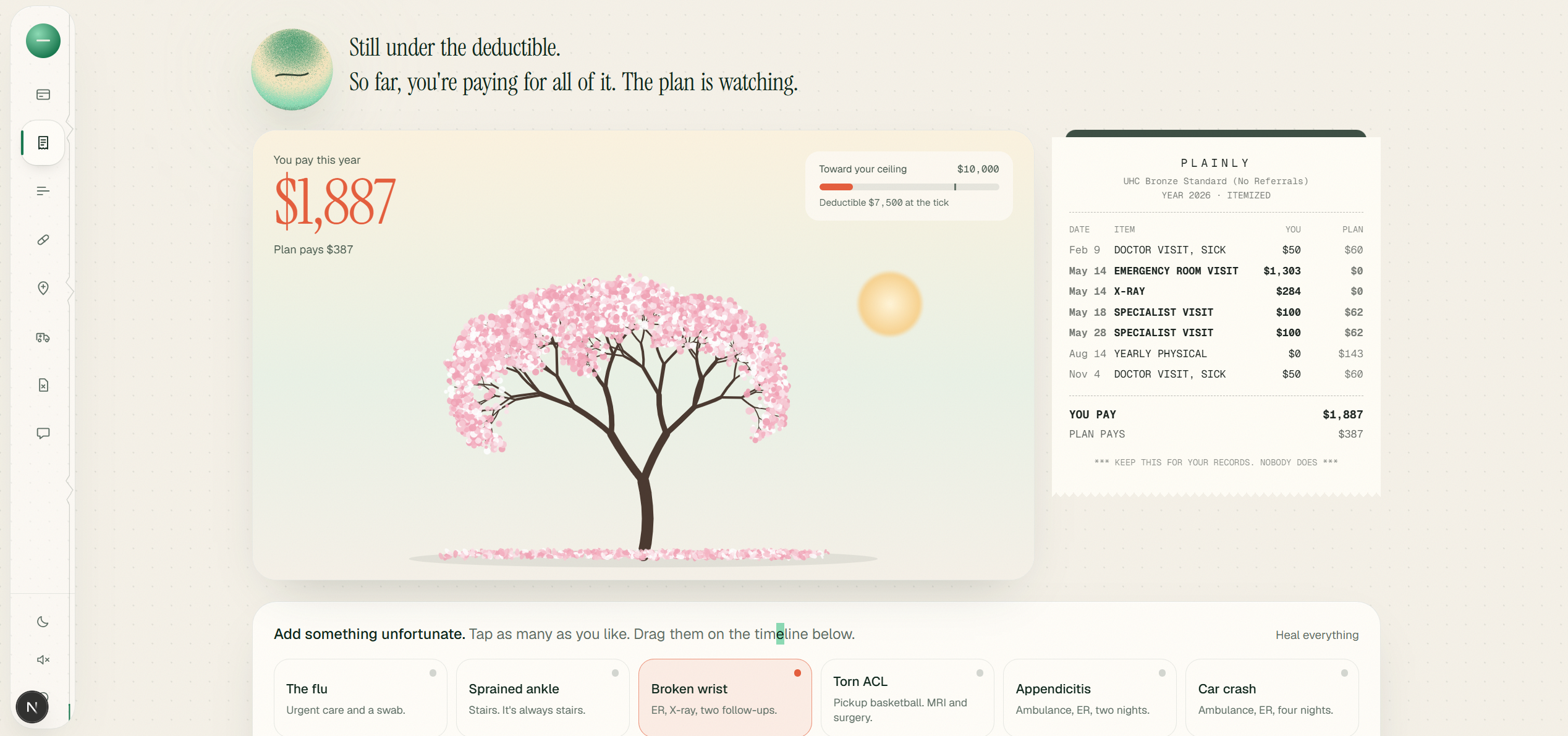
Sick Graphic for Cost Visualization
-
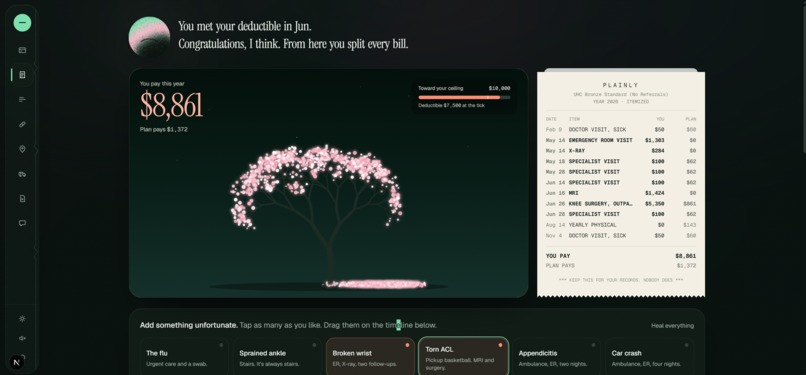
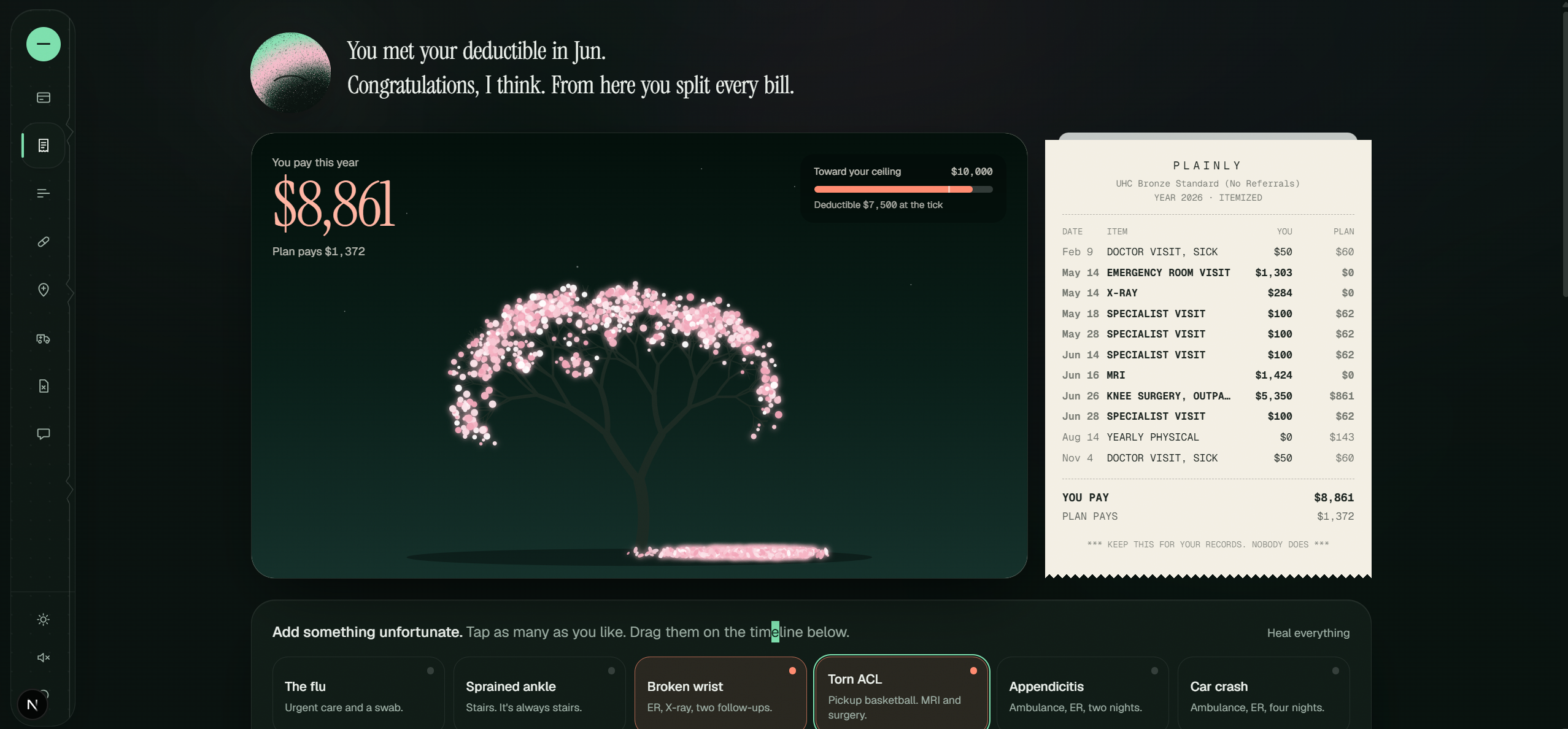
Continued Sick Graphic for Cost Visualization
-
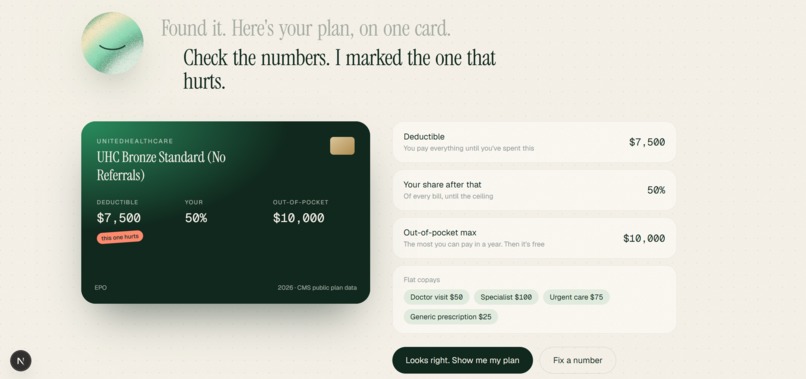
Finding plans through CMS API
-
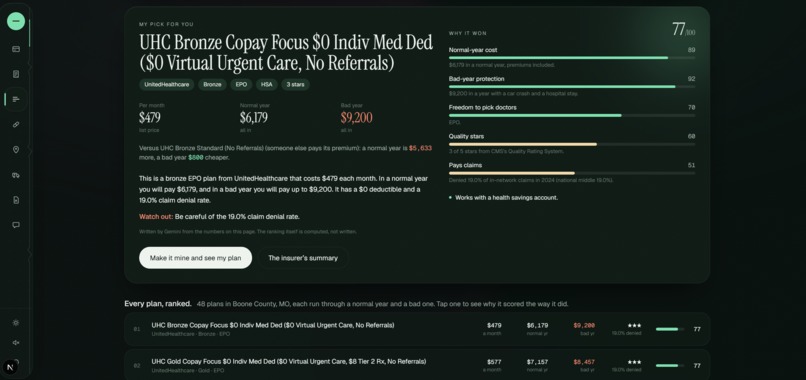
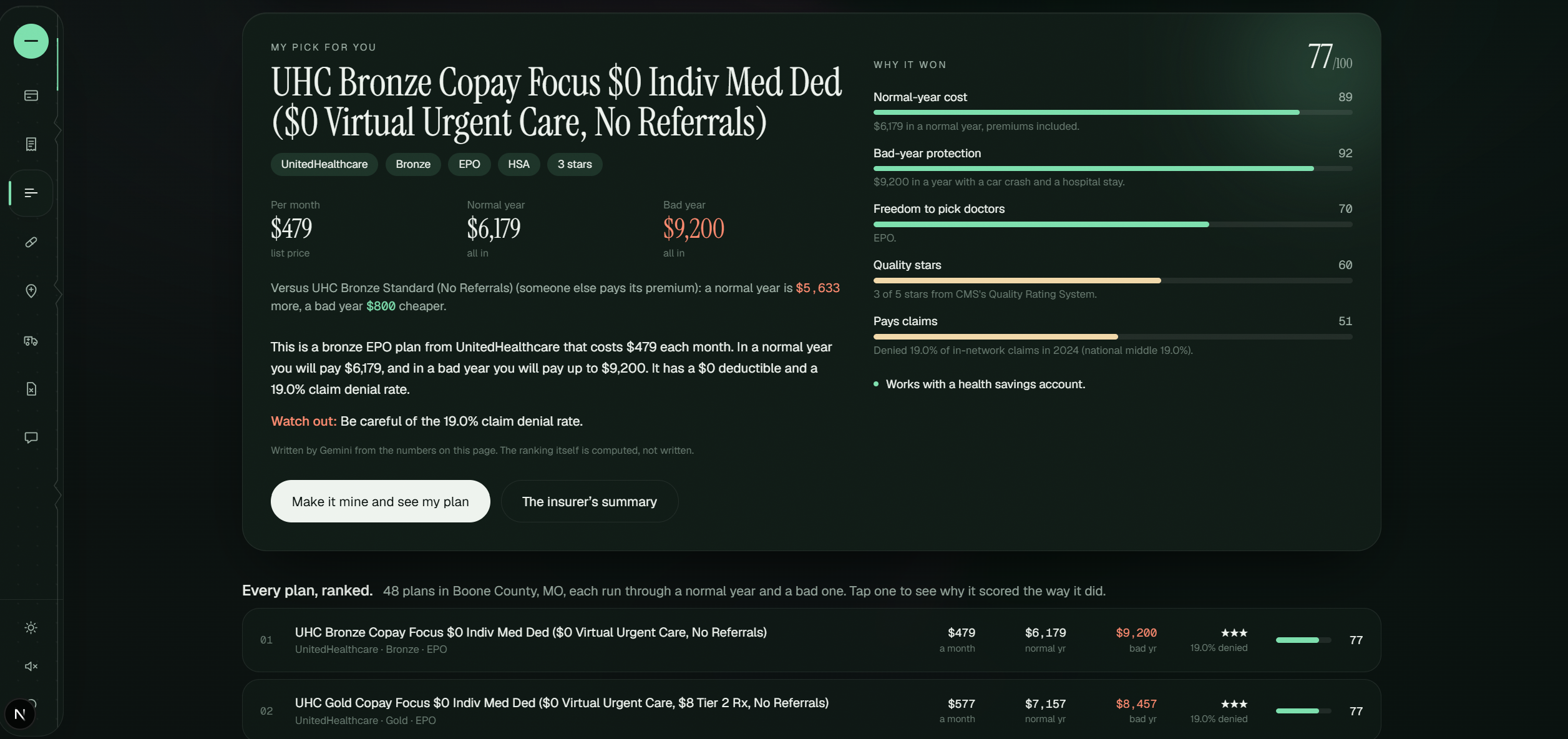
Ranking Plans based on Engine
-
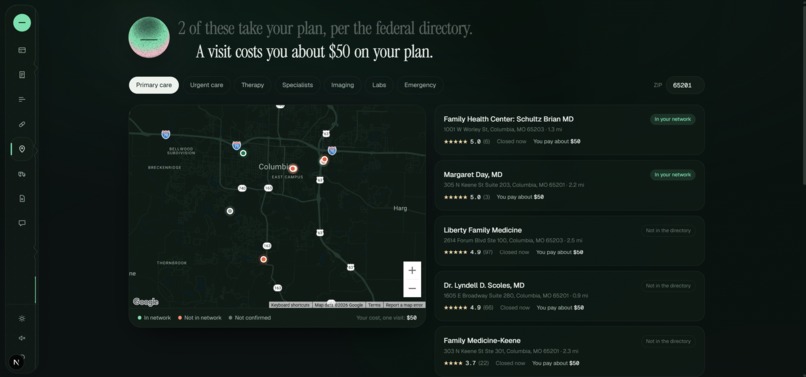
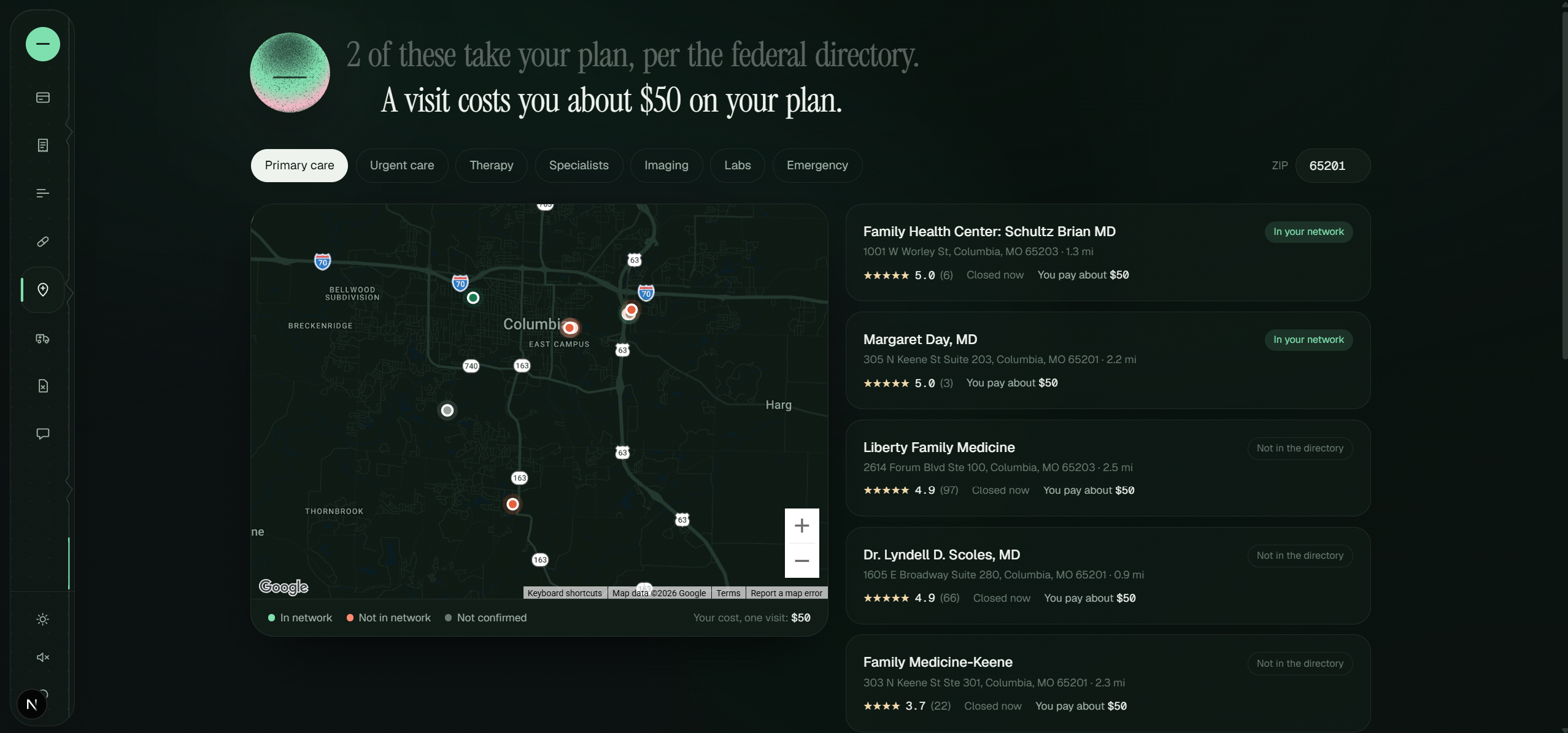
Maps integration to find providers and services nearby
-
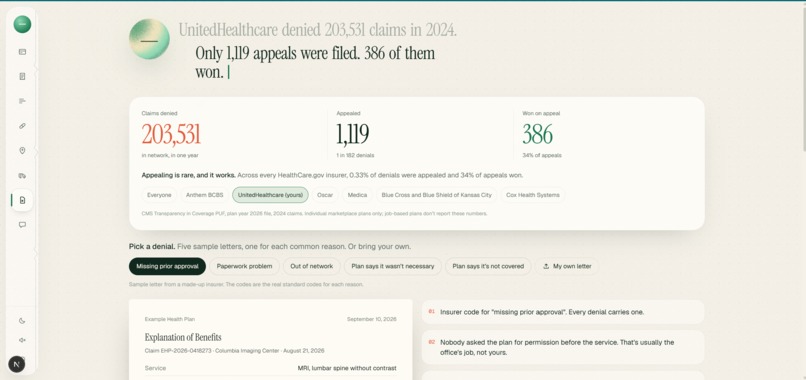
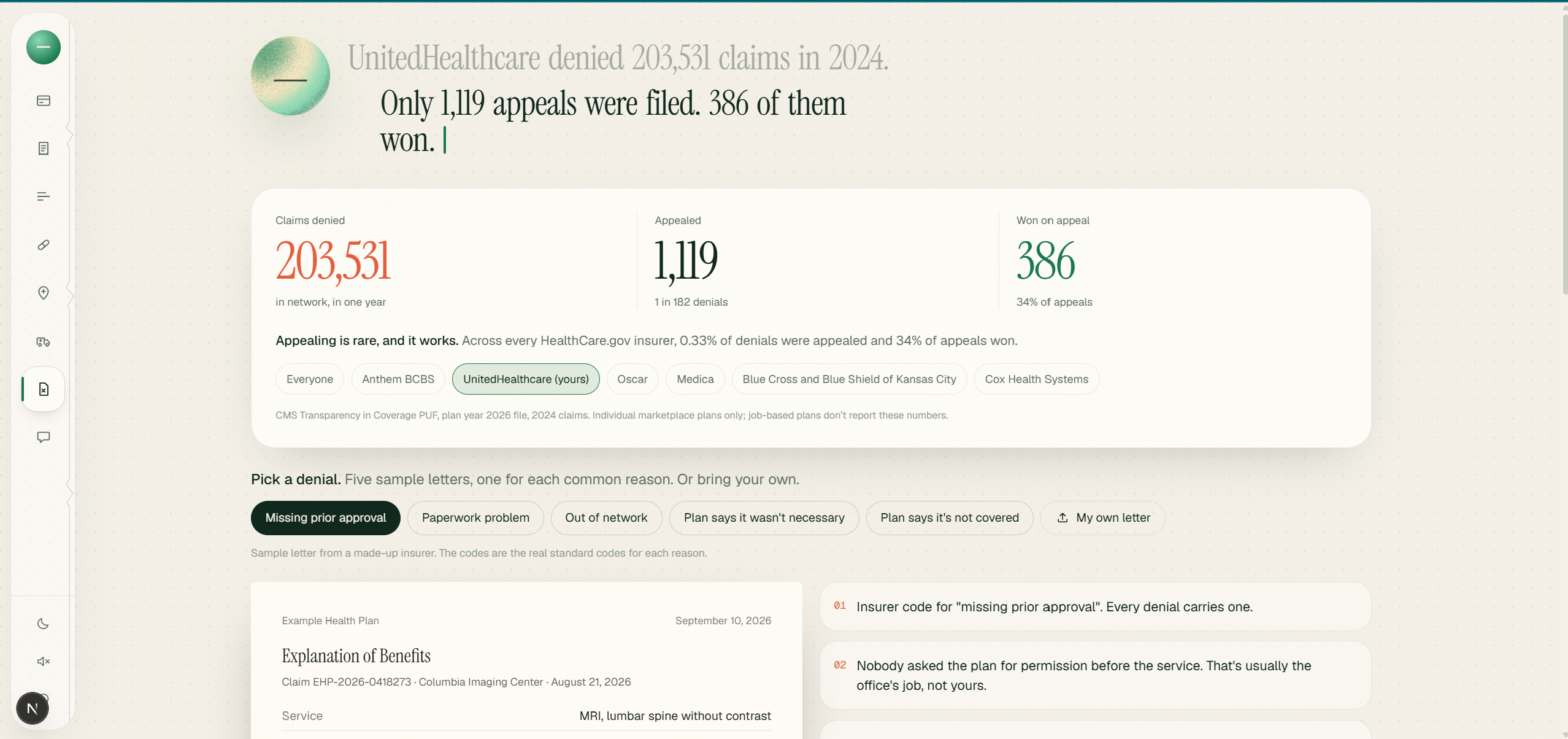
Statistics about Claim Denials
-
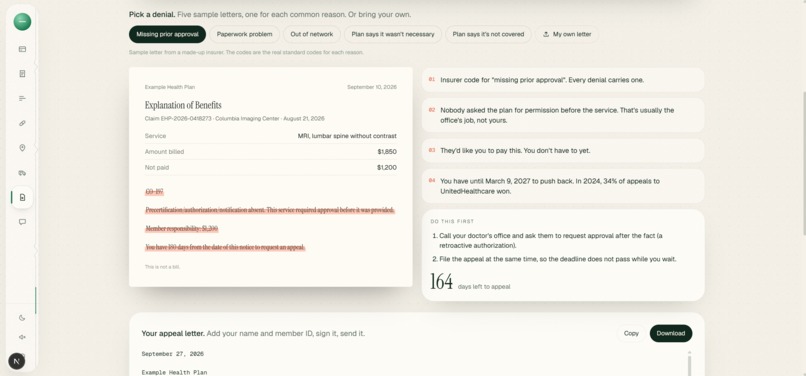
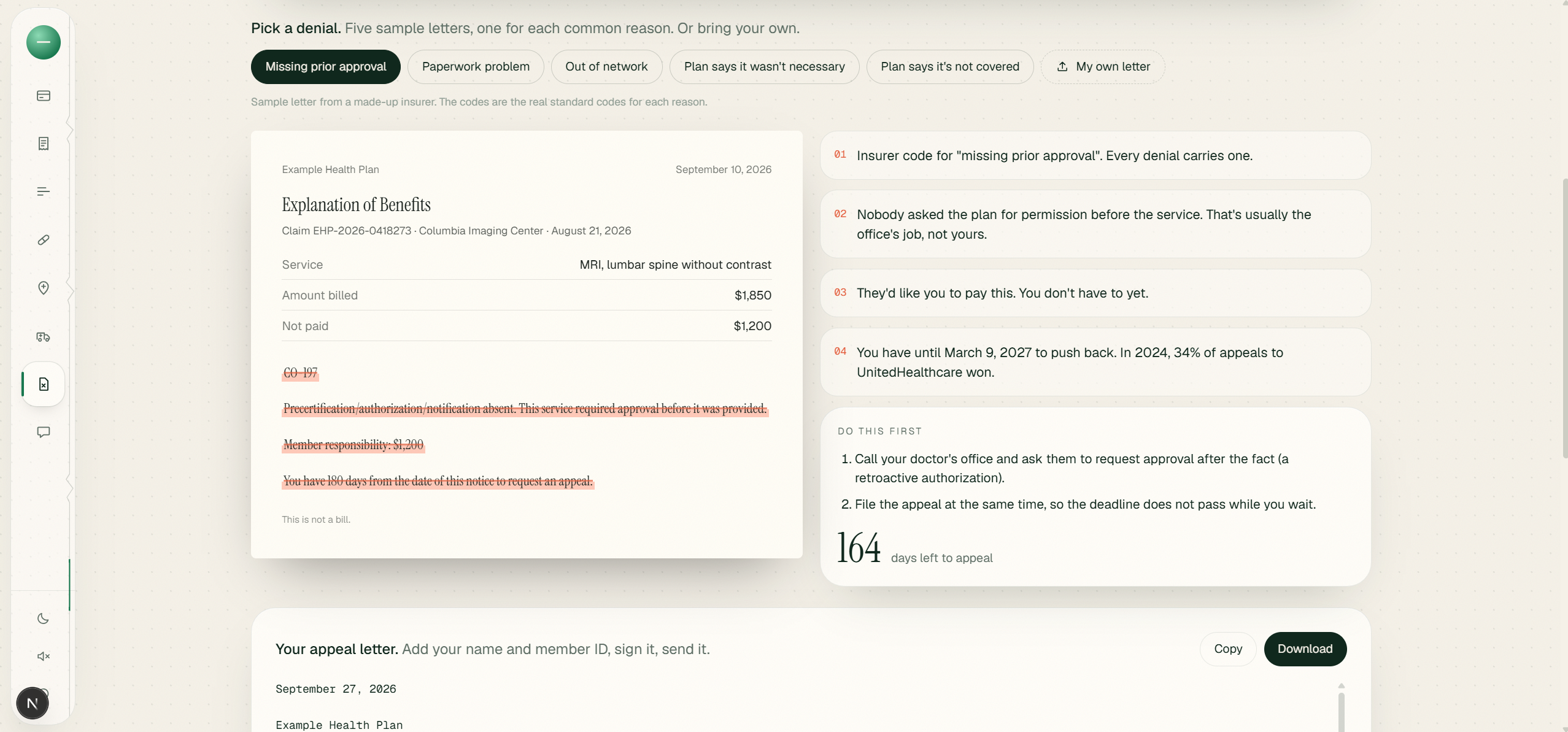
Helping Understand why the claim got rejected and informing that a denied claim does not mean one has to pay the bill in full.
-
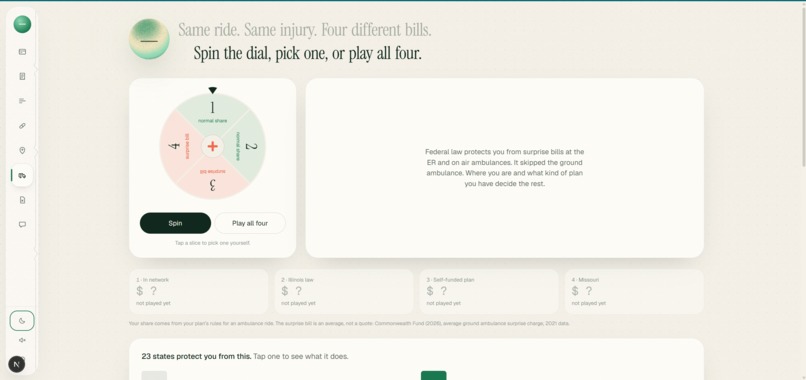
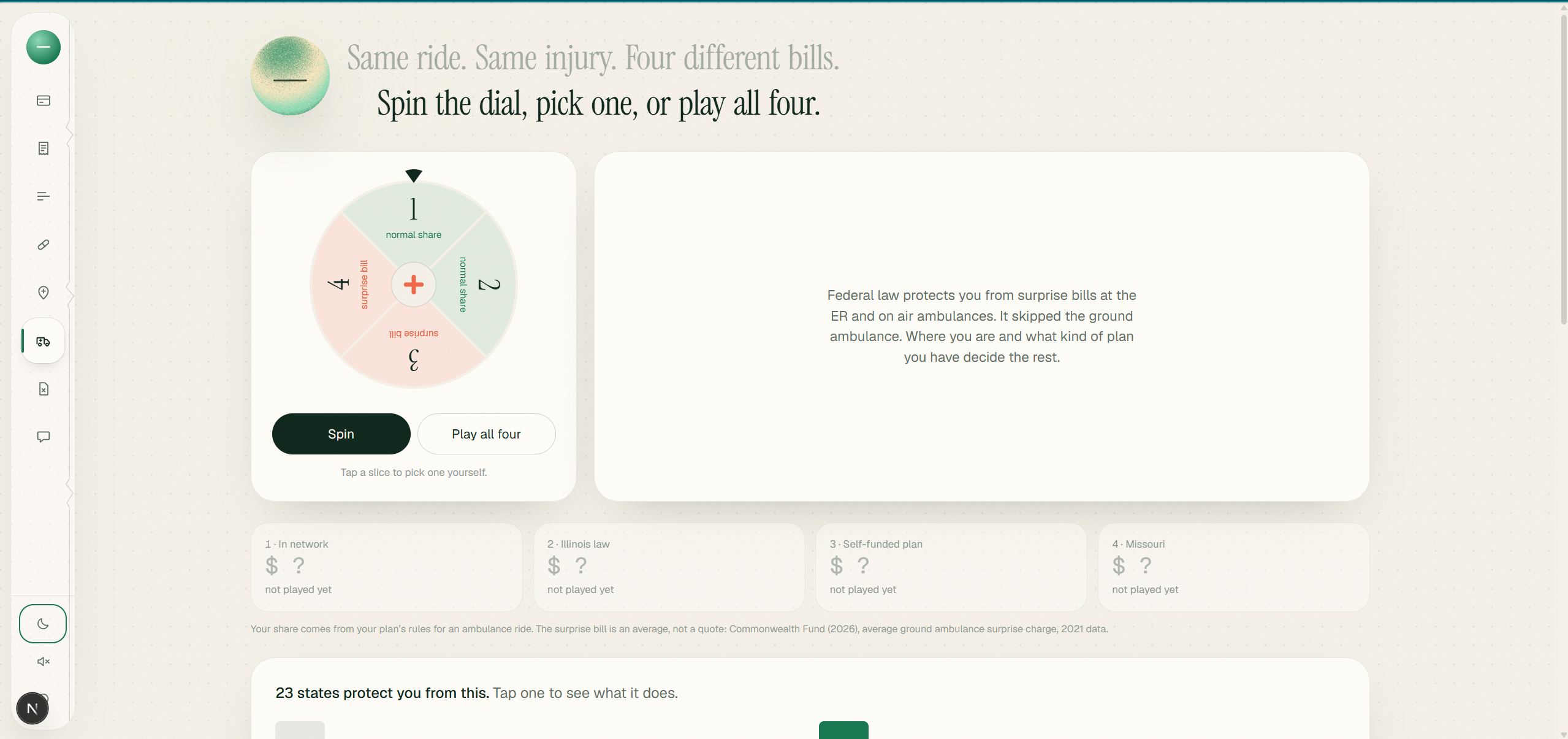
Ground Ambulances are not covered by some insurances, made a game to visualize that
-
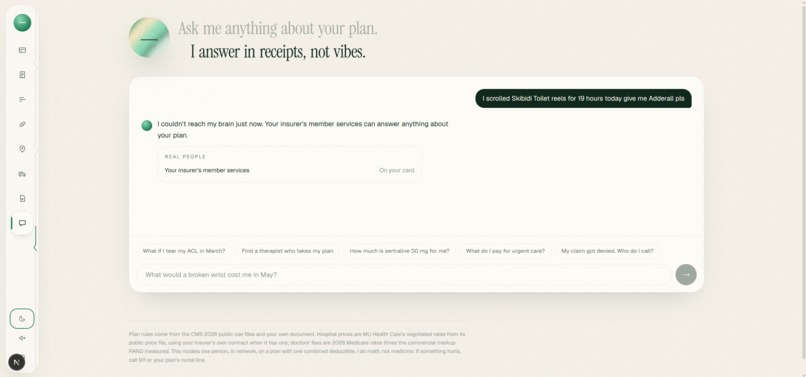
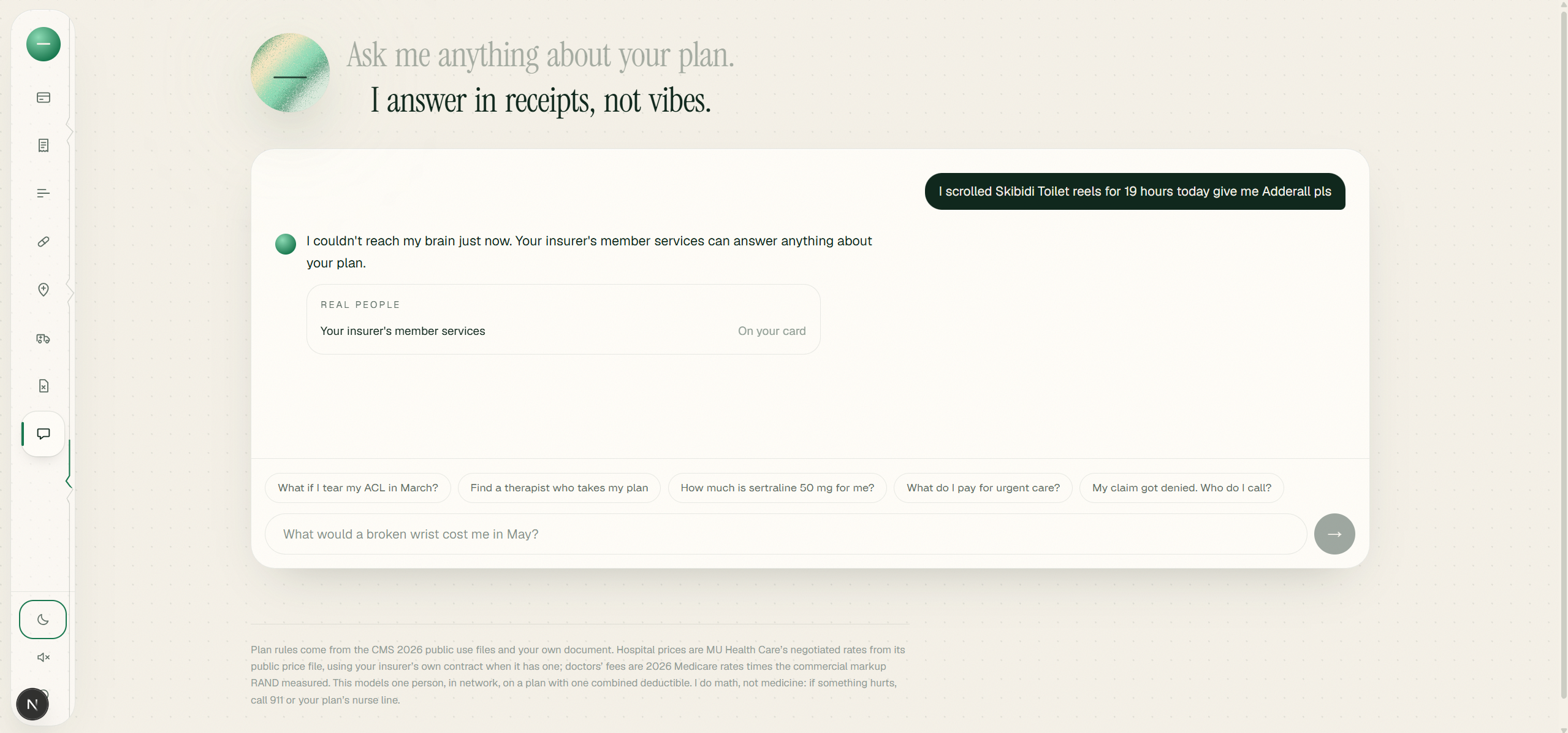
Gemini Agent to help if attention span is too low to do things manually.
Inspiration
Every insured person carries a card that they find out about after the first visit to the ER. Parse helps change that. Ask what their deductible is and you get a shrug. Ask what an MRI would cost them and you get a guess.
Furthermore, HealthCare.gov insurers denied 76.6 million claims in 2024. People appealed 0.33% of them, and 1 in 3 of those appeals won. Parse analyzes the denial and helps you file an appeal.
$$ \frac{255{,}373 \text{ appeals}}{76{,}574{,}822 \text{ denials}} \approx 0.33\% \qquad \frac{85{,}807 \text{ won}}{255{,}373 \text{ appeals}} \approx 33.6\% $$
That isn't a knowledge problem. It's a translation problem. So I built a translator.
What it does
Parse answers one question: *if this happens to me, what do I actually pay?*
- Reads your plan. Drop in the benefits PDF. Every number comes back with the quote and page it came from.
- Runs your year. A torn ACL in March, therapy in the fall. The bill prints line by line and stops at your ceiling.
- Finds care. Real places near you, checked against your plan's network, priced with your hospital's own rates.
- Beats the pharmacy counter. Your plan's price next to Cost Plus Drugs and $4 generic lists.
- Shops a better plan. Every plan in your ZIP, ranked by a bad year, not just the premium.
- Plays out the ambulance gap. One ride, four endings. Federal law skipped ground ambulances, and Missouri never filled the gap.
- Fights denials. Your insurer's real appeal record, the letter translated, the appeal drafted.
- Answers questions by running them through your plan, not by guessing.
Every path ends at a real person to call.
How I built it
The core is a deterministic cost engine, the only code that calculates the financials:
$$ \text{you pay} = \min\Big(\min(A, D) + c\,\big(A - \min(A, D)\big),\ M\Big) + B $$
Allowed amount \(A\), remaining deductible \(D\), coinsurance \(c\), room left under the out-of-pocket max \(M\), and the balance bill \(B\), which no ceiling protects you from. Events run in date order, so January's sprain changes what October's MRI costs.
The AI reads, never counts. Gemini parses PDFs and routes questions, always into a strict schema. A guard deletes any sentence with a dollar figure the engine didn't produce. The agent answers cost questions only by calling tools that run the engine.
ElevenLabs Integration for Accessiblity. A server route turns each line into speech, caches every clip so a line is only ever paid for once, and caps daily characters so a public demo can't drain the account. If ElevenLabs is unreachable, it falls back to the browser's own voice.
All real data: CMS 2026 marketplace files and API, MU Health Care's public price file, the CMS denial and appeal file for 185 insurers, Medicare fee schedules, and NADAC drug benchmarks.
Challenges
- Insurance data lies creatively. Cost sharing is stored as sentences. A bare
"20%"means the deductible is waived. A blank cell means unlimited, not zero. Each trap got a test. - Keeping AI honest about money. A model will happily say an MRI costs "about $500." The architecture makes that impossible.
- Demo-day chaos. Gemini started throwing overload errors the morning of judging, so I built automatic model fallback. Google kept returning ERs for "urgent care" until I filtered them out.
What I learned
- The No Surprises Act skipped ground ambulances. 23 states patched it. Missouri unfortunately is not one of them.
- Appeals work far more than people think, and almost nobody files them.
- AI is best used narrowly. Reading messy documents: brilliant. Suggesting decisions that cause a impact on both your health and finances: never.
What's next
Family deductibles, employer plan networks, and every state's ambulance law. Nobody should have to play roulette every time they need a medical service.


Log in or sign up for Devpost to join the conversation.