-
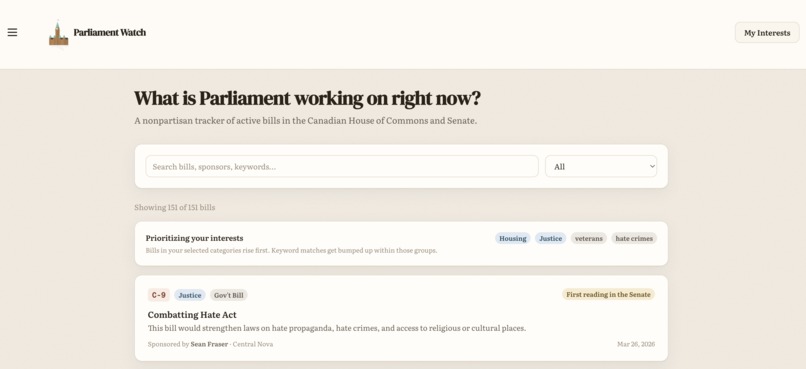
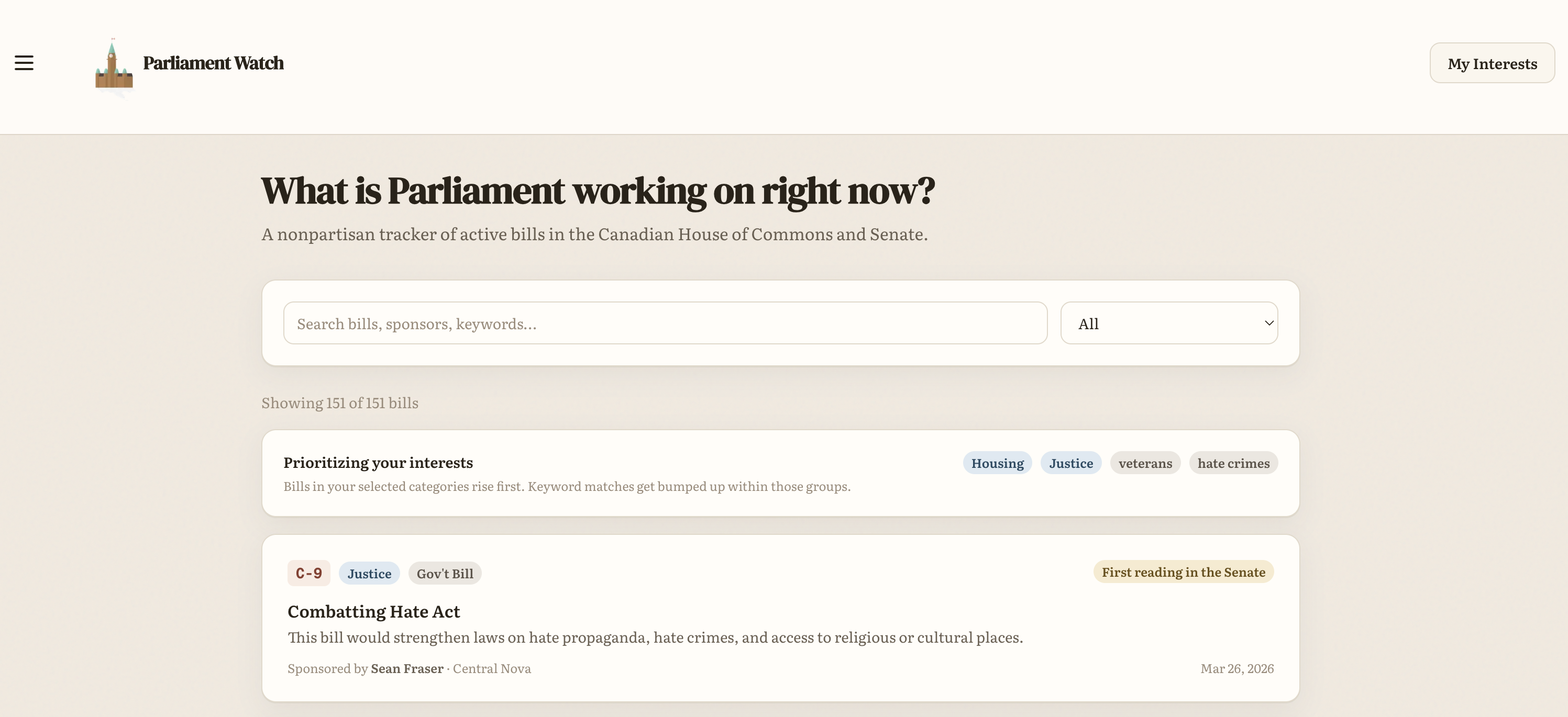
image of our dashboard
Inspiration
We entered the governance track because as Dario Amodei mentions in his blogs, democratic transparency is important. Canadians shouldn't need a law degree or hours of spare time to understand what Parliament is actually doing. LEGISinfo and official sources are authoritative but dense. News coverage is uneven, and social feeds prioritize outrage over context.
What it does
We show all the bills currently being debated in parliament as well as recommend bills for you to check out based on your interests. We provide plain-language summaries of the bills. You can ask Claude about the bill information and how its relevant to you. The goal isn't to tell anyone how to vote. It's to make political facts more accessible and understandable for everyday Canadians.
Why this problem is hard
Everyone has a limited amount of time and attention they can spend following politics each week. If each bill takes a long time to read and understand from raw legal text, most people can only realistically keep up with a handful at best. By reducing the time it takes to understand a single bill through clear stage timelines, search, and plain-language explanations, we increase how many bills a person can meaningfully follow without asking Parliament to change anything. That's the core idea behind our project. Lower the cost of understanding, and more people can participate from shared facts.
How we built it
We built Parliament Watch as a Next.js app that pulls live bill metadata from Parliament of Canada's LEGISinfo ecosystem and presents it in a filterable, readable list and per-bill detail views. We enrich context where we can, like supplementary detail from OpenParliament when available. We also added an AI chat using Claude that is scoped to explain, not persuade. It answers questions about procedure and substance in accessible language, with clear disclaimers.
You are able to receive recommendations for bills to look at based on your interests and you can also find your MPs contact info through the tool
Challenges we ran into
Data shape and enrichment: Canonical fields live in LEGISinfo, but human-readable summaries and subjects sometimes require merging another service. Graceful degradation when that API is slow or unavailable was crucial.
Keeping "neutral" in the UI: Even small choices like labels, ordering, and what counts as "trending" carry framing. So we tried to prioritize recency and procedure over narrative.
Trust and AI: Users are rightly skeptical of "political AI," so we emphasized citations to primary sources, nonpartisan framing, and visible limits on what the model should do.
Built With
- claude
- next.js
- react
- typescript
- vercel


Log in or sign up for Devpost to join the conversation.