-
-
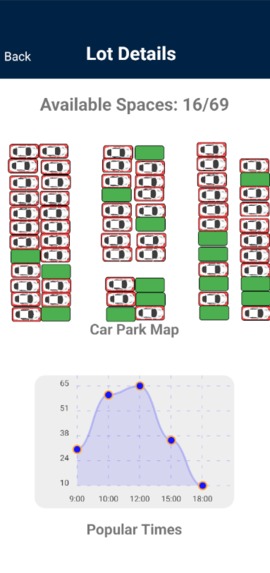
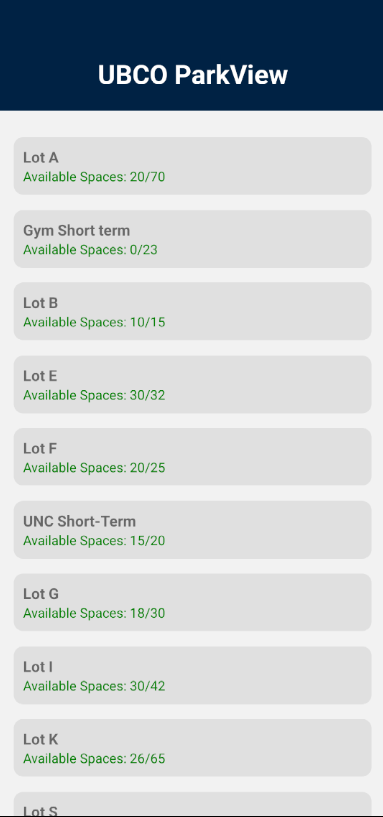
DetailsScreen
-
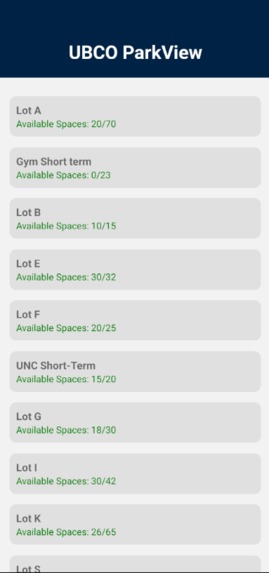
HomeScreen
-
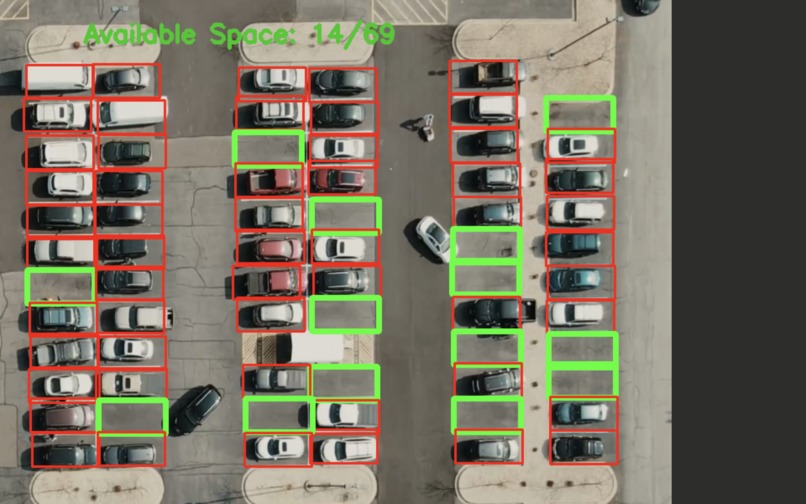
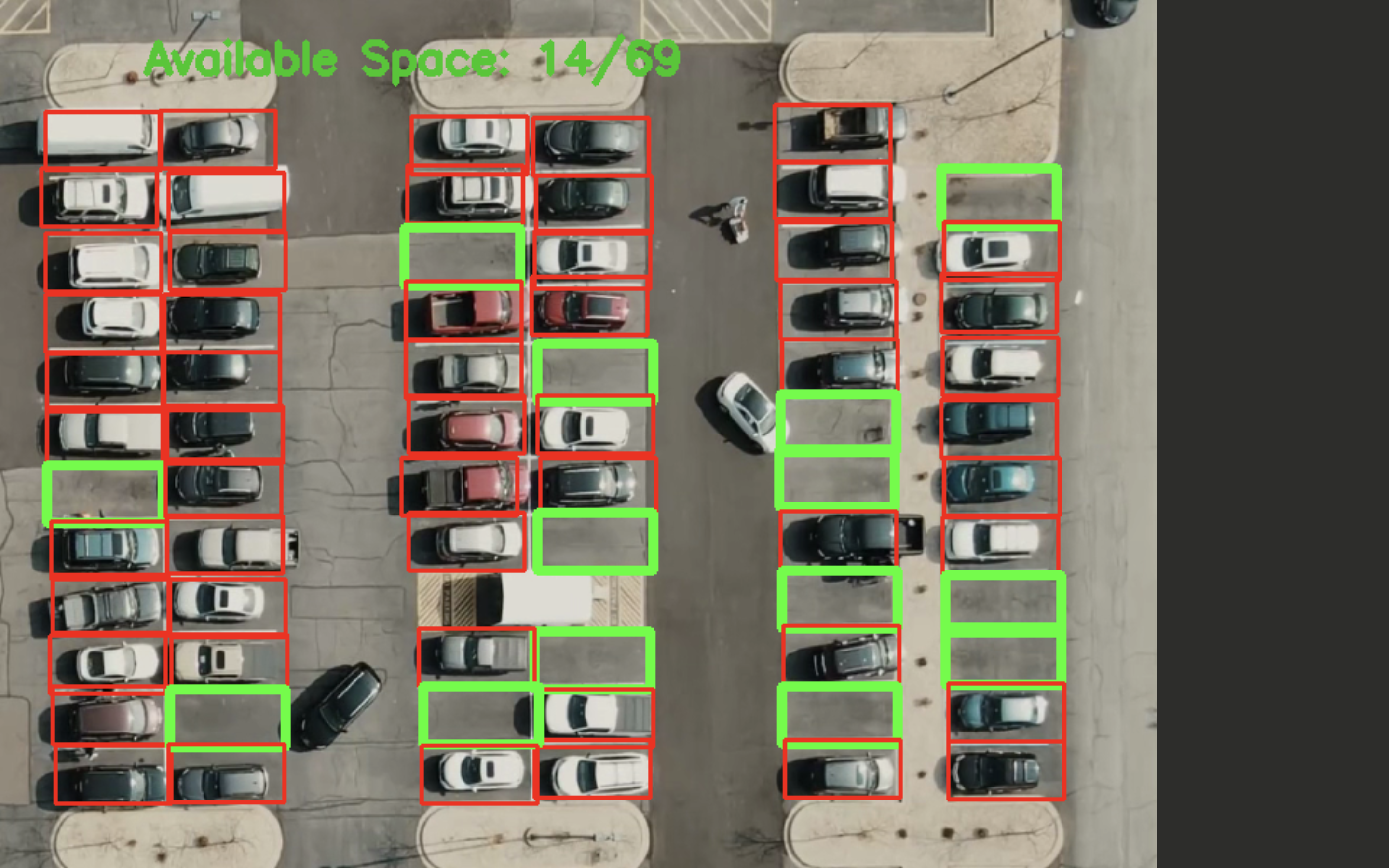
Object Detection Model
🌐 Connect with us:
Gurbir Amrit: 
Omar Ankit:
Dylan Tan:
Ammaar Khan:
Inspiration
We sought to address the daily challenges faced by students. Initially, we considered creating a table booking app for the library, akin to room reservations in the Commons. However, we aimed to tackle a more significant issue. The idea of simplifying the process of finding parking spaces on campus arose, recognizing the difficulty in securing parking. This idea was echoed by a librarian as we were asking him for a general opinion on our initial idea.
What it does
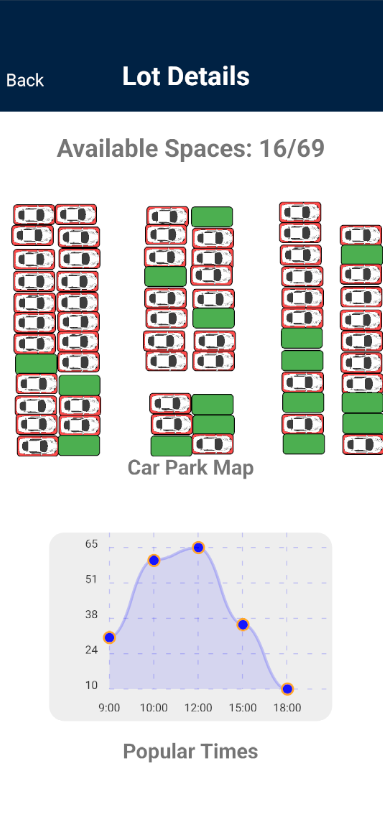
This project is designed to identify and track available parking spaces through video feeds. It leverages Python with OpenCV for image processing and can connect to live video feeds, or process recorded MP4 videos. The system seamlessly integrates with React Native for the frontend, providing an intuitive user interface and employing JSON to store parking positions. YOLO (You Only Look Once) integration is optional but enhances car detection. The feed is then presented on a graphical map within an app for user access.
How we built it
We built it by creating an ML object detection model and developing a frontend to display the results. Our approach involved a combination of:
Python 3.x OpenCV library NumPy library PyTorch (for YOLO integration) tkinter for Python (for GUI components) Pillow for image processing React Native environment (for frontend development) CSS
Challenges we ran into
We encountered challenges in mapping the video to the UI and properly setting dimensions for parking spots in our object detection model. Additionally, we faced issues with the emulator setup, requiring color threshold adjustments each time.
Accomplishments that we're proud of
We take pride in devising an innovative solution to a real problem. Our achievement includes building an object detection program, a results display interface, and a functional server-backed backend.
What we learned
Our learning experience covered the use of React Native, building an Object Detection Model, processing images for tangible results, transferring data to our database, and connecting it to our app. We also gained insights into constructing a front for an app linked to a database that updates in real-time based on parking lot status.
What's next for Parkview
Our future plans involve optimizing the UI and refining our image processing and model to detect cars in the parking lot from different angles. Additionally, we aim to enhance the app's functionalities.


Log in or sign up for Devpost to join the conversation.