-
-
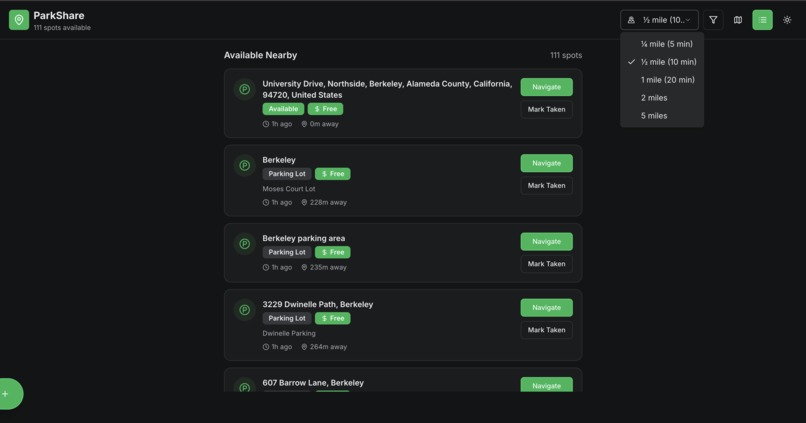
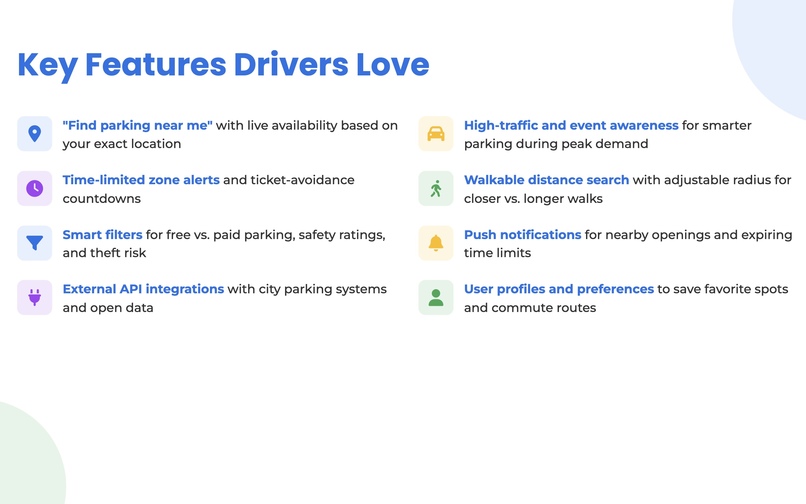
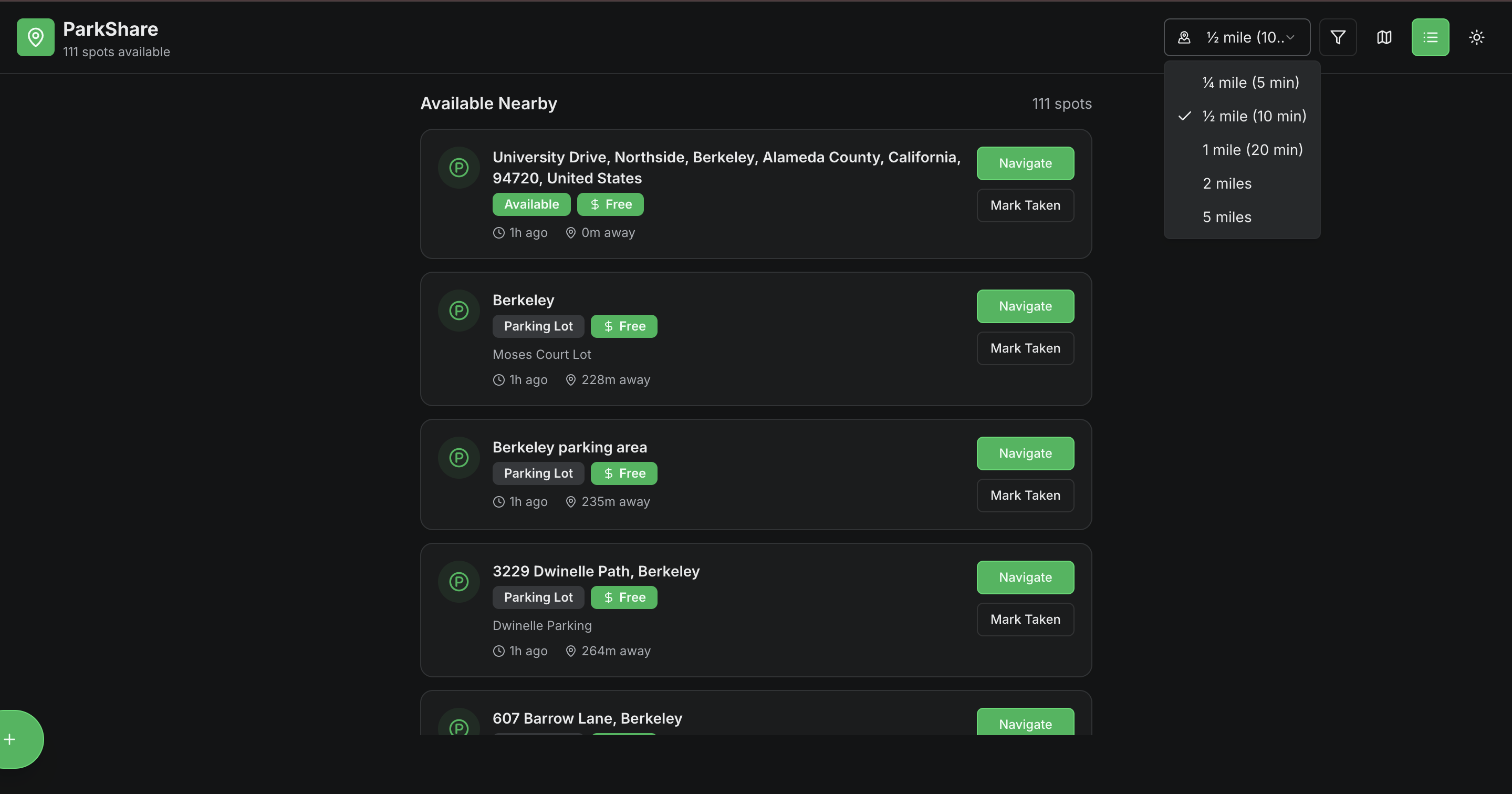
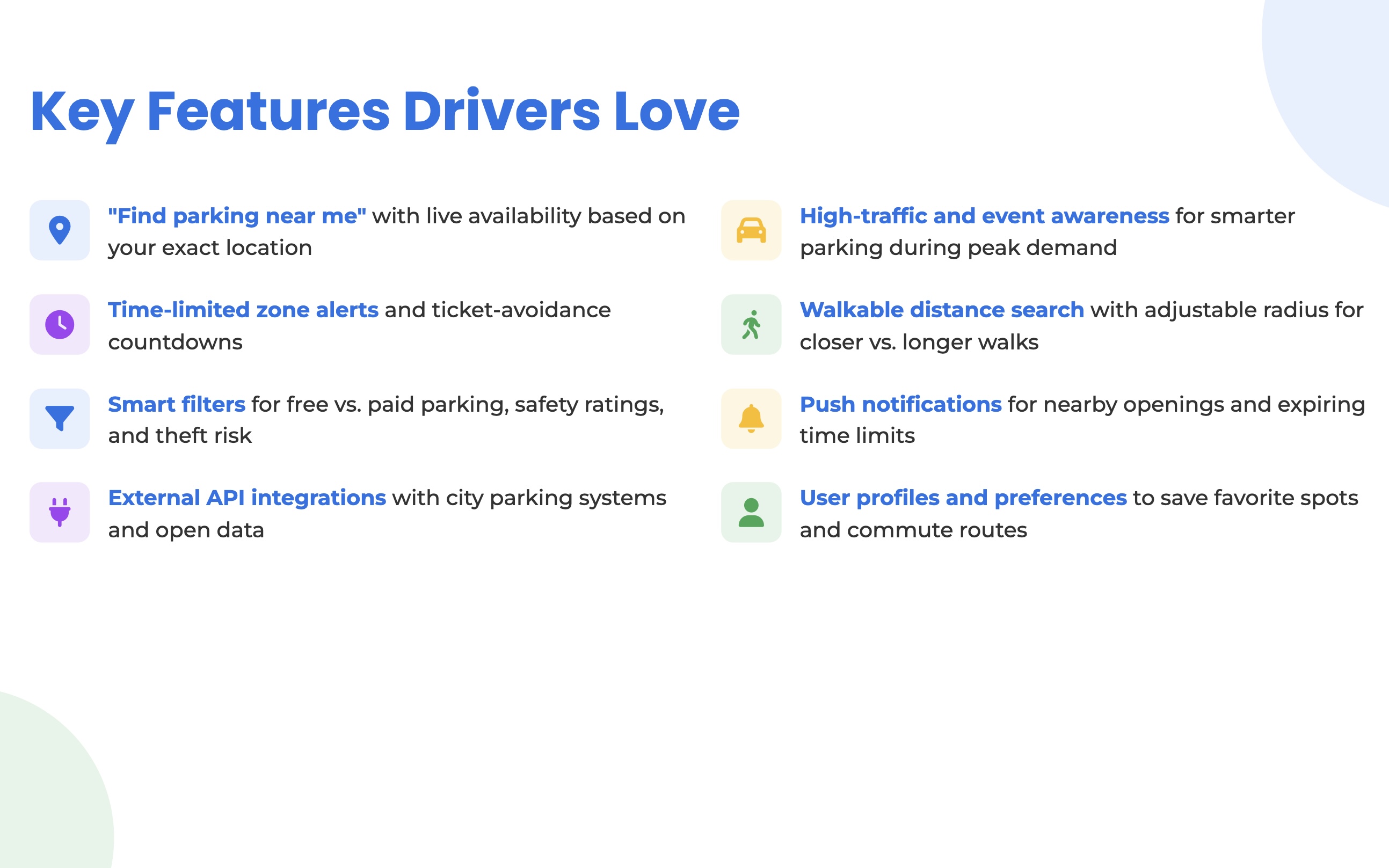
Sorting feature for parking distance
-
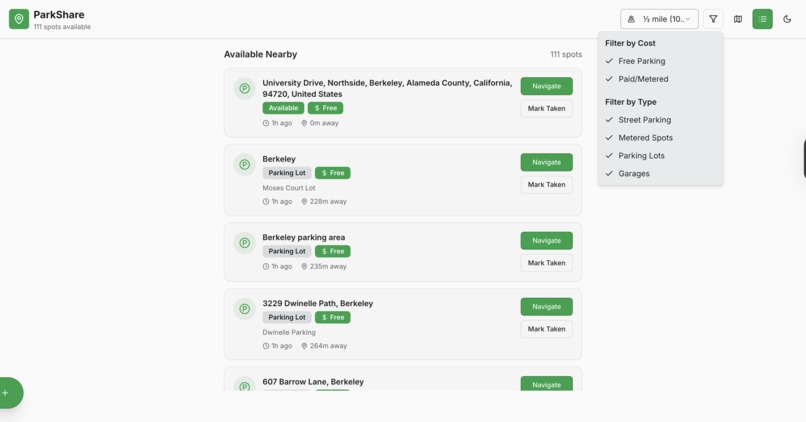
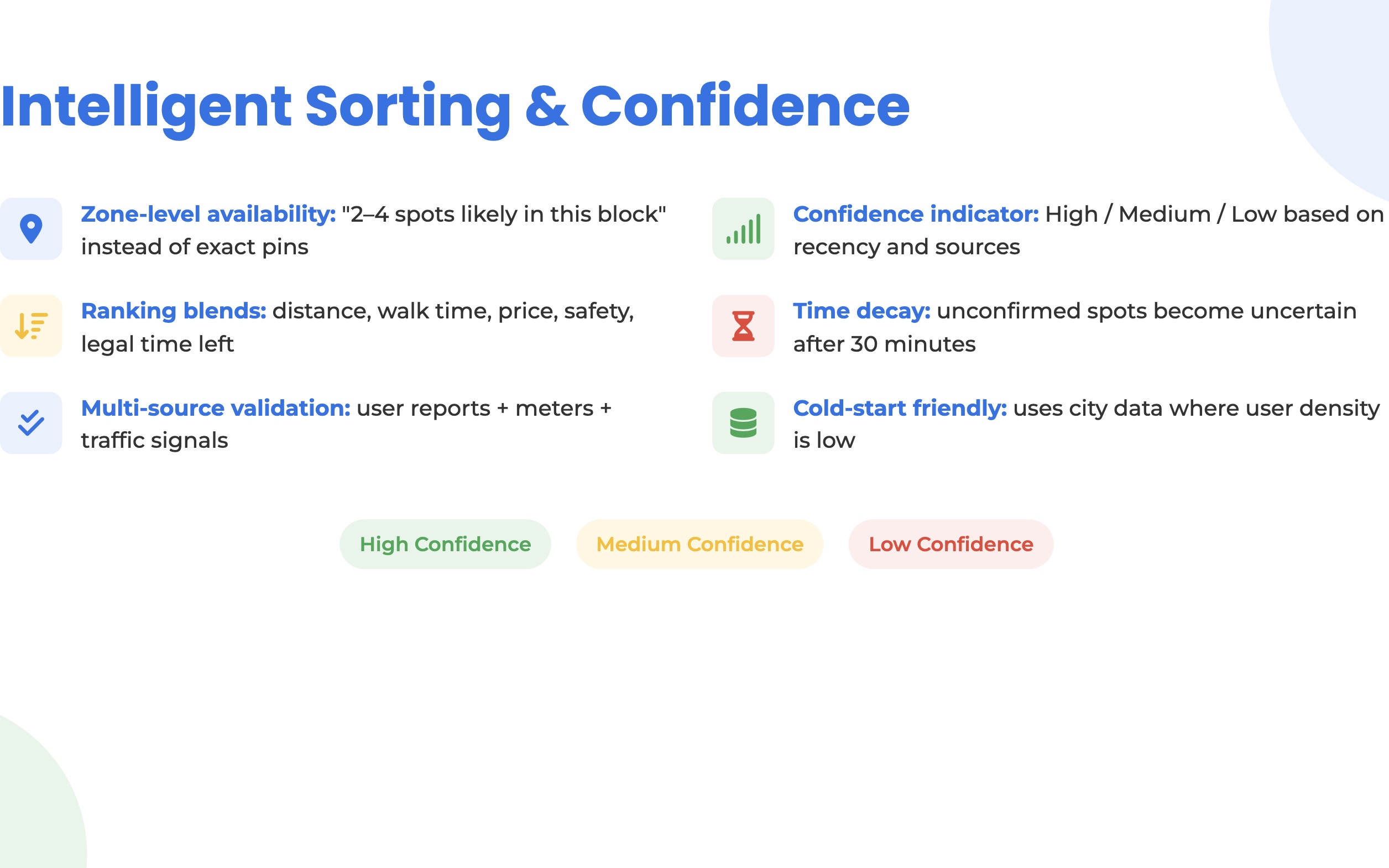
Sorting feature for parking type, parking time regulation to avoid ticket, parking type, traffic density sorting and many more.
-
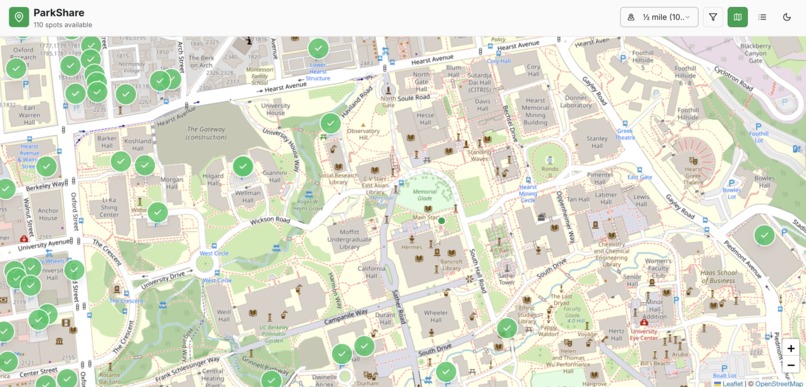
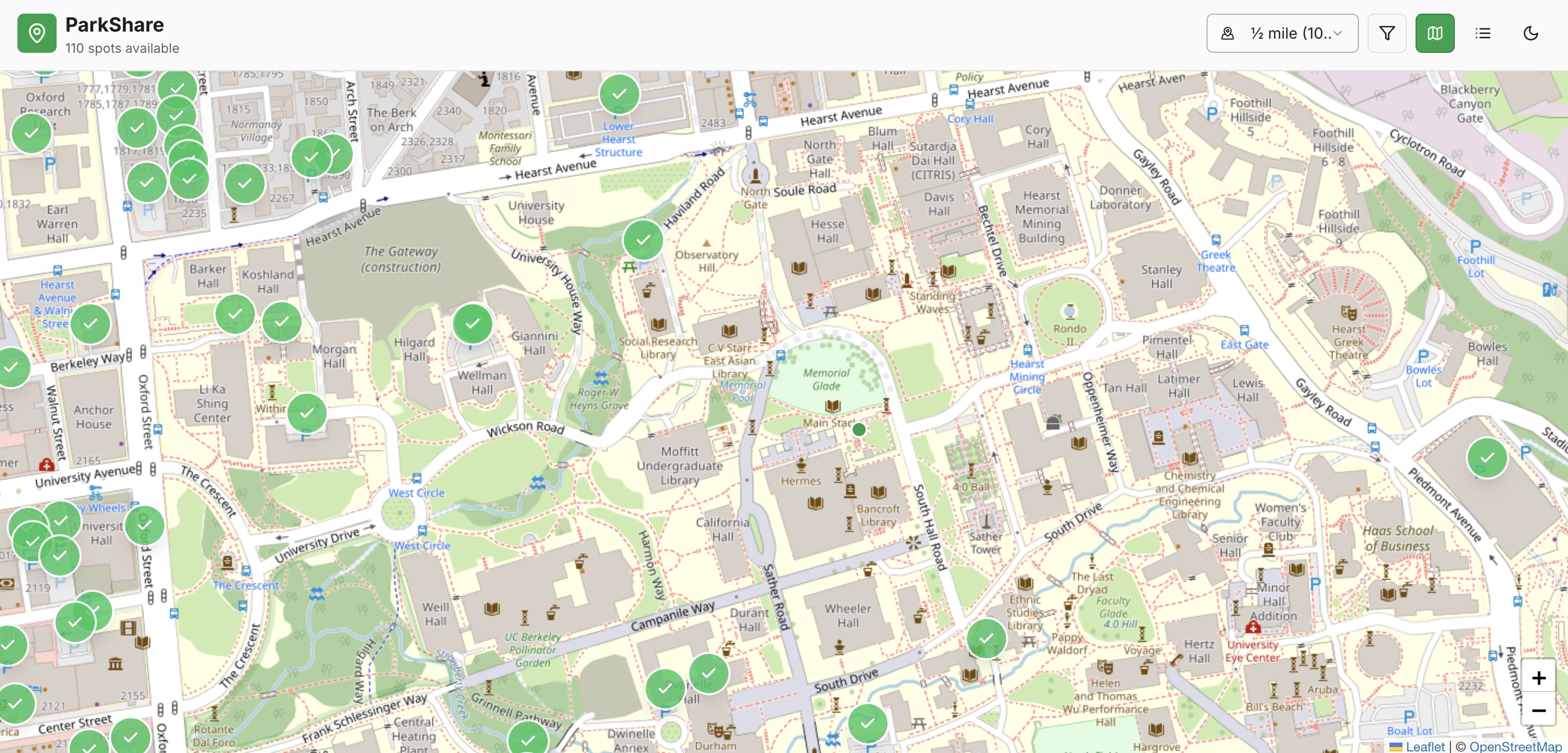
Map display available parking spot
-
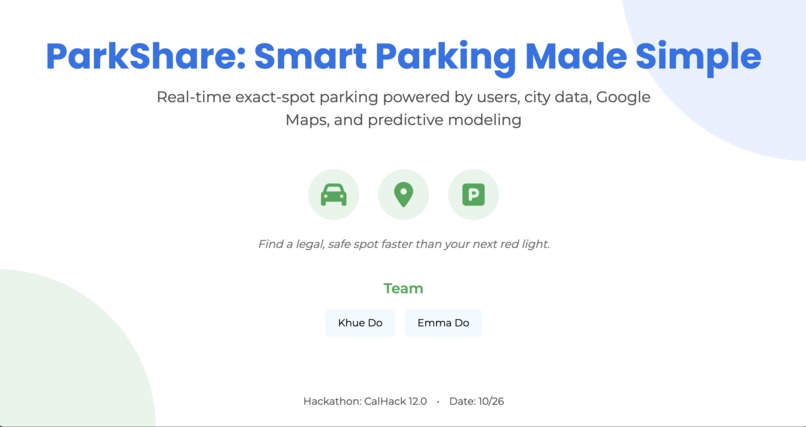
Slides
-
-
-
-
-
-
-
-
-
-
-


Inspiration
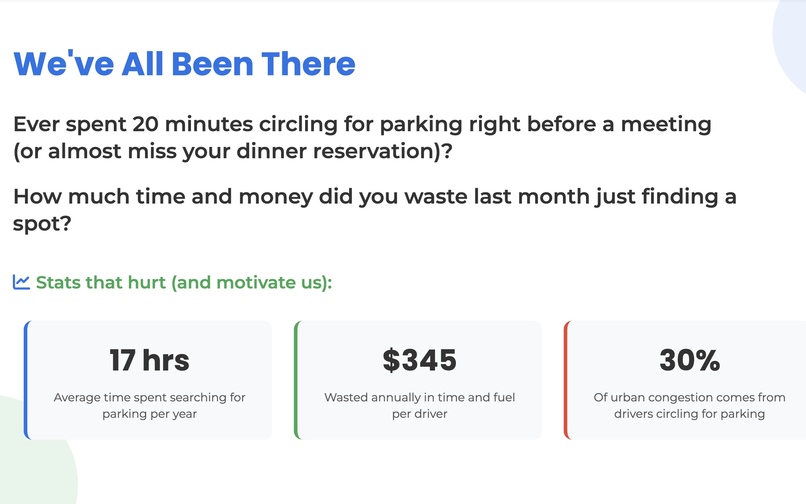
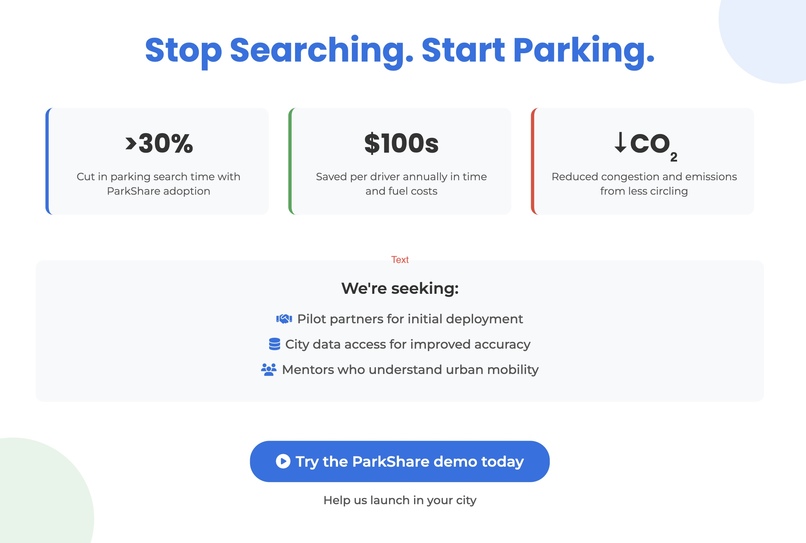
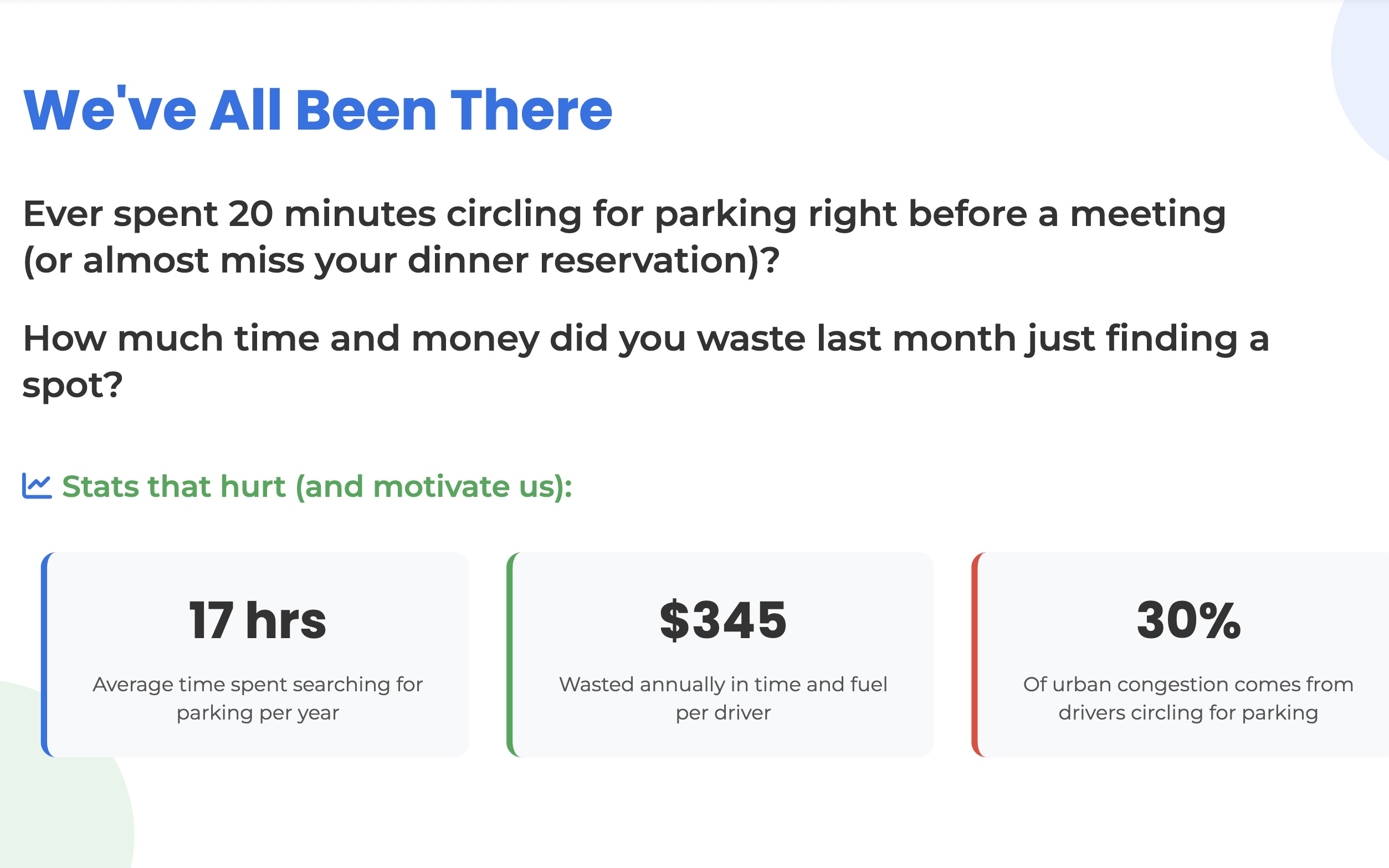
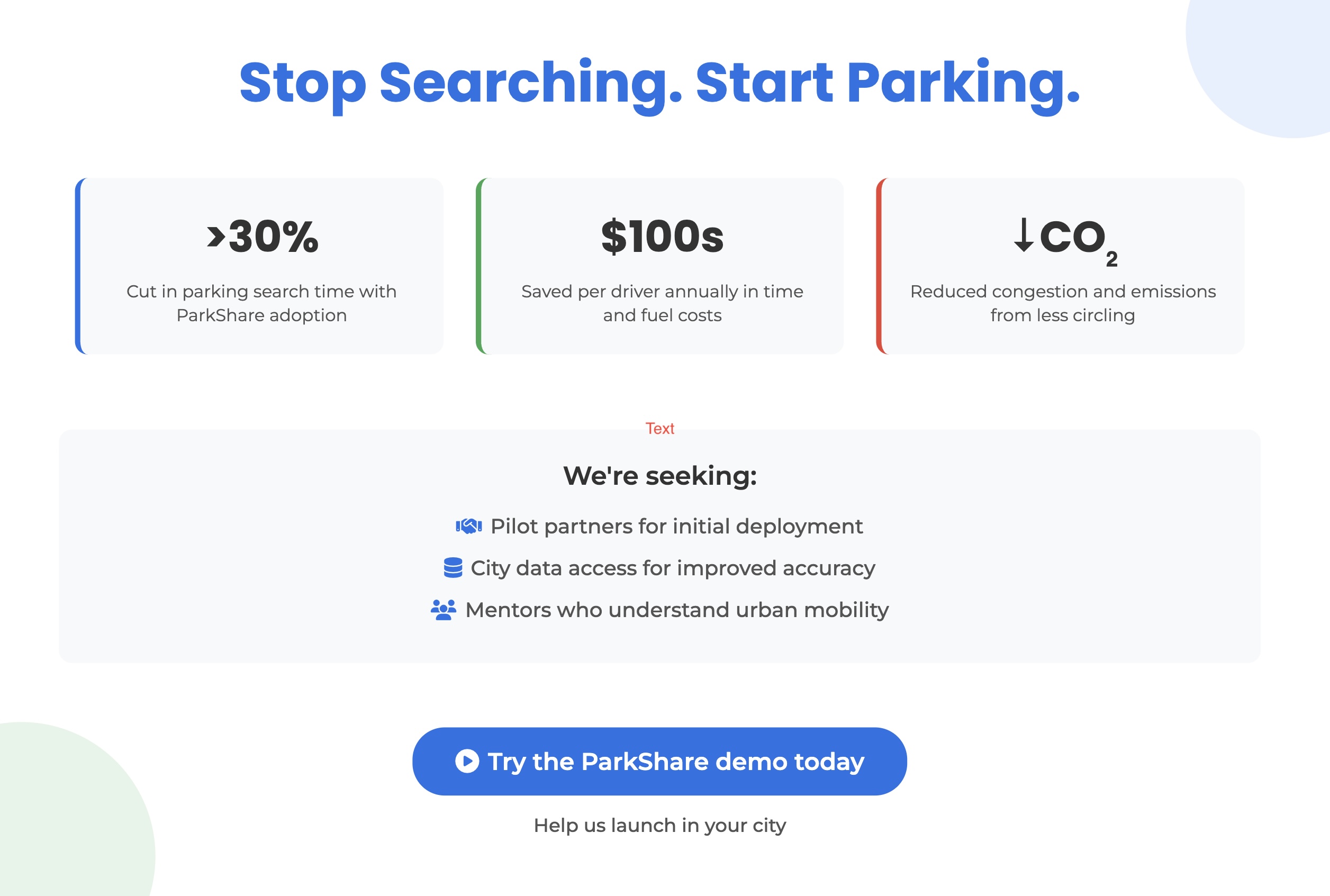
This project was inspired when we drive to SF and almost missed our reservation for a very stupid reason: finding parking spot! And then we start dive deeper into this issuem, and found those stats that hurt (and motivate us): 17 hrs: average time spent searching for parking per year $345: wasted annually in time and fuel per driver 30%: urban congestion comes from drivers circling for parking This is a real issue that our entire society face, and we want to fix that!
What it does
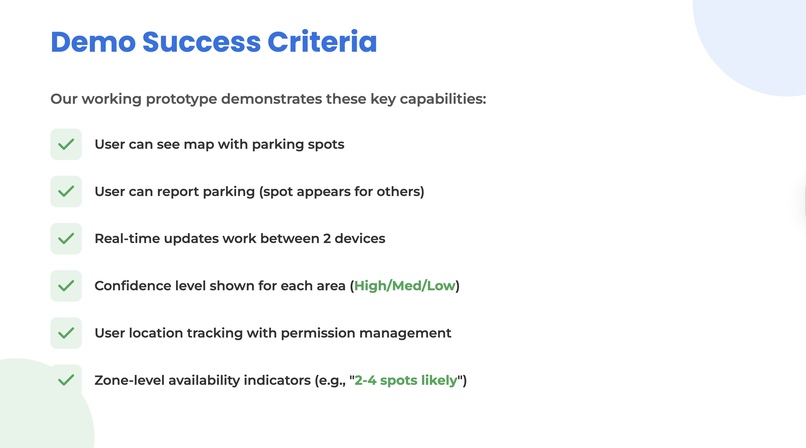
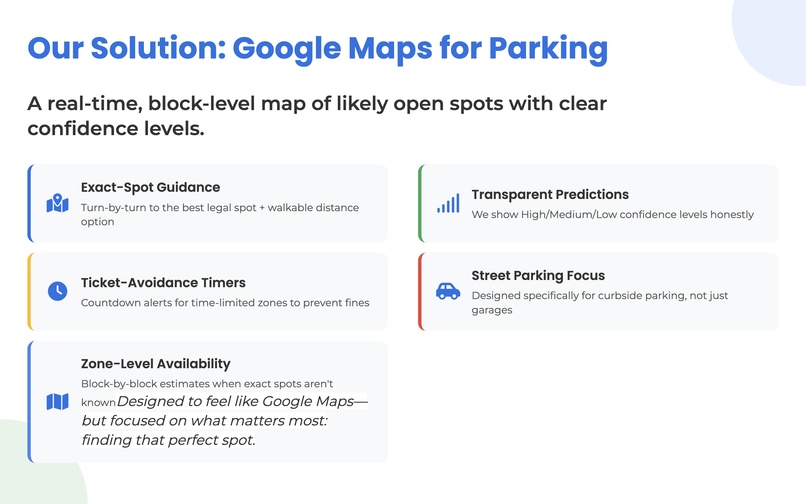
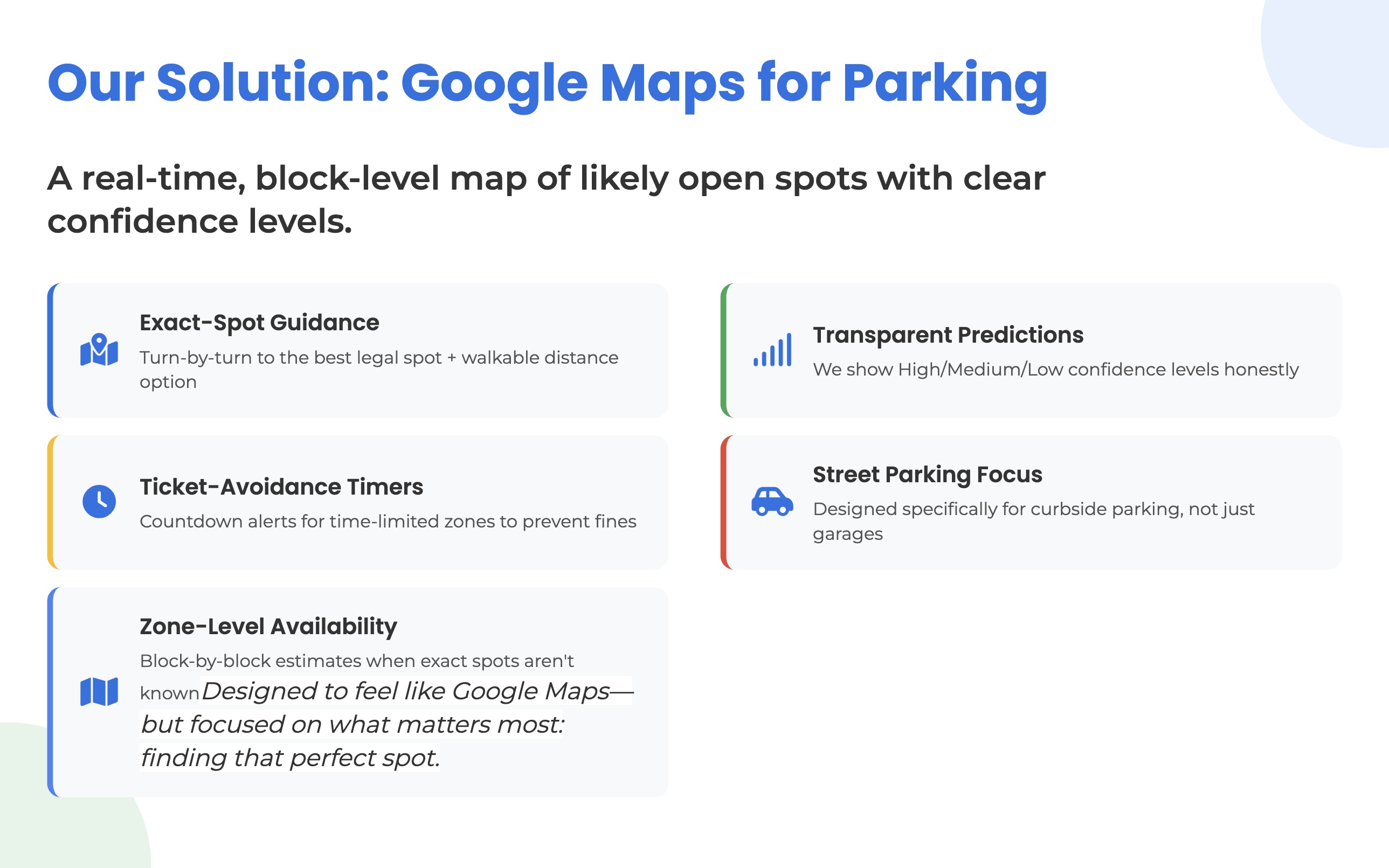
ParkShare helps drivers, especially SF residents with cars to quickly find open street parking. Our goal is simple: spend less time circling, and more time living. Users can view likely open spots, real-time updates, and street rules (like sweeping schedules and meter hours), all in one place.
How we built it
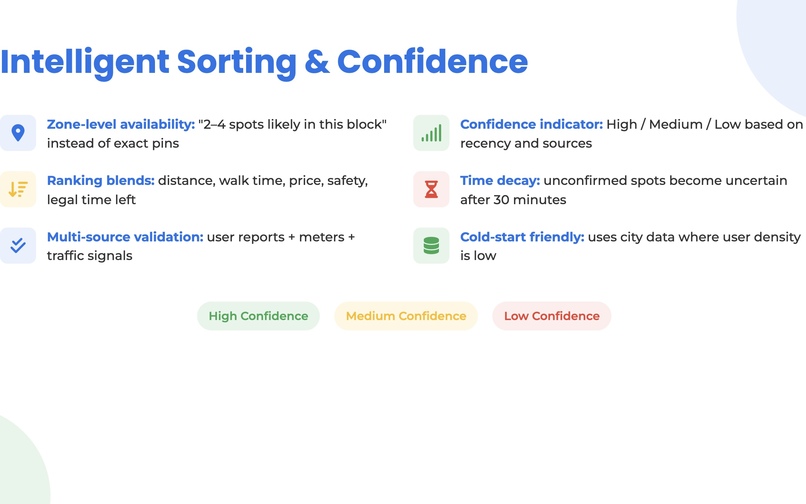
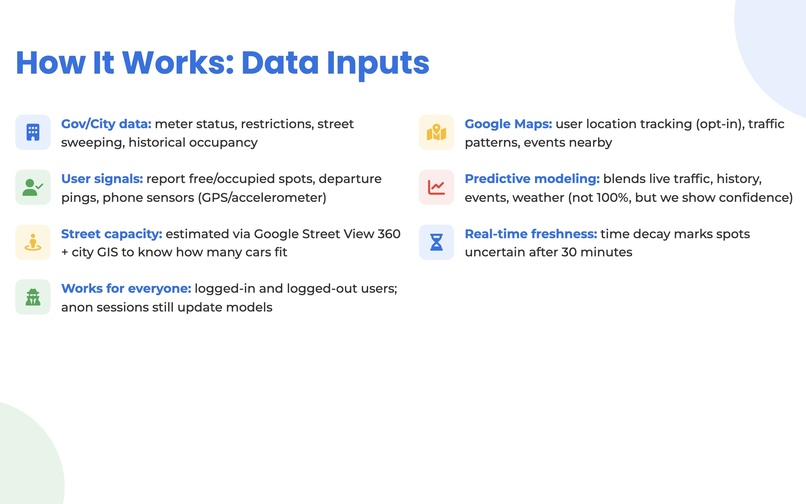
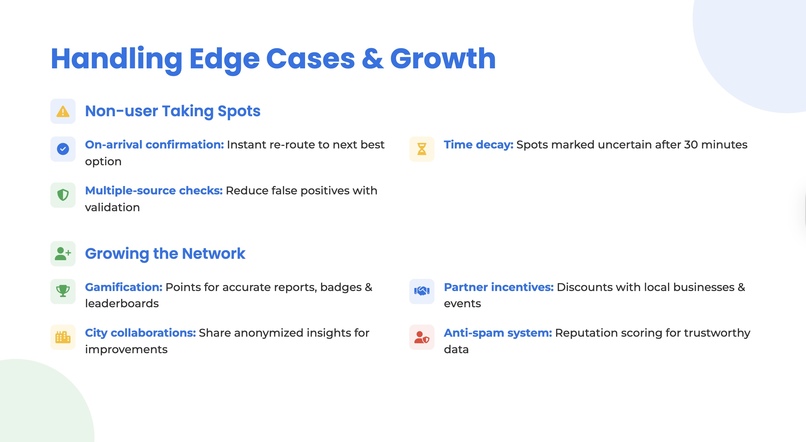
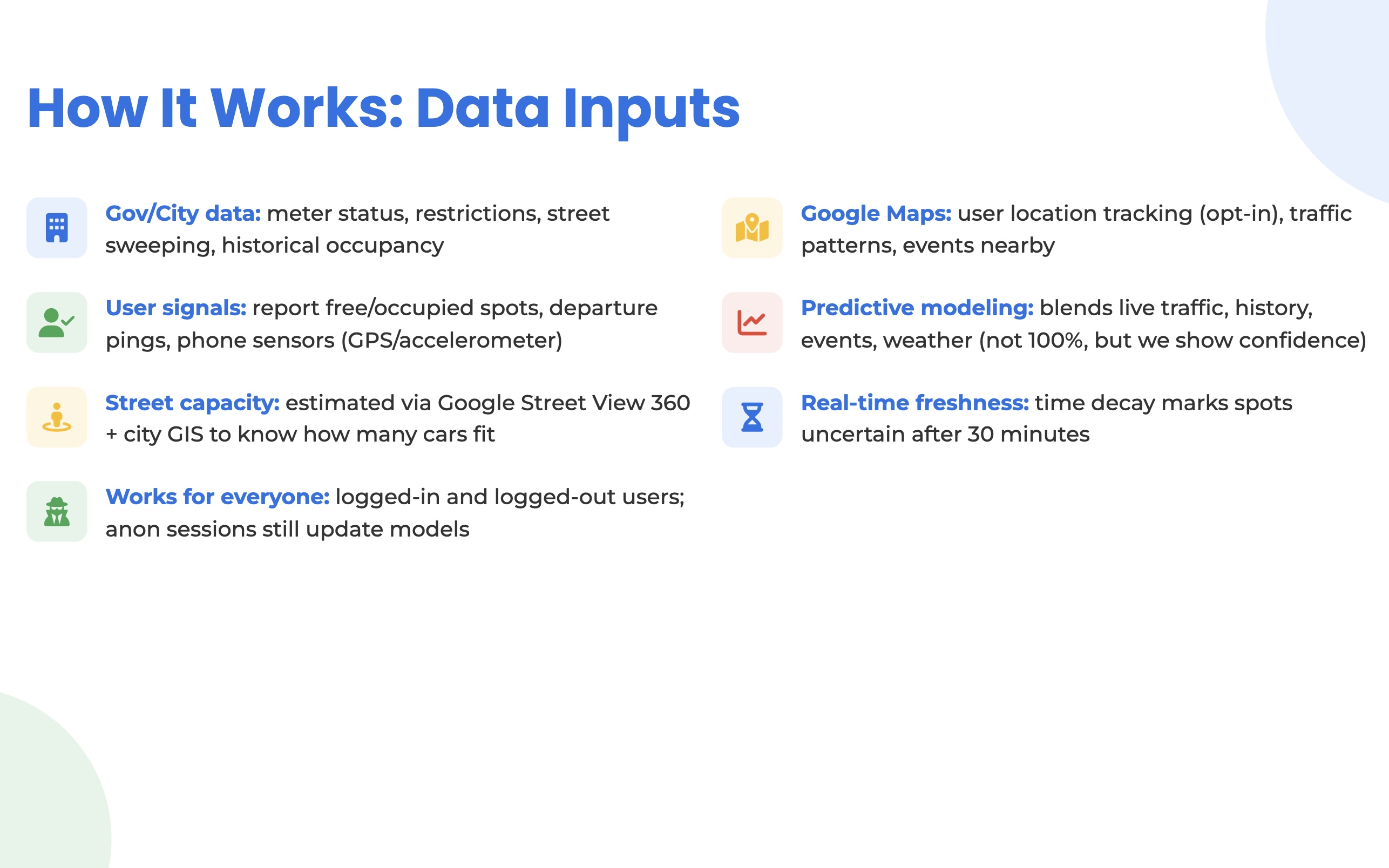
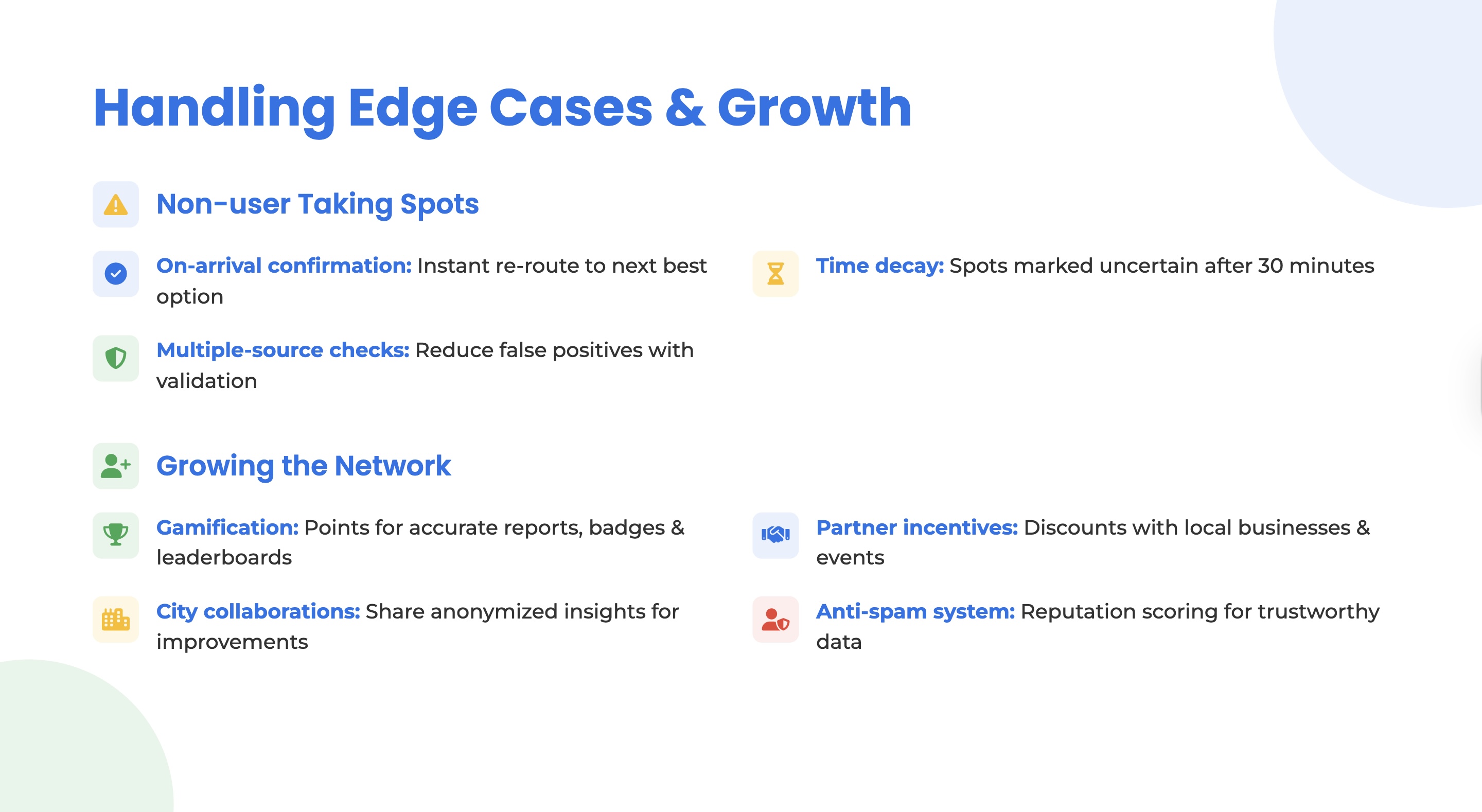
We combine multiple live and historical data sources to estimate the most probable open parking spots, as accurately and honestly as possible: City & Government Data: meter status, street sweeping schedules, parking rules, and historical occupancy Google Maps Integration: optional location tracking, traffic patterns, and nearby events Community Signals: users can report open or occupied spots, share departure pings, and passively contribute via phone sensors (GPS/accelerometer) Predictive Modeling: blends history, live traffic, weather, and events to estimate availability (with clear confidence levels) Street Capacity Mapping: uses Google Street View + city GIS to estimate how many cars can fit on each block Freshness Timer: spots automatically decay in confidence after 30 minutes to stay realistic Accessible to All: works for logged-in and anonymous users, everyone helps improve the model!
Challenges we ran into
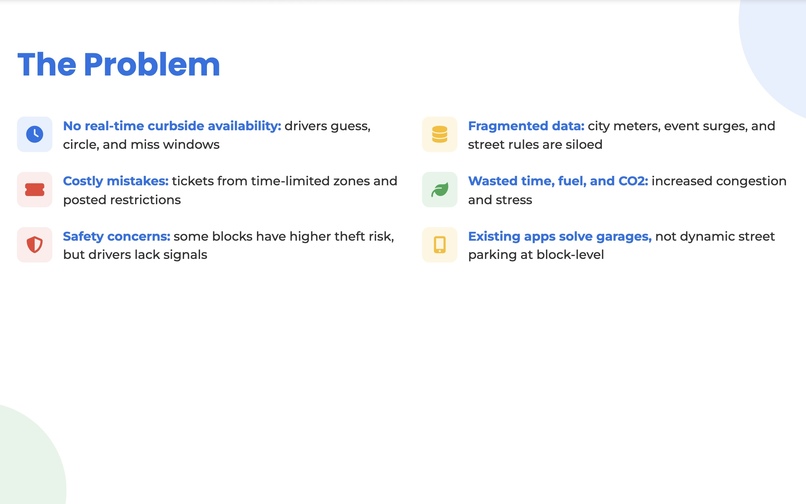
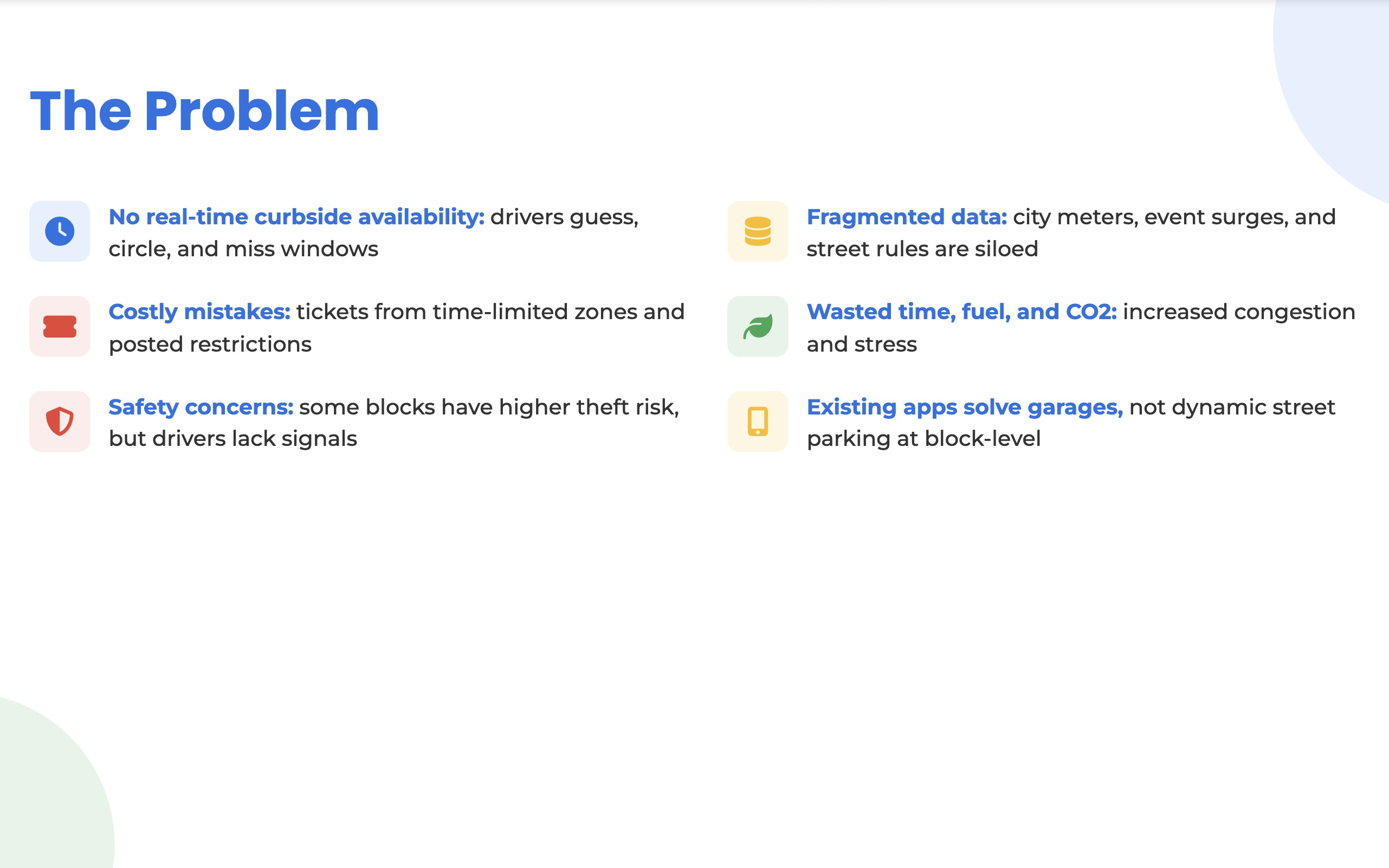
The biggest challenge is that there’s no reliable real-time street parking feed. To solve this, we had to get creative: pulling government data, building our own block-by-block capacity maps, and training a predictive model to fill the gaps.
Accomplishments that we're proud of
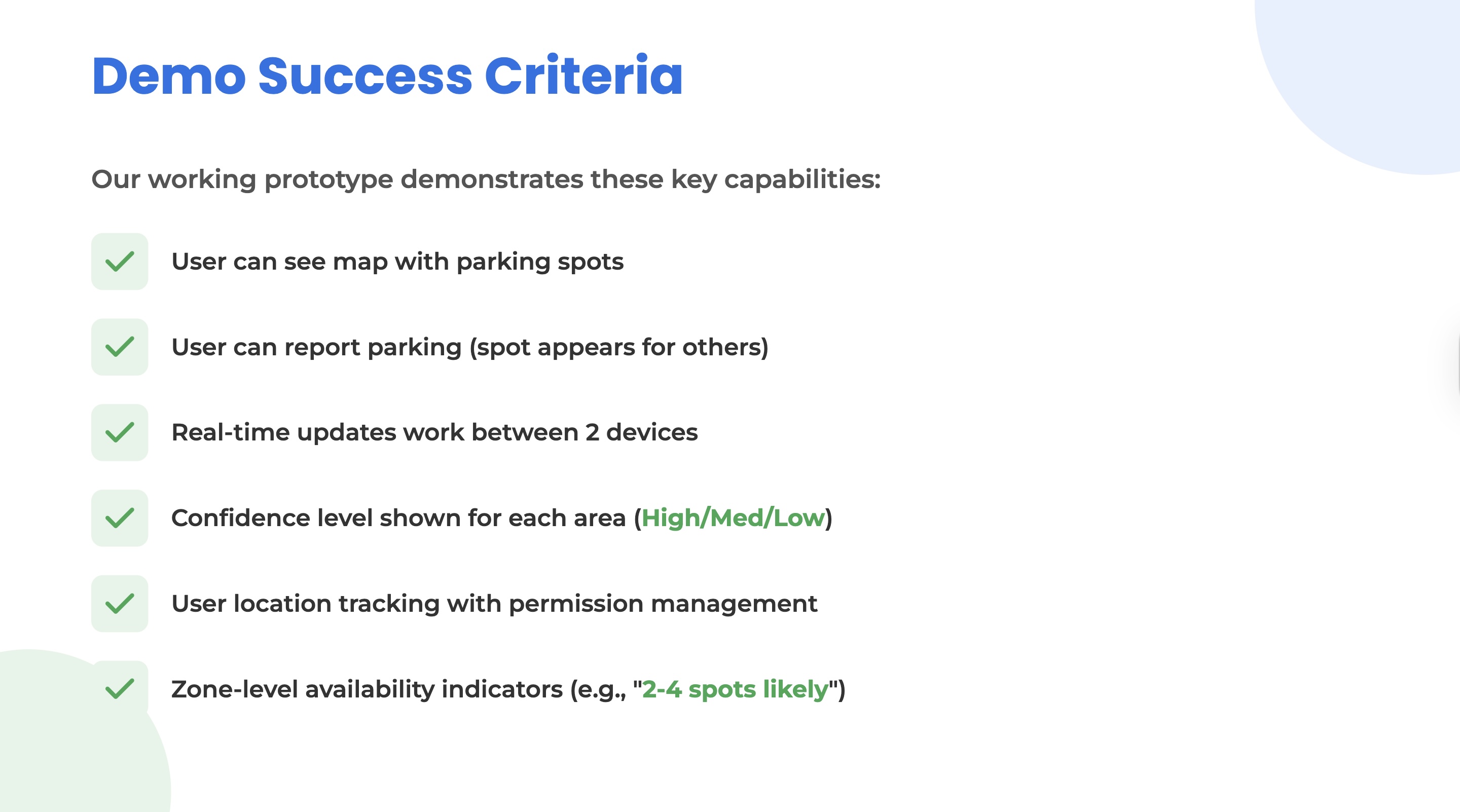
We’re proud that our early prototype actually works with about 80-95% prediction accuracy in our test zones. It’s not perfect, but it already saves time and frustration compared to blind circling.
What we learned
We learned just how complex city parking really is, and how powerful predictions can be when you blend community data, open data, and context. We also learned that solving a “simple” everyday problem requires a lot of invisible engineering.
What's next for ParkShare
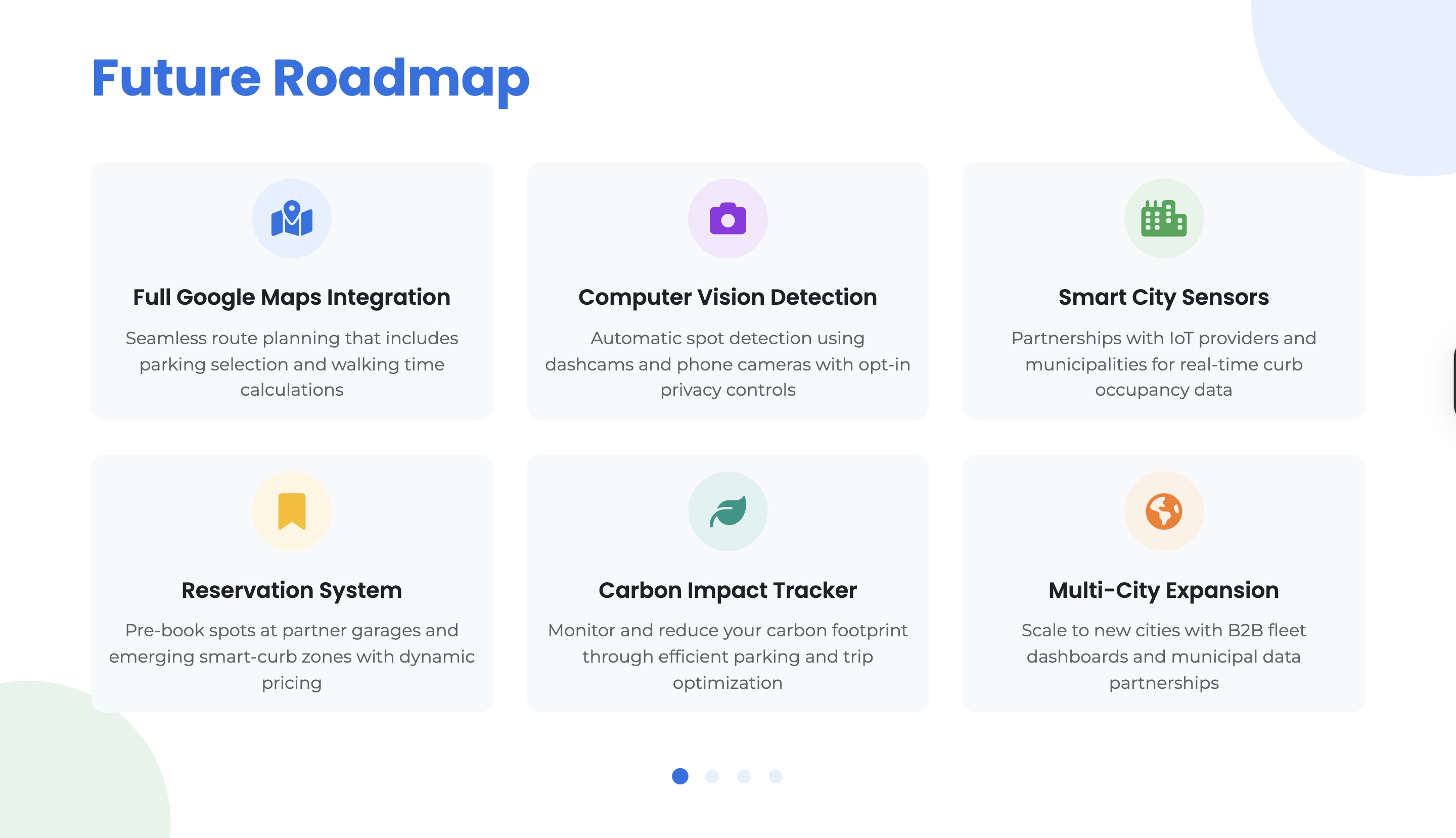
We’re only getting started. Next steps include:
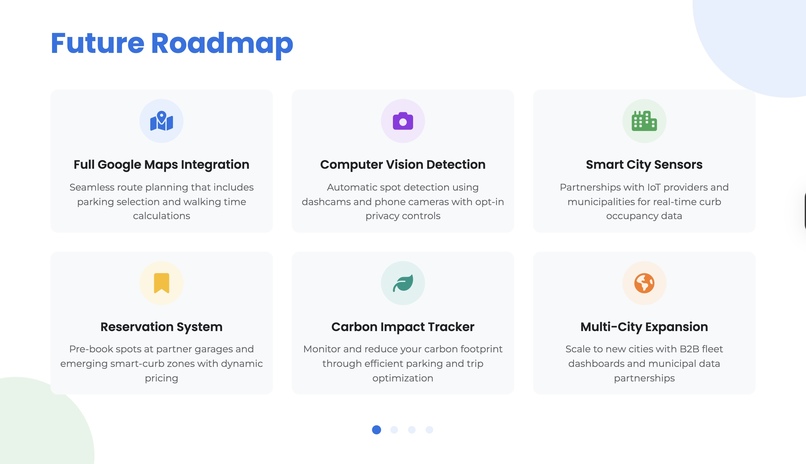
Full Google Maps Integration
- Seamless route planning that includes parking selection and walking time calculations
Computer Vision Detection
- Automatic spot detection using dashcams and phone cameras with opt-in privacy controls
Smart City Sensors
- Partnerships with IoT providers and municipalities for real-time curb occupancy data
Reservation System
- Pre-book spots at partner garages and emerging smart-curb zones with dynamic pricing
Carbon Impact Tracker
- Monitor and reduce your carbon footprint through efficient parking and trip optimization
Multi-City Expansion
- Scale to new cities with B2B fleet dashboards and municipal data partnerships
- Resident-only features (overnight alerts, street sweeping reminders)
- Push notifications for suddenly freed spots
So stick with us, our mission is to make street parking in SF less stressful, less wasteful, and far more predictable.
Stop Searching, Start Parking!
Built With
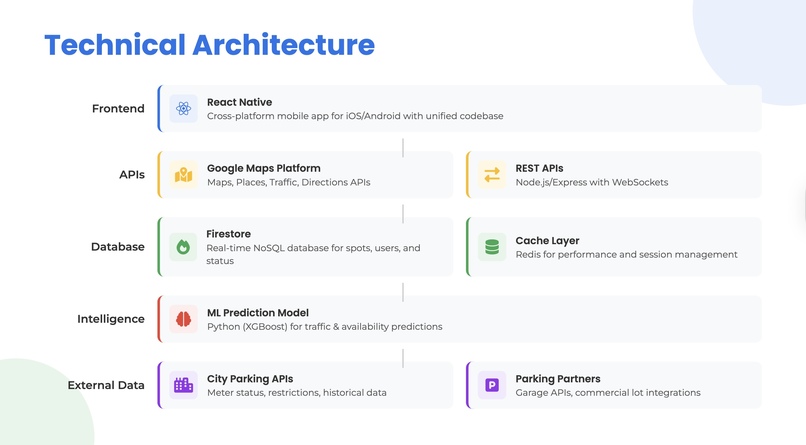
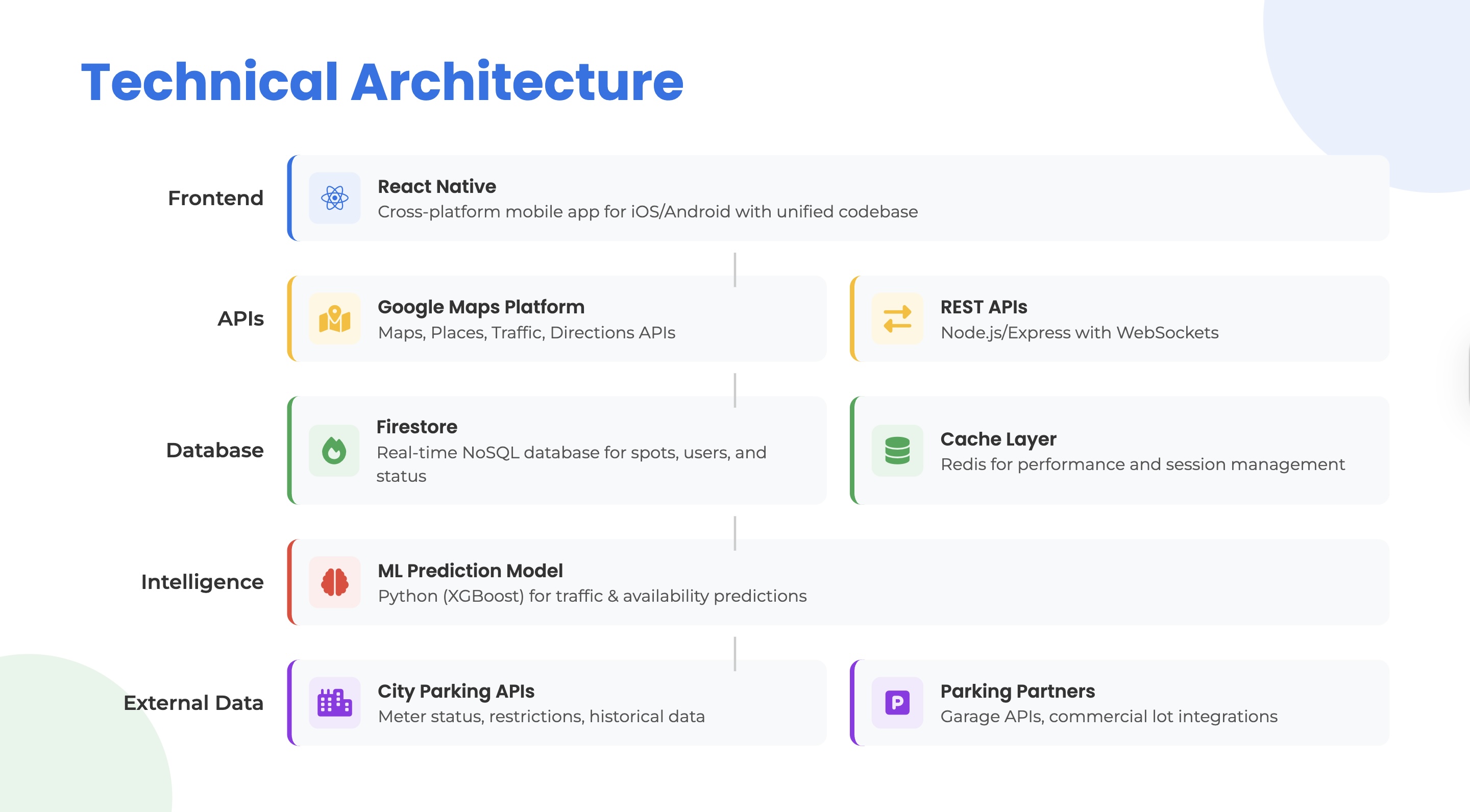
- api
- css
- database
- google-maps
- html
- javascript
- json
- neon
- react-native
- ts


Log in or sign up for Devpost to join the conversation.