-
-

ParkRepy-App-Icon-1024x1024
-
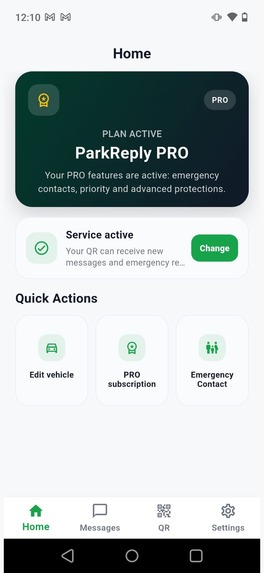
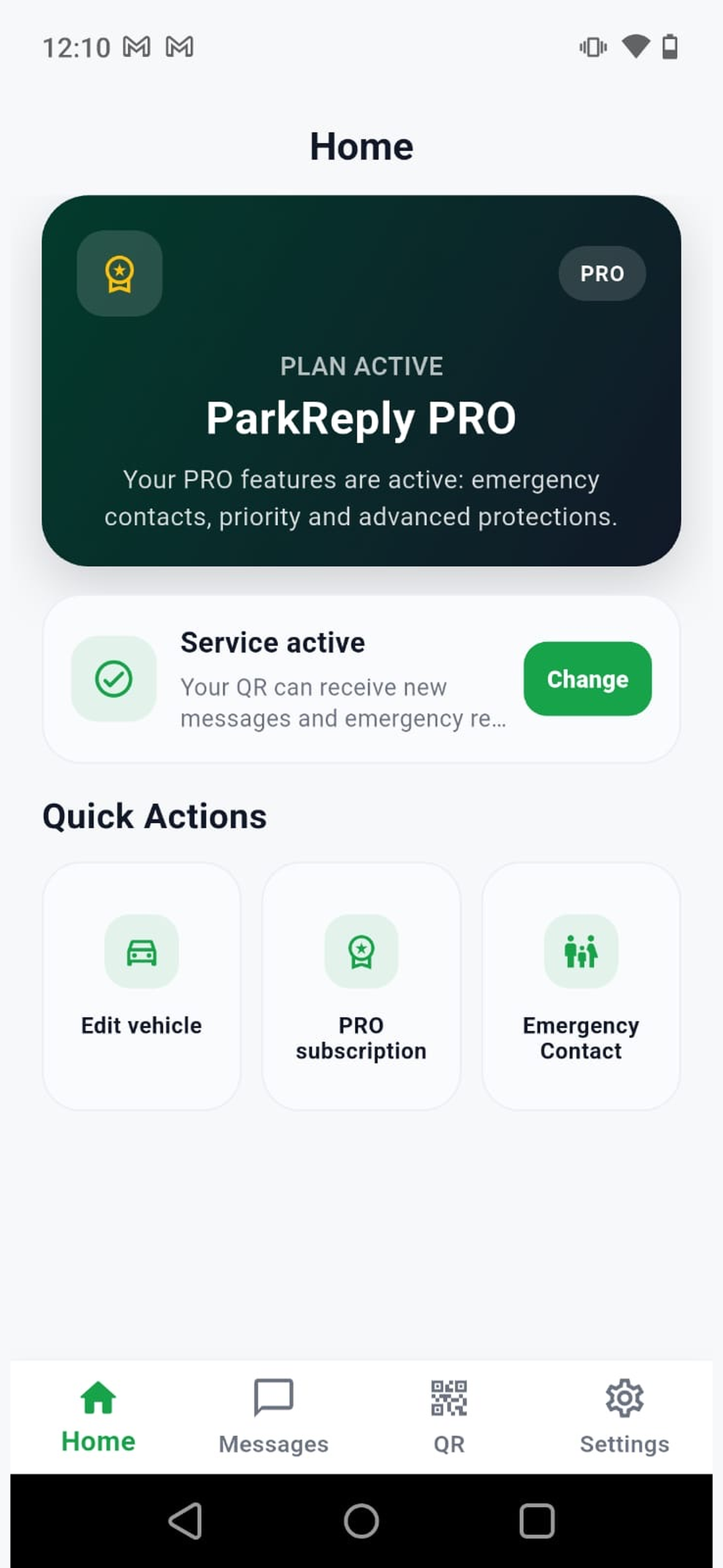
01-driver-home
-
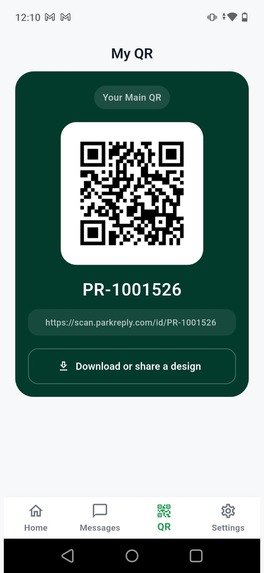
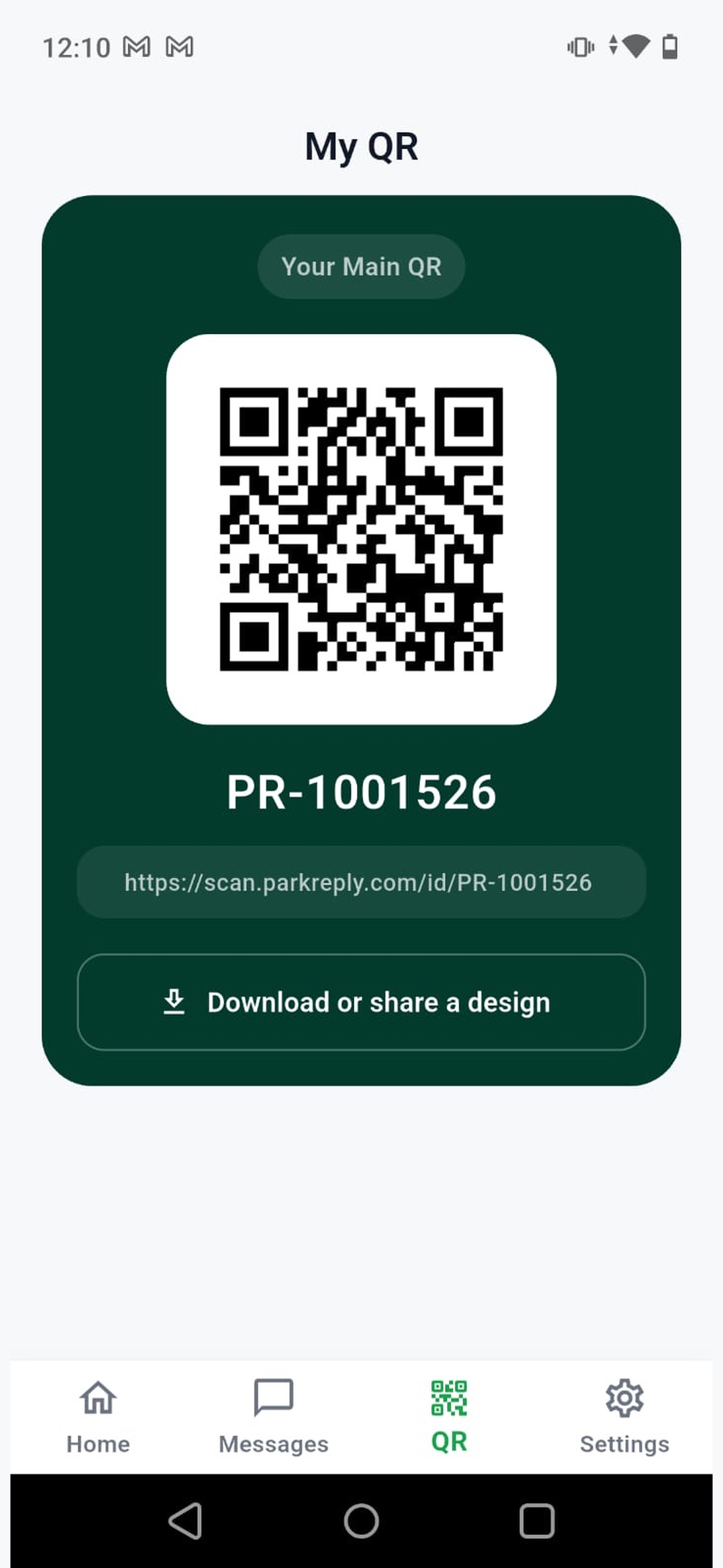
02-driver-qr-section
-
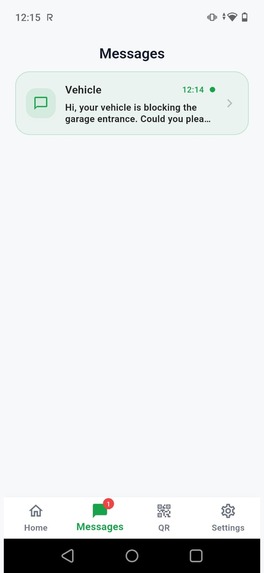
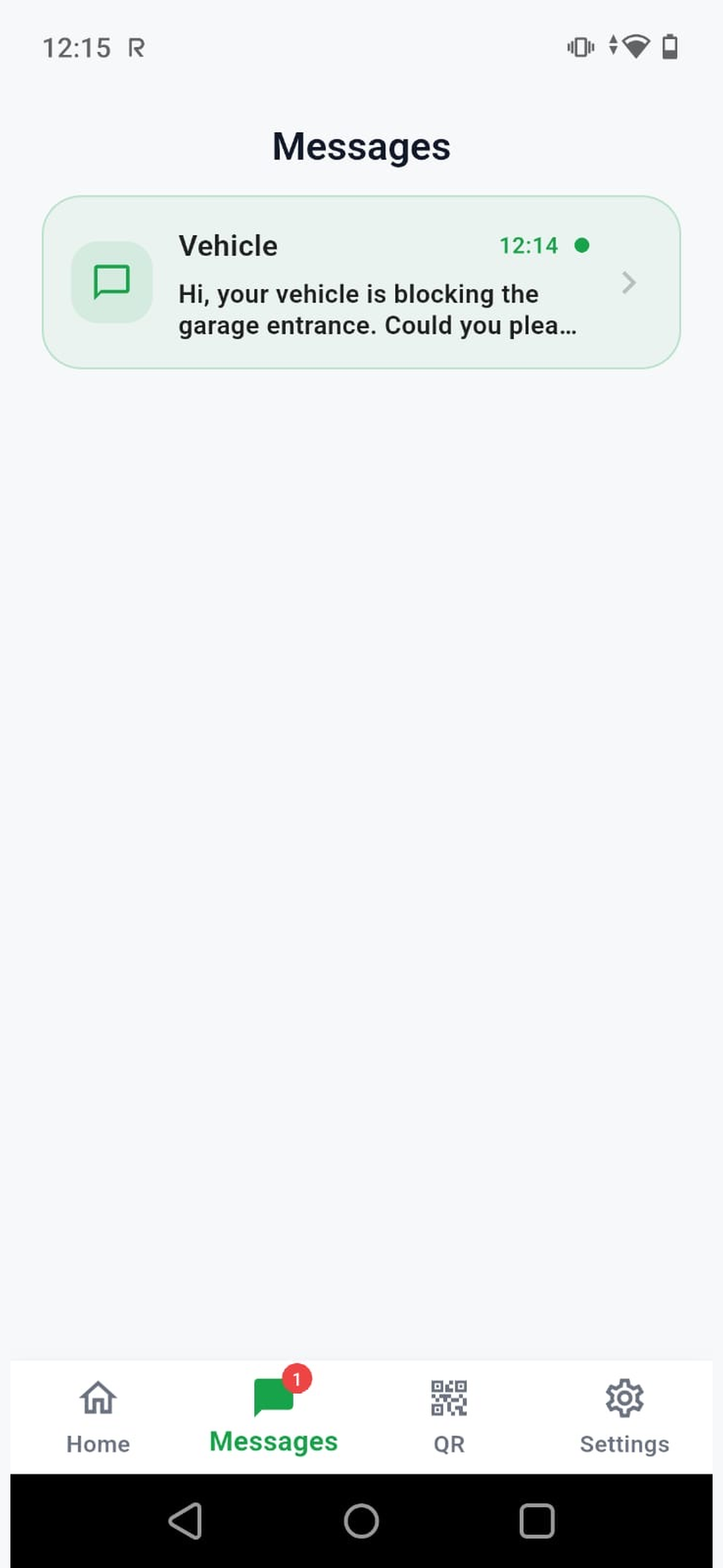
03-driver-message-received
-
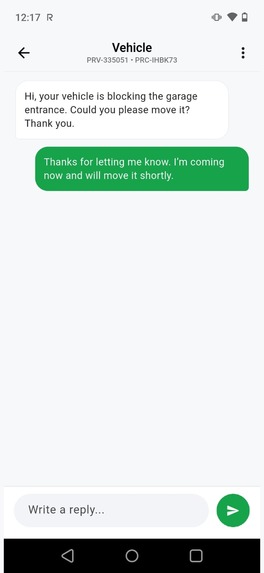
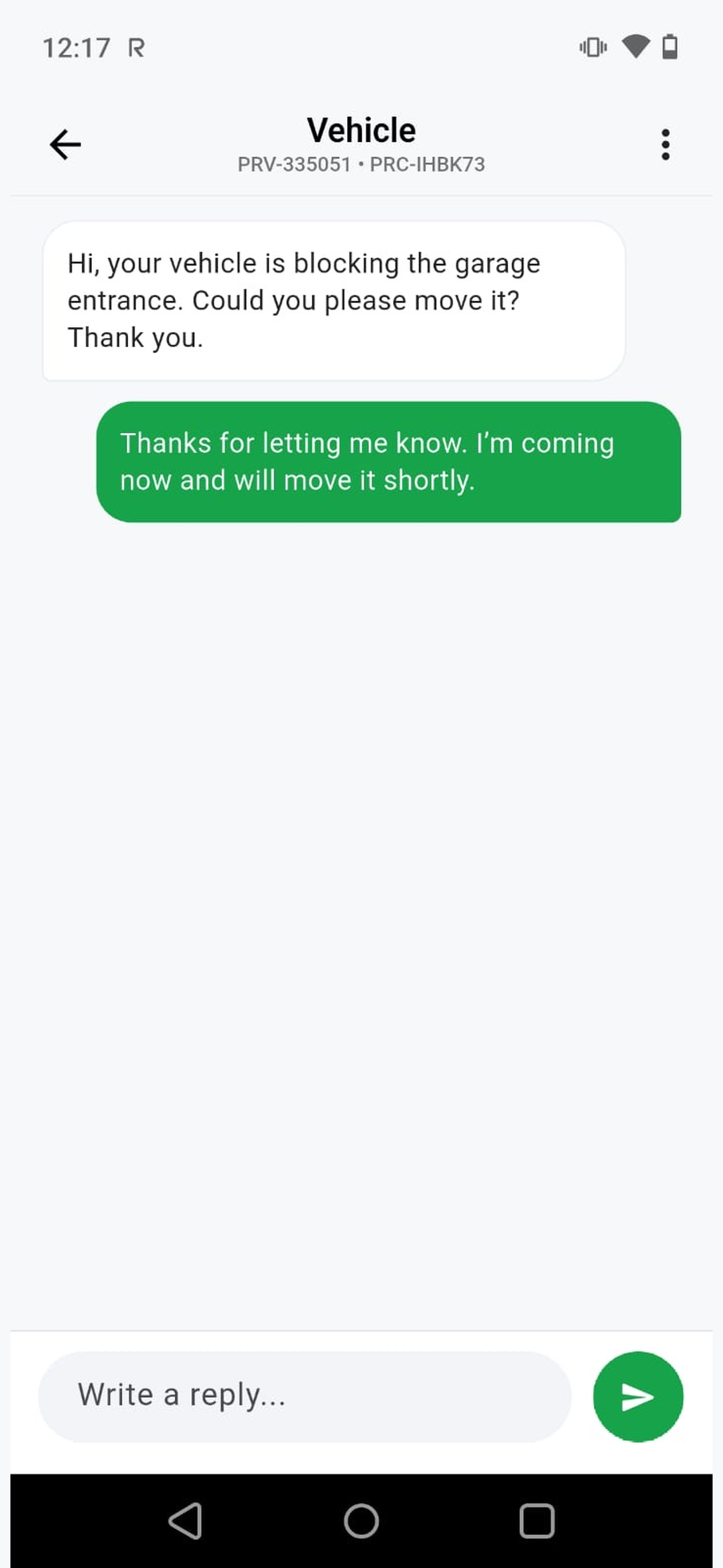
04-driver-conversation
-
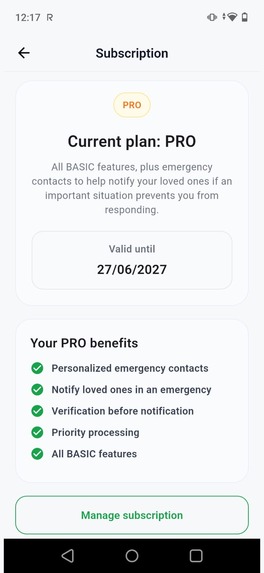
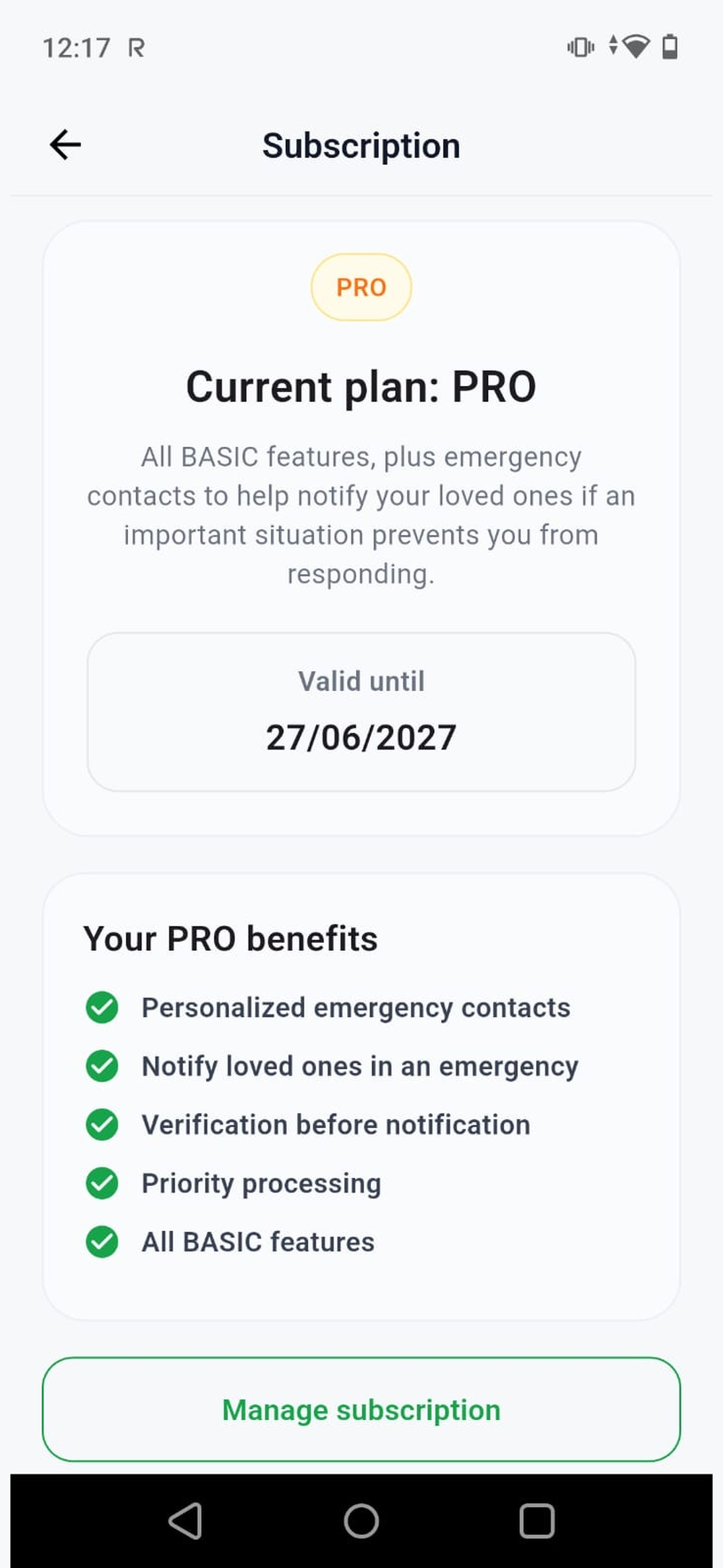
05-driver-pro-subscription
-
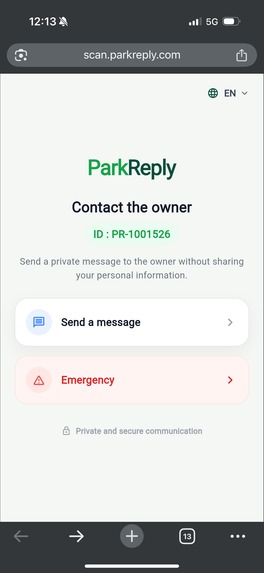
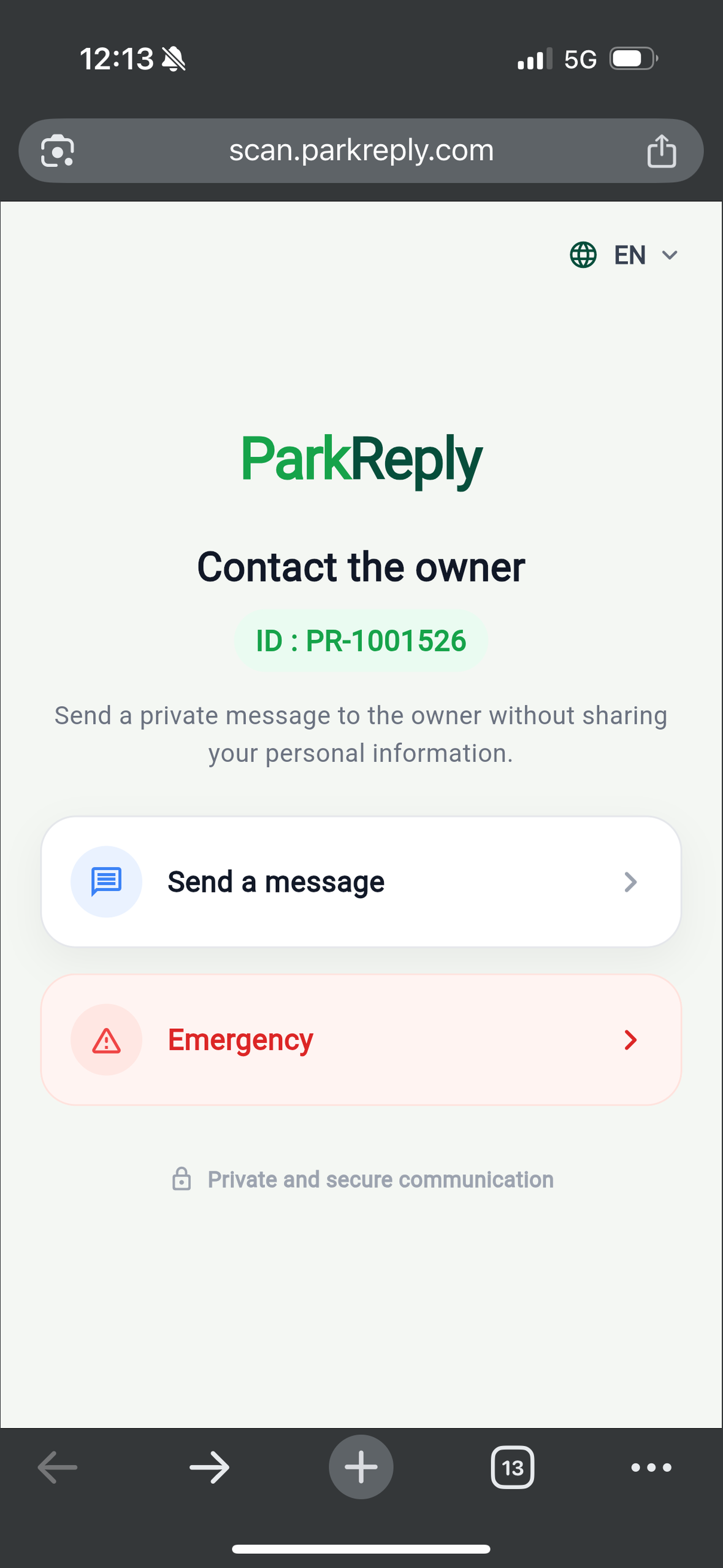
06-scanner-contact-owner
-
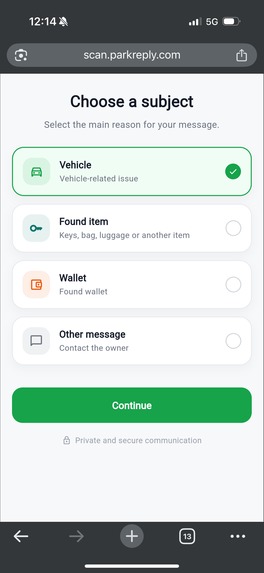
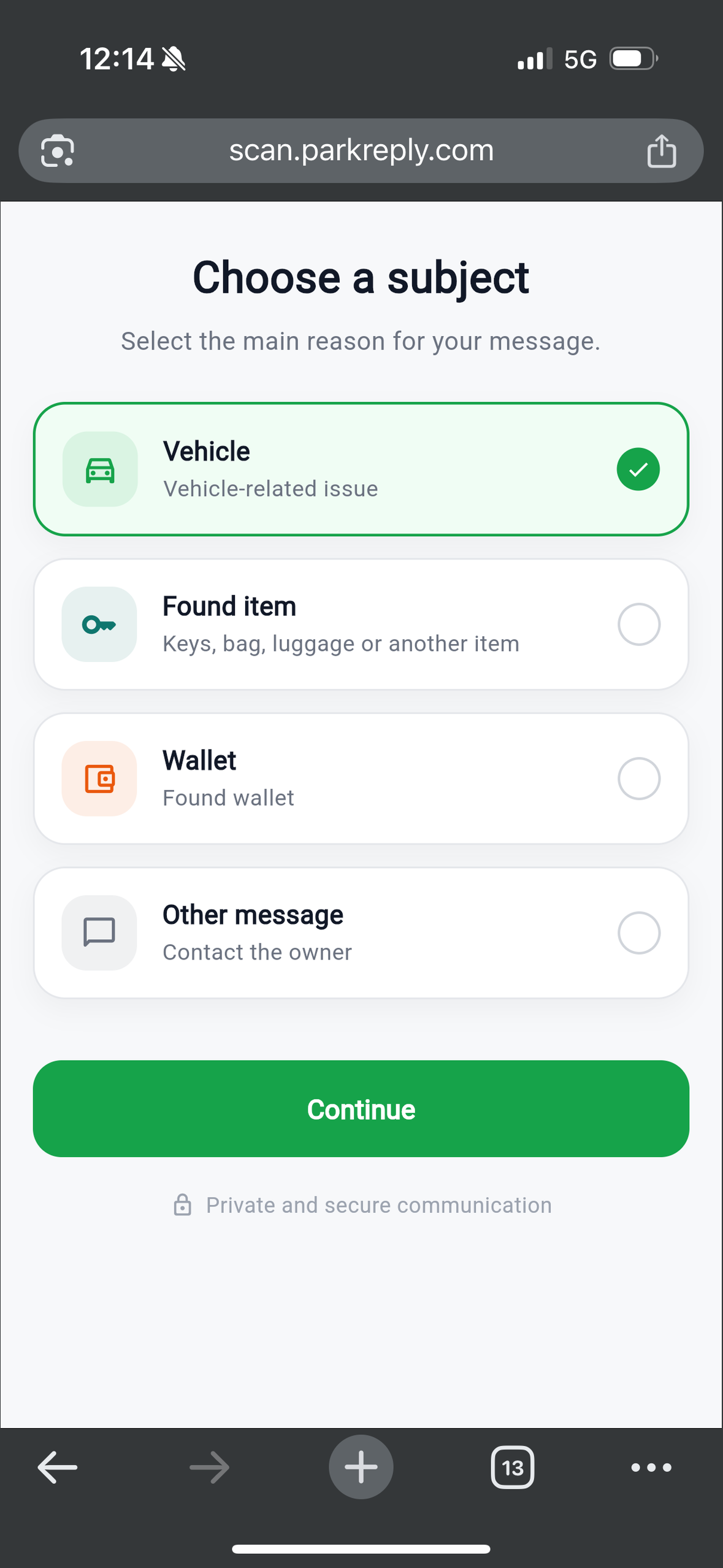
07-scanner-choose-subject
-
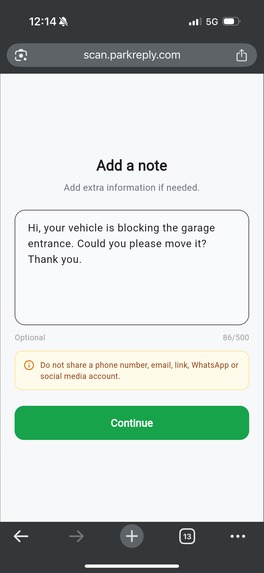
08-scanner-add-note
-
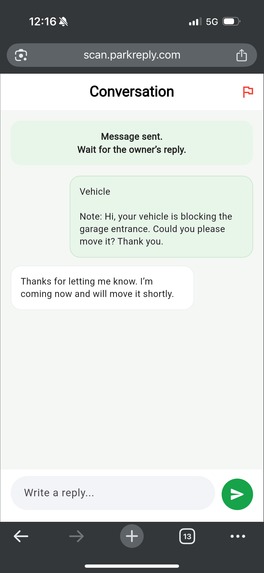
09-scanner-conversation

Inspiration
ParkReply started from a simple real-world problem: sometimes two people who do not know each other need to communicate, but there is no good reason for either person to reveal private contact information.
A common example is a parked vehicle. Someone may need to contact the owner because the vehicle is blocking another car or an entrance, because a problem with the vehicle has been noticed, or because a short message could quickly resolve the situation.
In many cases, there is no way to contact the owner at all. In others, people leave a personal phone number visible behind the windshield, making communication possible at the cost of privacy.
The same communication gap exists when someone finds lost keys, a wallet, a bag, or luggage and needs a way to reach the owner.
ParkReply was built around the idea that people should not have to choose between being unreachable and making their personal contact information public.
Our core principle is:
When communication is necessary, personal identity should not be.
What it does
ParkReply is a privacy-first communication platform that allows strangers to connect temporarily when communication is necessary, without revealing phone numbers, email addresses, social media profiles, or other personal contact details.
Instead of exposing a person's real-world contact information, ParkReply creates a communication layer between the person who needs to send a message and the owner who needs to receive it.
One of ParkReply's first use cases is vehicles.
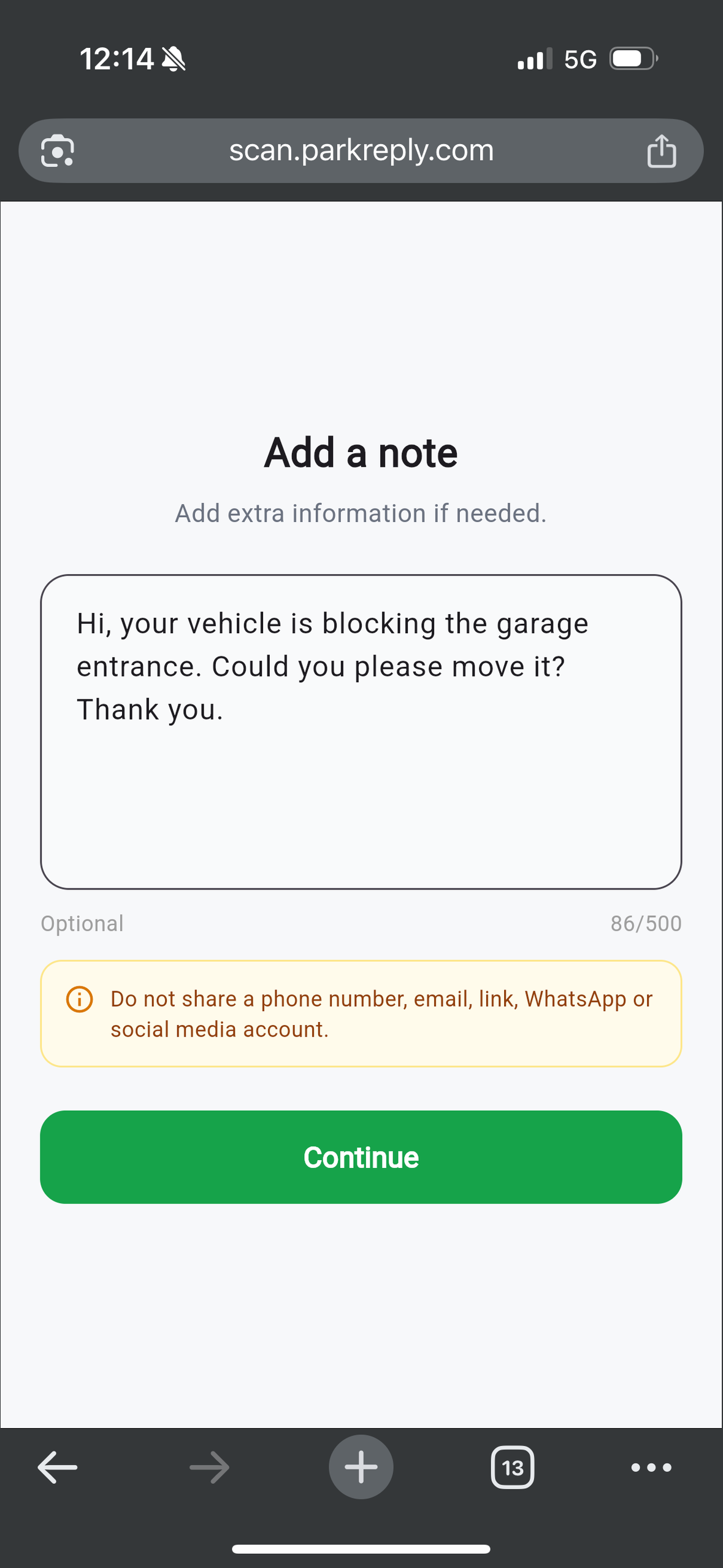
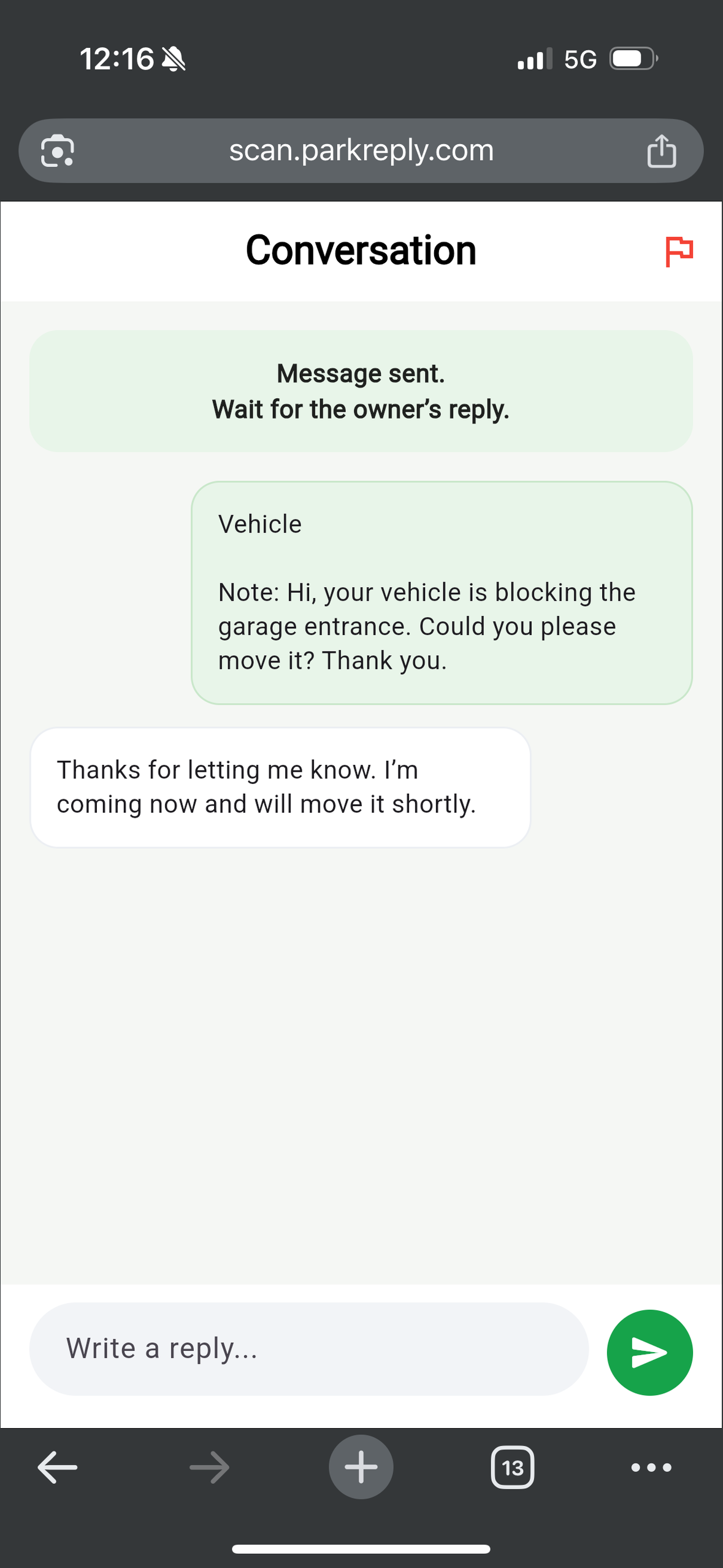
A ParkReply Sticker can be used on a vehicle. When someone needs to contact the owner, they can scan the ParkReply code, choose the relevant reason or send a message, and the owner can be notified without the scanner seeing the owner’s personal phone number or email address.
The same privacy-first communication model can also be used through printable Tags and Cards for everyday items such as keys, wallets, bags, luggage, and documents.
ParkReply is not designed to become a social network or to create permanent relationships between strangers. Its purpose is limited, necessary communication around a specific real-world situation.
Once the purpose of the communication has been fulfilled, the connection no longer needs to continue.
ParkReply is also not simply a QR sticker, key tag, or wallet card company. Those are entry points and early use cases for the underlying product.
The QR code is the bridge. The real product is the communication layer behind it.
Once an owner creates an account, ParkReply automatically prepares printable Tags, Stickers, and Cards that can be downloaded and printed for supported real-world use cases.
How we built it
ParkReply was built as a multi-surface product rather than a single QR-code page.
The current system includes:
- a Flutter-based Android application
- a public scanner experience that can be accessed without requiring the person scanning the QR code to create an account
- Firebase-backed infrastructure for authentication, data, messaging, and application services
- an administrative interface for managing the platform
- a public ParkReply website
- RevenueCat integrated with Google Play Billing for the ParkReply Pro subscription flow on Android
A key architectural principle is the separation between a user's private account information and the public ParkReply identity used for communication.
A person scanning a ParkReply code should be able to send a useful message without receiving access to the owner’s private account details.
The scanner experience is therefore designed around the communication need rather than exposing the identity behind it.
We also designed the communication flow around limits and controls instead of unrestricted stranger-to-stranger messaging. The objective is to enable the communication needed to resolve a specific situation while preserving privacy.
ParkReply follows a freemium model.
The Basic experience is currently free, while ParkReply Pro is offered as an annual subscription. On Android, Google Play Billing and RevenueCat are used for the subscription flow, entitlement handling, and purchase restoration.
Challenges we ran into
One of the biggest challenges in building ParkReply was realizing that privacy cannot simply be added as a marketing statement after the product is built.
Privacy affects the architecture and the communication flow itself.
The scanner needs to reach the correct ParkReply user without exposing private account data. The owner still needs to receive and respond to useful communication. At the same time, the communication needs boundaries so that a tool designed for necessary contact does not become unrestricted messaging between strangers.
Another challenge was bringing several connected surfaces together into one consistent product: the Android application, public scanner, backend services, administration tools, subscription system, and public website.
As ParkReply moved closer to launch, another important challenge was knowing when to stop expanding the product.
Instead of continuing to add features, the focus shifted toward stabilization: validating existing flows, fixing inconsistencies, strengthening subscription handling, and making sure the different parts of ParkReply work together reliably.
Accomplishments that we're proud of
We are proud that ParkReply developed from a simple QR-based idea into a broader privacy-first communication system.
The product now combines a real Android application, a public scanner experience, privacy-separated communication identities, backend infrastructure, administrative tools, and a subscription model.
More importantly, the product has remained focused on the original problem.
ParkReply does not require someone to make a personal phone number publicly visible just so another person can send one necessary message.
Vehicles, keys, wallets, bags, and luggage may be the first use cases, but they all demonstrate the same underlying principle: useful communication can happen without exchanging personal contact details.
We are also proud of bringing ParkReply to public launch on Android while keeping that privacy-first principle at the center of the product.
What we learned
One of the biggest lessons from building ParkReply is that privacy needs to influence the product from the beginning.
It affects architecture, data access, user flows, and the boundaries placed around communication.
We also learned to separate the product from the physical object that introduces it.
A sticker, tag, card, or QR code may start the interaction, but it is not ParkReply itself.
ParkReply is the communication layer that makes the interaction possible while protecting personal information.
Another important lesson was understanding that building more is not always the right next step.
As ParkReply approached launch, reliability, privacy, subscription integrity, usability, and consistency became more important than expanding the feature set.
What's next for ParkReply
ParkReply is now publicly available on Android, and the next phase is focused on real-world adoption.
Our immediate priority is to learn from how people use ParkReply in everyday situations, improve the existing experience, and grow the first user base while keeping the platform stable and privacy-focused.
Rather than rapidly adding features, we want to validate the core communication model first: can ParkReply make short, necessary communication between strangers easier without requiring either person to expose private contact information?
Vehicles, keys, wallets, bags, and luggage are starting points, not the definition of ParkReply.
The longer-term vision is to build a trusted privacy-first communication platform for situations where two people who do not know each other need to communicate for a specific reason without being forced to reveal their personal contact information.
When communication is necessary, personal identity should not be.

Log in or sign up for Devpost to join the conversation.