Inspiration
Parkinson’s care is not only about taking medication on time. Patients and caregivers often need to understand patterns around missed doses, symptom changes, ON/OFF periods, and movement-related observations. The problem is that these details are usually scattered across memory, notes, or short doctor visits.
We built ParkinTrack AI to make this tracking easier, more structured, and more useful. The goal is to help patients and caregivers log important daily information and turn it into clear insights that can support better conversations with clinicians.
What it does
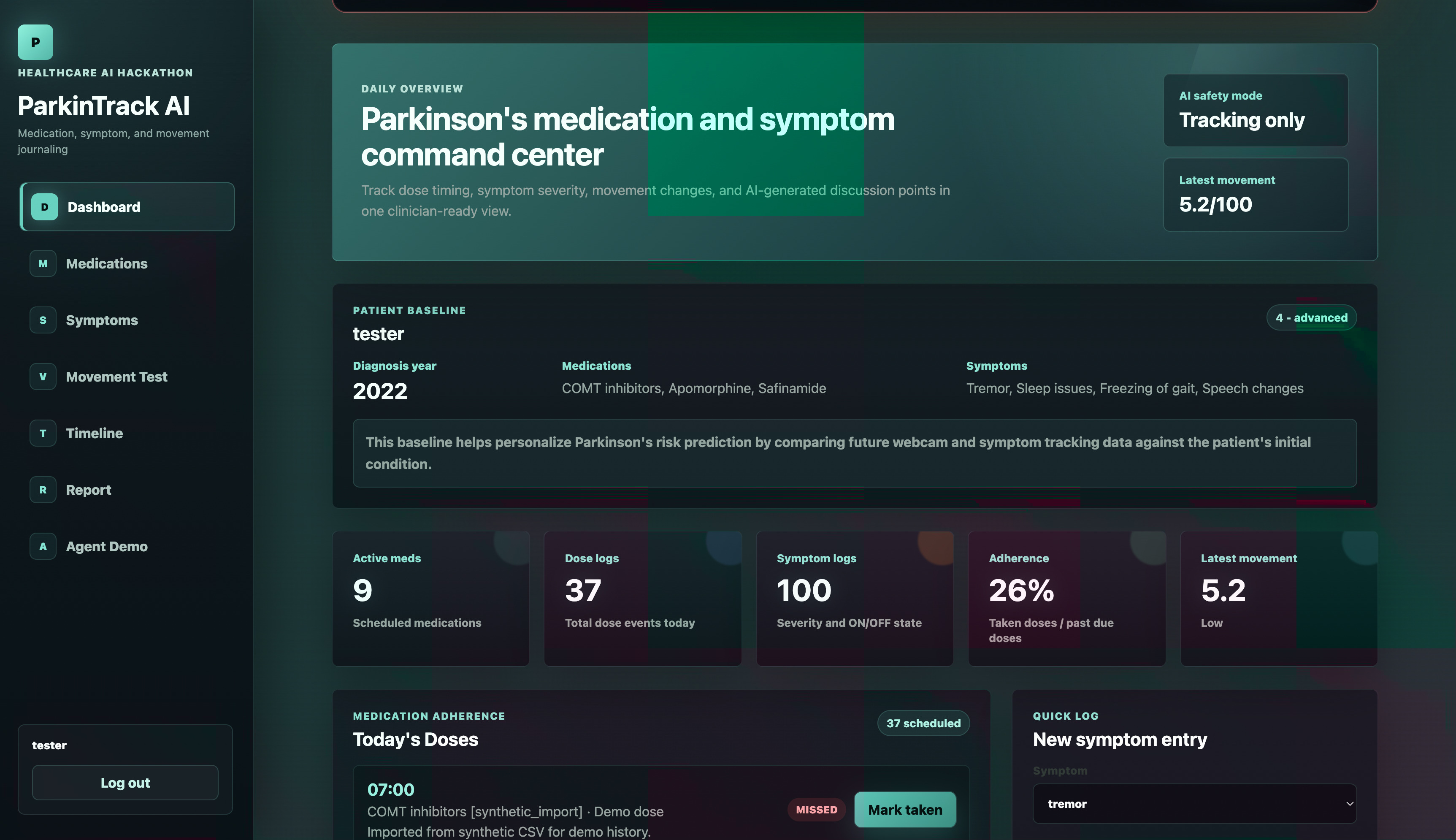
ParkinTrack AI is a full-stack healthcare assistant for Parkinson’s medication, symptom, movement-test, and prediction tracking.
The app allows users to:
- Log medication doses and missed doses
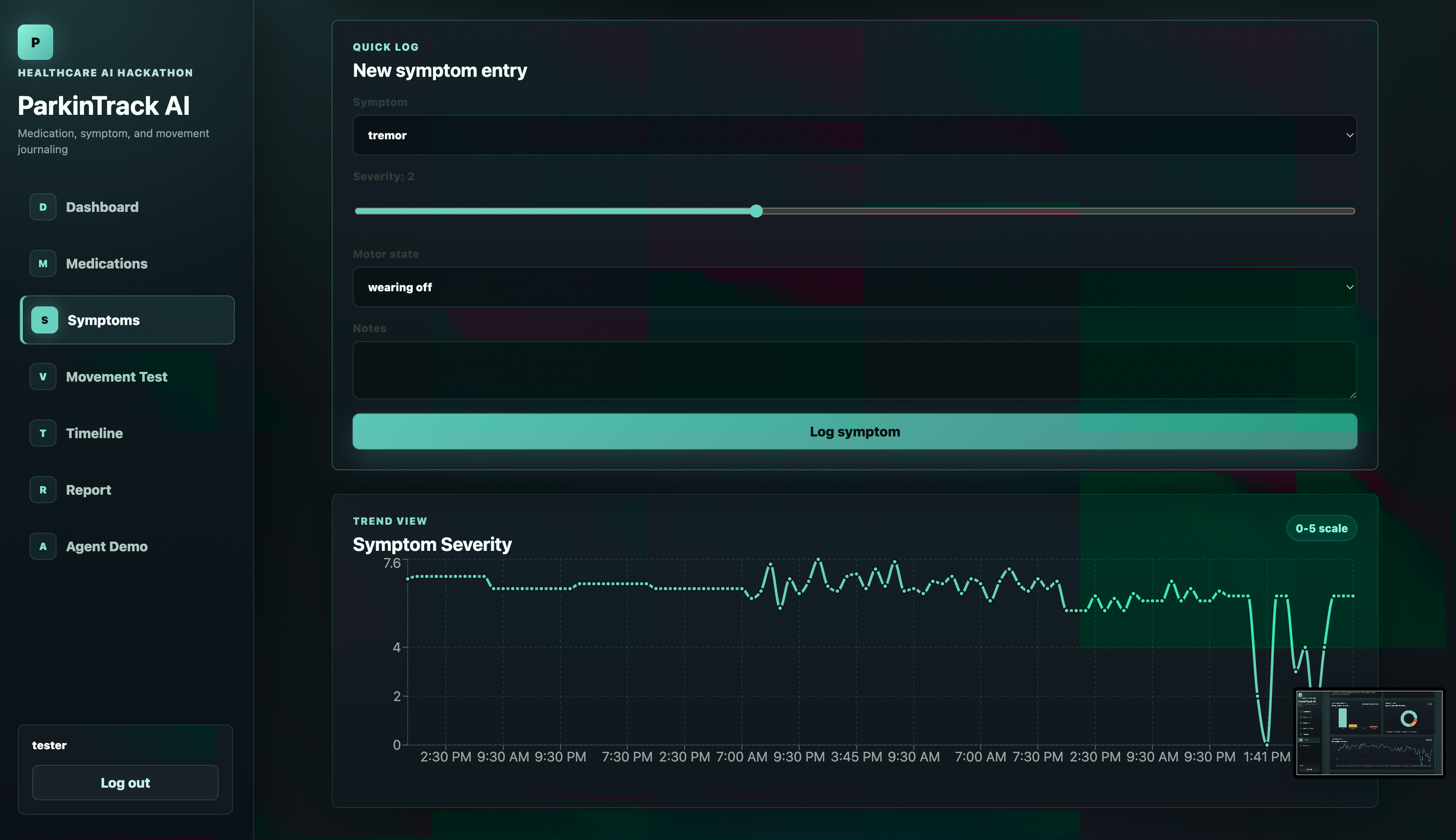
- Track symptom severity and ON/OFF periods
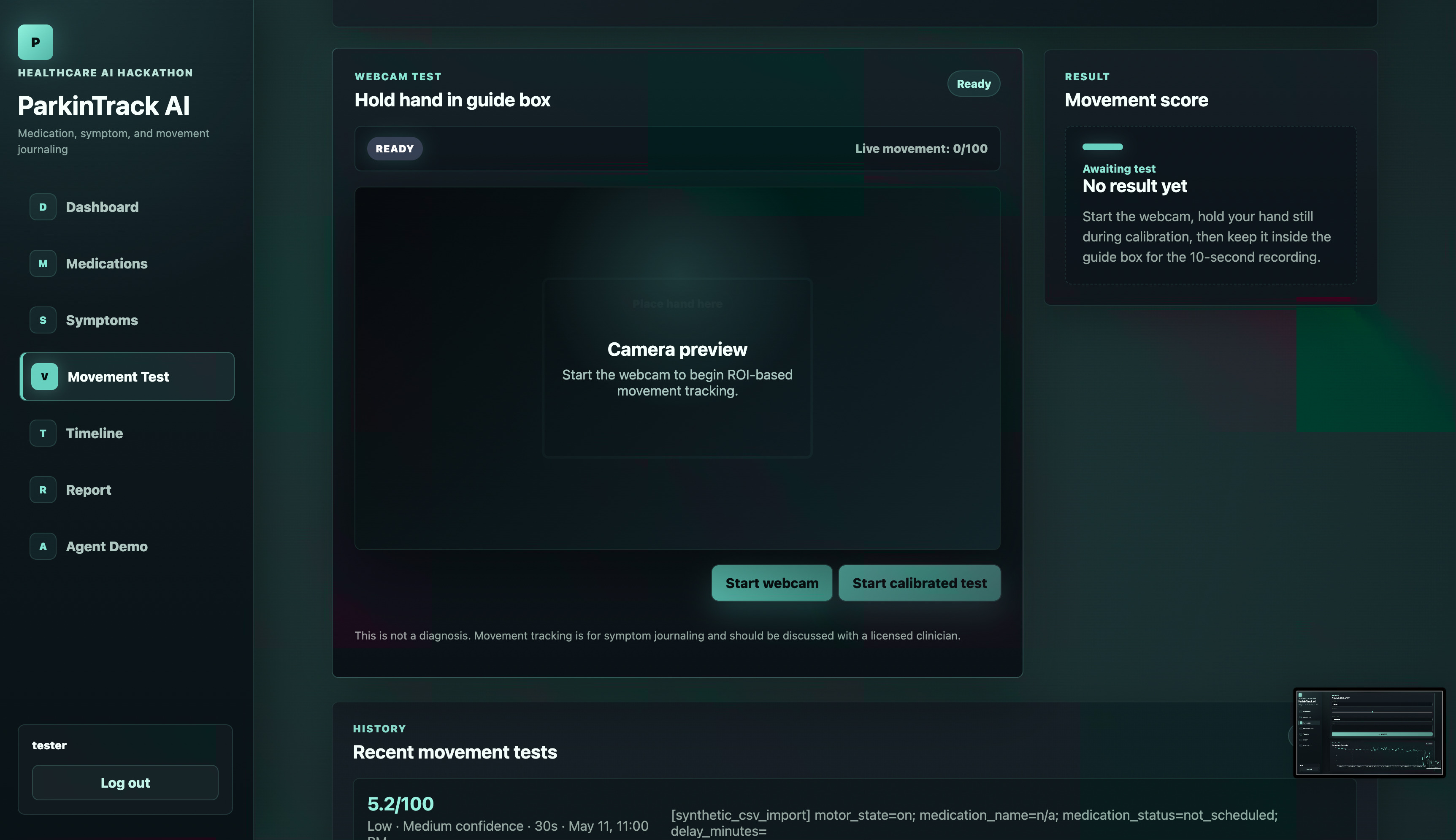
- Record movement-test observations
- Add patient notes and daily updates
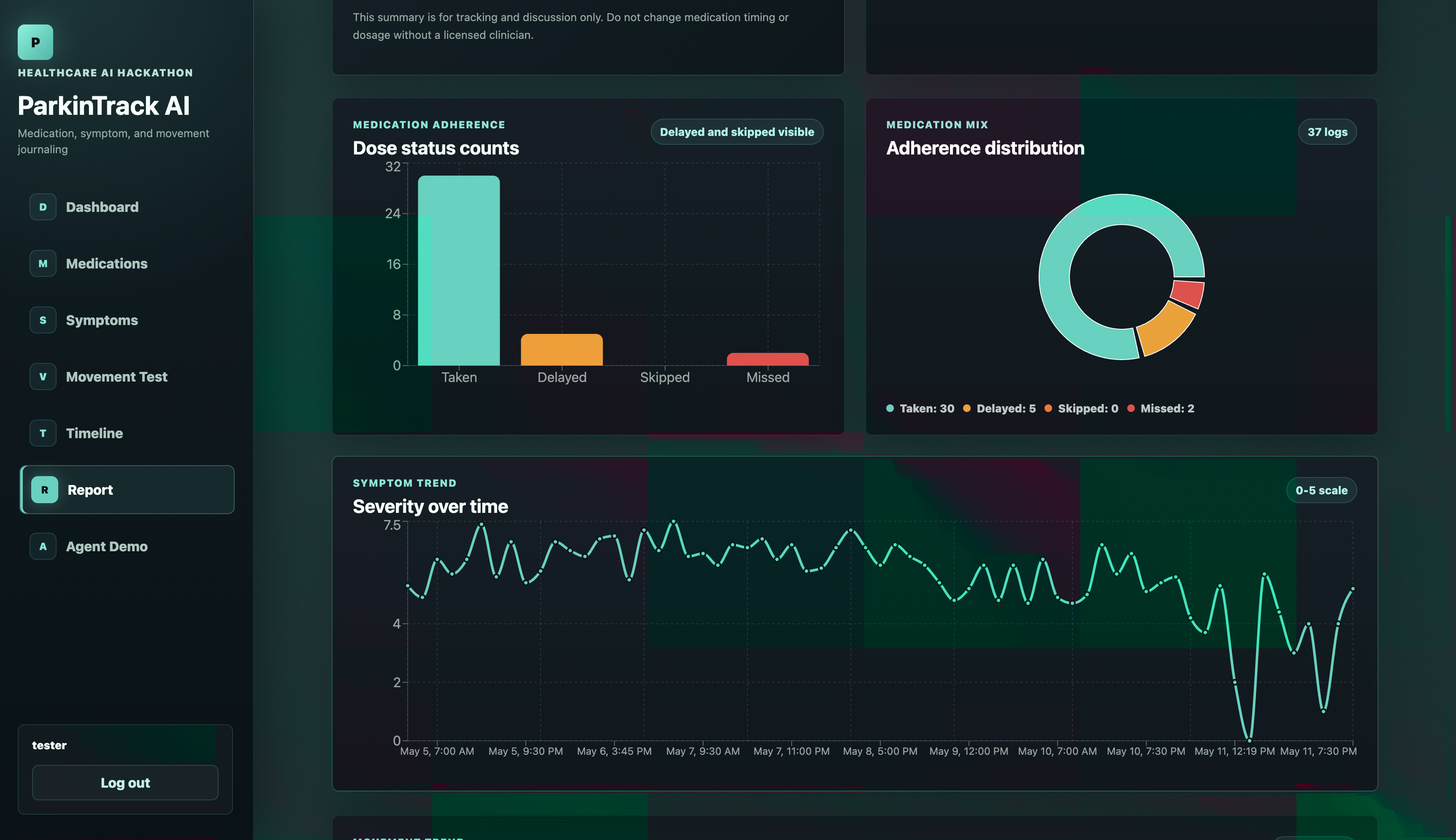
- View trend summaries and prediction-based risk insights
- Generate clinician-friendly reports
- Use an AI-powered prediction workflow with a mock fallback when no API key is configured
The platform is designed to make patient data easier to review, instead of relying only on memory during appointments.
How we built it
We built the project as a full-stack web application.
The frontend was built using React, Vite, React Router, Axios, HTML, CSS, and JavaScript. The backend was built using Node.js and Express.js, with PostgreSQL as the database. We also used JWT authentication for secure user login and protected routes.
For the AI workflow, we integrated an optional OpenAI API based prediction system. If no API key is configured, the app uses a built-in mock prediction agent so the demo can still run smoothly.
We also structured the project with a separate MCP server component to align with the hackathon theme around interoperable healthcare agents.
Challenges we faced
One major challenge was making the project feel useful beyond simple medication tracking. At first, the idea felt too basic because anyone can write down when they took medicine. So we expanded the project to focus more on patterns, prediction summaries, movement-test observations, and clinician-friendly reporting.
Another challenge was keeping the AI safe and realistic. We did not want the app to act like a doctor or make direct medical decisions. Instead, we designed the AI to provide supportive trend insights and risk summaries that can help patients and caregivers prepare better for clinical discussions.
We also had to make sure the system worked even without external API access, so we added a mock fallback for predictions.
What we learned
We learned how important it is to design healthcare AI around safety, clarity, and real user workflows. A healthcare project should not just look technical. It should solve a real communication or tracking problem for patients, caregivers, and clinicians.
We also learned how to connect full-stack engineering with AI agents, structured health data, and practical reporting. Building this project helped us understand how AI can support healthcare without replacing professional medical judgment.
What’s next
In the future, we would like to add:
- Better FHIR-based healthcare data interoperability
- More detailed medication adherence analytics
- Caregiver notifications
- Doctor-facing dashboards
- More advanced prediction models trained on structured historical patient data
- Exportable PDF reports for clinical visits
- Stronger privacy and security features for real-world healthcare use
Built with
React, Vite, React Router, Axios, Node.js, Express.js, PostgreSQL, JWT Authentication, OpenAI API, MCP Server, REST APIs, HTML, CSS, JavaScript, GitHub, and deployment-ready structure for platforms like Vercel and Render.
Built With
- axios
- express.js
- github
- javascript
- jwt
- mcp
- node.js
- openai
- postgresql
- react
- vite

Log in or sign up for Devpost to join the conversation.