-
-
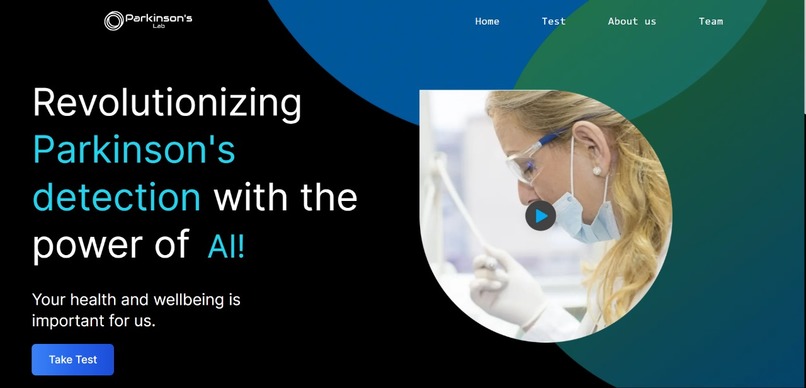
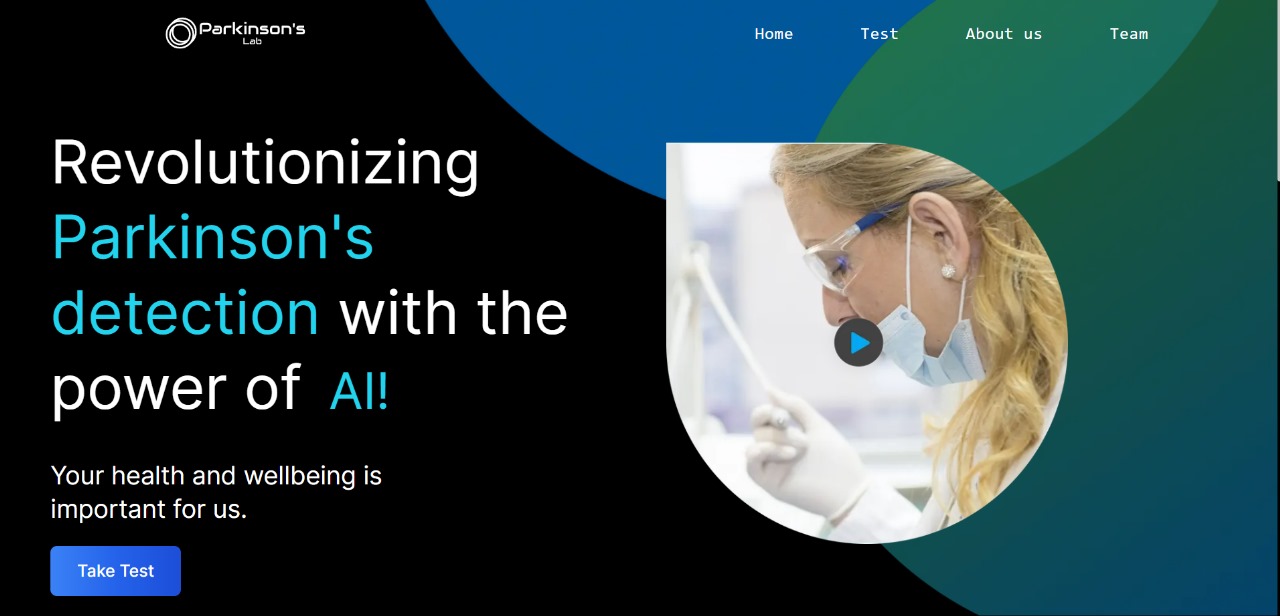
Hero Section
-
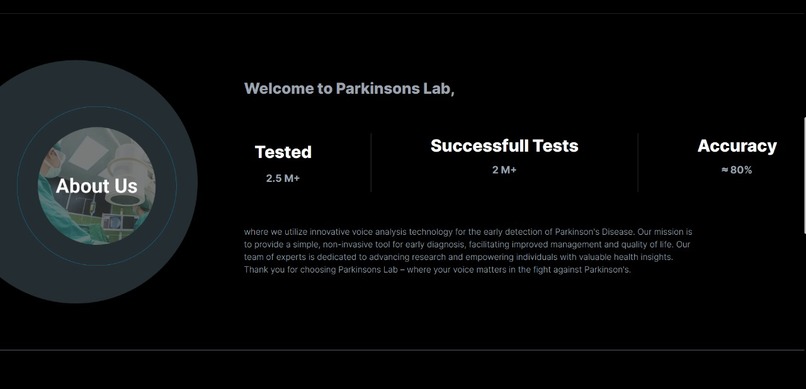
About Us Section
-
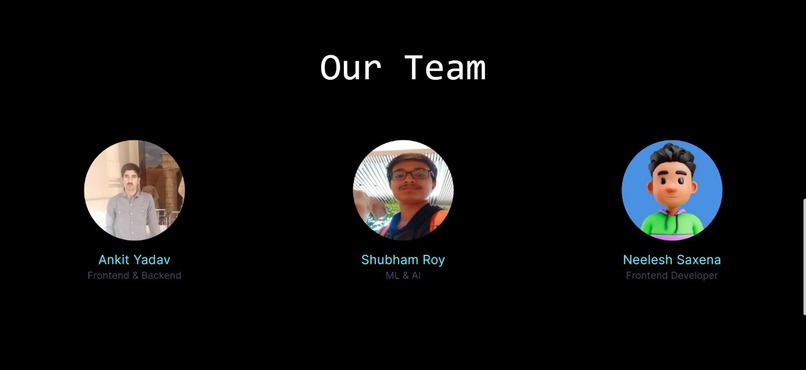
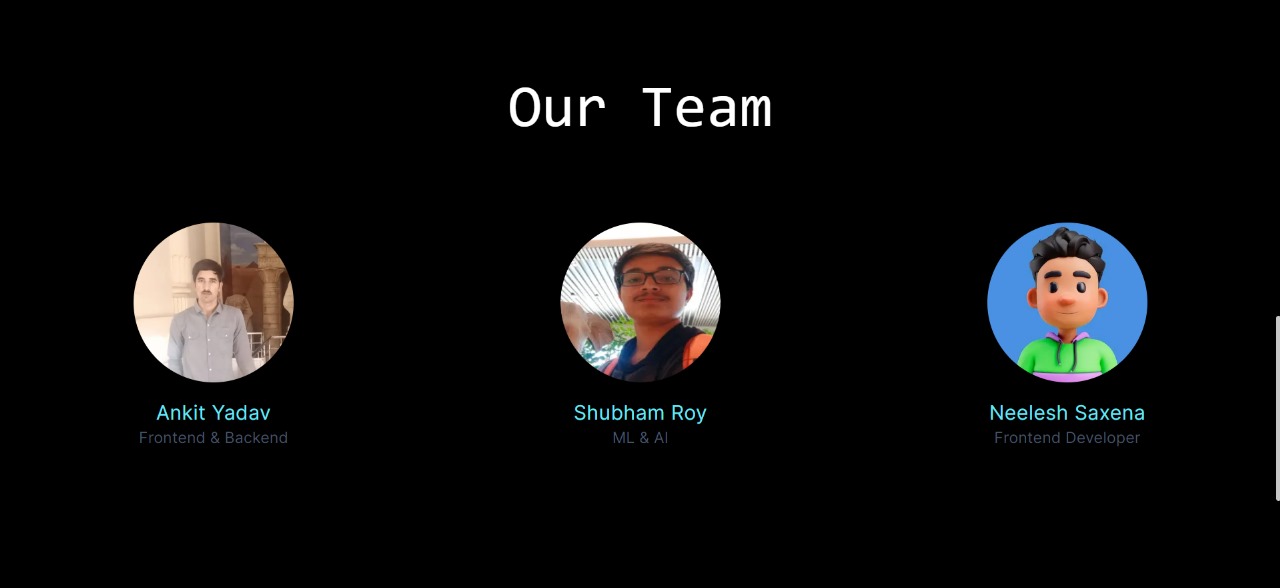
Our Team Section
-
Footer
-
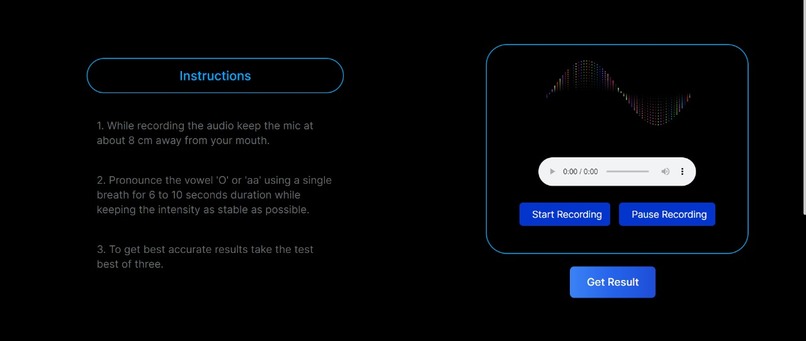
Recording Page
-
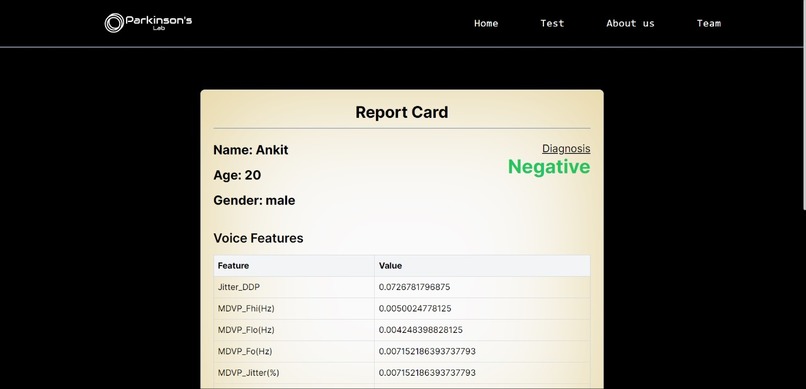
Final Report Card


Inspiration
Parkinson’s Disease is the second most prevalent neurodegenerative disorder after Alzheimer’s, affecting more than 10 million people worldwide. Parkinson’s is characterized primarily by the deterioration of motor and cognitive ability. There is no single test which can be administered for diagnosis. Instead, doctors must perform a careful clinical analysis of the patient’s medical history. Unfortunately, this method of diagnosis is highly inaccurate. A study from the National Institute of Neurological Disorders finds that early diagnosis (having symptoms for 5 years or less) is only 53% accurate. The gradual decaying of the neurons that produce a chemical called dopamine causes abnormal brain activities that result in PD symptoms. Therefore, the rate of newly diagnosed cases generally increases with age, whereas only 4% of people with PD are diagnosed before turning to 50. Because of these difficulties in traditional method of detecting we came up with an idea or a machine learning approach by creating a web-app to accurately diagnose Parkinson’s Disease using multiple voice features.
What it does
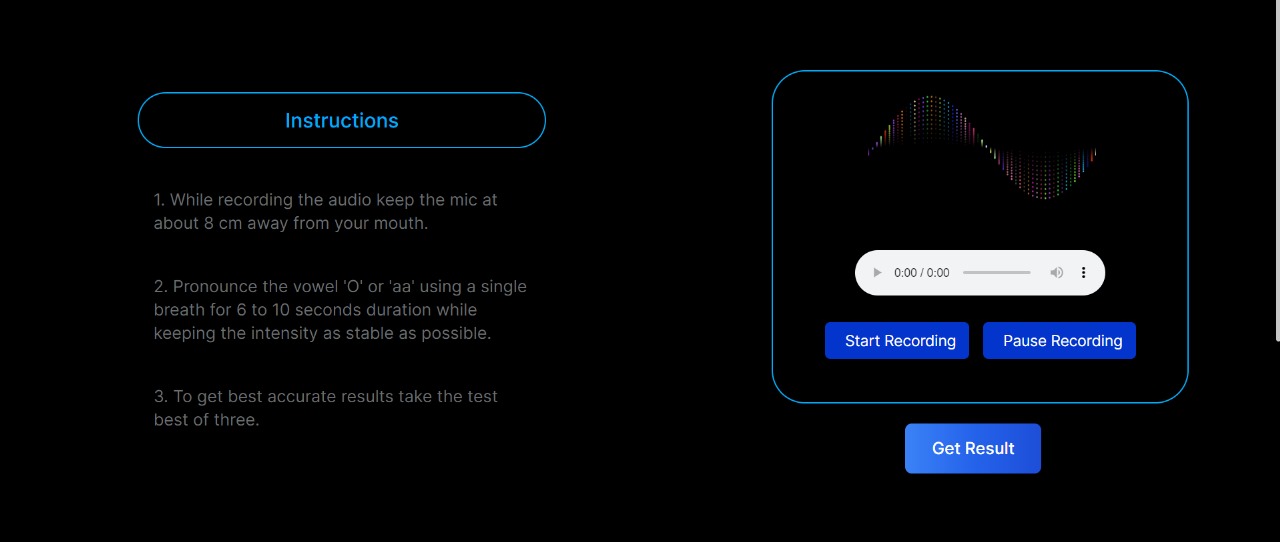
Parkinsons-lab's primary feature is the diagnosis of Parkinson’s Disease. Users are prompted to record their voice following specific instructions and upload the recording to the platform. Using this voice input and a deep learning model, the user's condition is assessed. The resulting test results are then made available for the user to view and download. The diagnostic process also accounts for variations in gender and age, enhancing the specificity and accuracy of the results.
How we built it
We built Parkinsons-lab using a neural network-based deep learning model, trained on previously recorded Parkinson's research data centered on voice analysis. The frontend, developed with NEXT.js and Tailwind CSS, collects the required inputs (voice recordings, and information such as gender and age). These inputs are then passed to a FLASK backend, which uses the model to make accurate predictions. The results are sent back to the frontend for display and are available for download.
We chose voice features because abnormalities in Parkinson’s Disease speech can be associated with multiple dimensions. Symptoms include dysphonia (impaired vocal sound production) and dysarthria (articulation issues). Dysphonic symptoms typically involve reduced loudness, breathiness, roughness, decreased energy in higher harmonic spectra, and exaggerated vocal tremor. These features provide valuable data for accurate diagnosis.
Challenges we ran into
Extracting All Features from Voice Recordings:
- Accurately capturing and processing voice features such as loudness, breathiness, roughness, and vocal tremor.
- Ensuring high-quality recordings to extract reliable data for the neural network model.
Integrating Voice Recording React Frontend with Flask Backend:
- Seamlessly connecting the NEXT.js and Tailwind CSS frontend to the FLASK backend containing the deep learning model.
- Ensuring smooth data flow and communication between the frontend and backend.
Finding the Most Accurate Algorithm:
- Testing various machine learning algorithms to identify the most accurate one for your dataset.
- Tuning hyperparameters to optimize model performance and achieve the highest diagnostic accuracy.
Time and Team Management:
- Coordinating efforts among team members to meet project deadlines.
- Balancing the technical workload while ensuring effective collaboration and communication within the team.
Accomplishments that we're proud of
We are proud of this project because not only we have introduced an accurate method for diagnosis Parkinson's Disease, but we have also created a valuable asset for doctors. Its potential can be reached by expanding this application to detect other diseases based on patient voice features. the project is both promising and inspiring.
What we learned
Teamwork and Time Management Skills
- Improved collaboration and time management.
Parkinson's Disease Diagnosis
- Challenges in accurate diagnosis.
Technical Skills and Problem Solving
- Embraced new tech stacks, solved errors.
UI/UX Design
- Crafting user-friendly websites.
What's next for Parkinsons-lab
Disease Detection Expansion:
- Explore detecting other diseases based on patient voice features.
- Leverage wearable devices (smartwatches, fitness trackers) for additional data on movement patterns and PD symptoms.
Revenue Model Development:
- Consider revenue streams:
- Pay Per Test Method: Charge for individual tests.
- Licensing Telemedicine Services: Offer licenses to corporate brands for telemedicine use.
- Consider revenue streams:
Chatbot Integration:
- Integrate a chatbot within the web app.
- Provide support and answer user questions related to Parkinson's disease.
Multi-Language Implementation:
- Extend your product's reach by implementing multiple language interfaces.


Log in or sign up for Devpost to join the conversation.