-
-
This is the result from the Emma project done by Microsoft Research, which makes us confident in the counter-vibration approach.
-
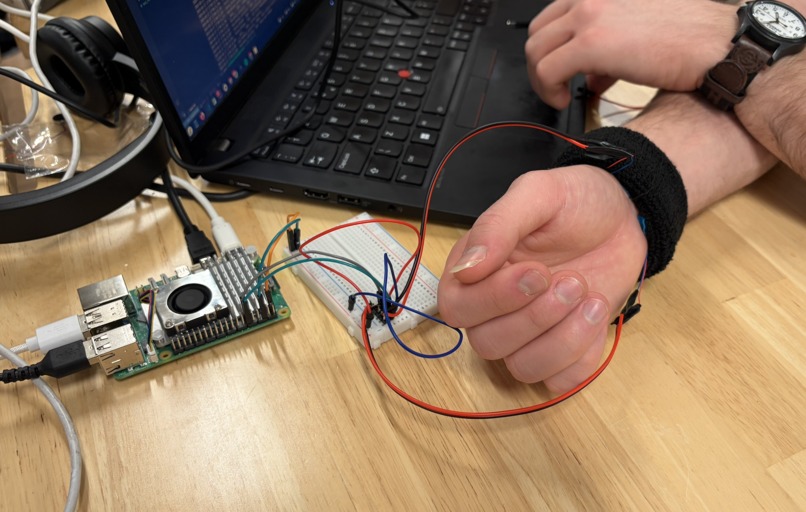
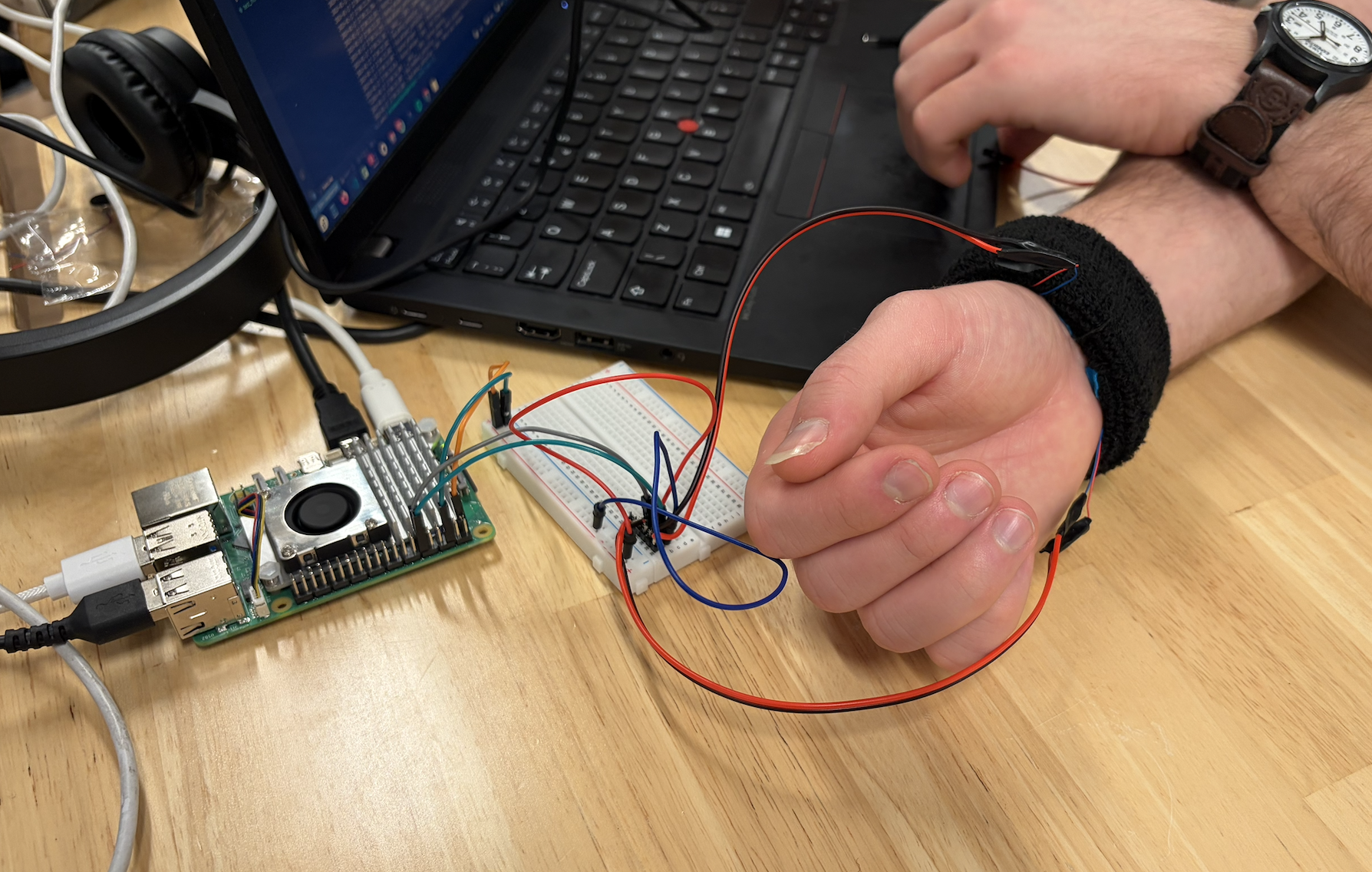
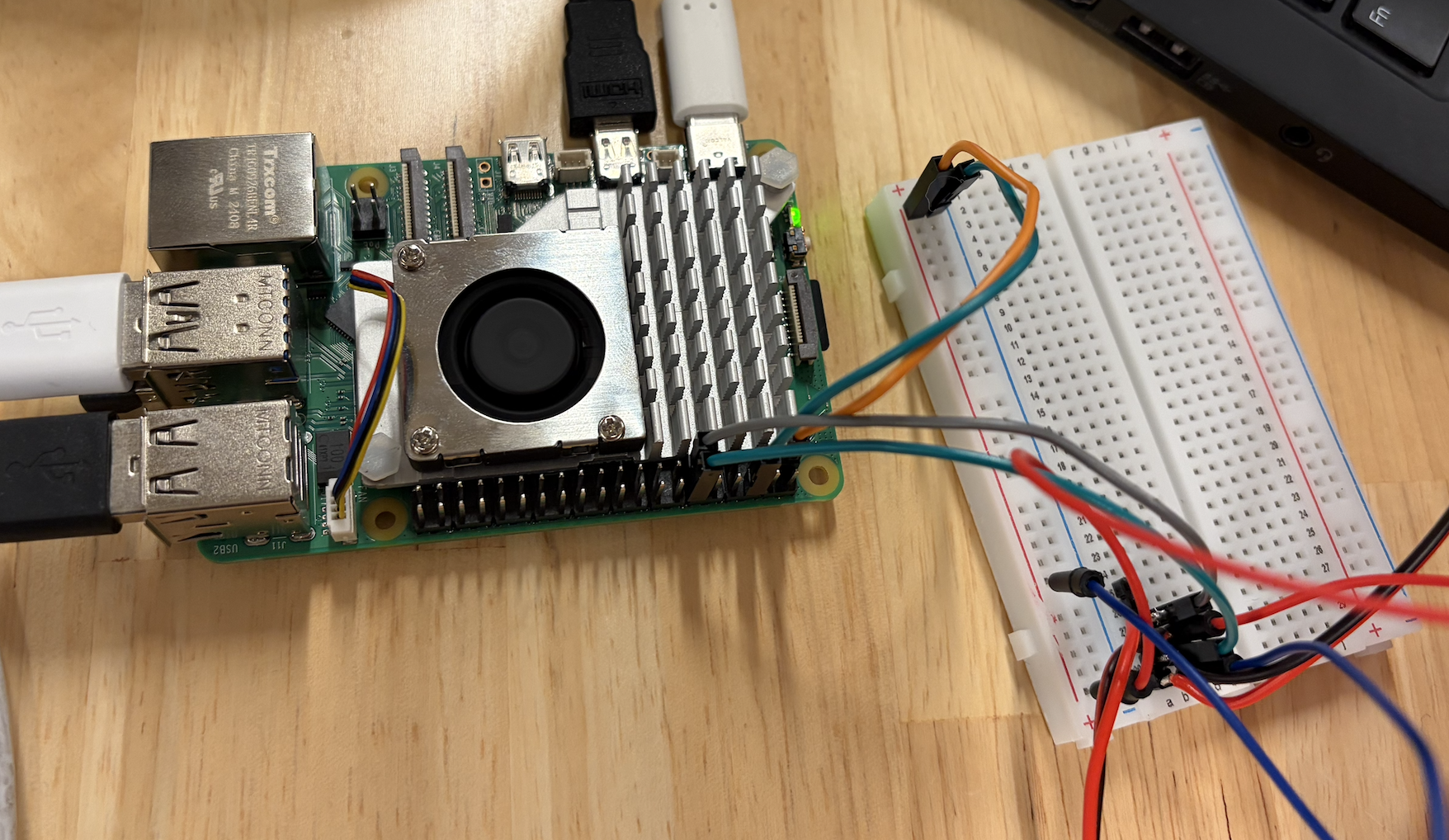
First prototype of what we hope Flux Watch to be, currently wired.
-
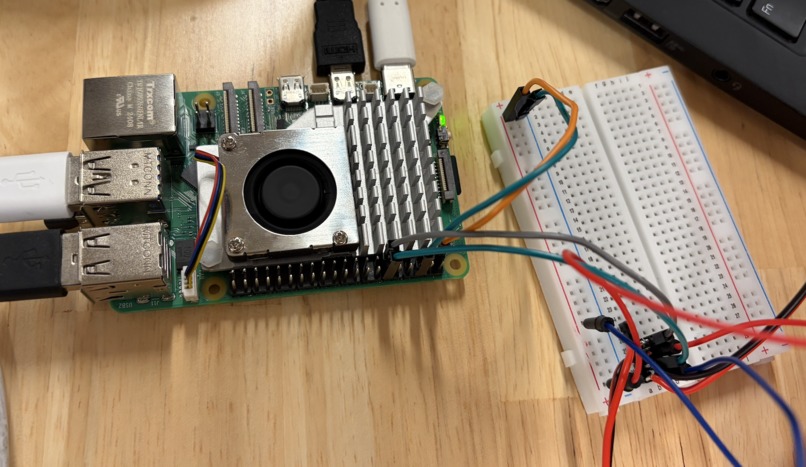
Raspberry Pi Configuration
Inspiration
Parkinson’s runs in our team member’s family, and we’ve seen how devastating tremors can be as they gradually take away someone’s control of their own body. My granny struggled for years; simple actions like picking up a fork or writing became difficult, especially when she was stressed.
The accessibility hack felt like a good opportunity to honour her memory and build something practical that could actually help people like my gran.
While researching support tools, we learnt about the Emma wristband by Microsoft Research (although it only worked via an app and using an outdated OS - Windows phones) and a recent study link that showed that vibrating a tendon on one arm reduced tremor and improved force control on the other arm in people with Parkinson's. That inspired us to create a straightforward, wearable wristband that could offer people with Parkinson’s a bit more stability and confidence during everyday tasks.
What it does
We made a tremor mitigation device designed to help Parkinson's patients manage hand tremors. It uses a Raspberry Pi 5 as the main controller that communicates with a motor driver system. The device delivers precise vibrations through small motors to counteract tremors in real-time. Users can control the system hands-free using voice commands processed through wake word detection to indicate when they're about to perform a motor task (like picking a fork up to eat or writing in a notebook) and the device provides spoken feedback about tremor levels and system status. The peripheral hardware connects to the motors using GPIO pins and receives commands from the central hub to start therapy, adjust vibration patterns, or monitor tremor intensity on demand.
How we built it
With a Raspberry Pi 5 connected through GPIO pins to two small vibration motors for tremor mitigation. The software is in Python using the gpiod library (version 2.x) to control the hardware pins and manage the motor states including forward, reverse, brake, and coast modes.
We mapped specific GPIO pins on the Raspberry Pi to the motor driver's input pins (AIN1, AIN2, BIN1, BIN2) and added a sleep control pin to enable low-power mode when the device isn't actively treating tremors.
We tested using a test script that cycles through all motor control functions.
The system is designed to eventually incorporate voice control using Vosk for wake word detection and pre-recorded audio files from ElevenLabs for spoken feedback, all running locally on the Pi without requiring external connectivity.
Challenges we ran into
Configuring the DRV8833 motor driver correctly (which we then decided to abandon), as we had to map the GPIO pins precisely and ensure the external power supply was adequate for the motors without damaging the Pi.
Additionally, we didn't have access to an accelerometer sensor, which meant we couldn't automatically detect tremor patterns in real-time as originally planned. This forced us to pivot towards a manual control system where users would trigger the vibration therapy through voice commands rather than having the device respond automatically to detected tremors.
Time constraint was also an obstacle as we would've otherwise tried a visual sensor.
Accomplishments that we're proud of
Despite hardware limitations, we managed to create a functional tremor mitigation device that maintains the core therapeutic goal of delivering targeted vibrations to users.
Our team is also more experienced with software rather than hardware, so learning on the job was something we definitely enjoyed and look forward to building upon.
What we learned
Hardware development requires patience and adaptability and building assistive technology isn't just about perfect sensors and algorithms, but about finding ways to make a genuine difference in people's lives no matter how small.
What's next for Parkinson's Watch
Upgrading our current project to be more than just a demo and more fit for commercial use such as by: using wireless motors for the watch and adding accelerometer sensors and/or visual sensing for the watch.


Log in or sign up for Devpost to join the conversation.