-
-
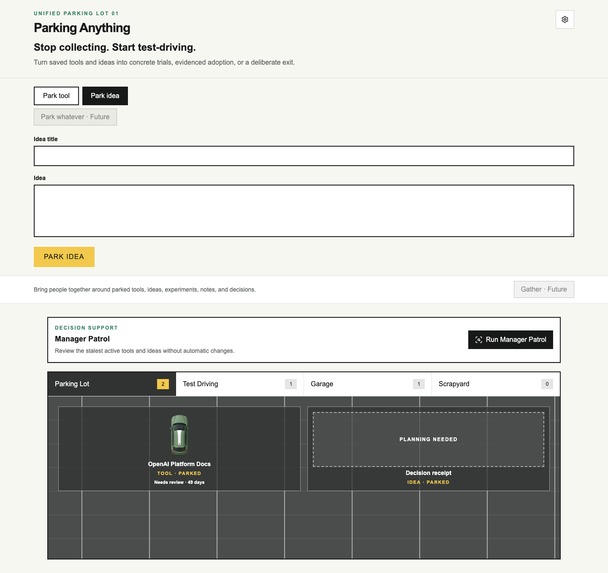
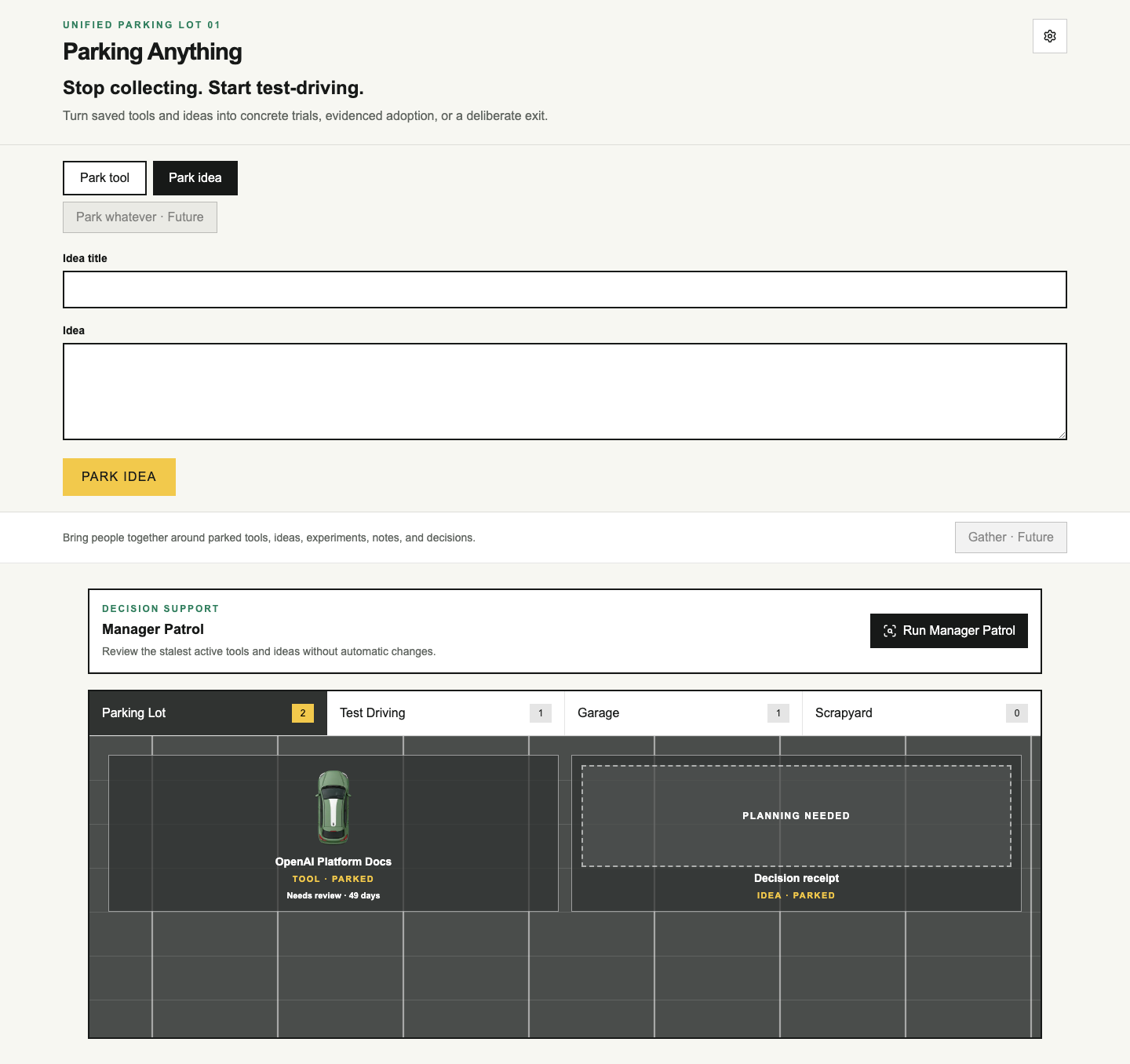
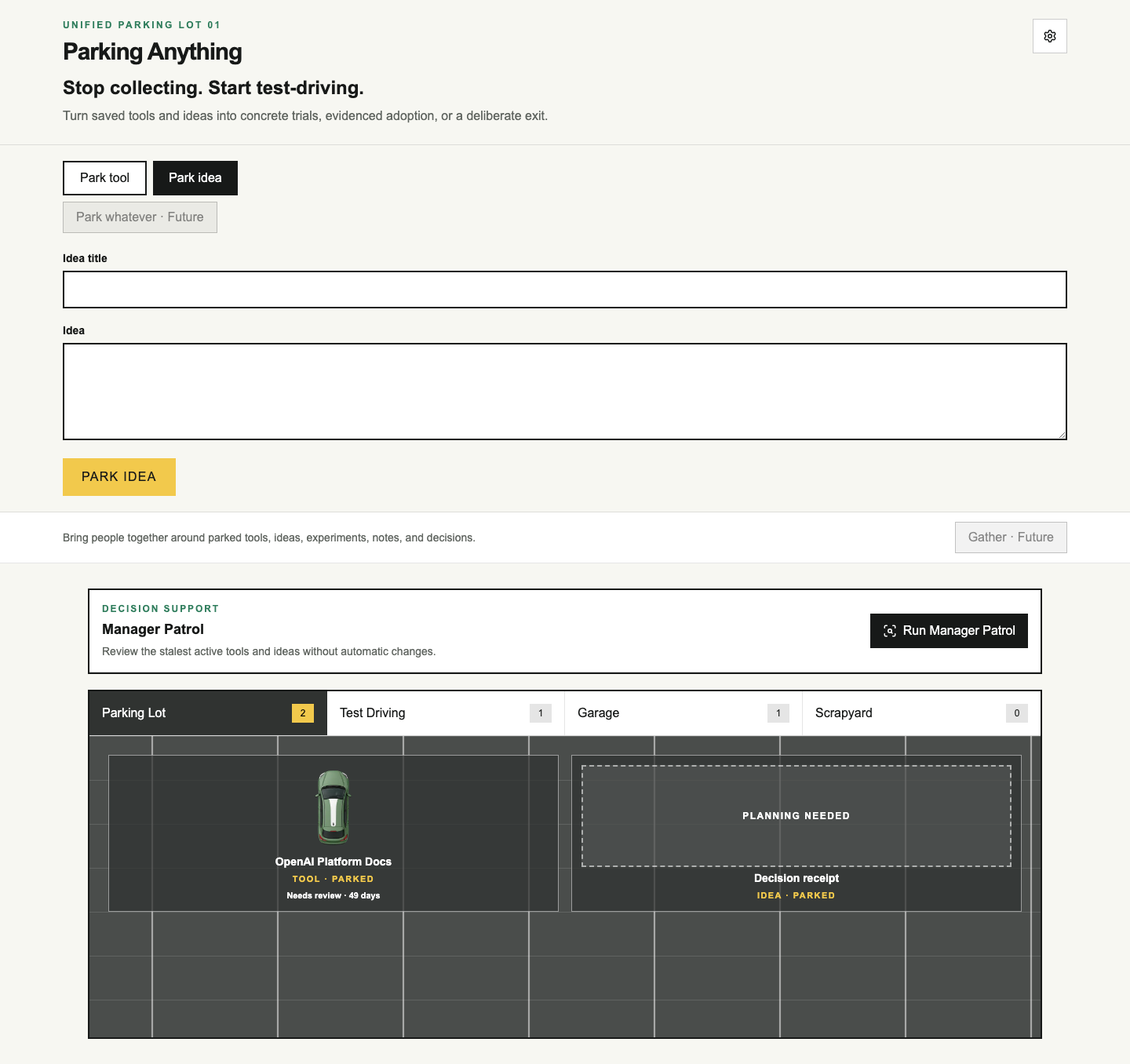
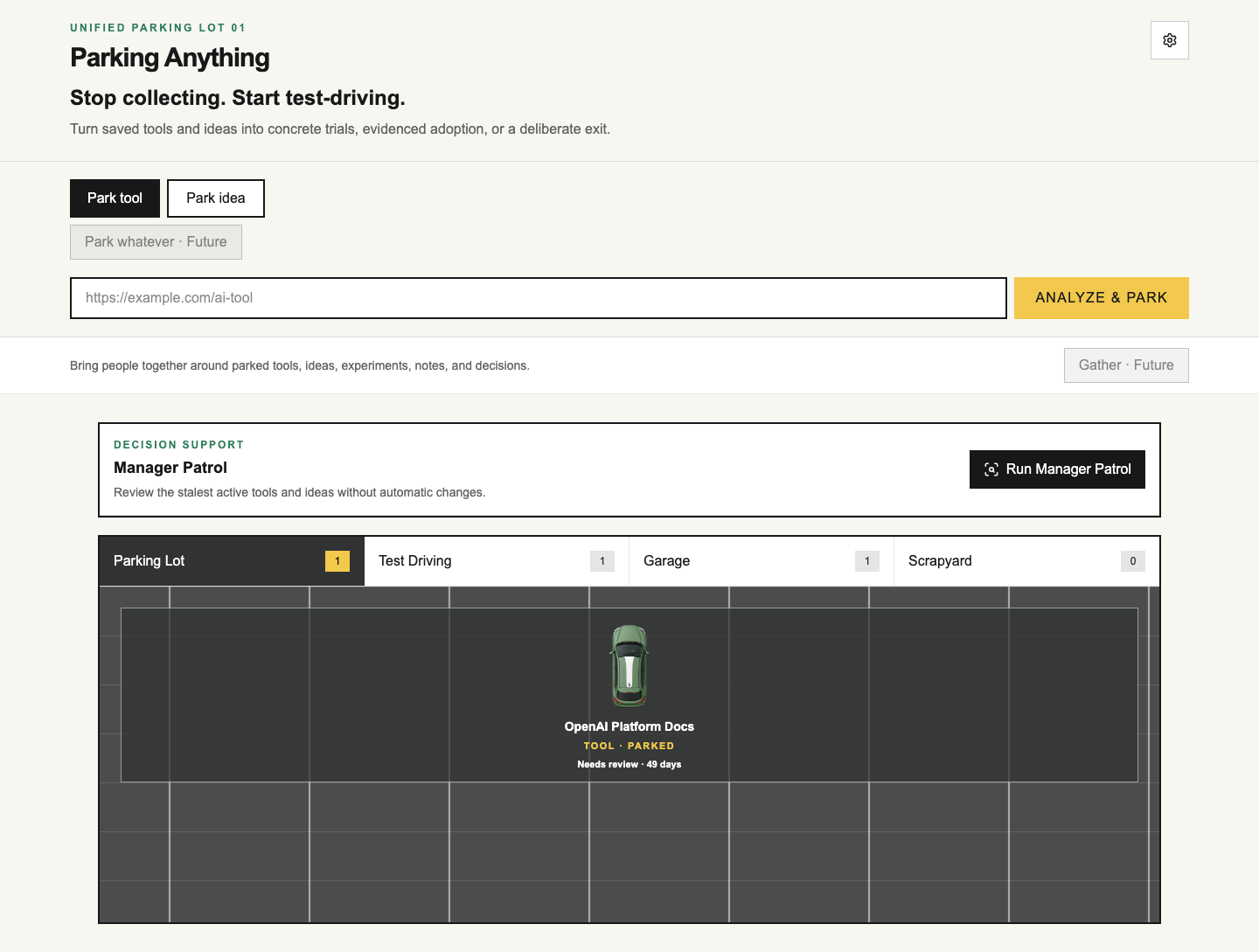
whole parking lot
-
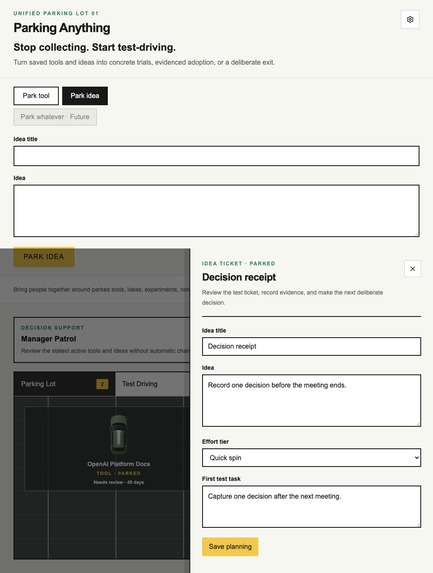
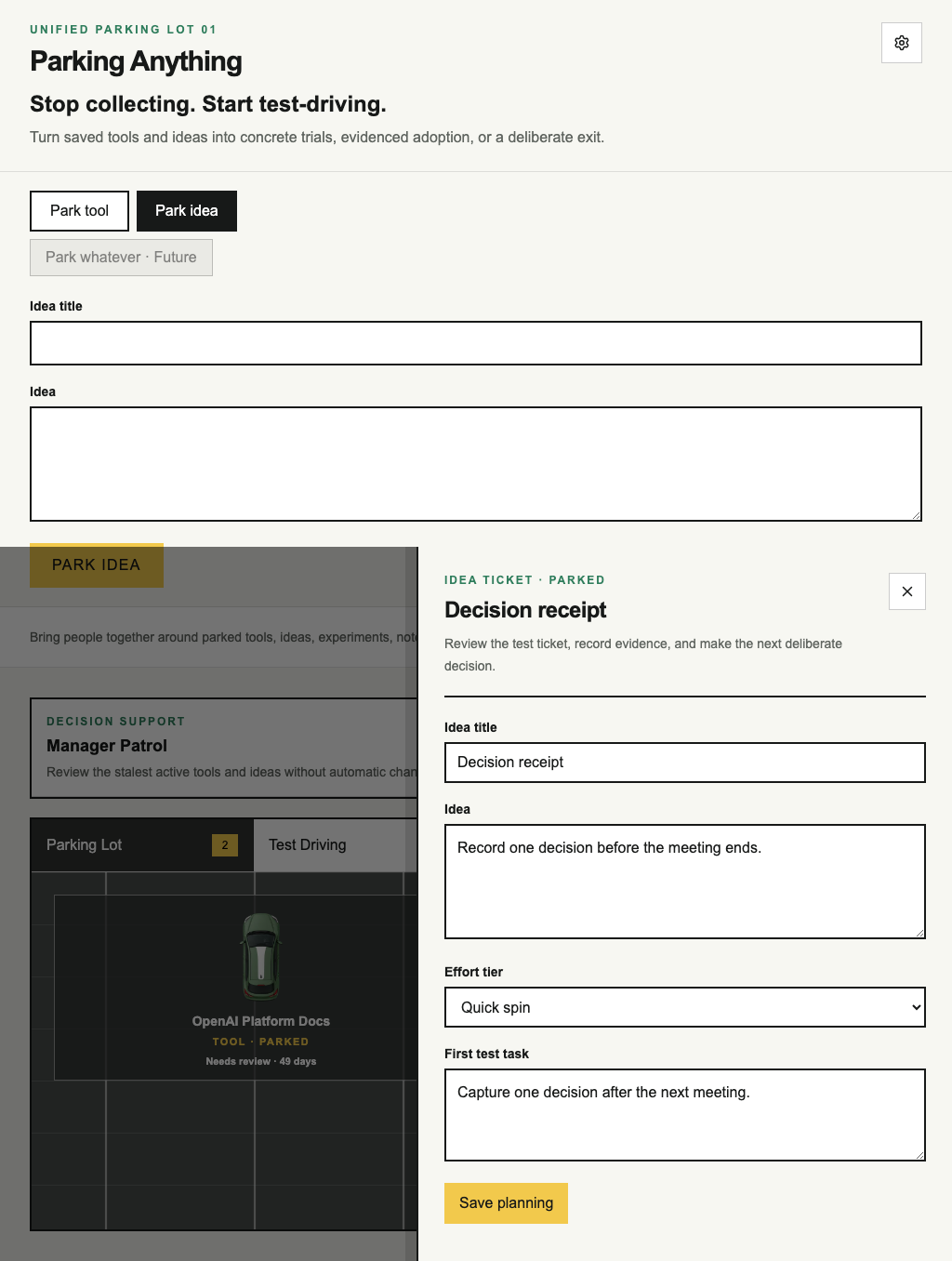
Test Drive
-
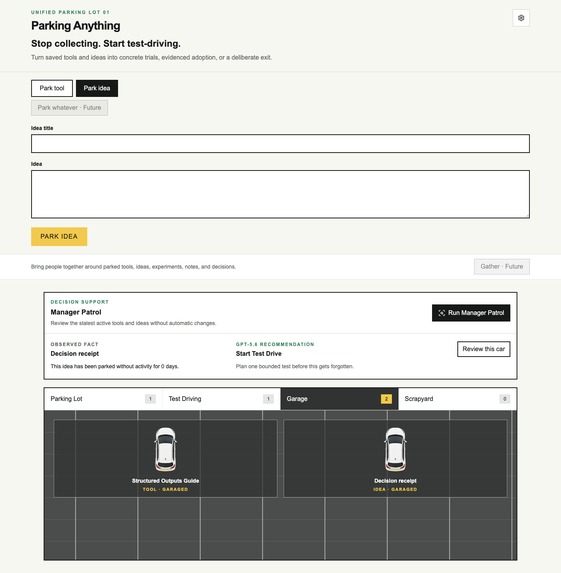
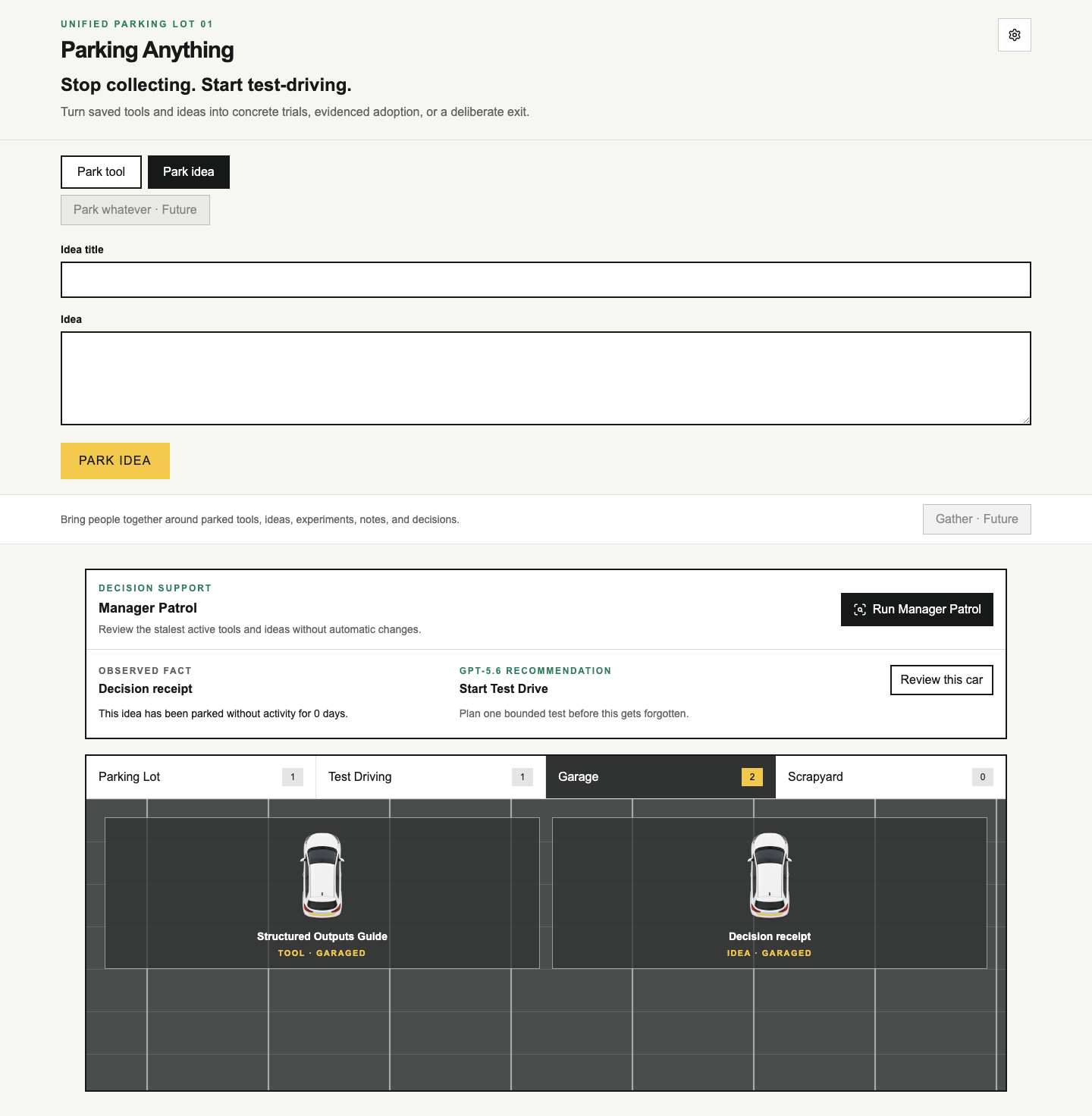
garage
-
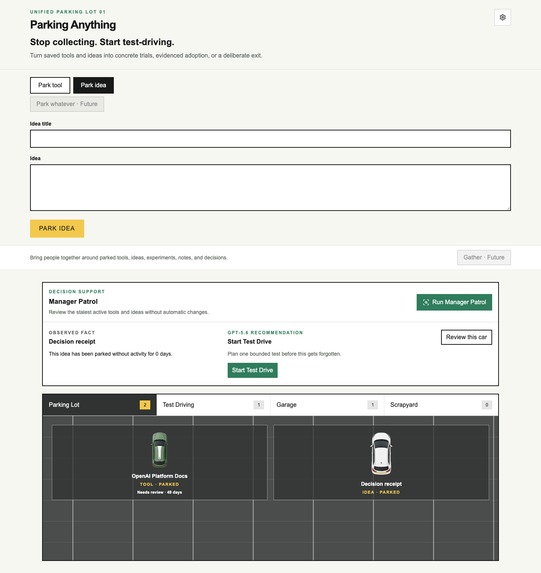
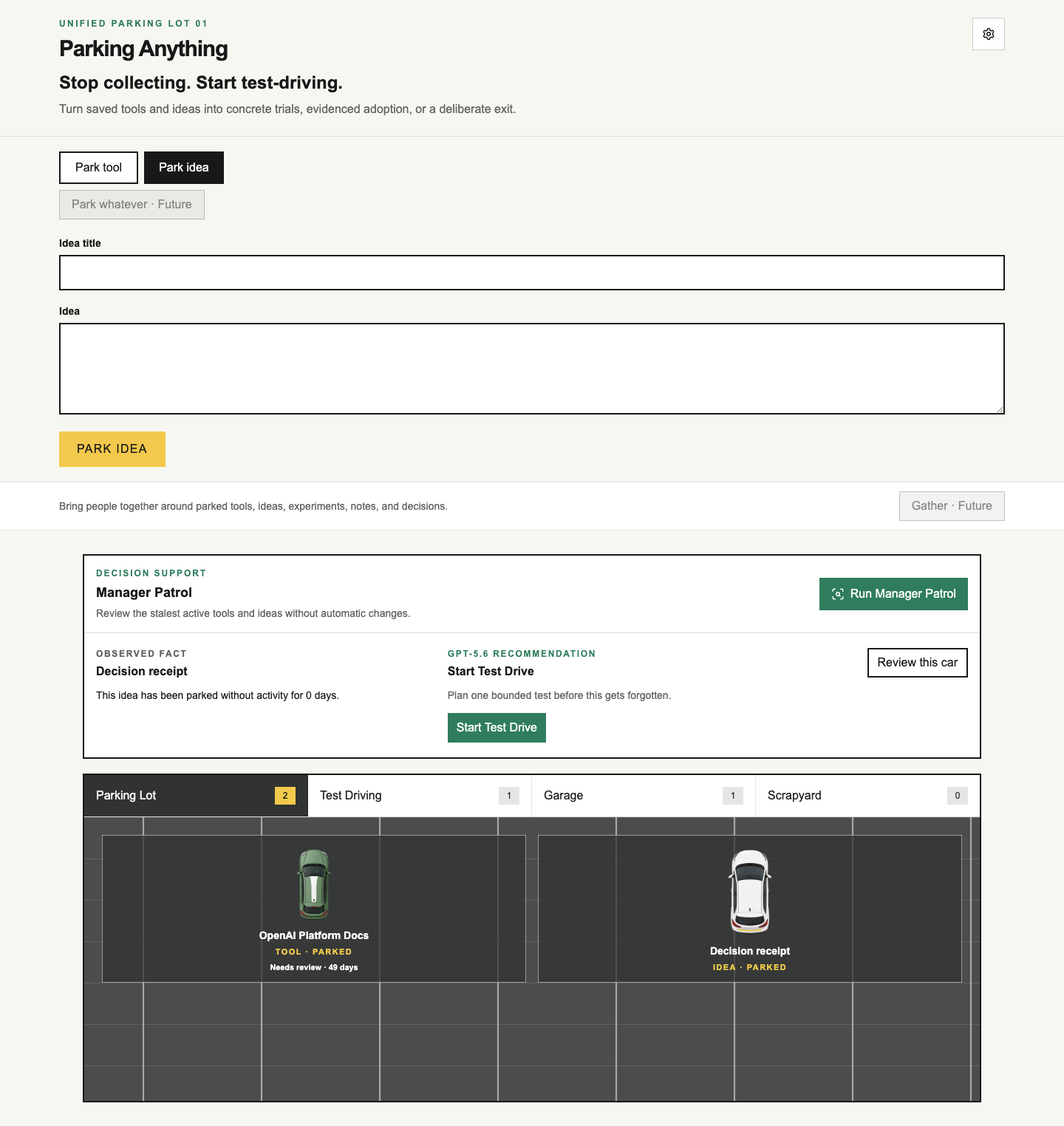
AI Manager Patrol
-
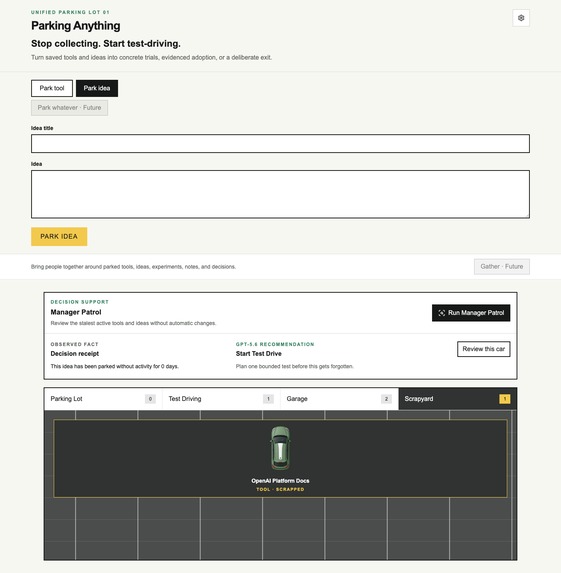
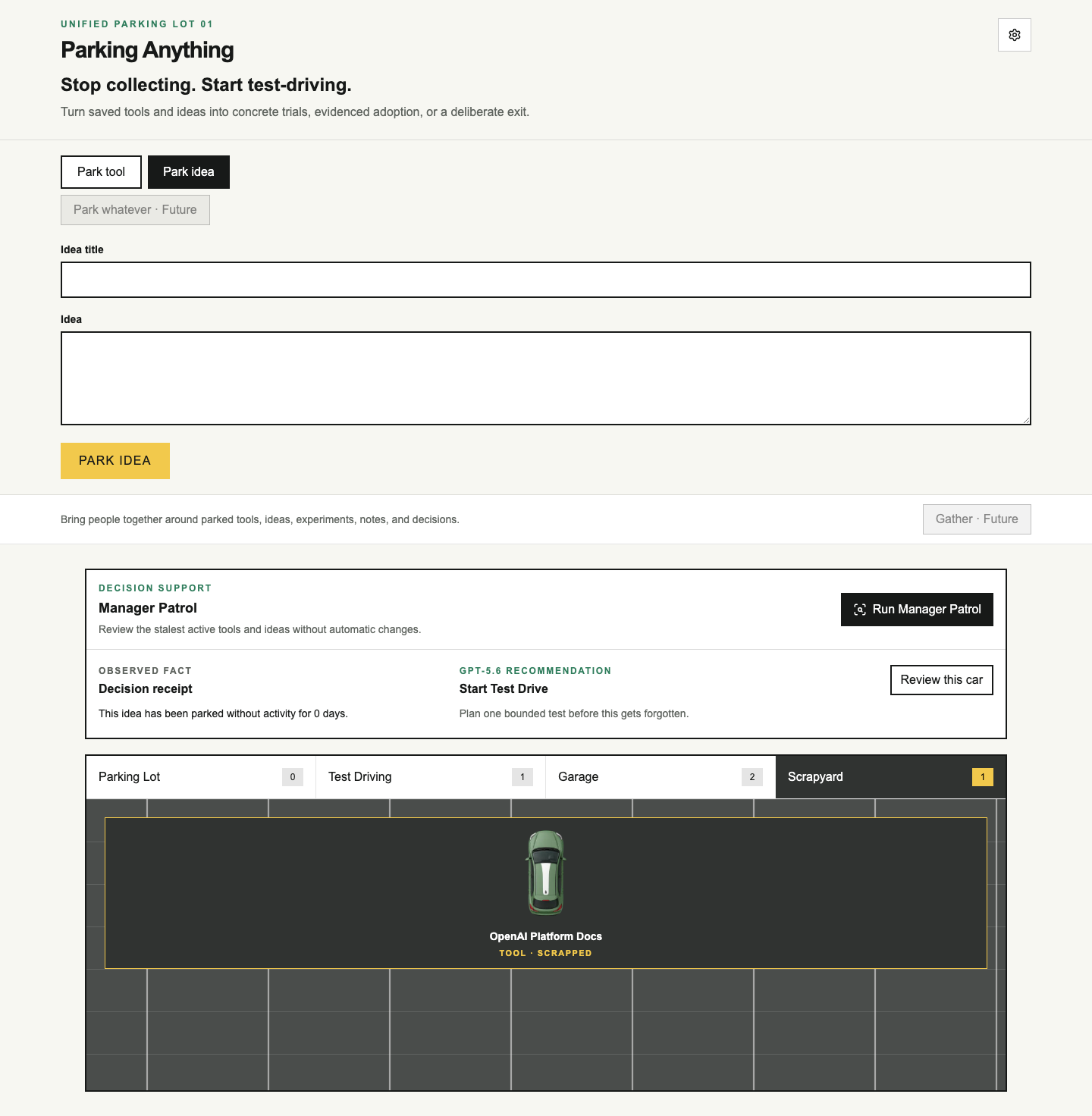
scrapyard
-
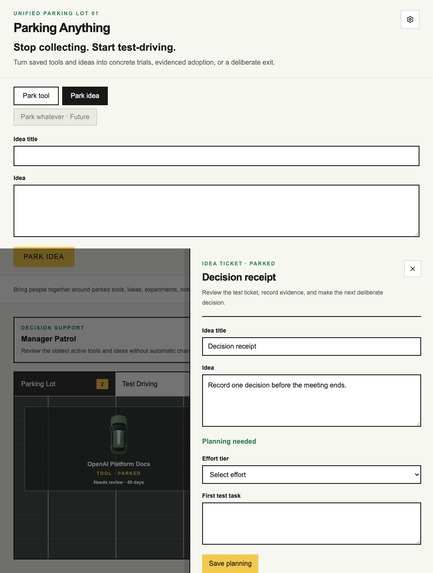
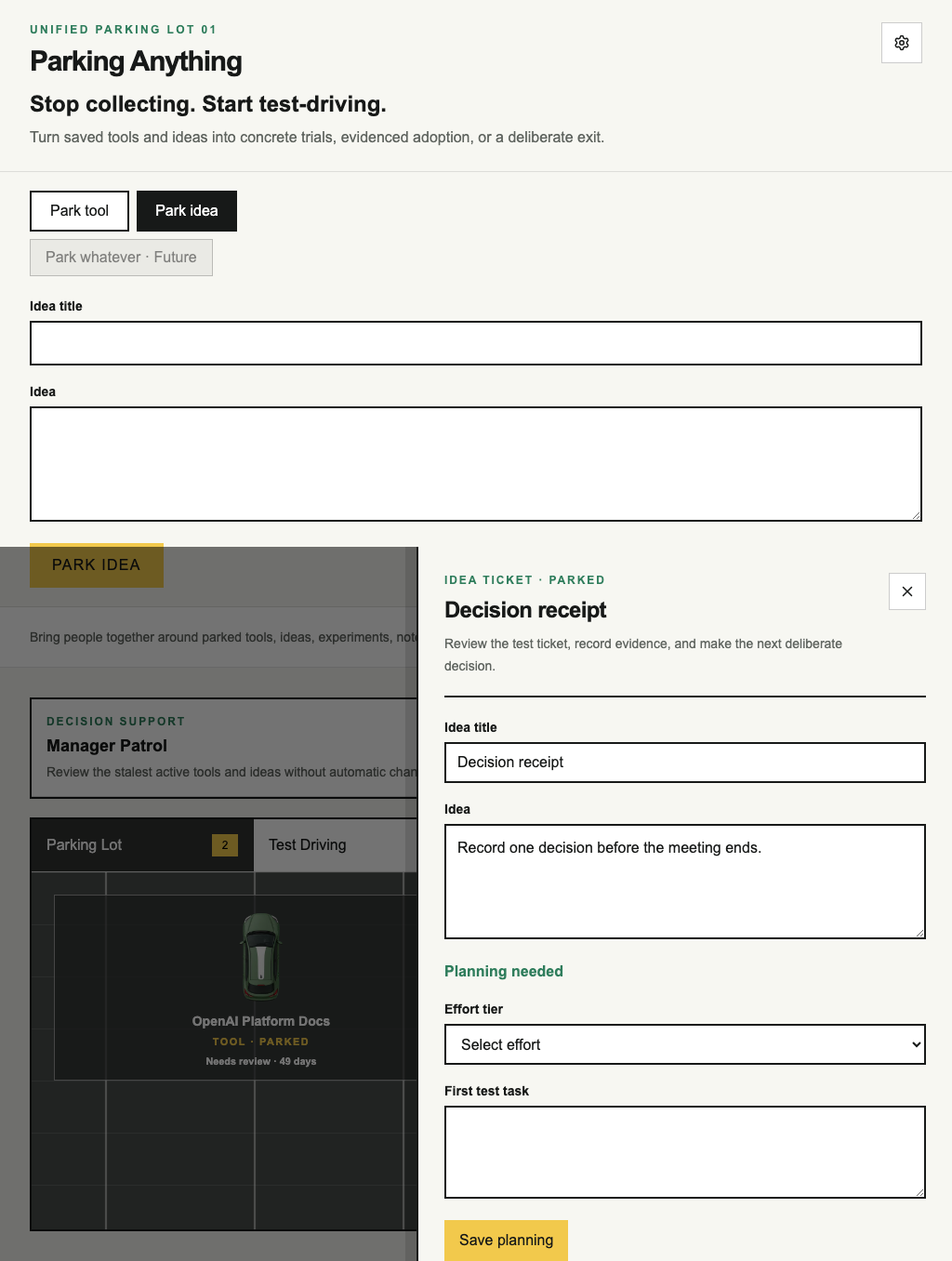
unpinned Idea
-
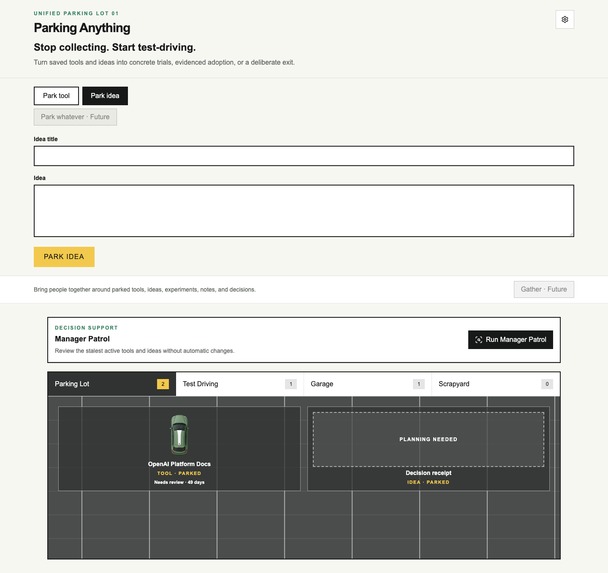
needed review
-
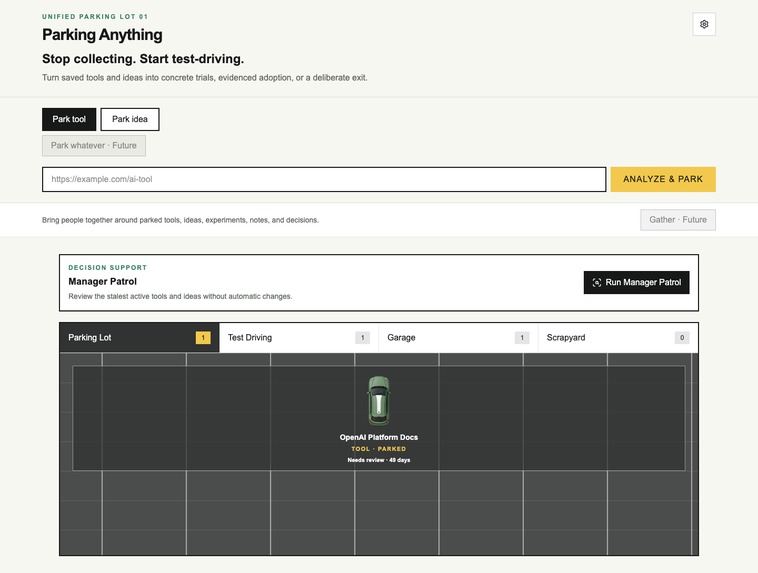
future (Gather function)
Inspiration
As a postdoctoral researcher focused on AI workflows, I constantly discover promising tools, ideas, repositories, articles, and research materials. Saving them is easy, but returning to evaluate them is much harder. Traditional bookmark managers help people collect more, but rarely help them decide what deserves attention. That inspired Parking Anything, a visual workspace that turns passive collecting into deliberate action.
What it does
Users can “park” AI tools, ideas, blog posts, code projects, research materials, or anything worth revisiting. The current version supports: 1.Park tool: Submit a public URL and receive an AI-generated summary, effort estimate, usefulness hypothesis, and first test task. 2.Park idea: Capture an idea manually without an AI or network request. 3.Test Drive: Turn a saved item into a concrete experiment. 4.Garage: Keep something that proved useful, supported by notes or a result URL. 5.Scrapyard: Deliberately reject something and record the reason. 6.Manager Patrol: Review stale items while keeping deterministic facts separate from AI recommendations. Tools and ideas share one lifecycle rather than becoming disconnected records.
How we built it
Parking Anything is a local-first web application built with Next.js, React, TypeScript, Tailwind CSS, Zod, and the OpenAI Responses API. Conventional code owns IDs, timestamps, lifecycle transitions, evidence requirements, and persistence. AI is used only where judgment adds value: analyzing submitted tools and recommending possible next actions. I used Codex throughout the specification, implementation, testing, debugging, and review process. Development followed a specification-first and test-driven workflow.
Challenges we ran into
The largest challenge was adding ideas without creating a second product inside the application. An early design gave ideas a separate waiting area and promotion flow. This duplicated the lifecycle and weakened the main concept. I redesigned the system so tools and ideas are first-class Parkables from the moment they are saved. Another challenge was separating AI recommendations from product truth. Manager Patrol may suggest an action, but it cannot change an item's status. Every transition remains deterministic and requires explicit user action.
Accomplishments that we're proud of
1.Built one coherent lifecycle for tools and ideas. 2.Added real AI-assisted URL analysis with Structured Outputs. 3.Kept Idea capture and lifecycle operations functional without AI. 4.Implemented safe local persistence and versioned migration. 5.Created evidence-backed Garage and reason-backed Scrapyard outcomes. Most importantly, Parking Anything treats rejection as a valuable outcome. Sending something to the Scrapyard is a conscious decision to stop spending attention on it.
What we learned
AI products work best when probabilistic judgment is built on deterministic foundations. AI can interpret and recommend, while conventional code should own state, validation, security, and user consent. I also learned that a strong product metaphor can shape the entire experience. Parking provides a natural language for temporary storage, experimentation, adoption, neglect, and removal.
What's next for Parking anything
The next step is to support more Parkable types, including blog posts, research papers, notes, and code projects. I also plan to develop Gather, a collaboration and meetup layer where people can exchange findings, organize testing sessions, collaborate on projects, or turn a parked idea into a community activity. The broader vision is to connect saved content with deliberate action and, eventually, community.

Log in or sign up for Devpost to join the conversation.