-
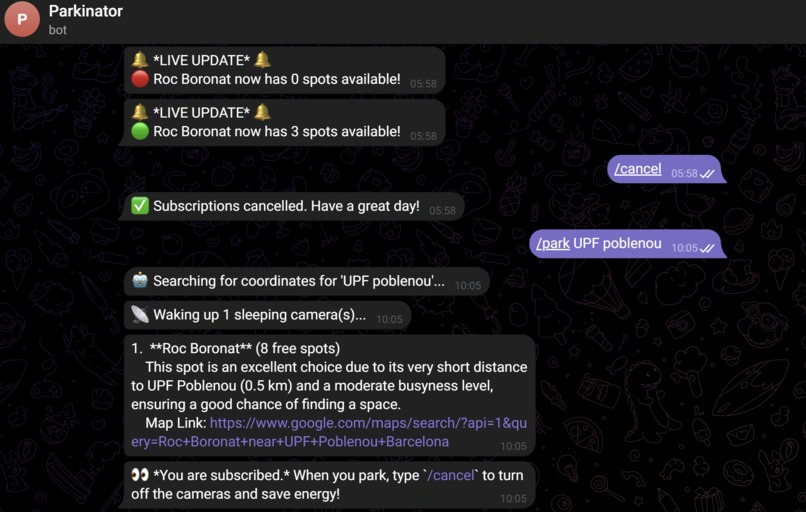
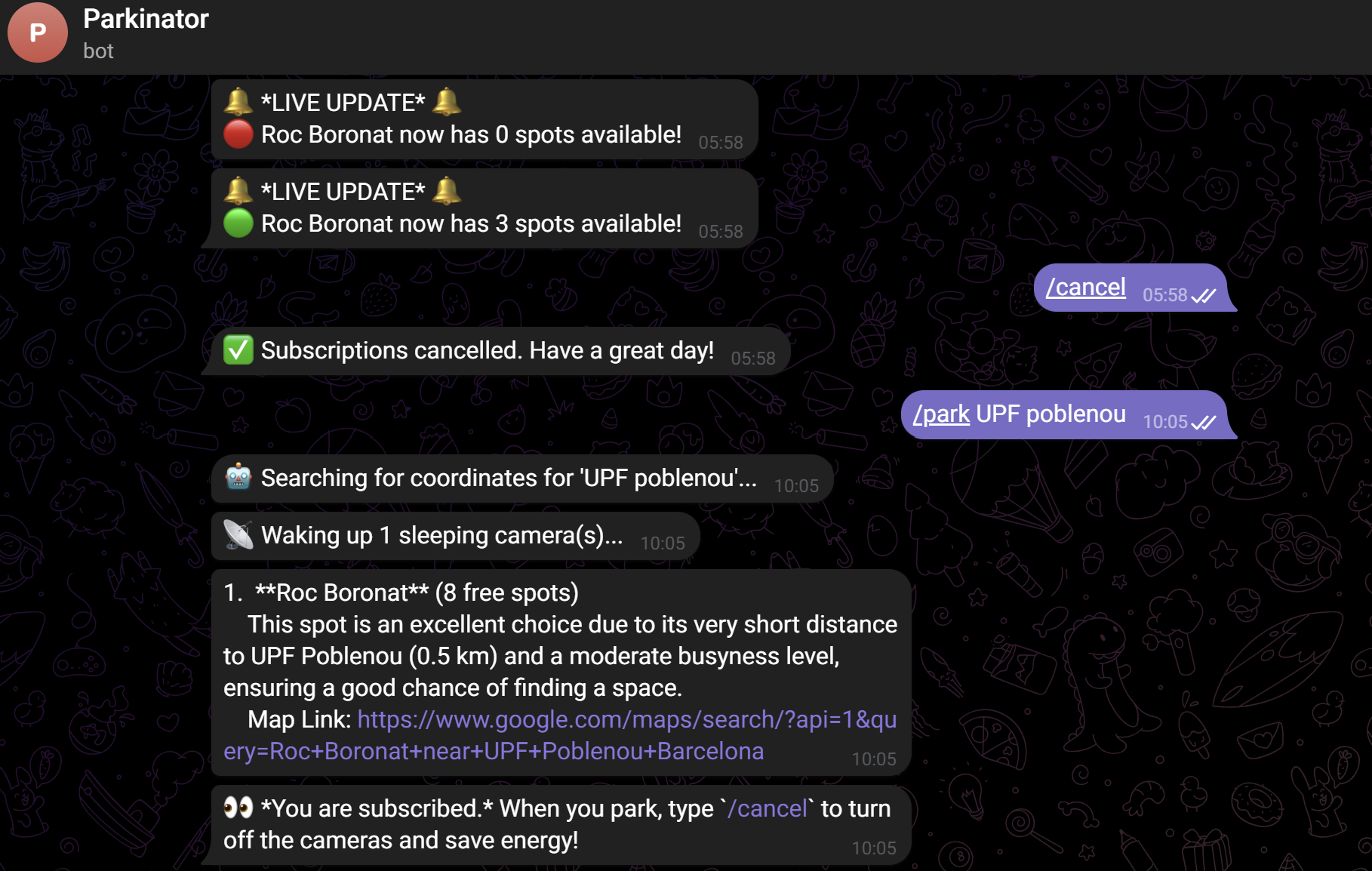
Telegram Bot Interface
Inspiration
We were inspired by a very common project we face in Barcelona, having to look for a spot to park our car. Loosing a lot of time and polluting the environment during the process.
What it does
Decentralized, edge-computed smart parking system designed to eliminate "urban roaming"—the behavior of drivers circling for parking that accounts for up to 30% of urban traffic congestion and unnecessary CO2 emissions.
By combining lightweight Computer Vision at the edge with a LLM interface, Parkinator provides real-time, privacy-first parking coordination without relying on heavy cloud infrastructure or complex mobile apps.
How we built it
Three-tier architecture:
The Vision Node (Edge AI): We trained a lightweight object classification model using Edge Impulse to run locally.
The Hardware Node (State Management): We used an Arduino UNO Q to manage the physical state of the parking lot, read the vision data, and publish live occupancy updates via MQTT.
The Intelligence Bridge (The Brain): We built a Python orchestrator in the Arduino App Lab using the Telegram Bot and Cloud LLM bricks.
Challenges we ran into
Our biggest hurdle wasn't the AI, it was the physical hardware communication. Getting multiple Arduino boards to reliably talk to each other proved to be a massive challenge.

Log in or sign up for Devpost to join the conversation.