-
-
Logo
-
Valid permit
-
Invalid permid

Inspiration
We saw how outdated and inefficient SCU’s parking permit system was. When speaking with a member of the Parking & Transportation Services on campus, we were told that the current parking system has many people forging permits, losing permits, and relies heavily on manual labor. As students, we wanted to build a smarter solution using Intel Tiber. Parkd was our way to solve a real campus problem with modern computer vision.
What it does
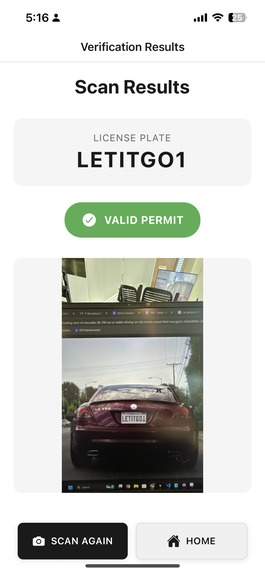
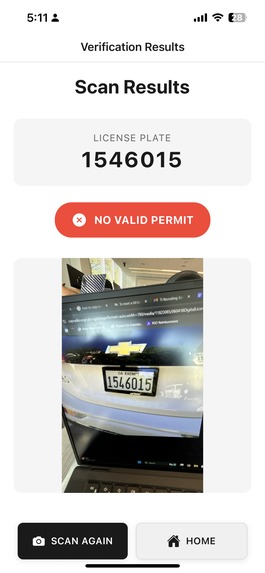
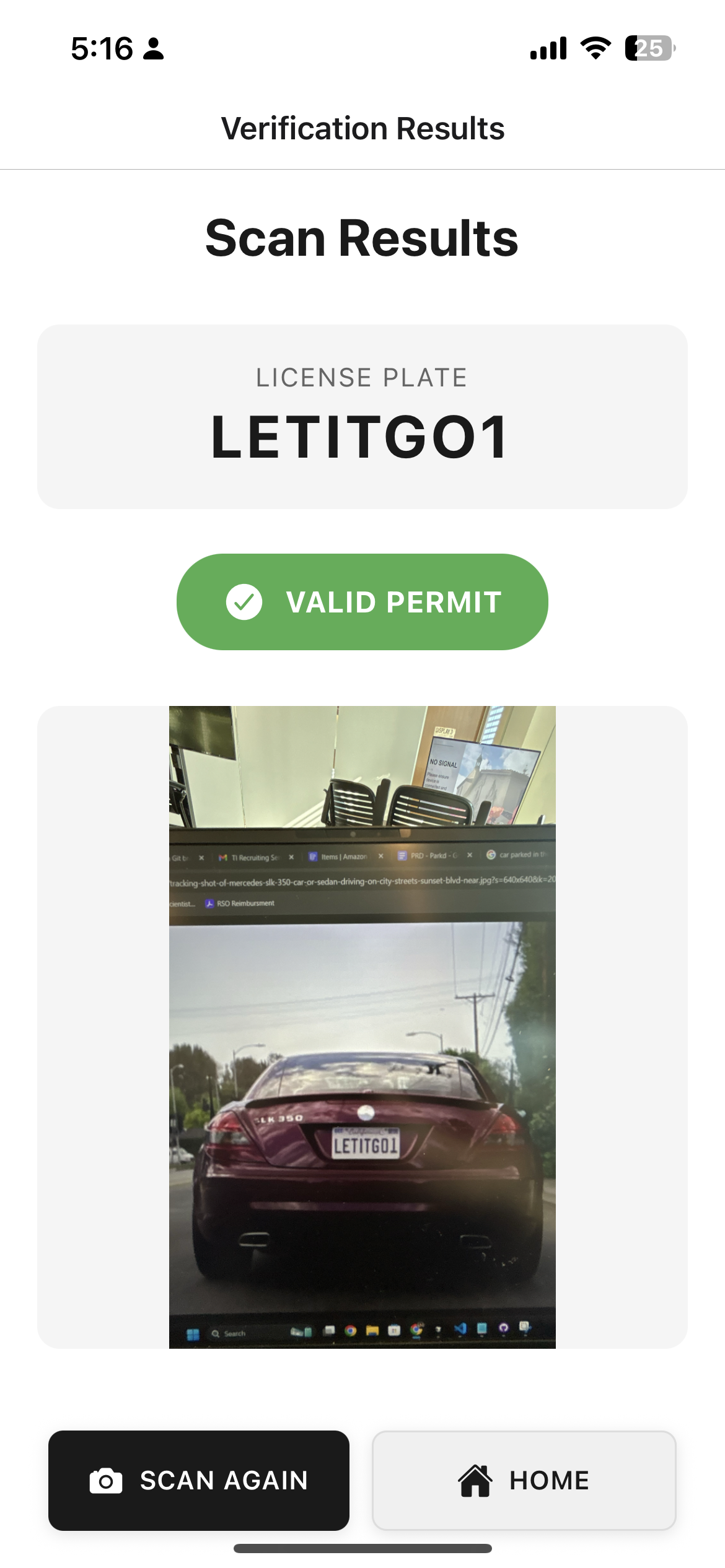
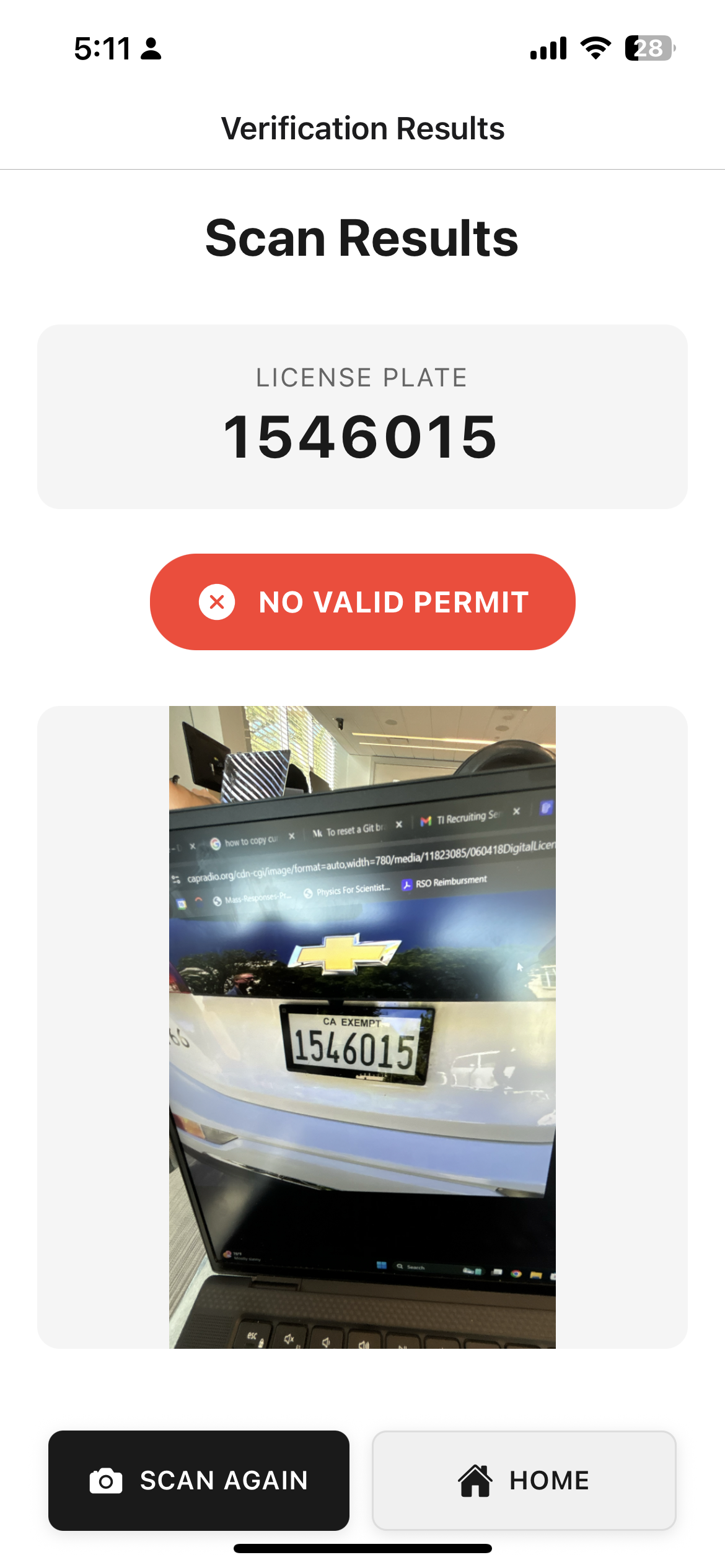
Parkd takes a photo of the back of a car and uses a trained computer vision model to extract the license plate and apply pre-processing and OCR to extract the plate number. It then calls a dynamodb database to check whether the vehicle has a valid permit. This allows for campus safety officers to take a photo and get instant validation without any physical permits needed. Standalone demo: https://www.youtube.com/shorts/iP5g9uqIKYs
How we built it
We built Parkd using a Jupyter Notebook powered by Python, OpenCV, YOLO, Roboflow, Pytorch, Ultralytics, and PaddleOCR optimized with Intel Tiber for fast, local inference. The model is trained and hosted on the cloud where PaddleOCR reads the cropped license plate. The user uploads an image, the system processes it to extract the plate number, and it’s checked against a sample permit registry in AWS DynamoDB. The result is displayed clearly for immediate enforcement.
Challenges we ran into
License plates aren’t always easy to read, glare, angles, and font variations made OCR tricky. We had to experiment with preprocessing techniques to improve accuracy. We had to work with sports team logos interrupting the plate text, and special cases that had to be covered with our OCR. We also had to keep our backend lightweight so that processing and detection was quick and accurate, without long training times during a 10 hour event.
Accomplishments that we're proud of
We built a functional license plate scanner from scratch with working OCR, a clean UI, and a clear use case. We also had the need for Parkd validated by workers in SCU’s Parking & Transportation Services.
What we learned
We learned how to take a real-world problem and break it down into a solvable project. We deepened our skills in image processing, ML training, Intel Tiber, and communicating technical ideas to non-technical stakeholders.
What's next for Parkd
We’re turning our MVP into a mobile app and integrating with SCU’s actual permit database. After a campus pilot, we’ll build admin tools, verification, and an improved model given longer training times and stronger GPUs to process faster. Long term, we could offer Parkd to other universities as a student-built, cost-effective alternative to commercial enforcement systems.
Built With
- amazon-web-services
- express.js
- huggingface
- intel-tiber
- jupyter
- paddleocr
- python
- pytorch
- react-native
- roboflow


Log in or sign up for Devpost to join the conversation.