Inspiration
What if you could jump into VR with your friends and have an entire amusement park full of games waiting for you?
That's the idea behind this project.
I want to create a place where having fun comes first. No complicated objectives, no pressure to grind, and no need to convince everyone to buy or launch a different game every time you want to do something else.
You might start by challenging a friend to ping pong, join a group playing bowling, race against everyone in a kart tournament, or end up in a chaotic grappling-hook battle.
And when you're tired of competing? Just hang out, explore the park, or discover what other players have created.
The goal is simple: one place, countless ways to have fun together.
The Game
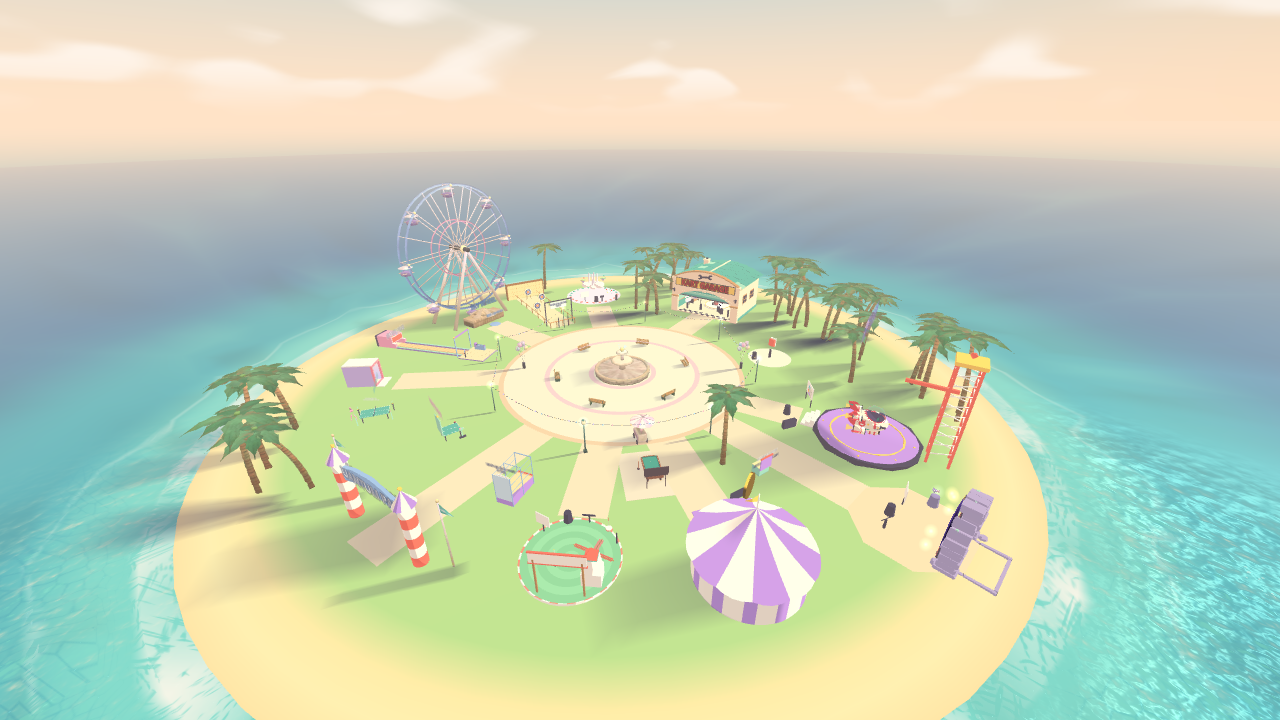
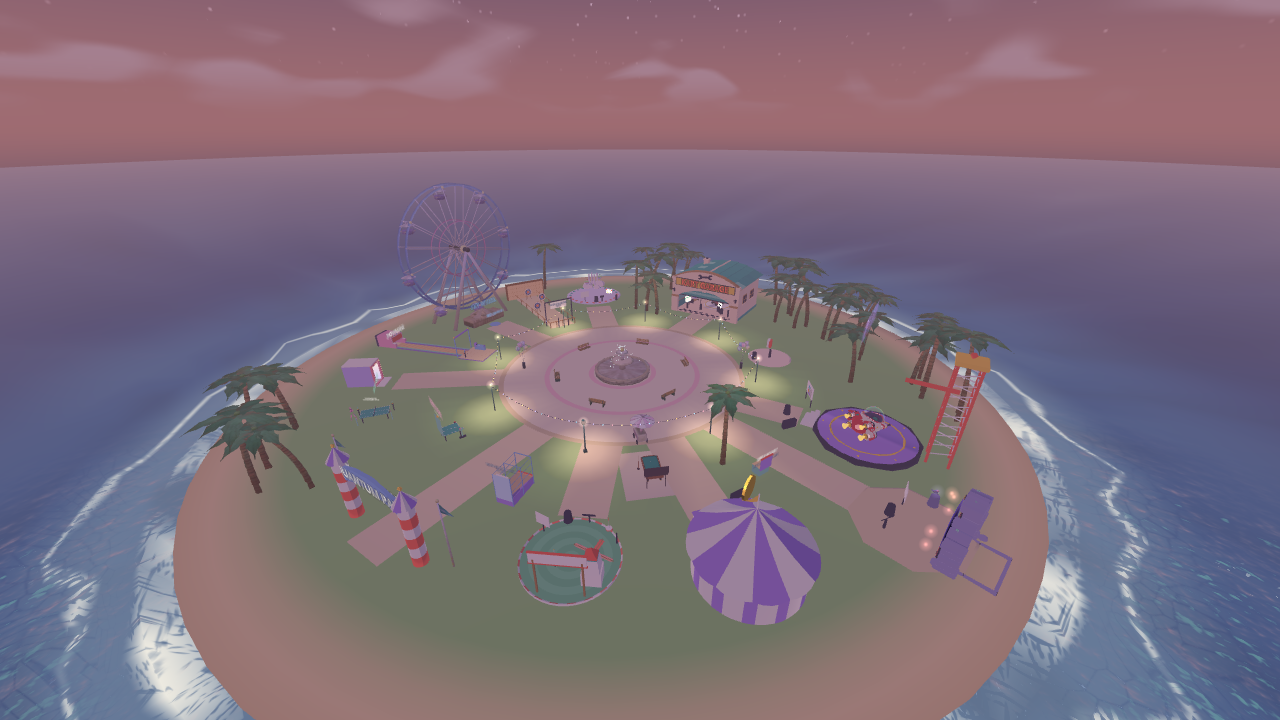
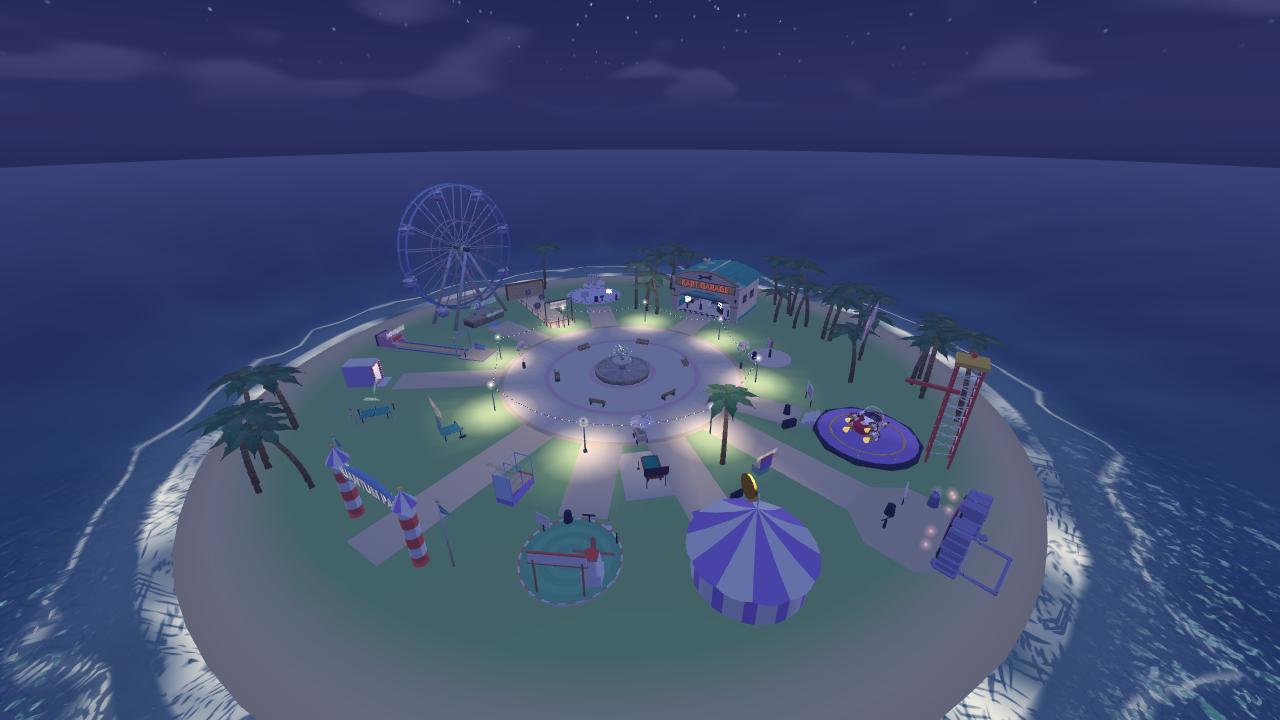
The game is a multiplayer VR playground where up to 16 players (with plans to expand that limit) can explore a shared amusement park packed with activities.
There are two main types of experiences:
Small Games — Quick, Simple, Fun
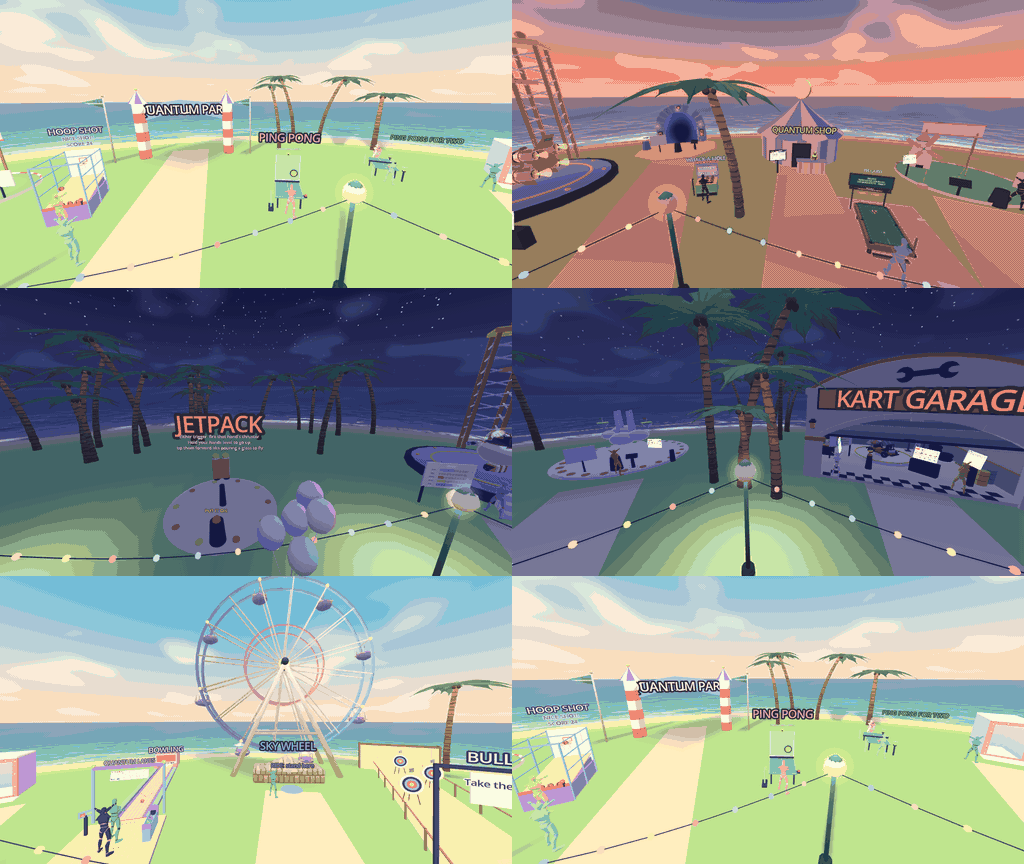
The park is filled with activities you can jump into at any moment: bowling, ping pong, archery, whack-a-mole, mixed reality (MR) pool, and many more to come.
These are the games you play while hanging out with friends. Some are competitive, others are just silly, and that's exactly the point.
Big Games — Entire Experiences Within the Park
Beyond the smaller activities, the park features larger games with their own mechanics, environments, and challenges.
Some of the experiences being developed include:
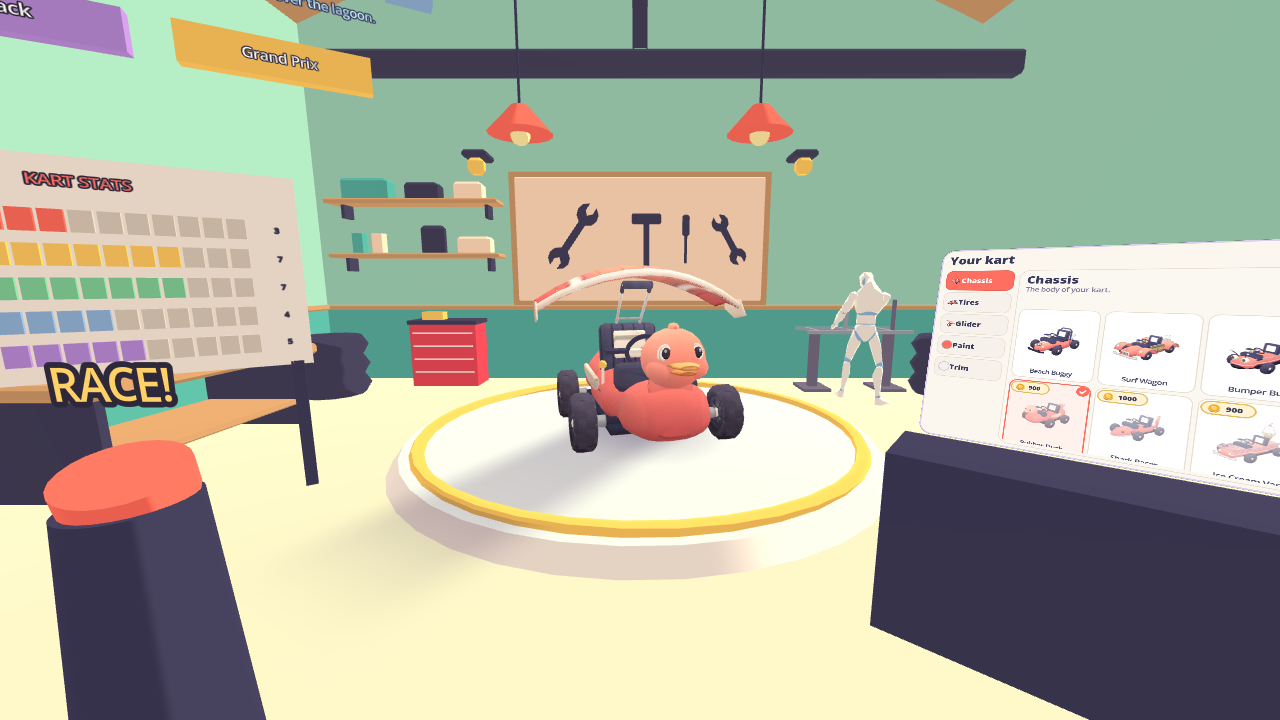
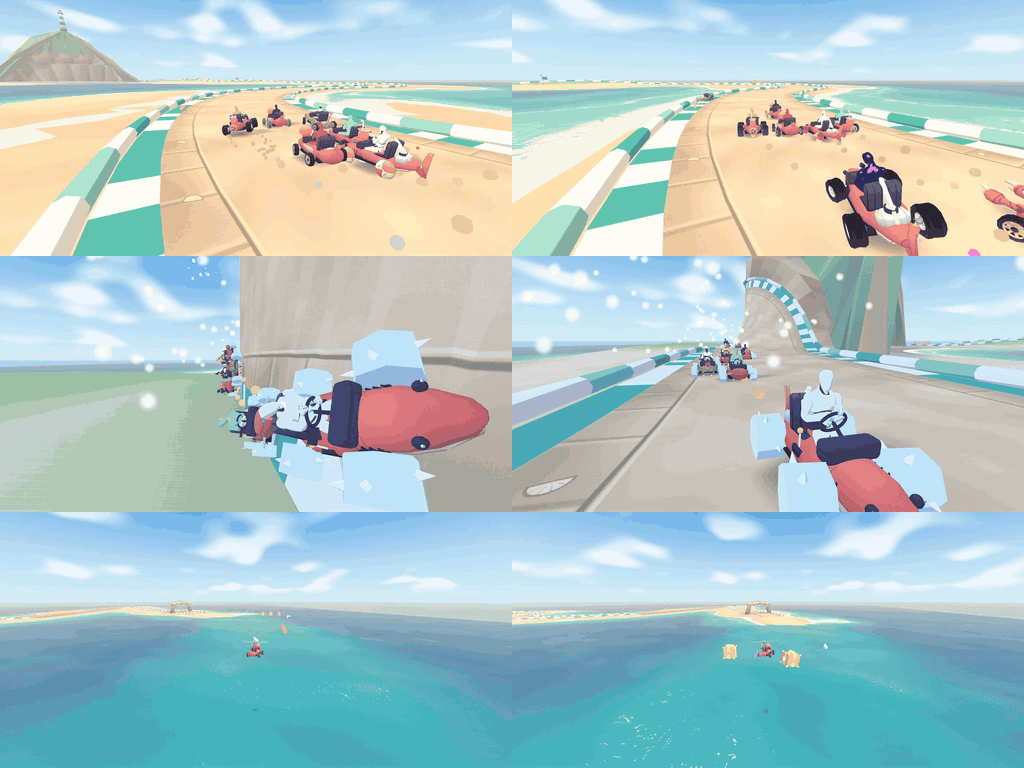
- Kart Racing: Race against friends on colorful tracks with customizable karts, including different chassis, wheels, and gliders.
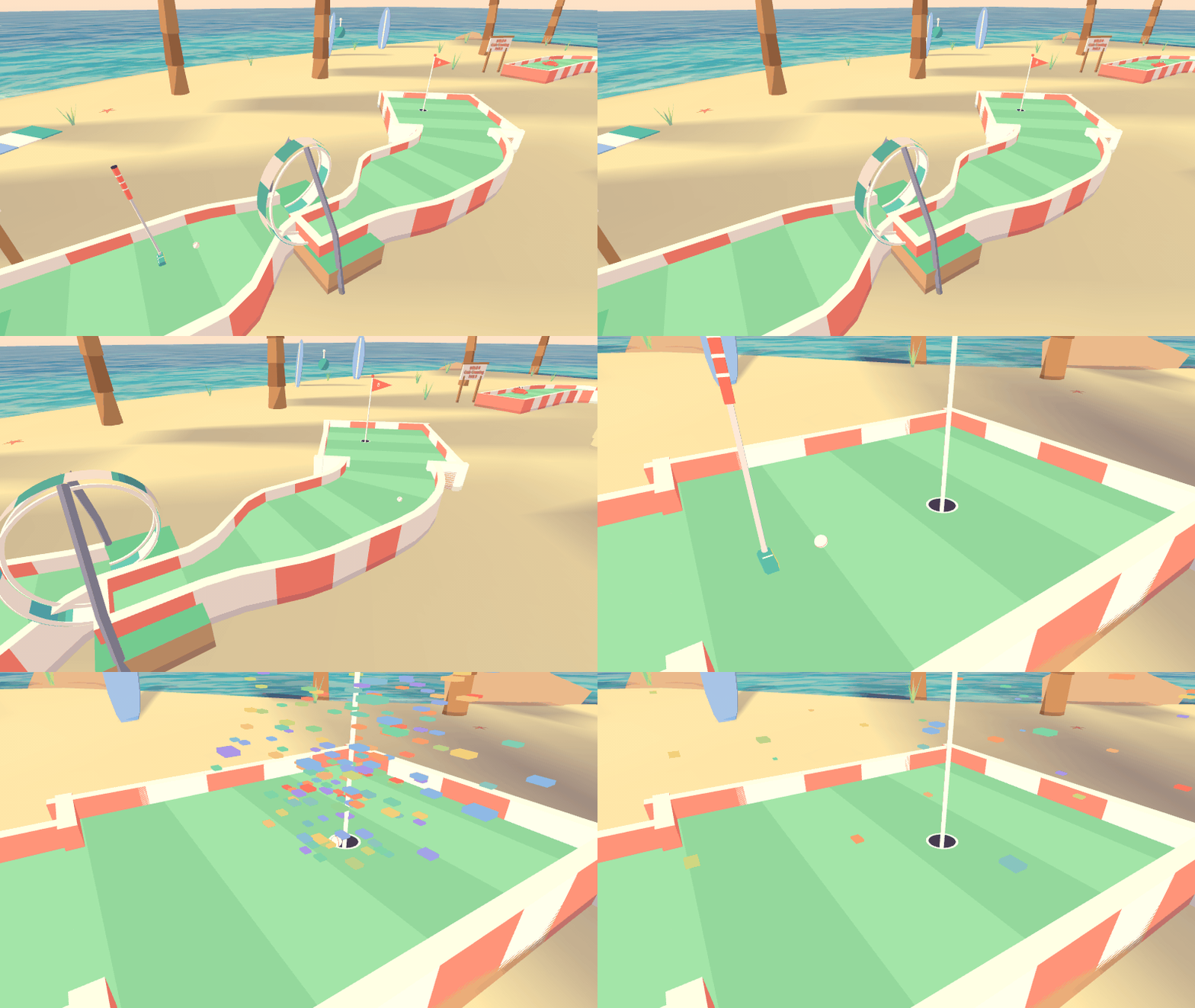
- Mini Golf: Challenge friends across creative courses filled with obstacles and surprises.
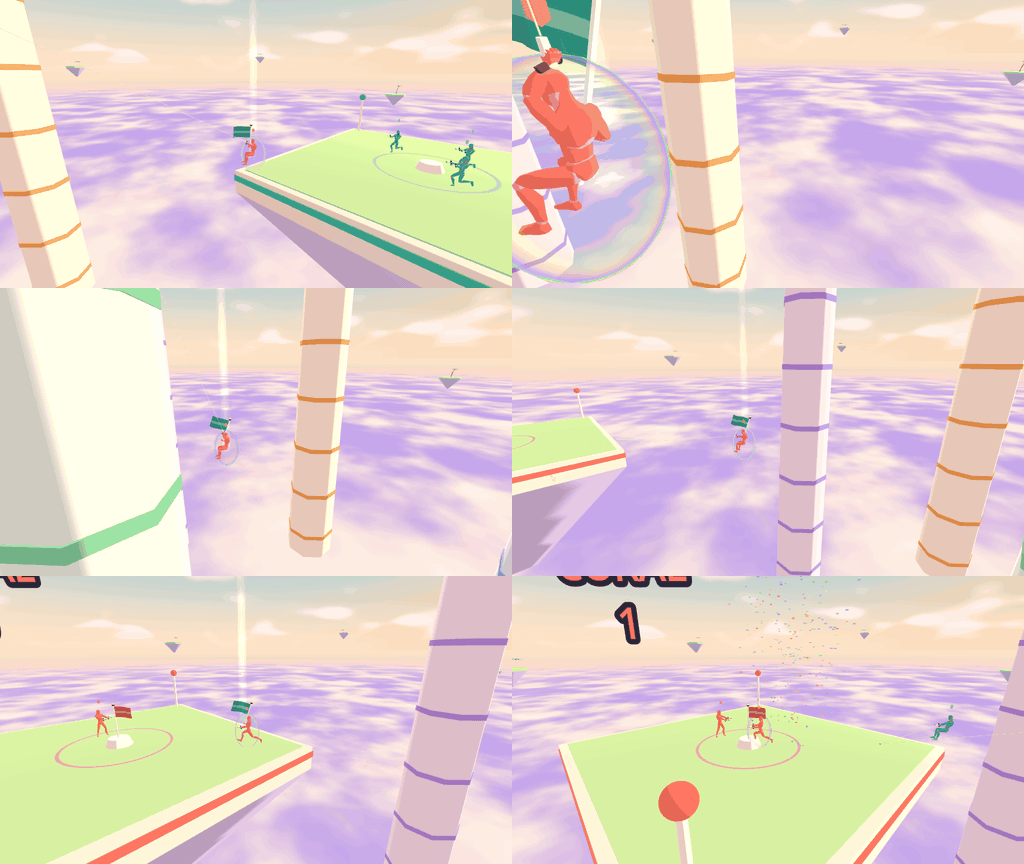
- Grappling-Hook Arena: A fast-paced multiplayer shooter where movement, swinging, and clever use of the environment are just as important as aiming.
Each of these is designed to feel like a complete game, not just a quick minigame.
The Most Important Feature: Create Your Own Games
This is where the project becomes much more than a collection of activities.
I want players to have the tools to create the places where everyone plays.
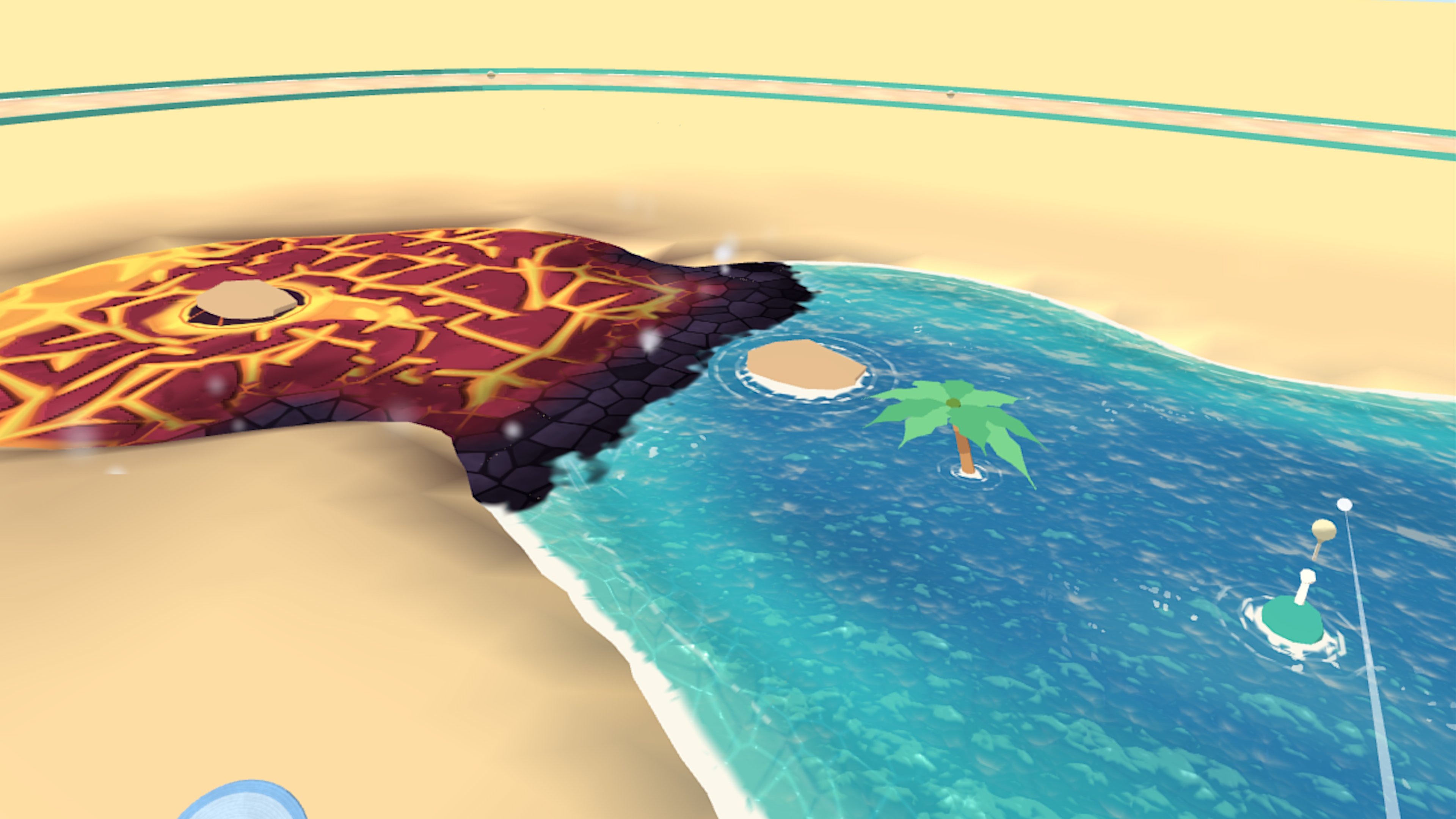
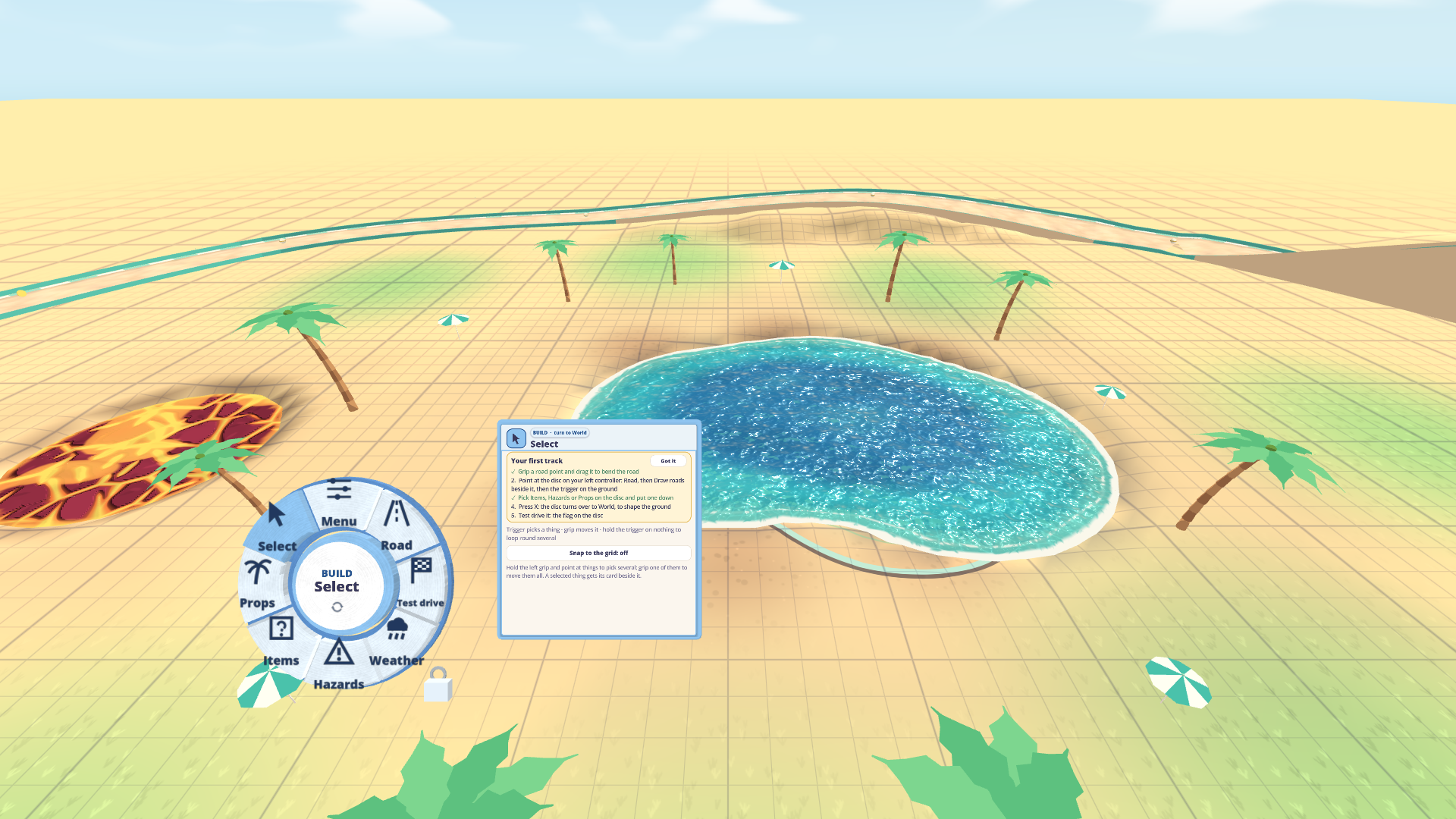
The larger games are being designed around an extensive, in-game level-building system that lets players construct their own scenes, tracks, arenas, and challenges directly in VR.
Imagine building a kart track with huge jumps, twisting roads, and unexpected shortcuts. Or designing a mini-golf course with crazy obstacles. Or creating a grappling-hook arena built entirely around vertical movement.
The idea is to provide a powerful but approachable set of building tools, with reusable objects, terrain and environment pieces, and game-specific mechanics.
And the best part?
Players will be able to share their creations with the community, so everyone has something new to discover and play.
I don't want the game to depend entirely on how many levels I can develop myself. I want the community to become part of what makes it grow.
A World With Its Own Personality
The park is the heart of everything.
Rather than feeling like a menu that teleports you between unrelated games, I want it to feel like an actual destination: a colorful, welcoming world where you see other players having fun and naturally want to join them.
Players will also be able to personalize their characters with cosmetics, while the larger games have their own customization systems. Karts, for example, will feature interchangeable chassis, wheels, and gliders.
Customization will be cosmetic only. Nobody should have to spend money to compete on equal terms.
How I'm Building It
The project is being developed for standalone Meta Quest, with a strong focus on multiplayer performance, responsive VR interactions, and a cohesive, stylized 3D world.
One of the biggest technical challenges is supporting so many different types of gameplay under one connected experience.
A kart racing game, a physics-based table tennis match, and a grappling-hook shooter have completely different requirements, especially when it comes to multiplayer networking and player interactions.
The building system adds another layer of complexity. It needs to be flexible enough to support very different games while remaining intuitive to use inside VR.
The challenge isn't simply making all these games work individually. It's making them feel like they belong together.
The Vision
I want this to become the kind of VR game you open without needing a plan.
And maybe one day, the most popular track, arena, or game in the entire park won't be something I created, but something a player built using the tools I gave them.
A playground built for fun, expanded by creativity, and kept alive by its community.


