-
Logo
-
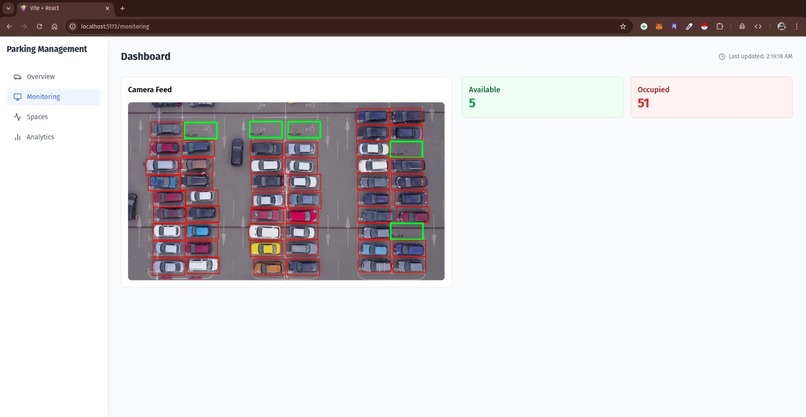
Live Monitoring
-
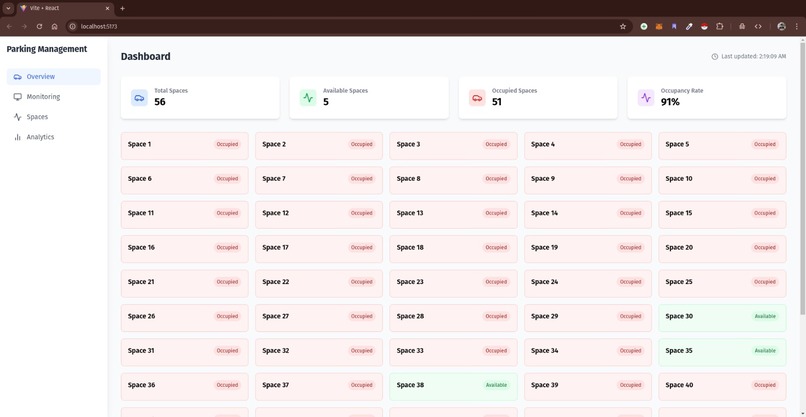
Dashboard
-
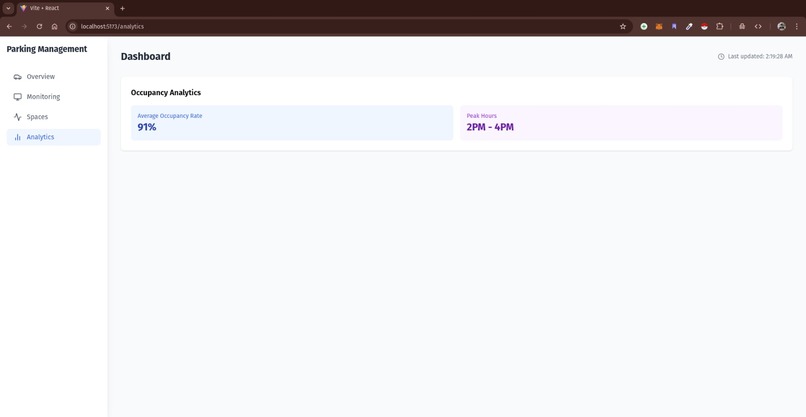
Parking day Analytics
Inspiration
Finding parking in busy areas is frustrating, time-consuming, and inefficient. Drivers waste fuel searching for spots, while outdated systems cause congestion and poor space utilization. Many parking lots lack real-time availability updates, digital reservations, and optimized management.
Our Smart Parking Management System solves this by providing real-time parking availability, AI-powered space optimization, and seamless reservations with digital payments. Users can find, book, and navigate to parking spots effortlessly, while parking lot owners maximize space utilization. This reduces traffic, saves time, and creates a smarter, hassle-free parking experience.
Challenges we ran into
Building this project required seamless integration of multiple technologies. The frontend (React.js) communicates with the Flask backend to handle real-time updates, reservations, and ticketing while ensuring smooth UI interactions. Establishing real-time WebSocket communication for live parking availability updates was challenging, especially in managing high-frequency data exchange. Ensuring efficient collaboration between Python (AI processing) and JavaScript (frontend) required well-structured APIs and optimized asynchronous processing to prevent performance bottlenecks.
For vehicle detection, we leveraged Generative AI (GenAI) to classify car types (SUV, Sedan, Mini) based on camera feeds, ensuring accurate space allocation. In contrast, a custom-built AI model and algorithm analyze parking lot layouts to suggest the best spots for each vehicle type, optimizing space utilization. Fine-tuning these models for real-time accuracy while keeping computational overhead low was a key challenge. Integrating these diverse technologies into a single, scalable system required extensive optimization, debugging, and testing.
Accomplishments that we're proud of
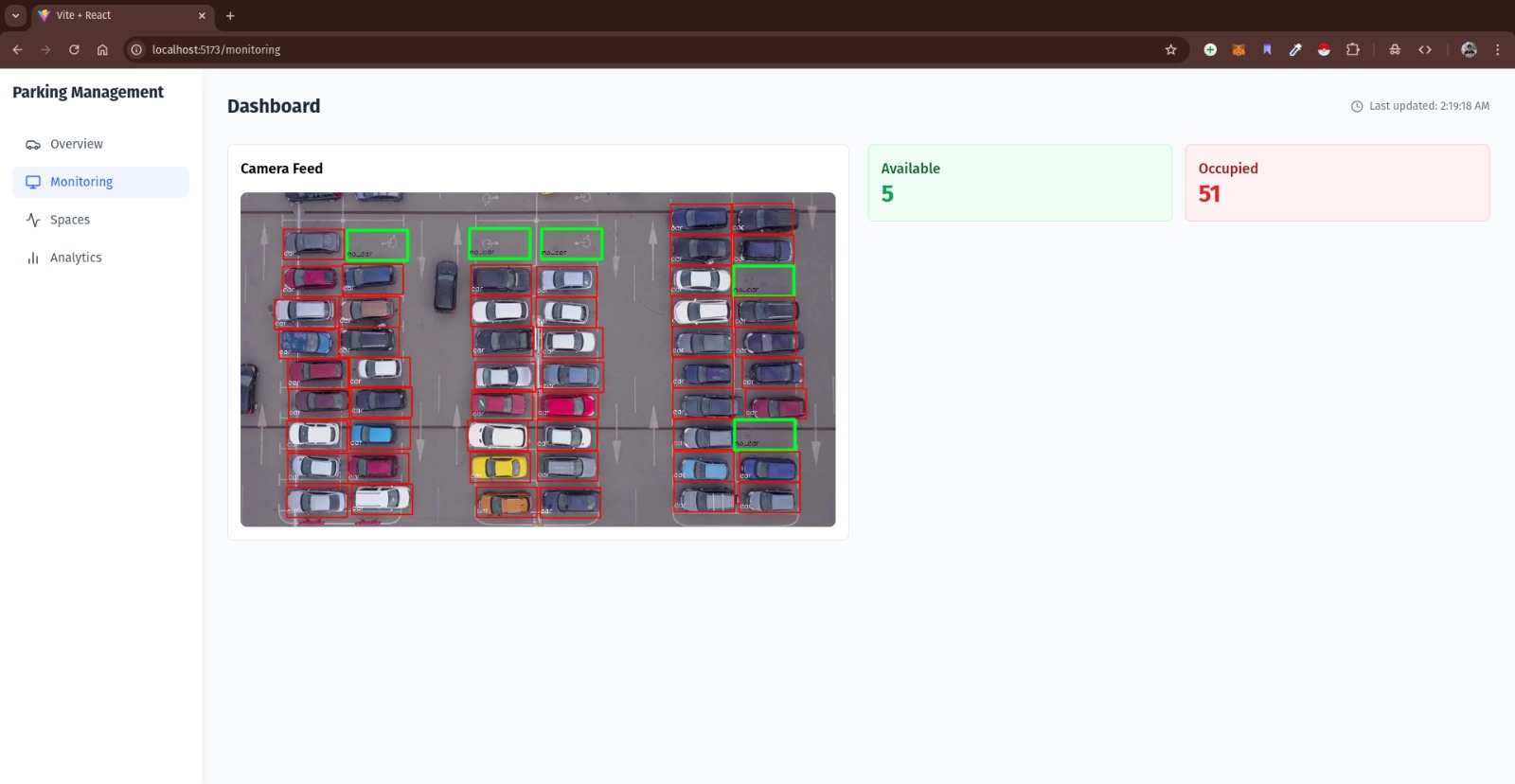
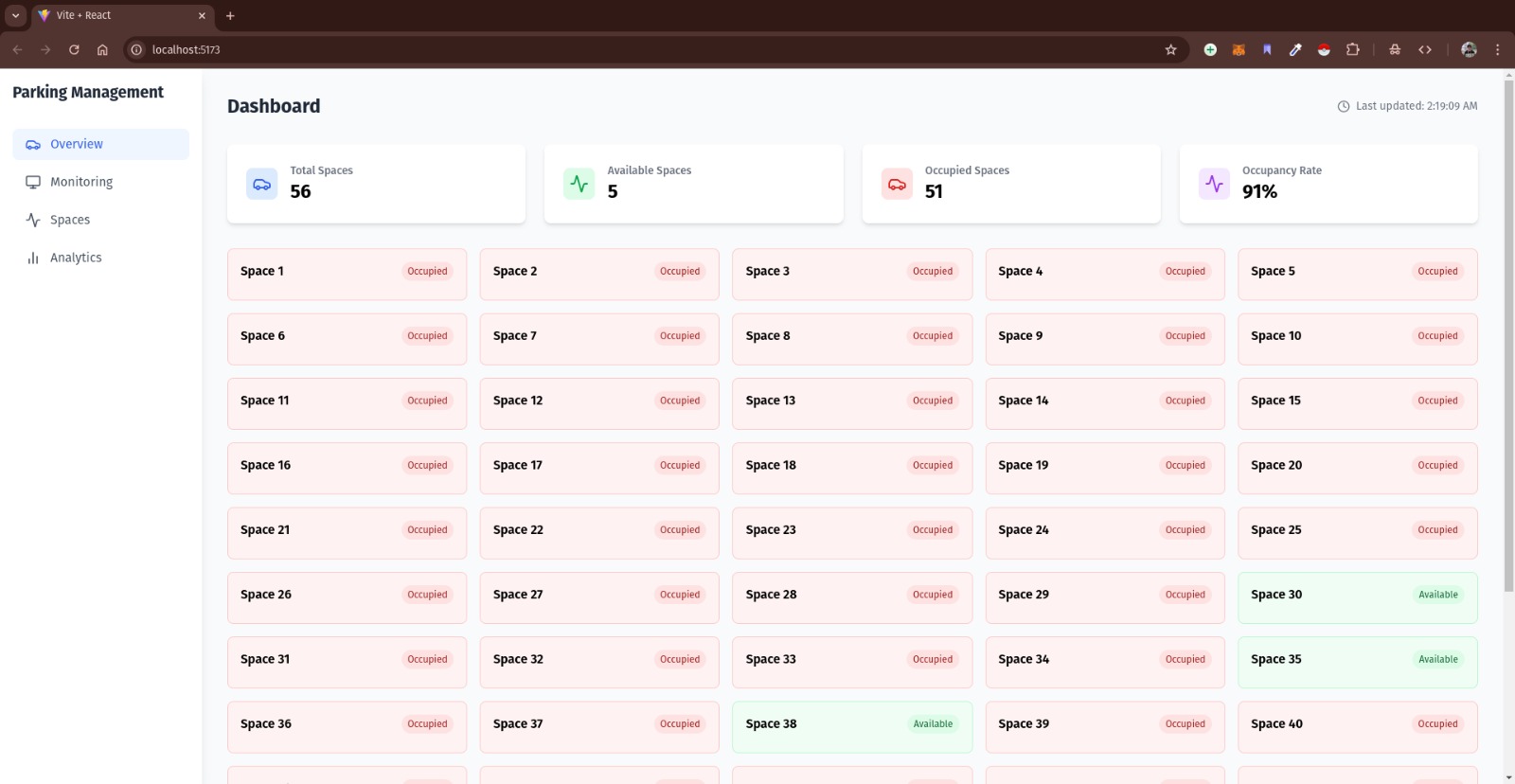
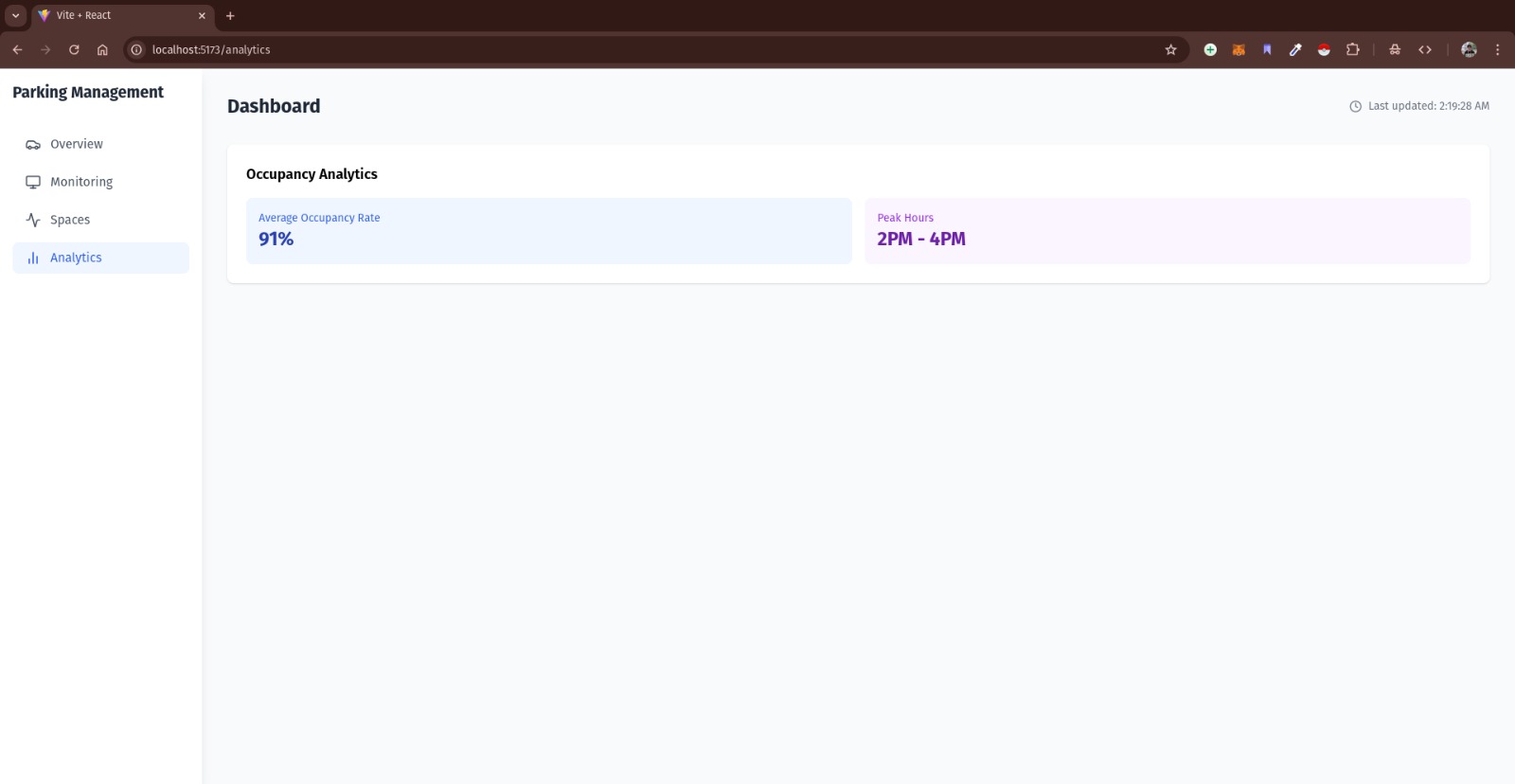
Our team successfully integrated Generative AI, a custom-built AI model, frontend, and backend into a cohesive system that delivers a seamless parking management experience. One of our key achievements was ensuring real-time AI-driven vehicle detection and classification, which significantly enhances space optimization. We also developed an interactive dashboard that provides live occupancy updates, reservation capabilities, and predictive analytics, improving both user convenience and operational efficiency. The integration of Flask for backend processing and React for frontend visualization was another milestone, allowing smooth communication between different system components. Beyond technical implementation, we take pride in the collaborative effort, problem-solving, and hands-on learning that went into building this project over several weeks.
What we learned
Throughout this project, we gained invaluable experience in AI model development, computer vision, and real-time system integration. We deepened our understanding of how AI can be applied in smart infrastructure and improved our ability to handle challenges related to data processing, model accuracy, and deployment in a full-stack system. Working with Flask and React, we learned how to efficiently manage asynchronous data flow, optimize server-client interactions, and improve UI responsiveness. Additionally, we explored cloud deployment strategies for scalability and recognized the importance of performance optimization to ensure real-time functionality. Beyond technical skills, this project strengthened our teamwork, problem-solving abilities, and adaptability, as we tackled unexpected issues and iterated upon our solutions.
What's next for ParkAI
The next steps for ParkAI involve expanding its capabilities to make it an even more powerful and scalable parking solution. One major improvement will be enhanced geospatial mapping integration, allowing users to locate and navigate to available parking spots with greater precision. Additionally, implementing automated payment processing will create a fully seamless parking experience, eliminating the need for manual check-ins and payments. Further, we plan to refine our AI models for improved accuracy in vehicle classification and occupancy prediction, enabling better space management. Another key enhancement will be edge computing and IoT integration, reducing latency by processing AI inference closer to the data source. Finally, we envision expanding ParkAI to a multi-location, cloud-based platform, making it scalable for smart cities and commercial parking solutions, ultimately transforming the way parking is managed in urban environments.
Built With
- ai
- cnn
- genai
- javascript
- jupyter
- python
- react

Log in or sign up for Devpost to join the conversation.