-
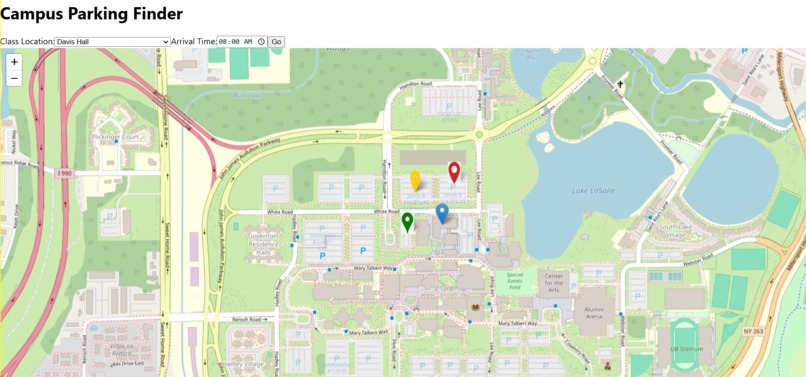
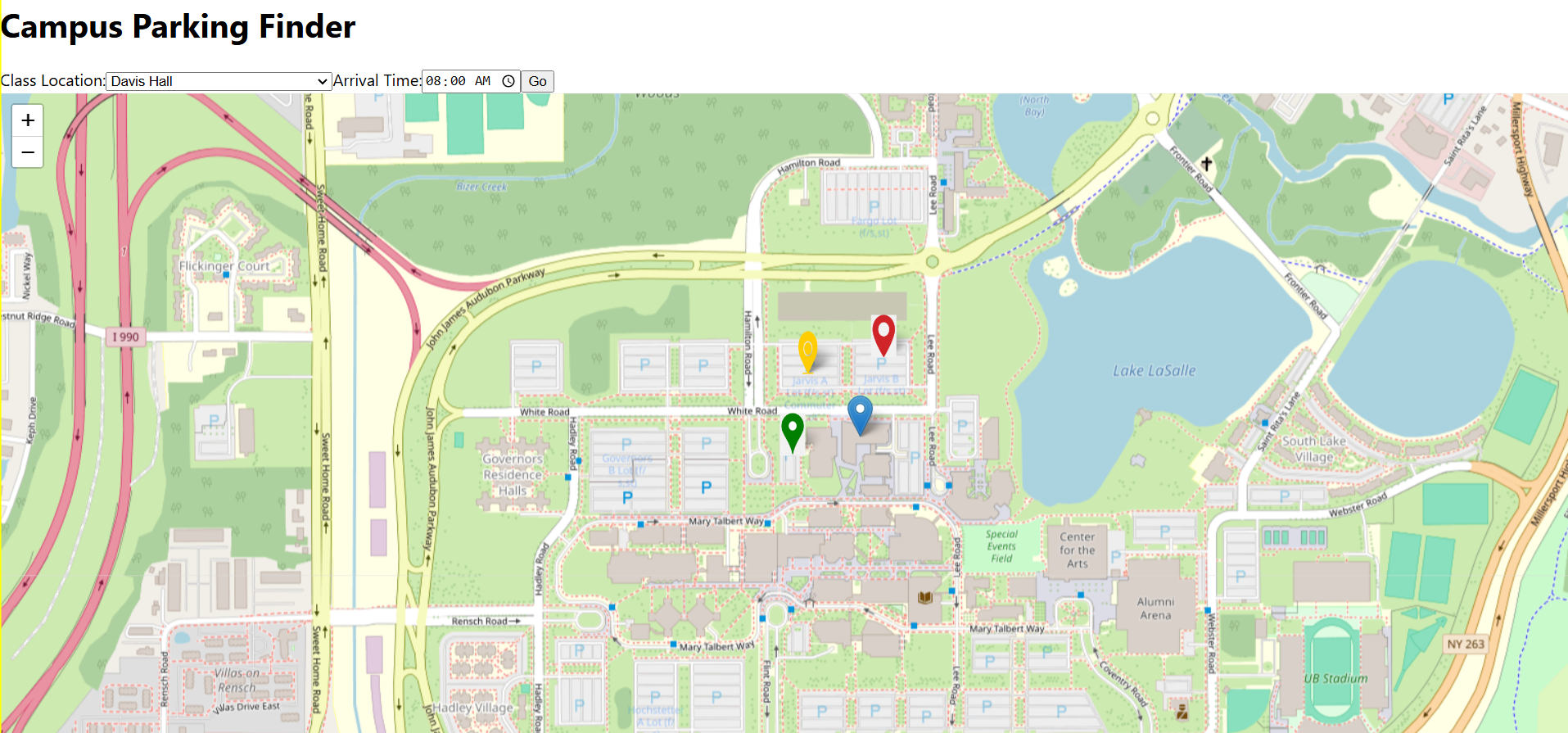
find parking for davis at 8am!
Inspiration
Campus parking has always been a major pain point for students and faculty, with valuable time wasted driving in circles looking for a spot. We wanted to build a solution that not only suggests the best parking options but also integrates seamlessly with users’ daily schedules, reducing stress and saving time. Our inspiration came from wanting to use technology to improve daily campus life in a meaningful way.
What it does
Park Tuah is a smart parking assistant that:
- Suggests the top 3 closest parking lots based on proximity and occupancy rates.
- Provides real-time occupancy data for parking lots.
- Displays walking routes from the parking lot to the user's class location.
- Offers walking distance and time estimates.
- Integrates with Google Maps for easy navigation to parking lots.
How we built it
- Frontend: Developed with React.js and React-Leaflet for an interactive user interface and map visualization.
- Backend: Built with Node.js and Express.js to handle requests, process data, and fetch parking suggestions.
- APIs: Leveraged OpenRouteService API for walking routes and Google Maps integration for navigation.
- Other Tools: Used haversine-distance for calculating proximity and occupancy rates dynamically.
- Hosting: Deployed on Heroku and integrated with our domain, www.hacktuah.co.
Challenges we ran into
- Dynamic Route Calculation: Ensuring accurate and fast walking route generation with real-time data was complex.
- Marker Customization: Implementing color-coded markers dynamically based on lot ranking and occupancy rates required significant tweaking.
- Deployment: Deploying a fully interactive map-based application with multiple integrations while maintaining performance was challenging.
Accomplishments that we're proud of
- Successfully implemented an intuitive UI that displays the most relevant parking options.
- Integrated real-time data to provide accurate occupancy rates and walking routes.
- Developed a scalable backend capable of handling dynamic requests.
- Delivered a polished and deployable project within the hackathon timeframe.
What we learned
- The importance of user-centered design in creating practical solutions.
- How to integrate multiple APIs into a single, cohesive application.
- Leveraging geospatial tools like haversine-distance for real-world applications.
- The value of collaboration and iterative problem-solving under tight deadlines.
What's next for Park Tuah
- Live Updates: Integrating live parking data from IoT sensors for real-time availability.
- Mobile App: Developing a mobile-friendly version for on-the-go access.
- Public Transit Integration: Adding options for navigating to campus via eco-friendly public transit routes.
- Enhanced Accessibility: Improving accessibility features for users with disabilities.

Log in or sign up for Devpost to join the conversation.