-
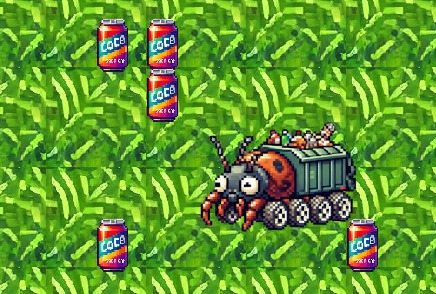
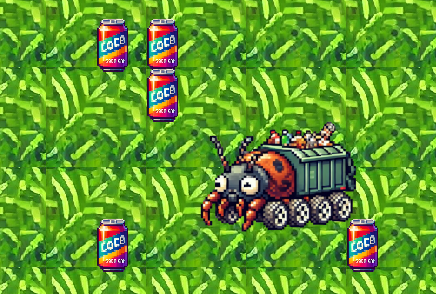
A pesky litter bug content with his work
-
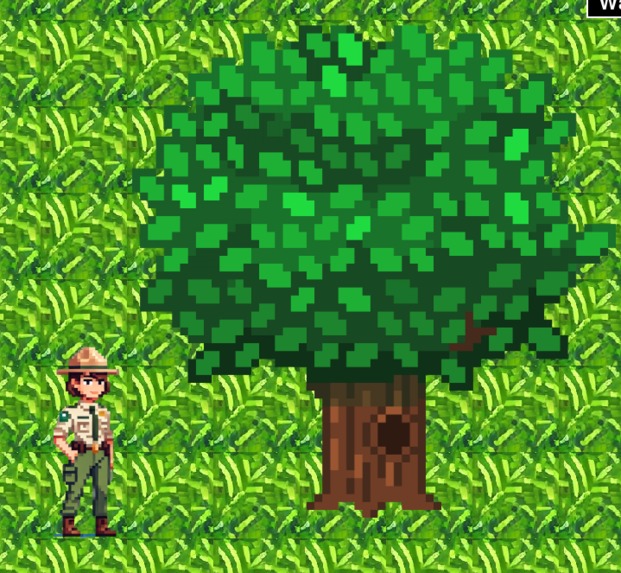
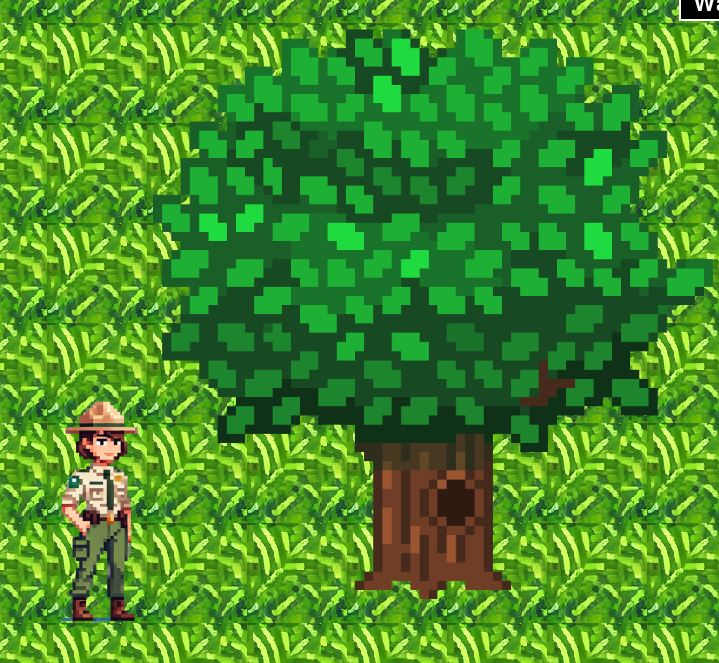
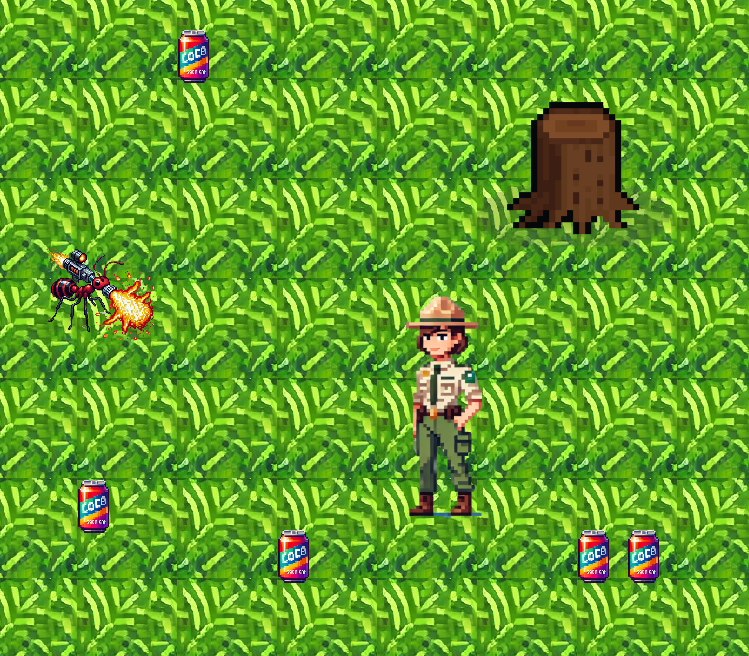
Ranger Rachel admiring her handy work
-
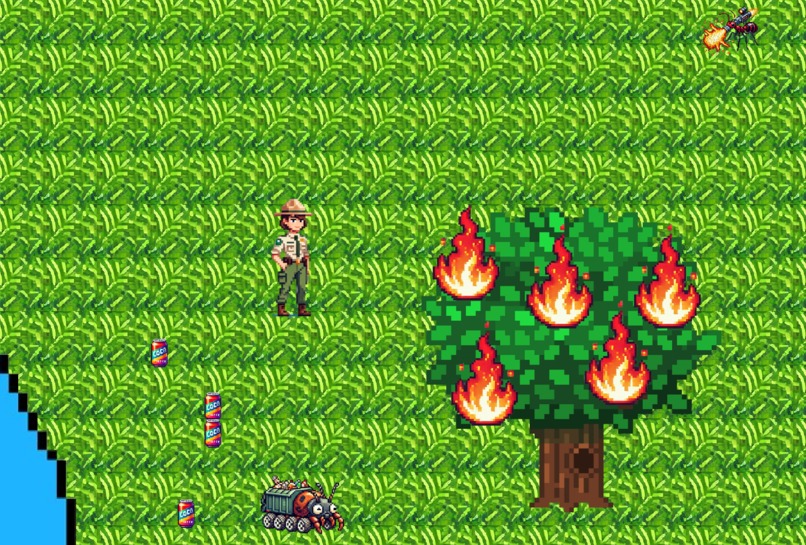
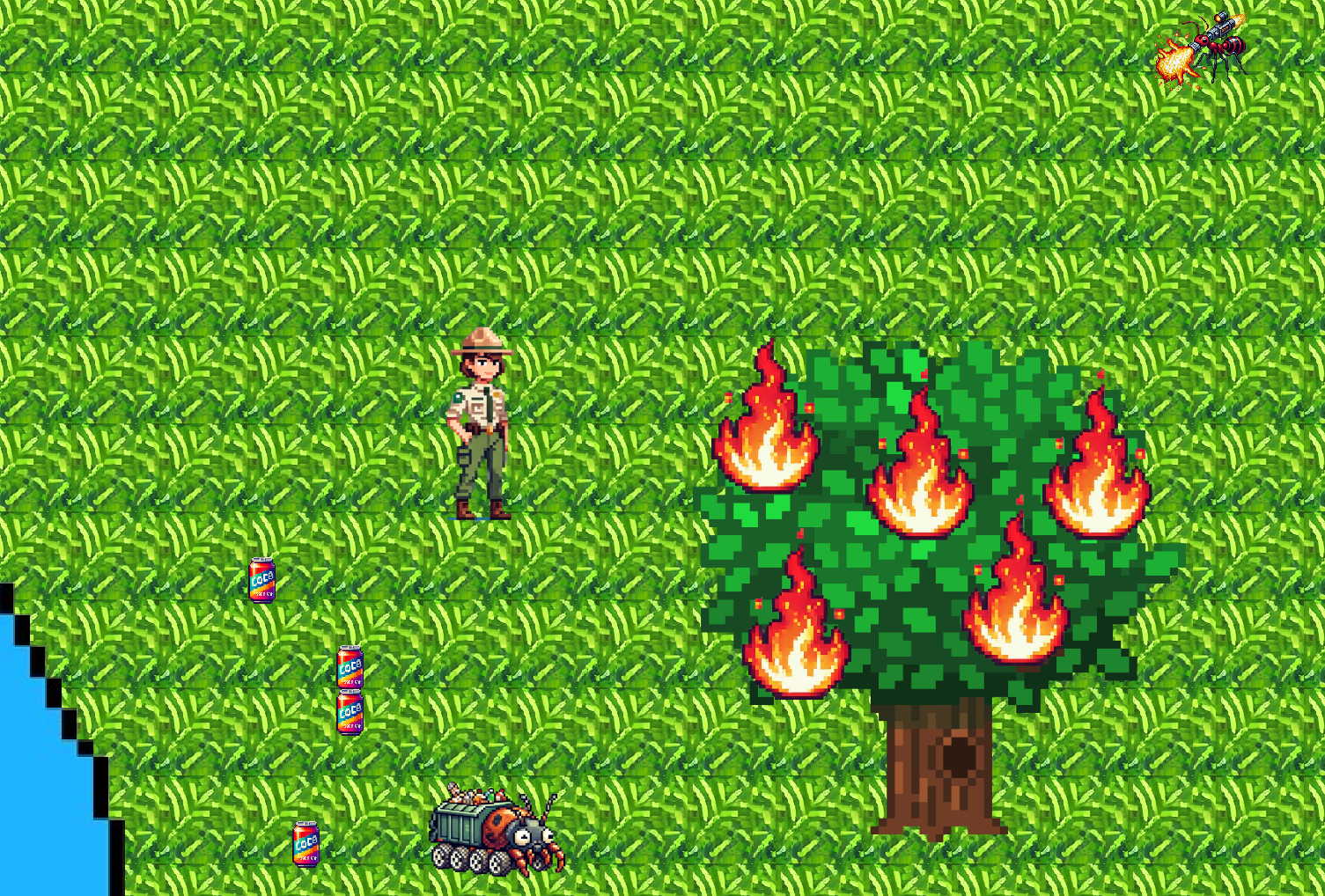
That's not good!
-
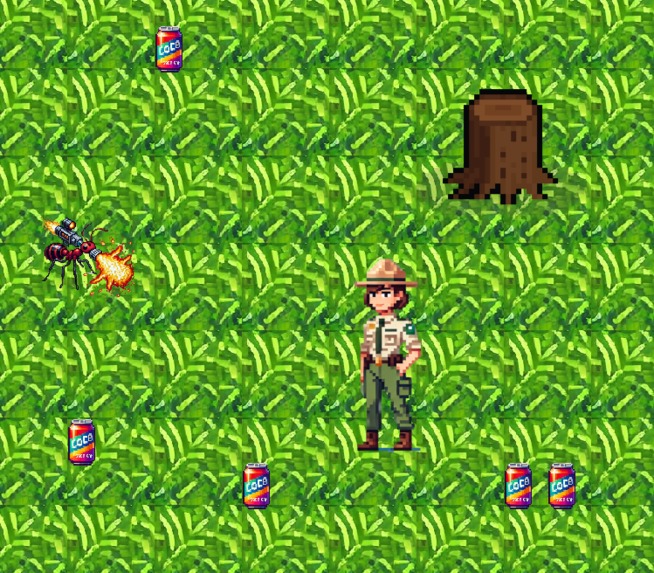
Ranger Rachel is stumped
-
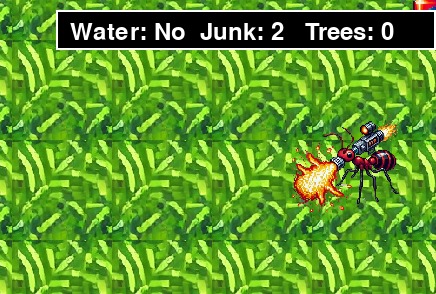
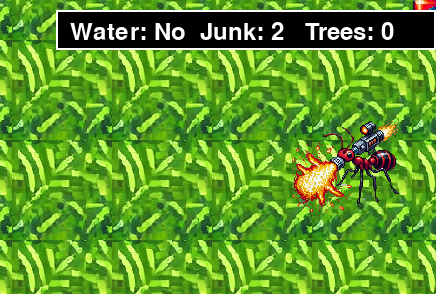
A fiesty fireant with Ranger Rachel's inventory
Inspiration
The idea to create a game centered around nature, recycling, and climate change was born out of a deep desire to raise awareness about the environmental challenges we face today, especially with younger audiences in mind. Nature is awe-inspiring, but it is also fragile, and the growing threats from pollution and climate change are pushing ecosystems to the brink. By blending gaming with environmental education, I wanted to create something both fun and impactful, where players can actively engage in restoring and protecting nature.
The goal is to inspire players to understand the importance of recycling, reducing waste, and mitigating the effects of climate change in an interactive way. Games have a unique ability to motivate action through choice and consequence, so creating a narrative where small, positive decisions lead to a healthier environment felt like a powerful way to make these complex topics accessible. Ultimately, the game is a call to action, encouraging players to not only succeed within the game world but to bring that same energy into their everyday lives.
Backstory
Ranger Rachel stood at the edge of Pleasant Park, her eyes scanning the horizon where thick plumes of smoke rose ominously into the orange sky. The sun, hidden behind a veil of ash, cast a sickly glow over the forest. Fires were nothing new in the park—climate change had made sure of that—but today, the flames weren't the only threat.
Something far worse was lurking in the park.
The fire ants had always been a nuisance, but this summer, they’d become something else entirely. As the climate shifted, so had the ants—mutated, twisted by the extreme heat and conditions. They weren’t just attacking in swarms anymore. They had developed something terrifying. A biological weapon that no ranger manual had prepared her for.
Flamethrowers.
What it does
Park Patrol serves as an educational tool, raising awareness about the dangers of climate change and promoting the benefits of recycling and planting trees. Through its gameplay, players confront environmental threats like litterbugs and fireants, symbolizing pollution and ecosystem damage, while learning how actions like cleaning up litter and planting trees can help restore balance. The game encourages players to make eco-friendly choices, demonstrating how small actions can have a positive impact on the environment and contribute to the fight against climate change.
How it was made
Park Patrol was built using Pygame, leveraging its flexibility to create a simple yet engaging game. The enemies in the game, like the fireants and litterbugs, were designed with first-generation Roomba-like movement, meaning they navigate the environment in a basic, automated fashion, often bouncing off walls and obstacles. This simple behavior made the enemies unpredictable yet fun to interact with. Additionally, the game implemented basic collision detection, ensuring that characters and objects interacted appropriately with the environment, preventing overlaps and maintaining a somewhat smooth gameplay experience.
The sound assets for the game were sourced from royalty-free libraries, ensuring I could use them freely without licensing concerns. For the majority of the visual assets, I utilized OpenAI's DALL-E to generate unique and creative sprites and backgrounds, giving the game a distinctive look while maintaining efficiency in the design process. This combination of free sound resources and AI-generated visuals allowed me to focus more on gameplay development while still achieving a presentable aesthetic.
Challenges
Getting started with learning the basics of Pygame was challenging, particularly when it came to understanding its coordinate system. Managing positions and movement within this system often led to tricky situations, where changing sprites for objects became difficult and sometimes caused unwanted behaviors in the game. Misalignment of coordinates and timing issues often resulted in objects moving unpredictably or appearing in the wrong places, making the learning curve steeper than expected. However, overcoming these initial challenges helped me gain a deeper understanding of how game environments are structured and controlled.
Accomplishments
With Park Patrol, I successfully created a fully functional game using pygame, building foundational skills in game development. I implemented basic AI for enemies, making them somewhat unpredictable and traverse the map. I also developed a tile-based world and integrated basic collision detection, ensuring smooth interactions between characters and the environment. This project not only allowed me to improve my understanding of Python but also taught me essential game design concepts like sprite management, enemy behavior, and environmental interaction through graphics and sound.
What was learned
While working with pygame, I gained hands-on experience in several key areas of game development, including tiling, sprites, sound effects, and basic collision detection. Through creating tile-based game environments, I learned how to effectively render game worlds, while working with sprites deepened my understanding of object-oriented programming as I managed game characters. I also explored how to integrate sound effects, enhancing the game’s interactivity and atmosphere. Implementing basic collision detection allowed me to apply mathematical logic in real-time, and overall, this process strengthened my grasp of Python, particularly in handling libraries, managing game loops, and optimizing code performance.
What's next for Park Patrol
In the future, I’d like to enhance my game by adding animation to make characters and objects feel more dynamic and visually engaging. Additionally, I plan to introduce a variety of terrain on the map to create more immersive and strategic gameplay, with different environmental elements impacting movement and interactions. I also aim to improve the AI of the fireants and litterbugs, making them more challenging and intelligent, with better pathfinding and decision-making to create more complex and rewarding gameplay experiences. Finally, I’d like to implement advanced collision detection to refine interactions between characters, obstacles, and terrain, ensuring smoother and more realistic gameplay mechanics.

Log in or sign up for Devpost to join the conversation.