-
-
-
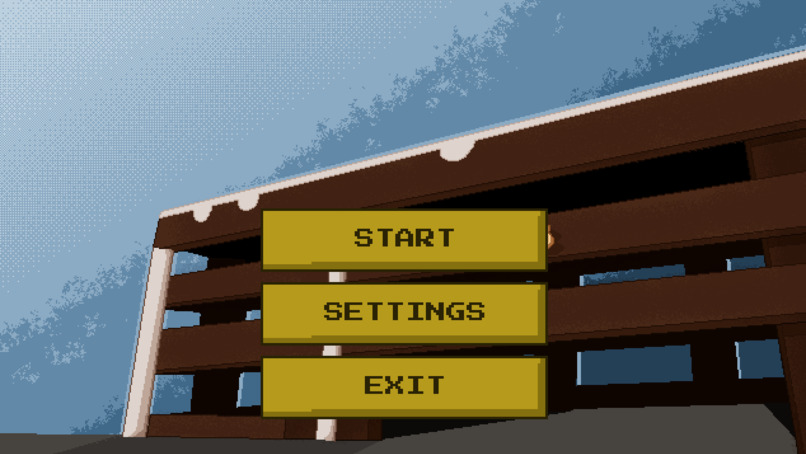
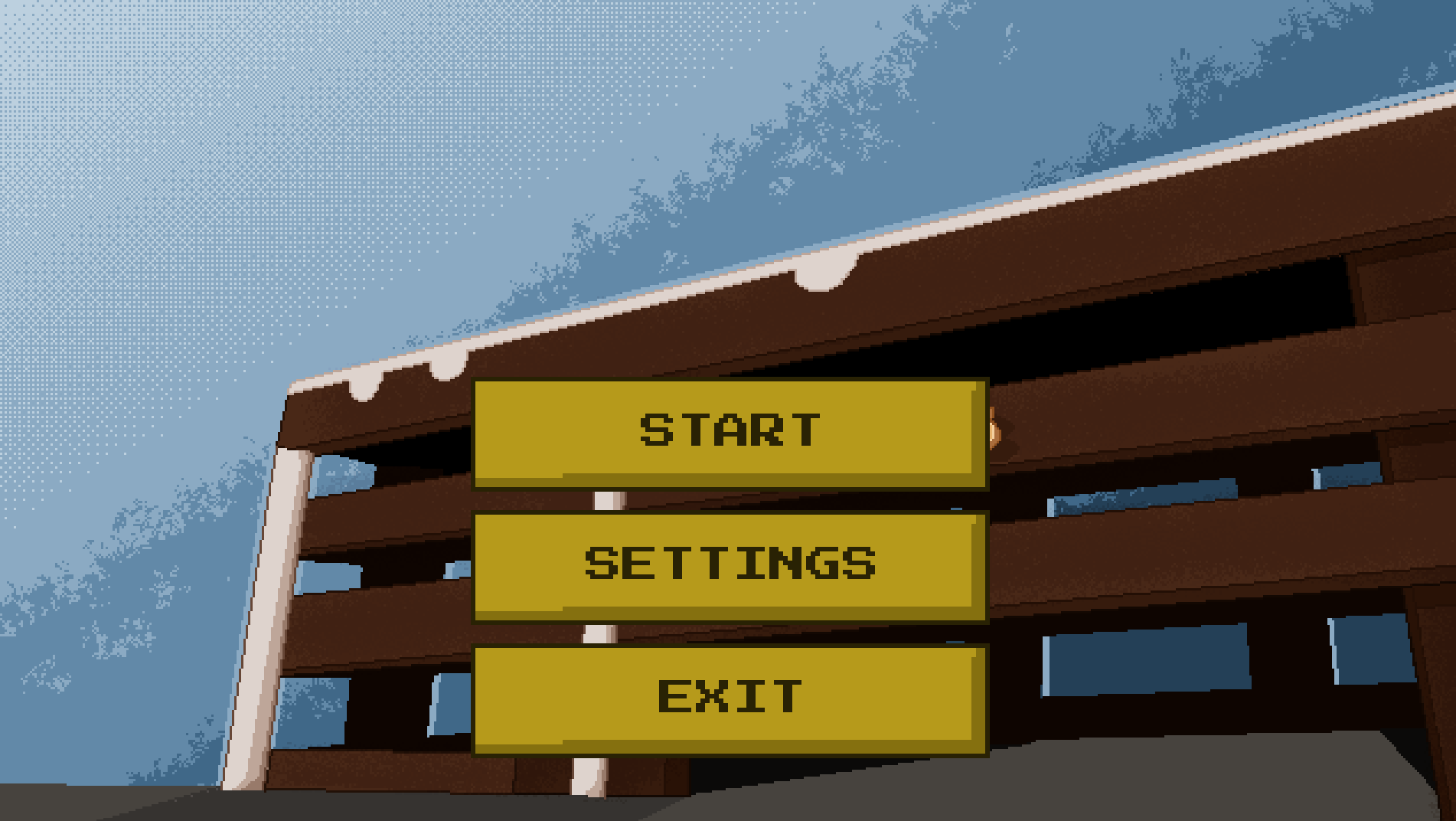
starting screen
-
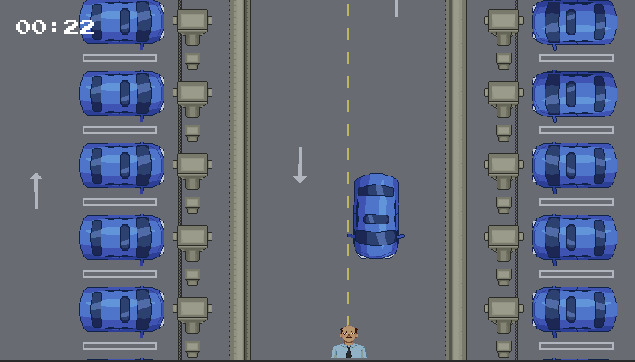
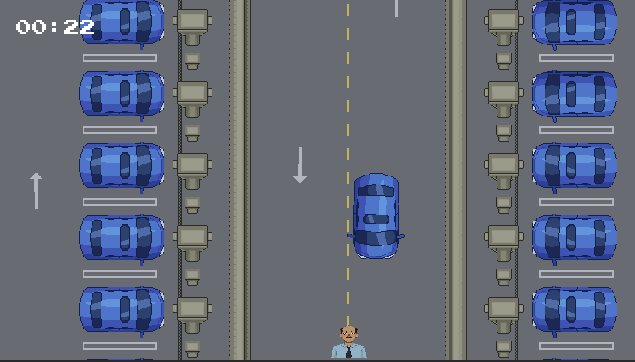
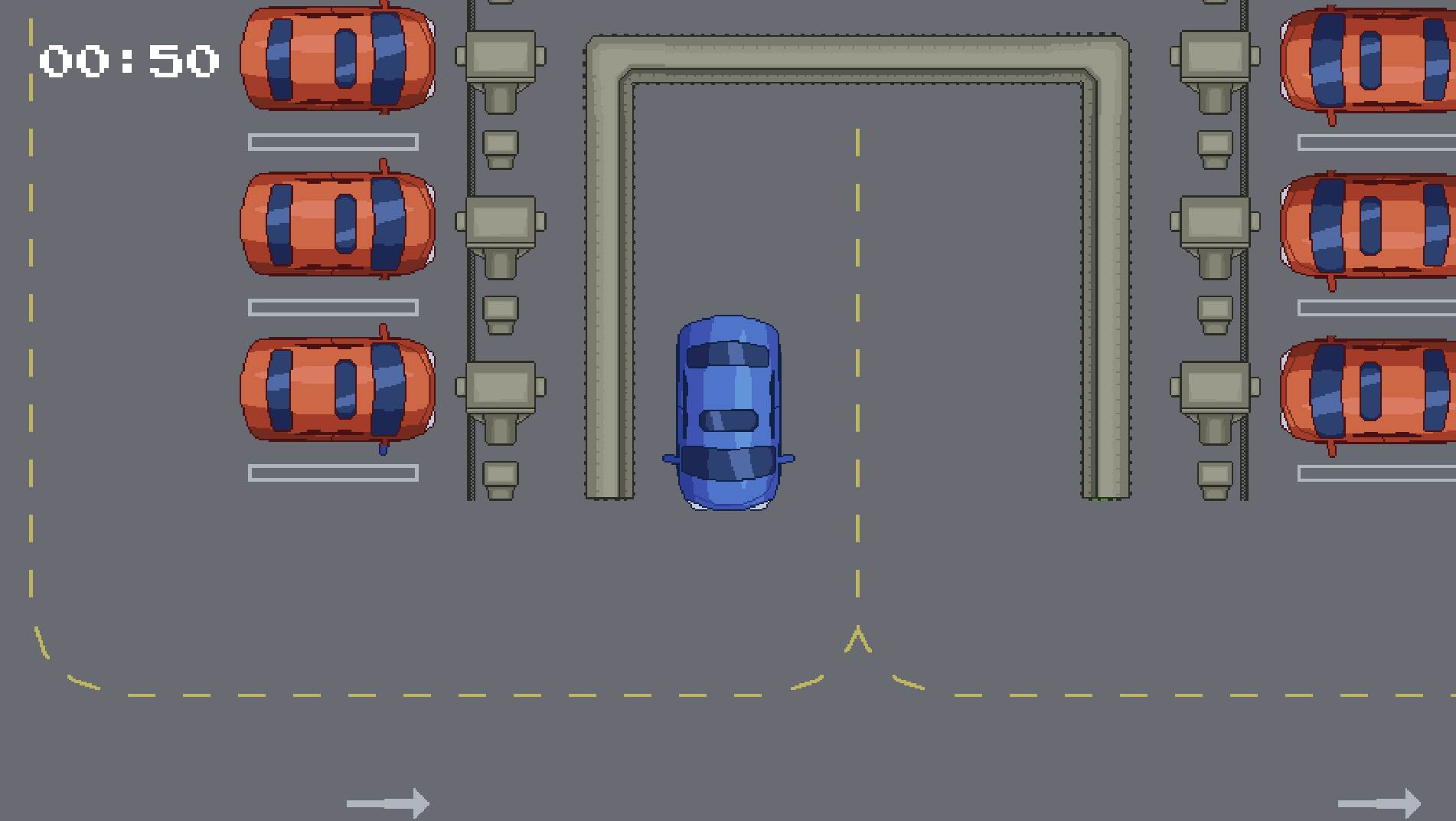
level 1
-
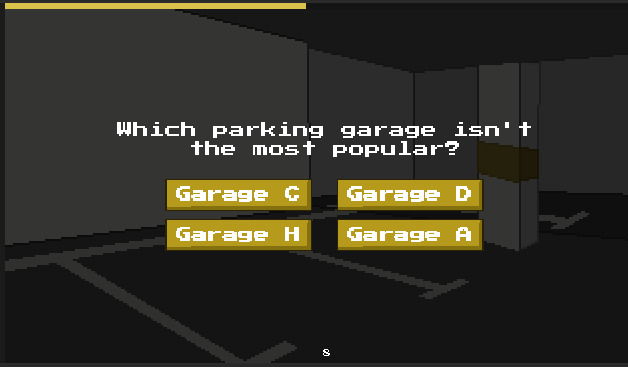
-
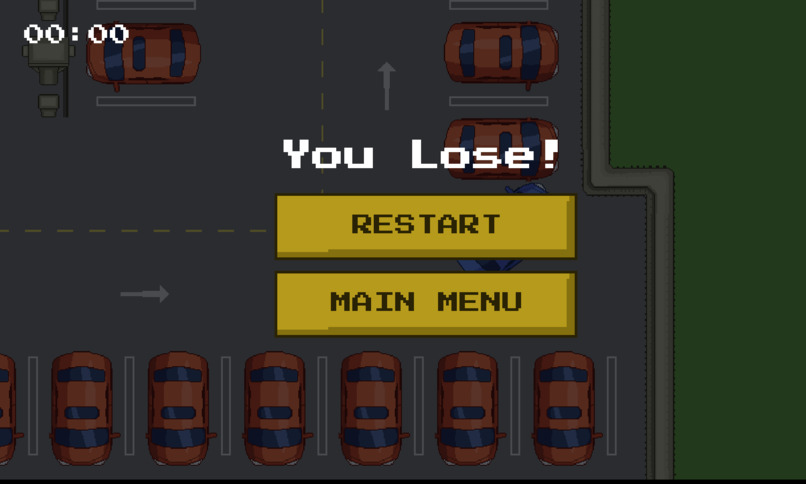
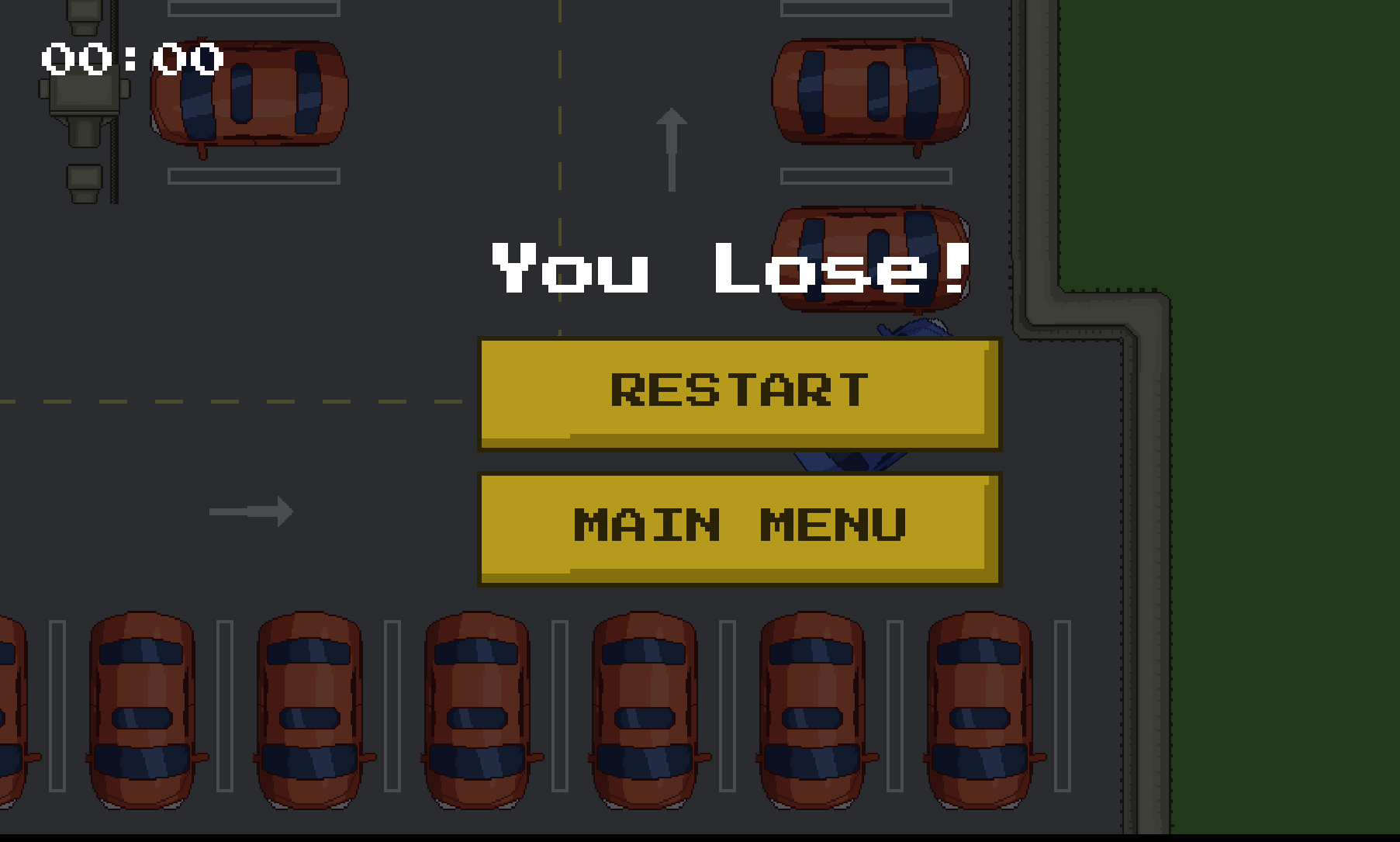
Didn't find parking in time :(
-
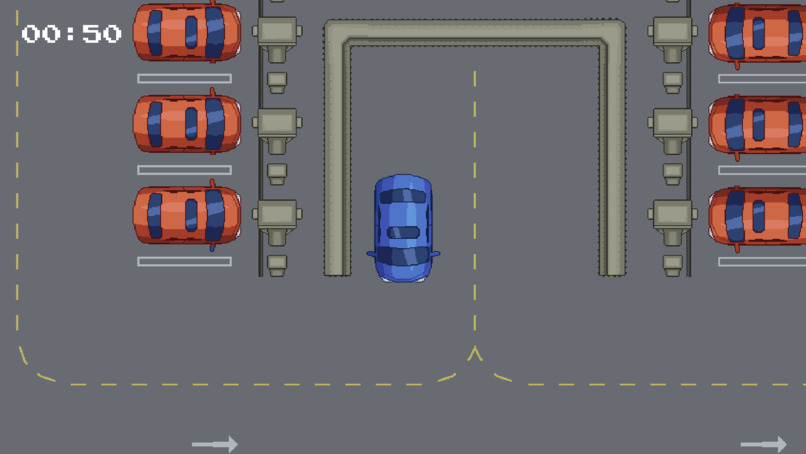
level 2
-
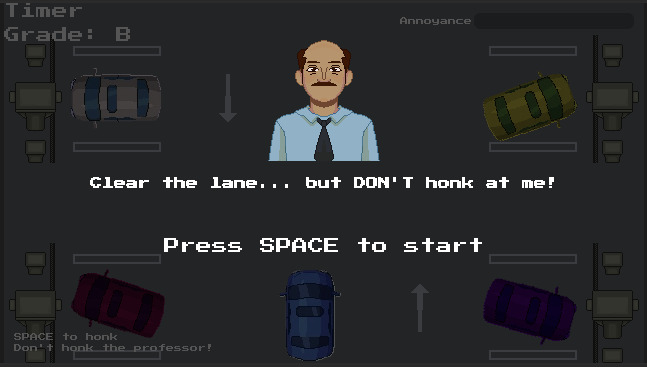
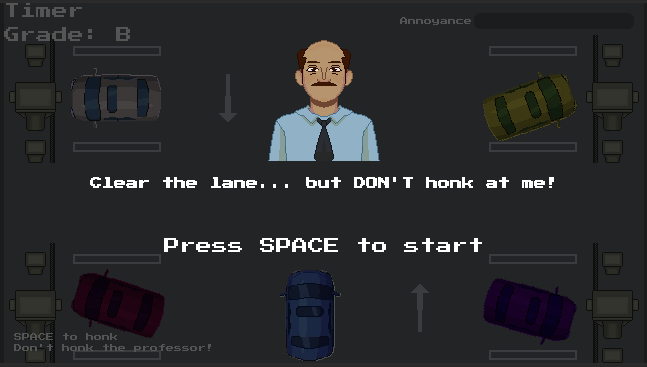
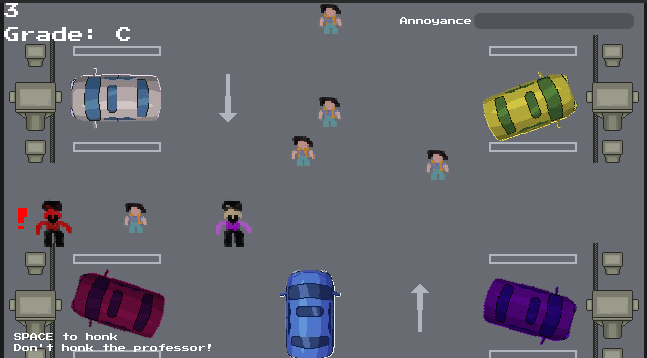
Honking mini-game
-
-
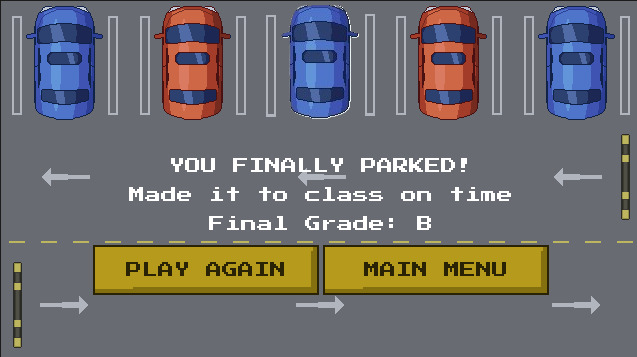
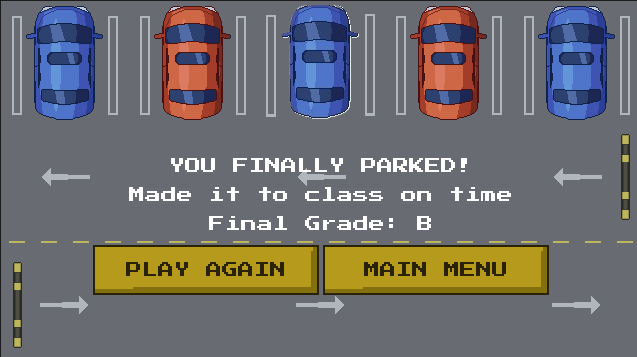
Ending screen!
Inspiration
Ever arrived on campus with five minutes until class starts, only to discover that the parking garage is basically a survival game? We've been there.
Park & Panic turns the struggle of finding campus parking into a fast-paced 2D arcade game. Players navigate a multi-level parking garage, dodge obstacles, and complete mini-games at checkpoints to make it to class on time. But there's a catch: the clock is ticking, and every mistake could cost you your grade!
What it does
Players take control of a car and work their way through a parking garage, navigating obstacles and reaching checkpoints along the way.
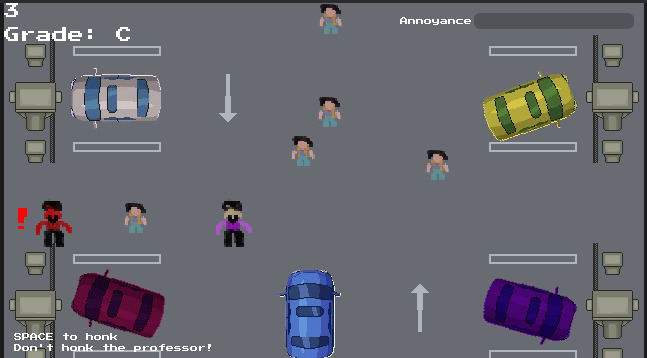
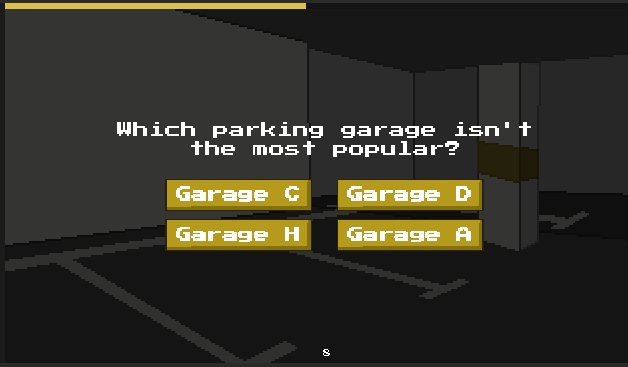
At each checkpoint, players face a mini-game that tests their timing, knowledge, or reaction skills. Winning allows them to continue their journey, while losing comes with a penalty that can lower their letter grade.
The goal? Make it through all the levels, survive the challenges, and secure that parking spot before time runs out!
How we built it
We developed Park & Panic using Godot 4 and GDScript, building the game through individual scenes and scripts that work together to create the overall experience.
Some of the main technical components include:
Godot 4: Used as our primary game engine to build the 2D environment, manage scenes, and handle gameplay.
GDScript: Used to implement player movement, collisions, checkpoint interactions, mini-game logic, and game progression.
Scene-based architecture: Organized the game into separate scenes for levels, menus, mini-games, and end screens, making individual components easier to develop and integrate.
Checkpoint interactions: Used trigger-based interactions to launch mini-games when the player reaches designated locations.
GitHub: Used for version control, task management, and collaboration across the team.
Challenges we ran into
One of our biggest challenges was getting independently developed pieces of the game to work together.
Since different team members worked on different levels, mini-games, and gameplay systems, integration became an important part of development. Connecting checkpoints to the correct mini-games, managing scene transitions, and making sure the game could continue smoothly after a challenge required coordination and testing.
We also had to balance the game's different systems, including the timer, player progression, and win/loss conditions, so that each part contributed to one consistent gameplay experience.
Accomplishments that we're proud of
We're proud of turning a simple, relatable idea into an interactive game with multiple gameplay systems.
Some highlights include:
Creating a playable 2D parking game in Godot.
Building a checkpoint system that connects driving gameplay with mini-games.
Developing separate scenes and challenges as a team and bringing them together into one experience.
Learning how to collaborate through GitHub while working on different parts of the same game!
What we learned
This project taught us that building a game is about much more than making individual features work. It's about making sure those features communicate with each other.
We gained experience with Godot, GDScript, scene management, game logic, and version control. We also learned how important communication, task division, and integration testing are when working on a collaborative software project.
What's next for Park & Panic
There's always room for more parking chaos!
Future improvements could include additional mini-games, more varied obstacles, improved visual effects, and expanded levels to make each playthrough even more unpredictable.
For now, remember: the real final boss was never the professor. It was campus parking.
Built With
- esprite
- gdscript
- github
- godot
- piskel
