The Problem
Every developer knows this pain: push code → wait 15 minutes for CI → discover your change broke a downstream service → investigate → fix → push again → wait another 15 minutes.
In organizations with hundreds of microservices, a single exported function change can silently break multiple projects. You don't know until CI fails across the organization.
The Solution: Parity-Flow
Parity-Flow provides predictive CI/CD feedback BEFORE you push by combining local AST analysis with GitLab's Orbit knowledge graph.
How It Works
- Local Indexing: tree-sitter parses your TypeScript/JavaScript files, extracting all functions, classes, interfaces, imports, and exports
- Delta Calculation: When you make changes, Parity-Flow compares current state to the last snapshot and calculates impact
scores - Orbit Integration: The Duo Flow queries GitLab Orbit Remote to find ALL downstream dependencies across your organization
- Instant Feedback: Know which teams and projects will be affected BEFORE pushing
Key Features
CLI Tool
parity-flow init .- Index your repositoryparity-flow push --dry-run- Analyze impact before pushingparity-flow duo analyze- Generate Duo Flow payloadparity-flow heal yaml- Self-healing CI/CD configuration
Impact Scoring (0-1 scale)
- High (≥0.6): Exported functions/classes with signature changes
- Medium (0.3-0.6): Internal but referenced definitions
- Low (<0.3): Local scope only
Flaky Test Detection
Uses the CP (Continuous Probability) formula:
CP = (F_recent/N_recent) × 0.7 + (F_total/N_total) × 0.3
Tests with CP ≥ 0.30 are auto-quarantined.
GitLab Duo Flow
4 AI agents work together:
- Coordinator: Receives AST delta, orchestrates analysis
- Dependency Analyzer: Queries Orbit for downstream importers
- Flaky Sentinel: Calculates CP scores for affected tests
- Self-Healer: Creates MRs to quarantine tests or fix YAML
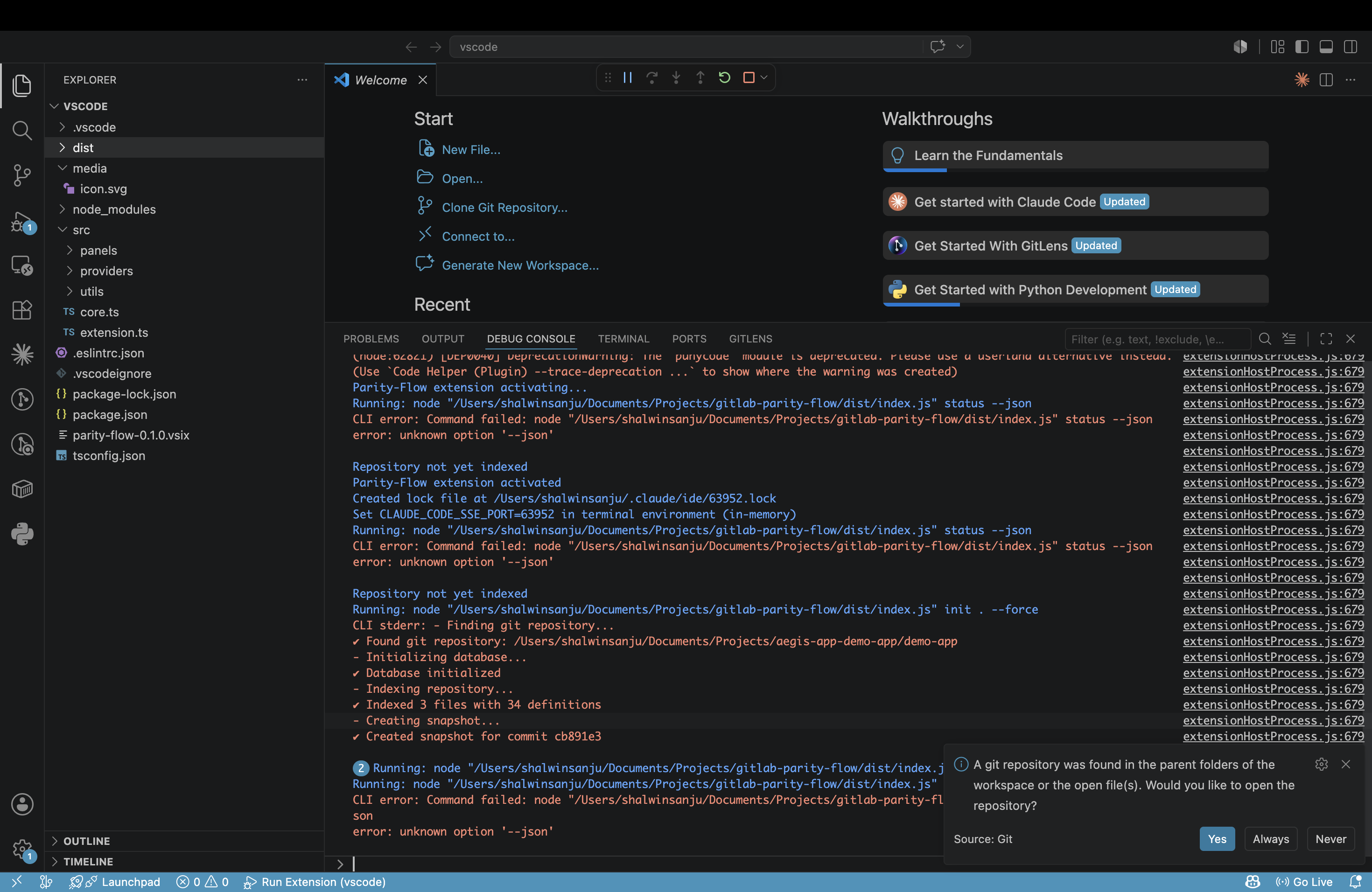
VS Code Extension
- CodeLens annotations showing impact scores
- Tree views for Impact Analysis, Flaky Tests, Status
- One-click actions to quarantine tests
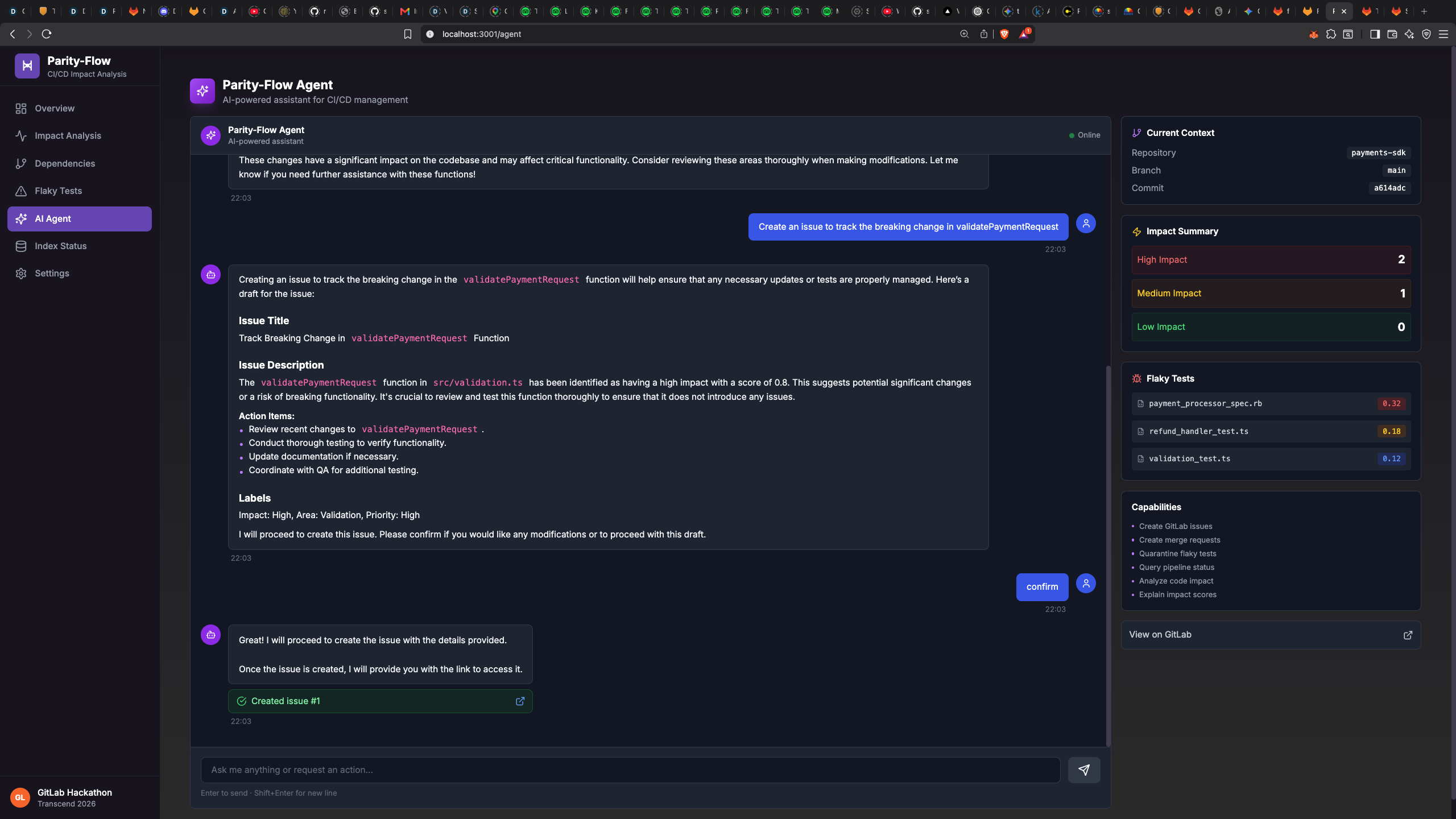
Web Dashboard
- Team-wide visibility
- Impact analysis charts
- Flaky test management
- Dependency graph visualization
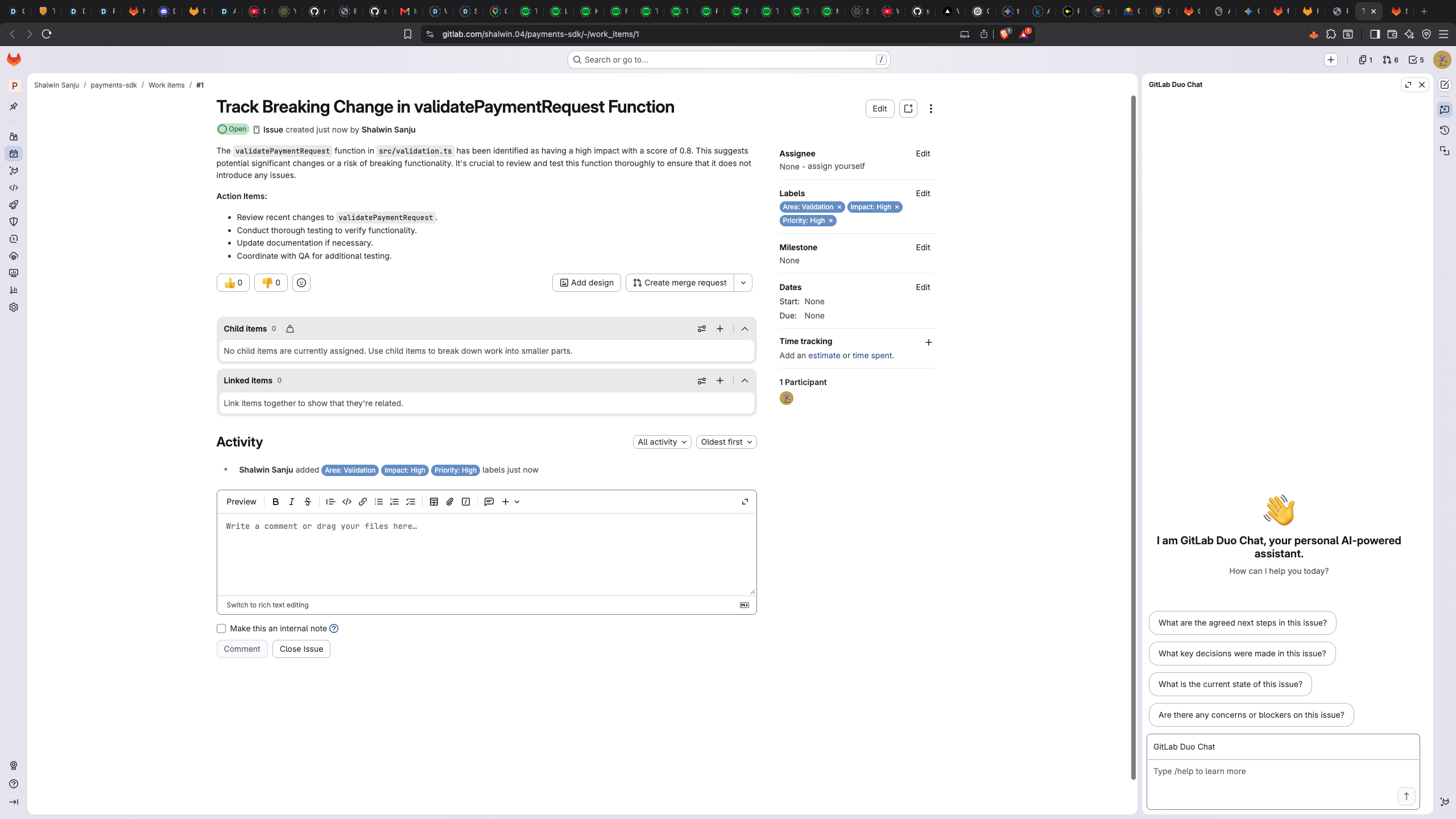
- AI Agent Chatbot - Natural language interface to create issues, MRs, and query GitLab
How It Uses GitLab Orbit
Parity-Flow leverages GitLab Orbit in several ways:
- Dependency Discovery: Queries Orbit's knowledge graph to find all projects importing your changed exports
- Code Owner Identification: Finds the right teams to notify about breaking changes
- Pipeline History: Correlates test failures with code changes to detect flaky tests
- Organization-wide Impact: Goes beyond local analysis to show impact across the entire org
## Technical Stack
- Languages: TypeScript, Node.js
- AST Parser: tree-sitter (same parser used by GitHub)
- Local Storage: SQLite via better-sqlite3
- Web Framework: Next.js 14, React 18, Tailwind CSS
- AI Integration: OpenAI GPT-4o for chatbot, GitLab Duo for flow agents
- Testing: Vitest (26 passing tests)
Development Approach
- Phase 1: Built core CLI with tree-sitter indexing and SQLite storage
- Phase 2: Implemented delta calculation and impact scoring algorithm
- Phase 3: Created Duo Flow YAML with 4 specialized AI agents
- Phase 4: Added VS Code extension with CodeLens and tree views
- Phase 5: Built Next.js dashboard with AI chatbot
- Phase 6: Integrated self-healing CI/CD capabilities
Next Steps
- Multi-language Support: Add Python, Ruby, Go parsers
- Daemon Mode: Real-time file watching with instant feedback
- GitLab CI Component: Native pipeline integration
- Deeper Orbit Integration: Correlate with vulnerabilities, MR history
- Team Analytics: Track impact trends over time
Impact
Parity-Flow solves a real pain point for development teams:
- Saves CI minutes: Catch issues before triggering pipelines
- Prevents broken builds: Know the blast radius before pushing
- Reduces friction: No more angry Slack messages from other teams
- Enables coordination: Automatically notify affected code owners
Built With
- gitlab-duo
- gitlab-orbit
- next.js
- node.js
- openai
- react
- sqlite
- tailwind-css
- tree-sitter
- typescript


Log in or sign up for Devpost to join the conversation.