-
-
-

interview mode
-
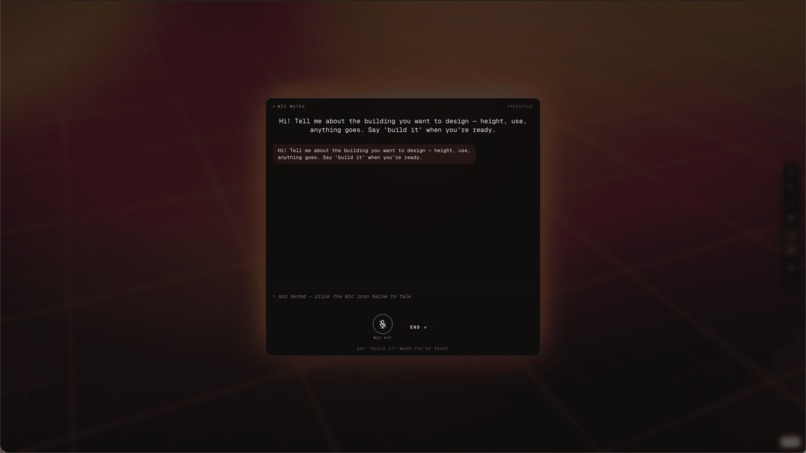
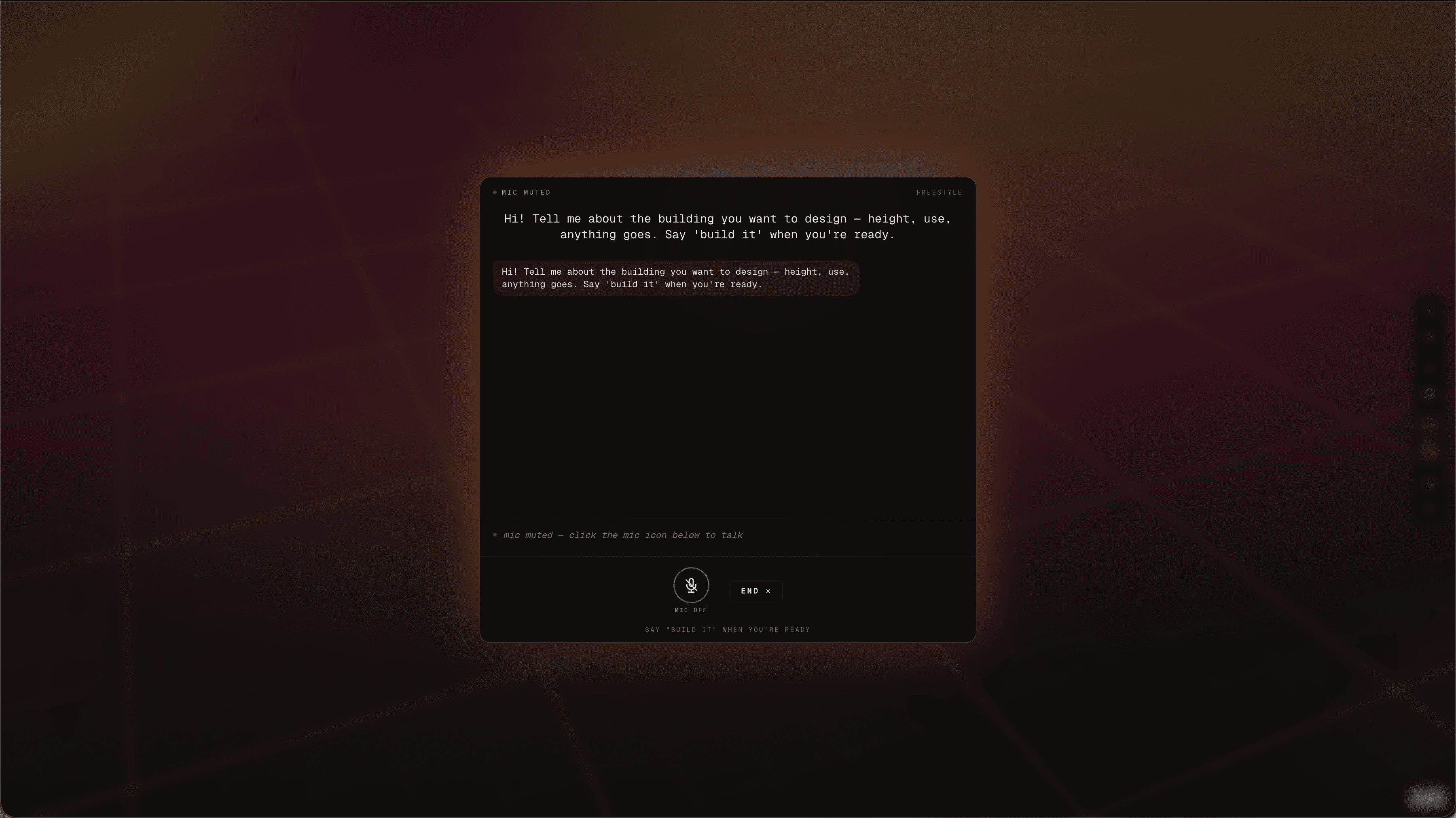
freestyle mode

inspiration
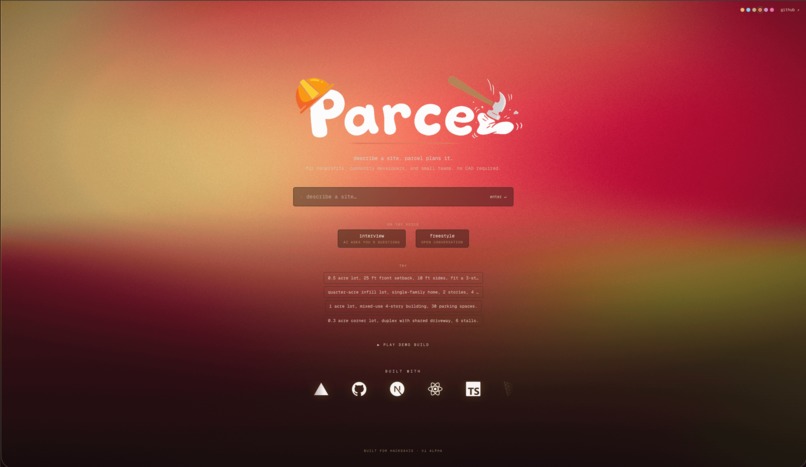
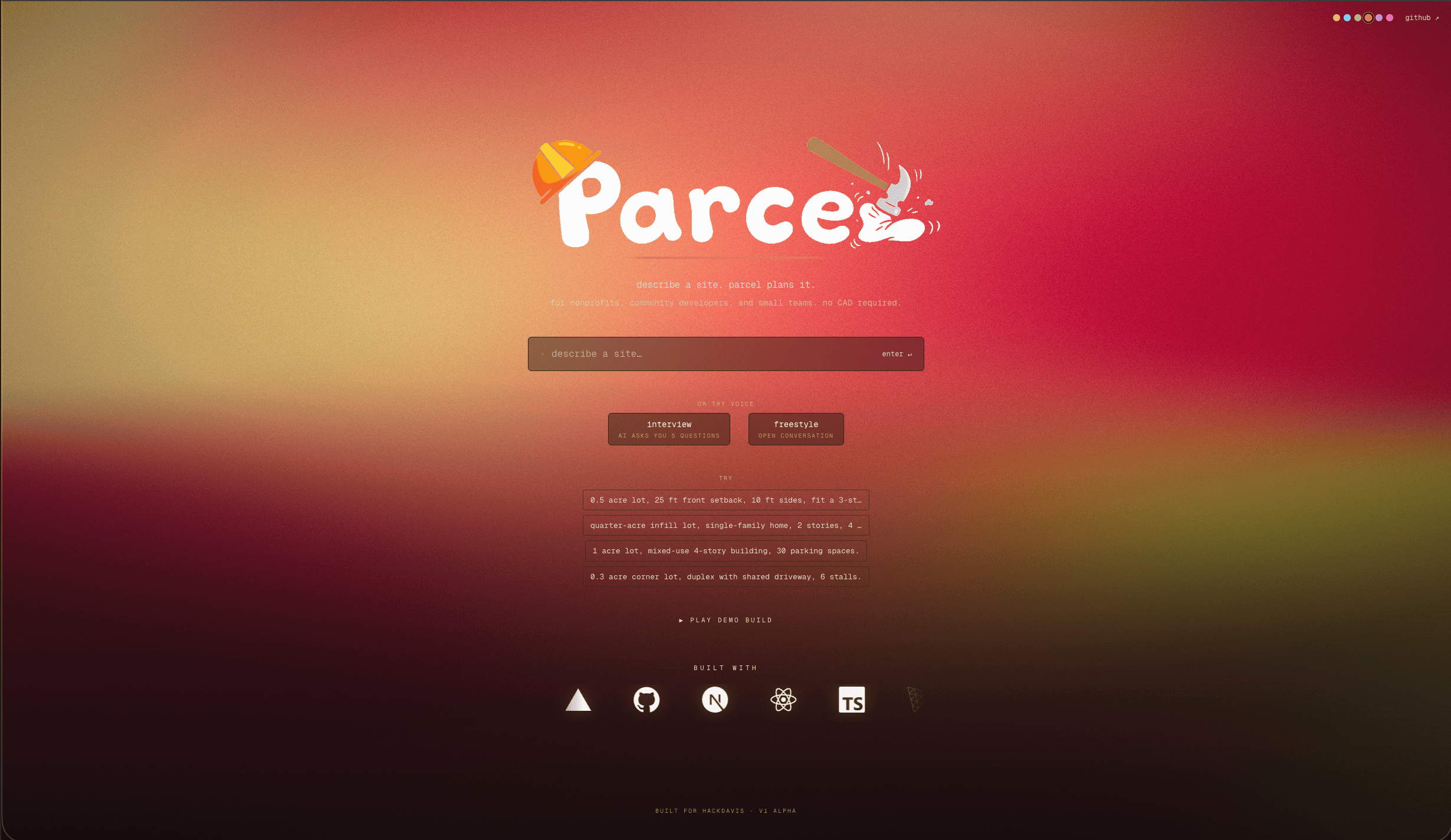
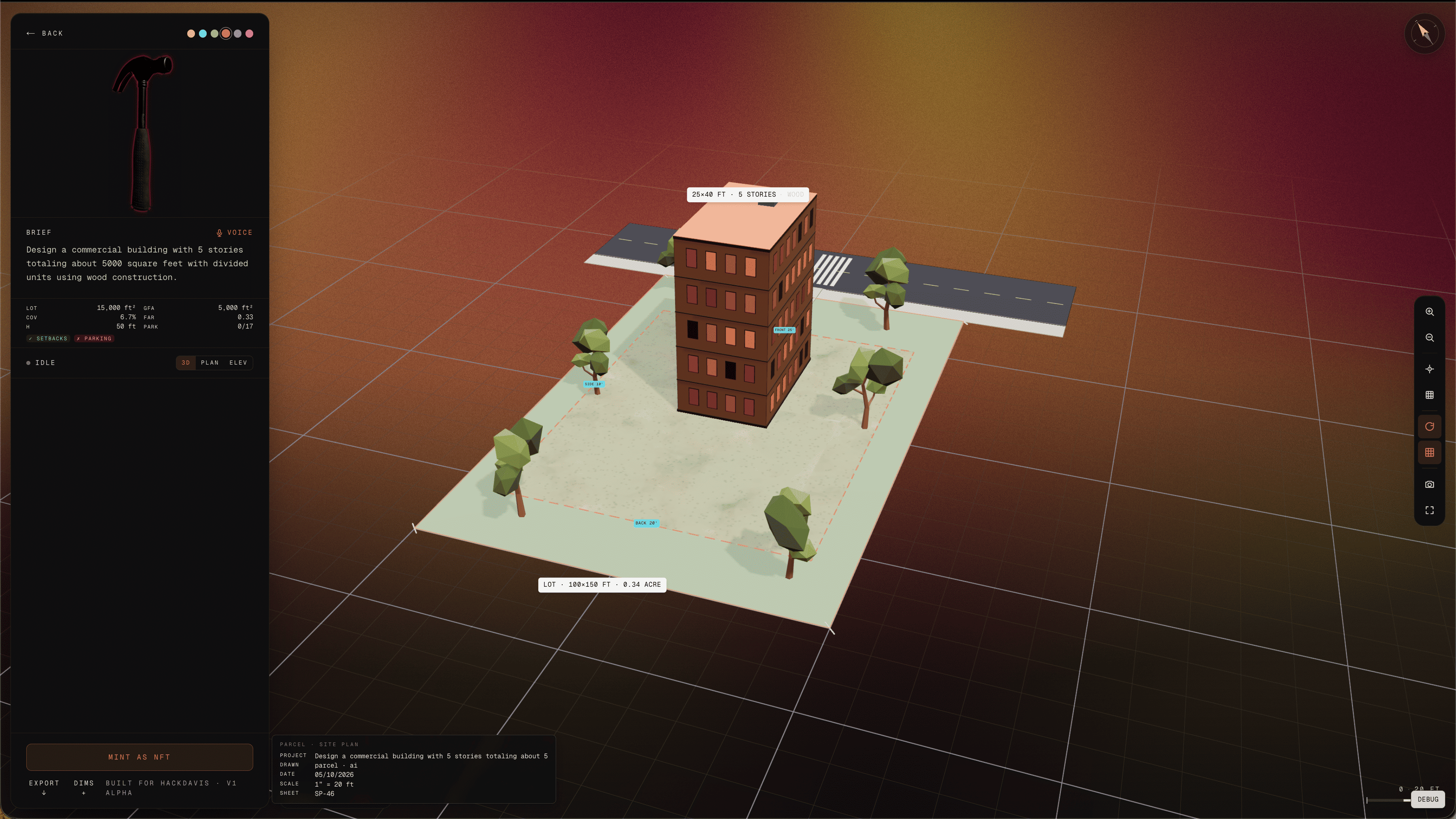
site planning is the first 5 minutes of any housing project. somehow it costs $3,000/year in Autodesk Forma or TestFit licenses. small developers, ADU owners, community land trusts, and affordable-housing nonprofits get priced out of step zero. parcel turns that step into a sentence.
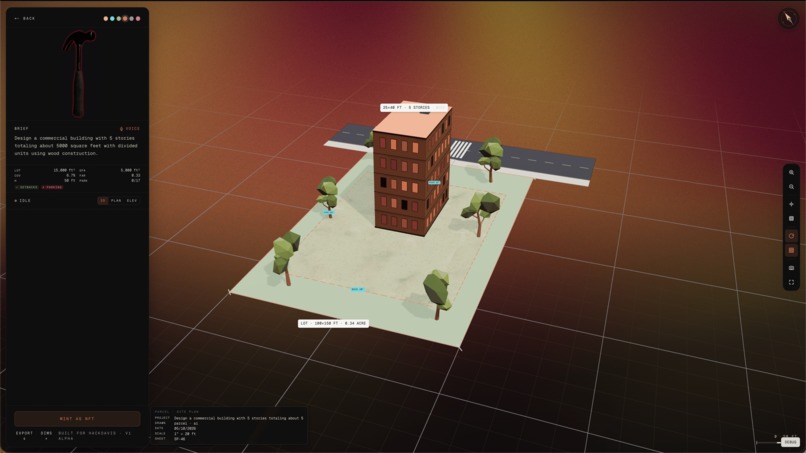
parcel reads setbacks, lot lines, and zoning so anyone can draft a 3D site plan without a CAD seat.
what it does
| input | parcel does | output |
|---|---|---|
| typed prompt | Gemini agent loop with constraint validation | 3D site plan in browser |
| voice interview (5 questions) | guided by ElevenLabs TTS + Web Speech API STT | same |
| freestyle voice convo | Gemini chat seam with canned fallback | same |
after the shell is placed, parcel layers:
- interior floorplan + furniture (separate Gemini route per building)
- trees, walkways, fences, bushes, pools, parking, street props
- on-chain provenance via Solana mint (Metaplex
mpl-core+ Irys uploader) - saved past plans, persisted with
backboard-sdk
how we built it
1. the JSON contract
every tool, the agent, the Zustand store, and the R3F scene speak one type from lib/types.ts:
// origin = front-left of lot. +x = right (width). +z = back (depth). feet.
export type SitePlan = {
  lot:       { width: number; depth: number };
  setbacks:  { front: number; back: number; side: number };
  buildings: Building[];     // x, z, w, d, stories, material, structure_type, program
  parking?:  { x: number; z: number }[];
  trees?:    Tree[];         // species ∈ {oak, pine, palm, maple}
  walkways?: Walkway[];      // flagstone | concrete | asphalt
  fences?:   Fence[];        // wood | wrought-iron | hedge
  bushes?:   Bush[];         // boxwood | hedge_round | flowering
  pools?:    Pool[];         // rectangle | round | kidney
  props?:    StreetProp[];
  status:    'pending' | 'valid' | 'invalid';
};
export type Step = { tool: string; note: string; ok: boolean };
2. the agent loop (app/api/plan/route.ts)
- runtime: Node.js on Vercel Fluid Compute,
maxDuration = 60s - model:
gemini-3-flash-previewvia@google/genai - calling mode:
FunctionCallingConfigMode.ANY+ThinkingLevel.LOW - iteration cap:
MAX_ITERATIONS = 20(fresh draft) /MAX_MODIFY_ITERATIONS = 8(edit existing plan) - rate limit: in-memory token bucket per IP (
lib/rateLimit.ts) - memory: loads last 5 prompts + plan summaries from Backboard so vague follow-ups inherit defaults
loop:
  1. send prompt + plan-state directive + tool declarations to Gemini
  2. read functionCalls[] off the response
  3. for each call: TOOLS[name](plan, args) → { plan, note, ok }
  4. push a Step into the trail; feed function-response Parts back
  5. break when finalize fires or iterations exhausted
the model never emits 3D geometry. it only fills typed JSON. our code does the math.
3. the 11 tools (lib/tools.ts, ~1.3k lines)
| tool | what our code does |
|---|---|
set_lot |
writes lot + setbacks, computes buildable envelope |
place_building |
rectangle-inside-rectangle setback check via isInsideSetbacks, no overlap with existing buildings |
check_setbacks |
validator Gemini calls before committing — feeds error string back so model retries |
place_parking |
greedy 9×18 ft stall packing in remaining space, respects driveway clearance |
place_trees |
per-species canopy radius, avoids buildings + walkways + each other |
place_walkway |
start/end + width + material, snaps to nearest building entry |
place_fence |
side flags (front/back/left/right) + style |
place_bushes |
canopy-aware avoidance, default diameters per variety |
place_pool |
shape + dims, validates clearance from buildings |
place_street_furniture |
benches, lamps, planters at front-yard zones |
finalize |
flips status to valid, ends loop |
key insight: the validator is a tool, not a post-step. when place_building returns ok: false, Gemini sees the failure note in the next turn and adjusts. constraint reasoning, not generation.
4. the renderer
- React Three Fiber 9 + drei (
<Grid>,<OrbitControls>,<Box>,<Gltf>) - Zustand store that the scene subscribes to per-slice
- procedural geometry by default; GLTF models (Quaternius City pack) layered in via
lib/modelConfig.tsper tree/vehicle/prop kind - story-stacked buildings (
STORY_HEIGHT_FT = 10), dashed setback lines, drag-to-rotate camera - LCP fix: the canvas is dynamic-imported off the landing-page critical path so first paint ships fast
5. voice
| layer | tech |
|---|---|
| transcription | browser Web Speech API (Chrome/Edge) |
| TTS | ElevenLabs via /api/tts proxy (key server-side, rate-limited per char) |
| voice-mode prompts | Gemini in interview mode (5 structured questions) or freestyle chat |
| chat fallback | gemini-2.5-flash if gemini-3-flash-preview returns 5xx |
6. on-chain mint (/api/mint-plan)
canvas snapshot (PNG) → Irys uploader (Arweave) → Metaplex Umi
                      → mplCore createV1 → Solana asset
every minted parcel becomes a verifiable record the user owns.
7. routes
/api/plan          agent loop (text → site plan)
/api/chat          freestyle conversation
/api/chat-history  Backboard-backed transcript persistence
/api/floorplan     Gemini → room layout per building
/api/interior      Gemini → furniture per room
/api/mint-plan     Solana mint via Metaplex
/api/save-memory   Backboard preference write
/api/tts           ElevenLabs proxy
stack
Next.js 16 · React 19 · TypeScript · Tailwind v4 · Three.js 0.184 · @react-three/fiber 9.6 · @react-three/drei 10.7 · framer-motion 12 · zustand 5 · @google/genai 2.0 (gemini-3-flash-preview, gemini-2.5-flash fallback) · ElevenLabs · @metaplex-foundation/mpl-core + umi-uploader-irys · bs58 · backboard-sdk · Vercel
challenges we ran into
- agent looping forever. early runs got stuck in
place_building → check_setbacks → place_buildingcycles. fix: hard cap at 20 iterations, separate cap of 8 for modify mode, and aMODIFY_DIRECTIVEsystem prompt that disablesset_lotso edits can't restart from scratch. - shared type drift. with 4 people writing tools, store, scene, and API in parallel, divergent field names would have killed integration. one
lib/types.ts, no exceptions. - landing-page LCP. the 3D engine was eating first paint. moved
<AccentGrainient />and the heavy R3F canvas behindnext/dynamicwithssr: false. - voice race conditions. Web Speech emits interim/final transcripts at unpredictable cadences while ElevenLabs streams audio. needed a careful state machine in
lib/speech.tsso the user can't talk over the agent. - Solana on the clock. Umi keypair loading from base58, Irys funding edge cases,
mpl-coreasset creation. hardened/api/mint-planand added a fallback canvas-capture path so partial failures still mint something. - Gemini JSON shape volatility.
gemini-3-flash-previewoccasionally returns malformed function-call args. wrapped every tool entrypoint in runtime checks that surface a clean error string back into the loop.
accomplishments that we're proud of
- a real multi-tool constraint-reasoning agent, not a wrapped chatbot
- 11 typed tools with a validator-in-the-loop pattern that lets Gemini self-correct
- 3 input modes (text, interview, freestyle) sharing one agent and one JSON contract
- on-chain provenance for civic site plans — your design becomes a permanent attributable record
- fast landing page despite shipping a full 3D engine
- it actually works on real prompts: infill duplexes, mixed-use 4-stories, corner lots with shared driveways, fire stations, public libraries
what we learned
- LLMs are far better at constraint reasoning than at generation when the validator lives inside the tool surface. a failing
place_buildingthat returns"x+w=85 exceeds buildable max=80, retry"produces smarter output than any prompt phrasing - typed JSON contracts > prose contracts. every line of
SitePlanwas load-bearing — addingprogram?: stringtoBuildingunlocked the entire interior pipeline without touching the exterior agent - Fluid Compute > Edge for 60s agent loops with multiple round-trips
- dynamic-import the heavy stuff. SSR-disabled imports for R3F and WebGL backgrounds bought us a sub-second LCP on the marketing surface
- rate-limit the things that bill per character before you ship the proxy
what's next for parcel
- real zoning-code lookup by address (San Francisco Planning Code + Santa Cruz code parsers)
- multi-building campus planning with shared circulation
- export to IFC / DXF so plans flow into traditional CAD pipelines
- collaborative parcels — share a link, edit the JSON together, agent assists both seats
- partner pilot with an affordable-housing nonprofit to validate the workflow against real ADU projects
Built With
- backboard
- elevenlabs
- framer-motion
- google-gemini
- metaplex
- next.js
- node.js
- react
- react-three-fiber
- solana
- tailwindcss
- three.js
- typescript
- vercel
- zustand


Log in or sign up for Devpost to join the conversation.