-
-

-
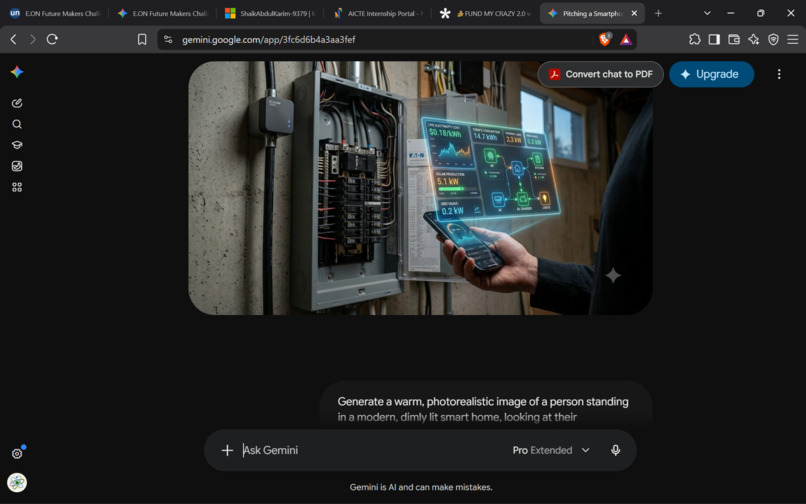
real time application

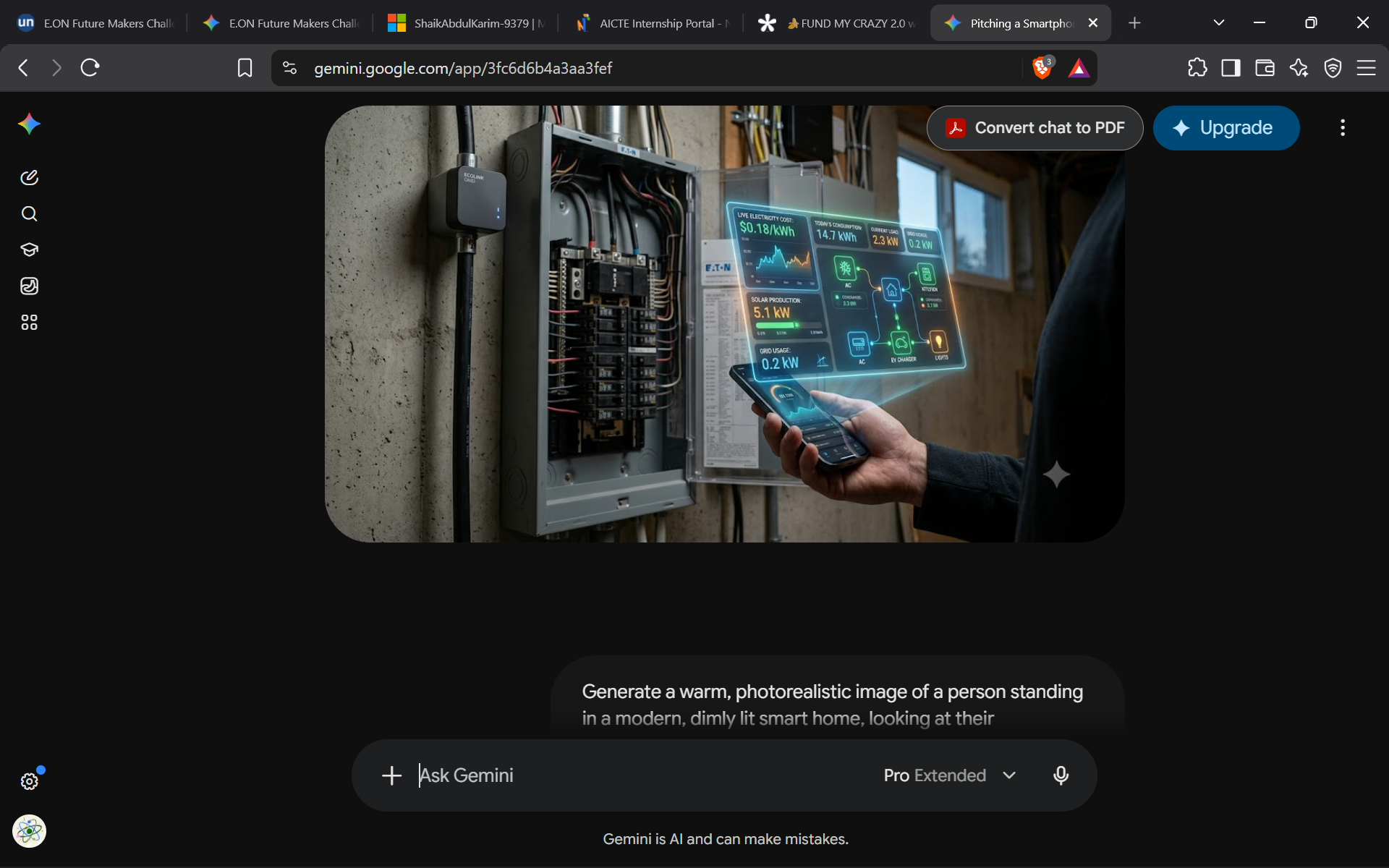
InspirationLook closely at a traditional static electricity meter sitting on the wall of millions of homes, and you will spot a glaring irony: the device built to measure electricity is constantly wasting it. Legacy meters rely on always-on LCD screens, glowing indicator LEDs, and internal mechanical stepper dials that draw continuous parasitic power 24/7 while inflating manufacturing costs and generating e-waste. Meanwhile, homeowners are kept completely in the dark for 30 days at a time until "bill shock" arrives at the end of the month. We named our project PARASYTE as a double entendre: first, its sensor clamps non-invasively onto the host AC wire like a symbiotic organism; second, its core mission is to kill the "parasitic" power drain of legacy utility hardware. We realized that to build the smart meter of the future, we didn't need to engineer a better screen—we just needed the audacity to delete the physical screen entirely and leverage the high-resolution display already sitting in everyone's pocket: the smartphone. What it doesPARASYTE is a frugally engineered, screenless IoT smart energy meter designed to modernize household infrastructure and everyday convenience: Non-Invasive Clamping: A split-core sensor snaps safely around the main live wire inside the distribution box, measuring electricity via electromagnetic induction without cutting or rewiring dangerous high-voltage lines. Real-Time Telemetry: It continuously measures Voltage (V), Current (A), Active Power (W), Frequency (Hz), Power Factor, and total Energy (kWh), streaming this telemetry wirelessly to the cloud. Zero-Screen Mobile Experience: By eliminating the physical display on the wall, the user's smartphone becomes the primary interface, transforming cold kilowatt-hour metrics into an engaging, live dashboard. Dynamic Billing & One-Tap Checkout: The app locks in a "starting point" baseline reading at the start of the billing cycle and continuously subtracts it from the incoming live reading (Units = Current Reading − Previous Reading). It multiplies those units by the local tariff so users can watch their exact monetary cost tick up in real time and settle their utility bill with a single tap. Dual-Mode Offline Resilience: If home Wi-Fi drops, PARASYTE automatically falls back to Bluetooth Low Energy (BLE) so homeowners can still read their meter locally when walking near the distribution board. How we built itWe engineered PARASYTE across a three-tier hardware-to-cloud architecture for a total prototype cost of just ₹1,400 (approx. €15): The Sensing Layer (Hardware): We paired a 100A Split-Core Current Transformer (PZCT-02) with a PZEM-004T (v3.0) AC communication module. The CT clamp captures the alternating magnetic field around the live AC wire, while the PZEM-004T translates that analog signal into factory-calibrated digital readings. The Processing & Transmission Layer (IoT): We interfaced the PZEM-004T with an ESP32-WROOM-32D microcontroller using UART serial communication (TX wired to RX2 Pin 16, RX wired to TX2 Pin 17, powered via a 5V AC-to-DC supply). Using the Arduino IDE in C++ with the PZEM004Tv30 and PubSubClient libraries, we programmed the ESP32 to poll Serial2 every 3 to 5 seconds, package the metrics into lightweight JSON payloads, and publish them over Wi-Fi via the MQTT protocol. The Application & AI Layer (Software): A Firebase Realtime Database ingests the streaming JSON payloads across dedicated /current_usage and /billing_cycle_start nodes. We built a cross-platform mobile application in Flutter that subscribes to Firebase in real time, runs the state-management billing math, integrates Razorpay/Stripe sandbox APIs for frictionless payment processing, and incorporates AI to translate raw usage patterns into conversational energy-saving insights. Challenges we ran intoHigh-Voltage Safety & Phase Isolation: Interfacing with 220V–240V AC mains required strict electrical isolation. During initial testing, we had to ensure the CT clamp enclosed only the Live (L) wire—clamping both Live and Neutral together causes the opposing magnetic fields to cancel each other out, resulting in a zero reading. UART Serial Handshake: Establishing reliable serial communication between the PZEM-004T's internal optocouplers and the ESP32 required precise pin mapping (Serial2 on GPIO 16 and 17) and ensuring stable 5V DC power so the optocouplers could trigger properly. Solving the "Blind Box" Problem During Outages: Because removing the LCD screen leaves no physical readout on the wall, a home Wi-Fi failure could lock users out of their data. We overcame this by implementing a fallback routine utilizing the ESP32's native dual-mode Bluetooth for localized data syncing. Persistent Billing Anchors: Ensuring that a power outage or ESP32 reboot didn't reset the monthly billing cycle required decoupling the billing math from volatile microcontroller RAM and anchoring the timestamped baseline readings permanently in the cloud database. Accomplishments that we're proud ofUltra-Frugal ₹1,400 Bill of Materials: Building a complete, working smart meter architecture using an ESP32 (₹400), PZEM-004T (₹350), 100A CT Sensor (₹300), 5V supply (₹150), and enclosure/wires (₹200)—slashing traditional €100+ smart meter CAPEX by roughly 85%. Zero Parasitic Screen Drain: Proving that eliminating always-on LCDs and mechanical dials can save megawatts of wasted grid electricity when deployed at a city-wide scale. Rapid, Zero-Cut Installation: Designing a plug-and-play hardware clamp that can be installed in minutes without cutting main wires or causing prolonged household power outages. Seamless Hardware-to-FinTech Pipeline: Taking an invisible magnetic field around a copper wire and turning it into a live, ticking financial currency with one-tap digital checkout. What we learnedThe Power of Subtractive Engineering: Innovation isn't always about adding more sensors or bigger screens; sometimes the most impactful engineering decision is deleting the most expensive, power-hungry component and letting existing consumer hardware do the heavy lifting. End-to-End IoT Telemetry: We gained hands-on mastery over industrial AC power sensing, asynchronous UART serial communication, lightweight MQTT pub/sub messaging, and real-time cloud synchronization. Privacy & Regulatory Alignment: Exploring international smart grid standards (like Germany's BSI TR-03109) showed us how operating as a minimal Home Area Network (HAN) bridge and keeping the interface on a user's personal smartphone naturally respects consumer privacy and simplifies compliance. What's next for PARASYTEEdge AI & Non-Intrusive Load Monitoring (NILM): Training machine learning models on the high-frequency current and power-factor signatures captured by the PZEM-004T so PARASYTE can identify individual appliances (distinguishing an air conditioner from a geyser or refrigerator) using only a single clamp at the main breaker. Conversational AI Energy Advisor: Deepening our AI integration so users can chat directly with PARASYTE via voice or text to get personalized load-shifting recommendations, anomaly alerts, and automated monthly budget targets. Custom Flame-Retardant PCB & Self-Harvesting Power: Transitioning from a breadboard setup to a compact, industrial-grade custom PCB inside a DIN-rail mountable enclosure, while exploring trickle-charging via magnetic induction from the CT clamp itself to make the hardware 100% self-powered. Smart Grid & Micro-Payment Scaling: Partnering with utility providers and residential complexes to pilot multi-meter deployments featuring automated prepaid billing and solar net-metering support.

Log in or sign up for Devpost to join the conversation.