-
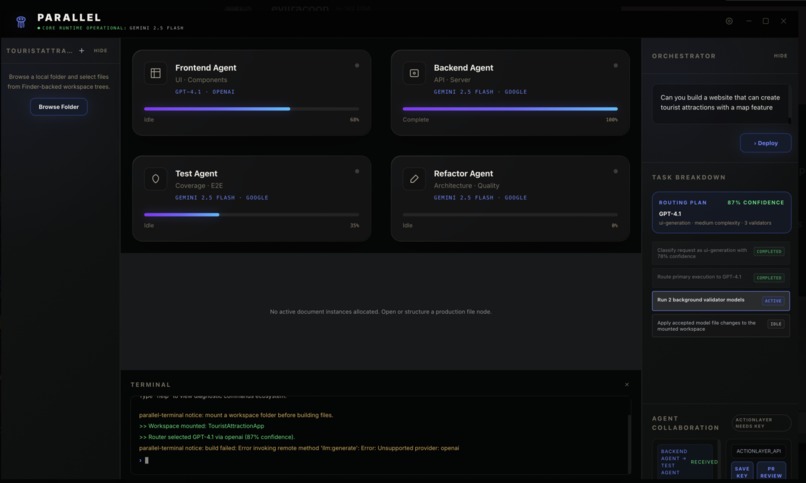
Homepage
-
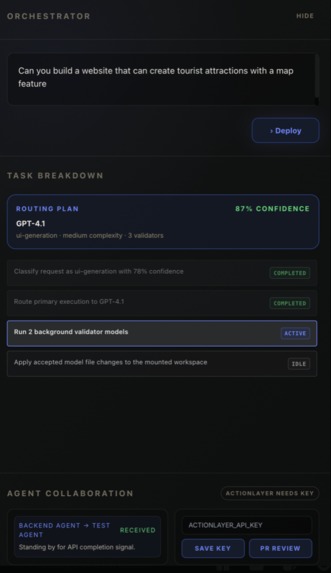
API Keys Settings
-
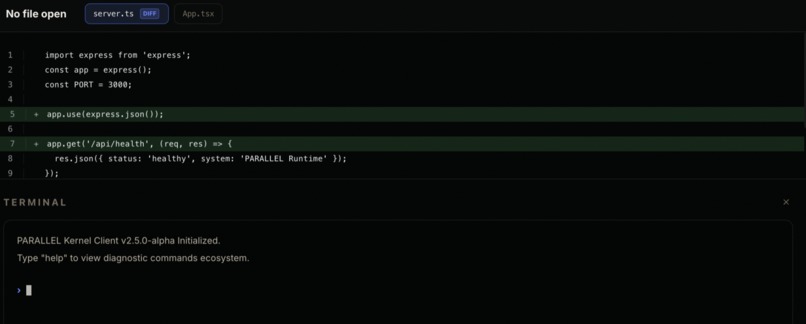
Interactive Terminal
Inspiration We were exhausted by the constant context switching required during deep engineering sessions. Jumping back and forth between a code editor, a separate terminal window, an orchestration manager, and fragmented AI chat panels kills focus and destroys developer velocity. We wanted a single, cohesive canvas that unifies the developer, the code, and autonomous AI agents in one immersive space where visual noise collapses and emotional immersion scales.
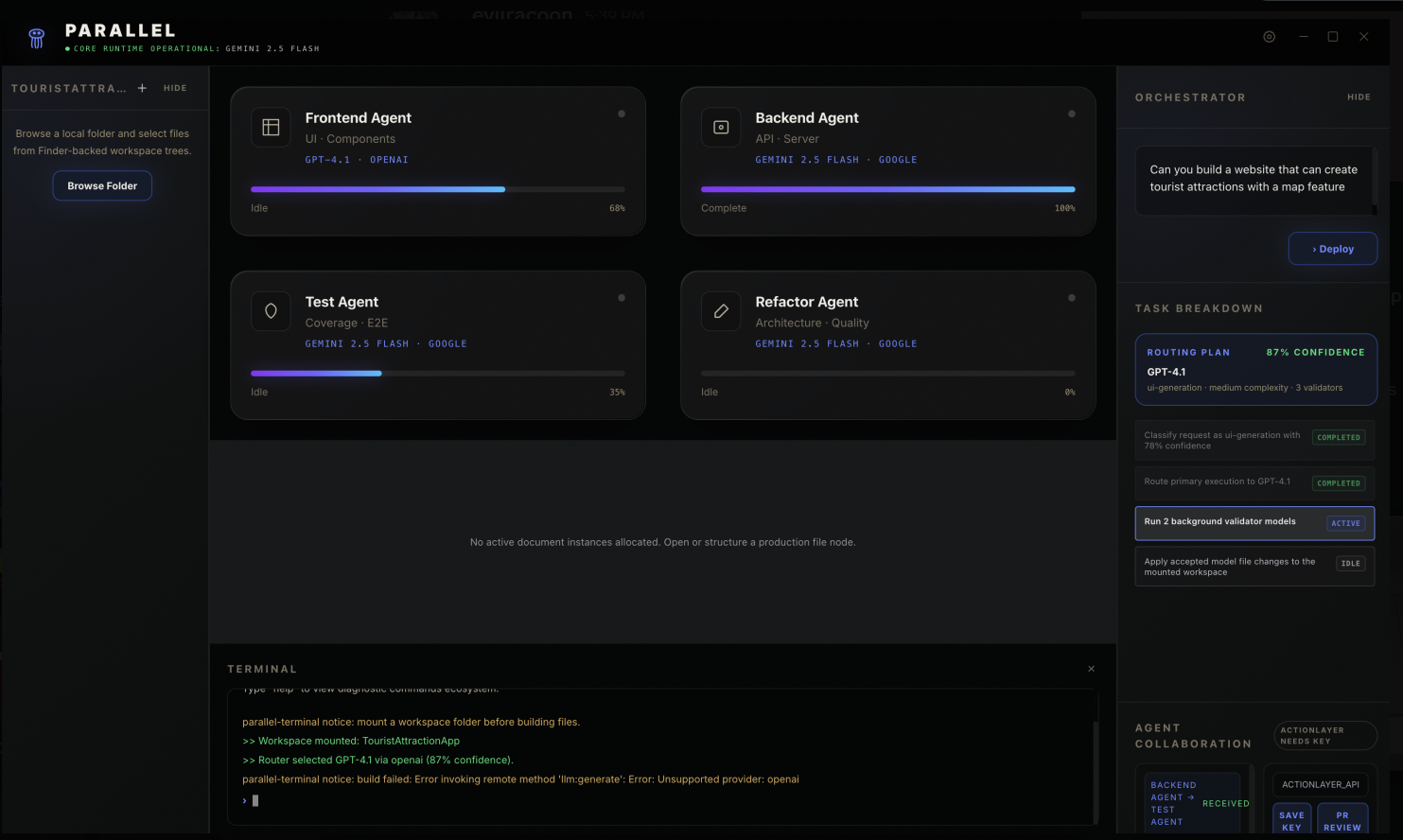
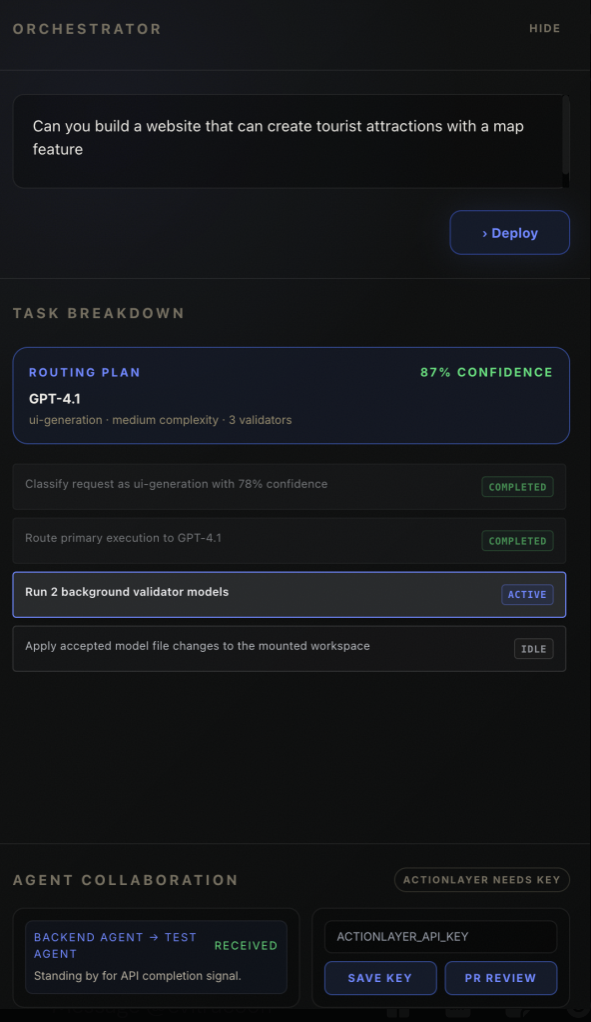
What it does Parallel is an advanced, autonomous multi-agent desktop development runtime. It takes user prompts, breaks them down into interactive task checklists, and dynamically coordinates a network of specialized agents—Frontend, Backend, Test, and Refactor.
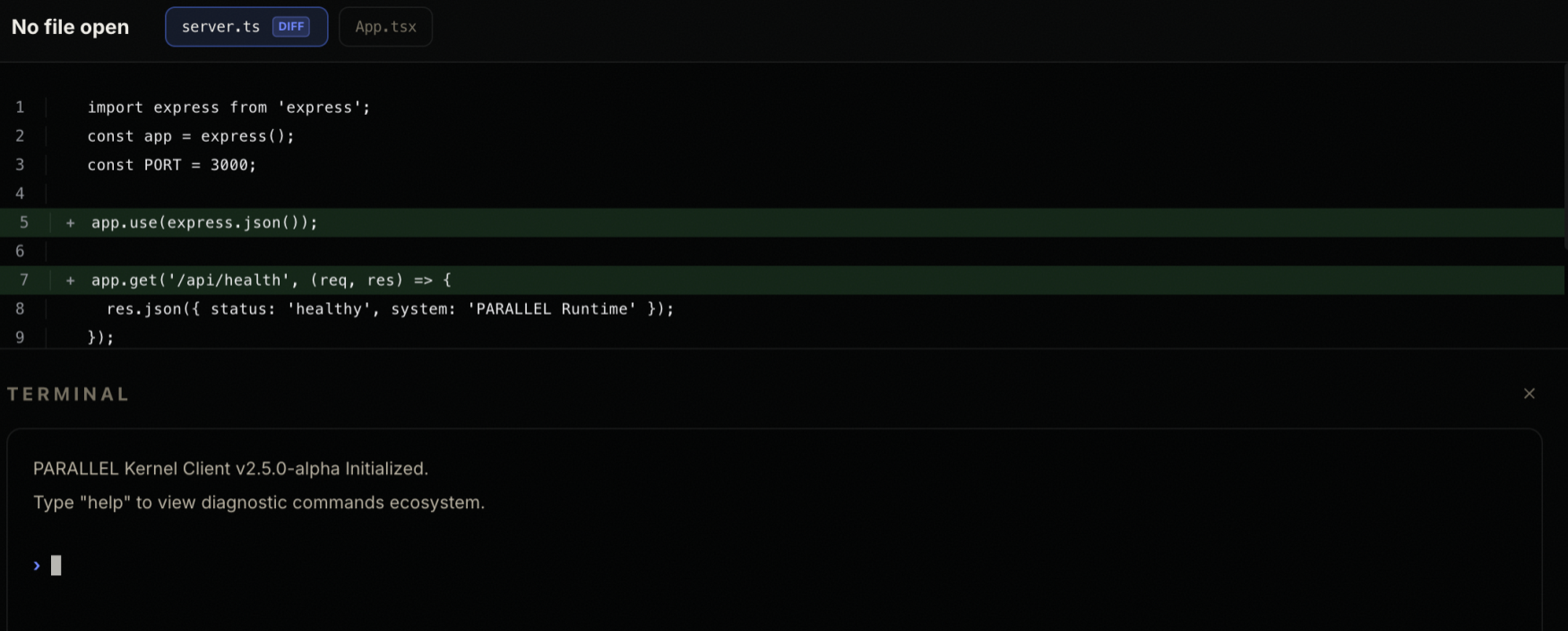
Instead of just pretending to work or displaying text strings, Parallel features a dedicated Action Layer that operates as an explicit interception layer to execute real operating system tasks. It writes code directly into a virtual file system tree, runs software test suites inside a simulated background terminal shell, and spins up local hosting process daemons to launch live development servers.
How we built it The Core Brain: We used React and TypeScript to build a centralized AppContext state engine that serves as a singular source of truth, synchronizing all panels, files, and agent milestones across the screen in real-time.
The Design System: We crafted a premium Deep Nocturnal Slate theme, utilizing heavy backdrop blurring and low opacity pastel green and red line overlays to simulate a beautiful, high contrast visual diff view directly behind modified code files.
The Action Layer: We engineered an interception layer that parses structured JSON payloads emitted by the active agents and routes them to real life file system handlers, terminal command simulators, and background process daemons.
Challenges we ran into One of the toughest hurdles was handling live data streams without causing massive UI lag or screen flicker. Forcing a code editor to re render every single time a background agent streamed an operational thought block or updated a file line row was incredibly taxing on the browser. We solved this by designing a text buffer system in memory that glues text blocks together before updating the view, alongside localized line indexing for our pastel diff highlights.
Accomplishments that we're proud of We are incredibly proud of building a fully working, zero placeholders Action Layer that connects abstract AI reasoning with tangible file, terminal, and process operations. We also succeeded in keeping the app completely private and secure by enforcing an initialization wizard gate that stores all user API keys directly within the local browser localStorage, ensuring no server side credential exposure touches your sensitive keys.
What we learned We learned how to deeply manage complex, fast changing parent state structures in React without compromising application performance. We also learned the importance of visual design hierarchy: balancing workhorse engineering typography like JetBrains Mono with sophisticated geometric layouts to separate machine UI text from fluid structural components.
What's next for Parallel We want to expand Parallel beyond the browser sandbox by compiling the entire ecosystem into a native desktop application wrapper using Electron. This will allow our custom Action Layer to communicate directly with actual native operating system directories, letting the AI agents interact with local git repositories, install real npm packages, and deploy live production code straight to cloud servers from your desktop.
Built With
- electron
- googleai
- react
- typescript
- vite


Log in or sign up for Devpost to join the conversation.