-
-
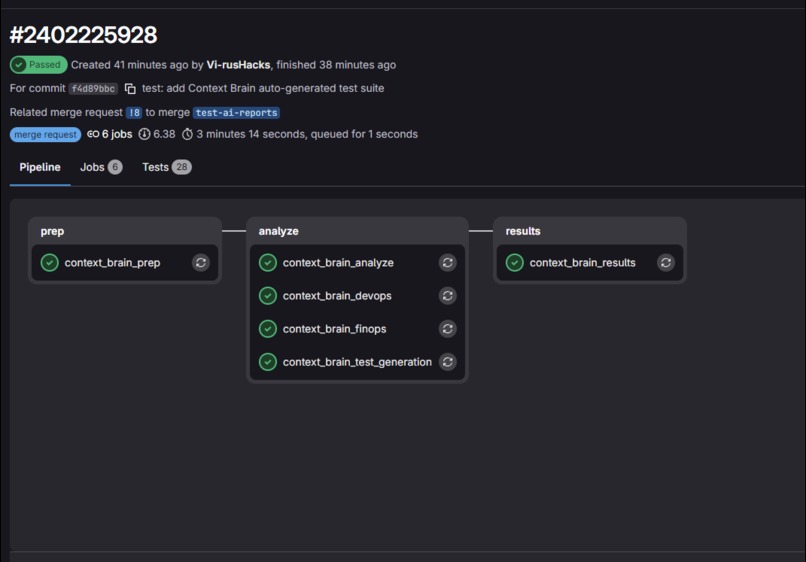
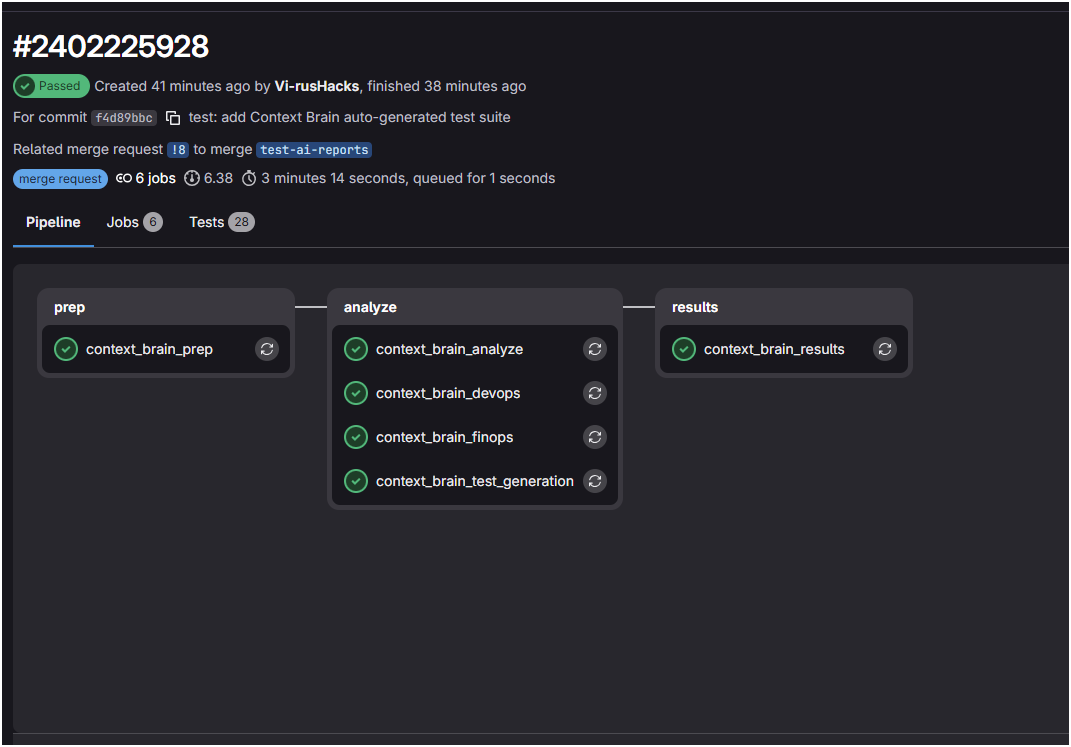
Entire_Gitlab_Agents_Pipeline
-
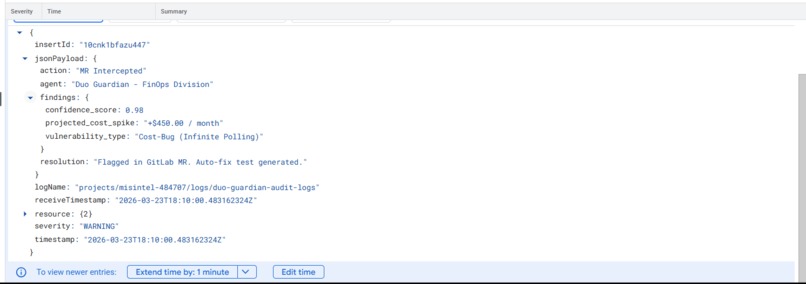
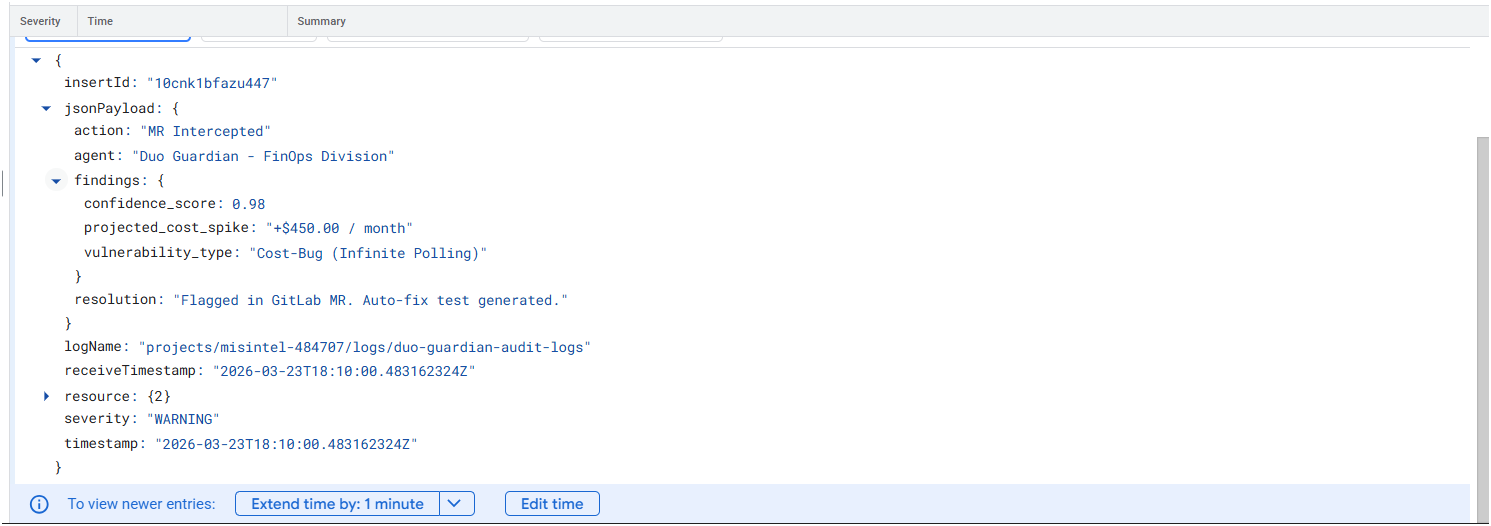
GCP_Logs_Warning
-
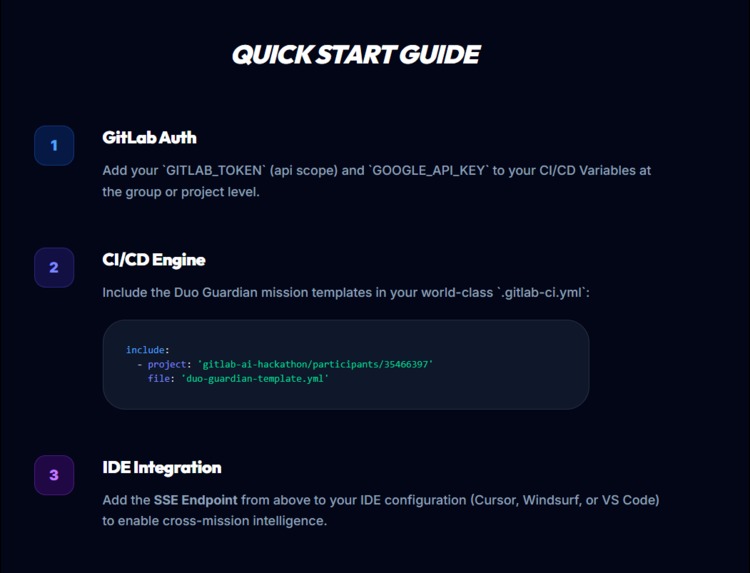
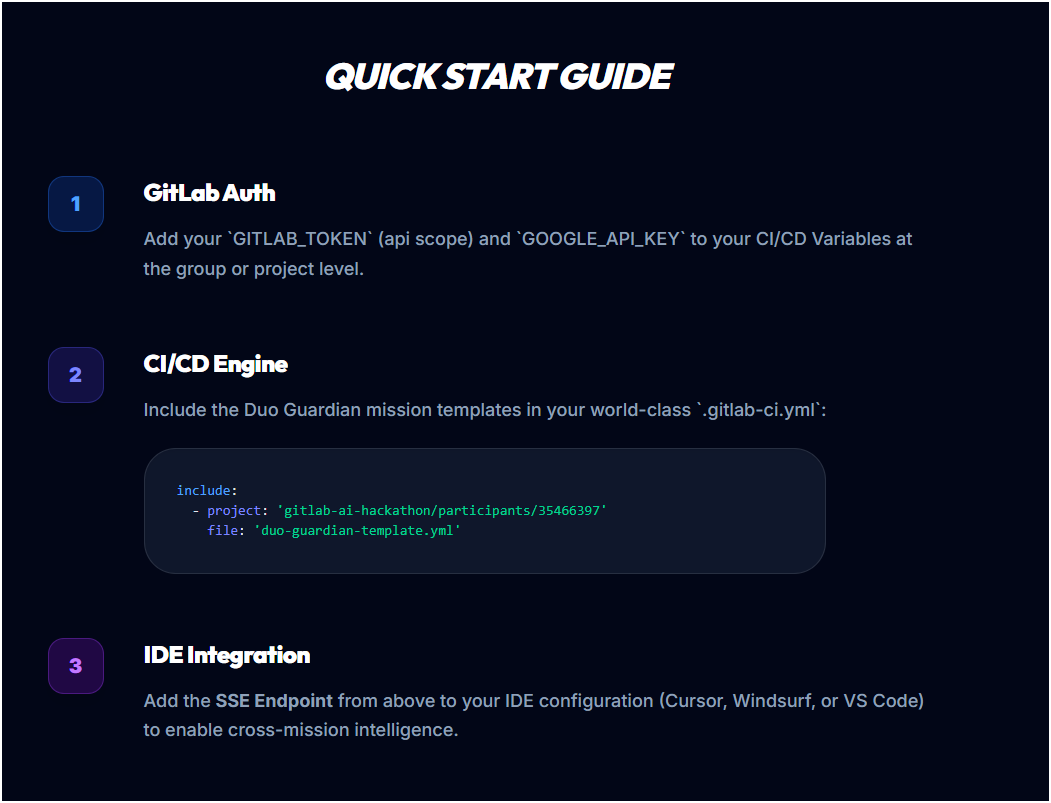
Plug_N_Play_Setup
-
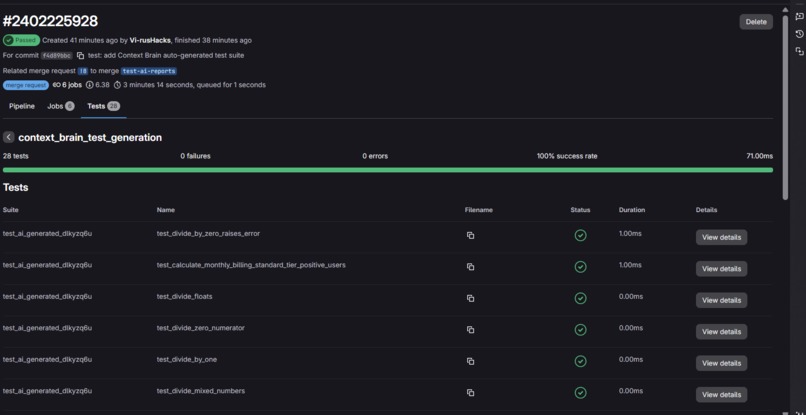
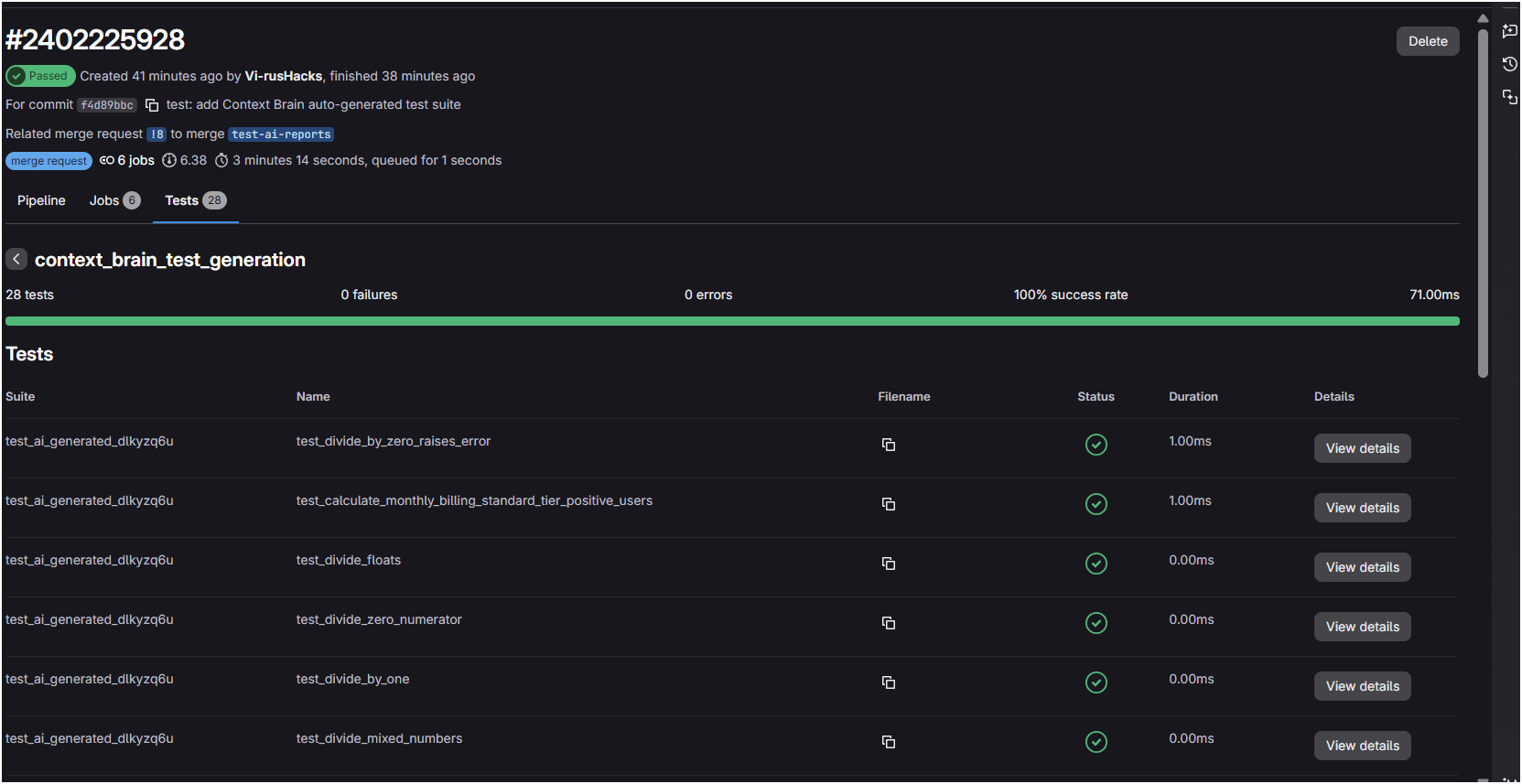
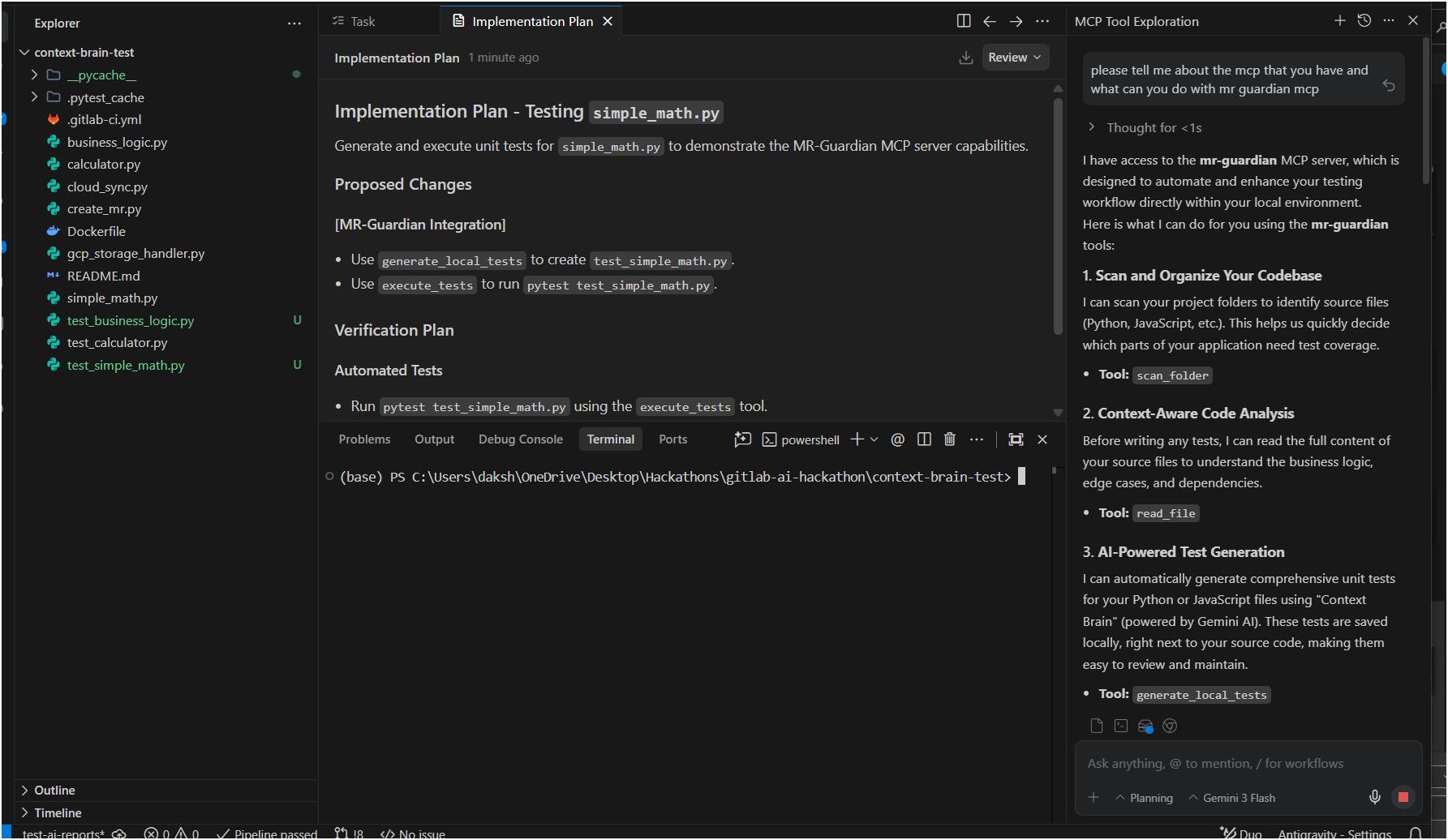
Test_Cases_created_by_agent_and_analysis_of_the_results
-
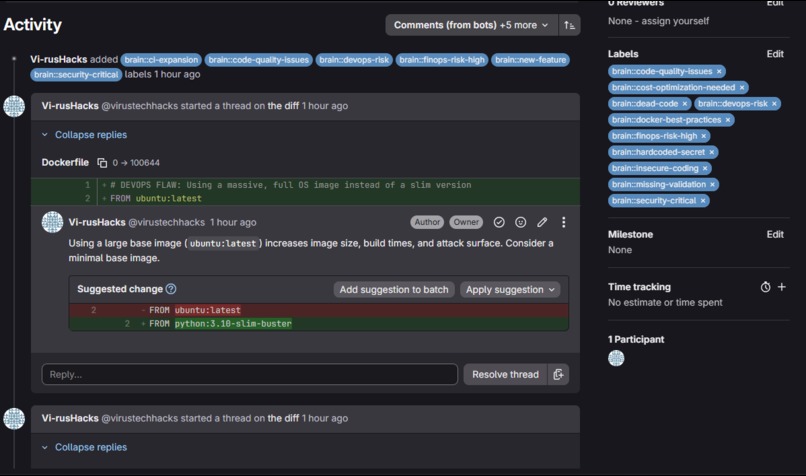
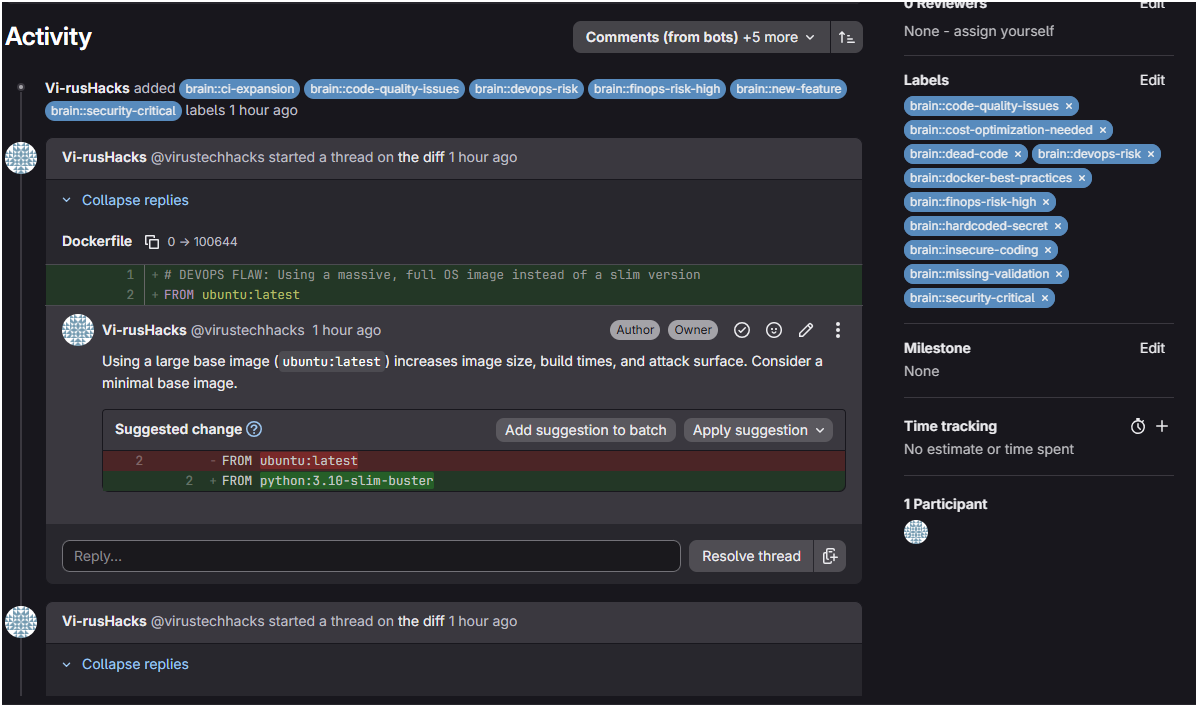
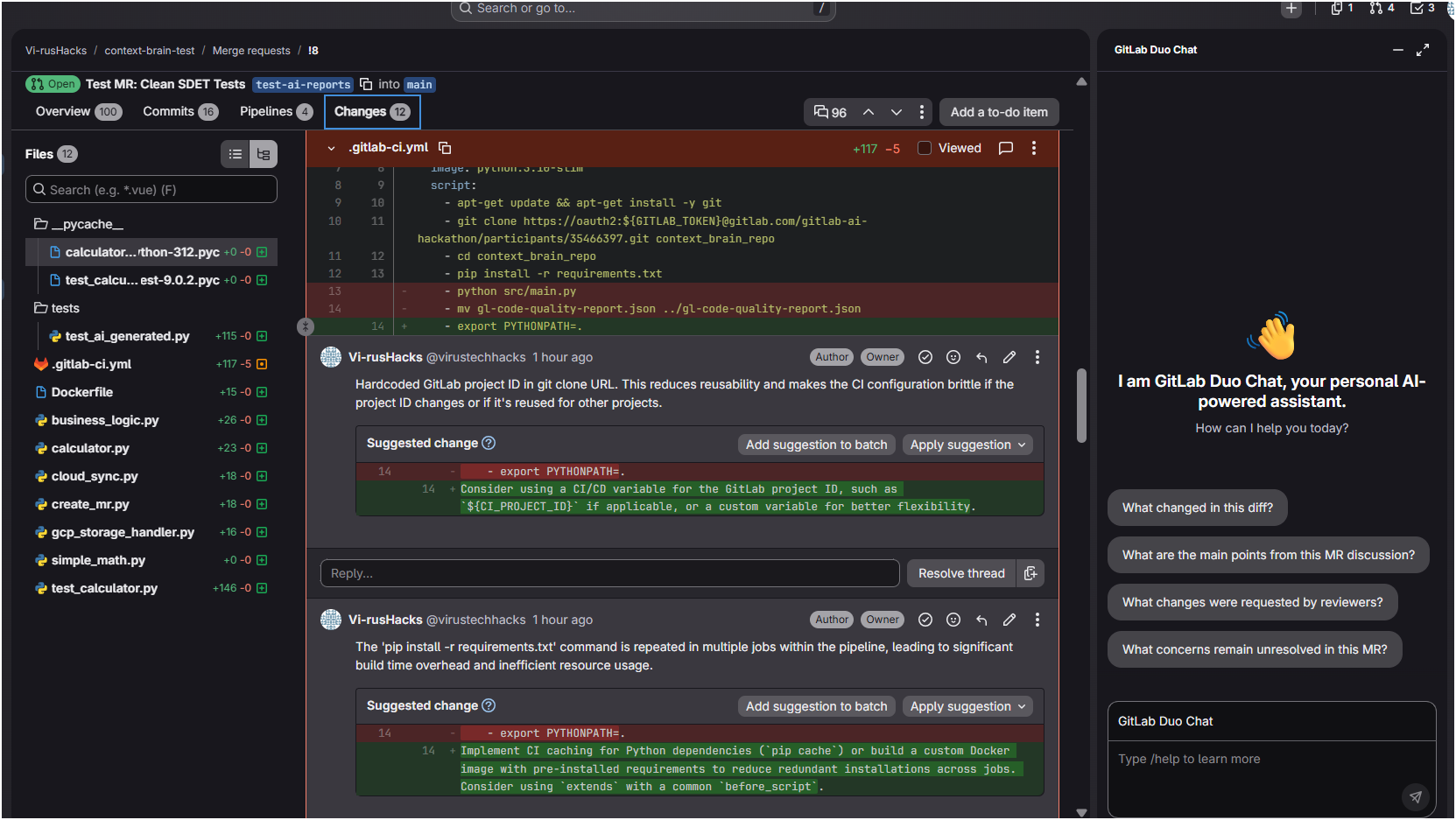
Annotations_on_files_for_catching_bugs_and_fixes
-
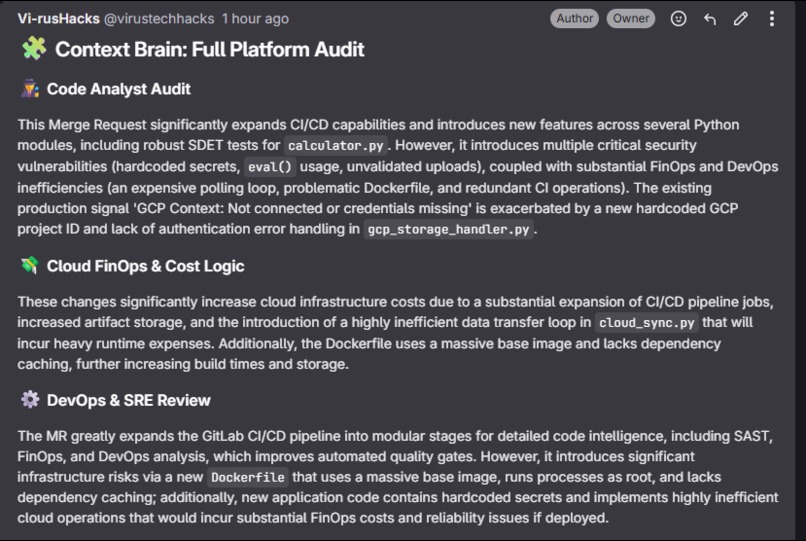
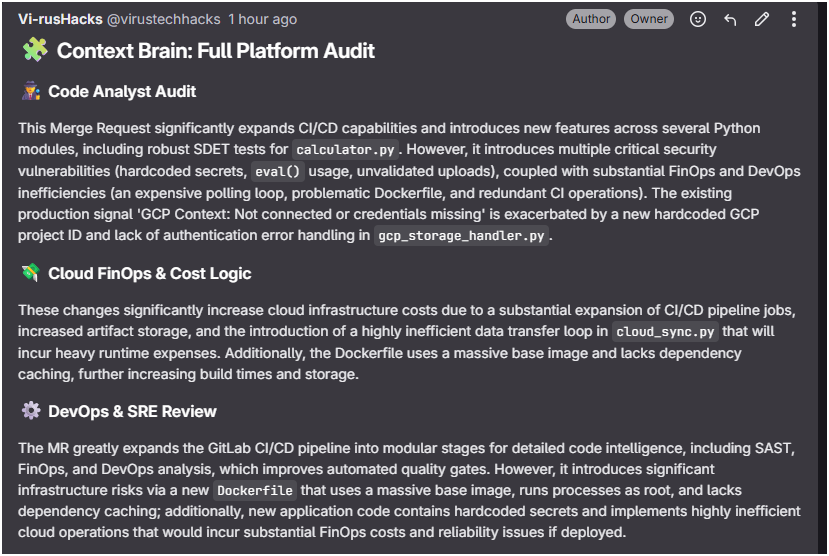
Full_Report_Pipeline_Overview
-
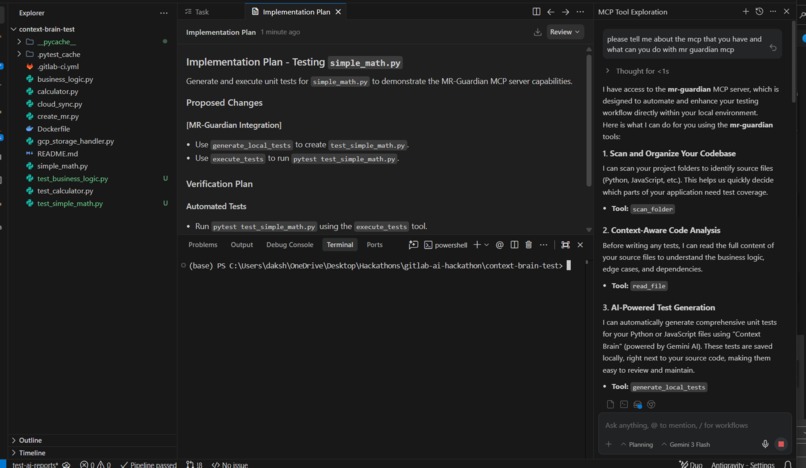
Local_MCP_Connection
-
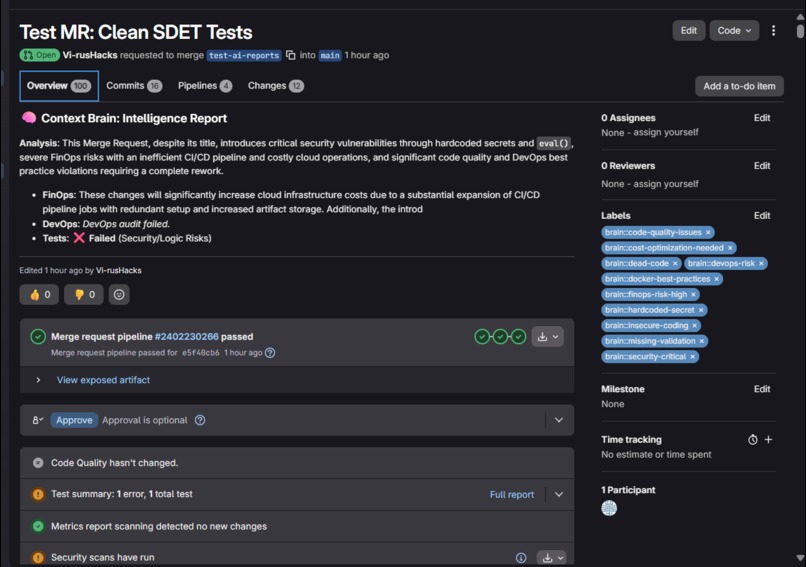
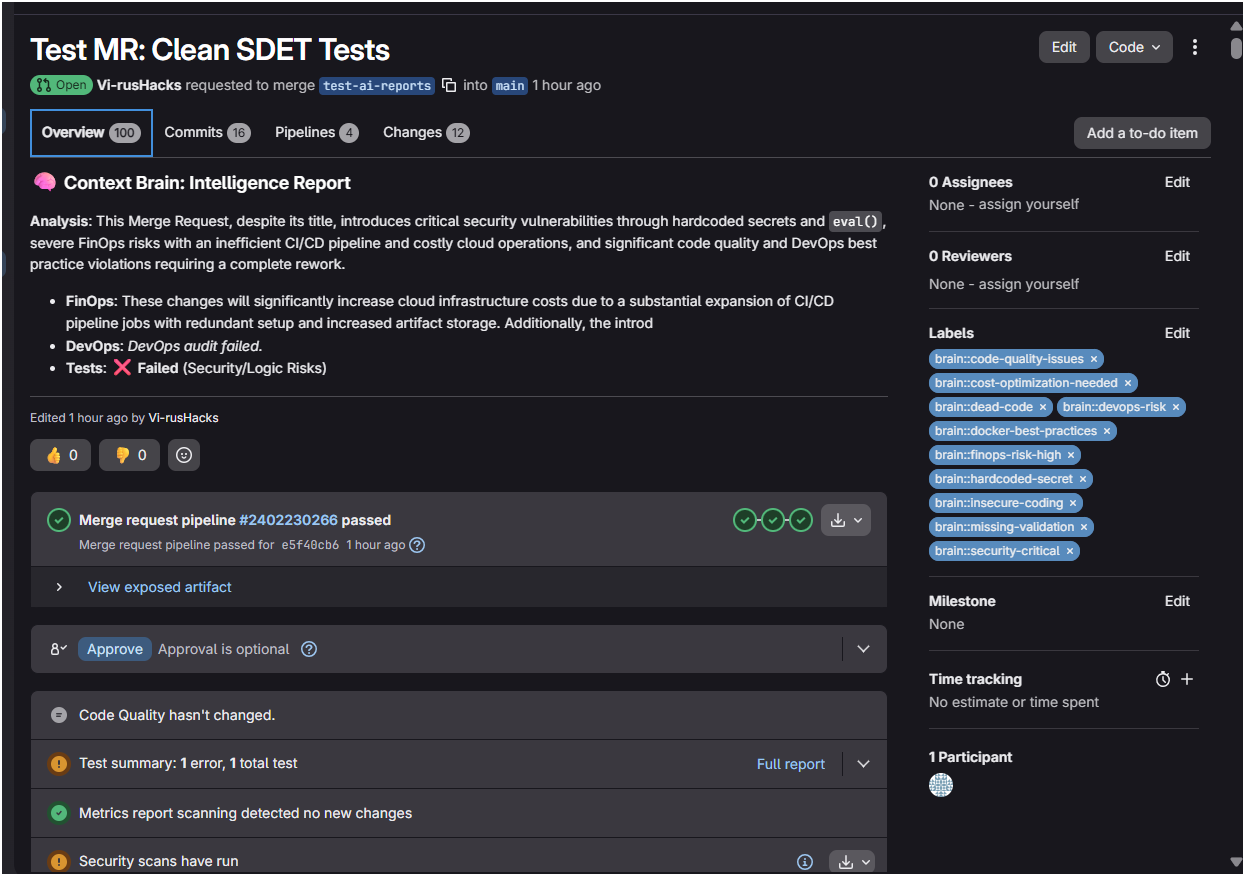
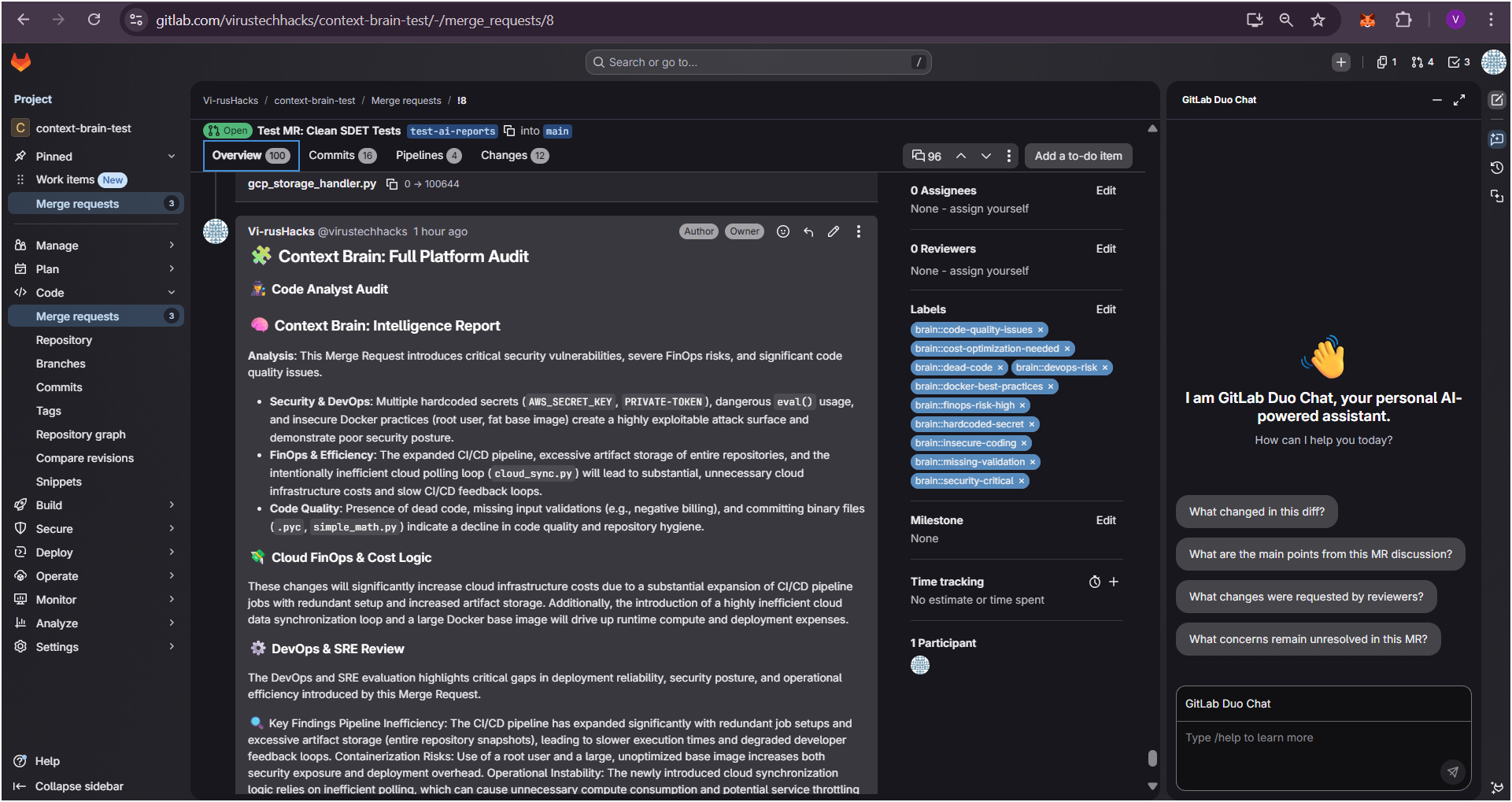
MR_Overview_with_Tags
-
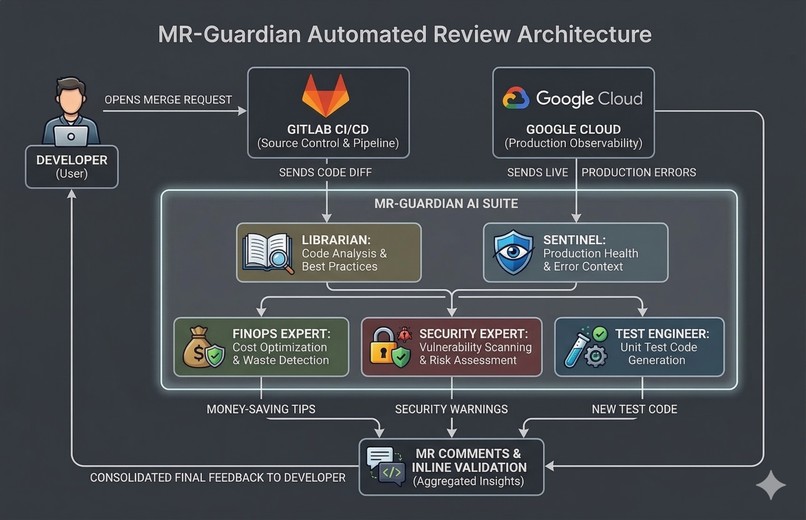
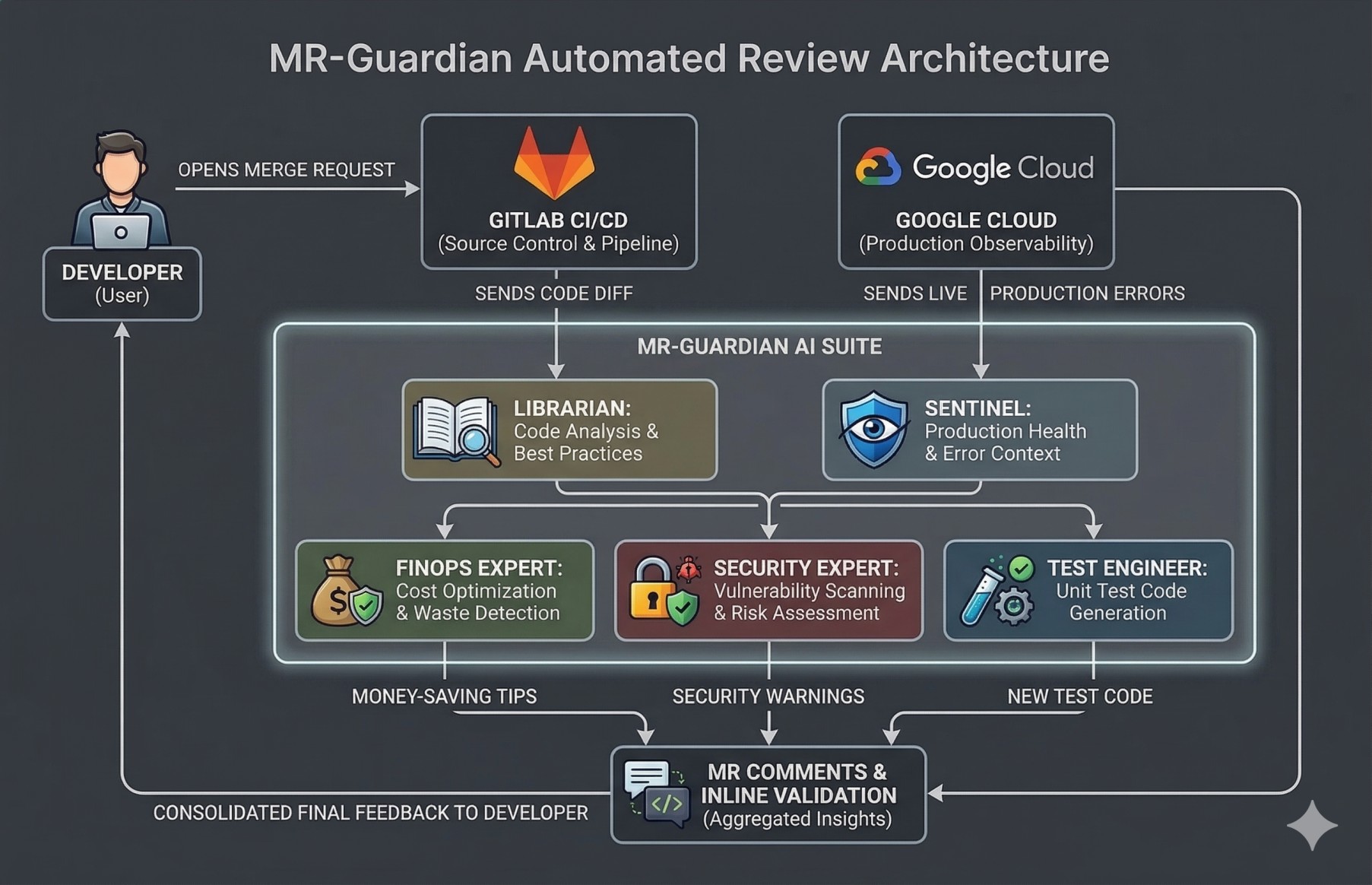
System_Architecture_And_Process_Flow
-
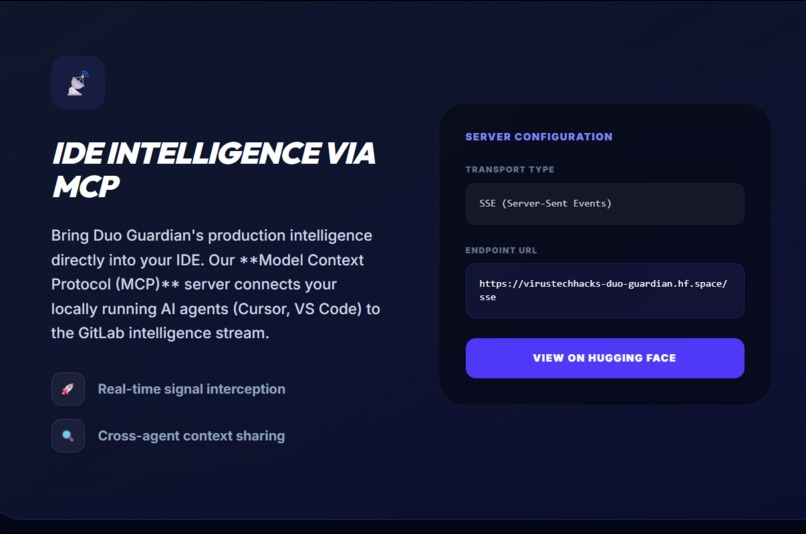
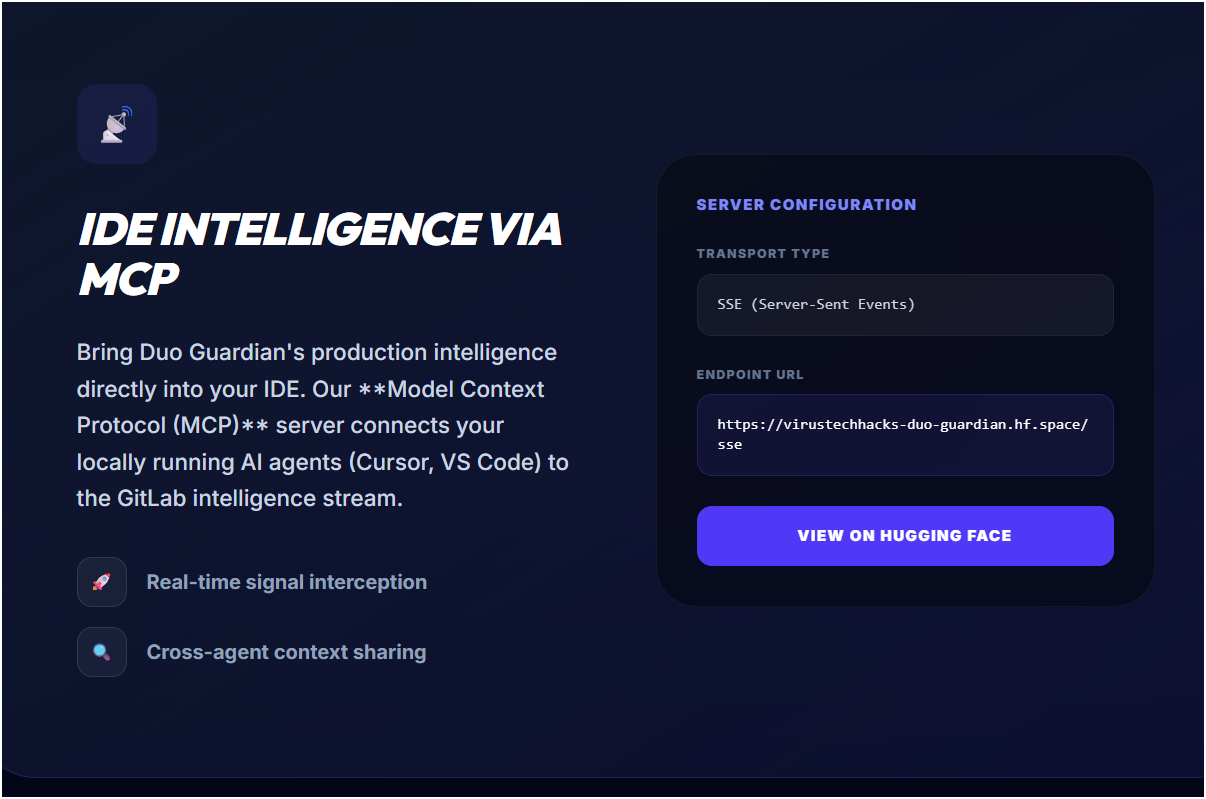
MCP_Integration
-
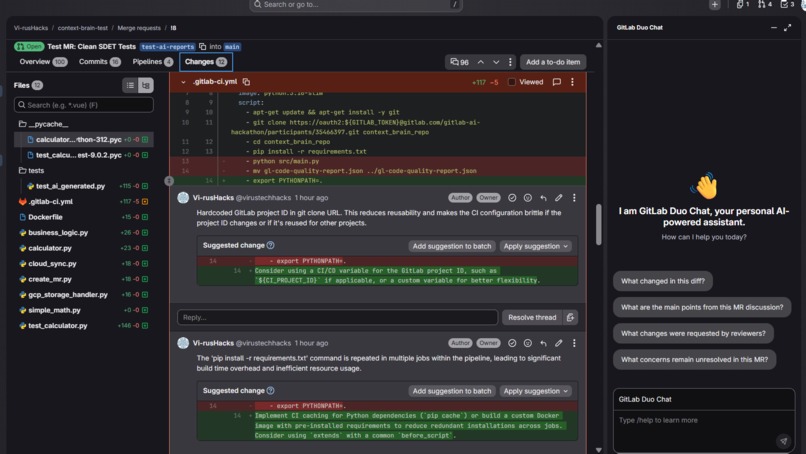
Git_Diff_Analysis
-
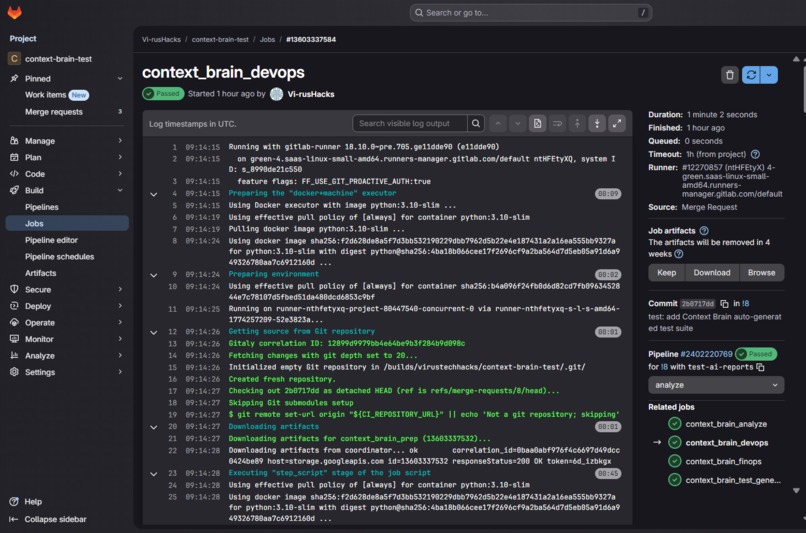
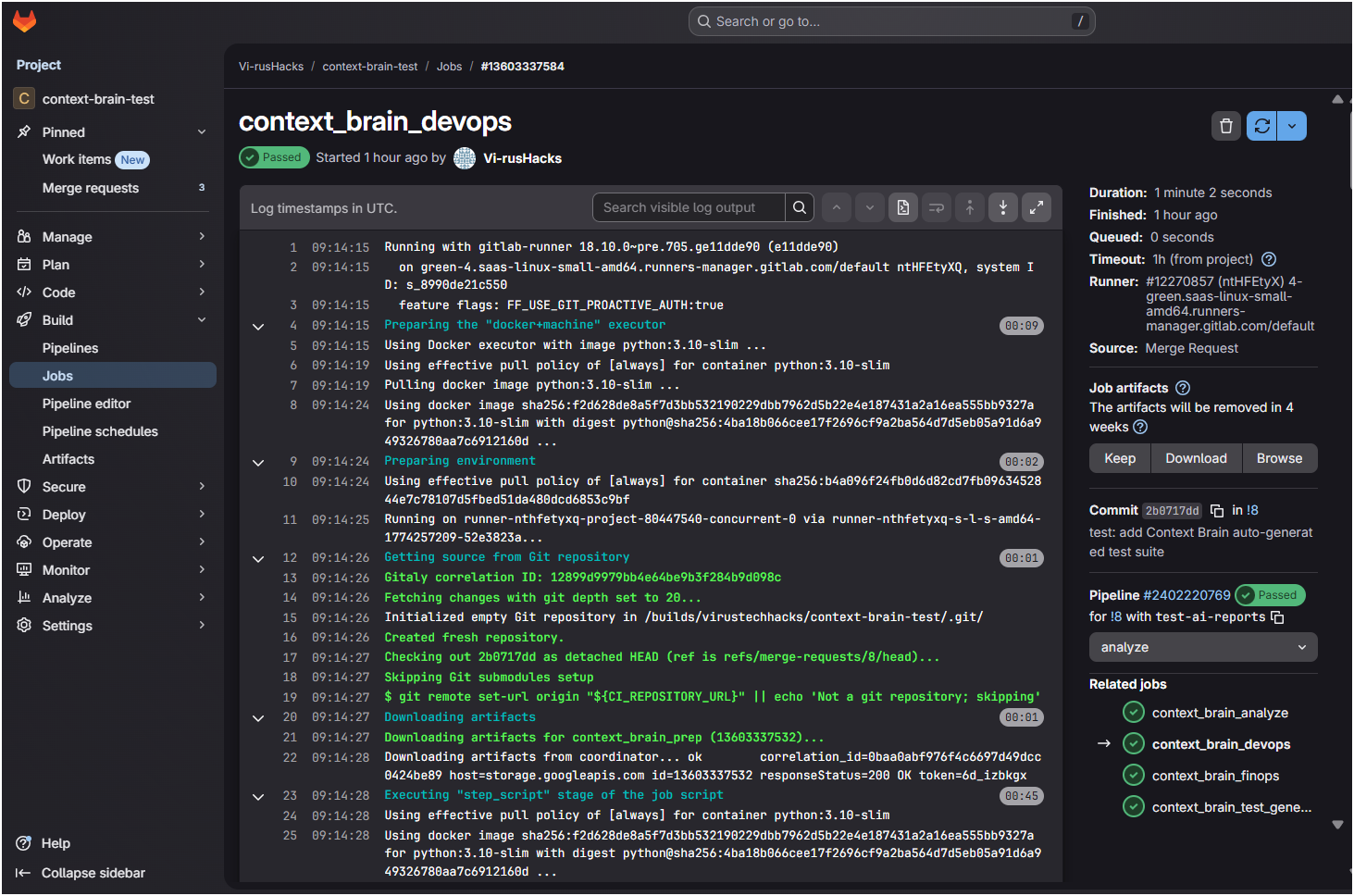
DevOps_Analysis
-
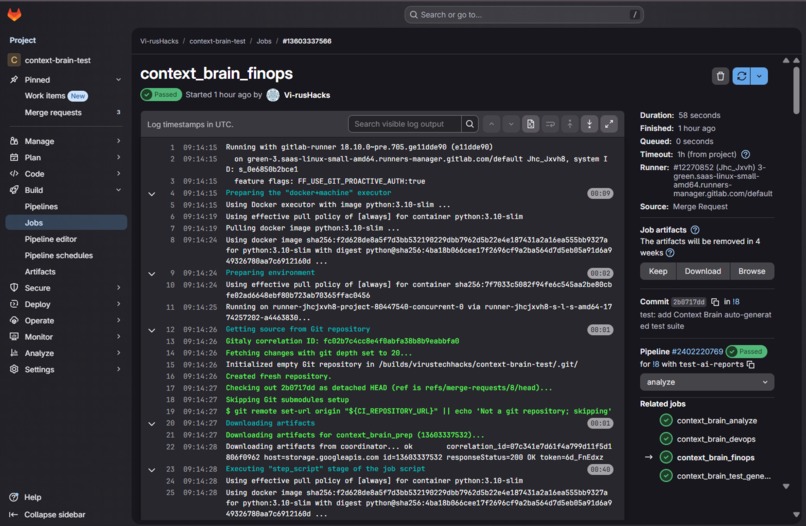
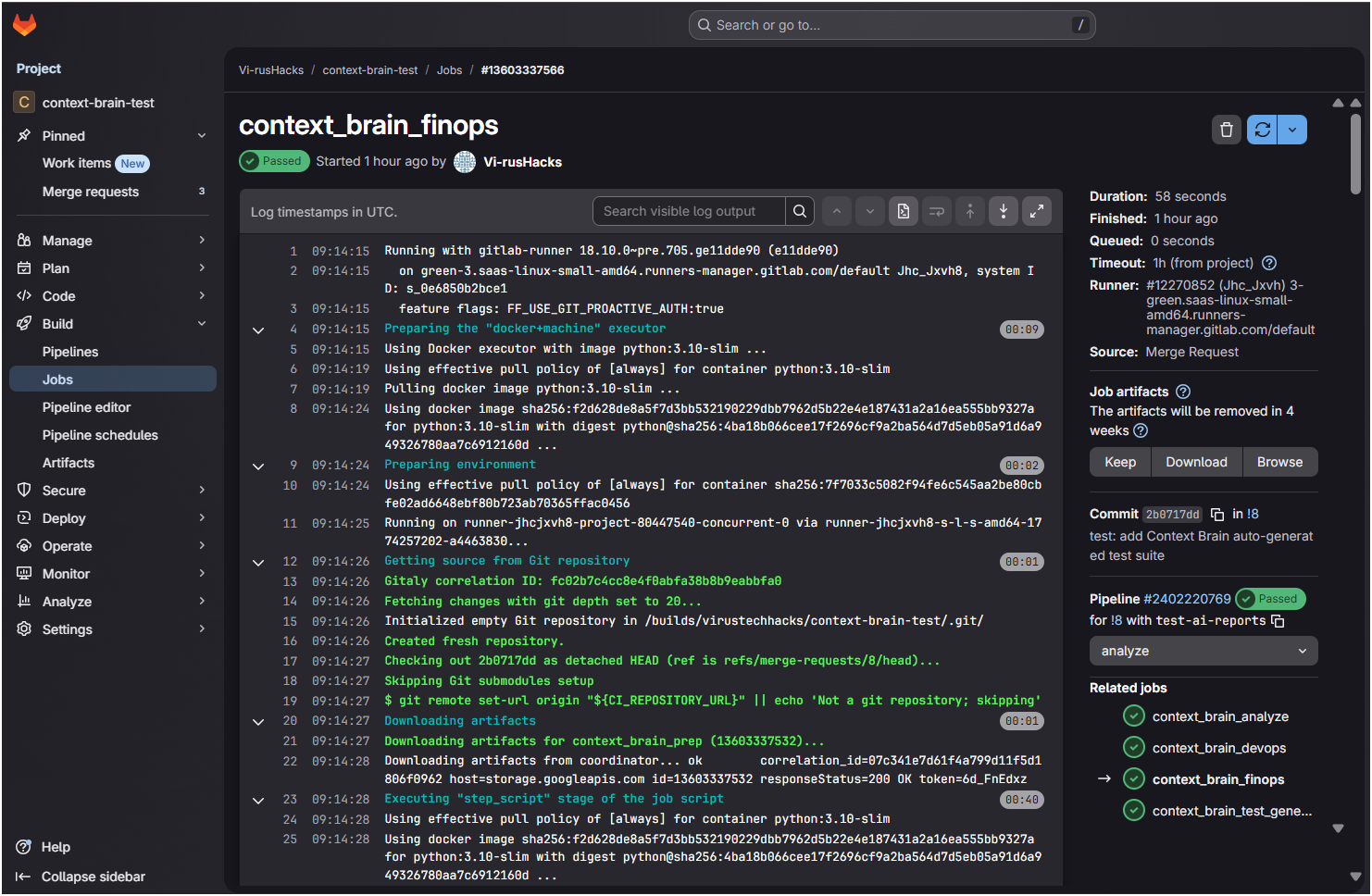
FinOps_Analysis
-
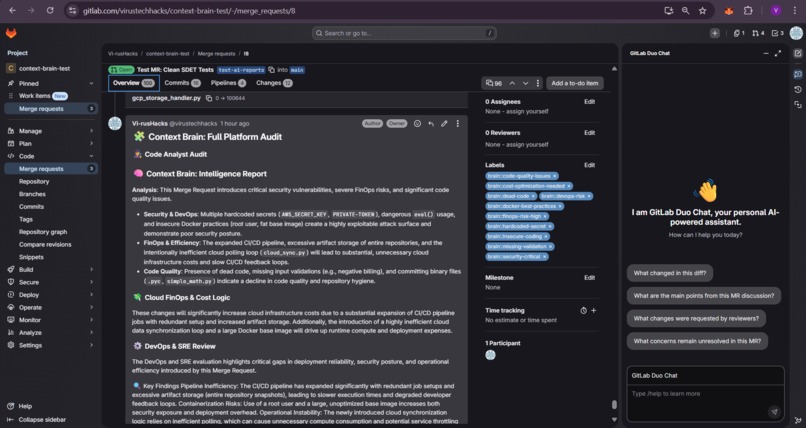
Pipeline_Report
Parallax: The Autonomous DevSecOps Lifecycle Guardian
Parallax is a self-governing production intelligence platform that bridges the gap between source code logic and the reality of cloud operations. It functions as an autonomous sentinel, evaluating every change request against live production signals before a single line is merged.
Inspiration
Most developer teams have experienced this: code is reviewed, tests pass locally, the merge goes through — and then something breaks in production. Not because the logic was wrong in isolation, but because it was incompatible with reality. An API call that works fine in CI creates an infinite polling loop at scale. A database query that looks clean in a diff starts timing out when it hits an 800ms production latency. A secret gets hardcoded in a utility function that reviewers skip over.
These are not bugs that linting tools or static scanners catch. They sit in the gap between what the code does and what the infrastructure actually requires. This is the "MR Blind Spot."
The team built Parallax to close that gap by giving every change request access to the same context that a senior engineer would want: what the production environment actually looks like right now, what the cloud signals are saying, and whether the new logic has been independently tested and verified before it touches the main branch.
What it does
Parallax is a multi-domain DevSecOps platform that performs four categories of analysis on every change request, autonomously, in parallel.
Financial Operations Analysis The FinOps module analyzes the code diff for patterns that translate into cloud cost increases. This includes identifying inefficient looping constructs that generate excessive API calls, detecting unoptimized data payloads or transfer patterns, and flagging resource instantiation patterns that would spike billing. The output is a direct cost-impact estimate tied to the change, not a generic warning.
Site Reliability and Infrastructure Audit The SRE module connects to the live production cloud environment and fetches recent error group activity, failure rates, and infrastructure signals from Google Cloud Error Reporting and Cloud Logging. It then cross-references those signals against the incoming code diff. If the new code modifies a code path that is already experiencing elevated error rates in production, the system flags it immediately. This is not a static rule match — it is a live context comparison.
Security and Code Quality Review The security analysis module performs a context-aware review of the diff, looking for hardcoded secrets, risky logic patterns, and vulnerabilities that standard SAST tools miss because they lack environmental context. When critical or high-severity issues are found, the system generates a formal SAST artifact and a Code Quality report in formats natively understood by CI/CD dashboards. It also creates inline review threads with specific, line-level code suggestions directly in the pull request interface.
Automated Quality Assurance and Test Generation The SDET module generates executable unit test suites for the new logic introduced in the change request. It does not just suggest test code — it executes those tests in a local sandbox and evaluates the exit code. If the tests pass, the module autonomously commits the verified test file to the source branch. If the tests fail, the system marks it as a critical failure and can halt the pipeline. This represents a genuine zero-trust approach to automated testing: the system proves its own work before taking action.
Developer IDE Integration via MCP A Model Context Protocol server runs locally inside the developer's IDE — specifically tested with Cursor and VS Code. This brings the same production-intelligence tooling to the pre-commit phase. Through the MCP interface, a developer can scan any local folder for testable files, read file contents for inspection, generate full unit test suites for individual files, and execute those tests immediately against their local environment. This compresses the feedback loop from minutes to seconds.
How it was built
The orchestration layer is built on LangGraph, a stateful graph execution framework for multi-agent systems. The decision to use LangGraph over a simple chain-based pipeline was deliberate. In an autonomous system that touches production infrastructure and commits back to source control, consistency and determinism are not optional. LangGraph provides a state machine where each agent operates as a dedicated node, receives only the context it needs, and contributes structured output to a shared state object. This prevents context drift, reduces hallucination risk, and makes the system's logic inspectable.
The pipeline stages are:
The Librarian node fetches the full change request bundle from the version control system. It applies smart filtering to strip binary files, lock files, and image assets from the diff before passing the context to downstream agents, conserving the reasoning model's context window for code that actually matters.
The Cloud Sentinel node connects to Google Cloud APIs and retrieves current production error groups from Cloud Error Reporting. This live data becomes part of the shared agent state and is available to all downstream reasoning nodes.
The Reasoner node is the primary synthesis layer. It takes the code diff, the CI log data from the last failed pipeline job, and the GCP production signals, and generates a structured intelligence report including code quality issues with file-level and line-level precision, severity classifications, label recommendations, and a one-sentence MR summary. The output is strict JSON, and the parser handles markdown fence stripping from model output gracefully.
The FinOps and DevOps nodes run as parallel audits that each contribute focused, domain-specific analysis to the shared pipeline state. The FinOps node estimates direct infrastructure cost impact. The DevOps node flags reliability risks and CI/CD configuration concerns.
The SDET node generates pytest suites against the new logic, executes them locally using subprocess with appropriate PYTHONPATH configuration, and evaluates the results. A guardrail layer rejects any test code that contains mocking constructs, which would indicate the model hallucinated untestable logic. Only clean, directly executable test code is accepted.
The Assembler node collects the outputs from all prior stages, constructs a premium HTML dashboard report, injects a structured summary into the pull request description using delimiter blocks that prevent duplicate injection on reruns, posts a detailed Markdown audit as a threaded comment, and generates native metrics artifacts for the CI pipeline widget.
The underlying intelligence is powered by Gemini 2.5 Flash, used both for the synthesis and domain-specific audit prompts. Each prompt is highly structured and role-specific, which significantly improves output precision compared to general-purpose queries.
The MCP server is implemented using the FastMCP framework and supports both stdio and SSE transport modes, making it compatible with both local IDE tooling and remote deployments.
Challenges encountered
The most significant technical challenge was context window management. A large change request can contain thousands of lines of diff. When that is combined with CI pipeline logs and GCP error telemetry, the total context can easily exceed practical reasoning limits. The solution involved building a multi-layer filtering system that strips irrelevant file types before tokenization, truncates log data to the most recent and relevant entries, and stages the context across multiple focused prompts rather than attempting a single monolithic analysis.
A second challenge was prompt reliability for the test generation node. Early versions of the SDET module frequently produced test code that included mocking constructs, which caused local execution to fail unpredictably. The resolution was a strict rule-based filtering layer that rejects any generated test suite containing patch decorators or MagicMock references before execution is even attempted. This made the zero-trust verification model reliable in practice.
Managing idempotency in the Assembler node was also non-trivial. Because the pipeline can run multiple times against the same pull request, the description injection logic needed to detect and replace prior injections rather than appending duplicates. This was solved by wrapping injected content in delimiter comments and applying a cleanup regex before each new injection.
Accomplishments that we're proud of
The zero-trust test verification model works end-to-end. The system generates tests, runs them independently, and only commits them to the repository when they pass. This is not a proof of concept — it is a production-capable pattern that sets a meaningful quality bar.
The parallel agent architecture successfully reduces the total pipeline latency compared to sequential analysis. The FinOps, security, and SRE audits run concurrently against shared context, which means the total time is roughly bounded by the slowest individual analysis rather than their sum.
The MCP server brings the same tooling stack to the local development environment without duplication. A developer working in Cursor can run the same test generation and execution workflow that the CI pipeline runs, against the same intelligence layer, before the code is even committed.
The SAST and Code Quality report generation integrates natively with CI/CD dashboard standards. The output artifacts conform to established report schemas, which means the results surface in the platform's native security and quality interfaces without requiring a separate dashboard or plugin.
What we learned
The most important technical lesson was that context quality matters far more than model size or prompt cleverness. The system's output is only as good as the signal it receives. When the diff is clean, the GCP data is fresh, and the CI logs are relevant, the analysis is precise and actionable. When any of those inputs are noisy or missing, output quality degrades immediately. Building robust data collection and filtering — before the model ever sees the data — turned out to be the most impactful engineering work in the project.
The second key lesson was that autonomous systems need hard constraints to be trustworthy. The test generation module improved significantly only when strict rules were enforced at the code level, not just in the prompt. Prompts can guide model behavior, but they cannot guarantee it. Code-level validation of model output is not optional in a system that commits to production branches.
What's next for Parallax: The Autonomous DevSecOps Lifecycle Guardian
The immediate roadmap focuses on three areas.
Auto-remediation is the logical next step for the FinOps module. Rather than flagging a cost-bug and leaving the fix to the developer, the system will be extended to generate an optimized replacement, validate it with the same test sandbox, and offer a one-click commit directly from the pull request interface.
Multi-cloud context expansion is planned to move the Cloud Sentinel module beyond Google Cloud. The architecture already treats the cloud provider as an interchangeable interface; extending it to ingest error telemetry and cost signals from AWS CloudWatch and Azure Monitor is a straightforward extension of the existing pattern.
Service mesh impact analysis would allow the system to reason not just about the change request in isolation, but about how the modified service interacts with its dependencies in the broader production graph. This is the difference between knowing a function is correct and knowing whether it is safe to deploy given the current state of everything it communicates with.
Parallax: Transforming the change request from a leap of faith into a production-ready guarantee.
Built With
- ci-ci
- devops
- devsecfinops
- finops
- github
- gitlab
- infrastructure-audit
- langgraph
- nexjts
- pre-prod-audit
- production
- py-test
- secops
- sre
