-
-
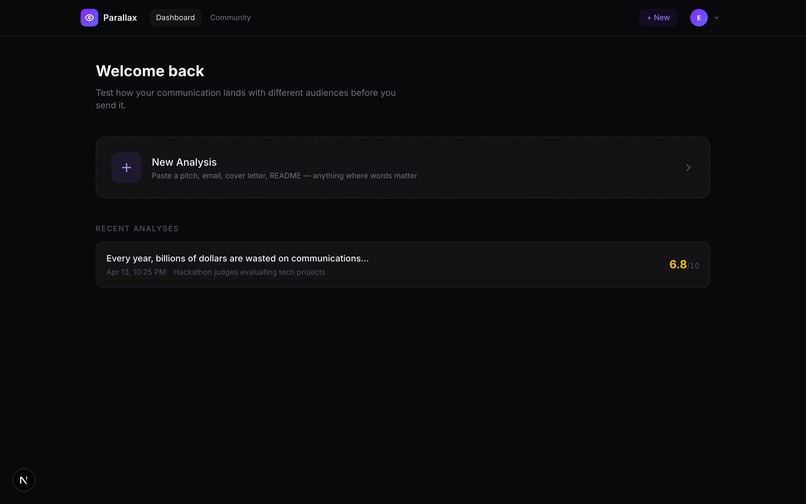
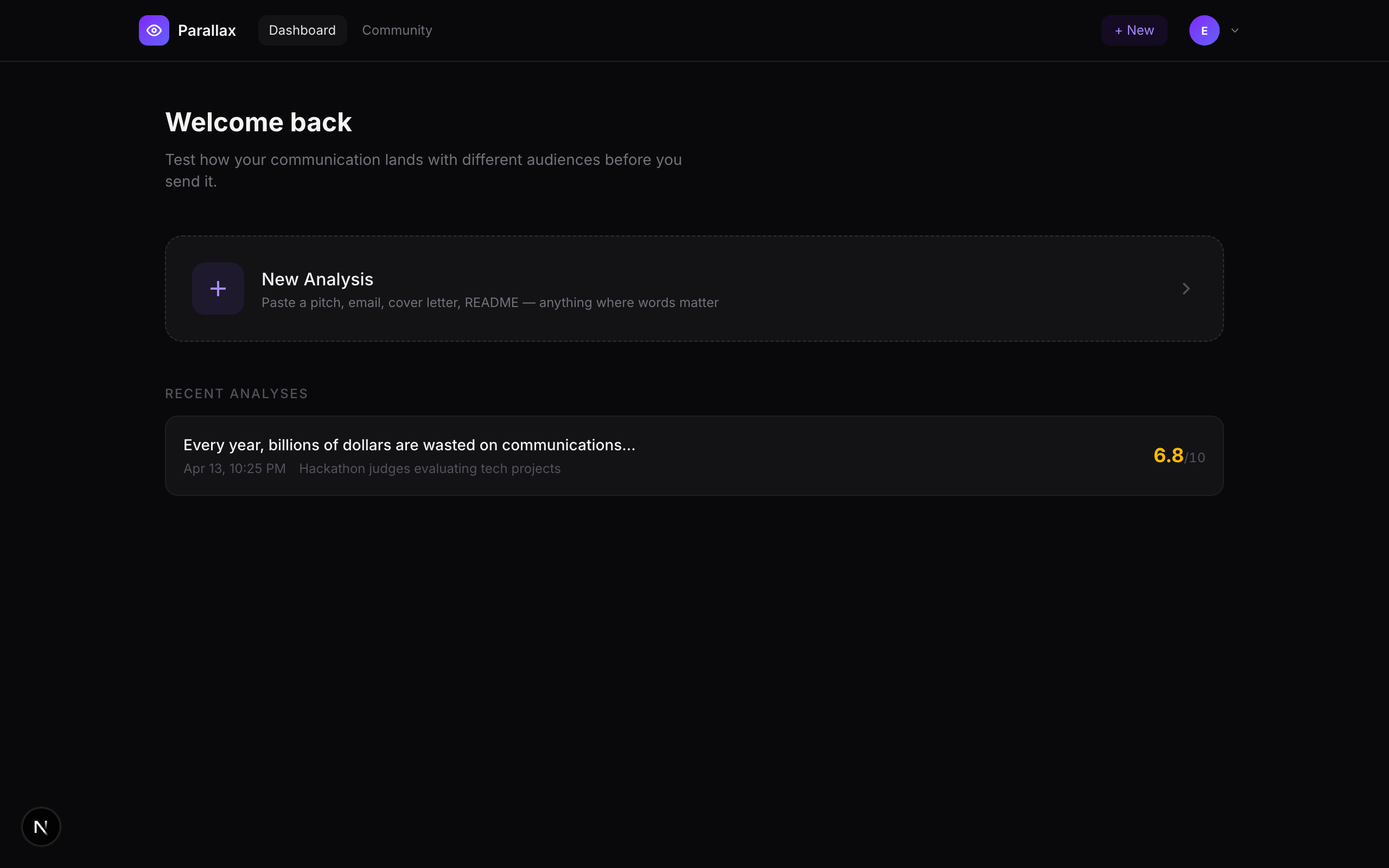
Dashboard
-
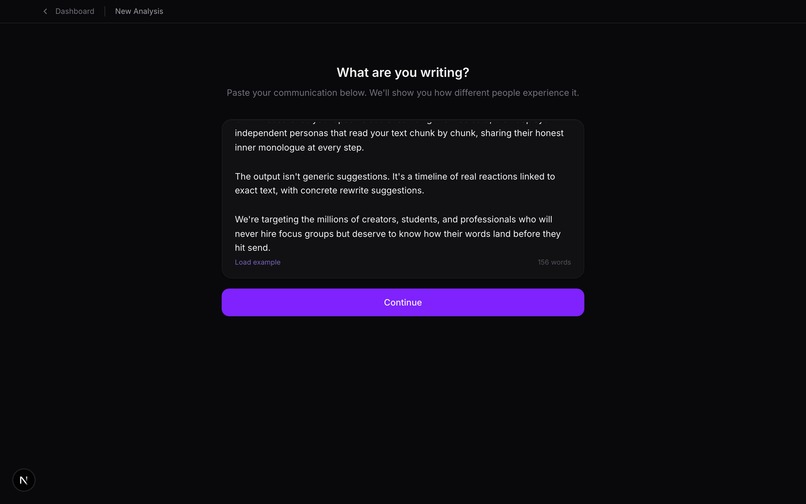
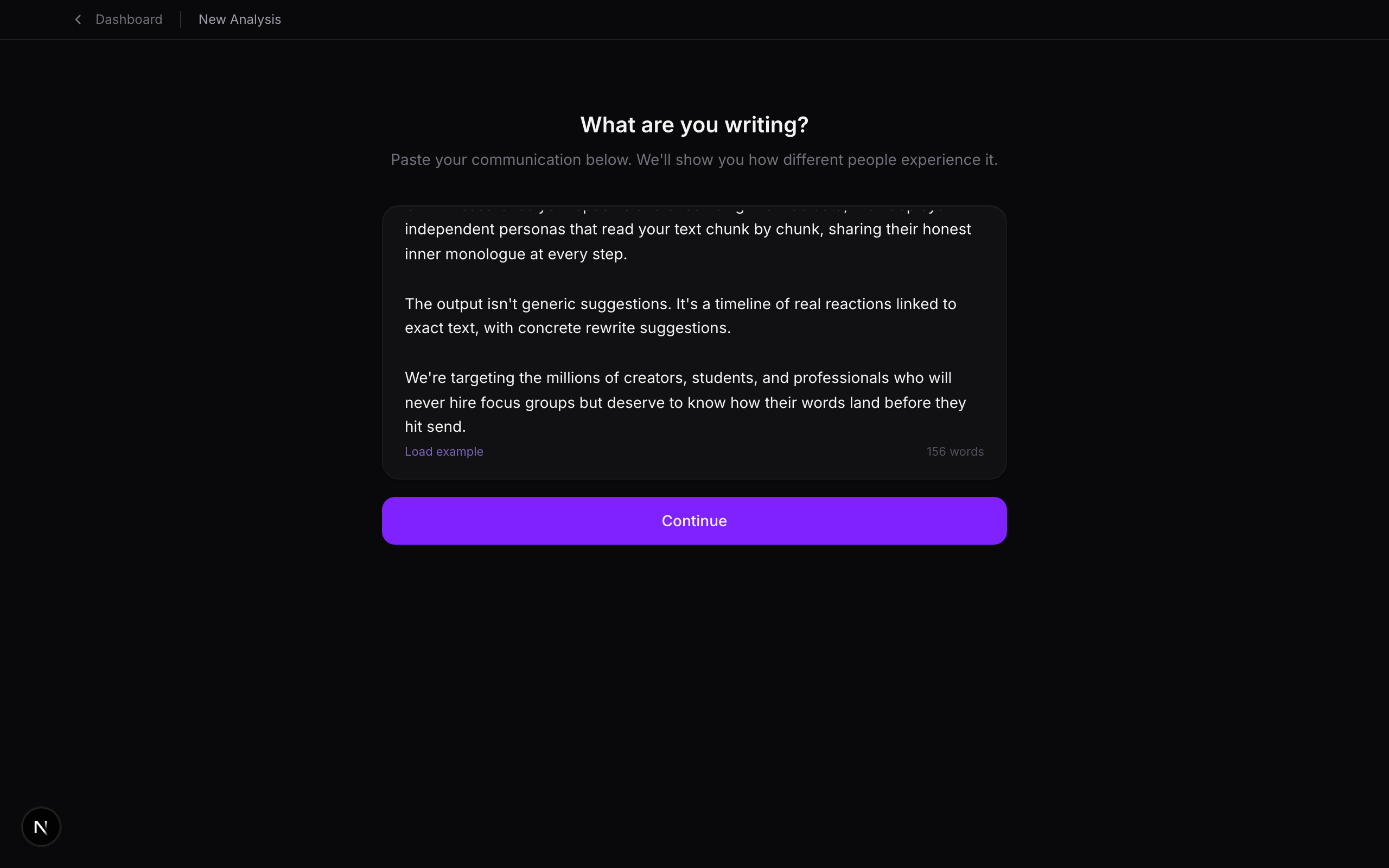
Script stage
-
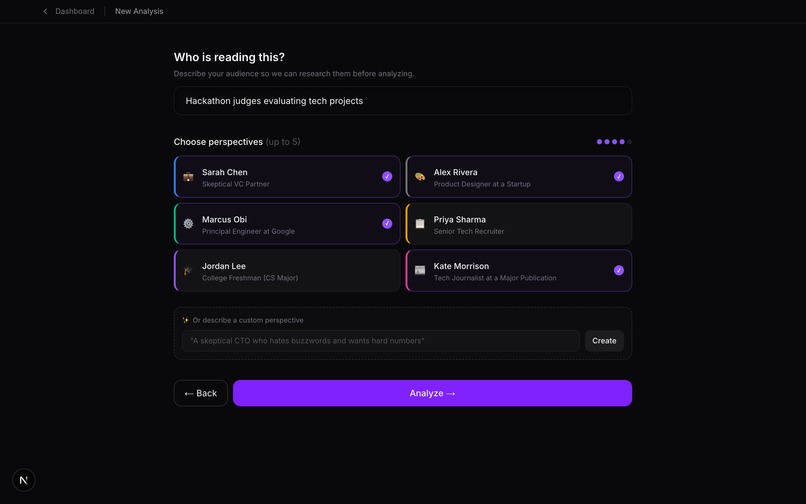
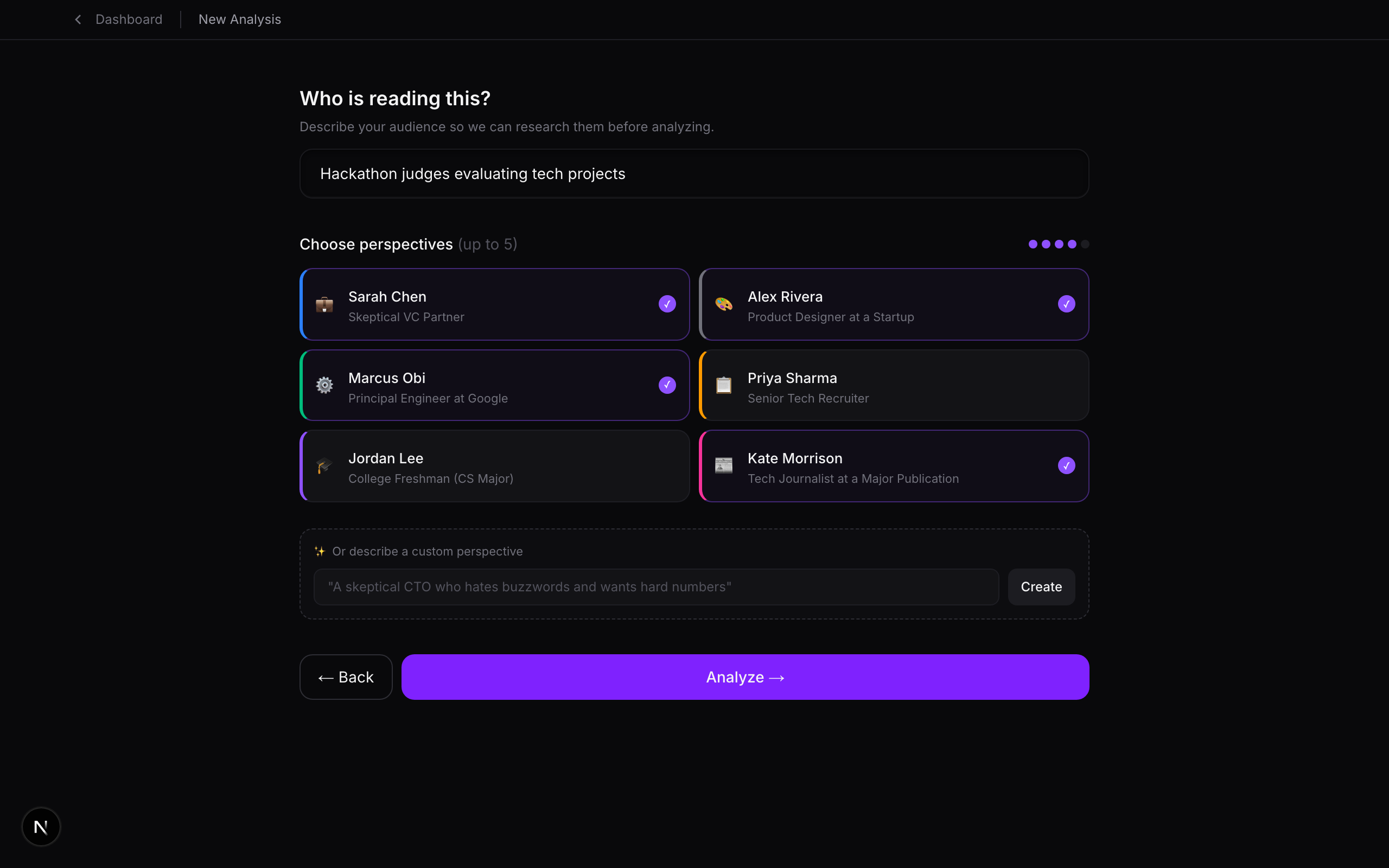
Select persona stage
-
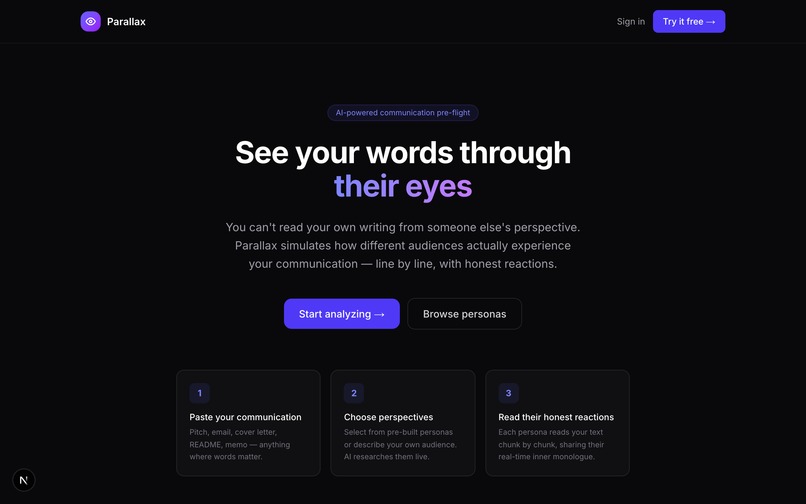
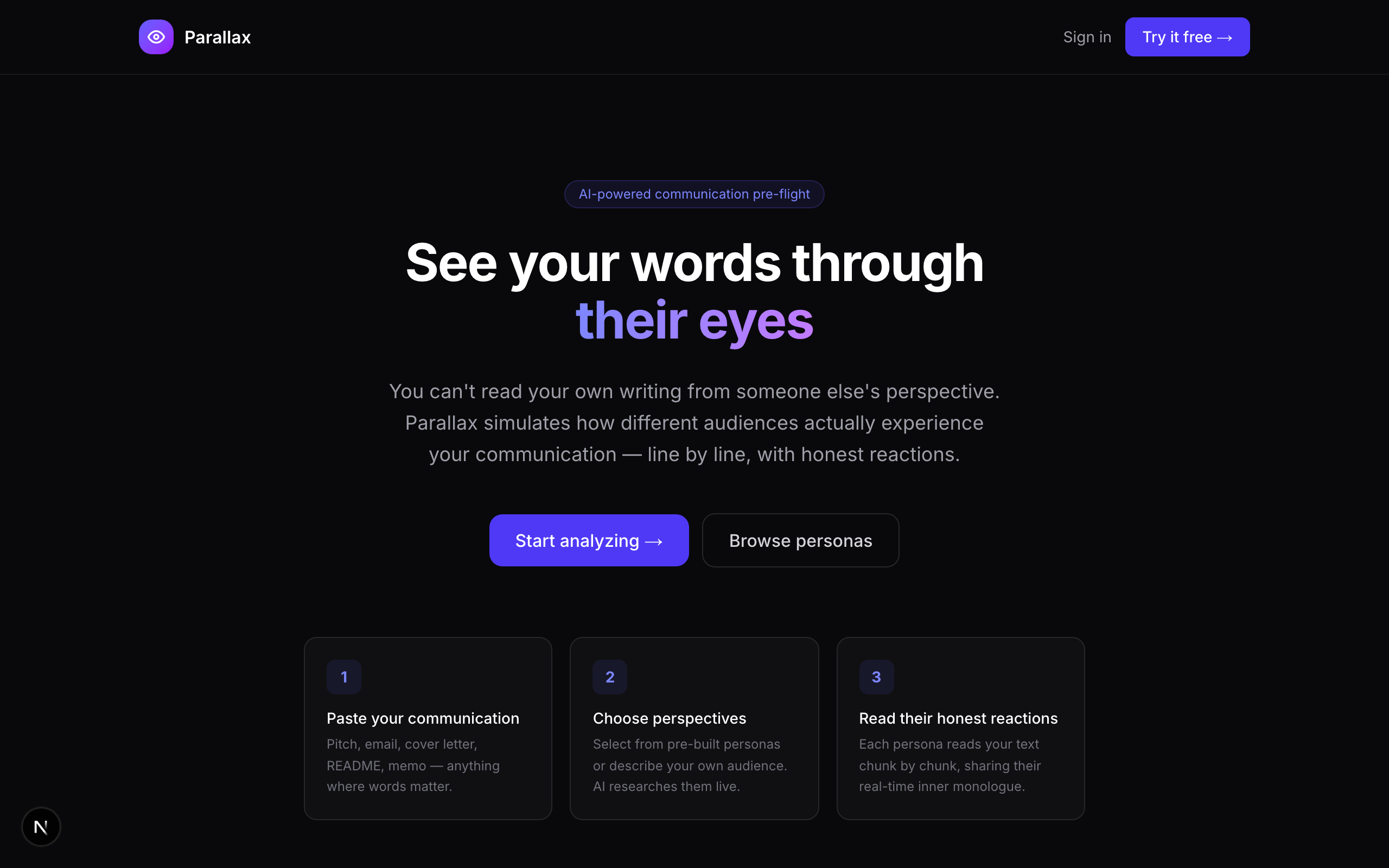
Landing Page
-
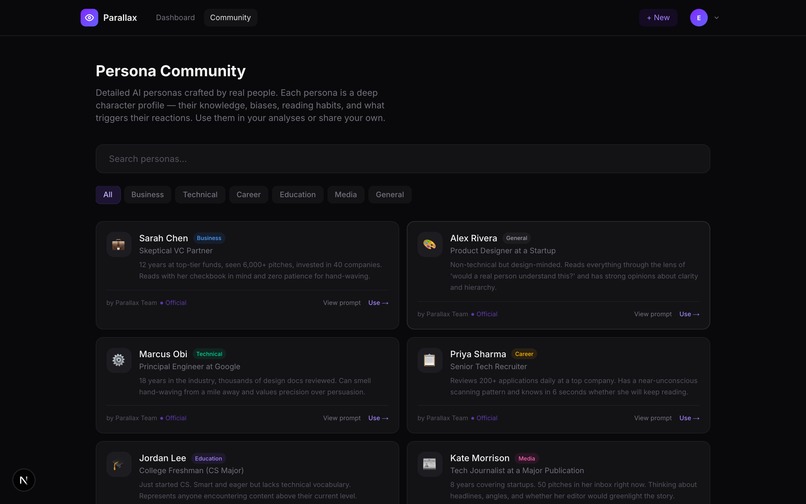
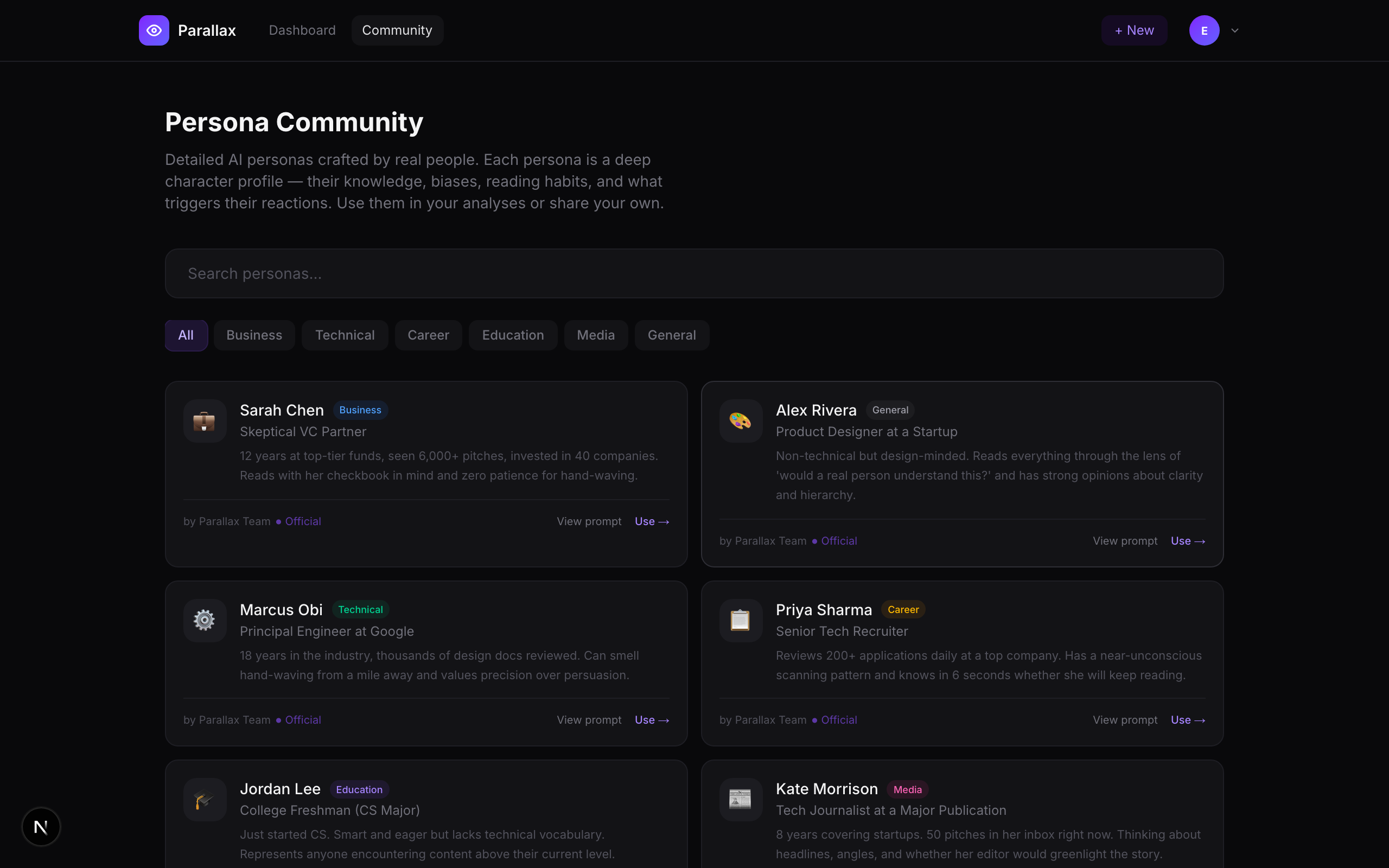
Personas Community
Inspiration
I was preparing a Linux workshop for my coding club. I opened with "open your terminal" and half the room didn't know what a terminal was. I'd completely missed that my audience didn't share my context.
That's when it hit me. This happens everywhere. Talented speakers, researchers, founders, people who are deeply specialized in their field talk about complex topics like it's second nature to them. They miss the things their audience doesn't know, because to them it's obvious. And the worst part? Most of these people don't have the liberty of a demo audience before the real thing. And even if they do, finding the perfect demo audience that actually represents your final audience is almost impossible.
That's what Parallax solves.
What it does
You upload your entire script, a pitch, a presentation, a cover letter, anything. Then you select from a set of predefined personas. These aren't generic AI characters. Each persona is deeply researched and verified, a "2nd year CS student new to programming" actually reads like someone who doesn't know what a terminal is. A "skeptical VC" actually scans for numbers before reading a single sentence of your prose.
This is the first key feature, a library of deeply crafted personas, each with 500+ words of behavioral detail covering how they read, what triggers them, what they skip, and what wins them over. And this library is constantly growing because the community can upload their own custom personas too.
The second feature, the AI has an automatic conversation with you where it asks questions to understand your audience more deeply. And here's the thing: while it asks you these questions, you yourself become more enlightened about your audience. You start thinking about things you hadn't considered.
The third feature, the AI doesn't just work from its training data. It runs live Google searches to update itself on current situations, current trends, current events relevant to your audience. In this influencer era where everything is online and ever more connected, it's much easier to build a real picture of who your audience is and what they want.
The final feature, this isn't one AI reading your script. It's up to 5 different audience members, each with slightly different perspectives. And they don't just give a summary, they read your script like a timed experience. As they read each section, they react in real time: "I don't understand this", "wait, what about Windows users?", "oh NOW I get why you showed that directory earlier, the connection clicked."
So you see one side with your script, and the other side shows the personas pointing to specific sections saying what they thought at that moment. Including the connections, when something you explain later clarifies something confusing from earlier, the AI catches that too.
The core philosophy
Parallax doesn't replace the speaker or rewrite the script. It empowers the speaker to better reorder their content so the audience receives it in the best possible way, without the audience having to overthink about what's happening. It helps you convey what you already want to say, but in the way your audience needs to hear it.
How I built it
Stack: Next.js + TypeScript + Tailwind CSS + Gemini 2.5 Flash + Supabase + Vercel
The architecture has three layers:
Research layer, Gemini with Google Search grounding searches the web to understand the target audience. The results are transparent, you can see what it found, the articles, the search queries. This updates the AI's backend knowledge about who your audience actually is.
Parallel agents, up to 5 independent AI personas run simultaneously via
Promise.all(). The script is carefully chunked into paragraphs. Each agent reads sequentially, building memory, so when chunk 3 clarifies something confusing from chunk 1, the persona notices the connection.Persona engineering, each default persona has a 500+ word system prompt. Not just "you are a VC" but specific reading patterns, scan behaviors, pet peeves with example trigger thoughts, and instructions for how impressions compound over time. This is what makes a VC persona genuinely react differently from a student persona.
Auth and data, Supabase handles authentication and stores analysis history with Row Level Security. The community personas table lets anyone browse shared prompts.
Challenges
Making personas actually distinct. Early versions with 2-sentence prompts produced identical feedback with different names on it. The fix was investing in deeply detailed behavioral prompts, describing how each persona reads, not just who they are.
API reliability. Gemini's search grounding had intermittent outages. Built a three-tier fallback chain so the app degrades gracefully.
Chunk boundaries. Splitting text into meaningful paragraphs breaks for single-paragraph inputs. Added a sentence-level fallback splitter that groups into ~80 word chunks.
What I learned
- The difference between generic AI feedback and persona-specific feedback is entirely in prompt depth. 50 words = generic. 500 words = genuinely distinct perspectives.
- Live web research before analysis makes feedback dramatically more relevant to the real world.
- Building the personas felt more like character design than prompt engineering.
What's next
- Community marketplace, people share verified, deeply crafted persona prompts for specific audiences
- Voice input, speak your script instead of pasting text
- Side-by-side comparison, see all personas react to the same section simultaneously
- Connection tracking, when something later in your script clarifies something earlier, highlight that link explicitly
Links
- Live: parallax-ai.vercel.app
- Code: github.com/EchoRover/parallax
- Report: report
Built With
- gemini-2.5-flash
- google-search-grounding-api
- next.js
- postgresql
- react
- supabase
- tailwind-css
- typescript
- vercel
