Inspiration
Paralyzed patients are unable to control the majority of their bodies, sometimes including their voice. However, they still retain the function of their brains. Paralassist turns these brain signals into a voice, allowing them to request help and make commands.
What it does
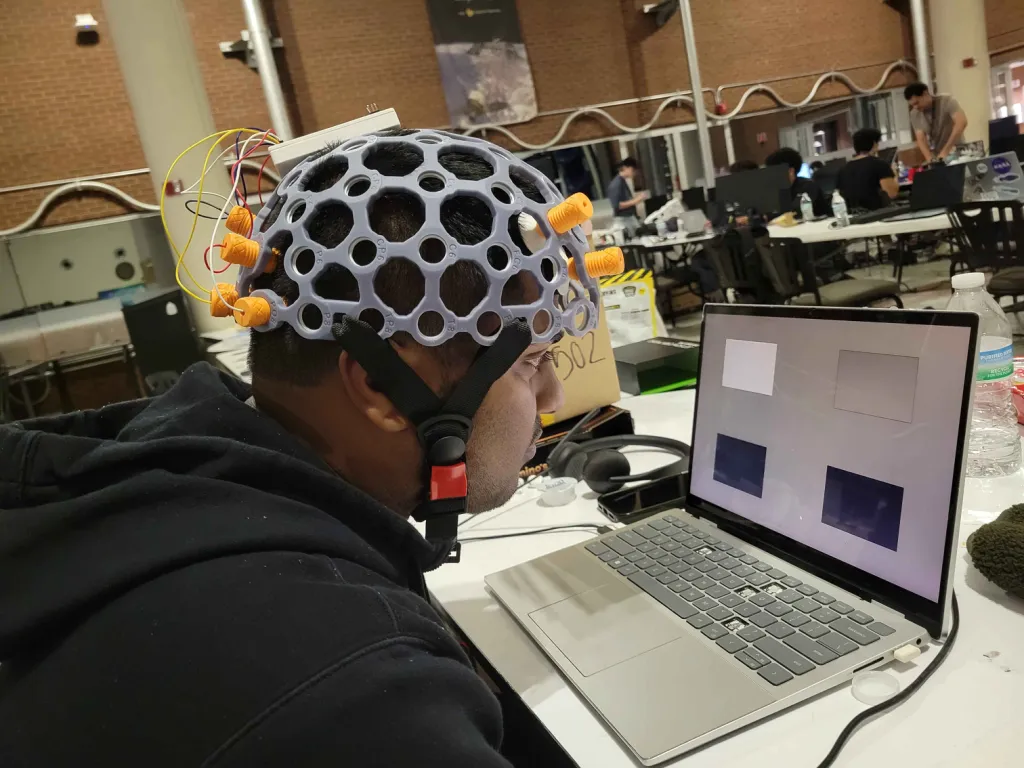
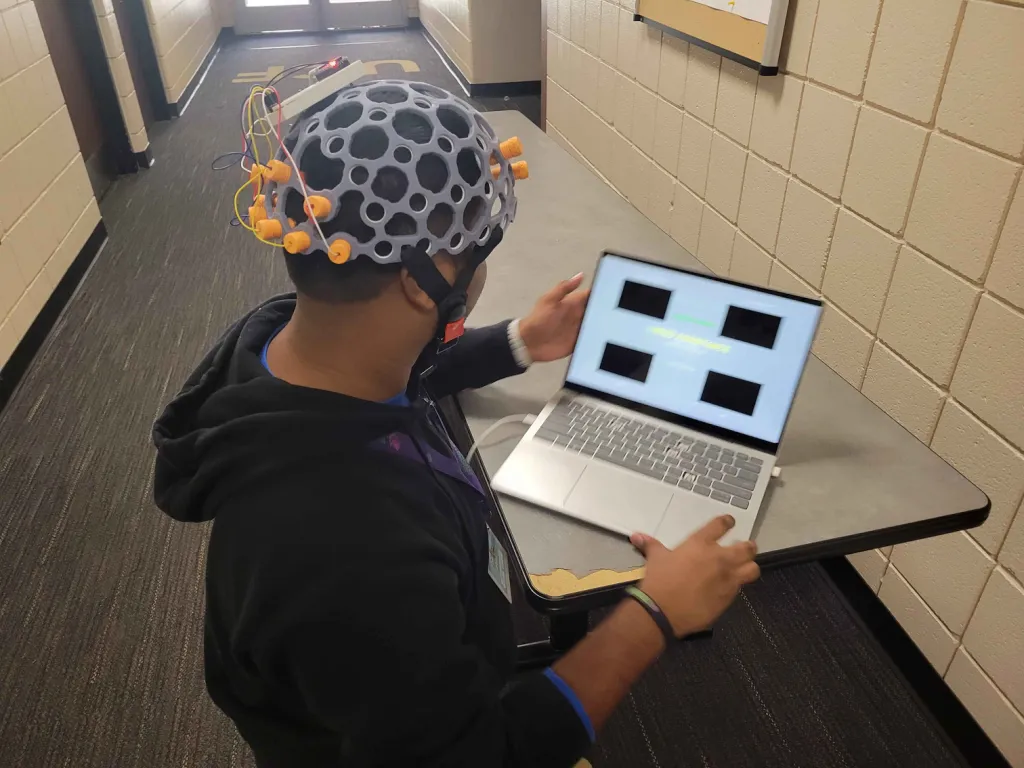
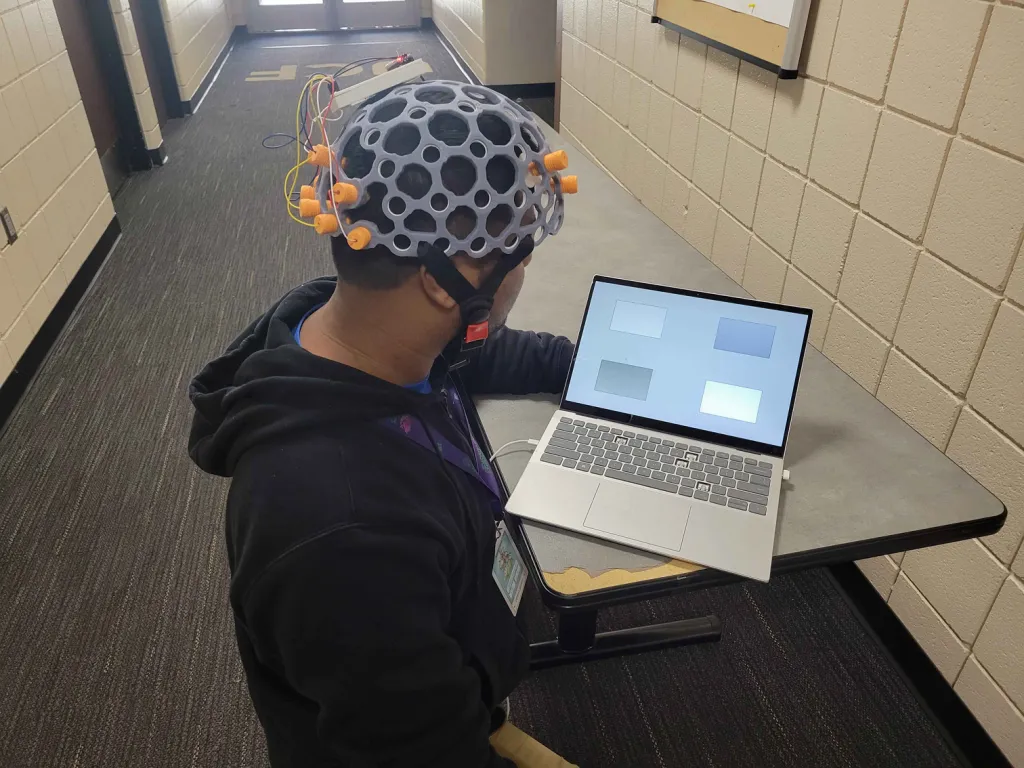
Paralassist uses an electroencephalogram (EEG) with a visual stimulus to convert a user's brain signals into messages. Users gaze at flickering tiles associated with messages, and generative AI is used to bring meaning to their responses.
How we built it
- Visual Frequencies: The human brain will attempt to replicate visual frequencies from flashing lights with Steady-State Visually Evoked Potentials (SSVEPs). We use these to associate them with meaningful messages and allow users to communicate with a glance.
- EEG Acquisition: Electrodes placed at the occipital lobe receive SSVEPs that are emitted when the user is exposed to specific visual frequencies associated with messages.
- AI Interpreters: Two AI models, a TRCA model and a model using the EEGNet neural network, calibrate themselves to the user’s brain waves and then interpret their SSVEPs into meaningful messages or commands.
Challenges we ran into
Training data was scarce, and the public SSVEP datasets we found varied in experiment type and had small inconsistencies with our needs, making them hard to unify. Developing the model was also a learning curve for our team, and working through preprocessing, feeding data, and model tuning deepened our understanding of the field.
Accomplishments that we're proud of
Half of our four-person team were first-time hackers, so the event was as much a learning experience as a build. We picked up new skills along the way, from training a machine learning model to learning how to navigate GitHub for version control, and collaborated effectively throughout. We’re also proud of bringing together our unique interests and fields of study into a single project.
What we learned
Through this project and the development of two AI models, we learned a lot about the workings of machine learning, such as how TRCAs and convolutional neural networks function. This is also the first hackathon for two of our teammates, and they learned a lot about GitHub and aspects of web design.
What's next for Paralassist
Paralassist has strong potential in medical field, where it can give ALS, spinal cord injury, geriatric, or locked-in syndrome patients a reliable, signal-based way to communicate basic needs. The same principle extends well beyond the hospital. Any setting where a person’s hands, voice, or attention are already occupied could benefit from a hands-free, silent control channel. Surgeons, pilots, and machine operators could issue commands without using their hands, and technicians could work in noisy or hazardous settings where speech and touch aren’t practical.


Log in or sign up for Devpost to join the conversation.