-
-
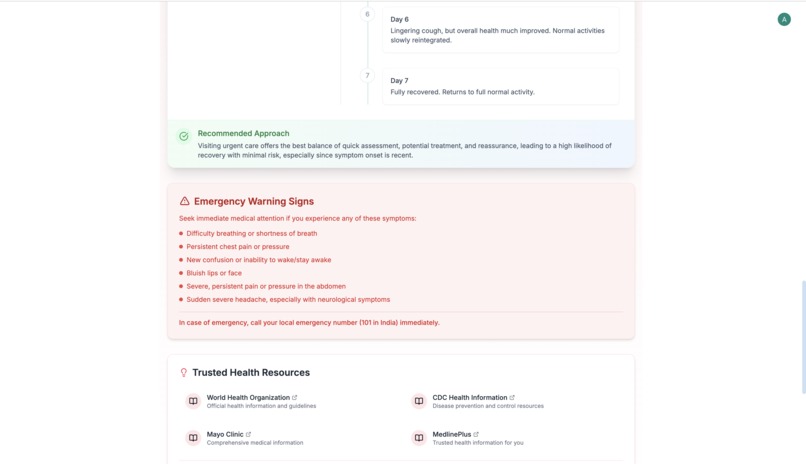
-
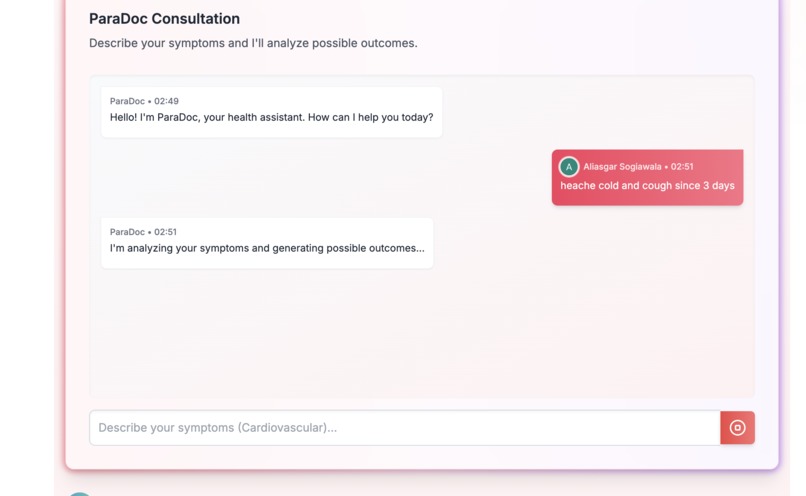
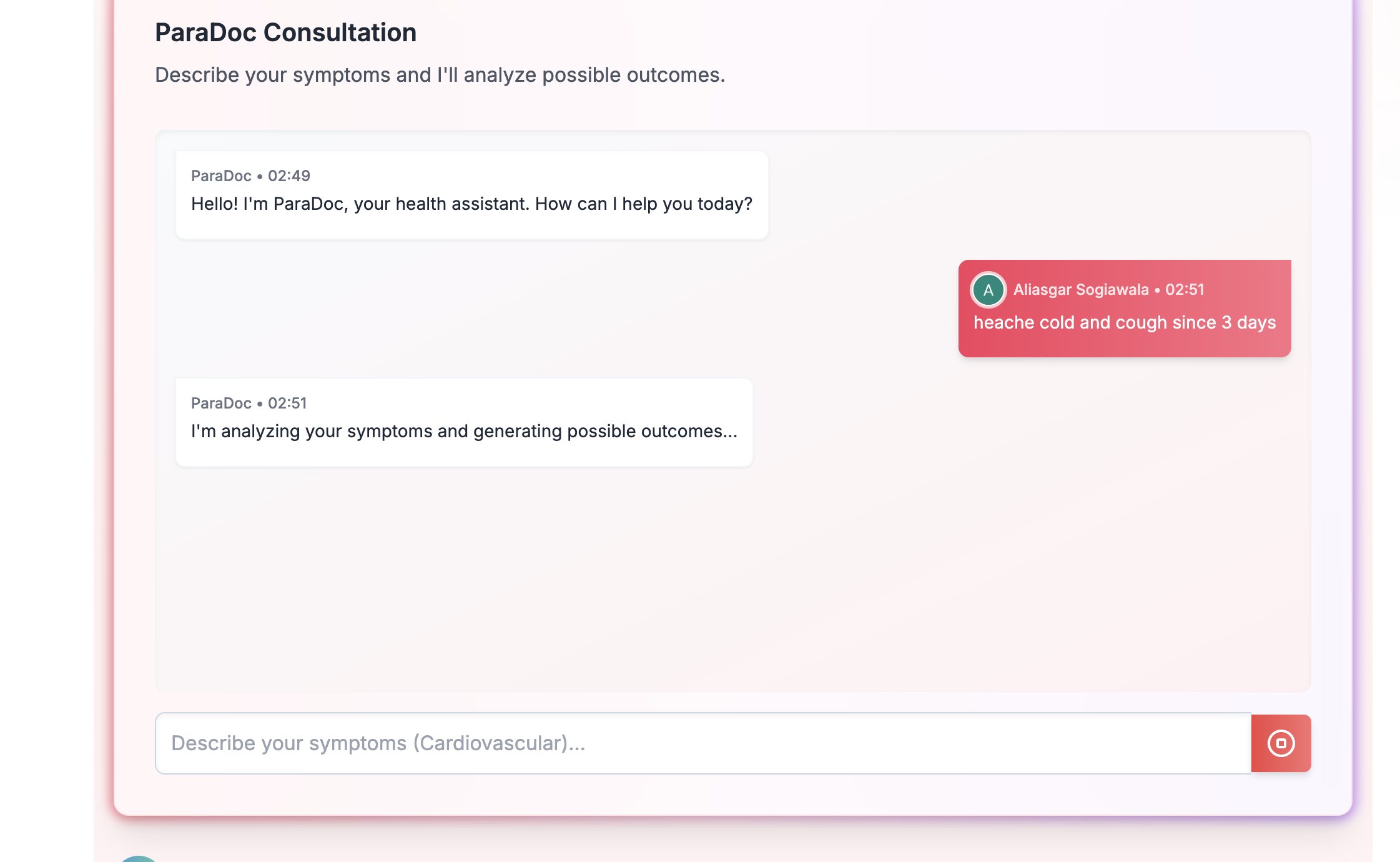
Chat Interface
-

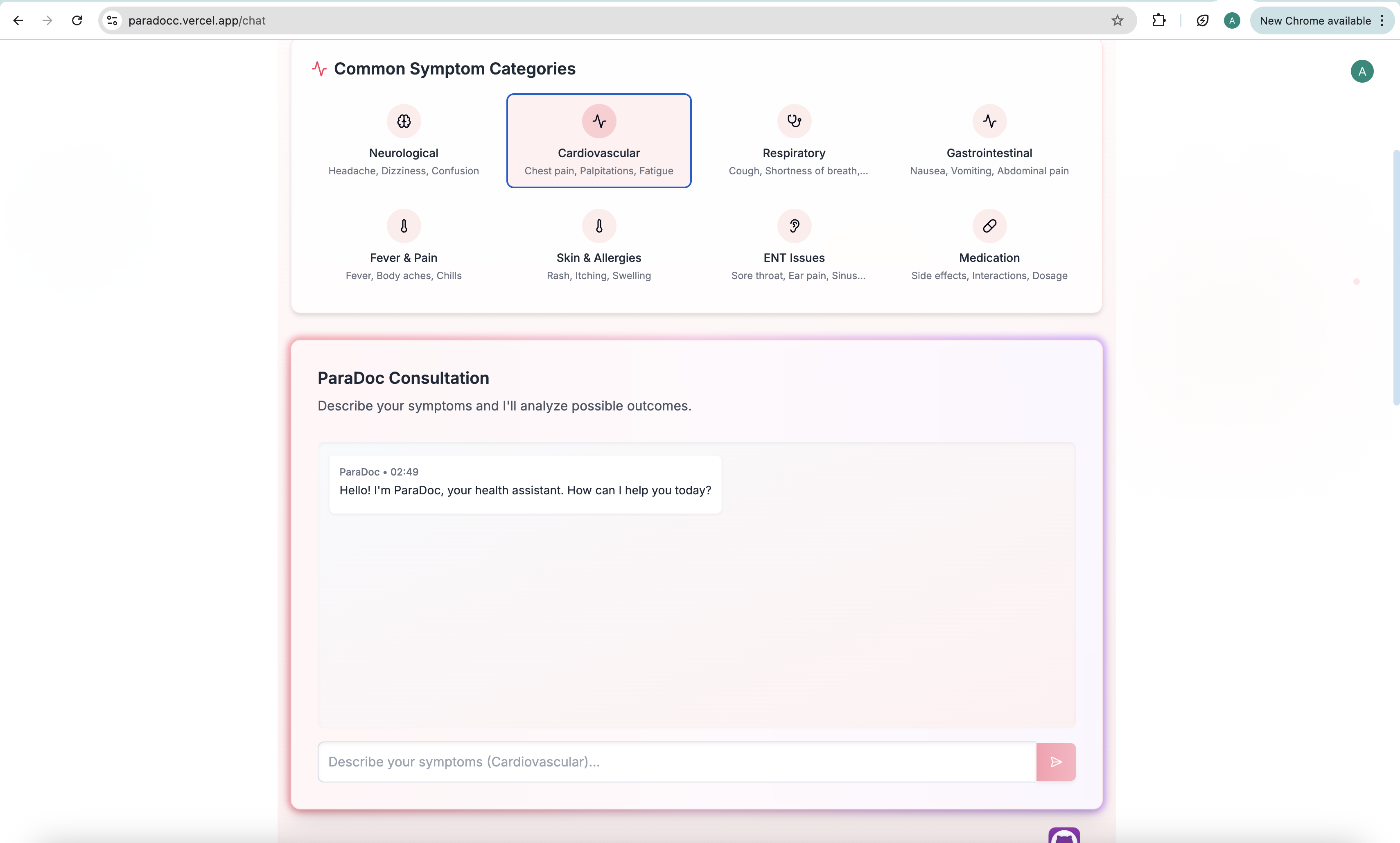
Landing Page
-
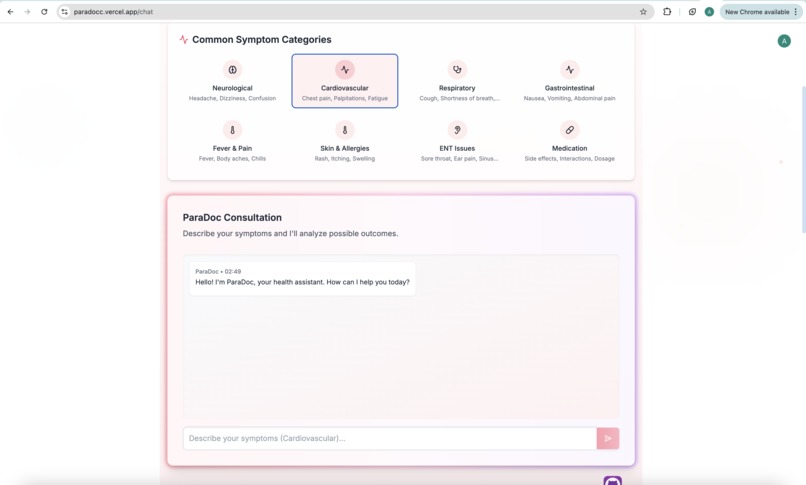
Chat Page
-
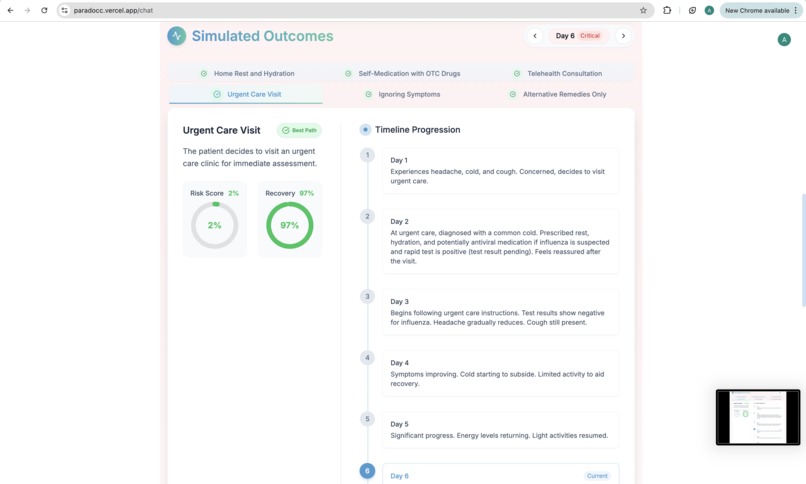
Analysis
-
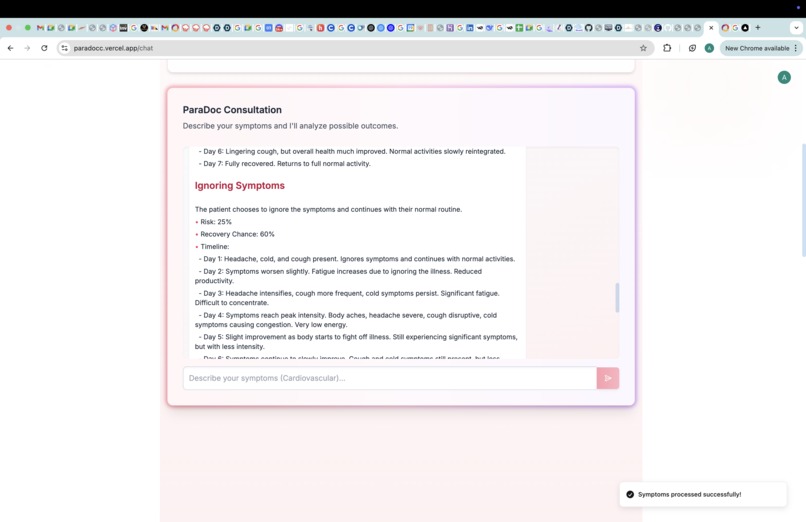
AI generated ans

🧠 Inspiration
In moments of health uncertainty , a sudden chest pain, a lingering cough , most people face a terrifying decision: wait, Google, or panic. We wanted to build something that offered clarity, calm, and medically-informed direction.
That’s how ParaDoc was born , a platform that helps people simulate future outcomes of health decisions through AI-powered analysis and branching scenarios.
We asked:
What if you could simulate how your condition might progress depending on what you do next , like ignoring it, resting, or seeking medical help , and see a clear breakdown of how that choice might evolve over 7 days?
⚙️ What It Does
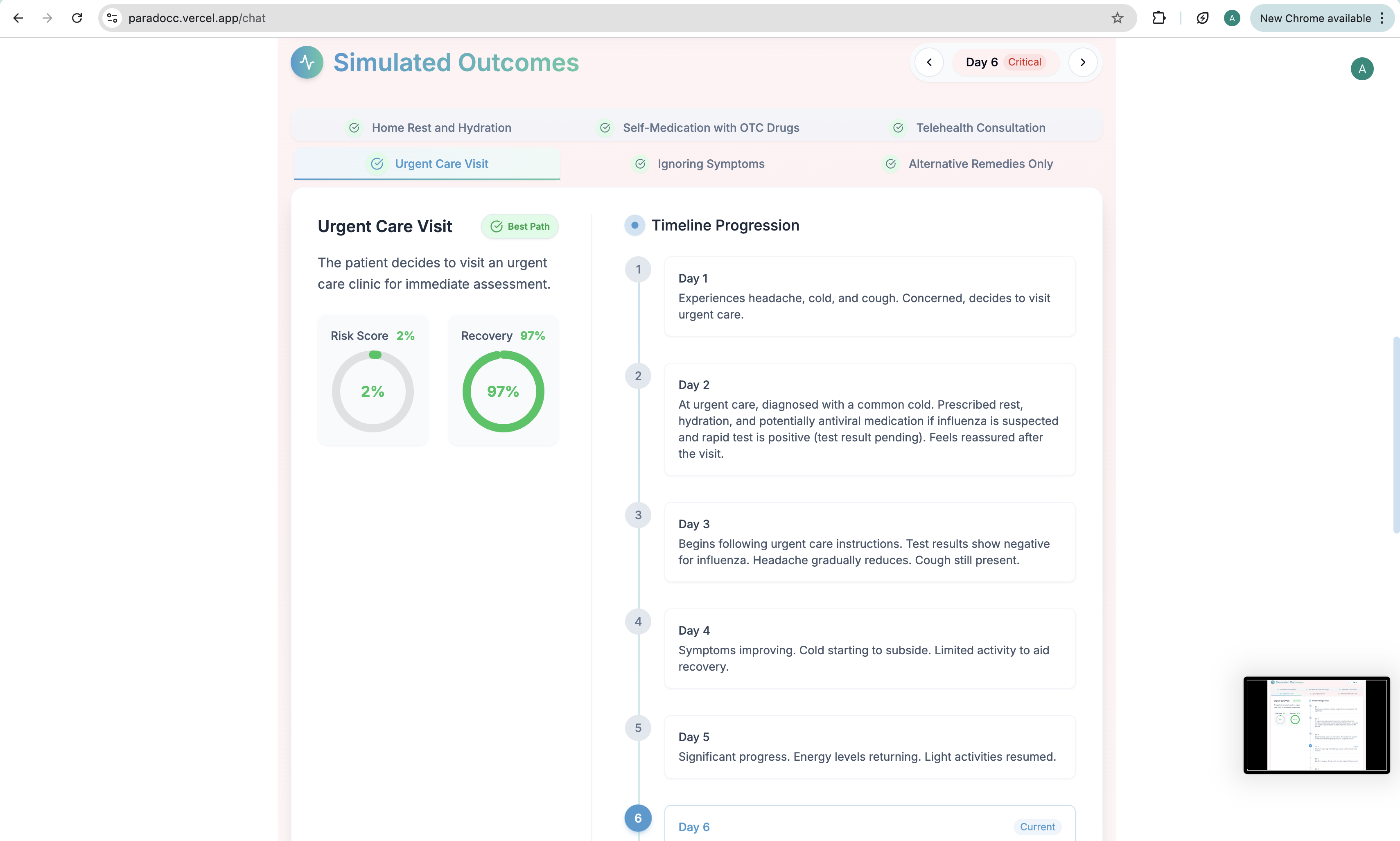
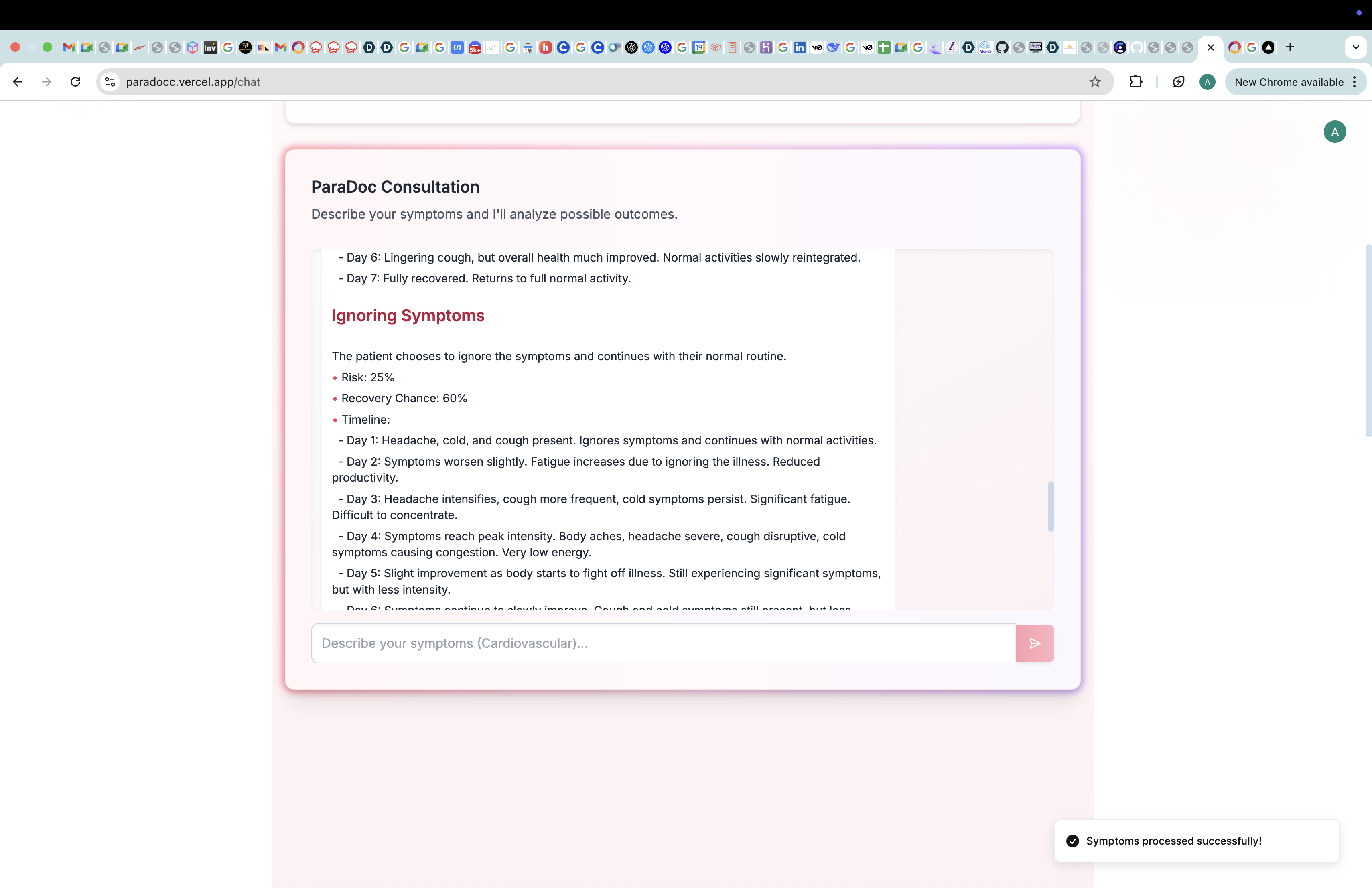
ParaDoc allows users to input symptoms and instantly see multiple possible response paths:
- Doing Nothing
- Self-Treatment
- Seeking Medical Attention
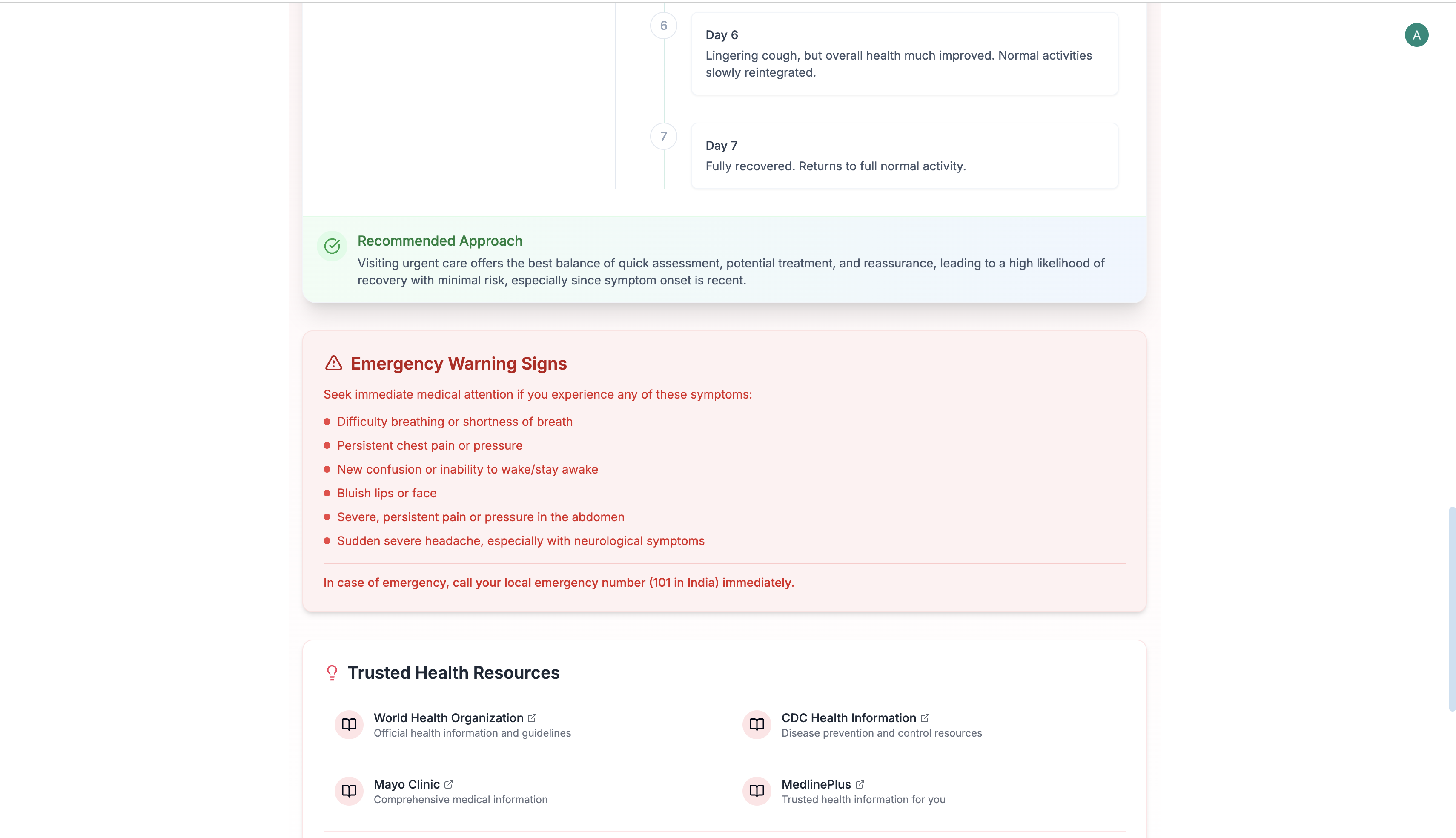
For each path, ParaDoc provides a 7-day simulated timeline showing likely events day-by-day (e.g. symptom progression, treatment milestones, recovery signs). It also gives:
- A Risk Score (likelihood of complication)
- A Recovery Score (probability of improvement)
- A recommended best path based on real-world context
This lets users make informed decisions based not on panic, but personalized insight.
🛠️ How We Built It
- Frontend: Built with Next.js and Tailwind CSS for responsive and intuitive UI
- LLM Integration: GPT-4o and Gemini power timeline generation and scoring using structured prompts
- Prompt Engineering: Custom modular prompts to simulate diverse symptoms and scenarios with minimal repetition or bias
- Pathway Logic: Backend logic generates 5-7 timelines per input, each with its own stats, summary, and outcome scoring
🚧 Challenges We Faced
- Designing prompts that created distinct but realistic timelines
- Ensuring the scoring wasn’t biased toward only one path (e.g. always choosing "doctor visit")
- Balancing clinical realism with approachable language
- Handling dynamic symptom input while keeping the output coherent and medically consistent
💡 What We Learned
- People engage deeply with branching narratives when it comes to health
- Even simple visual cues (risk/recovery score, step timeline) help people trust AI decisions more
- Language and UX matter as much as accuracy when the goal is helping someone in distress
🌱 What’s Next
- Add comic-style timeline generation using Stable Diffusion
- Integrate voice input and audio narration for accessibility
- Localize for multilingual rural populations
- Build a clinician-facing dashboard to create verified simulation templates
- Launch a mobile-first version for easy access on low-bandwidth networks
Built With
- api
- clerk
- gemini
- javascript
- nextjs
- node.js
- tailwindcss
- vercel


Log in or sign up for Devpost to join the conversation.