Inspiration
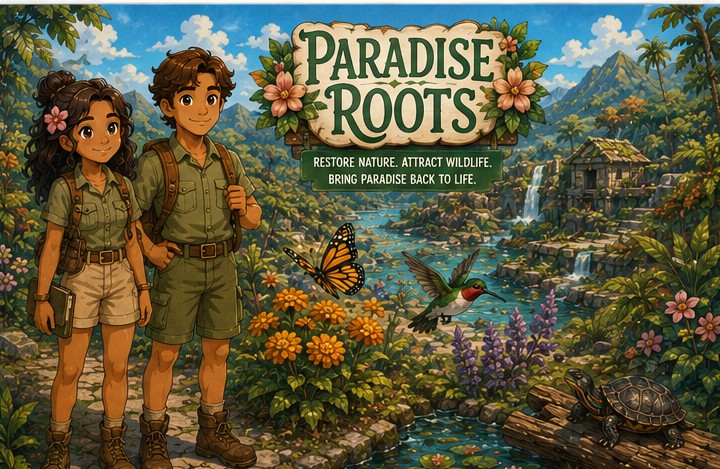
Paradise Roots was inspired by my love of cozy simulation games, gardening, wildlife, and environmental restoration. While many farming games focus primarily on profit and production, I wanted to explore a different fantasy: helping nature recover.
The project began with a simple question:
What if restoring an ecosystem was the progression system?
Instead of building the biggest farm or earning the most money, players transform a neglected tropical sanctuary into a thriving wildlife paradise. Every crop planted, habitat restored, and species discovered contributes to bringing the sanctuary back to life.
What it does
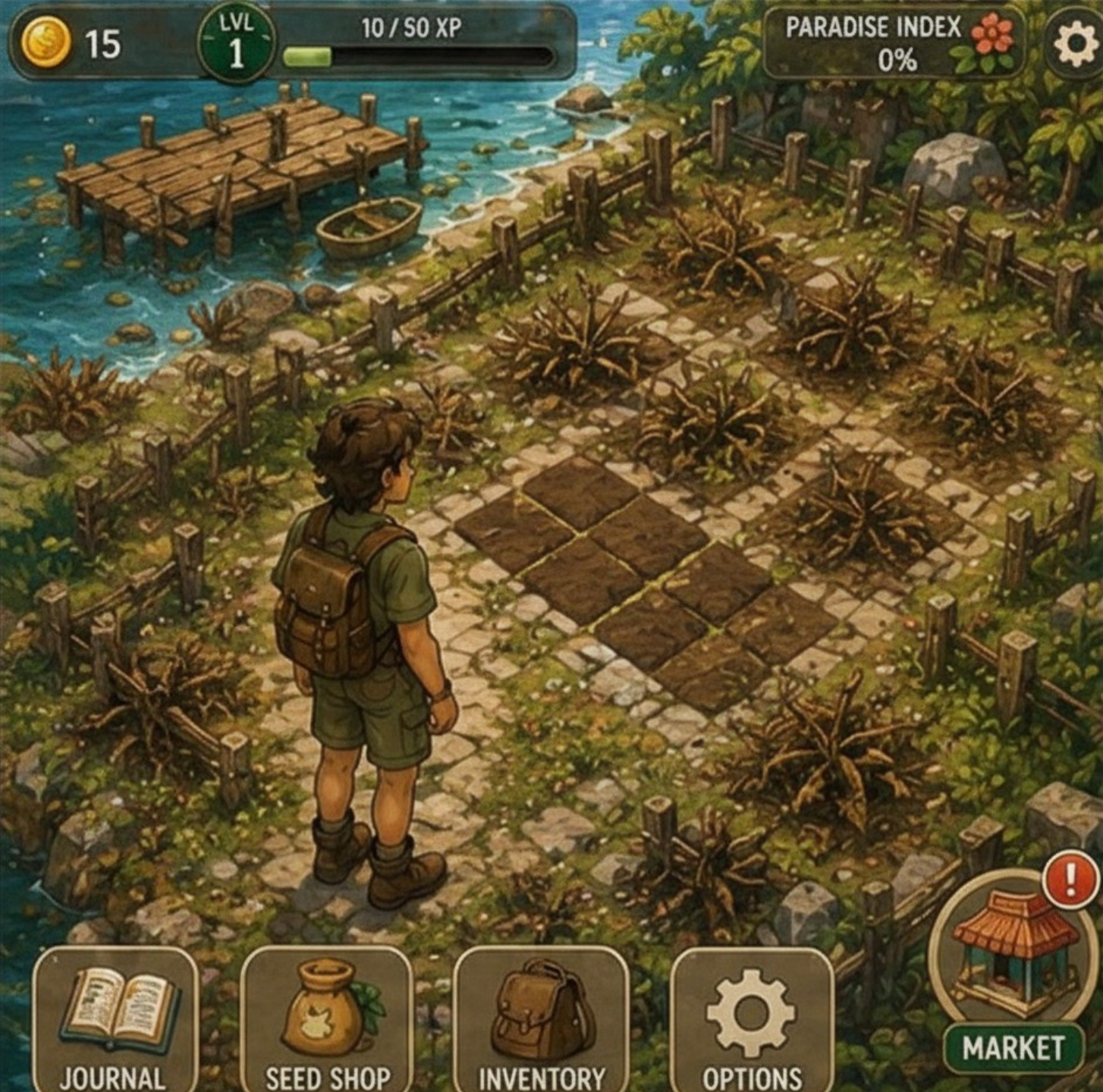
Paradise Roots is a cozy ecosystem restoration simulation game where players grow crops and flowers, fulfill visitor requests through the Sanctuary Market, restore habitats, attract wildlife, and expand their sanctuary.
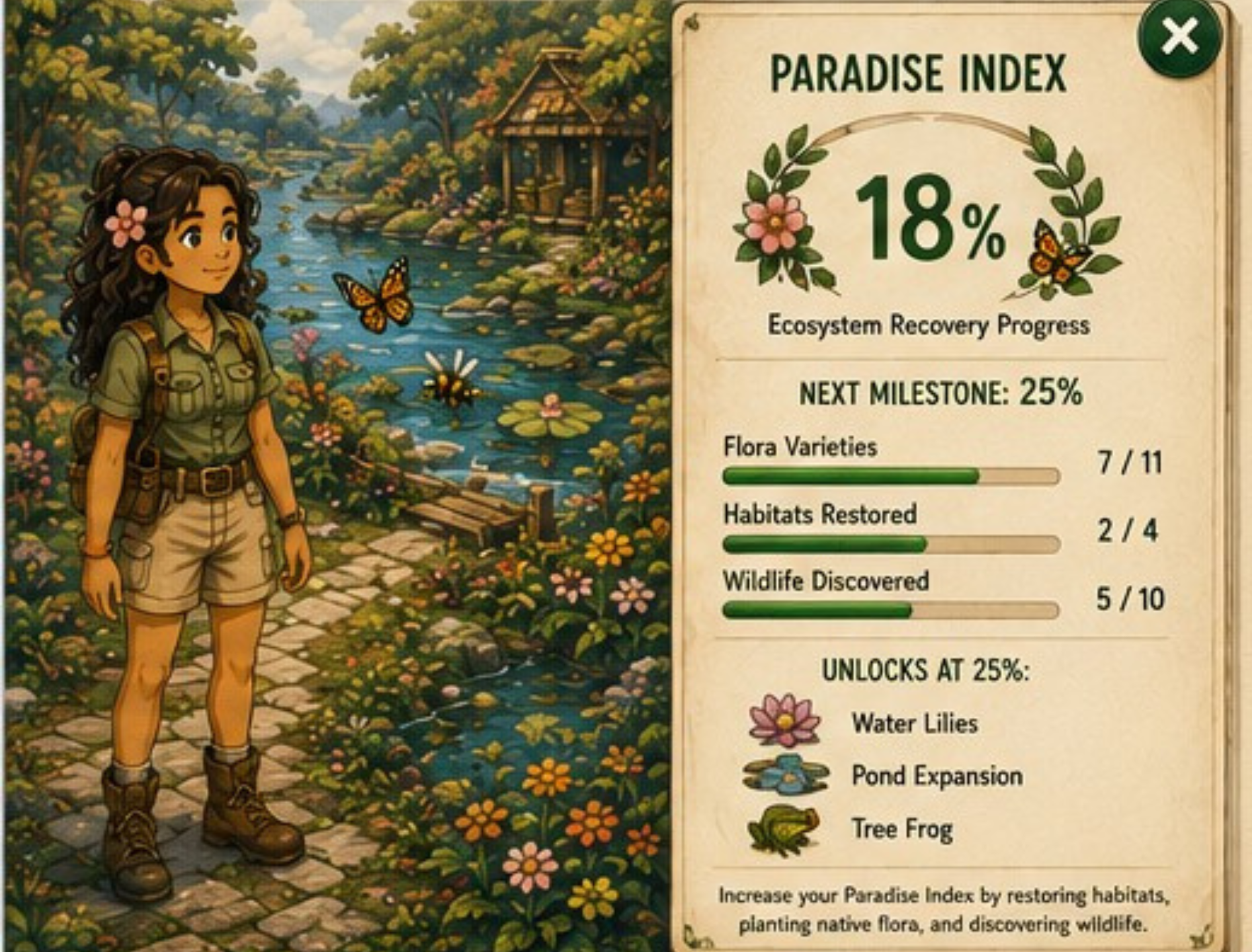
As players improve biodiversity, they increase their Paradise Index, a progression system that measures ecosystem health and unlocks new crops, habitats, wildlife species, and restoration opportunities.
Wildlife discoveries are recorded in the Paradise Journal, creating long-term collection goals while rewarding players for restoring a healthy, balanced ecosystem.
Unlike traditional farming simulations that focus primarily on profit, Paradise Roots centers progression around ecological recovery. Farming provides the resources, restoration drives progression, and wildlife serves as the reward.
How I built it
Paradise Roots was developed as a complete game design package consisting of four required artifacts:
- Game Design Document (GDD)
- Player Journey Map
- Visual Concept Package
- Production Plan
The design process began with the core gameplay loop:
Plant → Harvest → Restore → Attract Wildlife → Increase Biodiversity → Expand
From there, I developed supporting systems including crop progression, habitat restoration, wildlife attraction, the Sanctuary Market, the Paradise Journal, sanctuary expansion, and the Paradise Index.
The visual direction was built around bright tropical environments, visible environmental transformation, rewarding wildlife discovery, and a cozy, welcoming atmosphere. Every design decision was guided by a single goal: making restoration feel meaningful and rewarding.
As a solo designer, I focused on creating a cohesive design package where every artifact reinforced the same gameplay vision, progression systems, and restoration theme.
Challenges I ran into
The biggest challenge was balancing ambition with feasibility.
Many ideas supported the long-term vision of Paradise Roots, including seasonal events, sanctuary specializations, legendary wildlife, wildlife photography, dynamic ecosystems, and community restoration projects. While these ideas were exciting, including too many systems in the MVP would have weakened the project's production readiness.
Another challenge was creating a progression system that felt unique within the farming simulation genre. The solution was making biodiversity and ecosystem health central to progression through the Paradise Index and wildlife discovery systems.
Maintaining consistency across the Game Design Document, Player Journey Map, Visual Concept Package, and Production Plan also required careful planning to ensure every artifact described the same game experience.
Accomplishments that I'm proud of
One of my biggest accomplishments was creating a cohesive game concept where every major system supports the central restoration theme.
Rather than treating farming, wildlife, progression, and exploration as separate features, Paradise Roots connects them into a single ecosystem where each activity contributes toward multiple goals.
I am also proud of creating a realistic MVP scope that could be built within a 4-8 week production timeline while still providing meaningful progression, visible world transformation, and long-term player motivation.
Most importantly, I created a concept that feels distinct within the cozy simulation genre by making ecosystem restoration the heart of the player experience.
What I learned
Throughout the project, I learned the importance of interconnected systems in game design.
Strong progression is not simply about adding more content. It comes from creating meaningful relationships between player actions, rewards, and long-term goals.
I also learned the value of scope management. Defining what belongs in the MVP versus what belongs in future updates helped strengthen the overall design and improve production readiness.
Finally, I learned that environmental transformation can be a powerful reward system. Watching a neglected sanctuary gradually come back to life can be just as satisfying as traditional progression systems based on wealth or resource accumulation.
What's next for Paradise Roots
If development continued beyond the MVP, future updates would expand player expression, wildlife collection, and long-term progression while preserving the core restoration experience.
Potential additions include:
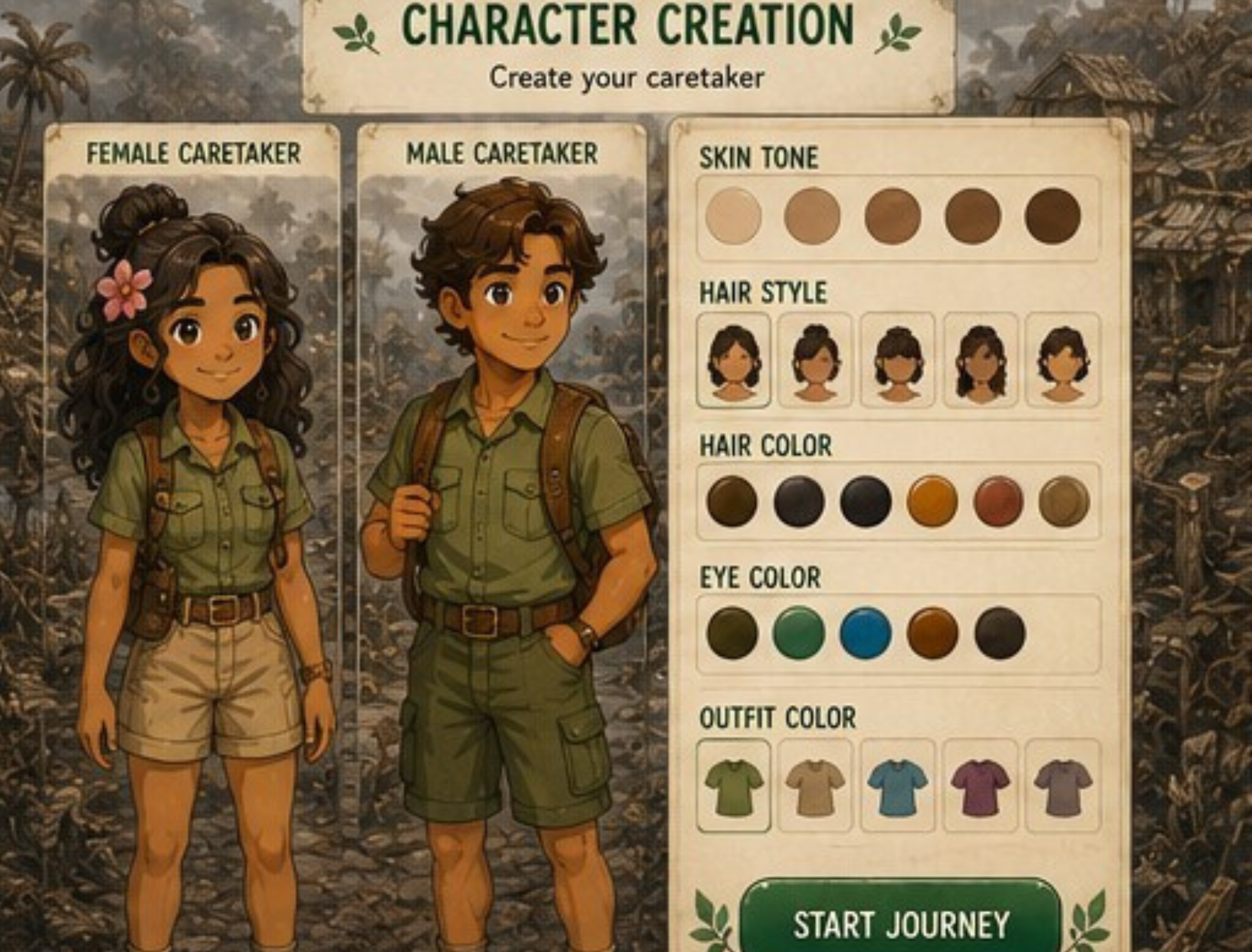
- Expanded character customization
- Sanctuary specializations
- Seasonal events
- Legacy Trees
- Legendary Wildlife
- Wildlife Photography
- Dynamic ecosystem events
- Community restoration projects
These features would build upon the foundation established by the MVP while maintaining the game's central vision: restoring nature, attracting wildlife, and transforming a forgotten sanctuary into a thriving paradise.
Built With
- canva
- chatgpt
- googlegemini


Log in or sign up for Devpost to join the conversation.