-
-
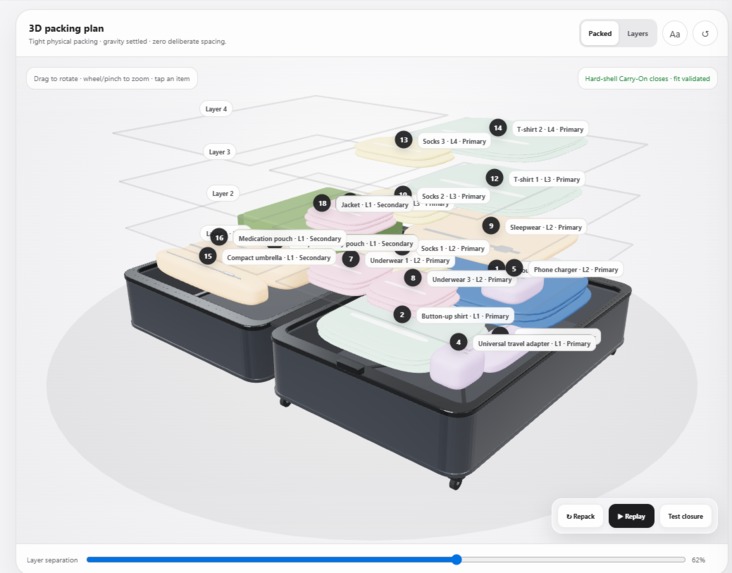
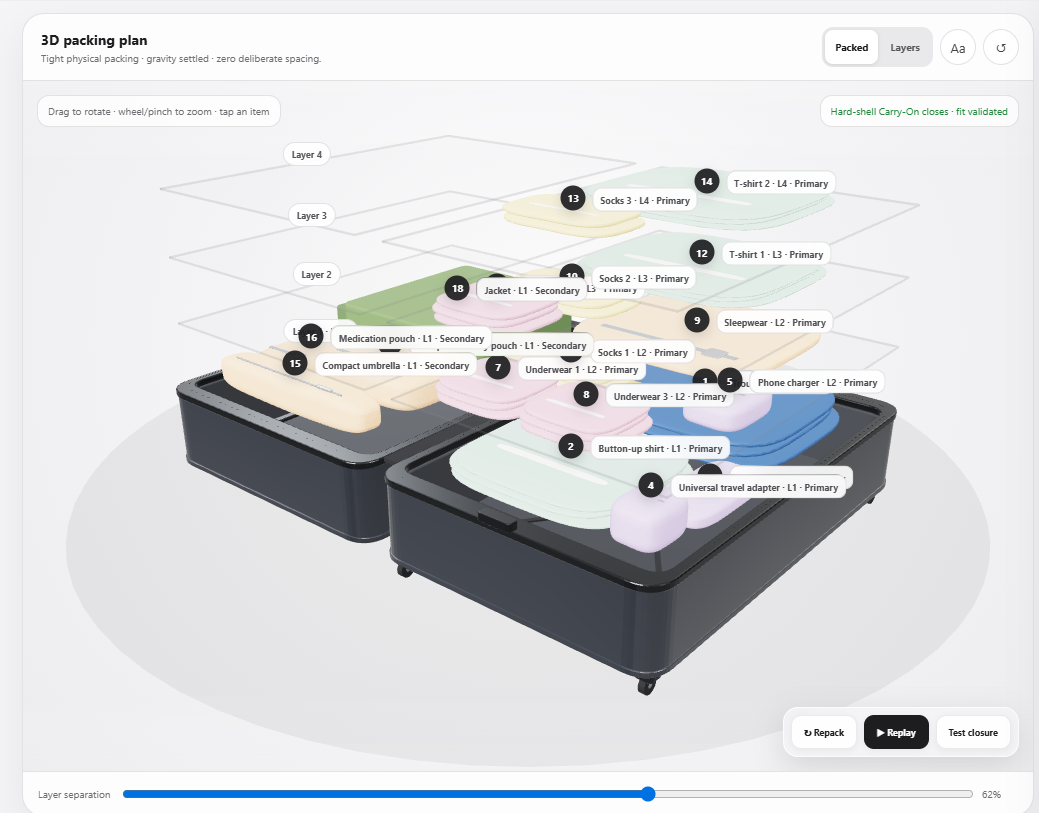
Labled Layers
-
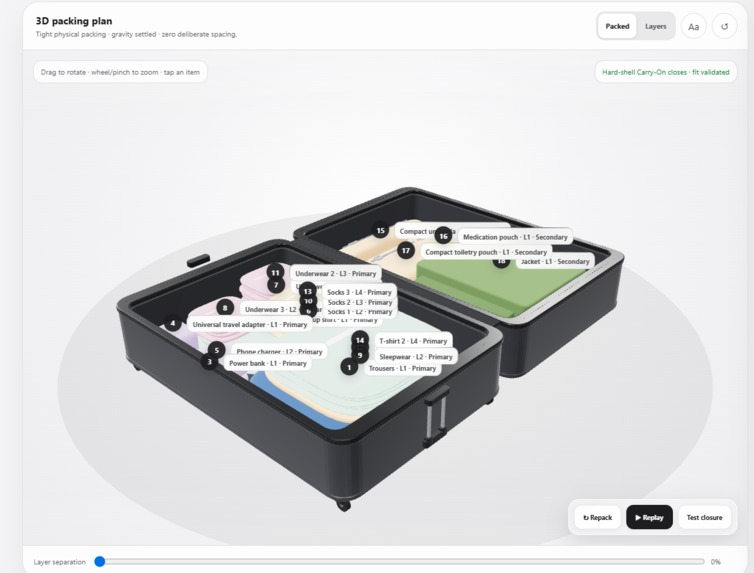
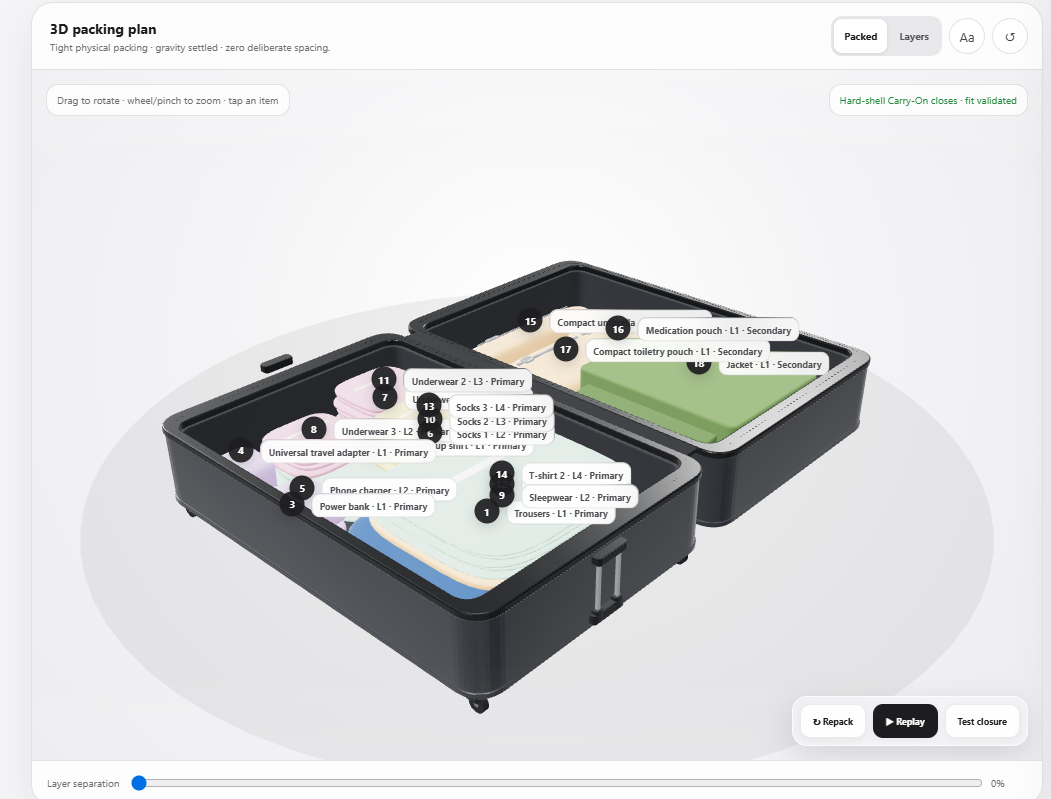
Packed, labeled
-
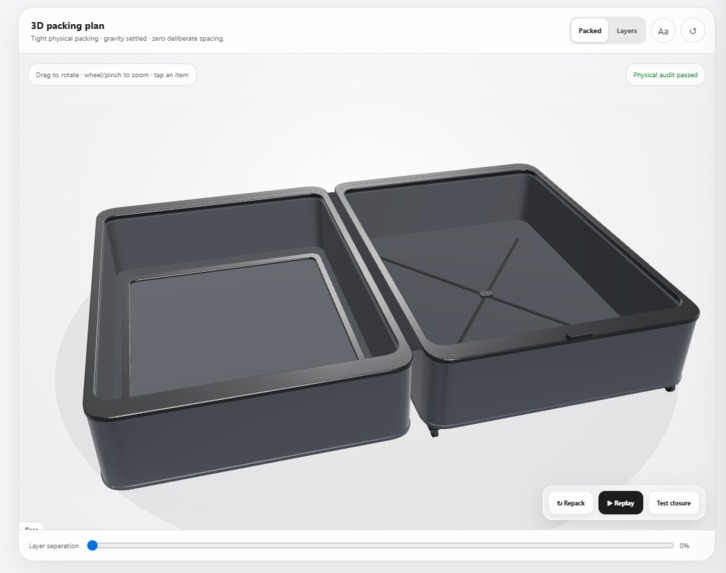
Empty
-
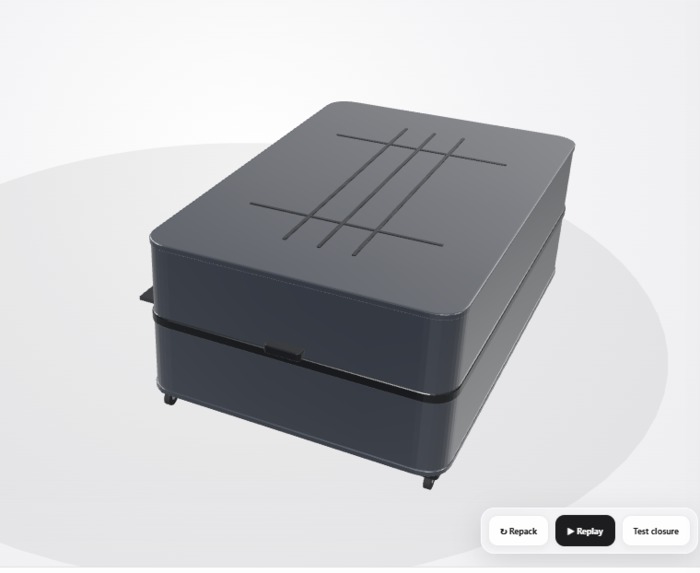
Closed
-
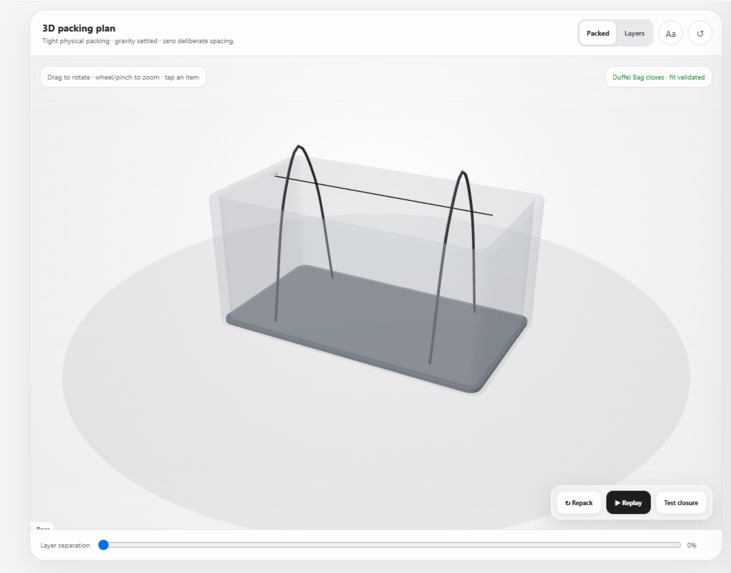
Duffel bag
-
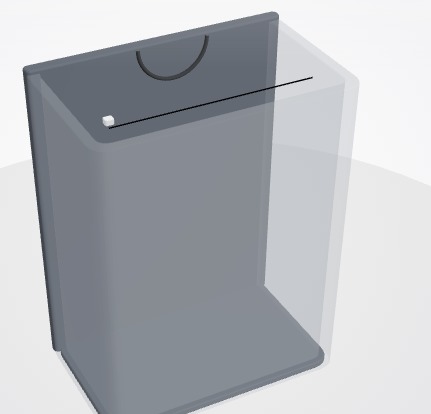
Backpack
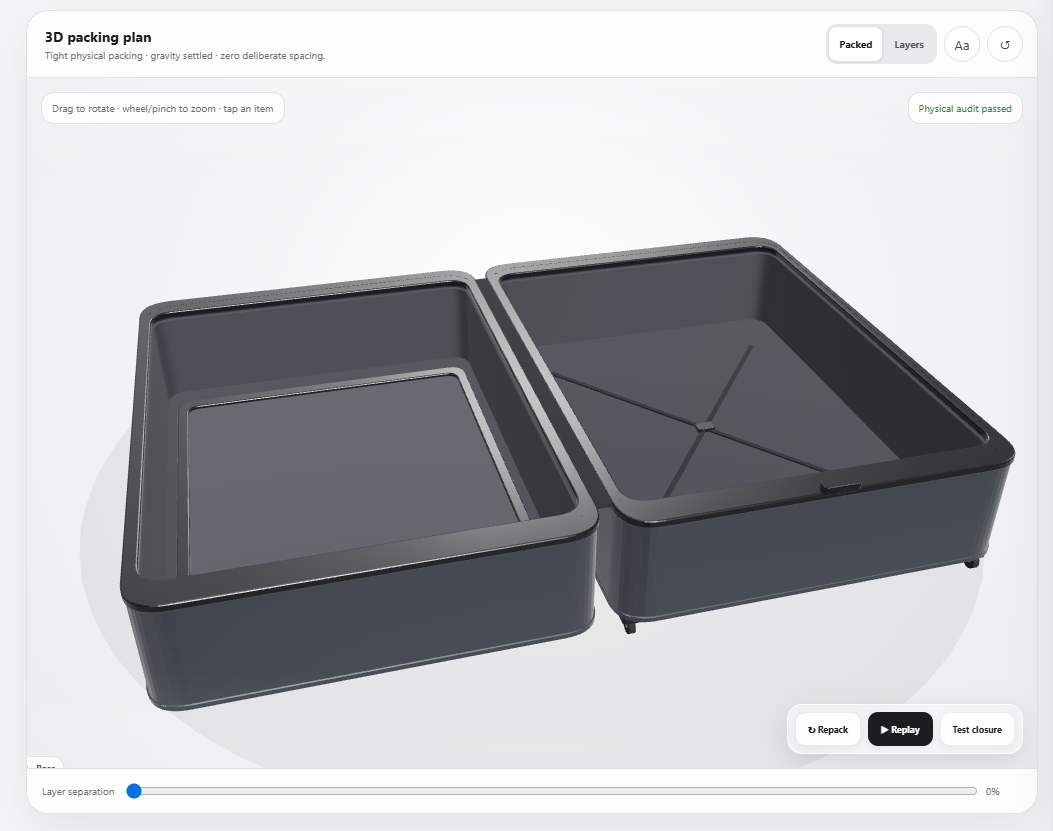
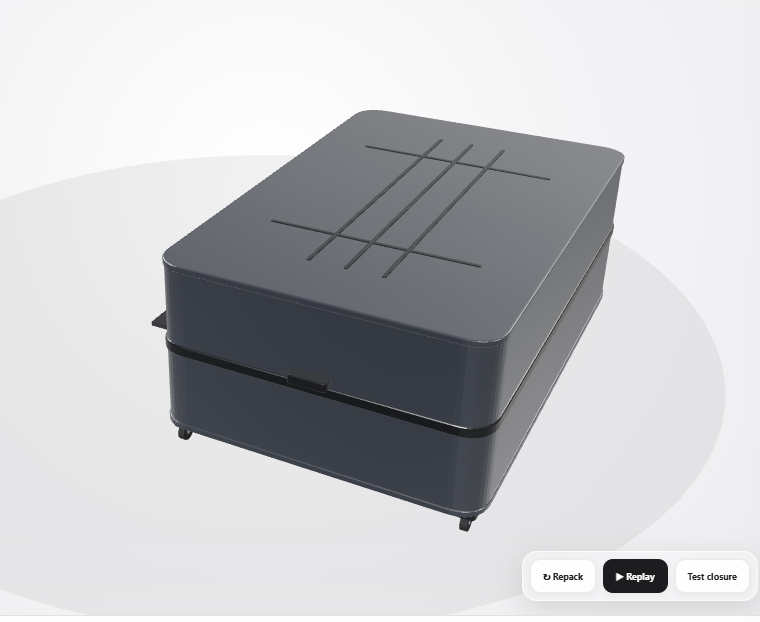
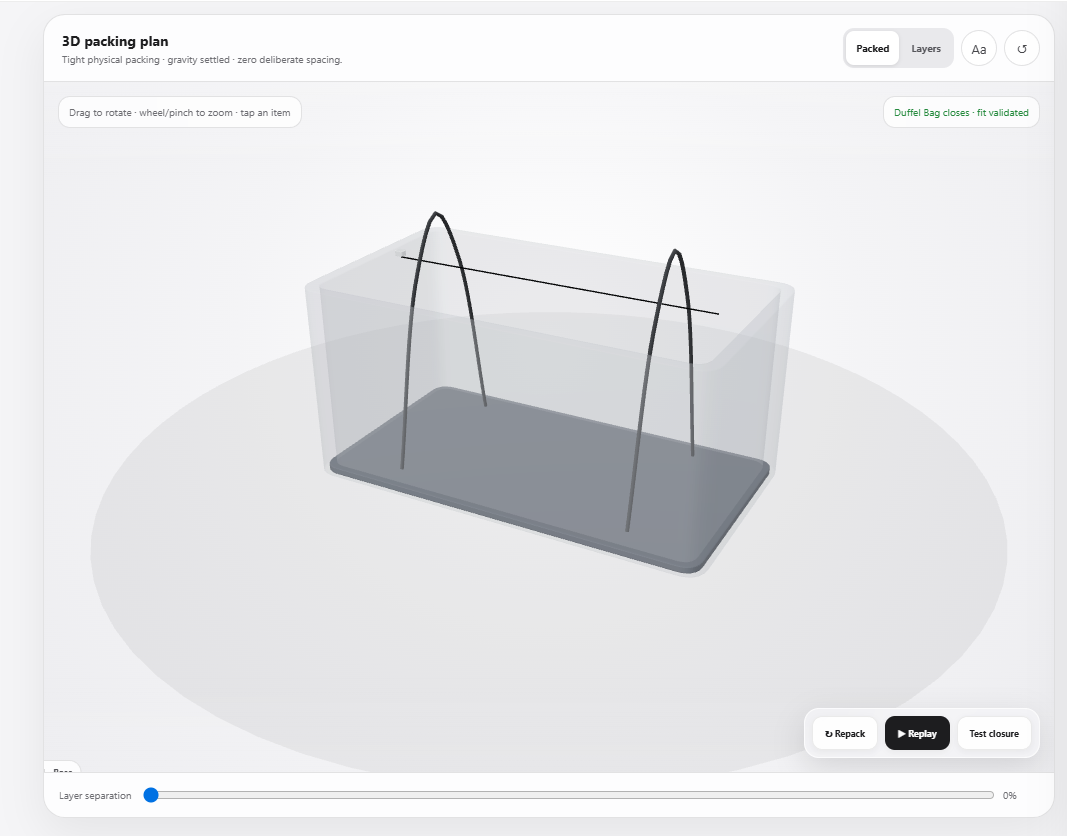
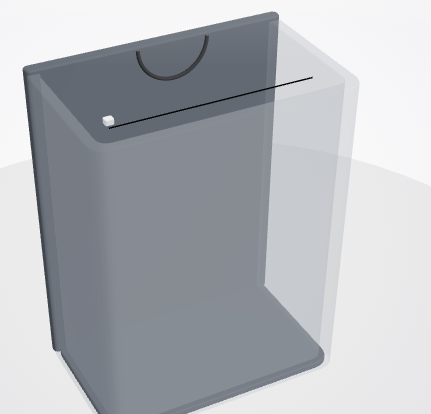
Inspiration
I always procrastinate packing until the very last minute, then struggle to find what belongs where even if I already have a packing list in mind. After I guess where everything should go and then rearrange my suitcase a dozen times, I finally come to find that it doesn't fit.
With AI becoming good at understanding what we need through context and chatlogs, I wanted to create a tool for ChatGPT to express a simple request into something physical and visual that we could actually use.
What it does
Paqly turns any packing list into a 3D packing plan that you can breakdown into clearly labeled layers.
Instead of organizing and planning what to put and where, you can simply tell ChatGPT what you want to bring or even just ask ChatGPT to create a list for you. ChatGPT would then communicate with Paqly directly through WebMCP and create a 3D visual based on the specified suitcase and items.
With Paqly, you are able to see where each item should go, which layer it belongs in, the order in which each item should be packed, how much of the suitcase is filled and whether the packing list actually fits.
How I built it
The core of Paqly is a WebMCP integration that exposes packing functionality directly to AI agents.
Rather than requiring an agent to navigate the website like a human and click through forms, Paqly exposes structured tools that allow ChatGPT to send packing information directly to the application. From there, the packing system takes the item dimensions and suitcase constraints, determines an arrangement, groups the result into packing layers, validates the placement, and passes that result into the interactive 3D visualisation.
A lot of the work also went into making the output understandable. A mathematically valid arrangement is not very useful if a person cannot tell what they are looking at, so the 3D view includes item labels, separated layers, a re-playable packing order and an interactive suitcase view.
Challenges I ran into
The hardest part was making the packing plan physically believable rather than just visually impressive.
Early versions could technically place objects inside the scene while still producing obviously bad results: items could overlap, float, extend outside the suitcase or leave large amounts of wasted space.
This meant I had to treat validation separately from visual rendering and continuously check that the generated arrangement actually made sense.
Another challenge was the WebMCP integration itself. I wanted the AI to interact with Paqly through structured WebMCP tools rather than simply using browser automation to click around the interface.
Finally, 3D packing is much harder than displaying a normal list. Different objects have different dimensions, orientations and levels of compressibility, while the final result still needs to be simple enough for someone to reproduce with a real suitcase.
Accomplishments that I'm proud of
I'm most proud that Paqly goes beyond giving packing advice.
You can describe what you are trying to pack like thinking aloud and get back an actual spatial plan showing where everything should go, and the combination of AI, WebMCP and interactive 3D makes the result easier to obtain and follow.
I'm also proud of how much the physical packing and visualisation improved throughout development. What started as basic object placement became a layered system with packing order, fit validation and a much clearer 3D representation of the suitcase.
What I learned
The biggest thing I learned is that giving AI tools is much more interesting than simply putting an AI chatbot inside a website.
WebMCP lets the AI interact with the actual functionality of Paqly. The AI handles the vibes, while Paqly handles the specialised packing logic and visualisation.
I also learned how quickly a 3D system can look correct while being physically wrong. Building this forced me to think much more carefully about constraints, validation and the difference between generating something that looks good and generating something that actually works.
What's next for Paqly
The next step is making Paqly understand more about the real world.
I want it to support a much larger library of real items, better modelling of soft and compressible objects, different suitcase types and more advanced physical optimisation to better simulate a real packing environment. I want it to be able to mathematically find not just the optimal placement for each item, but the optimal fold, the optimal angle, and other features that make a paq perfect.
Built With
- cannon-es
- chatgpt
- codex
- css3
- html5
- javascript
- netlify
- three.js
- webmcp

Log in or sign up for Devpost to join the conversation.