-
Home Page
-
Mind Maps 1
-
Mind Maps 2
-
Article 1
-
Article 2
-
Paper:Vision
Inspiration
Paper:Vision was inspired by the growing challenge of information overload in the digital age. We recognized that people, especially those with ADHD, often struggle to focus on lengthy articles and research papers. We have provided a solution that simplifies the process of reading and comprehending complex content while enhancing accessibility.
What it does
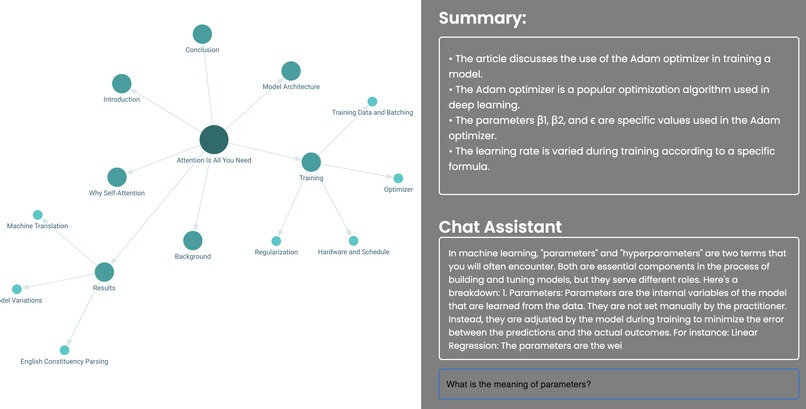
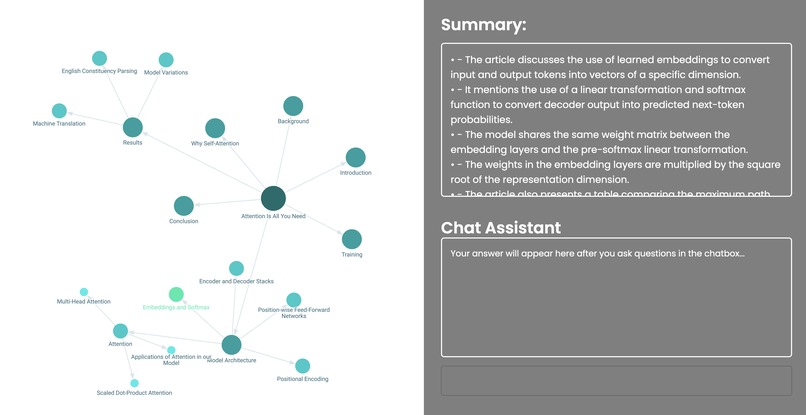
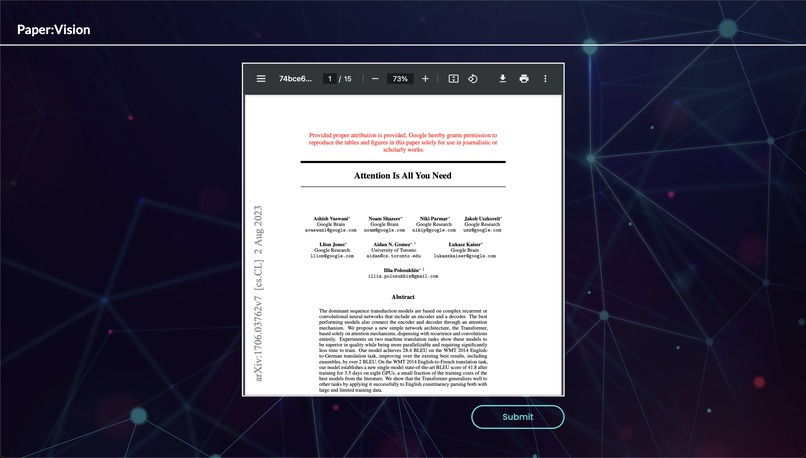
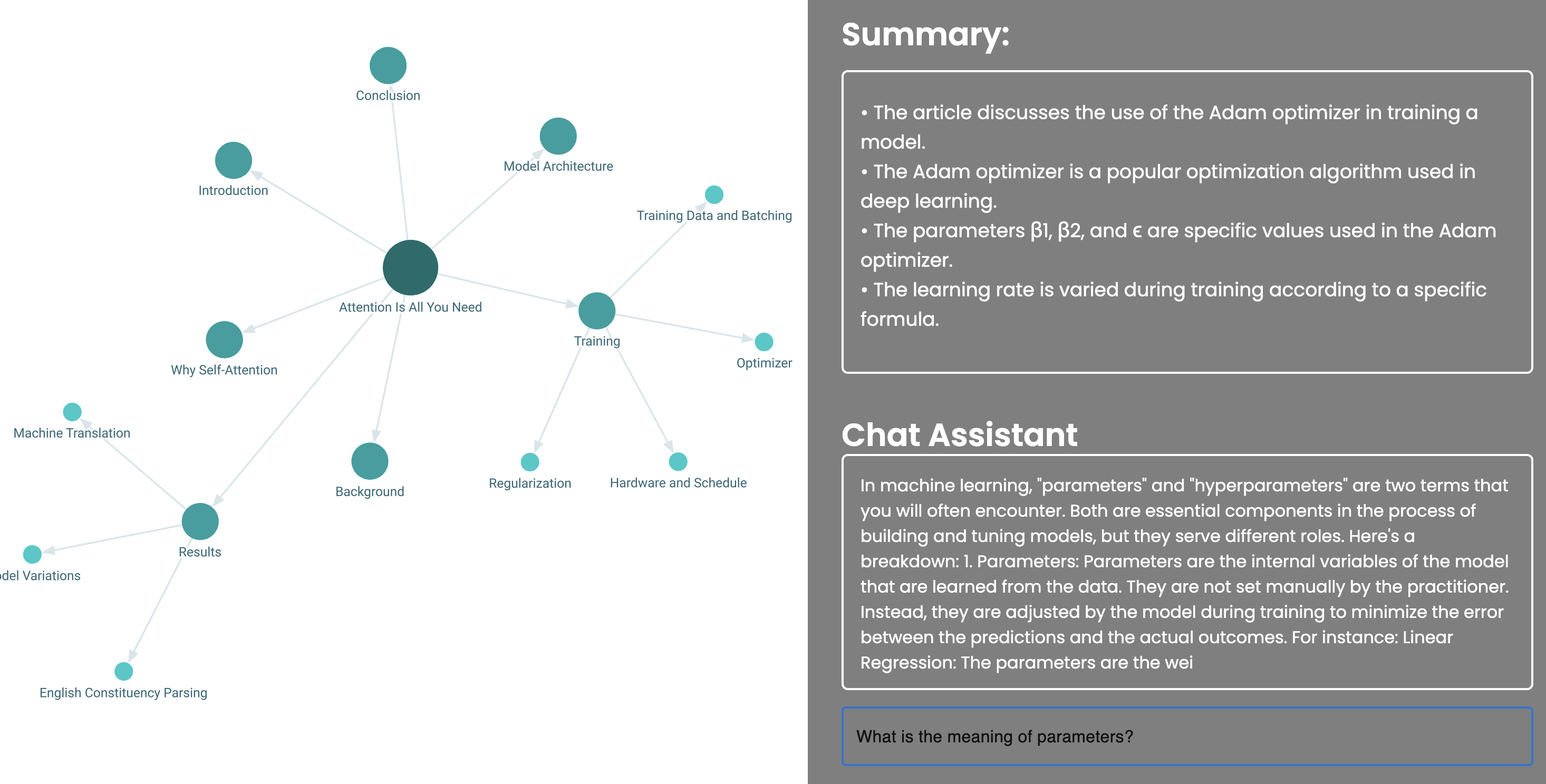
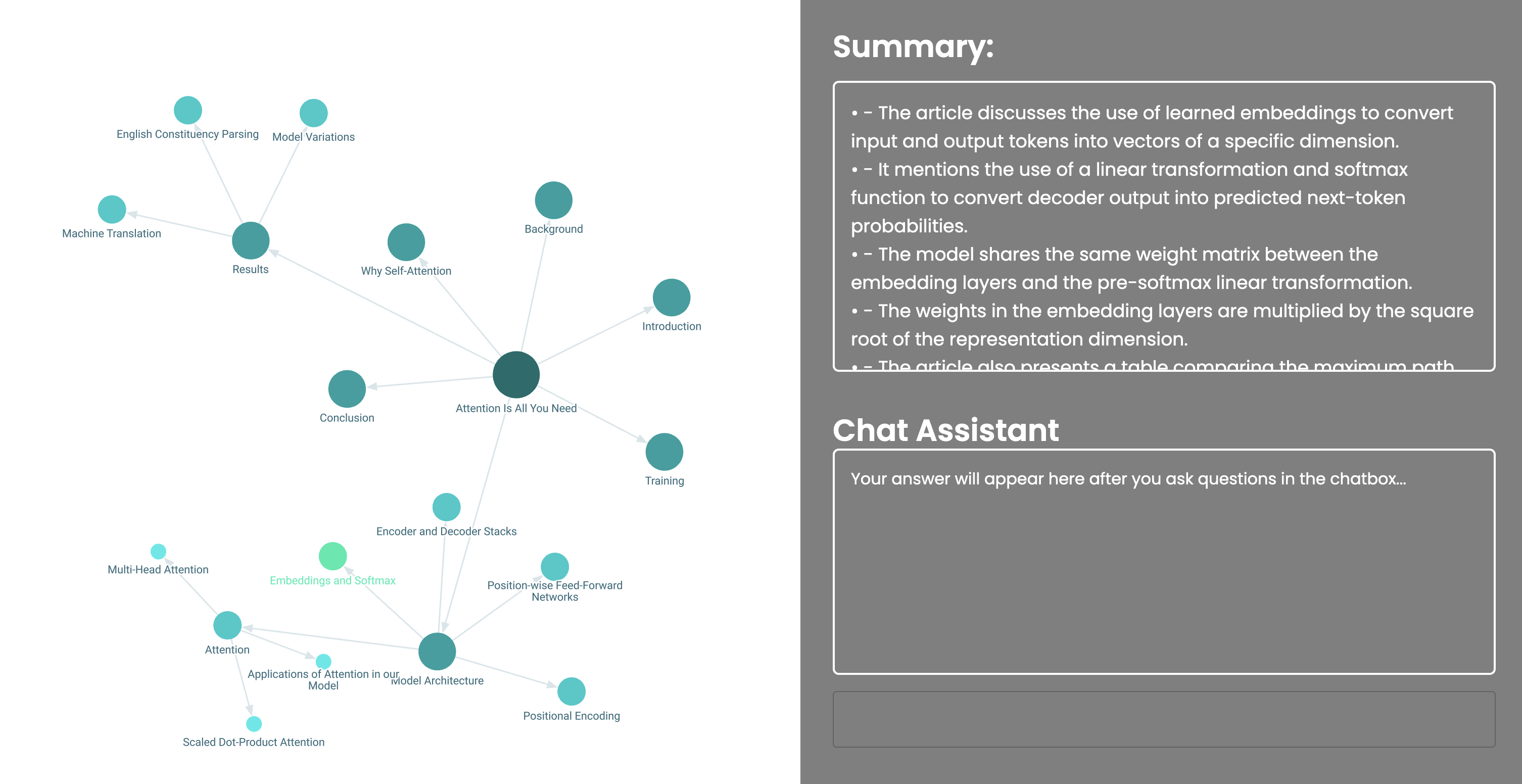
Paper:Vision is a web-based framework designed for individuals with ADHD that takes articles, breaks them down into sections and subsections, and generates visual mind maps. Each node in the mind map contains a summary of its corresponding section with bullet points. The tool also includes a chatbot that can answer questions related to the content, making it easier for users to actively interact with articles, save time, and improve comprehension.
How we built it
The back-end uses Python and GPT-3.5 to parse out articles into relative sections and subsection. Each of them are represented as nodes, having attributes such as Title, Text, Children etc. The back-end uses Flask to communicate with MongoDB and send the nodes to Front-end where the mind map is generated using React and WebGL.
Challenges we ran into
The prominent challenge was to create the mind map using nested nodes, including the feature to show text and chatbot once a node is clicked. Another challenge was effective parsing of large articles, and making sure the summary highlights all important information.
Accomplishments that we're proud of
We're proud of achieving a user-friendly and visually engaging tool that simplifies complex content. Feedback from users has been overwhelmingly positive, with many reporting improved reading comprehension and efficiency.
What we learned
- Debugging CORS issues: Upon attempting to send requests to our backend (Flask) and receiving 404 errors, we spent a few hours trying to make Flask allow CORS. We are now experts 😎
- We learned how to learn fast: This project required many niche components that most developer don't use every day (WebGL for mind-maps). This project taught us to graph many tools on the fly.
What's next for Paper:Vision
- User database system: We would like to enhance our user experience by allowing users to save their mind maps to their profiles. This saves them the trouble of re-inputting a PDF file that they have previously seen, and allows them to refer back to various concepts.
- Support for images and tables: Currently, we are able to provide interactive sections of information based on the PDF's text, skipping over any images and tables. We would like to use visual data in our mind map to help users achieve an intuitive understanding of the article's content.
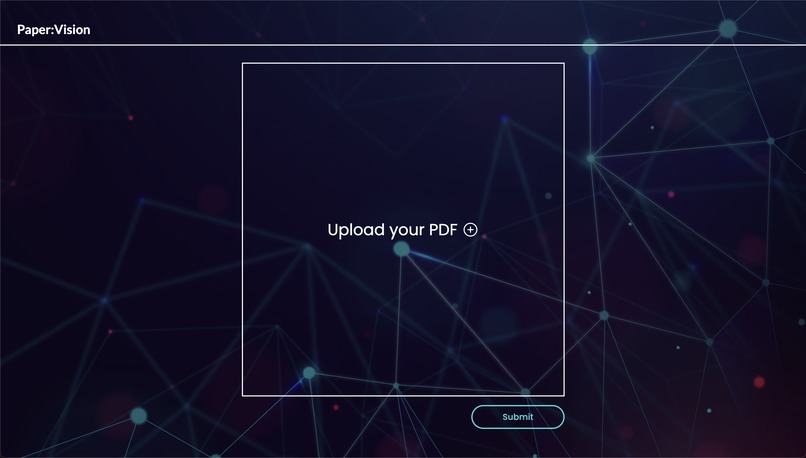
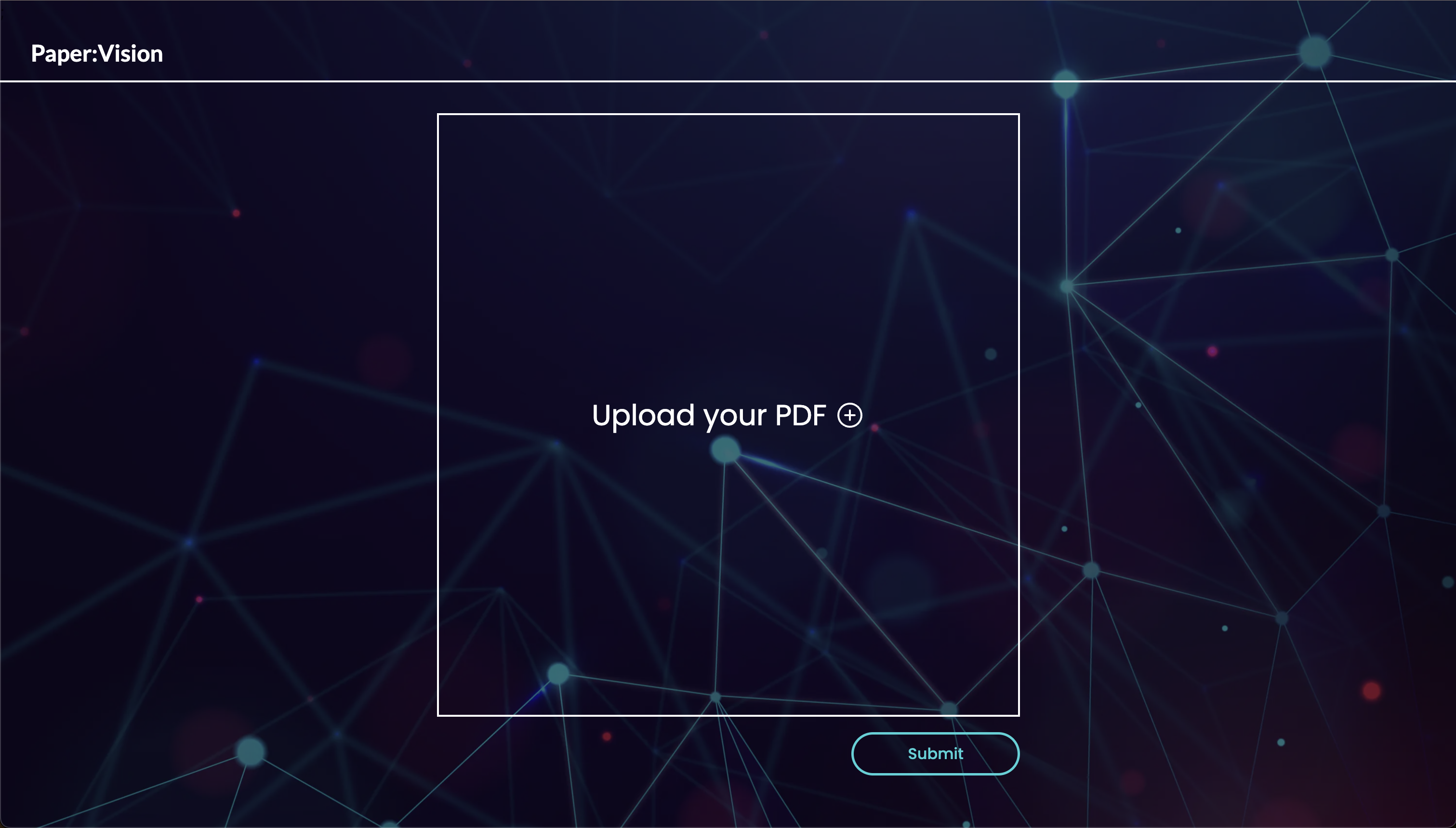
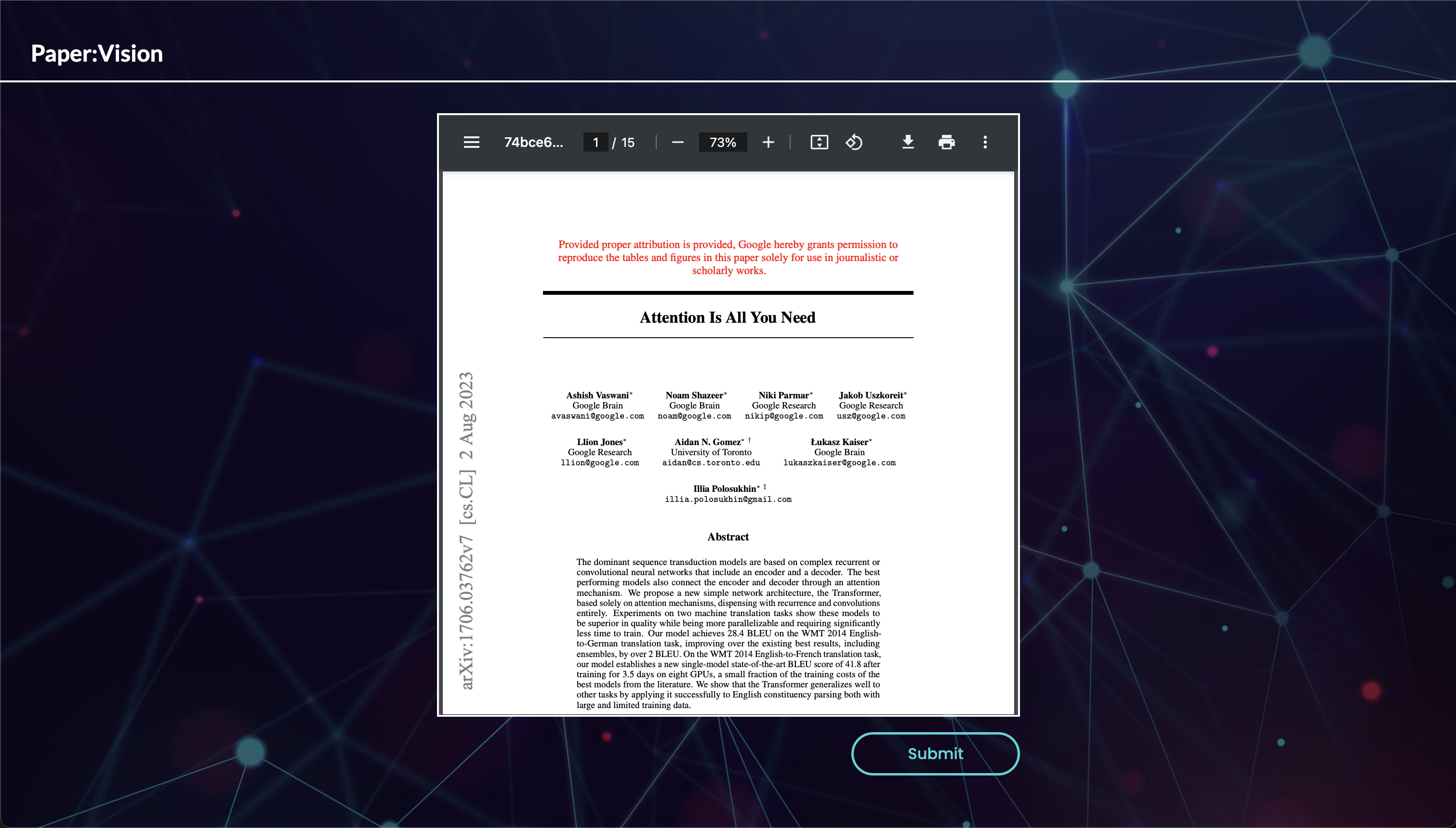
- Processing websites: Our current website flow involves the user dropping a previously saved PDF. We would like to expand our support for website URLs.
- Partnerships: We would like to explore the potential impact of Paper:Vision on the success of students in higher learning by committing to partnerships with educational institutions, integrating our platform into school platforms.


Log in or sign up for Devpost to join the conversation.