-
-
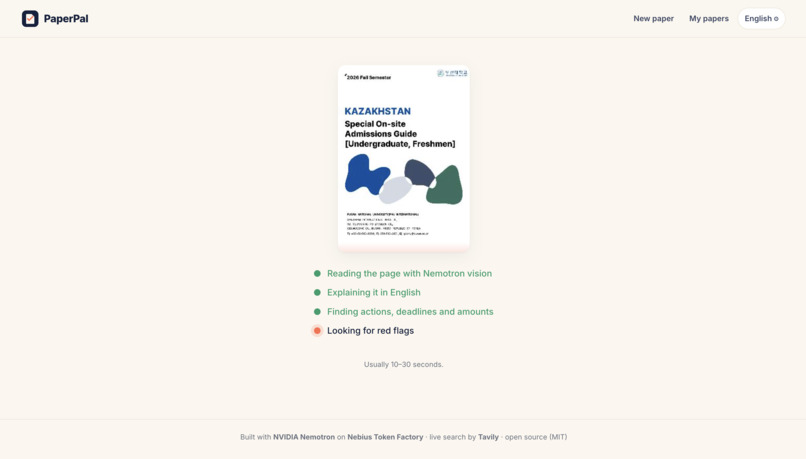
document analyzing
-
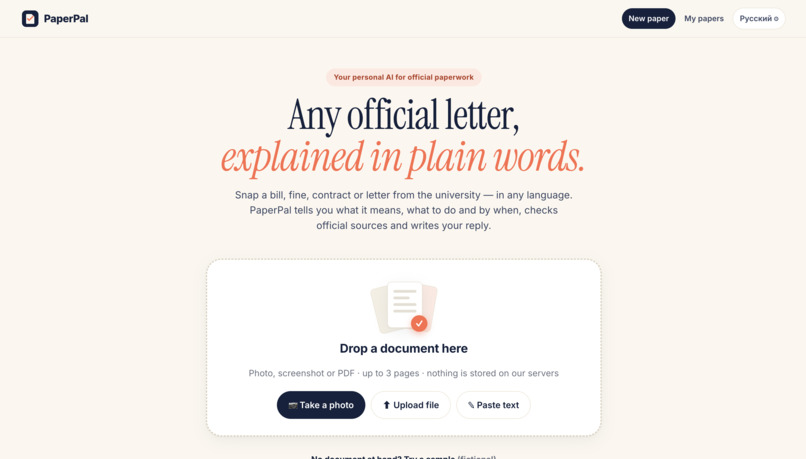
homepage
-
-
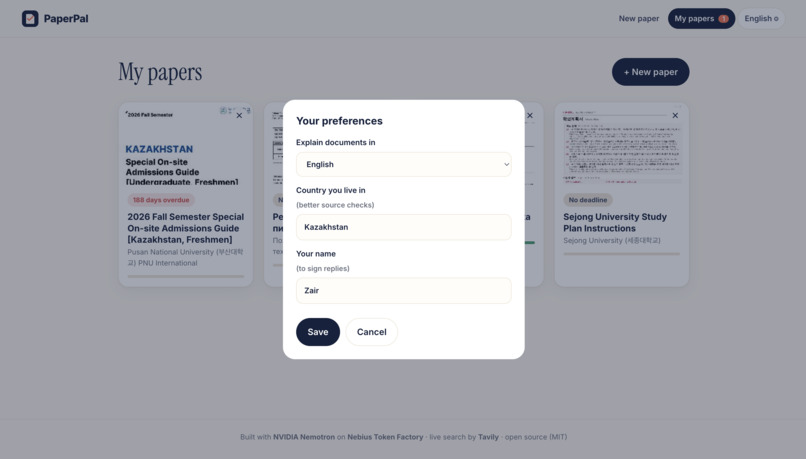
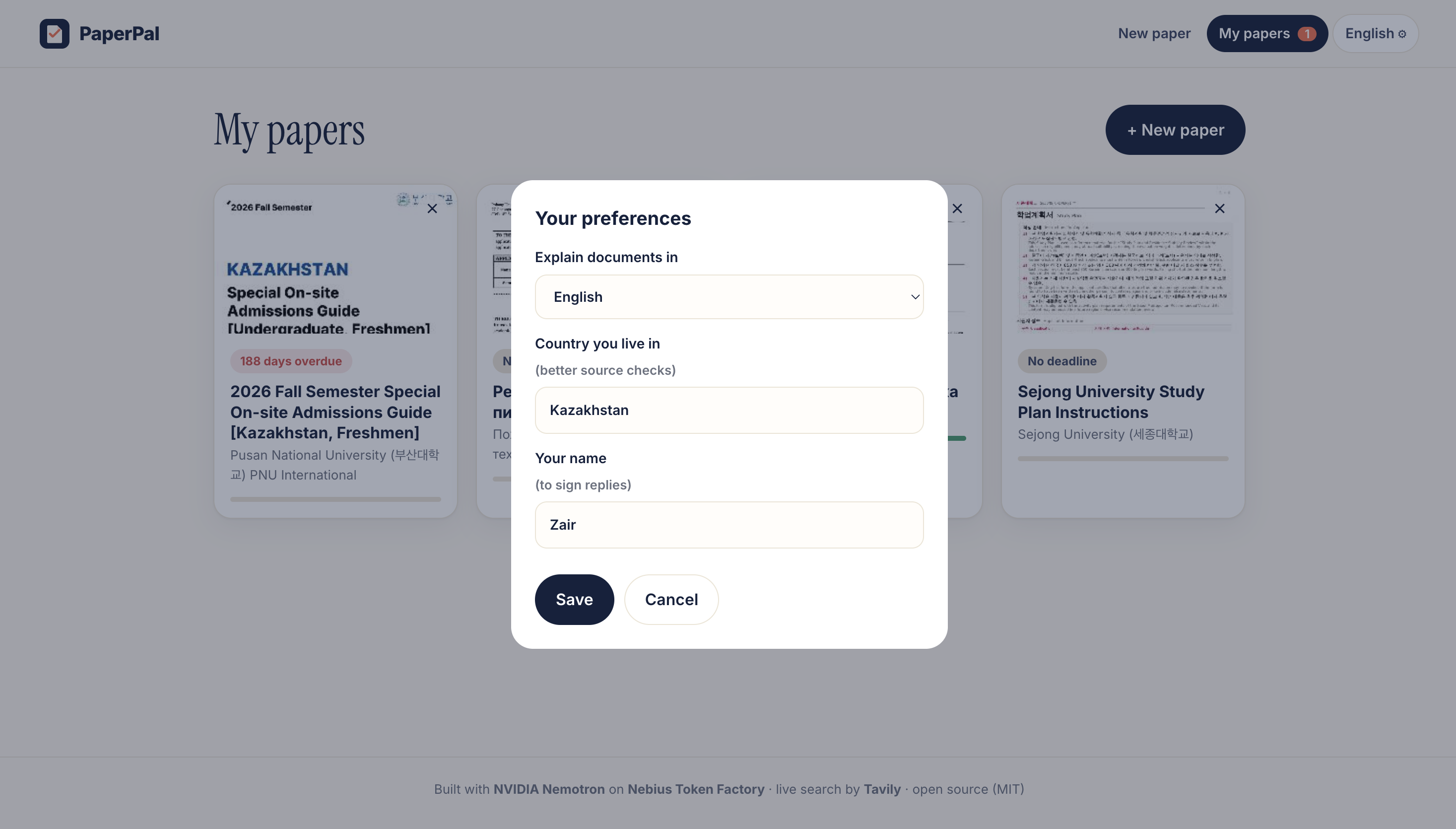
settings
-
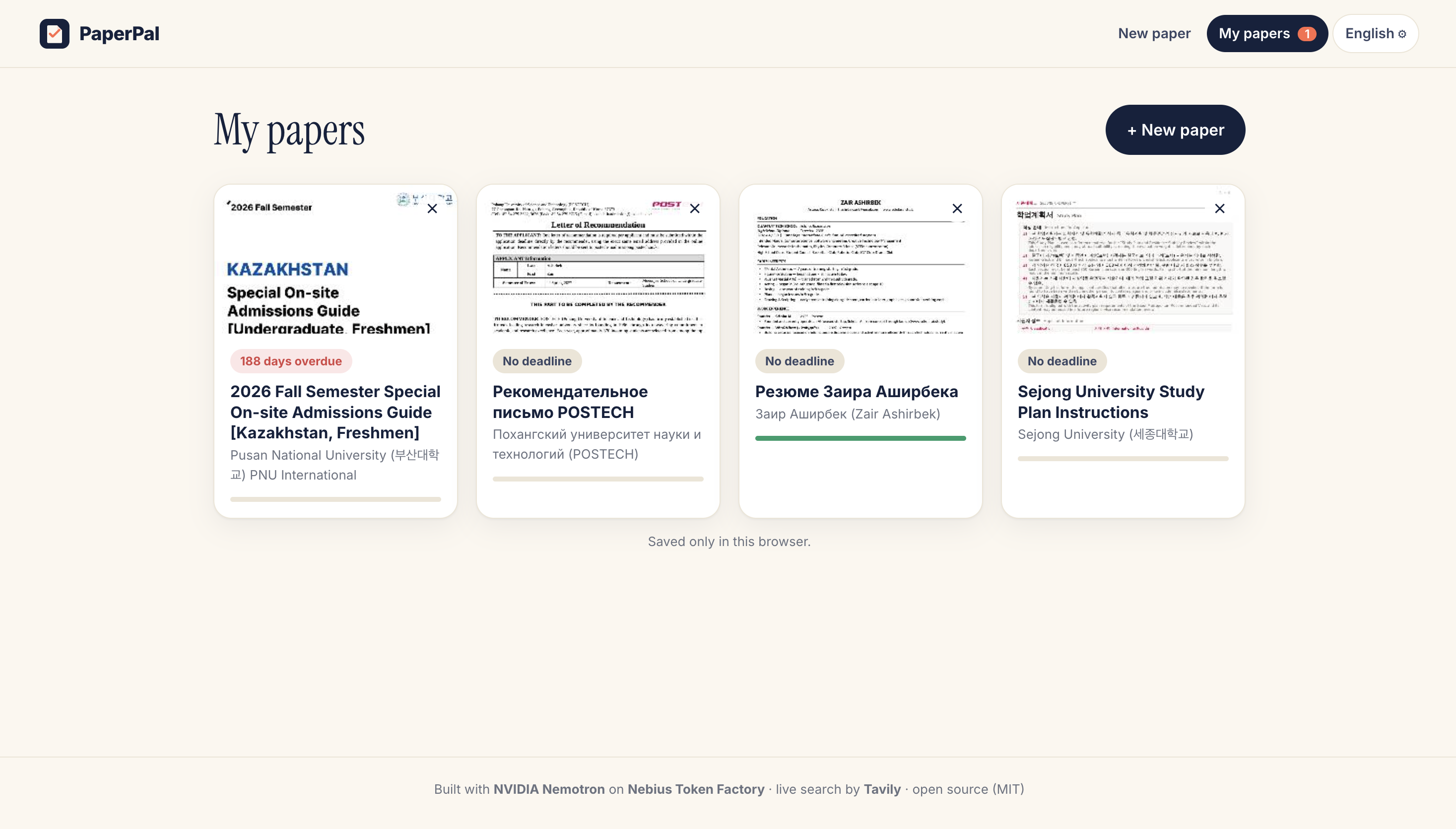
my papers
-
overview
Inspiration
I'm about to move to South Korea for university. The first thing waiting for me there is paperwork in a language I can't read yet: tuition bills, visa letters, housing contracts, fines. Millions of people already live this way: international students, migrants, elderly people, anyone who has stared at an official letter and wondered "What do they want from me, and by when?"
Translation apps turn the words into another language, but they don't tell you what to do, by when, or whether the letter is even legit. Missing one deadline can cost you a fine, your apartment or your visa. I wanted a personal AI that sits next to you like a friend who has read a thousand of these letters.
What it does
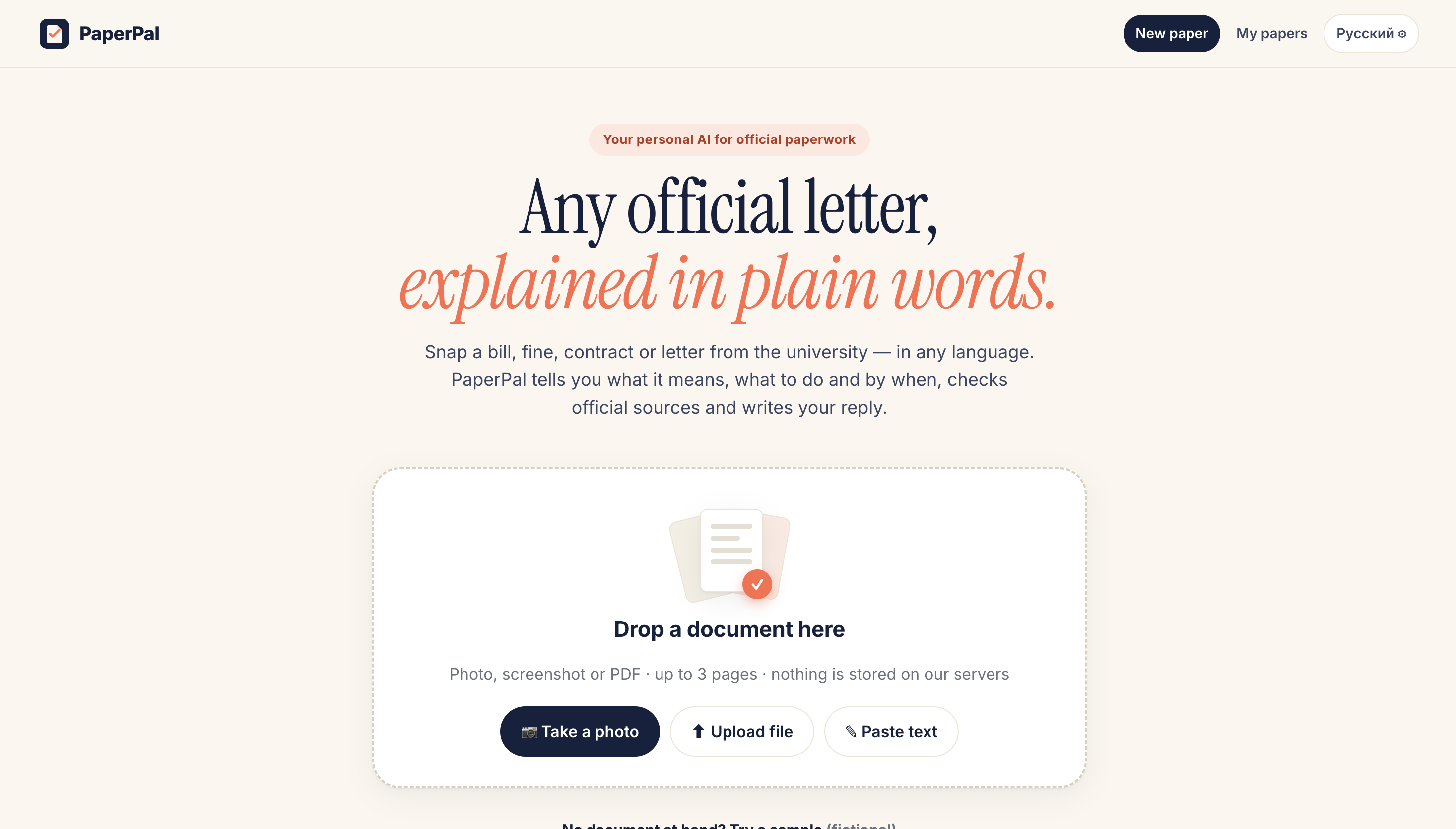
- Snap, upload or paste a letter, bill, fine, contract or email, as a photo, PDF or text, in any language.
- Plain-words explanation in your language: what the letter is, who sent it, and what they want from you.
- A to-do list with real deadlines. Relative dates like "within one week of receipt" become actual dates (marked as estimates). You get countdowns, a calendar file (.ics) with reminders, and browser notifications.
- Money and consequences: every amount, and what happens if you ignore the letter.
- Red flags: possible scam signs, missing information, unusual demands.
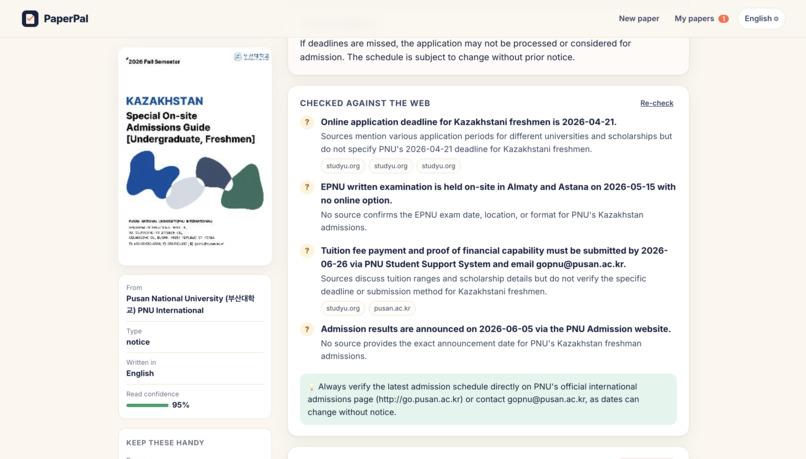
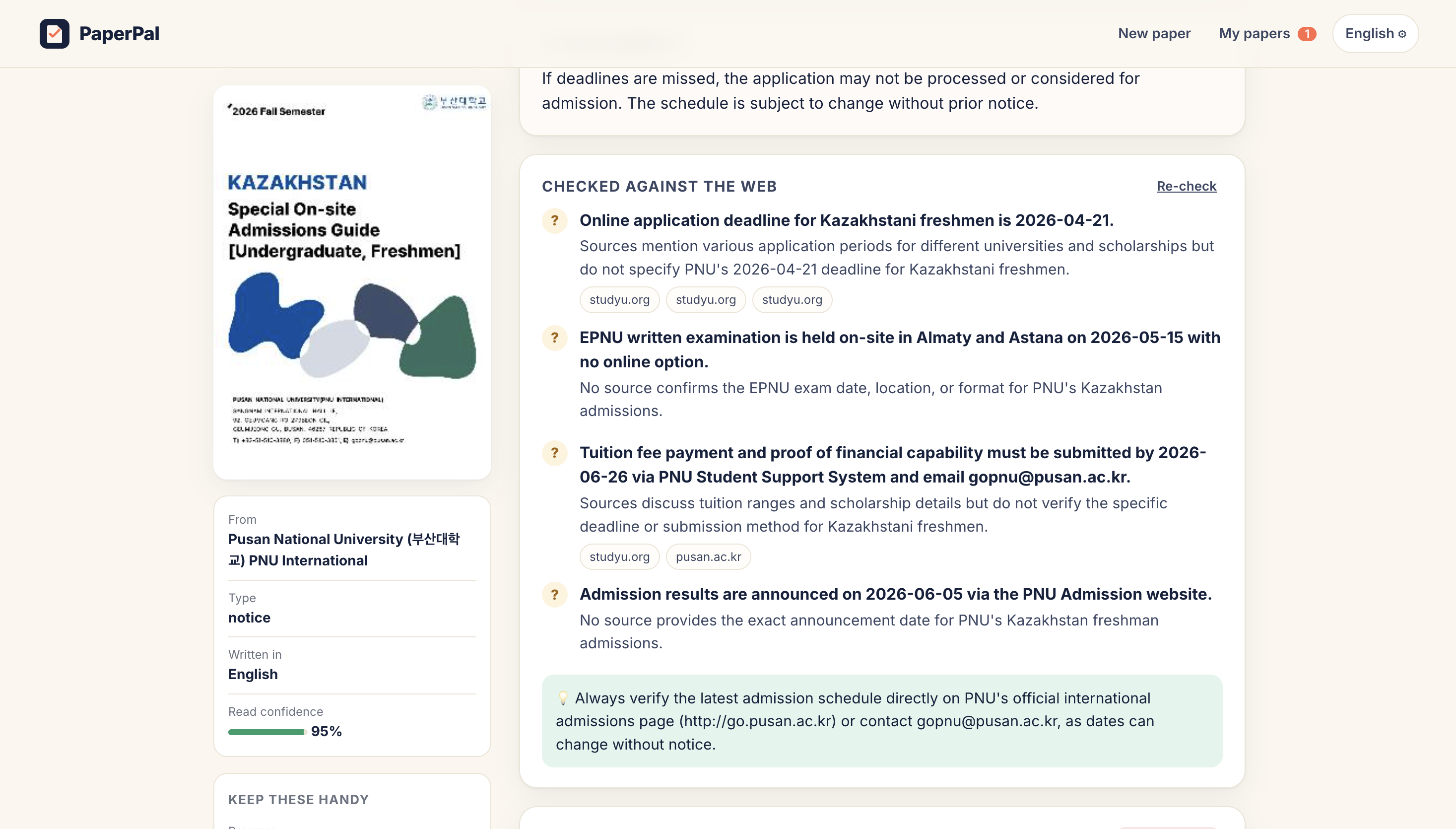
- Checked against the live web. PaperPal searches official sources and marks each key rule as confirmed, differs or unclear, with links. In testing it confirmed a German parking fine against official government portals and caught that the appeal period was 2 weeks, not 1.
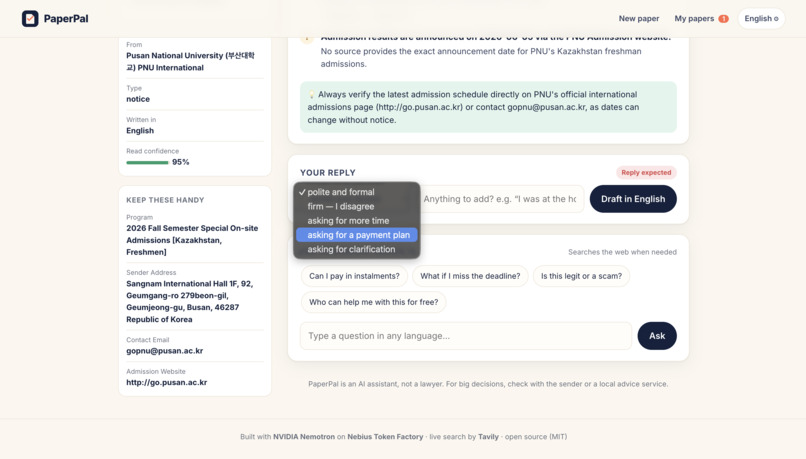
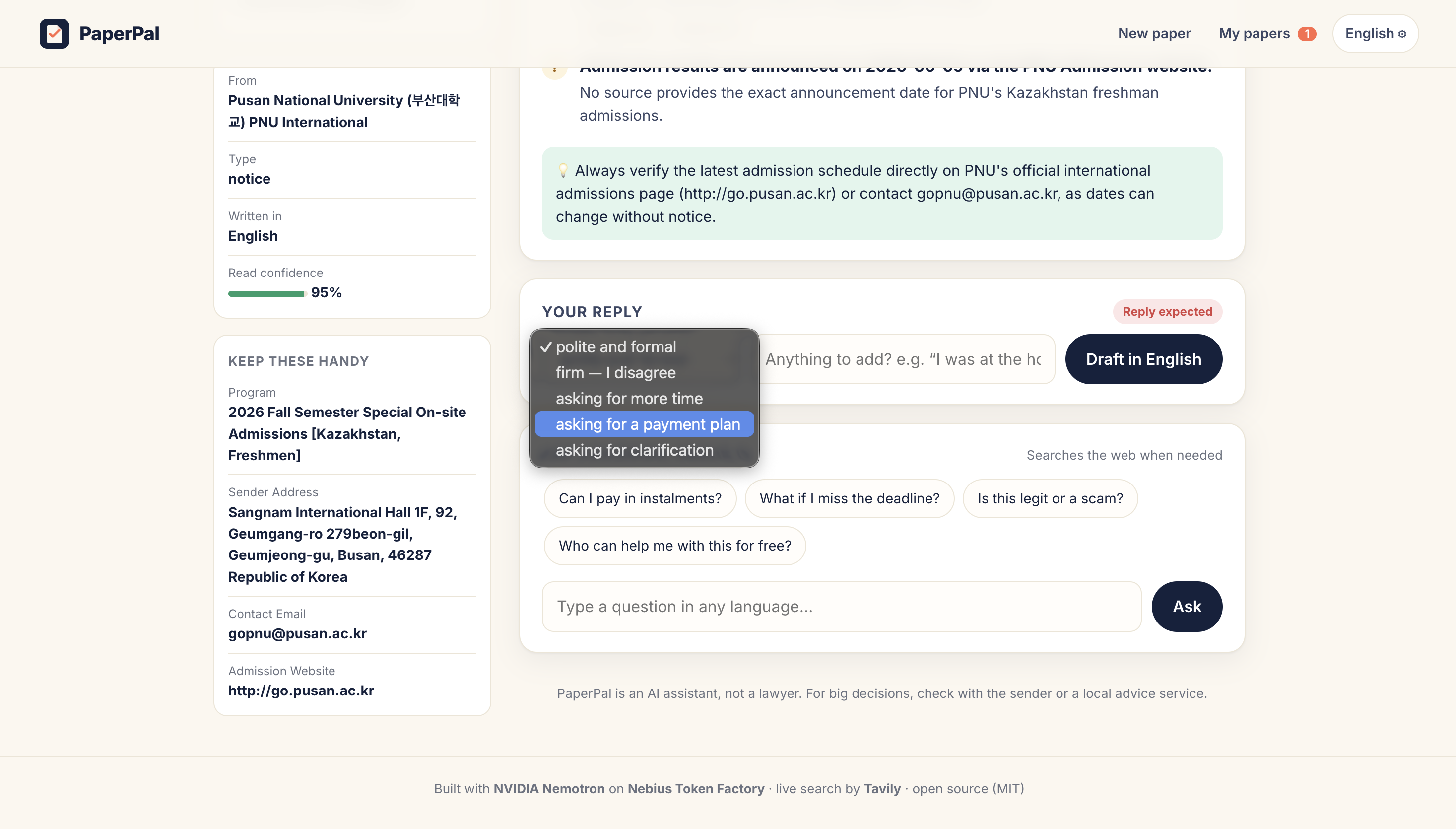
- Your reply, written for you. It drafts a reply in the sender's language (German for a German office, Korean for a Korean university) in the tone you pick ("asking for more time", "I disagree", "payment plan"), plus a translation so you know what you're signing.
- Ask anything: a chat about the document that searches the web when needed and cites sources.
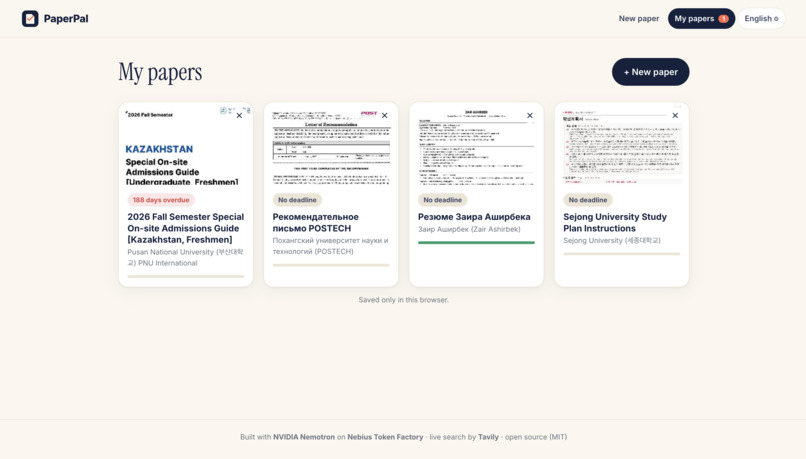
- My papers: every document with its open deadlines, sorted by urgency. Data stays in your browser.
How we built it
- NVIDIA Nemotron models on Nebius Token Factory (OpenAI-compatible API), each used for what it does best:
Nemotron-3.5-Super-VLreads photos and scans directly: stamps, tables, small print, Korean/German/Russian text.nemotron-3-super-120b-a12breasons over the document and the web sources, fact-checks them and drafts replies.Nemotron-3_5-Lightningmakes fast decisions (does this question need a web search?) and translates the fact-checks.
- Tavily live web search for checking official rules and answering questions.
- Front end: Vite + TypeScript, pdf.js for PDFs, and no framework, so it stays fast on phones.
- Back end: Vercel serverless functions. API keys stay on the server, and documents are never stored.
- Structured JSON output with a schema, a tolerant JSON parser and automatic retries.
Challenges we ran into
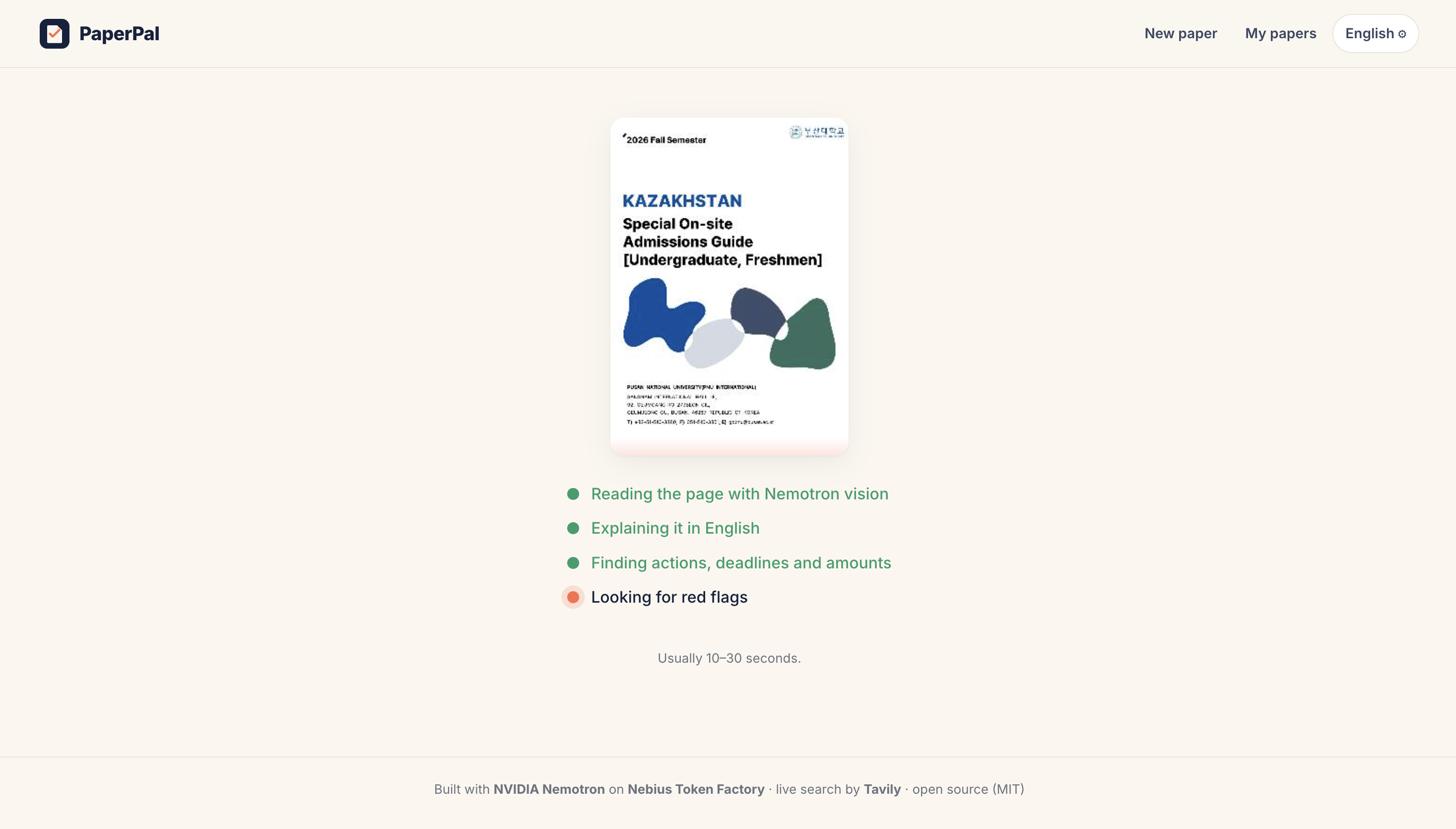
- Reasoning tokens vs. long JSON. The vision model sometimes spent most of its budget thinking and the JSON got cut off. I tuned reasoning per step (short reasoning for reading documents, none for quick planning and translation) and added a fallback chain. Reading now takes about 25 seconds and the other steps 6–10 seconds.
- Deadlines without dates. Official letters say "within 14 days of receipt". The model now computes the date from the letter date plus typical delivery time and labels it as an estimate.
- Language discipline. The web sources are mostly English, so answers drifted into English. A small Lightning translation pass keeps everything in the user's language, while replies stay in the sender's language.
- The AI was too good at spotting fakes. My first fictional samples used placeholder emails and phone numbers, and PaperPal flagged them as signs of a forged document. I had to make the samples more realistic.
Accomplishments that we're proud of
- It reads a Korean tuition bill from a phone photo and gets every amount and both deadlines right.
- The fact-check finds and cites official government pages, not random blogs.
- A full loop from photo to understanding to deadlines to a verified, ready-to-send reply in under a minute.
- Works in 16 languages and on mobile, with nothing to install.
What we learned
- Vision LLMs are now good enough to replace the OCR → translate → reason pipeline with a single step.
- Controlling reasoning effort per call matters as much as choosing the model.
- Grounding with live search turns "the AI says so" into "here's the official page".
What's next for Paperpal
- Multi-letter cases: follow-up letters linked to the same matter.
- Country packs with verified official sources (Korea, Germany, Kazakhstan…).
- Filling in official forms from the letter and the user's profile.
- Optional encrypted sync and a mobile app with camera-first capture.
- Partnering with universities' international offices and migrant-support NGOs.
Built With
- css
- html
- javascript
- nebius-token-factory
- nemotron-vl
- nvidia-nemotron
- pdf.js
- tavily
- typescript
- vercel
- vite

Log in or sign up for Devpost to join the conversation.