-
-
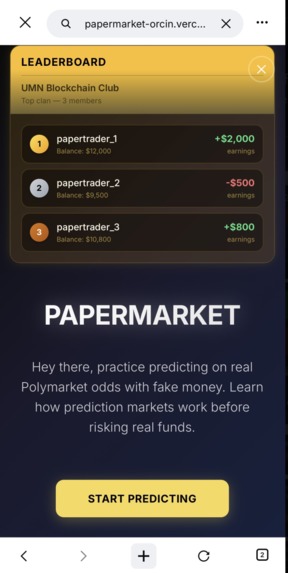
Homepage
-
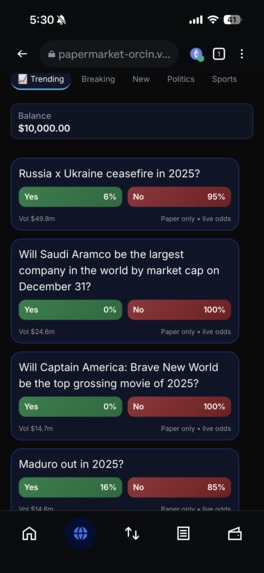
Markets
-
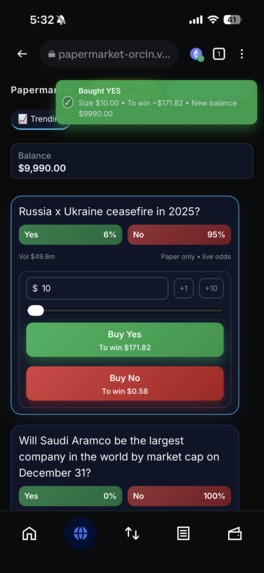
buy
-
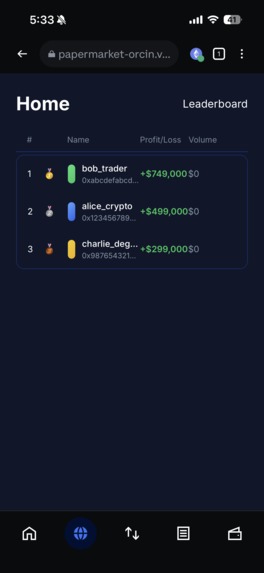
leaderboard

Inspiration
We love prediction markets, but we’ve seen firsthand how intimidating they can feel for new users. When real money is involved, people hesitate, even if they’re curious and have strong opinions. We wanted to remove that initial fear and replace it with something familiar: friendly competition. Papermarket is built around that simple idea: let people learn by playing, and let the rivalry make it fun.
What it does
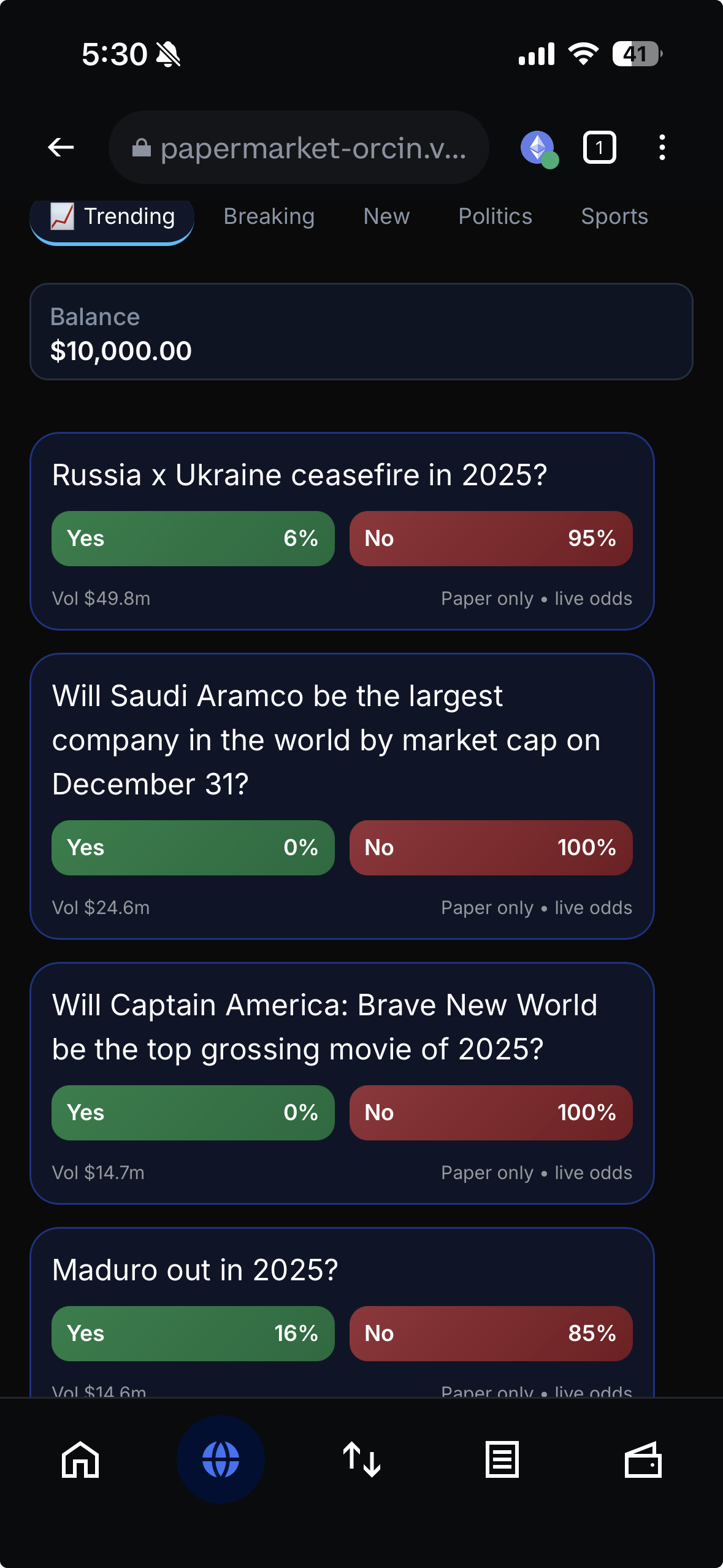
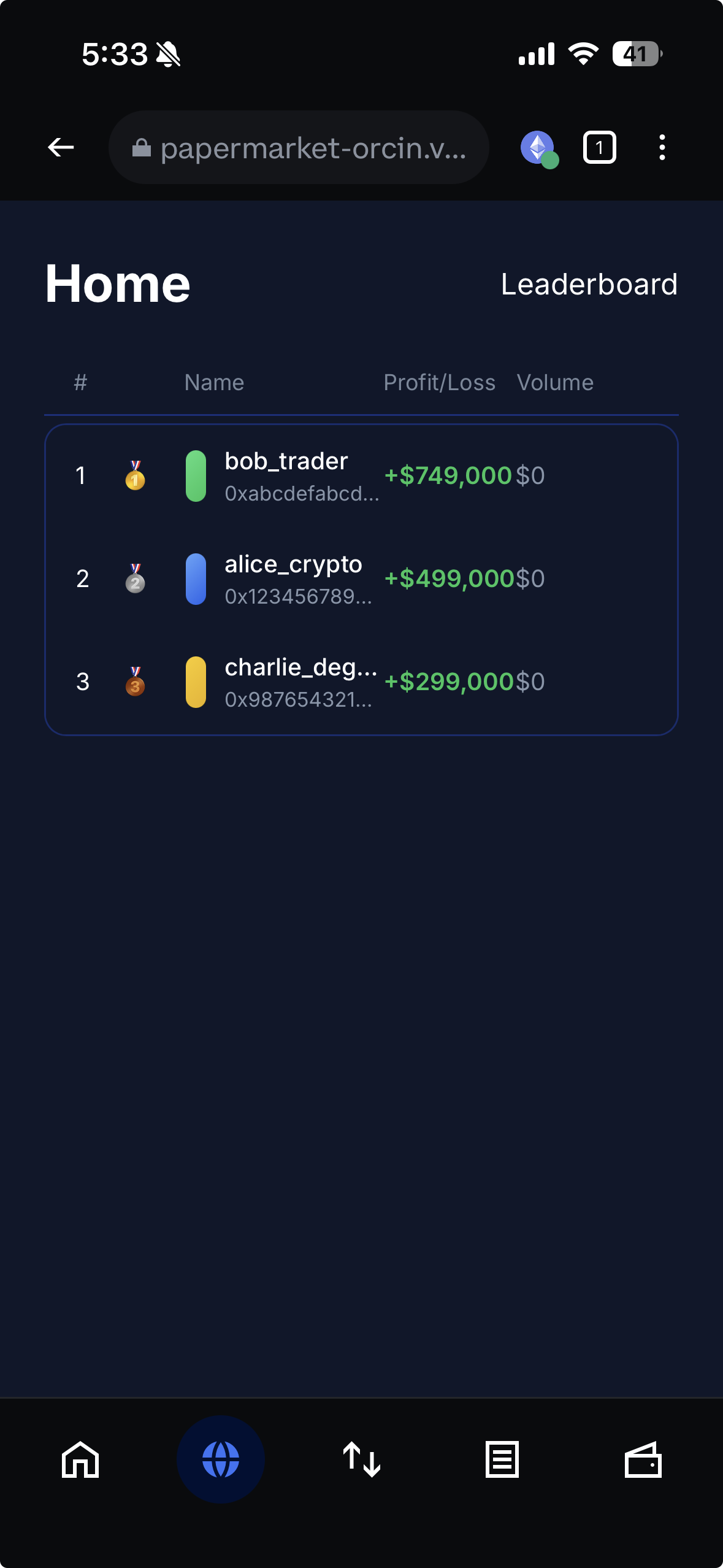
Papermarket lets anyone practice predicting real Polymarket events with fake money. You can create a league with friends, make picks on real markets, and track your score as the odds move. The live leaderboard shows who’s actually beating the crowd. No risk, no stress, just a clean, fast way to understand prediction markets and prove you know what’s going to happen.
How we built it
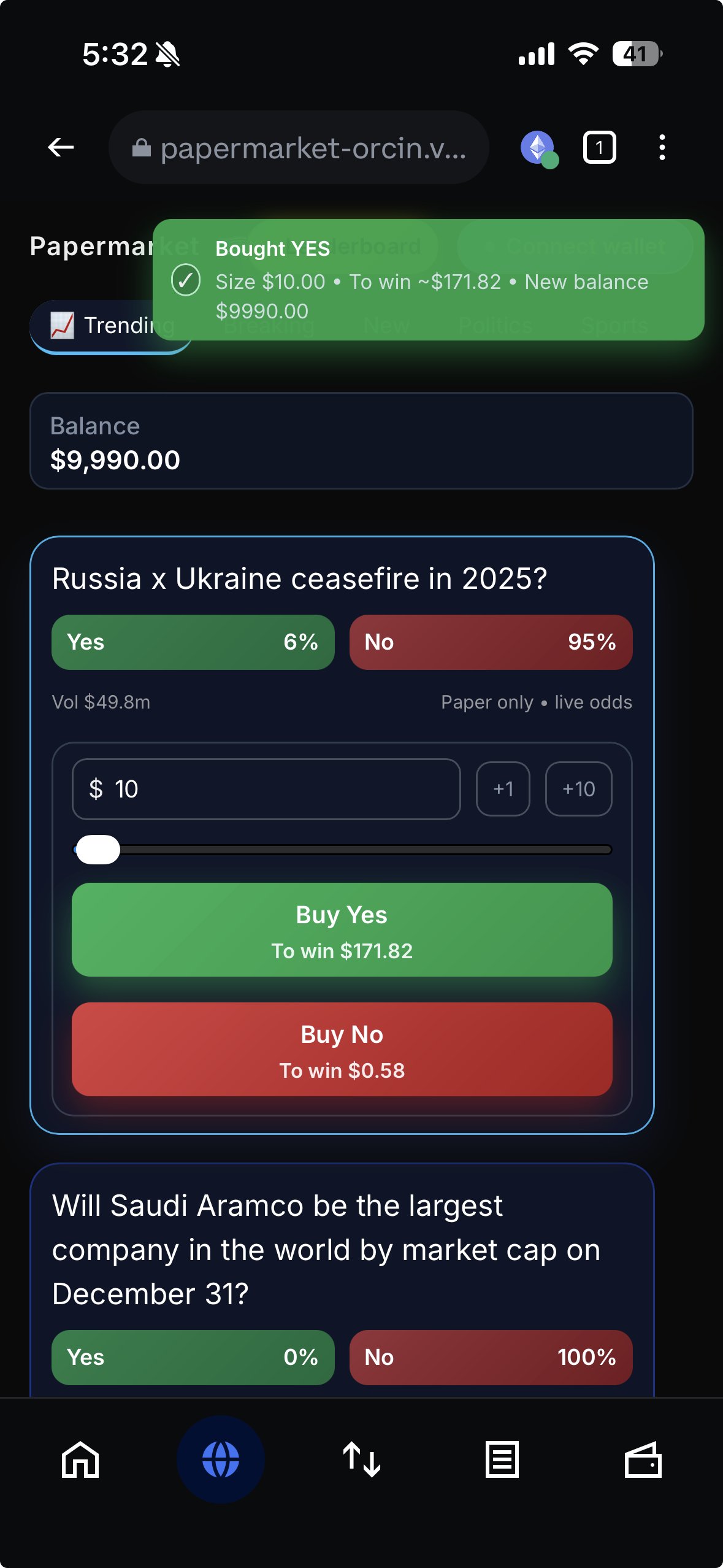
We built Papermarket by combining live Polymarket data with a lightweight, mobile-first trading interface designed specifically for Base Mini Apps. The architecture uses a server-side API route to safely fetch markets, while the client side handles fast interactions, card animations, and real-time filtering. We added a virtual balance system using localStorage so users can paper-trade with $10,000 and see how their strategy plays out without spending anything. MiniKit provides seamless Base integration, and custom toast notifications give immediate feedback for every trade. The result is a clean, fast, gamified experience that makes prediction markets accessible to anyone.
Challenges we ran into
A lot of the challenge wasn’t just coding — it was learning how to build something together. We had to figure out how to stay organized, merge changes safely, and avoid breaking each other’s work. Using Git and GitHub became its own learning experience, especially when we ran into merge conflicts or pushed something that wasn’t ready.
On the product side, getting the UI to feel smooth on mobile took more trial and error than expected. We rebuilt the market cards several times because they kept shifting, breaking layouts, or reacting in ways we didn’t plan. We also struggled at first with how to manage a shared balance system and make trades feel responsive and intuitive.
Overall, the hardest parts were communication, coordination, and making lots of small decisions that all had to work together in one clean experience.
Accomplishments that we're proud of
One of our biggest accomplishments was simply getting everything to work together smoothly. We took real Polymarket data, turned it into clean and responsive cards, added a working balance system, and built a full trading flow inside a Base Mini App — something none of us had done before.
We’re also proud of how we improved as a team. Early on, even small Git conflicts felt overwhelming, but by the end we were confidently reviewing each other’s changes, committing in smaller chunks, and communicating before pushing updates. It felt like we went from “coding next to each other” to actually collaborating.
Finally, seeing the finished product — a functional, mobile-friendly prediction market experience — was a huge payoff. It started as a rough idea, and now it feels like something real people could use.
What we learned
We’re proud of how much we were able to build in such a short time. We integrated live market data through Polymarket’s API, adapted it to work inside the Base ecosystem, and turned it into a smooth prediction-market experience designed specifically for mobile mini-apps. Getting the UI, the balance system, and the trading logic all working together felt like a real milestone.
We’re also proud of how we grew as a team. At first, GitHub was chaotic — merge conflicts, overwritten files, and “why is nothing deploying?” moments — but over time we learned how to communicate, review code, and commit responsibly. It taught us teamwork, patience, and persistence.
Most of all, we’re proud that we actually finished something. We took an idea, fought through bugs, API issues, and layout problems, and ended with a polished mini-app that people can use. It’s proof we can build real things in the real world.
What's next for Papermarket
We want to take the competitive side even further. Our next steps include more gamification across the entire experience: things like XP, leveling, achievement badges, and seasonal leaderboards that reset with every major event cycle. We’re also working on shareable rank cards and league highlights so users can flex their wins on social. Long-term, we’ll introduce live tournaments and prizes that make every prediction feel like a meaningful play. The goal is to make forecasting feel like a game people can’t put down, and eventually transition the best performers into real trading on Polymarket once they’ve proven they have the edge.

Log in or sign up for Devpost to join the conversation.