
Inspiration
The inspiration for PaperLink stemmed from recognizing the need for a unified platform designed to cater to the needs of students, researchers, and organizations in the field of academic research. This platform ensures that users are not led down a never-ending rabbit hole of links, tabs, and citations. We saw the pain points faced by individuals and groups in navigating the web for scholarly works & we wanted to create a solution that simplifies this process.
What it does
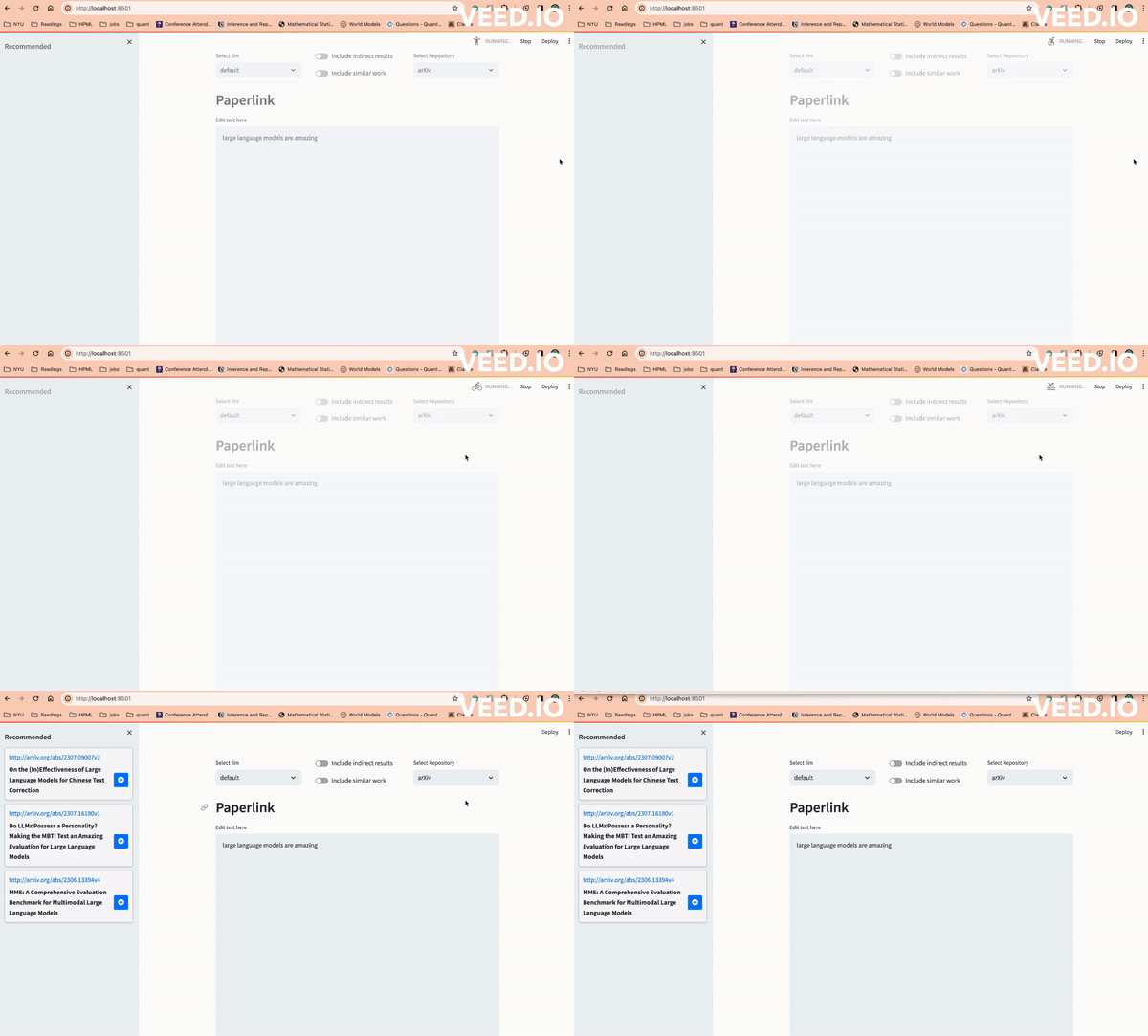
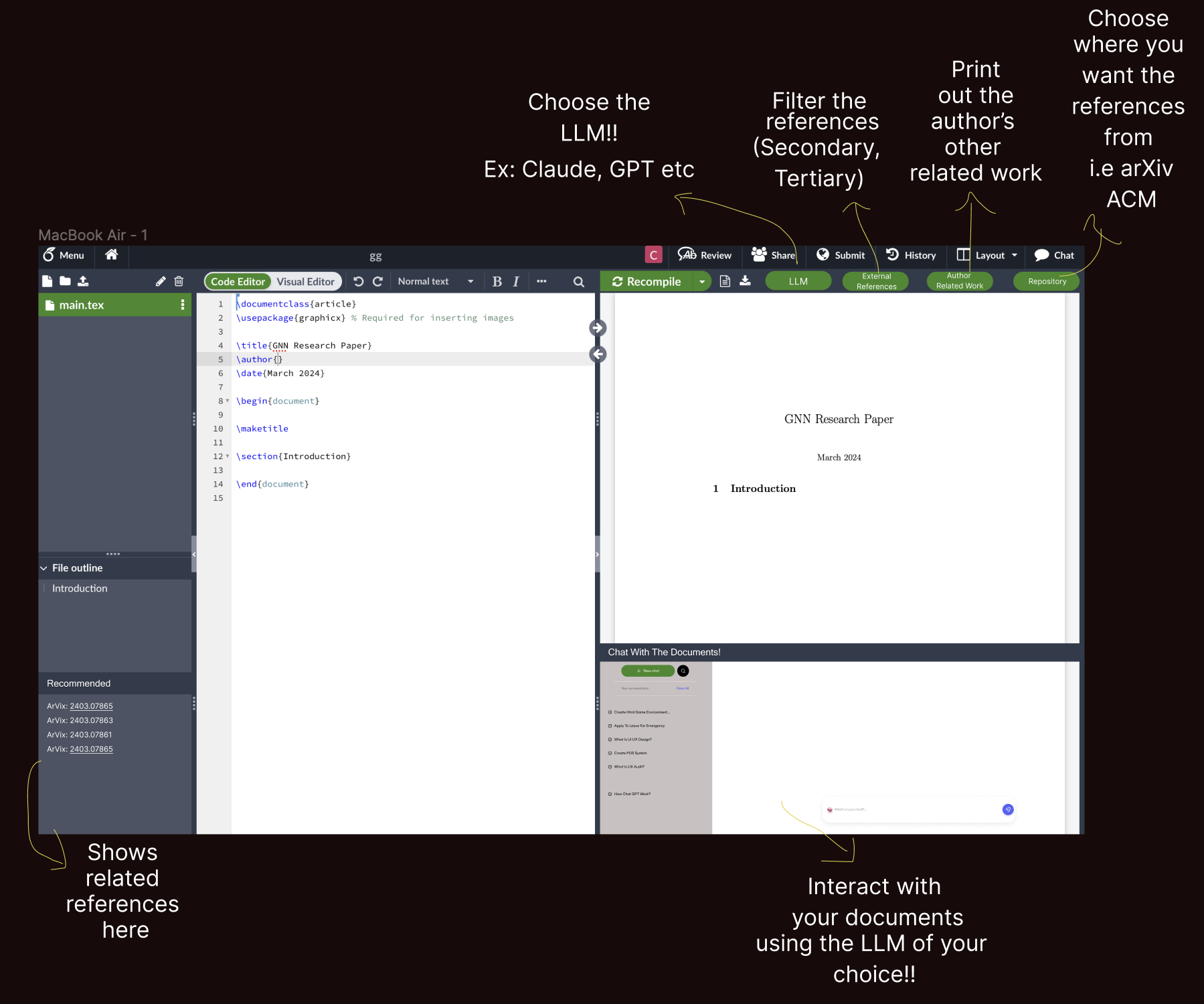
PaperLink is a platform that serves as a solution for research and academic needs. It allows users to discover, access, organize, and share academic papers seamlessly in one platform. It is a cloud-based text editor that combines the most desired/loved features of Overleaf and Connectedpapers.
How we built it
PaperLink is built on a robust tech stack featuring Google Cloud Platform (GCP) for scalability and advanced knowledge graphs on Neo4j for managing complex citation networks, and Python for backend development and data processing. Streamlit was used for creating user interfaces, Anthropic's Claude (AI) for artificial intelligence functionalities using RAG based retrieval to optimize its output.
Challenges we ran into
One of the main challenges we faced was developing a system that could handle the complex network of citations and references inherent in academic research. Trying to fetch all the information about all the linked articles and authors and converting them to a graph was challenging. Managing the vast amount of data and ensuring its accuracy and relevance presented significant technical hurdles. Additionally, designing a user interface that is both intuitive and comprehensive proved to be a challenging task.
Accomplishments that we're proud of
We're proud to have drafted a platform that addresses the needs of students, researchers, and organizations in the academic community. PaperLink's potential to simplify the research process and facilitate knowledge sharing is paramount to achieve innovation and excellence.
What we learned
Through the development of PaperLink, we learned the importance of voicing opinions and collaborative brainstorming to solve complex problems. We gained additional insights into the various pain points and challenges faced by individuals and organizations in the academic community. In developing PaperLink, we honed critical technical skills across several domains rapidly: Cloud Computing: Mastered Google Cloud Platform for scalable app deployment and management. Graph Databases: Learned to use Neo4j for modeling and querying complex citation networks. Python Development: Advanced our Python skills for backend development, focusing on data processing and API integration. UI Development with Streamlit: Gained proficiency in Streamlit for creating intuitive, interactive web interfaces. AI Integration: Implemented AI functionalities with Anthropic's Claude, enhancing search and recommendation systems. Collaborative Problem-Solving: Emphasized teamwork in tackling technical challenges, fostering a multidisciplinary approach. User-Centric Design: Developed a keen understanding of balancing simplicity and functionality in user interface design. Data Management: Focused on ensuring data integrity, relevance, and timeliness in a vast academic dataset.
What's next for PaperLink
For PaperLink's future, we envision creating browser extensions that seamlessly integrate with popular web browsers, allowing users to access PaperLink's features directly from their browsing experience. These extensions could provide quick access to relevant papers, citation suggestions, and research tools, enhancing the efficiency of online research. We plan to develop integrations for popular developer environments such as Visual Studio Code and IntelliJ.


Log in or sign up for Devpost to join the conversation.