-
-
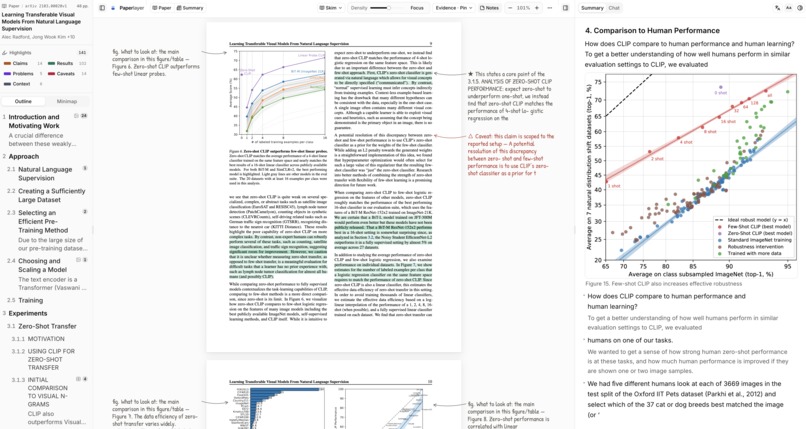
PaperLayer UI
-
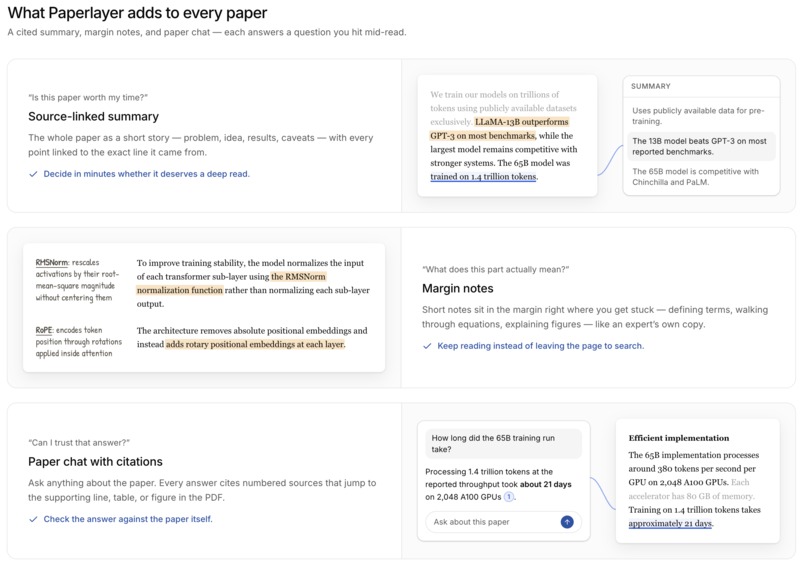
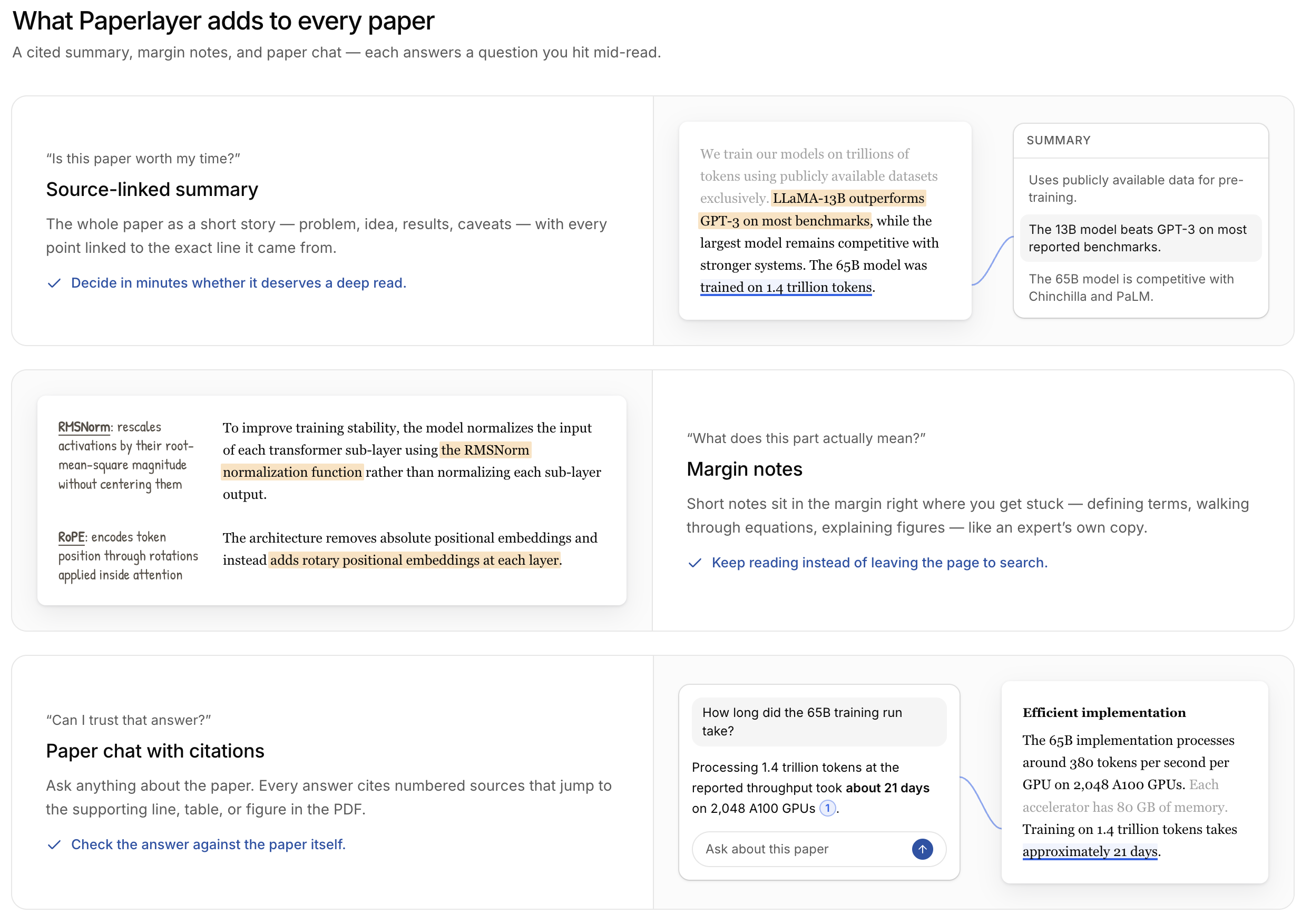
PaperLayer features
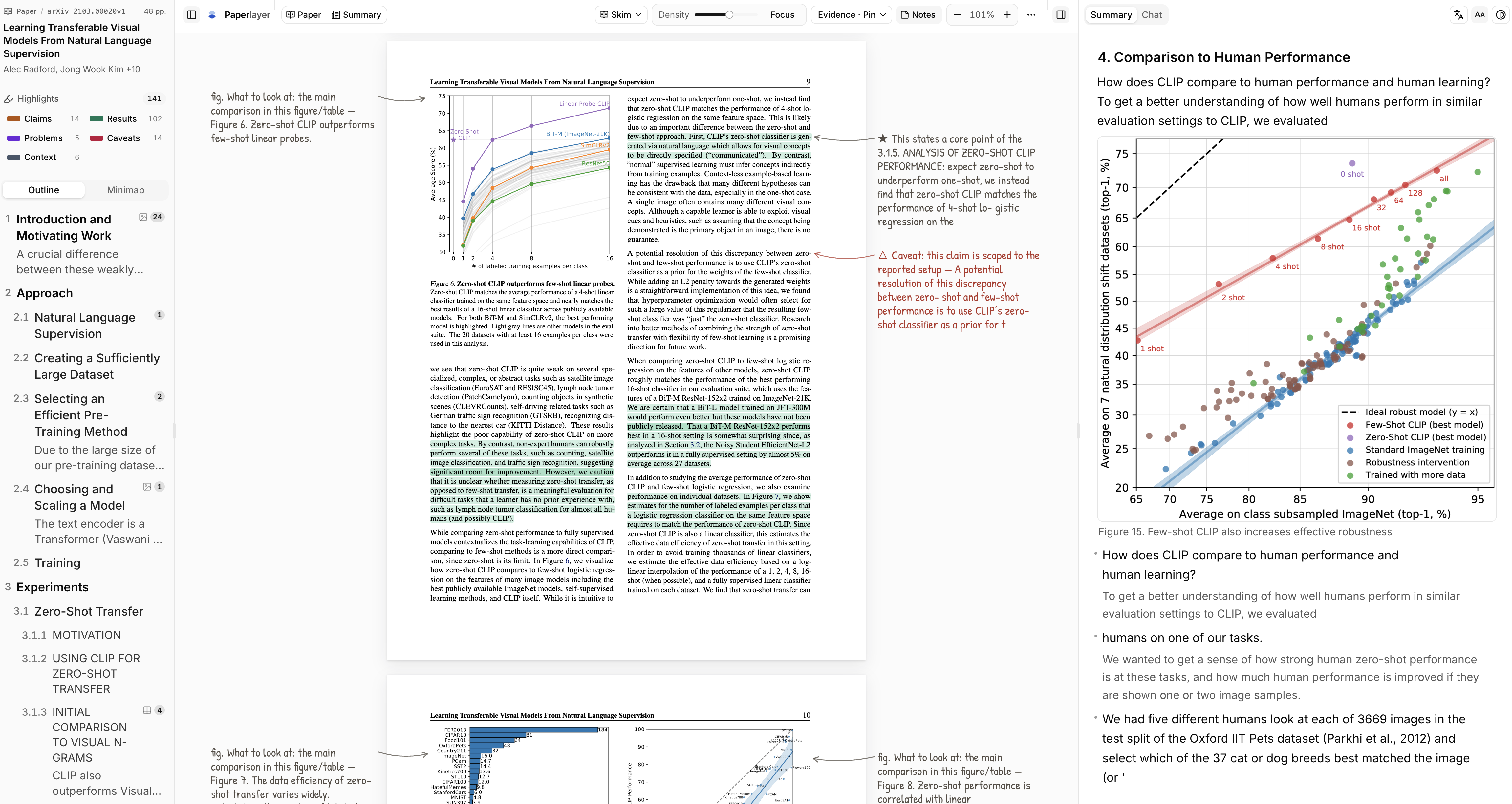
Paperlayer is for AI and CS researchers who need to grasp papers quickly. It puts AI reading help directly on top of the original arXiv PDF: you still read the actual paper, but the AI highlights what matters for your goal, explains the hard parts right where they appear, and links every claim it makes back to the exact spot in the source.
The problem
AI and CS move too fast to read everything. Hundreds of new papers land on arXiv every day, and keeping up with even one subfield means screening far more long, dense PDFs than anyone can read front to back.
AI summaries seem like the answer, but they have a trust problem. A summary is a second document: you can't see what it left out, and the moment a claim actually matters, you're back in the PDF searching for the evidence yourself.
So you're stuck with a bad choice — read everything linearly and fall behind, or trust summaries and lose touch with the source.
The solution
Never replace the paper. Guide attention over it.
Paperlayer renders the original PDF untouched and draws everything else — highlights, notes, summaries — on top, as a layer you can turn off. Even if you only ever read the summary, every point stays one click from its source:
- Every claim links back. Click any summary point, margin note, or chat citation and you land on the exact sentence, equation, or table cell it came from. We call this the Evidence Walk.
- Checked before shown. Grounding isn't a prompt instruction — it's a gate. A validation pass, run separately from generation, rejects any note it can't tie to a specific span in the source. The worst case is fewer notes, never an invented one — the paper itself is always there.
- Reading modes. Skimming a paper, reproducing its method, and reviewing it all need different passages. Pick Skim, Understand Method, or Reviewer, and Paperlayer highlights what matters for that goal and dims what you can safely skip. Dimmed text is still readable, and a density slider controls how much gets marked.
- Notes in the margin. Definitions, equation walkthroughs, figure guides, and caveats sit right next to the passage they explain — no jumping around.
- Analyzed once. Each paper's reading layer is cached, so the next reader gets it instantly without new model calls.
Built With
- codex
- next.js
- python

Log in or sign up for Devpost to join the conversation.