Inspiration
As young scientists aspiring to go to academia, we observed the importance of privacy to protect the hard work of scientists. Also, the lack of income researchers get for their projects, which goes to the publishing companies. For example, one of our colleagues published his work in a journal, and shared with us his concerns about recognition for his work and accessibility to the paper he composed. With that in mind, we wanted to solve this problem that is relevant to us. We also feel that this is a project that affects us personally, and can potentially be something we all use in the future.
What it does
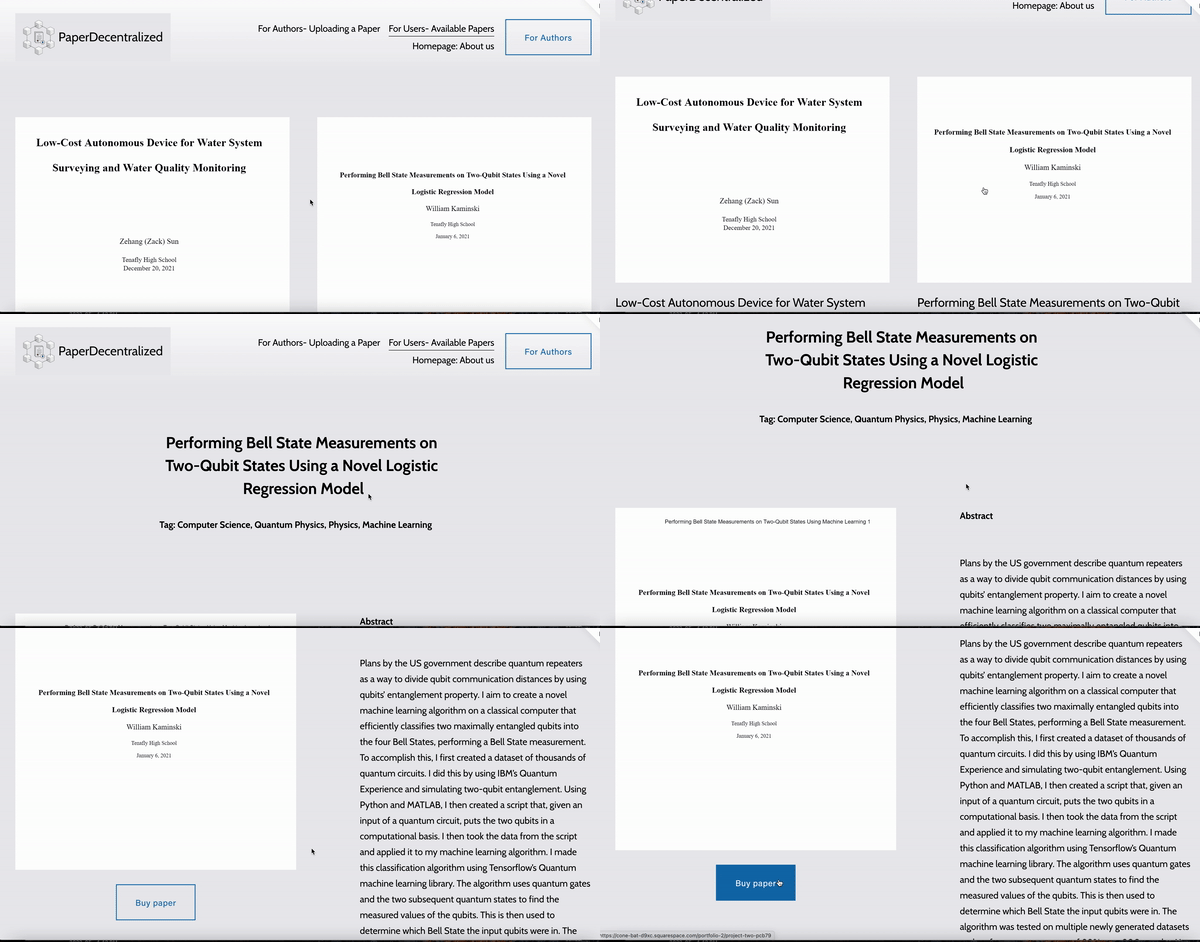
PaperDecentralized allows researchers to upload their papers as pdfs to the ipfs. They can set a price for their paper in Ether. The hash of the paper is then connected to the ethereum blockchain. This turns the pdf into an NFT which the author can make a profit off of. A user who wants to read a paper is able to look through a catalog of available papers, and request a paper. The transaction then takes place where the author receives the money, and the user receives the pdf from the ipfs.
How we built it
We authenticated our users by hosting the server on Moralis to connect Metamask accounts and then created a JavaScript script to upload the file to the ipfs and then return a hash. We then constructed our smart contracts so authors can upload their papers onto the IPFS, which then each paper would be hashed with the randomization provided by Chainlink’s VRF. Users can buy and own copies of an author’s papers using Ether from their Metamask accounts to make payments. Once the user sends Ether, they are assigned the same hash as the paper. This is then sent to IPFS, and if it matches, it will send the paper to the user. The Ether is sent to the author’s Metamask account while the user will have ownership of a copy of the paper.
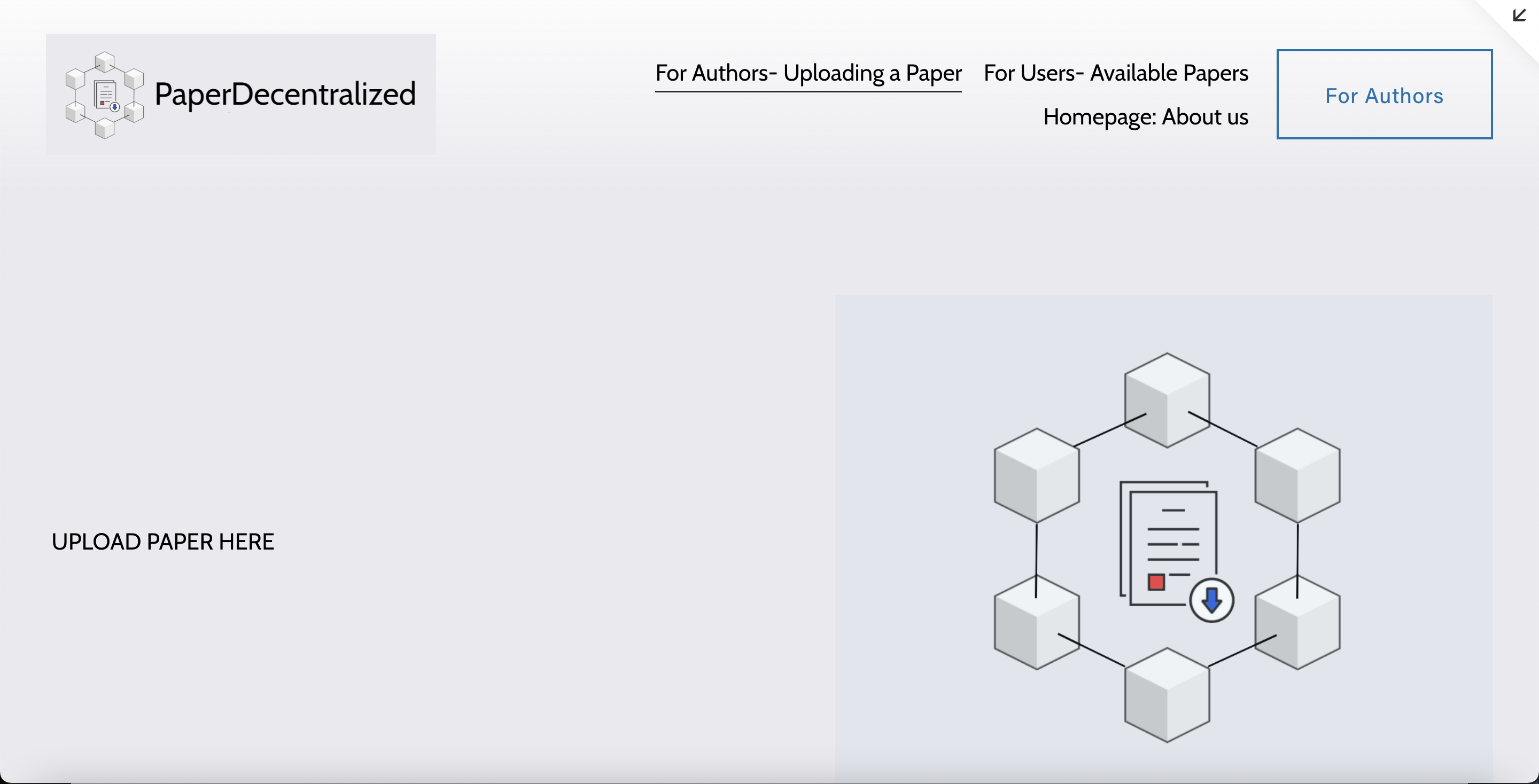
Upload Papers
We authenticated our users by hosting the server on Moralis to connect Metamask accounts and then created a JavaScript script to upload the file to the ipfs and then return a hash. We then constructed our smart contracts so authors can upload their papers onto the IPFS, which then each paper would be hashed with the randomization provided by Chainlink’s VRF. Users can buy and own copies of an author’s papers using Ether from their Metamask accounts to make payments. Once the user sends Ether, they are assigned the same hash as the paper. This is then sent to IPFS, and if it matches, it will send the paper to the user. The Ether is sent to the author’s Metamask account while the user will have ownership of a copy of the paper.
Challenges we ran into
We ran into some troubles with how to integrate Chainlink because we were trying to upload the files directly to the Chainlink oracle. Instead, we used the Chainlink VRF to randomize the hash of a paper to increase security. We also had some trouble integrating our solidity contracts into the web environment of HTML/CSS and Javascript.
Accomplishments that we're proud of
We are proud of the hard work and passion that each of our team members have put in for this project. We also take pride in the diverse backgrounds of our workforce, which includes women, people of color, etc. We also are proud of completing this project which can have a profound impact on many researchers across the globe, including ourselves and our colleagues.
What we learned
We’ve learned about how blockchain technology works and how it can greatly influence the future. We’ve developed our knowledge in smart contracts and the programming language that utilizes it, Solidity, as well as other libraries and implementations that come with it. We also familiarize ourselves with web3 and application development using HTML Javascript, and we gained further experience with competing in competitions and such. Most importantly, we learned to collaborate with one another effectively and positively, emphasizing the importance of teamwork for all of us.
What's next for PaperDecentralized
We want to try and add a peer review system to PaperDecentralized. So users will be able to upvote and downvote papers based on quality of research, ensuring that papers still maintain state-of-the-art. We also want to try to upload the pdfs directly onto the Chainlink oracle instead of onto the ipfs, simplifying the system. We also want to eventually publish the website for global access, which involves putting it on the web as well as deploying it on the Ethereum network.


Log in or sign up for Devpost to join the conversation.