-
-
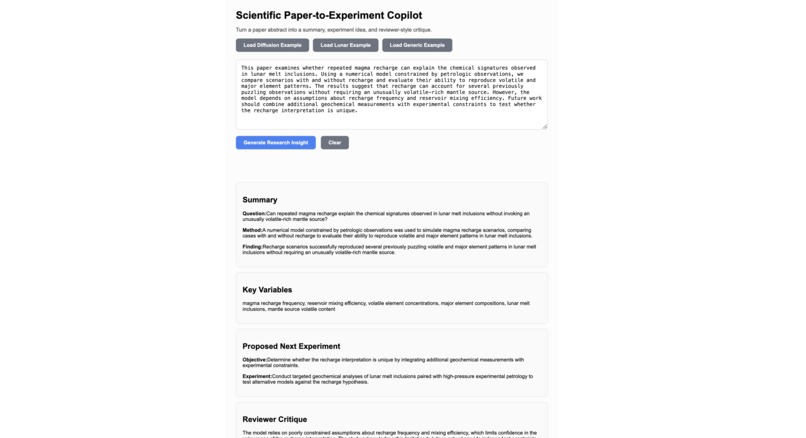
Lit2Lab helps researchers turn a paper abstract into a clear summary, key variables, a follow-up experiment, and a reviewer-style critique.
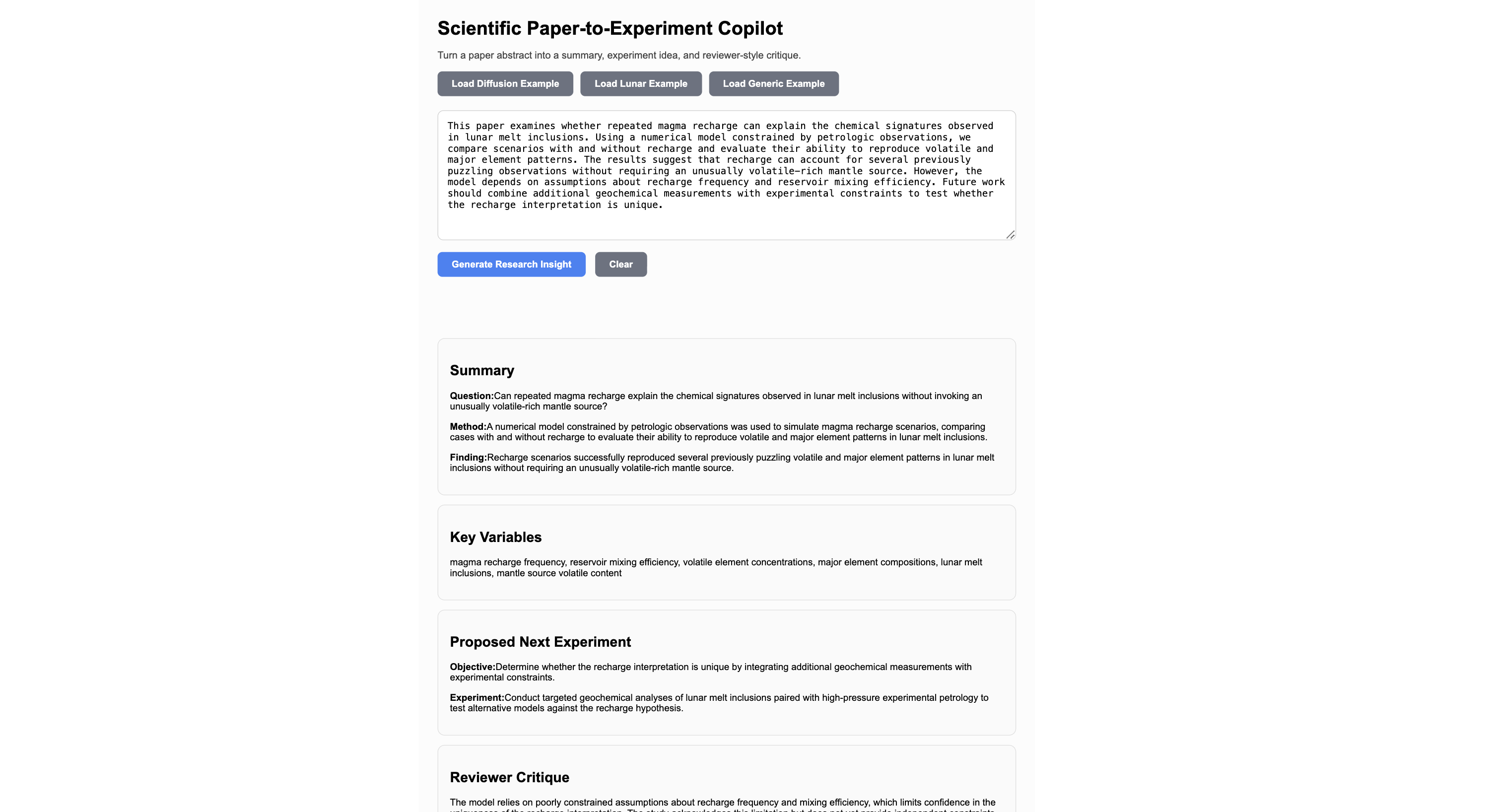
Inspiration
Reading papers is only the first step. The harder part is figuring out what the paper really means and what experiment should come next. I would like to build a tool that helps researchers move faster from reading to planning.
What it does
Lit2Lab takes a paper abstract and turns it into a structured research note. It summarizes the paper, pulls out the key variables, suggests a next experiment, and gives a short reviewer-style critique.
How we built it
I built Lit2Lab with Jac for the app and Python for the backend helper. The app sends the pasted paper text to Claude, then turns the model output into structured sections that are easy to read in the interface.
Challenges we ran into
The biggest challenge was getting the AI pipeline stable. I ran into API setup issues, environment mismatches, parsing problems, and formatting problems in model output. We also had to simplify the scope to focus on one strong workflow.
Accomplishments that we're proud of
I built a working research copilot, not just a basic summarizer. The app gives useful outputs for research thinking: summary, variables, next experiment, and critique. We also got Claude working inside a Jac-based full-stack app.
What we learned
I learned how to build a full-stack app in Jac, how to connect LLMs to a real product, and how important it is to make model output structured and reliable.
What's next for Lit2Lab
Next, I want to make Lit2Lab more useful for real research workflows. That includes better paper comparison, stronger field-specific suggestions, and support for organizing multiple paper analyses in one place.
Built With
- anthropic
- claude
- jac
- python

Log in or sign up for Devpost to join the conversation.