-
-
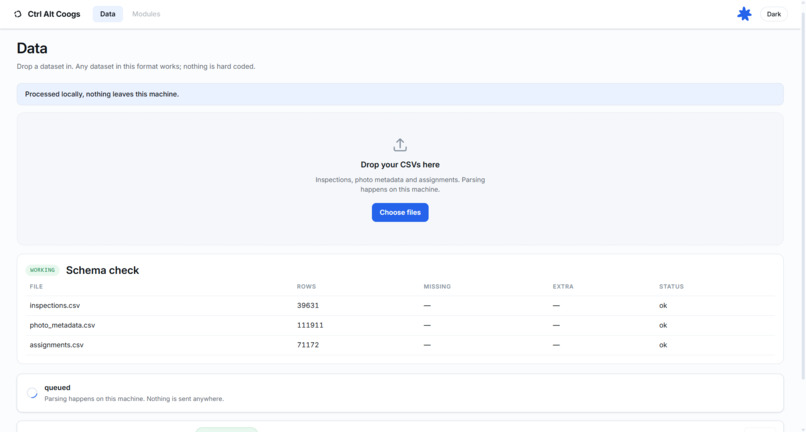
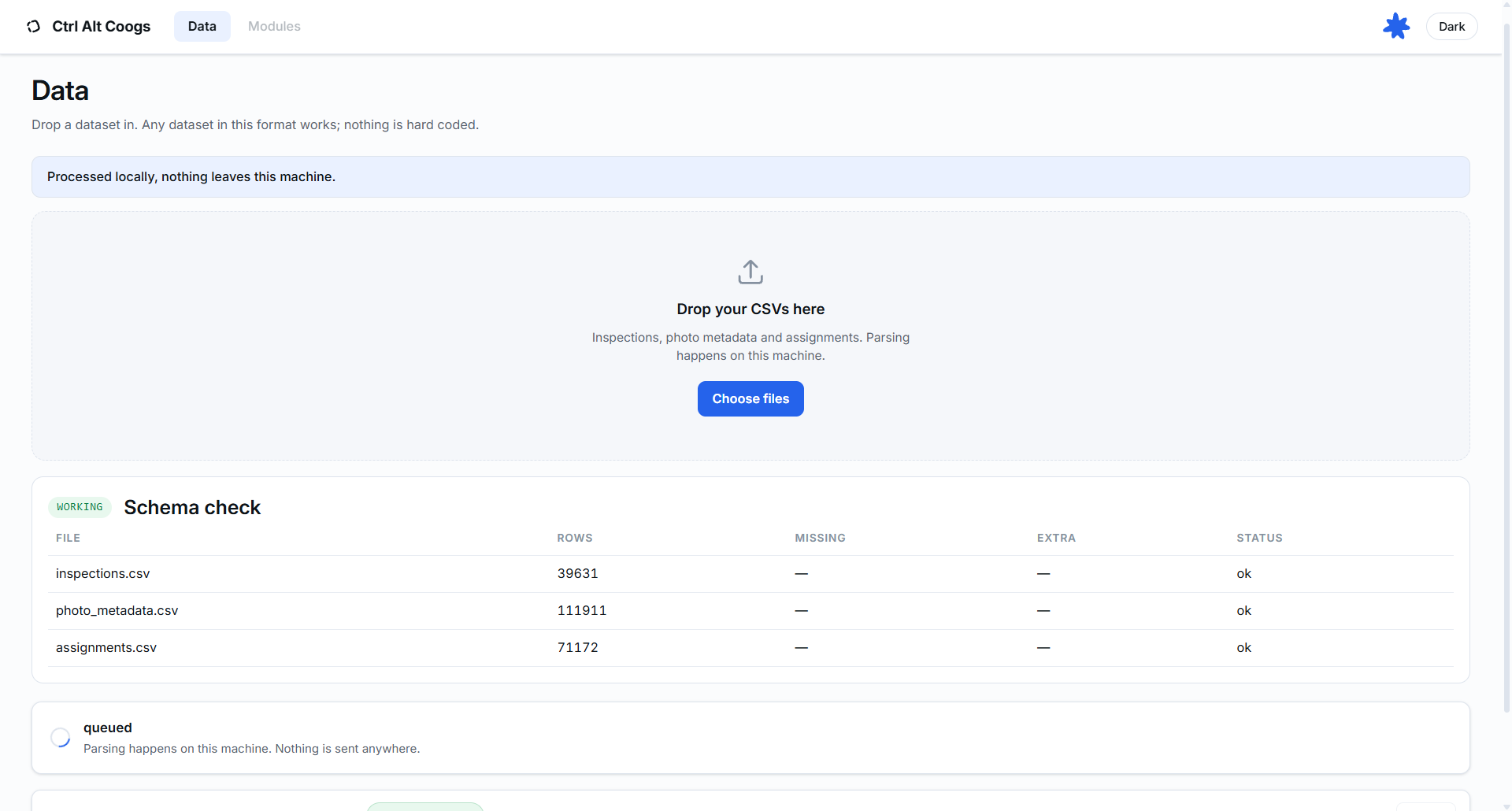
Everything ran locally, Upload necessary files
-
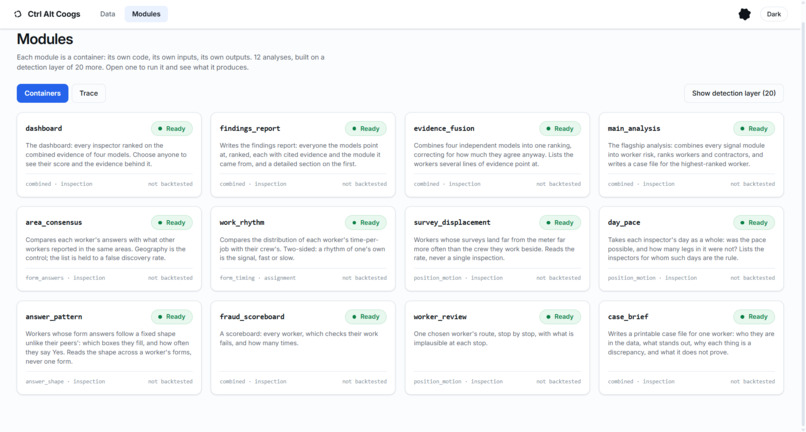
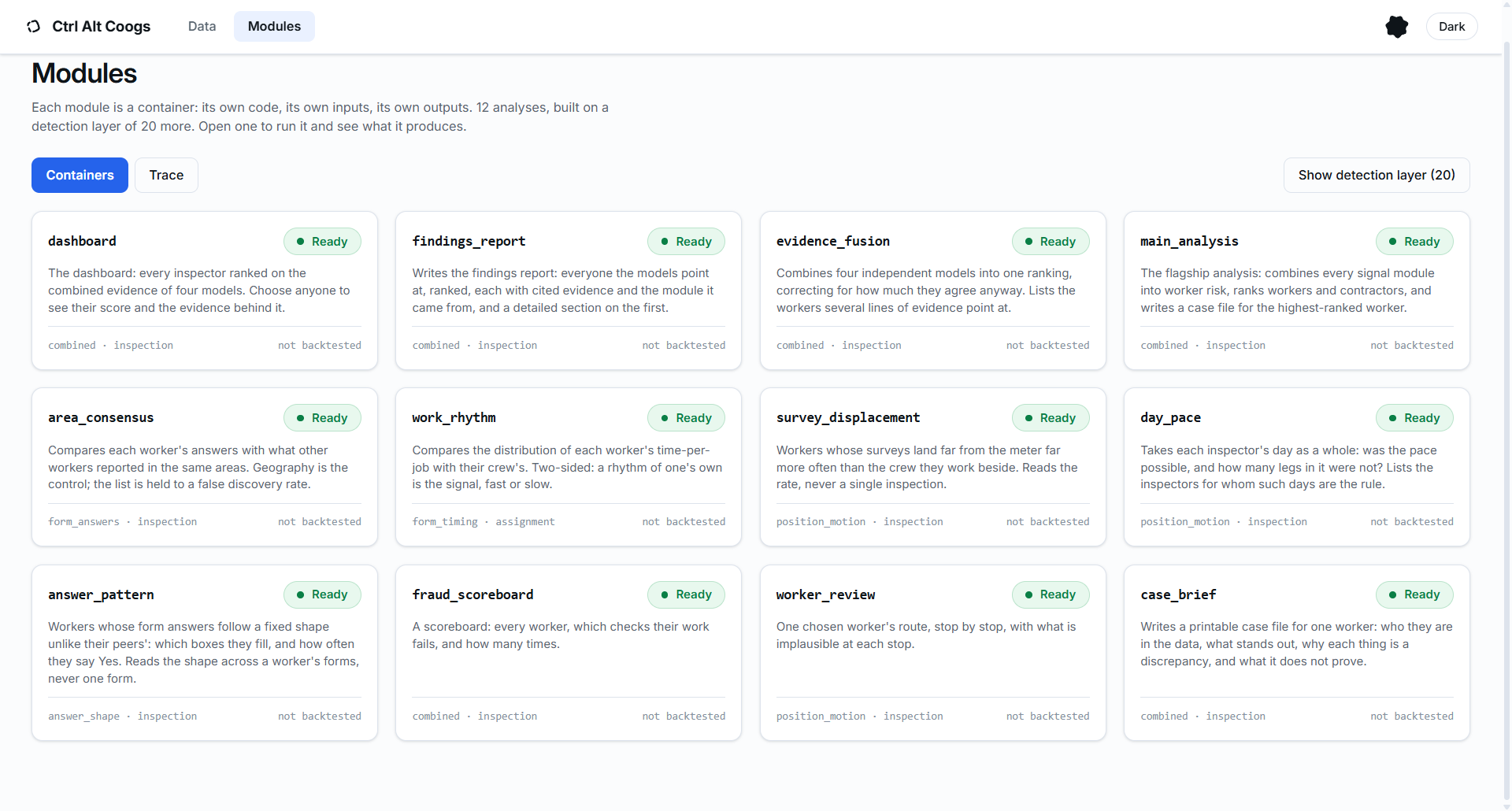
All the different modules that can be applied to the data
-
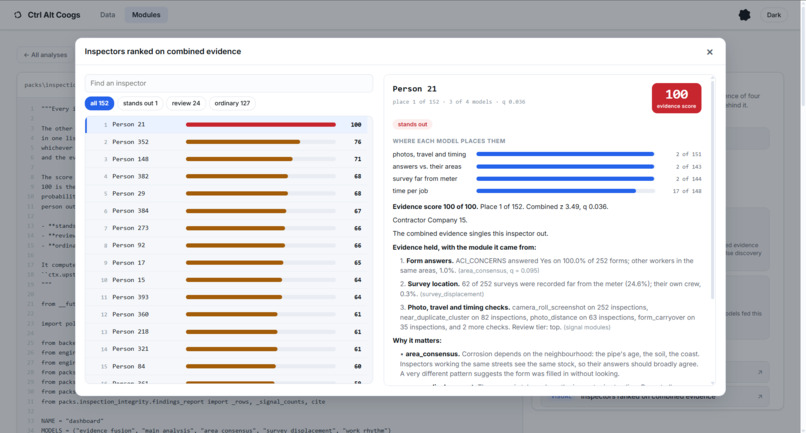
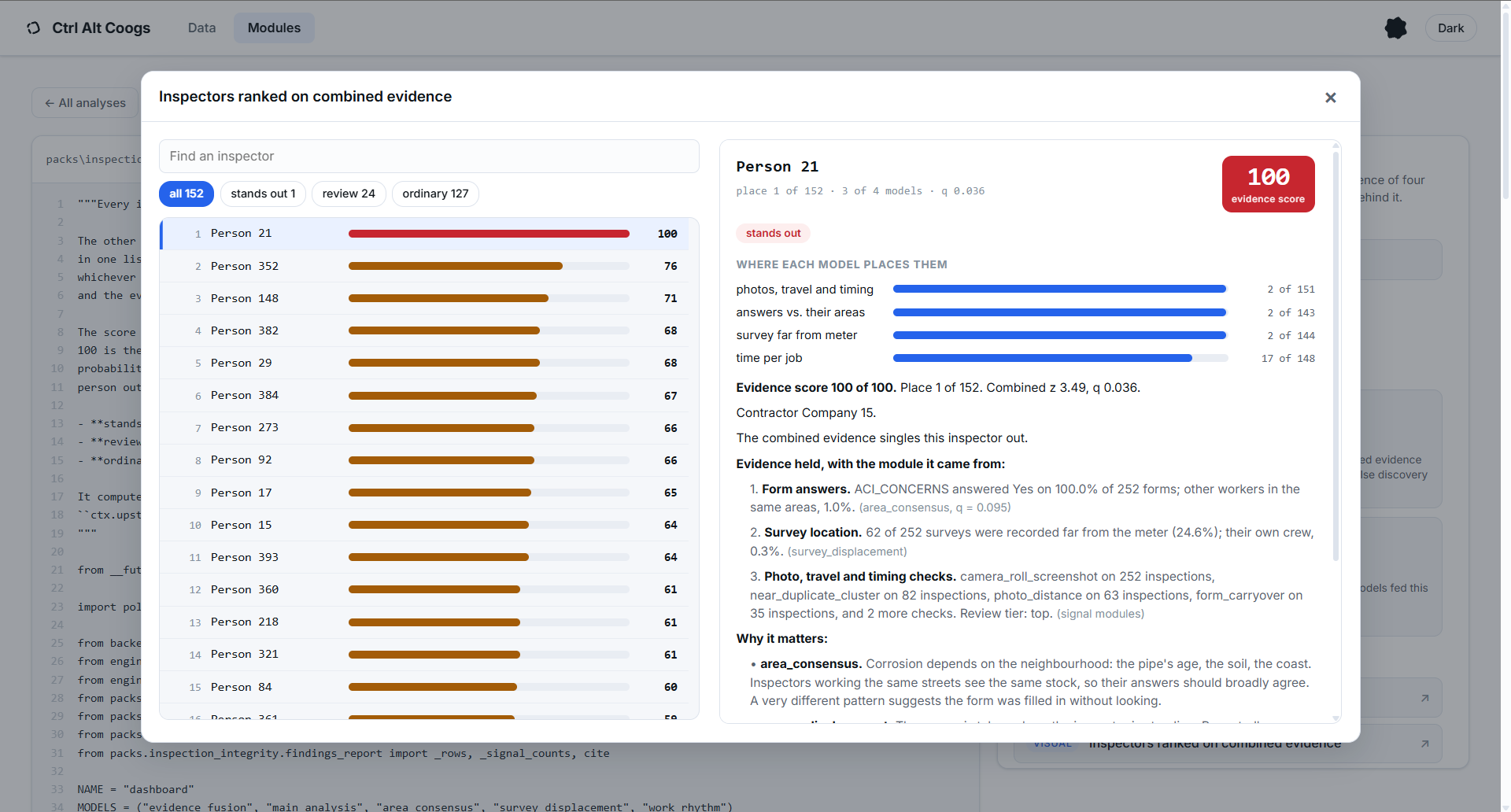
Dashboard module with priority review and Evidence Score
PaperTrails
Inspiration
Somewhere, a gas meter is rusting, and the paperwork says someone checked it.
Reviewing millions of inspection records and photos by hand is impractical. An inspection submitted without a visit can leave corrosion unnoticed. We wanted to help reviewers decide where to look first—and give them evidence they could verify.
The challenge was limited ground truth: no confirmed-clean inspections and reviewed-invalid records concentrated on one inspector. We couldn’t honestly claim a fraud-detection accuracy.
What it does
PaperTrails turns inspection, photo metadata and assignment files into an evidence-backed review queue.
Eight checks examine:
- Whether the phone was at the meter
- Drive-by photography
- Conflicting company records
- Mismatched meter readings
- Photos that may not belong to the visit
- Impossible travel
- Days unlike an inspector’s other days
- Answers that differ from nearby inspectors
Reviewers can explore ranked inspectors, inspect routes, view contractor summaries and export findings reports or individual case files as PDFs.
Core analysis runs locally. The optional AI assistant connects to a user-selected provider, receiving messages and dataset structure rather than inspection values or analysis results.
How we built it
Each analysis is a reusable module with declared inputs, configurable parameters and cached results. The dashboard ranks inspectors by how many checks they fail, then by the reported probability that a pattern is materially unusual.
We compare inspectors working on the same ground and separate contradictions within individual records from statistical patterns. The displayed score is not a probability of fraud.
Our stack combines Python, Polars, DuckDB and FastAPI with React and TypeScript. Docker supports deployment, while Model Context Protocol exposes tools to external assistants.
Challenges we ran into
Early tests missed checks that silently skipped data in the actual loading pipeline. Earlier scoring also produced overly broad tiers and let uninformative signals dilute useful evidence.
These problems pushed us toward explicit checks, traceable findings and tests that follow the full data-loading path.
What we learned
Every warning needs an innocent explanation considered alongside it. Bad location fixes, meter exchanges and unusual working conditions can resemble misconduct.
In our documented synthetic evaluation, three planted fabricators rank first, second and third. That checks behavior under known scenarios; it does not establish real-world accuracy.
PaperTrails helps people choose what to investigate. Every finding remains a reason for human review.
Built With
- docker
- fastapi
- kubernetes
- networkx
- node.js
- polars
- python
- react
- scikit-learn
