-
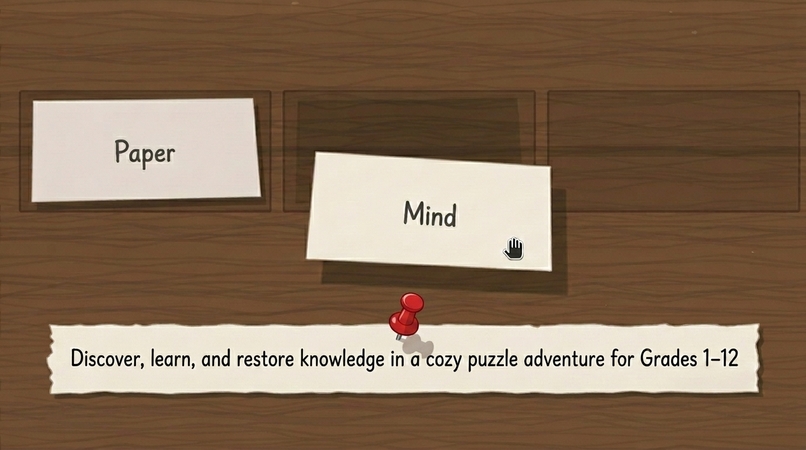
Paper Mind
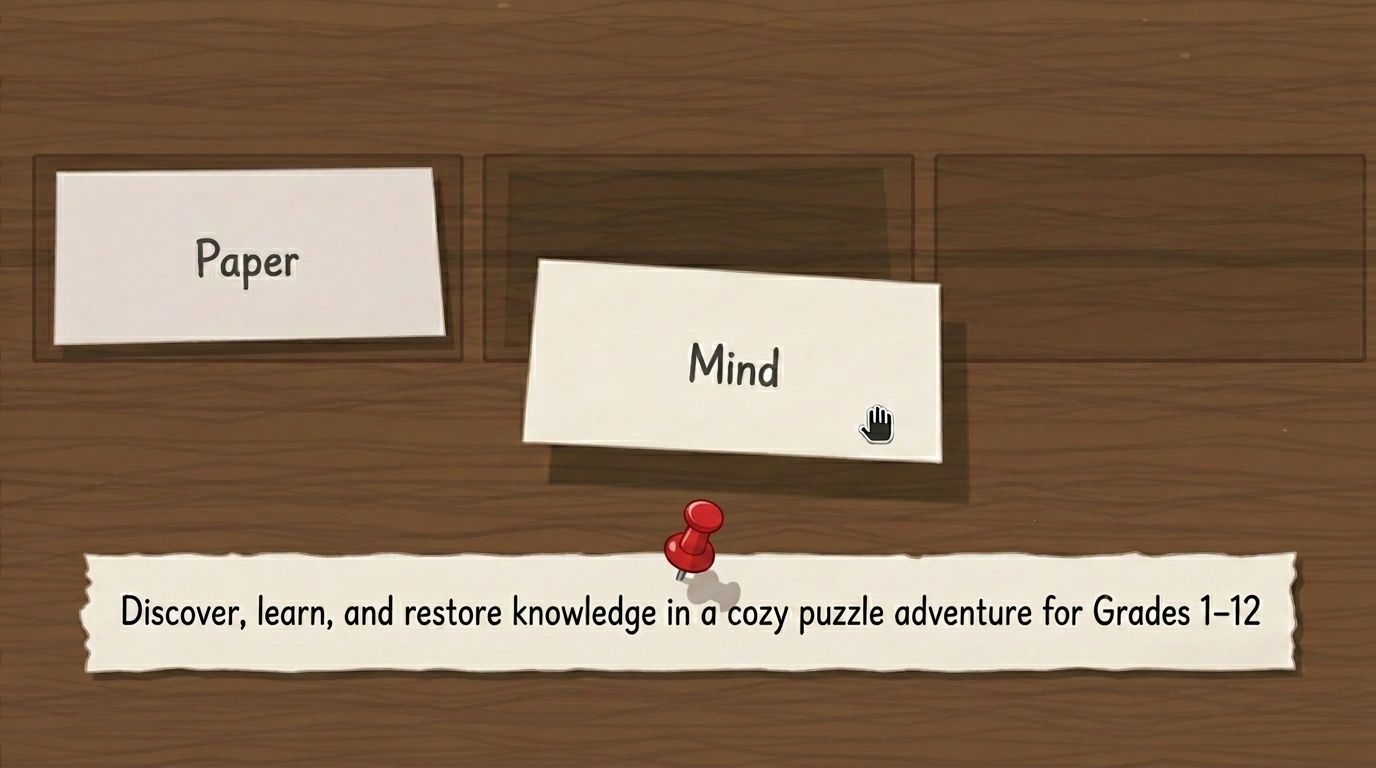
Paper Mind — Restoring Knowledge Through Cozy Puzzle Play 📜
Inspiration
Paper Mind started from a simple thought:
Why do most educational games either feel too sterile or too overstimulating?
Many learning apps focus heavily on rewards, flashy effects, or repetitive quizzes. While building this project, I wanted to create something completely different — an experience where learning itself felt calm, meaningful, and emotionally warm.
I imagined a magical forgotten Archive where knowledge had been torn apart into scattered paper fragments. Instead of simply answering questions, players would slowly restore lost knowledge piece by piece.
The core idea became:
Learning should feel like restoring something valuable, not just completing homework.
That idea shaped the entire atmosphere of the project:
- cozy parchment visuals
- handcrafted UI
- emotional progression systems
- collectable relics tied to learning milestones
I wanted Paper Mind to feel like:
- a magical study desk
- a quiet library
- a world where curiosity itself feels rewarding
What Problem Paper Mind Solves
One of the biggest problems with modern educational apps is that learning often feels:
- stressful
- repetitive
- overstimulating
- reward-driven instead of curiosity-driven
Children are frequently pushed toward:
- endless quizzes
- flashy dopamine-heavy mechanics
- short attention reward loops
instead of meaningful engagement with knowledge itself.
Paper Mind was built to solve that problem by transforming learning into a calm restoration journey.
Instead of “getting answers right,” players:
- restore lost knowledge
- rebuild meaningful sentences
- recover archival relics
- slowly bring a magical Archive back to life
The goal was to create a learning experience children genuinely WANT to return to because it feels peaceful, immersive, and emotionally rewarding.
What the Game Is
Paper Mind is a cozy educational puzzle adventure for Grades 1–12.
Players solve learning challenges by dragging scattered paper fragments into the correct slots to rebuild meaningful educational sentences.
For example:
Fragments:
- “moon”
- “shape”
- “in”
- “changes”
- “The”
- “sky”
Restored sentence:
“The moon changes shape in the sky.”
As players progress:
- puzzles become more advanced
- educational subjects evolve
- new grades unlock
- collectable relics are recovered
- the magical Archive slowly comes back to life
Features
📚 Educational Puzzle Gameplay
Players reconstruct meaningful educational sentences using draggable paper fragments.
Subjects include:
- science
- geography
- astronomy
- history
- environmental science
- mathematics foundations
- technology
across Grades 1–12.
🏺 Curiosity Cabinet
Players unlock one meaningful collectable relic after completing each grade.
Examples:
- 🧭 Tiny Crayon Compass
- 🌍 Explorer’s Globe
- 🧪 Scientific Method Flask
- 👑 Grand Archive Crown
The collectibles are displayed inside a magical archive-like cabinet system.
📖 Archive History
Every completed gameplay journey is preserved inside an archival history system showing:
- restored grades
- earned relics
- total play time
- high scores
- restoration milestones
This makes progression feel personal and memorable.
🏆 Archivists Leaderboard
A dynamic leaderboard showcasing top players using an elegant parchment-style ranking system.
The top 3 archivists receive special animated visual treatment:
- 🥇 Gold
- 🥈 Silver
- 🥉 Bronze
while preserving the calm handcrafted atmosphere.
How I Structured Conversations with MeDo
MeDo became a major part of the development workflow throughout the project.
Instead of using it only for isolated code generation, I structured conversations with MeDo like collaborative design sessions.
I would:
- define the emotional goal first
- explain the gameplay atmosphere
- describe the desired player feeling
- then break systems into smaller implementation tasks
For example, instead of simply asking for:
“Add inventory system”
I structured prompts around:
- emotional progression
- collectable meaning
- archive world-building
- calm UX behavior
- handcrafted visual tone
This helped generate systems that felt cohesive with the world of Paper Mind instead of feeling like generic game features.
I also iterated heavily through conversational refinement:
- adjusting UI wording
- improving progression psychology
- refining modal interactions
- polishing atmospheric details
- evolving gameplay reward systems
The iterative conversational workflow made it feel less like prompting a tool and more like collaborating on a living design system.
The Most Impressive Feature MeDo Helped Create
One of the most impressive systems MeDo helped shape was the entire collectable progression ecosystem around:
- Curiosity Cabinet
- Integrity Seals
- Archive History
- archival-style progression systems
Originally, the game only had simple level progression.
But through iterative conversations, the experience evolved into a much richer emotional restoration journey where:
- every completed grade unlocks a meaningful relic
- player history is permanently preserved
- progression becomes emotionally memorable
- rewards feel handcrafted instead of arcade-like
Another major breakthrough was refining the atmosphere and UX language across the game.
How I Used Plugins & APIs
I used the built-in Image Generation, Large Language Model, and AI Search plugins extensively during development.
These tools helped:
- generate educational sentence structures
- organise grade-level learning content
- maintain thematic consistency
- rapidly iterate gameplay ideas
- refine collectable and progression systems
The integrations made experimentation incredibly fast and allowed me to focus more on:
- gameplay feel
- emotional design
- atmosphere
- progression systems
Instead of spending large amounts of time manually creating repetitive educational content.
How I Built It
The project was built as a responsive web-based game experience optimised for both desktop and mobile.
The gameplay system combines:
- drag-and-drop puzzle mechanics
- progression tracking
- collectable systems
- dynamic leaderboards
- session persistence
- archive-style UI systems
The visual identity focused heavily on:
- parchment textures
- warm archive lighting
- soft particle ambience
- paper-like UI interactions
- cozy typography
I spent significant time refining:
- emotional pacing
- reward design
- UI atmosphere
- progression psychology
This is because I wanted the game to feel emotionally comforting rather than overstimulating.
Challenges I Faced
Balancing Education and Fun
One of the hardest challenges was making educational content feel genuinely enjoyable without turning it into:
- a quiz app
- rote memorisation
- repetitive gameplay
The solution was to make learning tactile and restorative: players physically rebuild knowledge instead of selecting multiple-choice answers.
Avoiding Dopamine-Heavy Design
Modern educational apps often rely on:
- excessive rewards
- flashy animations
- loud sounds
- constant stimulation
I intentionally moved away from that approach.
The challenge became:
How do you make a calm experience still feel rewarding?
This led to systems like:
- Curiosity Cabinet
- Integrity Seals
- parchment reveal animations
- atmospheric archive ambience
which create emotional satisfaction without overwhelming the player.
Integrating Authentication Systems
Another challenge was integrating account persistence and authentication cleanly into the archive-style experience.
An earlier attempt using Google authentication repeatedly failed to properly trigger the sign-in workflow despite multiple implementation attempts.
Eventually, I redesigned the system entirely and shifted toward a dedicated archive-style registration and login system using:
- username
- password
The new approach worked immediately and fit the world of Paper Mind much better both technically and emotionally.
What I Learned
This project taught me that educational experiences become far more powerful when they create emotional connection.
I learned:
- atmosphere changes how players perceive learning
- calm design can be more memorable than over-stimulation
- small UI details deeply affect immersion
- progression systems feel stronger when tied to meaning instead of pure rewards
Most importantly, I learned that:
curiosity itself can become the reward system.
Final Thoughts
Paper Mind is more than a puzzle game to me.
It is an attempt to make learning feel:
- peaceful
- magical
- emotionally warm
- worth returning to
I wanted children to feel not like they were completing assignments but like they were restoring something important.
This was such a cool experience for me, and I’d definitely recommend Medo to everyone I know!
Built With
- medo
- medo.dev
- no-code-platform

Log in or sign up for Devpost to join the conversation.