-
Paper IQ
Inspiration
Every time I tried reading a research paper outside my field, I hit the same wall — dense jargon, unexplained charts, and no way to know what actually mattered. I wanted a tool that didn't just summarize text but genuinely met the reader where they are. When I discovered Gemini could read an entire PDF natively in one call, I knew that was the foundation worth building on.
What it does
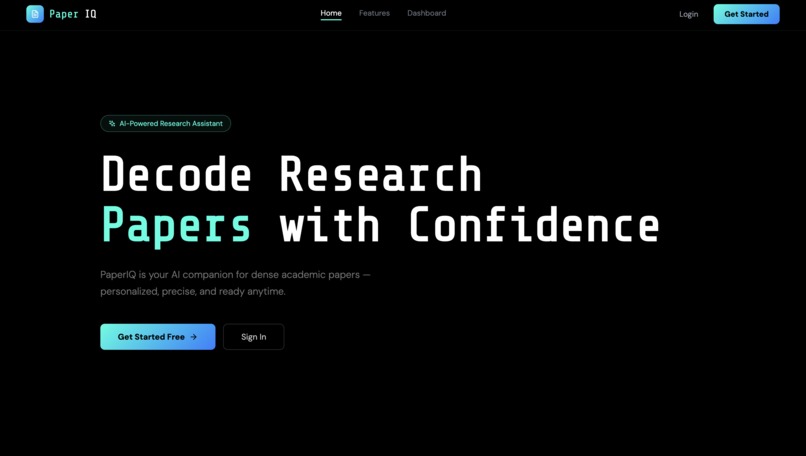
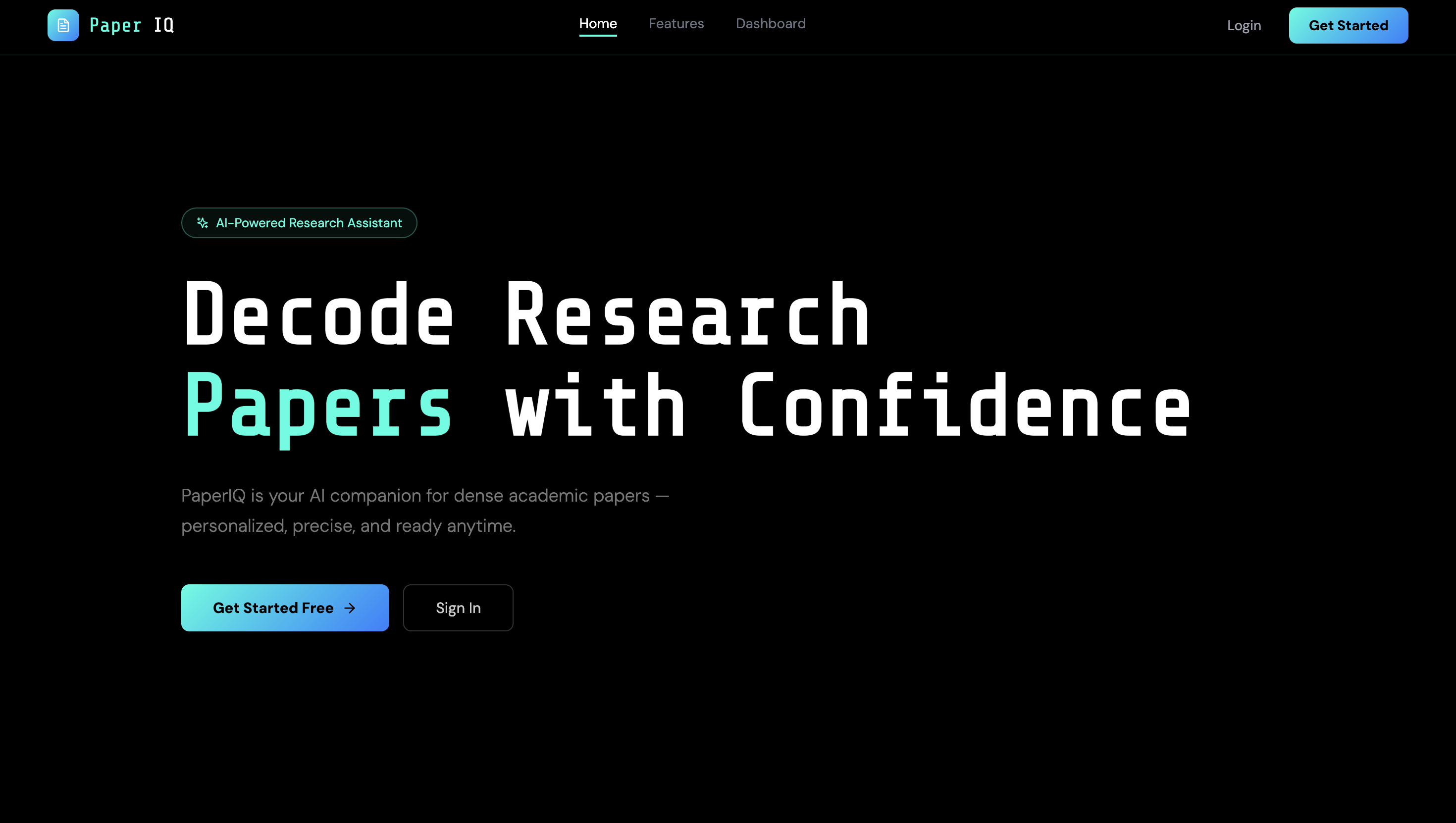
PaperIQ turns any research paper into something anyone can understand. Upload a PDF once and get three tools instantly:
- ELIF — explains the paper at your level: High School, Undergrad, Recruiter, or Expert — each with a plain-English summary, key contributions, and a jargon glossary
- ScholarSight — upload any chart or diagram from the paper and Gemini explains what it shows, what to look for, and how it connects to the paper's argument
- Chat — ask the paper anything in plain English and get direct answers with full conversation memory across sessions
How I built it
Next.js 14 for the frontend and API routes, Gemini 2.5 Flash for all AI calls, and MongoDB Atlas to store user accounts, paper analyses, and chat history. PDFs are sent directly to Gemini as raw bytes — no text extraction library needed. A React Context in the root layout shares the uploaded PDF across all pages without any prop drilling. Every analyzed paper is fingerprinted so returning users never wait for the same paper to be analyzed twice.
Challenges I ran into
The biggest challenge was Gemini's free tier. Multiple models were either deprecated or hit quota limits mid-build. I ended up building a 5-key round-robin rotation system on the fly — each request cycles through five API keys across separate Google Cloud projects, tracking usage per key and skipping any that hit the daily limit. It turned a frustrating blocker into one of the most interesting problems of the day.
Accomplishments that I'm proud of
Getting Gemini to receive an image and a full PDF simultaneously in one call for ScholarSight was a highlight — it reasons across both without any extra infrastructure. I'm also proud of the duplicate detection system: re-upload the same paper and PaperIQ recognizes it instantly, restores your previous analysis and full chat history, and skips the Gemini call entirely. That felt like building a real product, not just a hackathon demo.
What I learned
Gemini's context window genuinely changes what's possible. Most AI tools chunk documents and retrieve fragments. PaperIQ sends the whole paper in one shot — every figure, equation, and reference — and lets Gemini reason across all of it. I also learned that free tier engineering is real engineering. Working within hard quota limits forced creative solutions that made the app more robust than it would have been otherwise.
What's next for PaperIQ
- Upload two papers and compare them side by side — methodology, findings, and where they disagree
- Highlight any text in the PDF and ask Gemini to explain or simplify it
- One-click export to a clean PDF summary or Notion page
- Citation network — extract the most important cited papers and link directly to Google Scholar

Log in or sign up for Devpost to join the conversation.