-
-
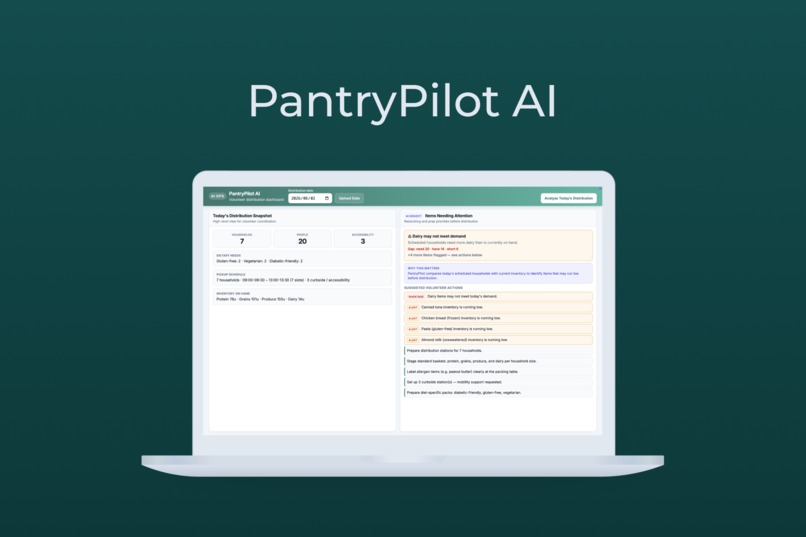
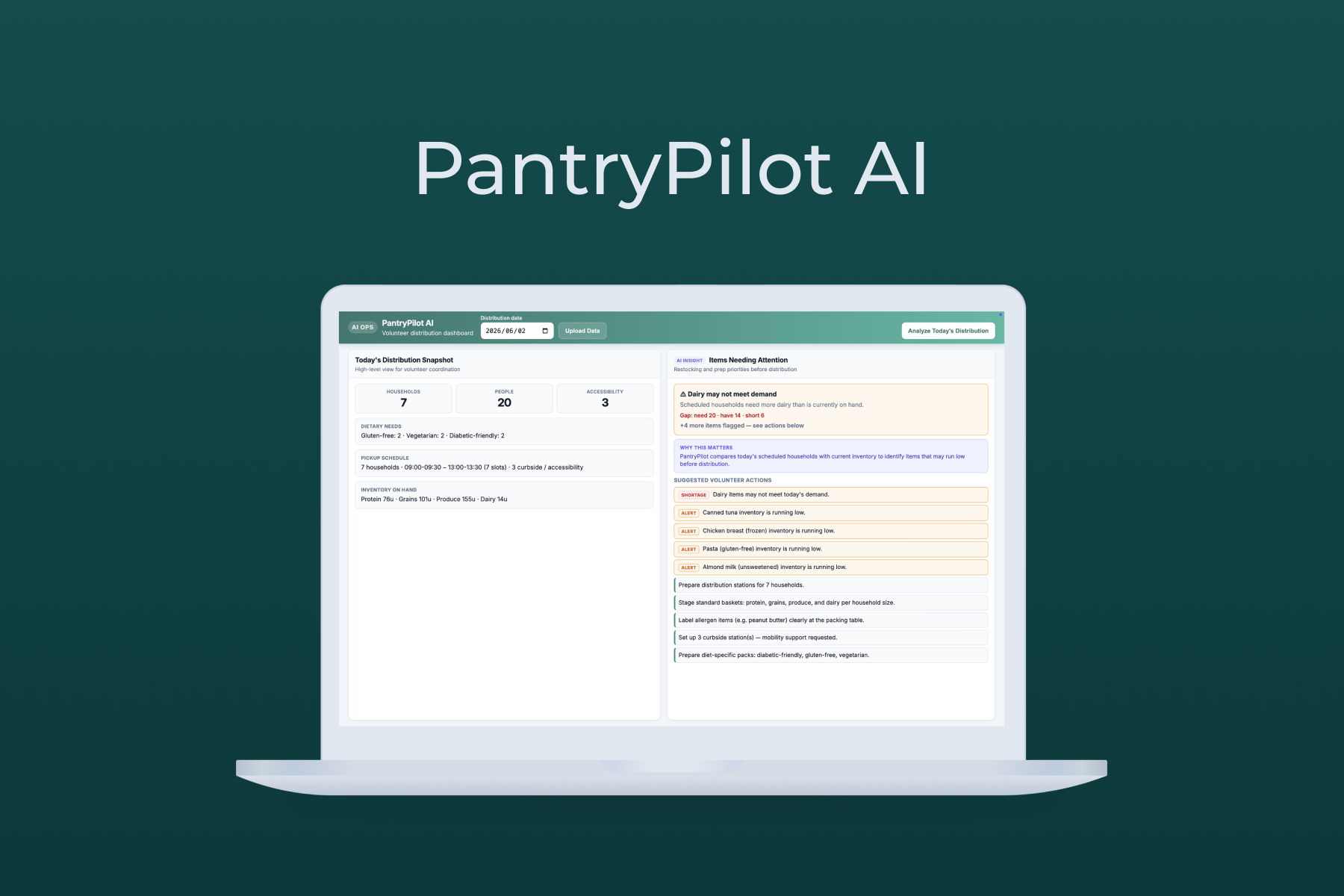
PantryPilot AI Dashboard
-
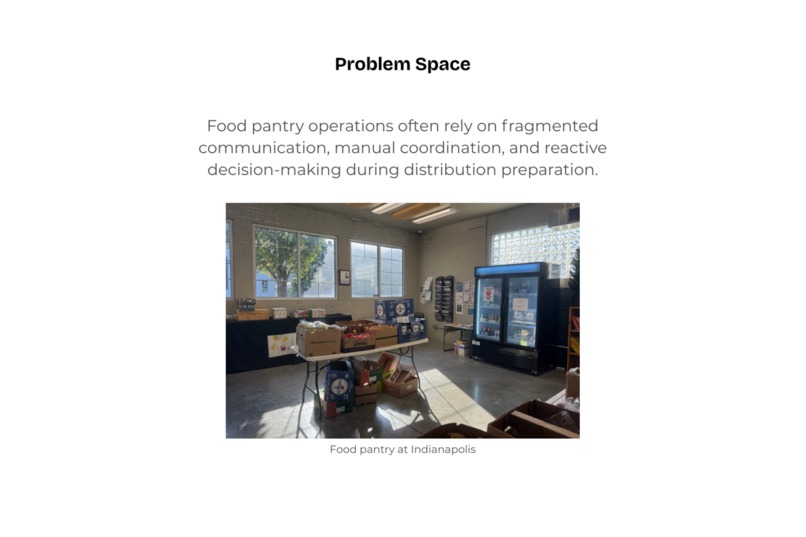
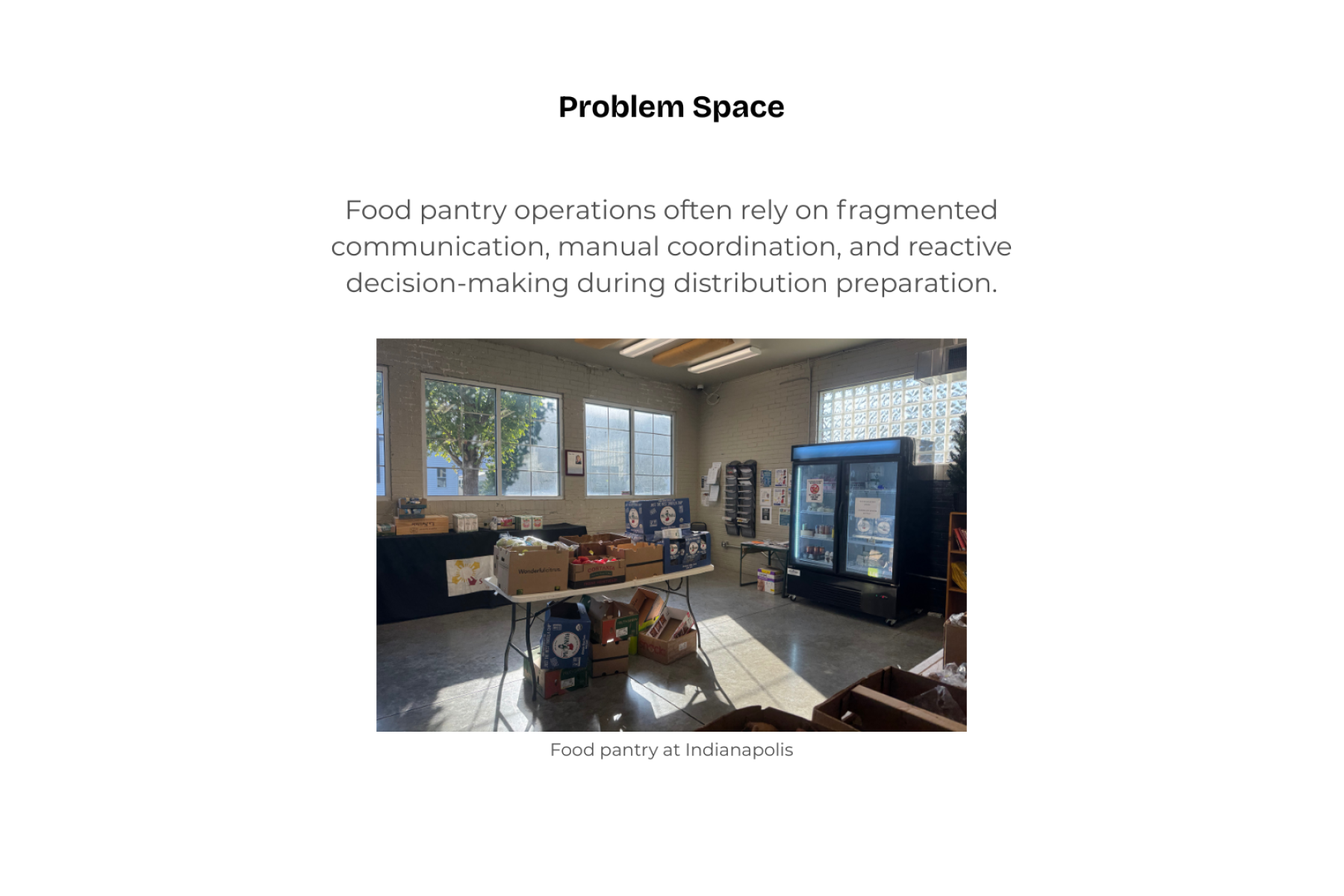
Problem Space
-
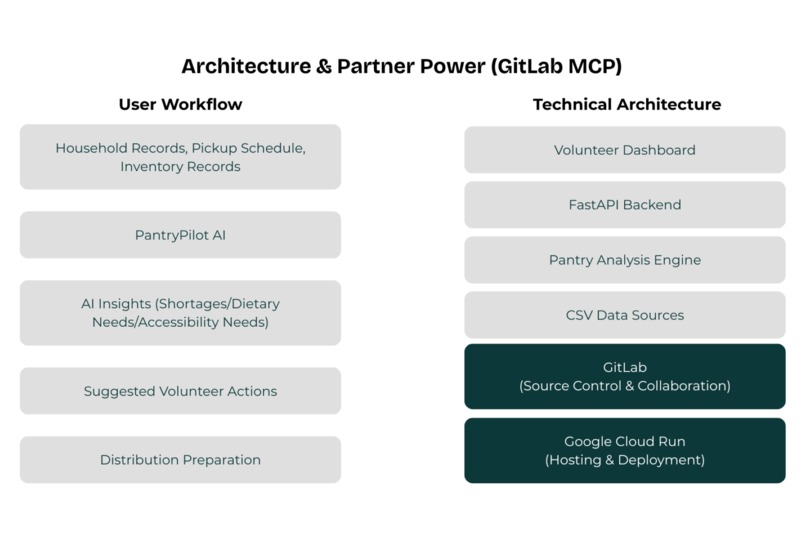
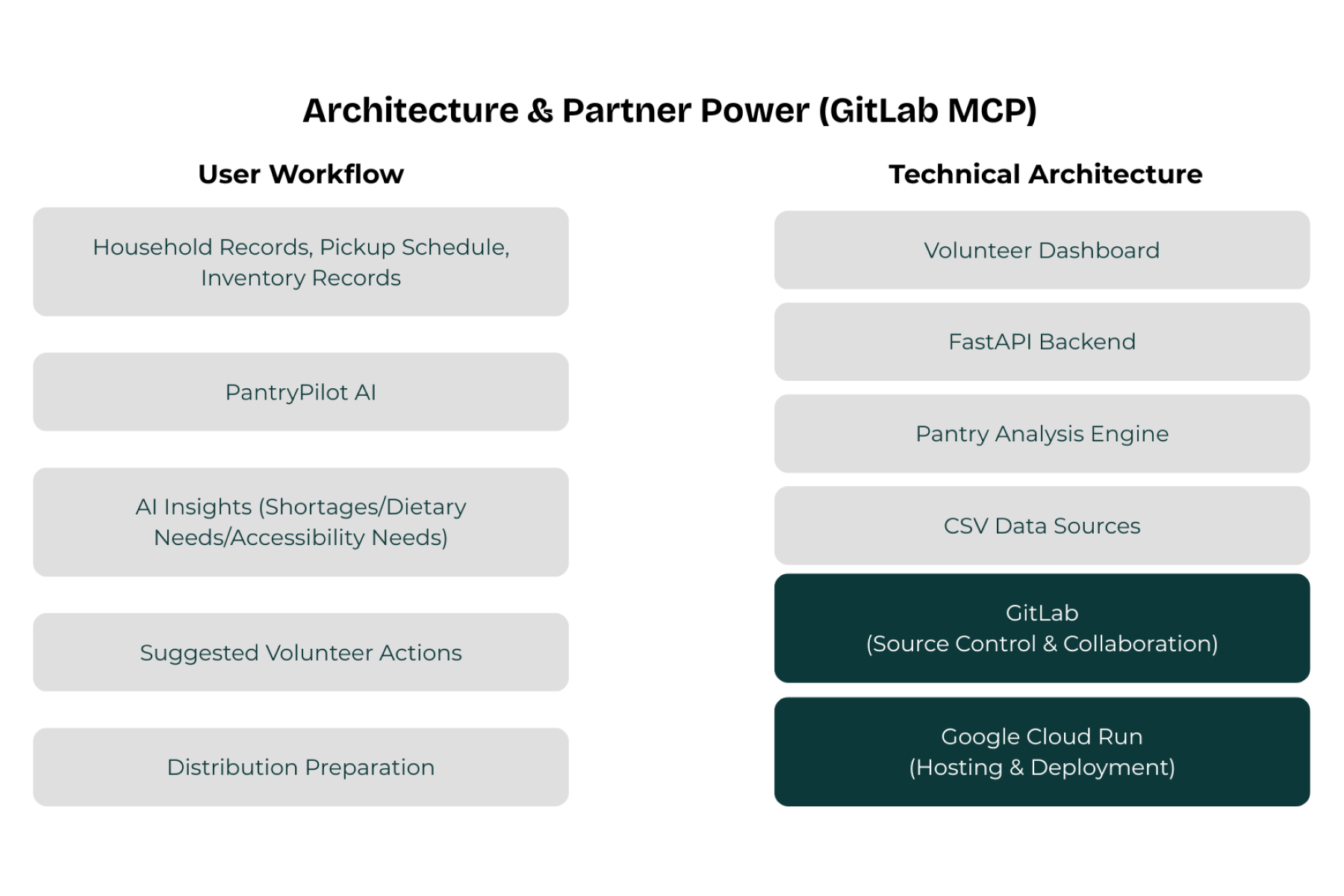
Architecture & Partner Power (GitLab MCP)
-
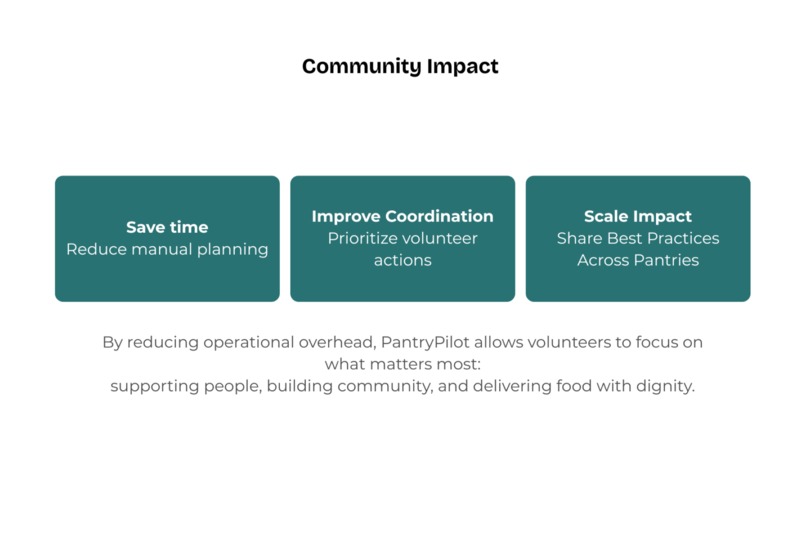
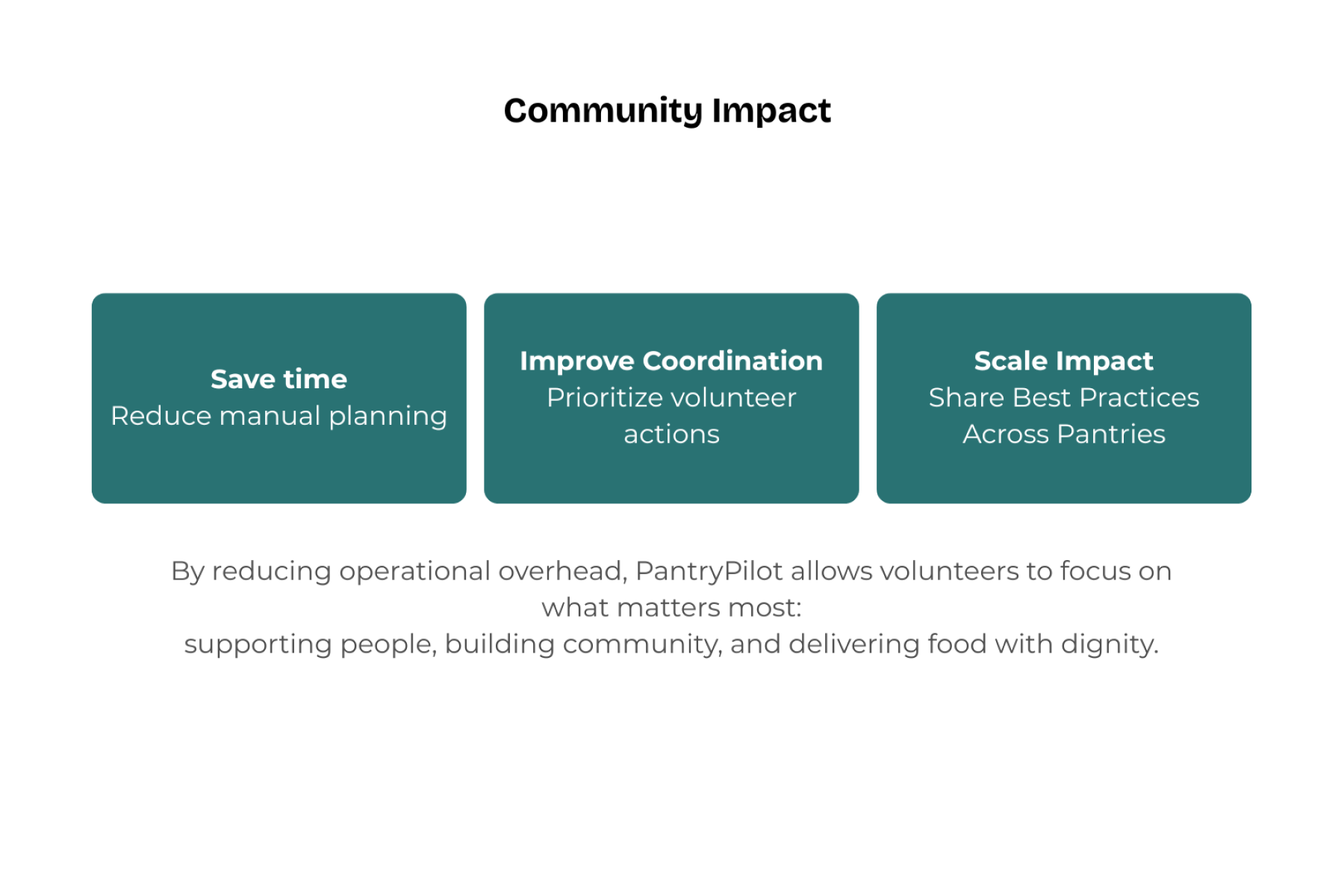
Community Impact
Inspiration
As international students in the Midwest, we observed that many food pantries still rely on spreadsheets and manual coordination to prepare for daily distributions. Volunteers spend valuable time reviewing household requests, checking inventory, and identifying shortages before distribution begins. We created PantryPilot AI, an AI-powered operations assistant that analyzes pantry data, detects potential shortages, and recommends actions, helping volunteers spend less time managing logistics and more time serving their communities.
What it does
PantryPilot AI is an AI-powered operations assistant for food pantry volunteers. By analyzing household requests, pickup schedules, and inventory records, it generates a daily distribution summary, highlights accessibility and dietary needs, detects potential inventory shortages, and recommends actions before distribution begins. Instead of manually reviewing multiple spreadsheets, volunteers receive actionable insights and prioritized guidance in a single dashboard.
How we built it
We built PantryPilot AI using a FastAPI backend, a lightweight web frontend (HTML/CSS/JavaScript), Google Cloud Run for deployment, GitLab for source control, and Cursor AI for rapid development and iteration. The system analyzes pantry operational data, including household requests, pickup schedules, and inventory records to generate distribution summaries, identify inventory risks, and recommend volunteer actions. We deployed the application on Google Cloud Run and made it accessible through a web-based dashboard for volunteers.
Challenges we ran into
One of our biggest challenges was learning and integrating multiple new technologies within a short hackathon timeframe. We explored GitLab MCP integrations, Google Cloud deployment, and AI-assisted development tools while building the product, and encountered obstacles such as deployment errors, cloud configuration issues, API integration challenges, and repository permission constraints. Through rapid experimentation and iteration, we overcame these challenges and successfully delivered a working end-to-end application on Google Cloud Run.
Accomplishments that we're proud of
We are proud that PantryPilot evolved from a technical prototype into a volunteer-centered AI assistant focused on solving a real operational challenge. Throughout the project, we continuously refined the scope, choosing to prioritize practical value over adding more features. By helping volunteers quickly identify inventory risks, understand household needs, and prepare for distributions more efficiently, PantryPilot demonstrates how AI can reduce administrative workload and enable volunteers to spend more time supporting their communities.
What we learned
This project taught us that effective AI systems are not just about automation—they are about helping people make better decisions. The most valuable outcome was enabling volunteers to understand what is happening, why it matters, and what actions to take next. We also learned the importance of UX writing and information hierarchy when designing AI-powered operational tools, as clear insights are often more valuable than complex features. From a technical perspective, we gained hands-on experience with Google Cloud deployment, AI-assisted development workflows, GitLab-based collaboration, and rapid prototyping within a hackathon environment.
What's next for PantryPilot AI
Our next step is to evolve PantryPilot from a dashboard into a proactive AI operations assistant. Future enhancements include integrating directly with pantry inventory systems, supporting multiple food pantries with different workflows, and enabling natural language interactions so volunteers can ask questions such as “Which items need restocking today?” or “What should we prepare first?” Our long-term vision is to help food pantries reduce administrative workload, make faster operational decisions, and spend more time serving their communities.
Built With
- cursor
- fastapi
- gitlab
- google-cloud
- python


Log in or sign up for Devpost to join the conversation.