-
-
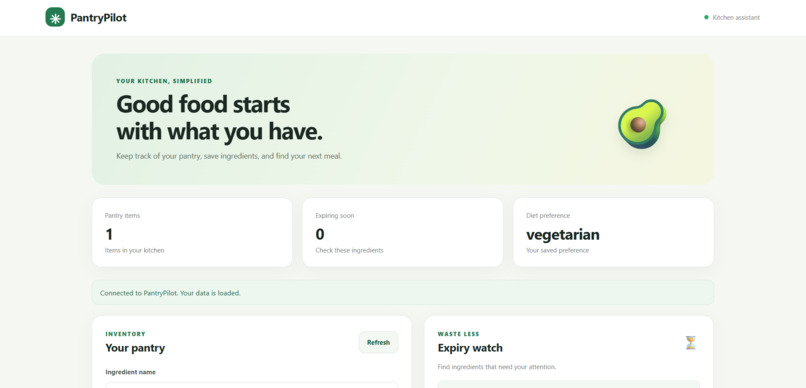
Dashboard and add ingredients
-
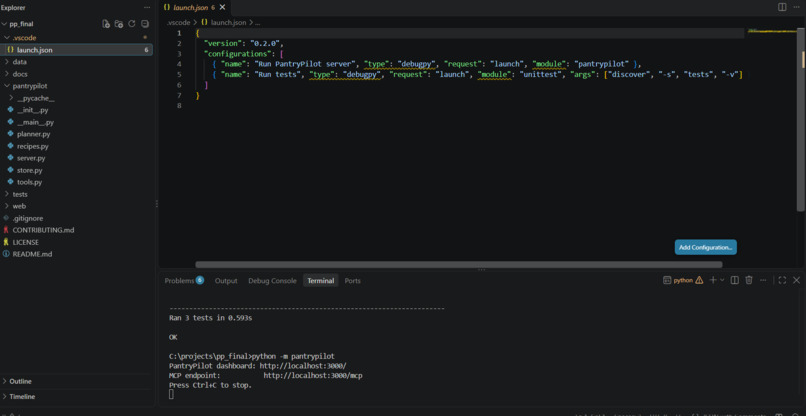
backend
-
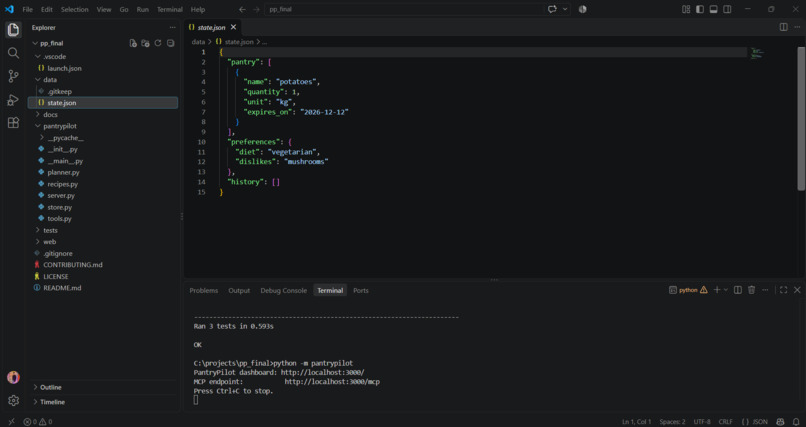
backend
-
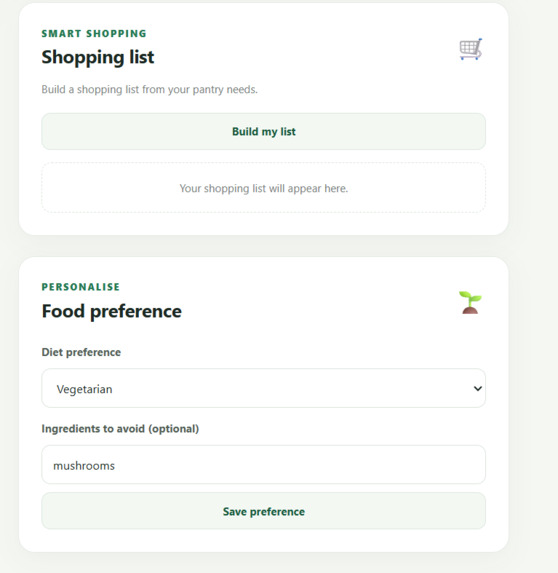
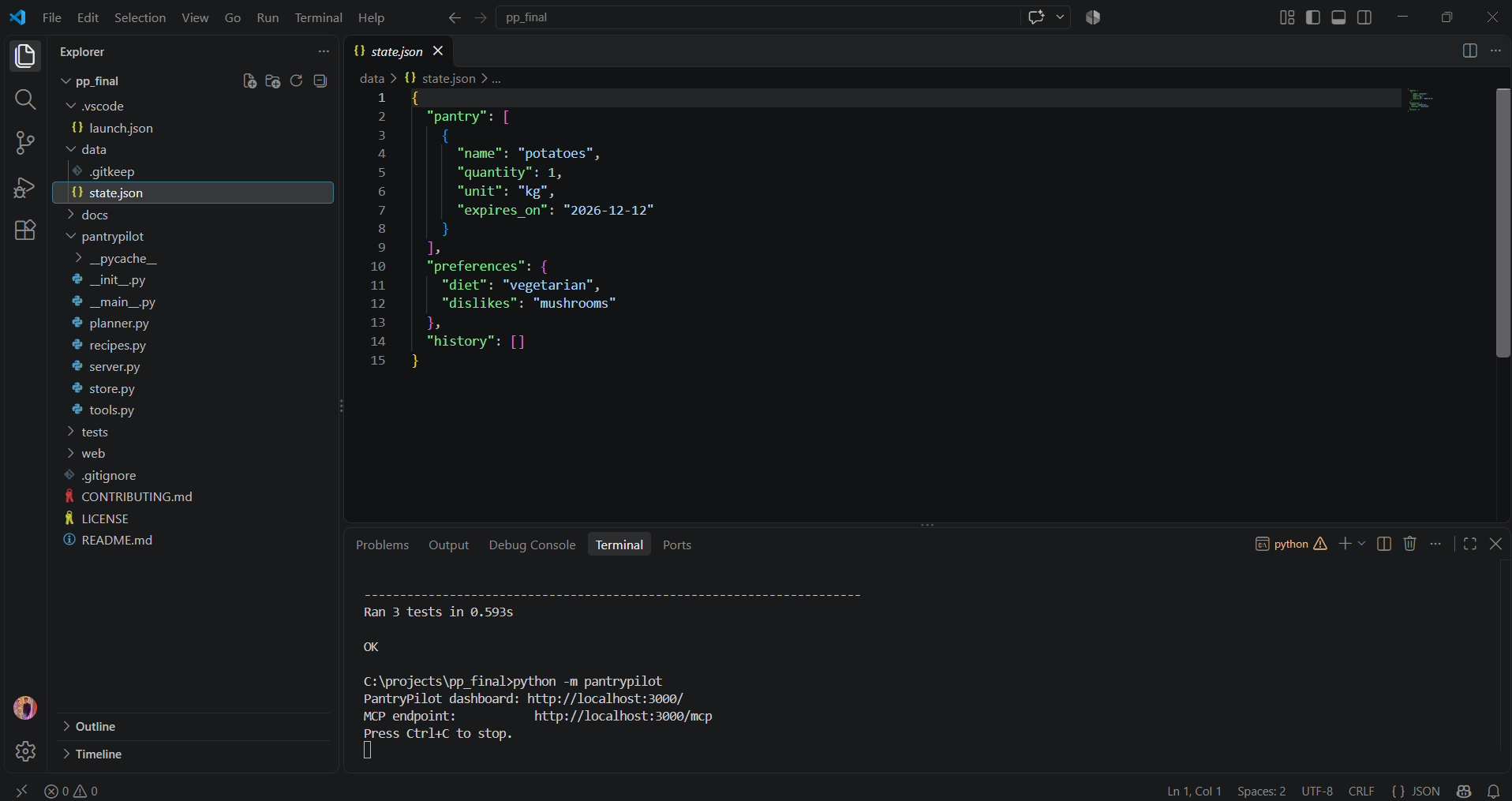
Preferences
-
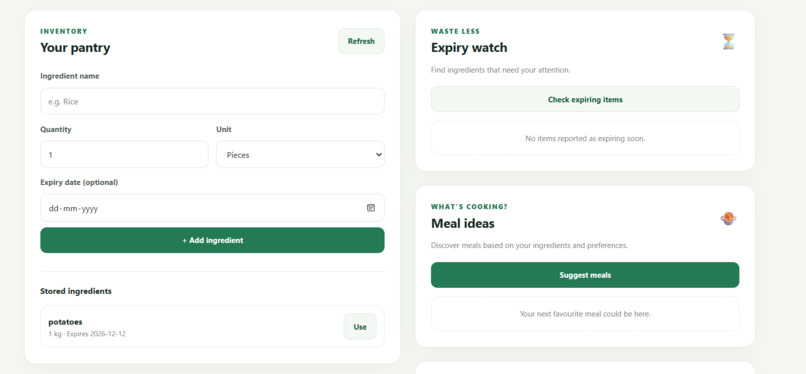
Meal ideas and Expiry
Inspiration
What it does
How we built it## Inspiration
Food waste often happens because people forget what is in their pantry, overlook expiry dates, or struggle to decide what to cook with the ingredients they already have. PantryPilot was created to make everyday food management simpler by bringing pantry tracking, expiry monitoring, meal suggestions, and shopping-list creation into one assistant.
What it does
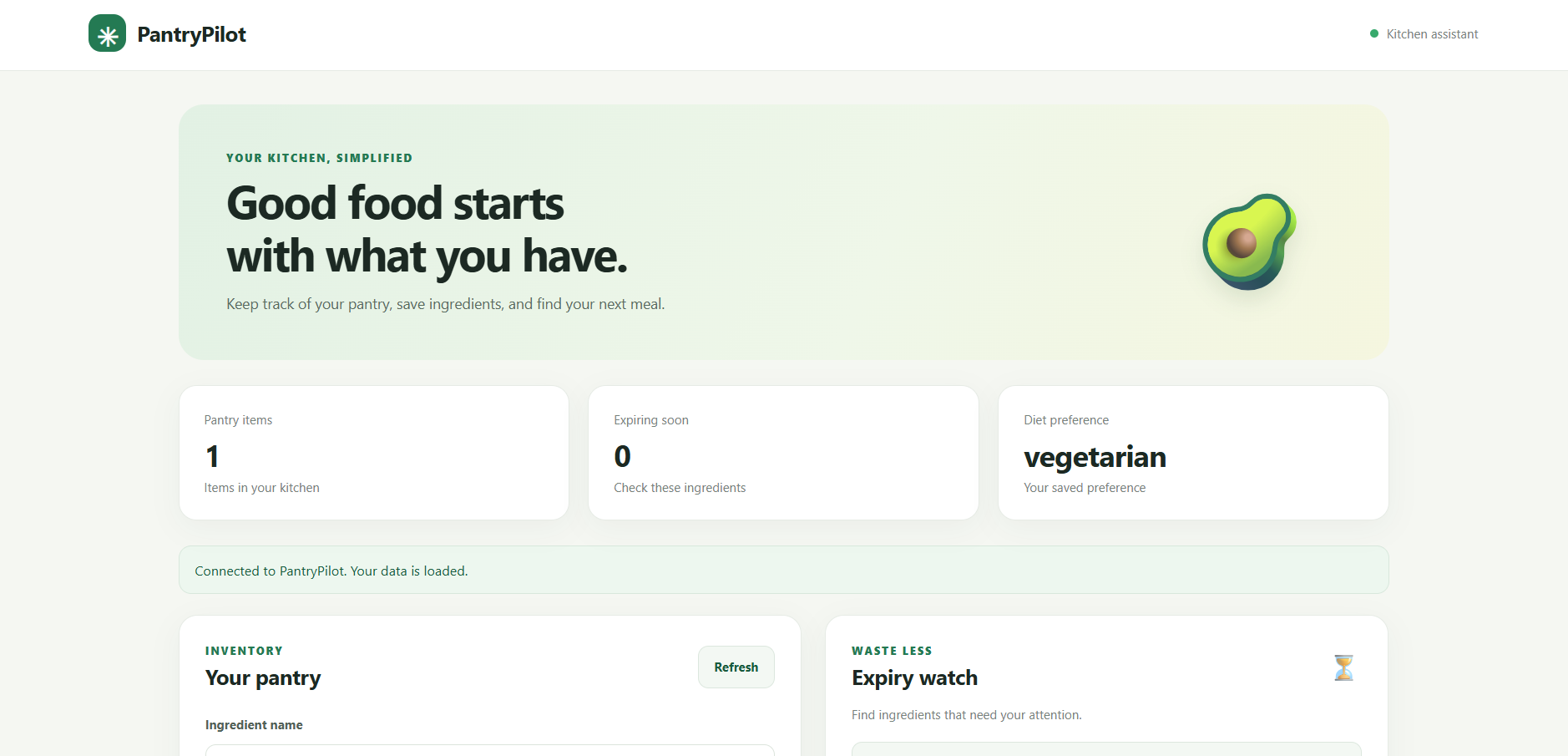
PantryPilot is a smart pantry assistant that helps users manage their ingredients and plan meals more efficiently.
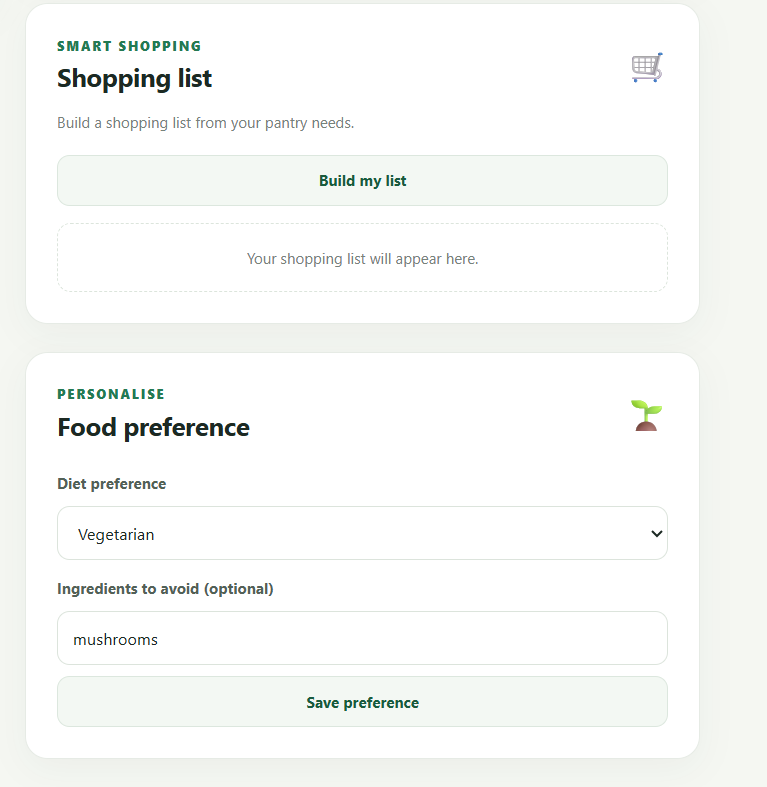
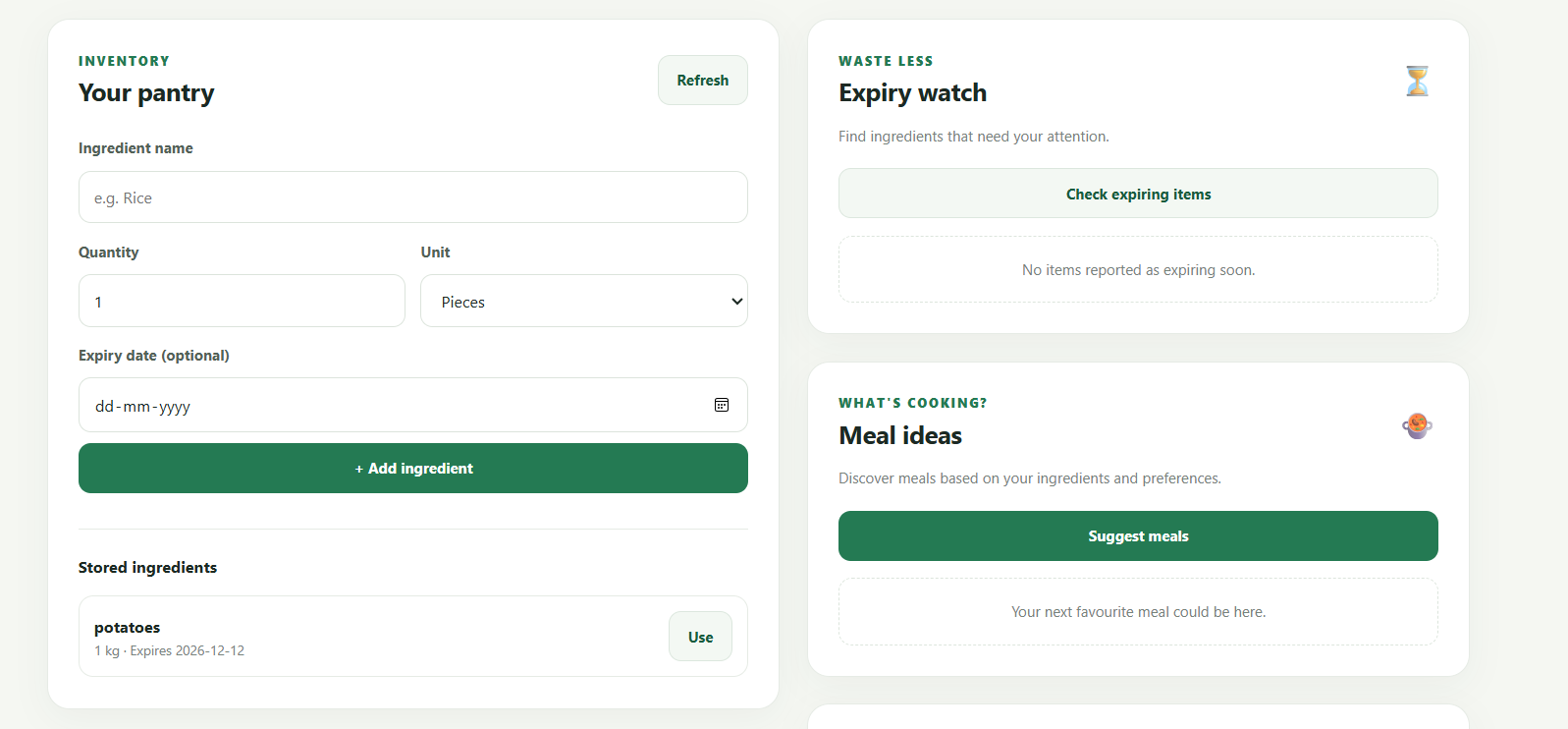
- Pantry management: Add ingredients with quantities and units, and keep track of available items.
- Expiry tracking: Monitor upcoming expiry dates so users can prioritize ingredients that need to be used soon.
- Meal suggestions: Get meal ideas based on pantry ingredients and identify ingredients that may be missing.
- Shopping lists: Build shopping lists to help plan grocery purchases.
- Dietary preferences: Save dietary preferences and disliked ingredients for a more personalized experience.
How we built it
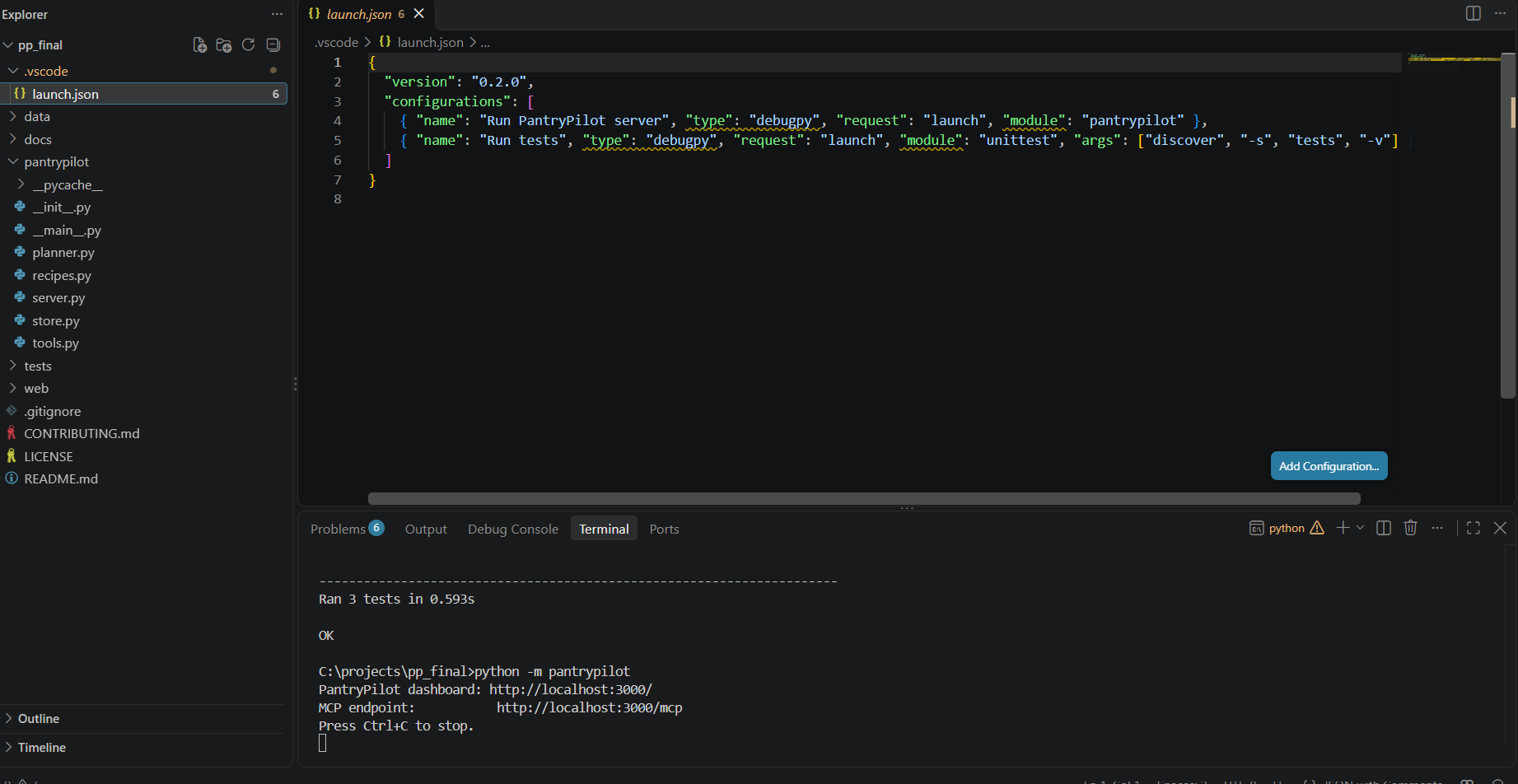
PantryPilot was built with Python and a lightweight web interface. The backend uses FastAPI-style HTTP endpoints and an MCP server to expose pantry functions as tools. The application stores pantry information, preferences, and related state in a JSON file, allowing data to persist across restarts.
The frontend uses HTML, CSS, and JavaScript to provide a dashboard for managing pantry items, viewing expiry information, exploring meal suggestions, and generating shopping lists. The backend and frontend communicate through the MCP endpoint, connecting the interface to the pantry-management tools.
Challenges we faced
One of the main challenges was connecting the frontend to the backend reliably. Tool responses needed to be handled consistently so that pantry items, expiry information, dietary preferences, and shopping-list results appeared correctly in the interface.
Another challenge was ensuring that saved information remained available after restarting the server. Testing the application helped identify issues involving response formats, preference persistence, and the display of expiry information.
What we learned
Building PantryPilot strengthened our understanding of Python backend development, MCP tools, API communication, frontend integration, persistent data storage, and debugging across different parts of an application. It also taught us the importance of testing complete user workflows rather than checking individual features in isolation.
What's next
Future improvements could include more intelligent meal recommendations, barcode or receipt scanning, notifications for approaching expiry dates, and deeper integration with conversational assistants. Our goal is to make PantryPilot a practical everyday tool that helps people waste less food and shop more thoughtfully.
Challenges we ran into
Accomplishments that we're proud of
What we learned
What's next for PantryPilot
Built With
- css
- fastapi
- html
- javascript
- json
- mcp
- python
- rest

Log in or sign up for Devpost to join the conversation.