-
-
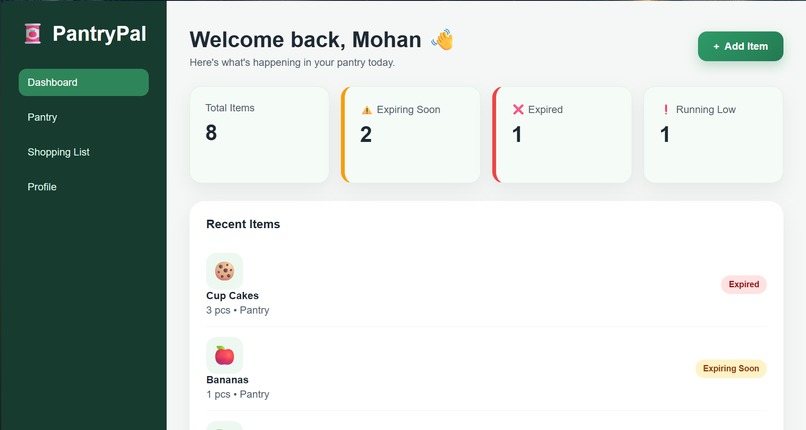
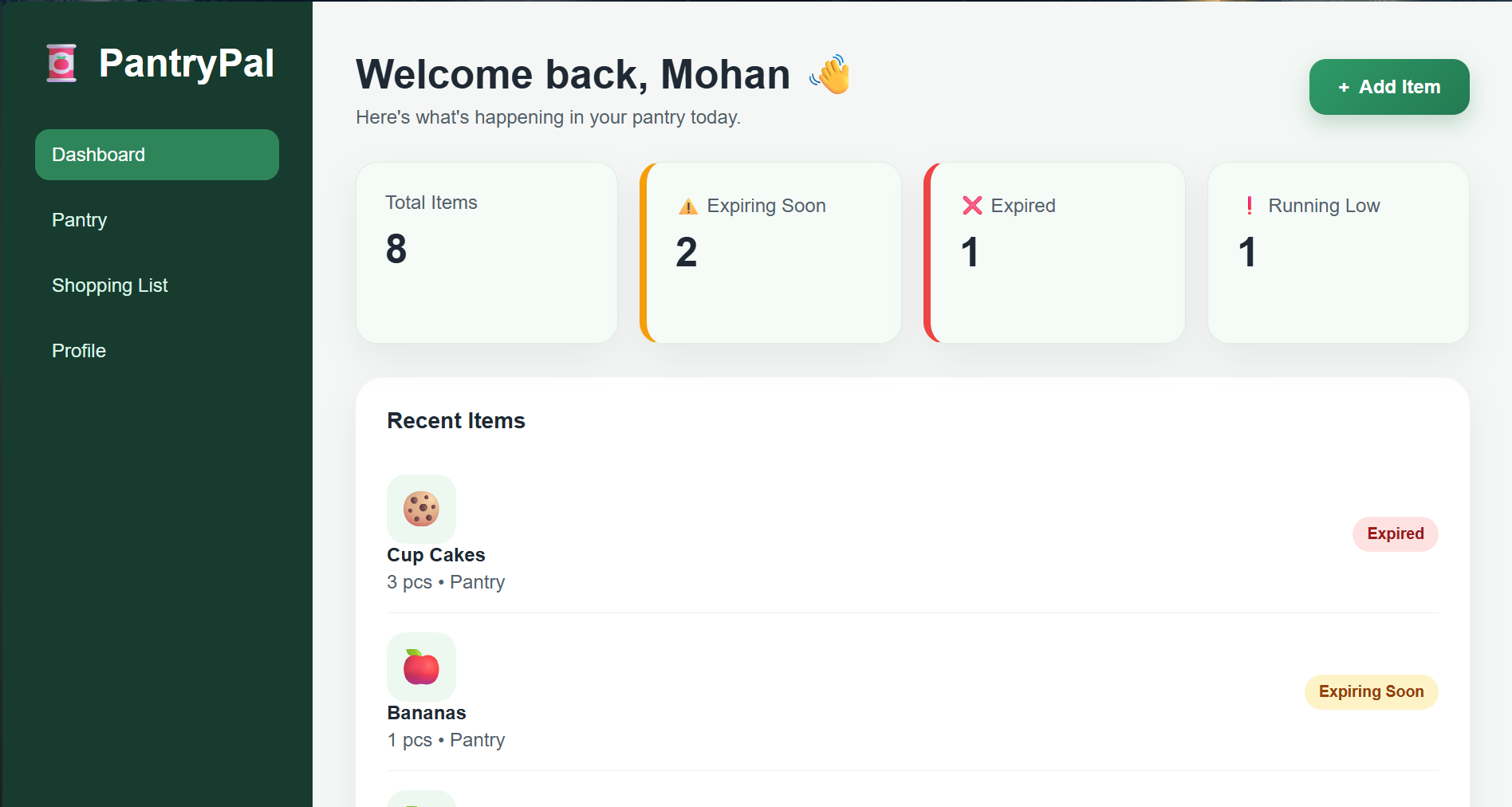
Dashboard
-
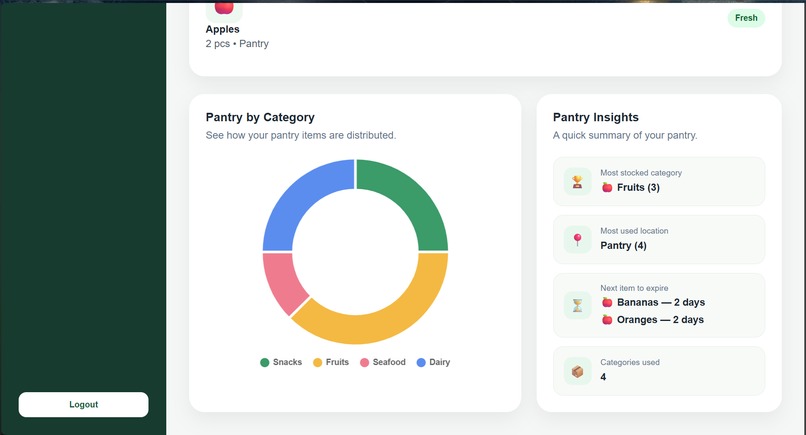
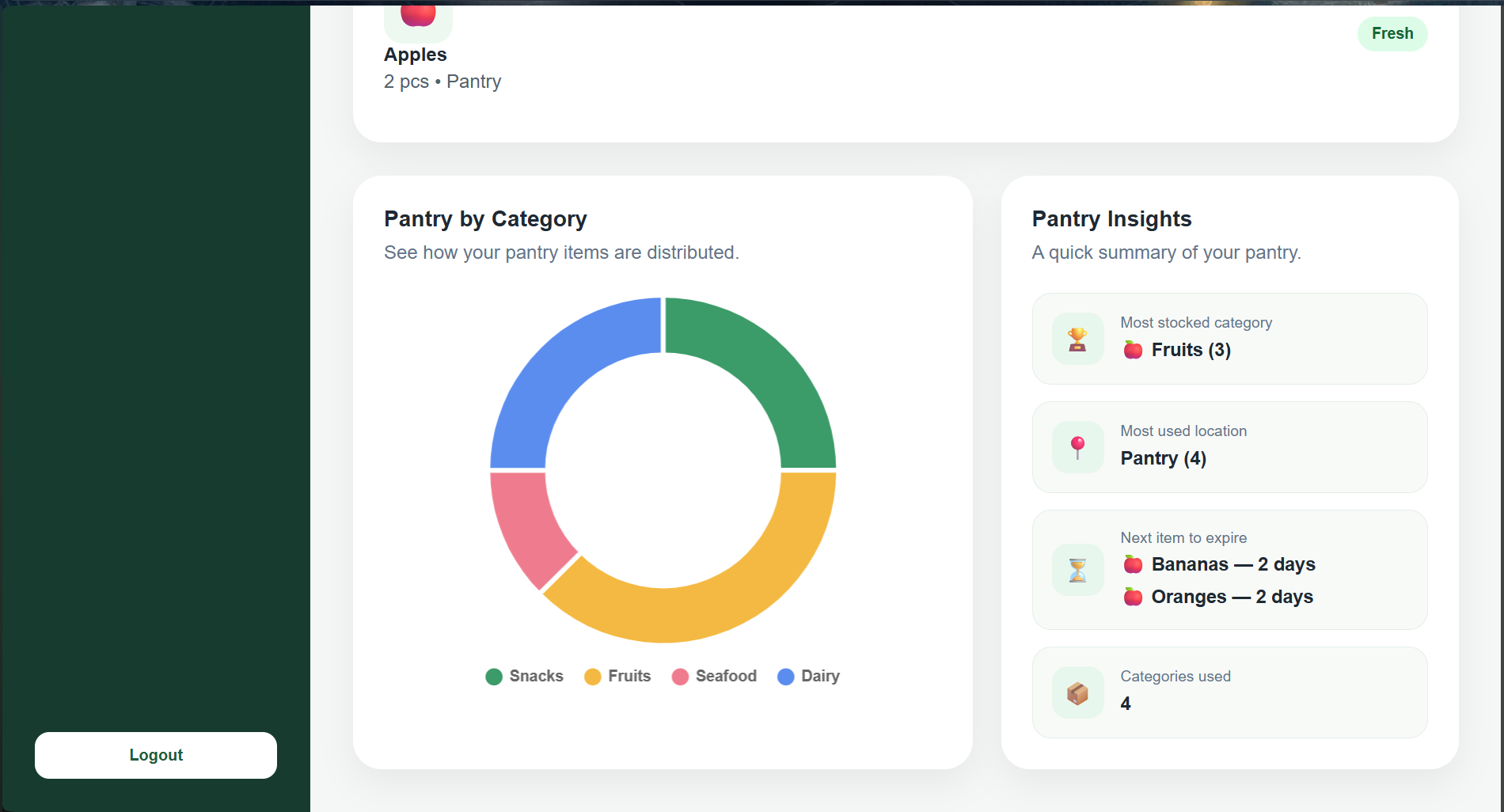
Dashboard stats and chart
-
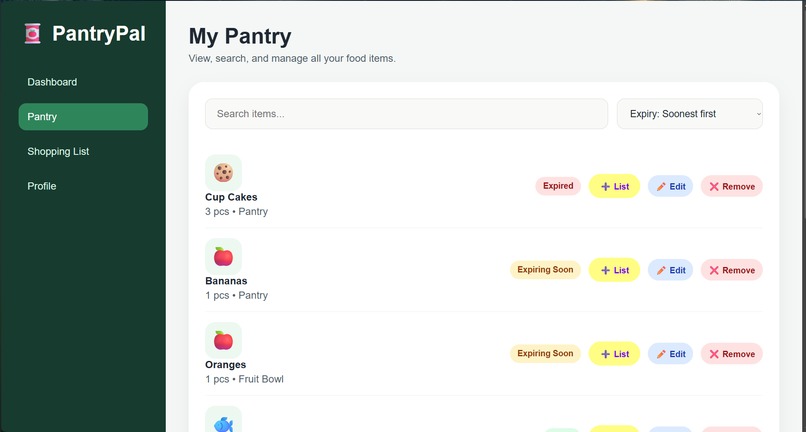
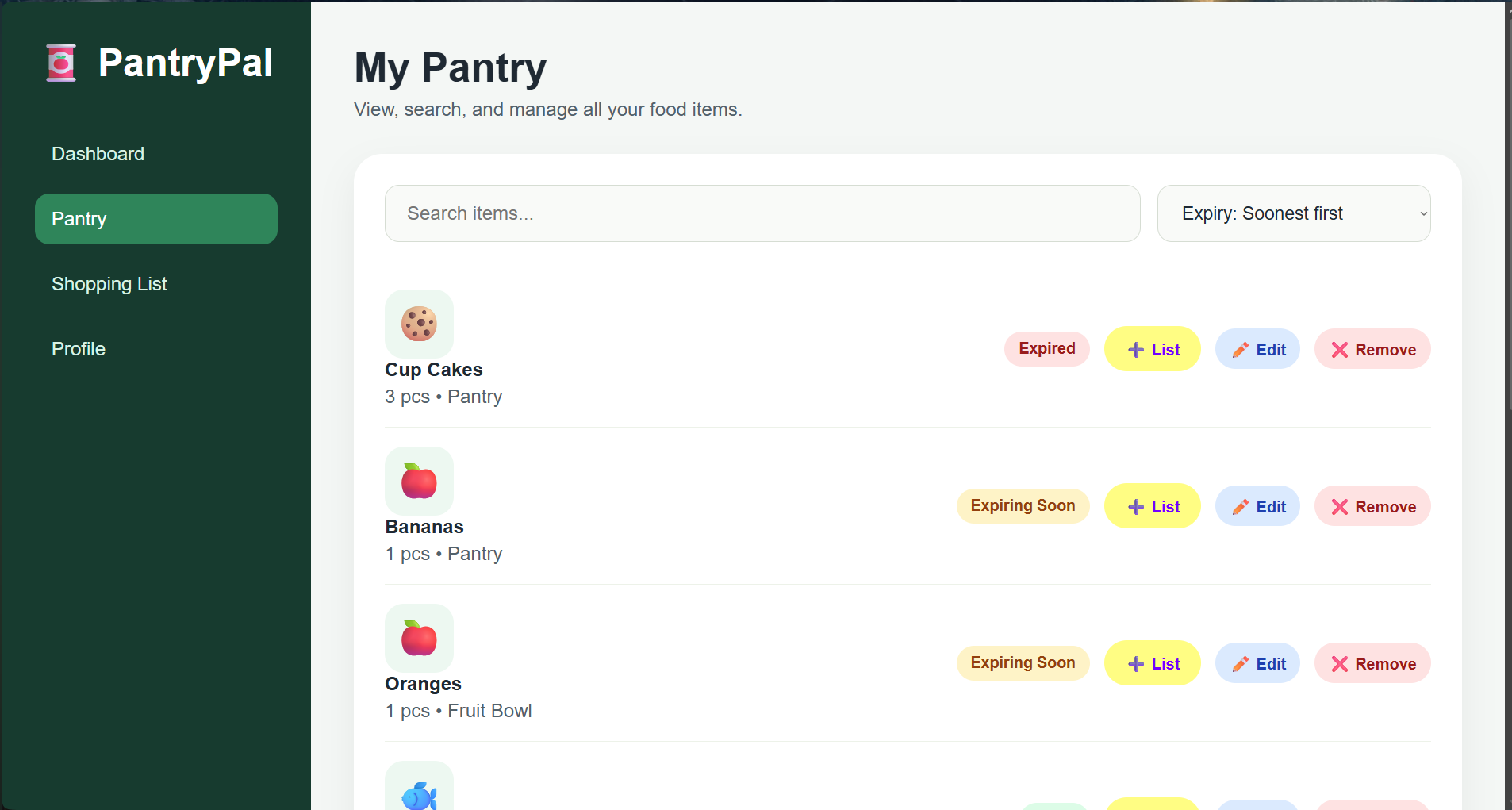
Pantry page
-
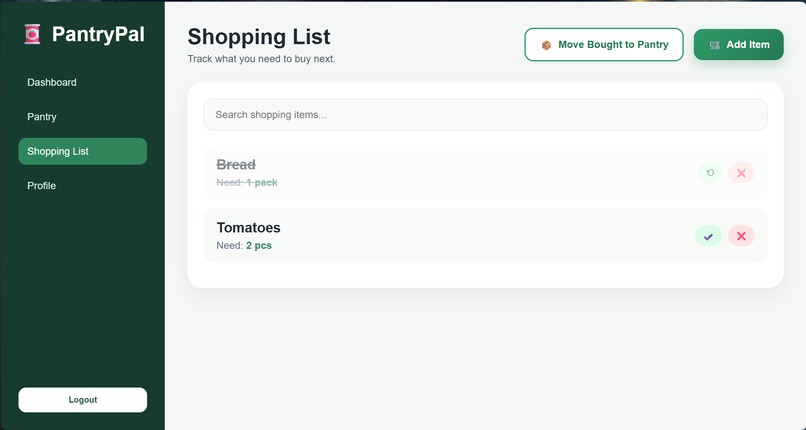
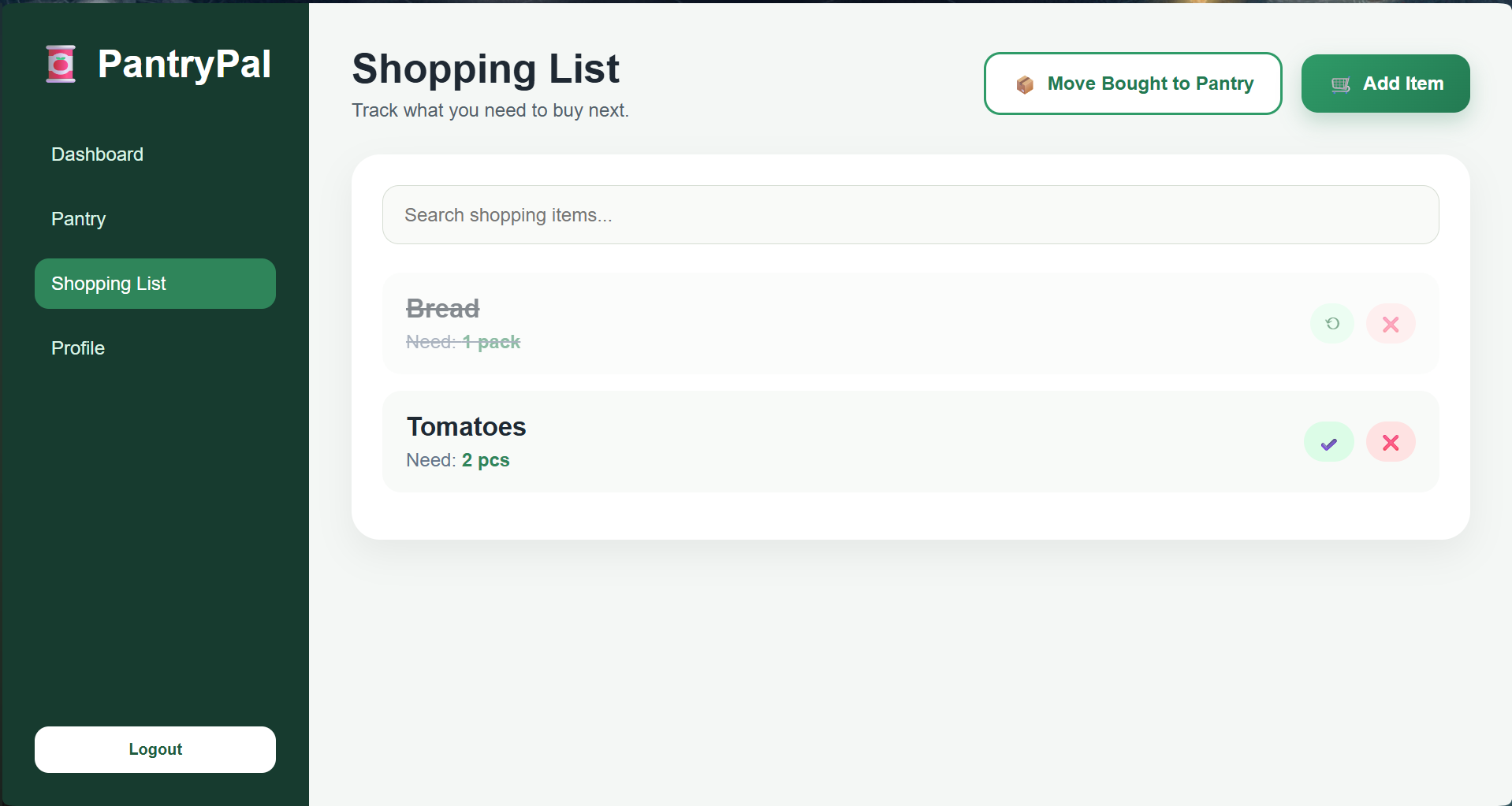
Shopping List
-
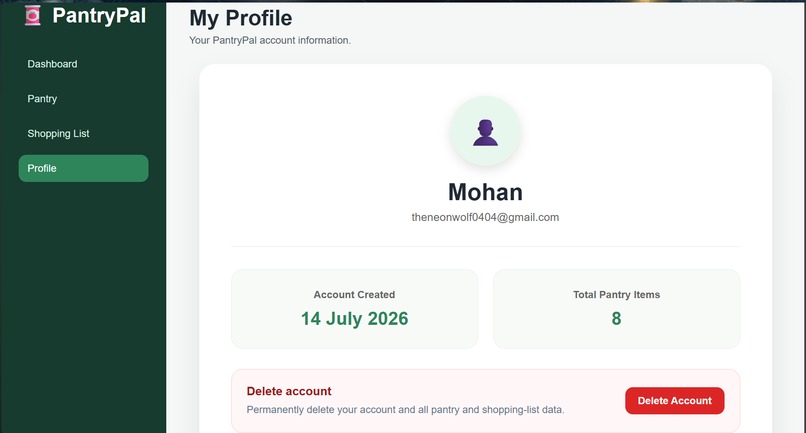
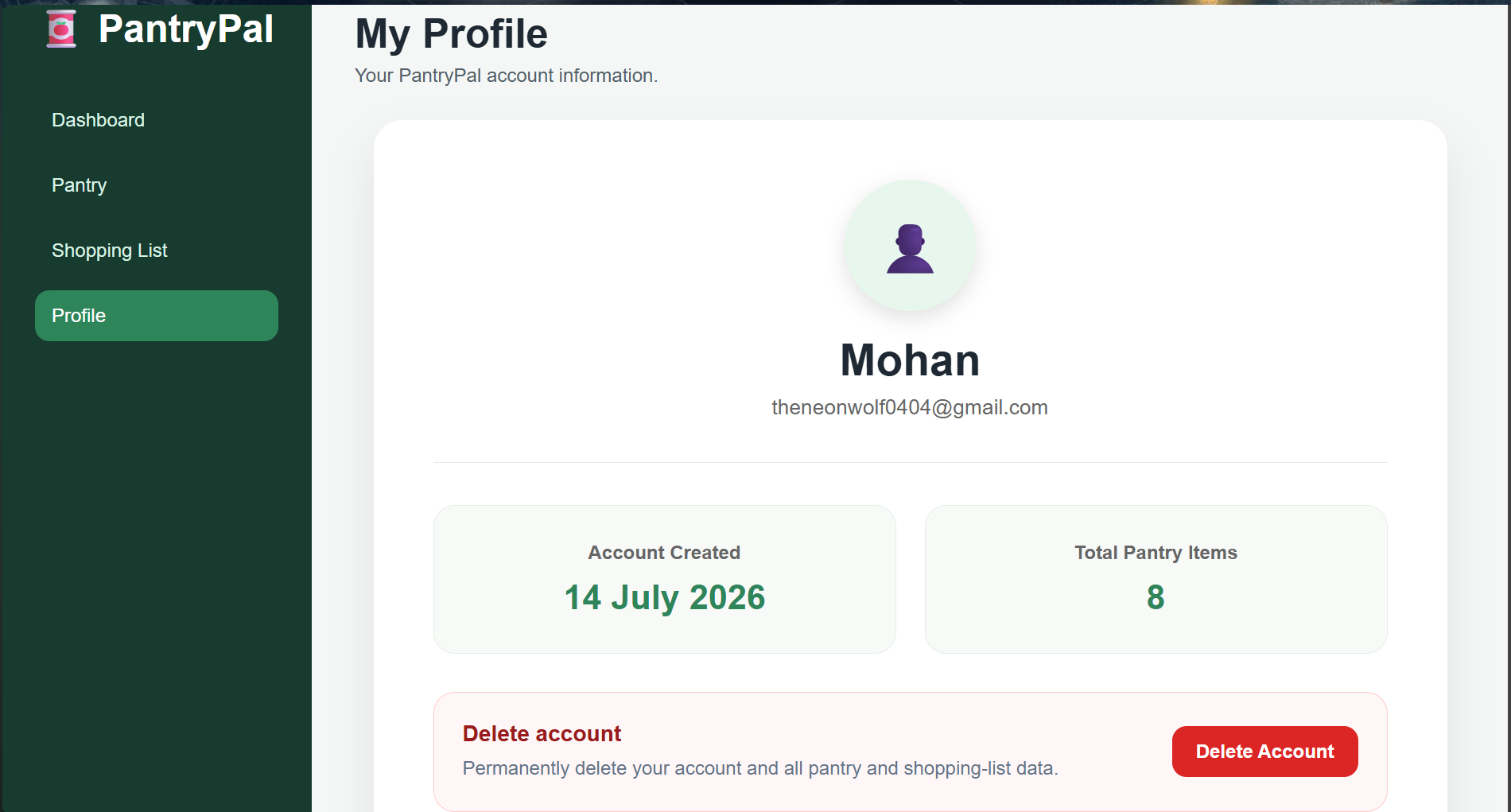
Profile
-
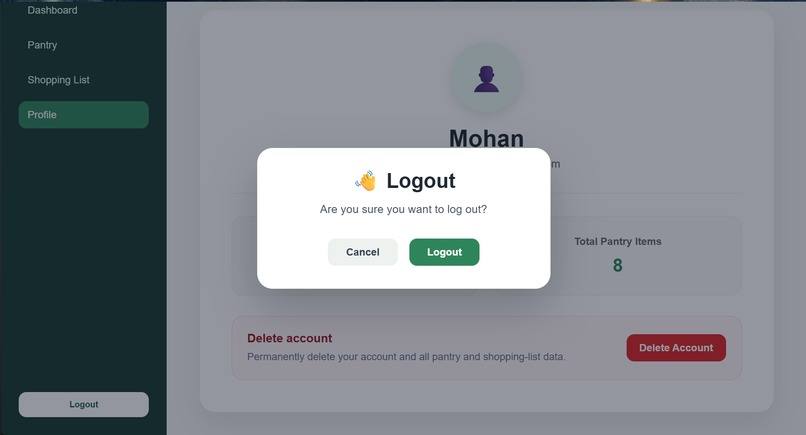
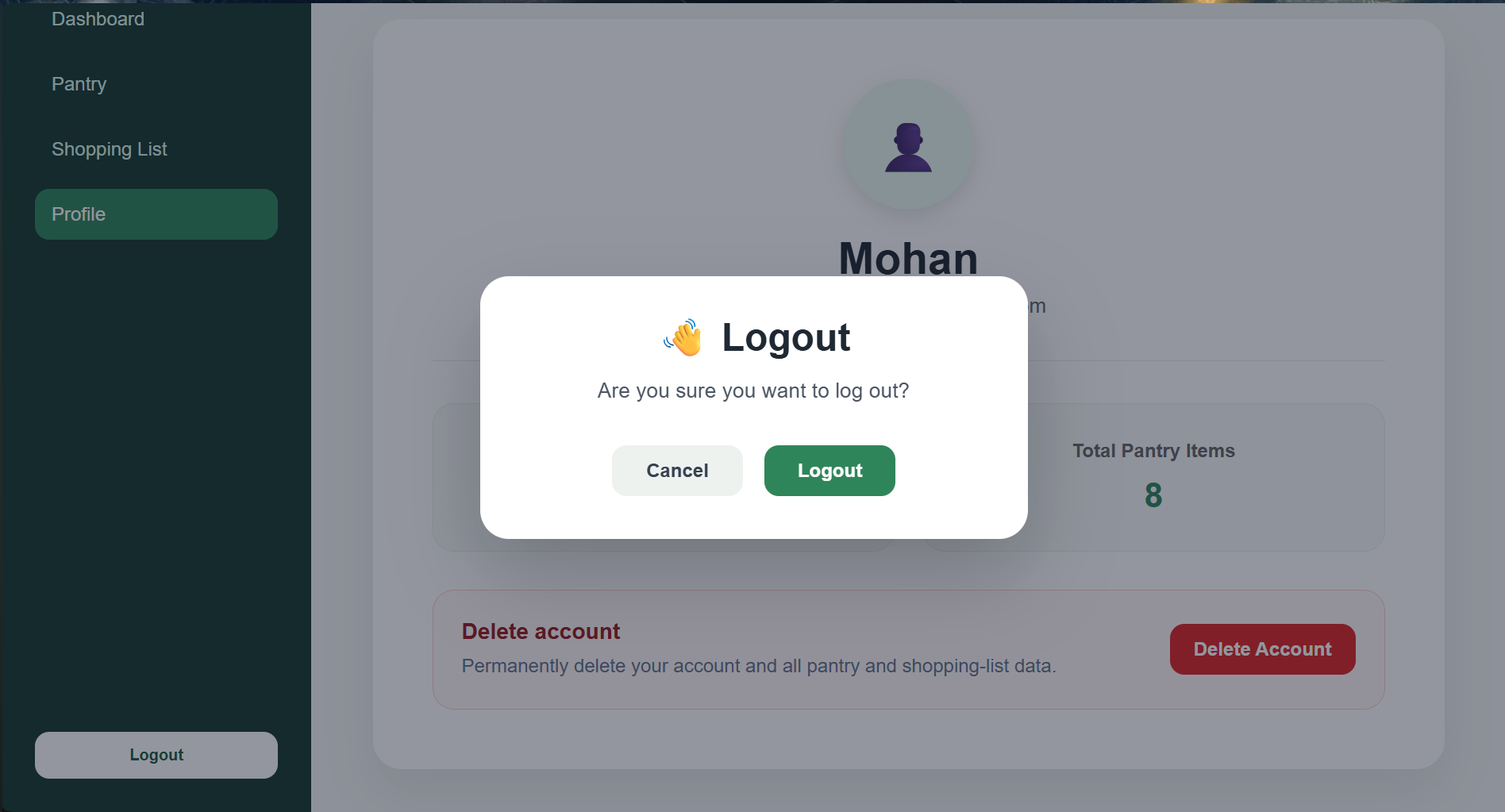
Logout
-
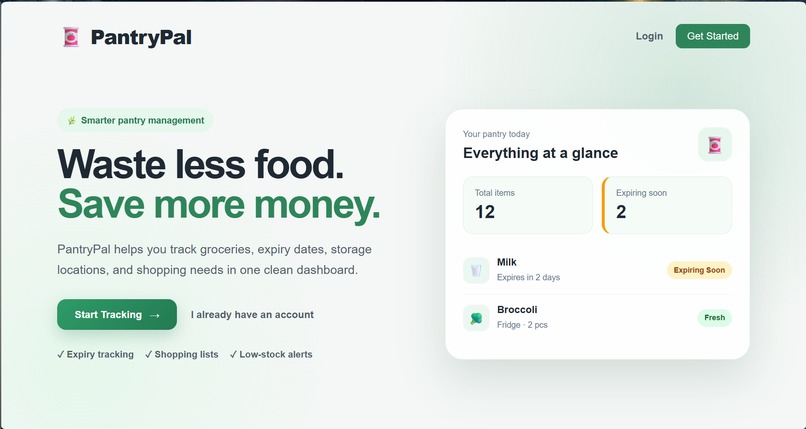
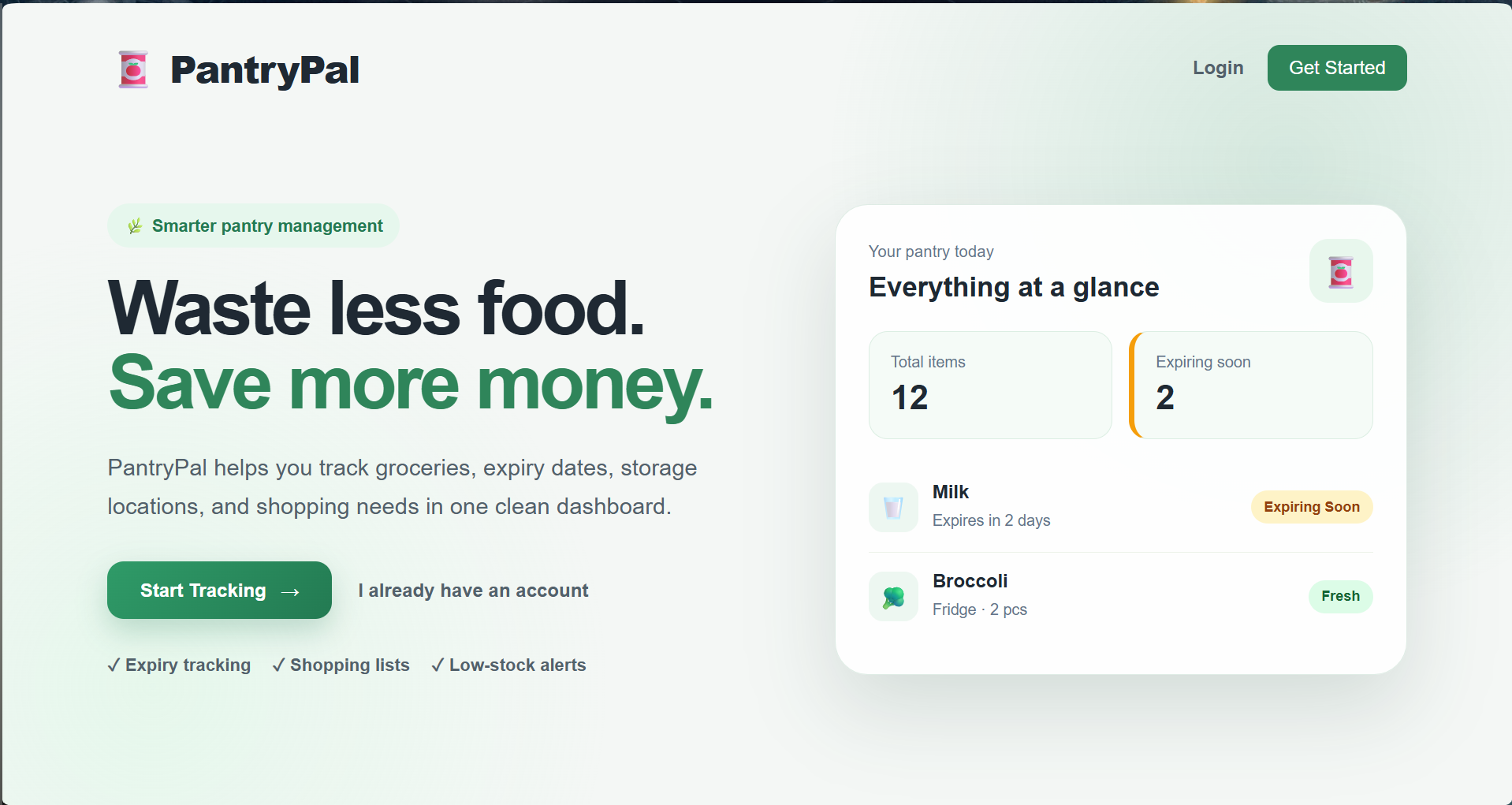
Index page for login and registration
-
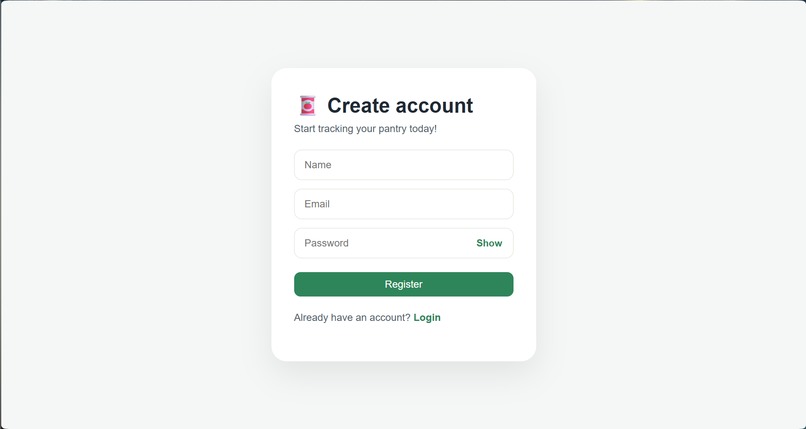
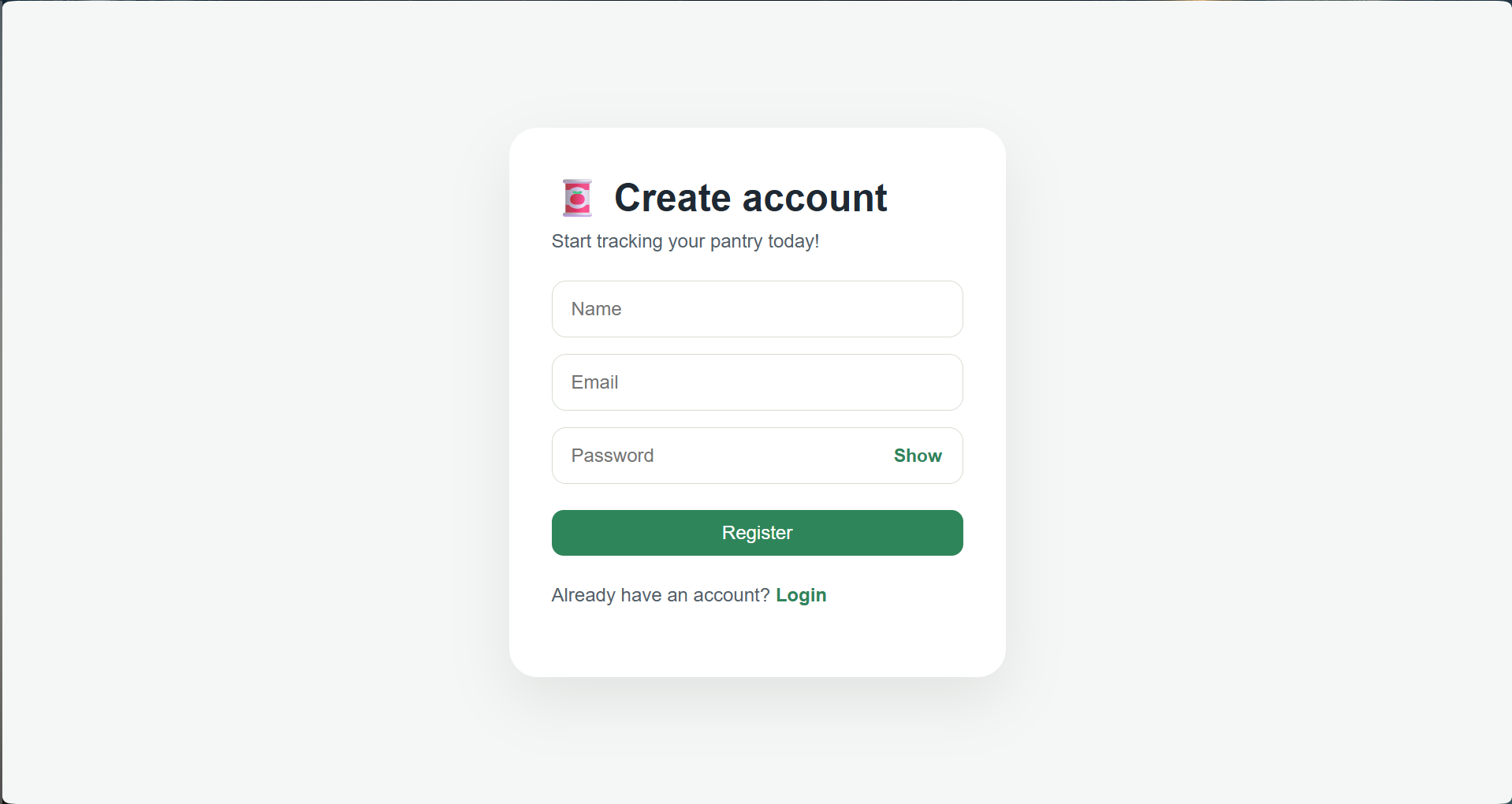
Register form
-
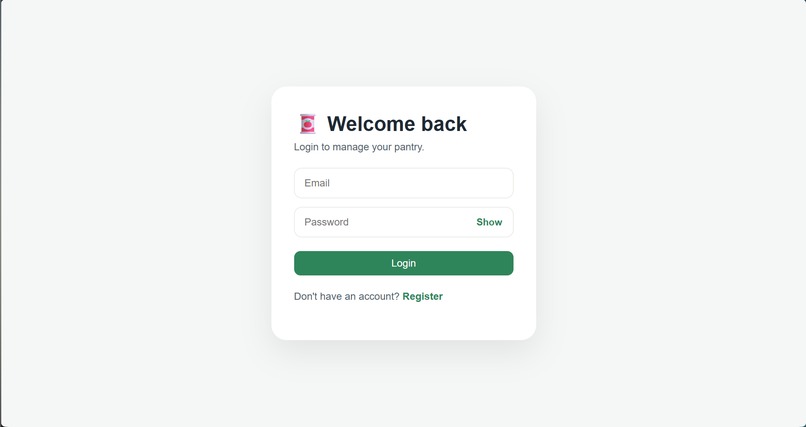
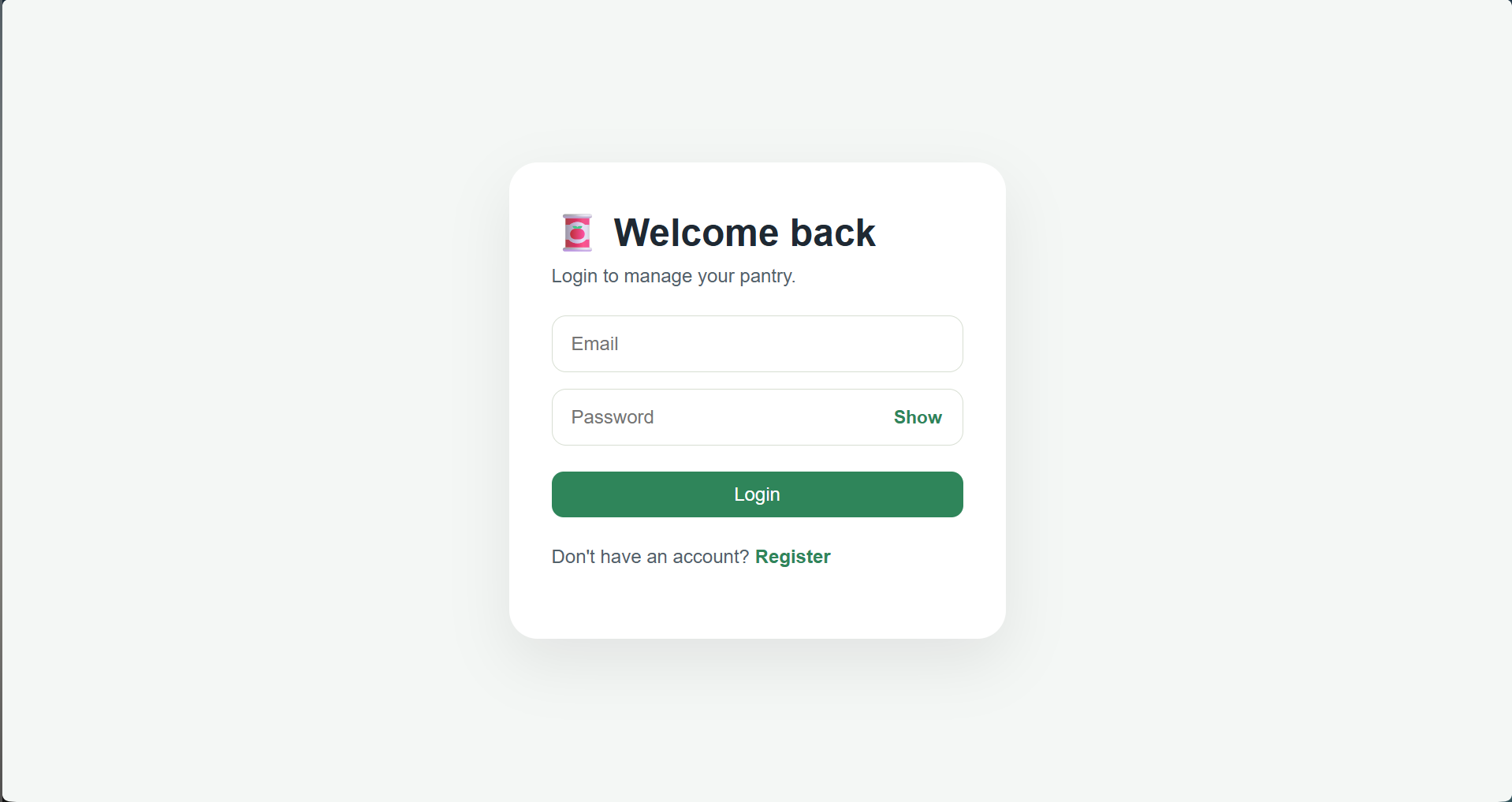
Login form
Inspiration
Food waste is a common problem in many households. Groceries are often forgotten at the back of the fridge, expire before they're used, or get purchased multiple times because people simply don't know what they already have. I wanted to create a simple solution that helps people stay organized, save money, and reduce unnecessary food waste.
That idea became PantryPal—a web application that makes pantry management easy and accessible for everyone.
What it does
PantryPal allows users to securely create an account and manage their household pantry in one place.
Users can:
- Add and organize pantry items by category and storage location
- Track expiry dates with clear freshness indicators
- View items that are expiring soon or already expired
- Monitor low-stock items using customizable minimum quantity thresholds
- Create and manage a shopping list for future purchases
- View a dashboard summarizing pantry statistics
With everything organized in one place, PantryPal helps users make better purchasing decisions while reducing food waste.
How I built it
PantryPal was built as a full-stack web application using modern JavaScript.
Frontend:
- HTML
- CSS
- JavaScript
Backend:
- Node.js
- Express.js
Database:
- MongoDB Atlas
- Mongoose
Authentication:
- JSON Web Tokens (JWT)
- bcryptjs (for password hashing)
The frontend communicates with a REST API built using Express, while MongoDB stores user accounts and pantry information. The dashboard dynamically calculates pantry statistics such as expiring items and low-stock products to provide users with useful insights.
Challenges I ran into
One of the biggest challenges was designing a system that remained simple while still being useful. Managing pantry data required careful handling of expiry dates, stock quantities, and different storage locations. I also spent a considerable amount of time ensuring authentication worked correctly, testing and protecting API routes, and making the application responsive across desktop and mobile devices. Another challenge was creating an intuitive interface that allows users to quickly add, update, and organize their pantry without unnecessary complexity.
Accomplishments that I'm proud of
I'm proud of building a fully functional full-stack application from scratch.
Some highlights include:
- Secure user authentication
- A responsive and clean user interface
- Dynamic dashboard with pantry insights
- Expiry tracking system
- Low-stock monitoring
- Shopping list management
- Mobile-friendly design
Most importantly, PantryPal solves a real-world problem that many households experience every day.
What I learned
Throughout this project, I strengthened my understanding of full-stack web development, REST API design, authentication with JWT, MongoDB data modeling, and frontend-backend integration. I also learned the importance of planning application architecture, improving user experience through iterative design, and balancing functionality with simplicity under hackathon time constraints.
What's next for PantryPal
I plan to continue improving PantryPal with features such as:
- Barcode scanning for faster item entry
- OCR receipt scanning to automatically add purchased items
- Smart recipe recommendations based on available ingredients
- Household sharing so families can manage a pantry together
- Push notifications for expiring or low-stock items
- Data analytics to help users understand food consumption habits
The goal is to make PantryPal an everyday kitchen companion that helps people save money, stay organized, and reduce food waste.


Log in or sign up for Devpost to join the conversation.