-
-

Logo
-
Ai Meals
-
Spending Analysis
-
Pantry

Pantry Mind
The AI-Powered Kitchen Execution Engine
Transforming Food From Passive Inventory Into Financial Intelligence
Inspiration
Every year, the average household wastes approximately 74kg of food. Most kitchen applications fail because they act like static digital cookbooks instead of intelligent systems that understand what users actually own.
Pantry Mind was created to solve a simple but expensive problem:
People spend money on groceries without having a system to execute consumption efficiently.
The goal was to create a Kitchen Command Center capable of:
- Tracking real pantry inventory
- Calculating the monetary value of food usage
- Reducing food waste through intelligent execution
- Providing hyper-personalized meal recommendations
- Providing real-time pantry intelligence
- Saving both money and food waste simultaneously
Instead of guessing what users should cook, Pantry Mind builds recommendations around:
- Existing pantry inventory
- Kitchen hardware
- Dietary restrictions
- Allergies
- Expiration timelines
- Real grocery spending data
What It Does
Pantry Mind is a high-utility AI platform that combines:
- Vision scanning
- OCR receipt analysis
- Financial calculations
- Personalized recipe intelligence
- Social recipe discovery
- Real-time AI assistance
The system converts groceries into structured financial assets.
Core Features
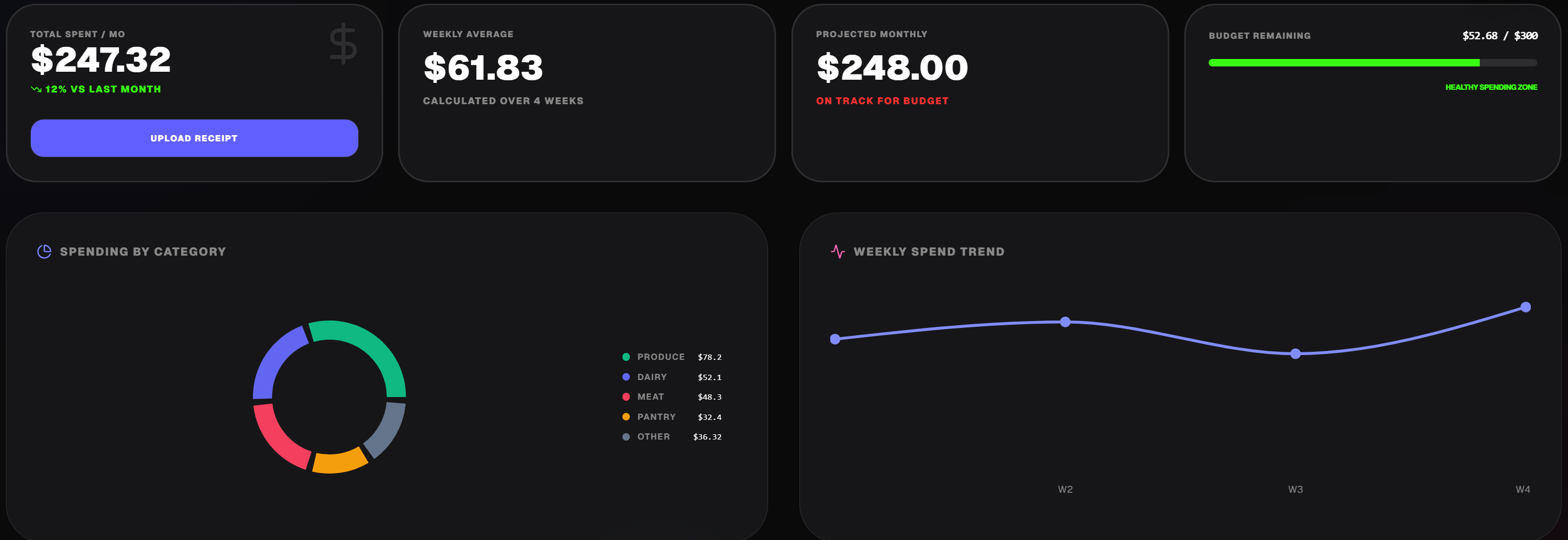
1. Financial Pantry Intelligence
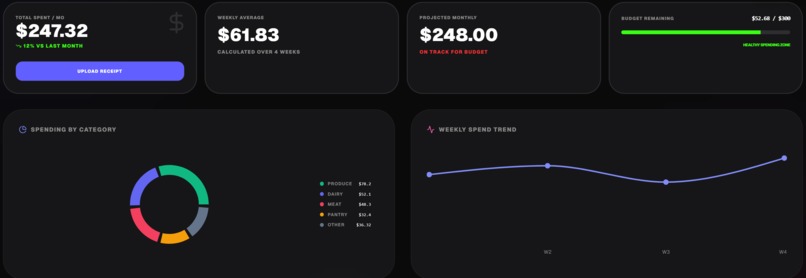
Pantry Mind tracks:
- Grocery prices
- Ingredient weights
- Quantity remaining
- Estimated waste exposure
- Value consumed per meal
Every meal generated has an estimated financial value attached to it.
The platform uses a weight-based valuation engine:
$$ \text{Value Used} = \left( \frac{\text{Item Price}} {\text{Total Weight}} \right) \times \text{Weight Used In Recipe} $$
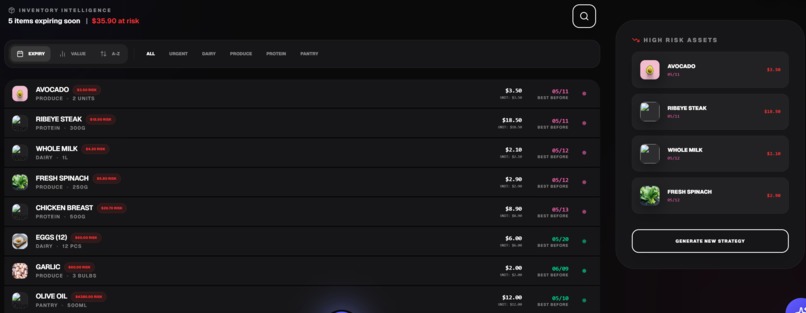
This allows users to see:
- How much money each meal saves
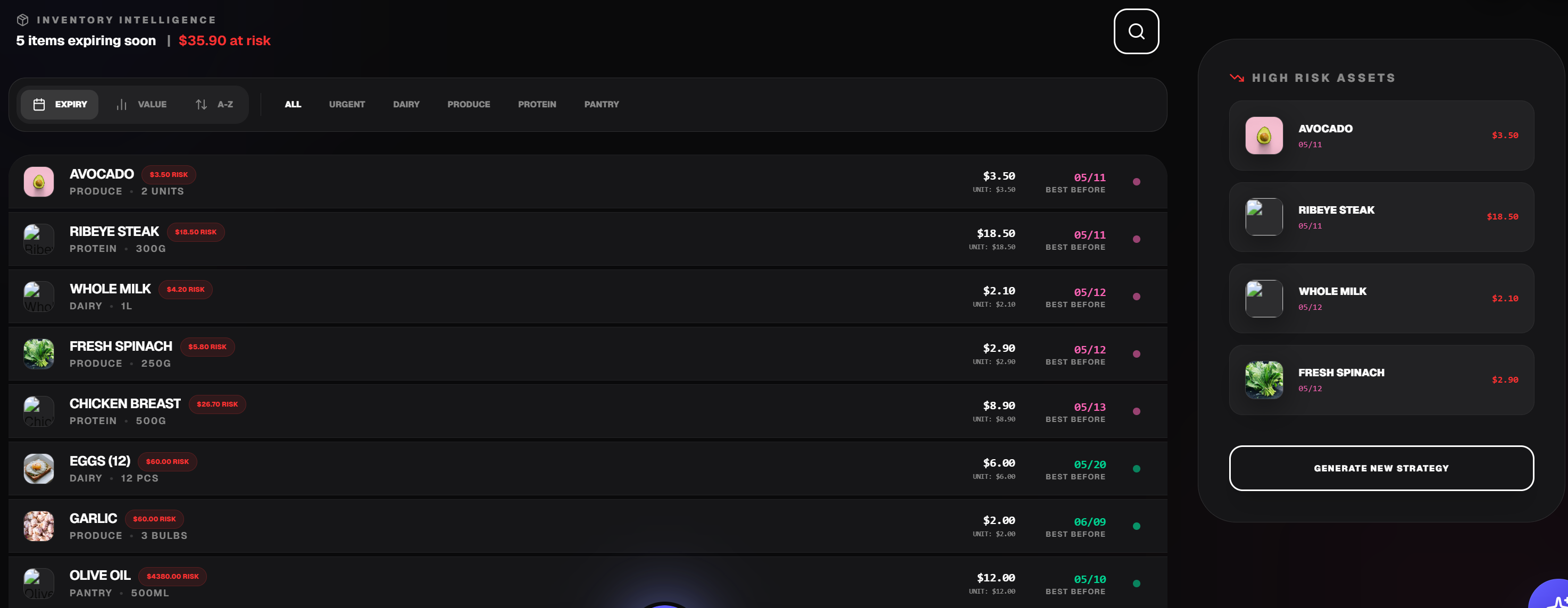
- Which ingredients are at financial risk
- Which foods should be prioritized before expiration
The result is a system that directly attacks food waste using financial visibility.
2. Multi-Target Vision Scanning
Pantry Mind removes manual pantry entry entirely.
Users can upload:
- Grocery receipts
- Countertop grocery photos
- Pantry images
- Fridge images
The AI vision engine:
- Detects multiple ingredients simultaneously
- Reads receipt prices
- Extracts item quantities
- Detects weights and package sizes
- Updates inventory automatically
This creates a live pantry database in seconds.
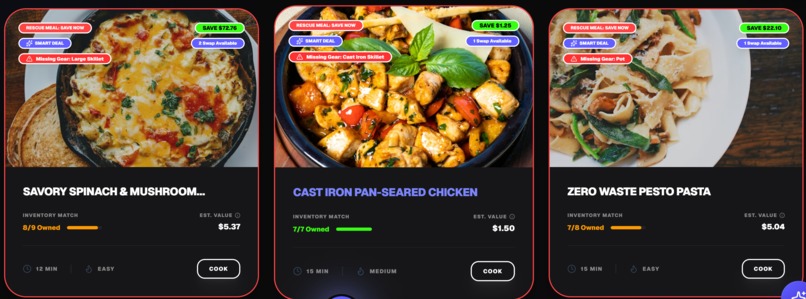
3. Personalized Recipe Execution
Most recipe apps recommend generic meals.
Pantry Mind acts as a strict execution engine.
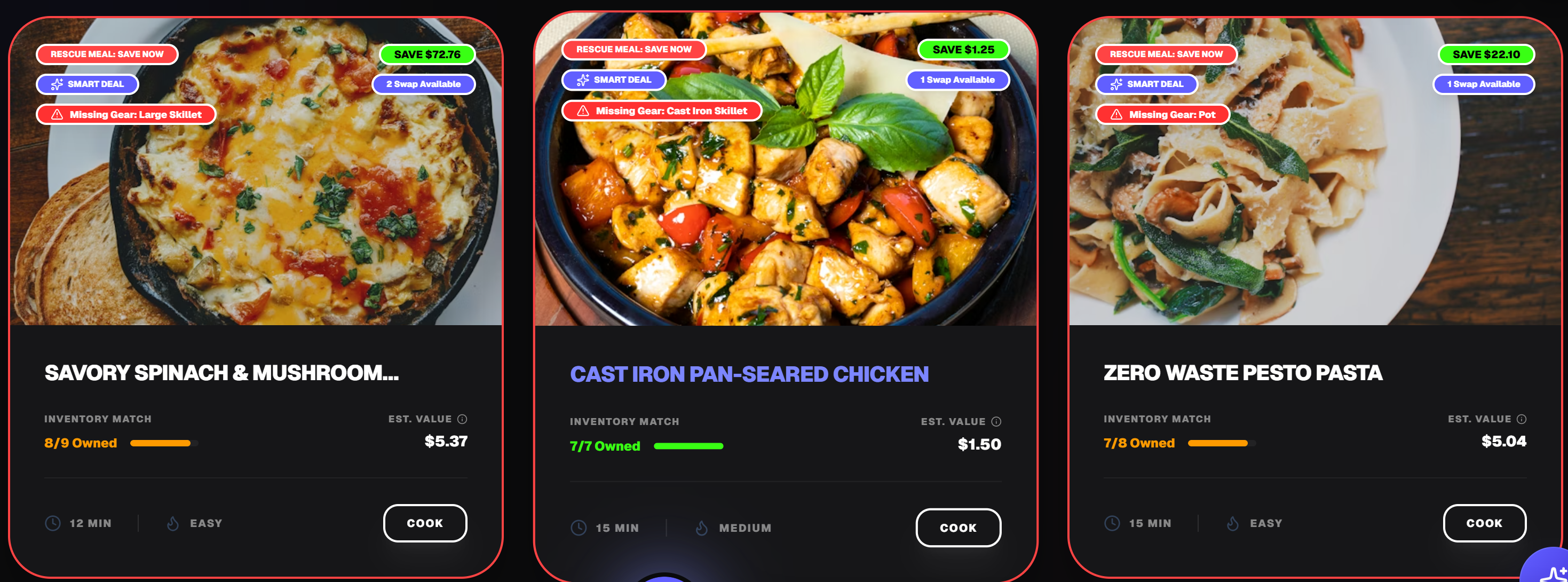
The system filters recipes using:
- Allergies
- Dietary restrictions
- Available ingredients
- Missing ingredients
- Kitchen hardware ownership
Examples
- No air fryer → no air fryer recipes
- Nut allergy → all nut ingredients excluded
- Vegetarian → meat recipes removed completely
This ensures every recommendation is realistically executable.
4. Interactive AI Assistant
An AI assistant is embedded directly into the dashboard.
Users can ask:
- How to prepare ingredients
- Cooking substitutions
- Storage advice
- Recipe modifications
- Nutrition-related questions
The assistant references the user’s live pantry inventory to provide contextual responses.
Example Questions
What can I replace eggs with?How do I prepare butternut squash?What can I cook using chicken and spinach?
5. Social Discovery Ecosystem
Pantry Mind includes:
- A For You feed
- A Following feed
- Creator profiles
- Community recipe sharing
Users can publish:
- Efficient meal plans
- Budget-friendly recipes
- Healthy recipes
- Low-waste meal systems
6. Creator Monetization
Verified Creators can monetize their kitchen expertise.
Revenue opportunities include:
- Engagement-based payouts
- Sponsored content
- Integrated recipe advertisements
- Brand partnerships
This transforms Pantry Mind into both:
- A utility platform
- A creator economy ecosystem
How I Built It
Pantry Mind was built entirely inside Google AI Studio using “Vibe Coding” workflows.
Instead of manually engineering backend infrastructure, I described:
- Application logic
- UI behavior
- AI interactions
- Vision processing requirements
- Financial calculation systems
The Gemini models generated and refined the implementation.
Technologies Used
| Technology | Purpose |
|---|---|
| Google AI Studio | Rapid iteration and AI workflow development |
| Gemini 2.0 Flash | Recipe intelligence and pantry logic |
| Multimodal Vision Models | OCR receipt reading and grocery detection |
| Live Preview | UI/UX iteration and testing |
UI/UX Design
The interface was designed as a modern high-contrast command center.
Design System
- Background: Deep dark mode
- Primary text: Pure White
#FFFFFF - Secondary headers: Medium Grey
#888888 - Minimalist financial dashboard aesthetic
- Fast scanning-first interaction flow
The goal was to create software that feels:
- Operational
- Intelligent
- Efficient
- Data-driven
Challenges Faced
Eliminating Generic AI Recommendations
The hardest challenge was preventing the AI from making generalized meal suggestions.
I had to refine the logic repeatedly so the system only generated recipes that were:
- Physically cookable
- Compatible with owned hardware
- Safe for allergies
- Relevant to available ingredients
Vision System Accuracy
Another major challenge was refining the multi-target scanning system.
The AI needed to:
- Detect multiple groceries simultaneously
- Distinguish overlapping ingredients
- Parse crowded receipts accurately
- Extract prices correctly
- Maintain fast processing speeds
This required multiple iterations of prompt refinement and model tuning.
What I Learned
This project completely changed my understanding of software development.
Using Google AI Studio, I learned that modern AI tools allow creators to transform ideas into fully functioning applications through instruction-based development.
I also learned that:
- Financial visibility changes user behavior
- Food waste is largely an execution problem
- AI becomes significantly more useful when connected to real-world inventory data
The most important insight was:
The best way to reduce food waste is to make users see the literal dollar value of what they are about to throw away.
Future Plans
Future versions of Pantry Mind will include:
- Expiration prediction systems
- Smart grocery budgeting
- Barcode scanning
- Nutrition optimization
- Household consumption forecasting
- AI-generated grocery lists
Impact
Pantry Mind aims to:
- Reduce household food waste
- Save users money
- Improve grocery efficiency
- Simplify meal planning
- Build sustainable consumption habits
By turning groceries into measurable financial assets, the platform helps users make smarter decisions every day.
Built With
- chatgpt
- claude
- googleaistudio
- perplexity
- youtube

Log in or sign up for Devpost to join the conversation.